



What was James Clerk Maxwell’s IQ?
Second Wrangler at Cambridge in 1854, and author of the 1865 paper that showed light is an electromagnetic wave.
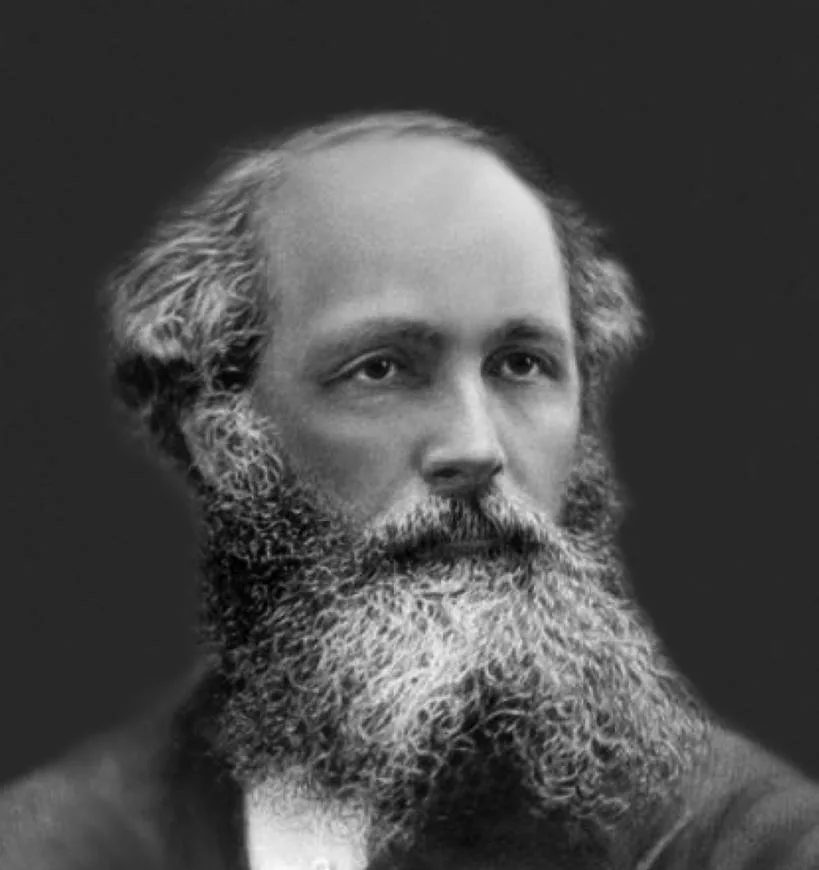
James Clerk Maxwell’s IQ was never measured: he died in 1879, before any intelligence test existed, and Catharine Cox’s 1926 study of 301 geniuses does not rate him. The “190 to 205” on popular lists cites no test. His documented record, a paper at 14, Second Wrangler in 1854 and the 1865 electromagnetic theory, supports an estimated IQ of 165–185.
James Clerk Maxwell’s estimated IQ
- His first scientific paper, “On the description of oval curves and those having a plurality of foci,” was read to the Royal Society of Edinburgh on April 6, 1846, when he was 14.
- At Cambridge he graduated from Trinity College in 1854 as Second Wrangler, behind Edward Routh, and was bracketed equal with Routh in the Smith’s Prize examination.
- He won the Adams Prize in 1859 for showing that Saturn’s rings must consist of many small separate particles, and was the only entrant to submit an essay.
- His 1865 paper “A Dynamical Theory of the Electromagnetic Field” (Philosophical Transactions of the Royal Society, vol. 155) showed that electric and magnetic fields travel as waves at the speed of light.
- He was the first Cavendish Professor of Physics at Cambridge from 1871 and designed the Cavendish Laboratory, opened on June 16, 1874.
This is an inference from public records, not a measurement, and no Cox (1926) rating exists to anchor it. A rank in the Cambridge Mathematical Tripos tests training in a particular examination style as well as ability, and Maxwell’s tutors noted he was poorly prepared for it, so the range is wide.
- Born
- June 13, 1831, Edinburgh, Scotland
- Died
- November 5, 1879, Cambridge, England
- Field
- Physics and mathematics
- Education
- Edinburgh Academy; University of Edinburgh; Peterhouse, then Trinity College, Cambridge (B.A. 1854)
- Cambridge rank
- Second Wrangler 1854; Smith’s Prize bracketed equal with Edward Routh
- Known for
- Electromagnetic field theory (1865), Treatise on Electricity and Magnetism (1873), three-color photography (1861)
- Posts held
- Marischal College, Aberdeen (1856); King’s College London (1860–65); first Cavendish Professor, Cambridge (1871–79)
- Cox (1926) rating
- None: not among her 301 subjects
What an IQ of 165–185 actually means
Set the claim aside for a moment. If someone genuinely scored in this range, here is what that would represent.
Average is 100 by construction, and about two-thirds of people fall between 85 and 115. Take the test to place your own score on this scale.
| Score range | Classification | Share of people | What it indicates |
|---|---|---|---|
| 85 – 114 | Average | ~68% | The range most people fall into. |
| 115 – 129 | Above average | ~13.6% | Roughly one person in seven. |
| 130 – 144 | Gifted | ~2% | The threshold most high-IQ societies use. |
| Above 144 | Highly gifted | ~0.1% | Figures above this range are extrapolated from the curve rather than measured. |
Percentages are approximate and describe a normal distribution. The same number means different things on tests with different standard deviations.
Thirty questions gives you a measured position on this exact scale — your score, your percentile and the ability breakdown behind it.
Find out in 30 minutes →Who James Clerk Maxwell was
James Clerk Maxwell was born on June 13, 1831, at 14 India Street, Edinburgh, to John Clerk Maxwell, an advocate, and Frances Cay, and grew up at the family estate of Glenlair in Kirkcudbrightshire. In 1841 he went to the Edinburgh Academy, where his schoolmates called him “Dafty”; he was not the school’s dux, an honor that went to his friend and later biographer Lewis Campbell. At 14 he wrote his first paper, on mechanically drawing ovals with a pin and string, which James Forbes presented to the Royal Society of Edinburgh on April 6, 1846.
He studied at the University of Edinburgh and in October 1850 went to Cambridge, where he started at Peterhouse and moved to Trinity College before the end of his first term. In 1854 he graduated as Second Wrangler, behind Edward Routh, and was bracketed equal with Routh in the Smith’s Prize examination. After a fellowship at Trinity he became Professor of Natural Philosophy at Marischal College, Aberdeen, in 1856, where he worked on Saturn’s rings and won the Adams Prize in 1859. He married Katherine Mary Dewar in 1858.
From 1860 to 1865 he held the chair of natural philosophy at King’s College London, where he met Michael Faraday at the Royal Institution; in a lecture there in 1861 he showed the first durable color photograph, made by photographing a tartan ribbon through red, green and blue filters. His 1865 paper in the Philosophical Transactions argued that light is an electromagnetic wave, and his 1873 Treatise on Electricity and Magnetism presented the equations in their developed form. The question of how old scientists are at their breakthrough is a fair one for Maxwell: the oval paper came at 14 and the 1865 theory at 34.
How does Maxwell compare with Newton? Their records differ in kind; Newton’s own range on this site is 170–190, and Maxwell’s overlaps its lower half. In 1871 Maxwell returned to Cambridge as the first Cavendish Professor of Physics and designed the Cavendish Laboratory, opened in 1874; he also edited Henry Cavendish’s electrical papers, published in 1879. He died in Cambridge on November 5, 1879, aged 48. For the wider question, see the IQ Metrics test.
 By Elora Mercer, Celebrity Research WriterFigures checked by Leon Falkner, Data & Research Analyst
Reviewed by Aarav Vardhan, Editor-in-Chief · Last reviewed November 2026

James Clerk Maxwell: the documented record
The estimate above rests on this record. Every entry here is a matter of public fact, which is more than can be said for the number itself.
- 1831Born June 13 at 14 India Street, Edinburgh, and raised mainly at the family estate of Glenlair.
- 1841Enters the Edinburgh Academy at age ten, arriving in Edinburgh on November 18.
- 1846His paper on oval curves is read to the Royal Society of Edinburgh on April 6, when he is 14.
- 1854Graduates as Second Wrangler and shares the Smith’s Prize with Edward Routh.
- 1856Becomes Professor of Natural Philosophy at Marischal College, Aberdeen.
- 1859Awarded the Adams Prize for his essay on the stability of Saturn’s rings.
- 1861Demonstrates three-color photography at a Royal Institution lecture and is elected a Fellow of the Royal Society.
- 1865Publishes “A Dynamical Theory of the Electromagnetic Field” and leaves King’s College London.
- 1873Publishes A Treatise on Electricity and Magnetism.
- 1871Appointed first Cavendish Professor of Physics at Cambridge; the Cavendish Laboratory opens on June 16, 1874.
- 1879Dies in Cambridge on November 5, aged 48.
Where the 190–205 figure came from
Following a claim back to its first appearance is the part almost nobody does — and it is what most people are actually asking.
What is James Clerk Maxwell’s IQ? No test result exists, so any Maxwell IQ is an estimate from his record. The “190 to 205” appears on the History Snob list of historical geniuses, in an entry that describes his equations and then says his IQ estimate falls in that range, with no test, study or date behind it.
Where does the 190–205 come from? It does not trace to Catharine Cox’s The Early Mental Traits of Three Hundred Geniuses (1926), the one systematic attempt to rate historical figures from childhood and youth records. That volume rates Michael Faraday and Isaac Newton but has no entry for Maxwell, who was born in 1831, within her 1450–1850 birth window. A figure that looks like her method but lacks her ratings is a guess, and the ranking of historical geniuses by IQ estimate shows which names have a documented basis.
Was James Clerk Maxwell a genius? His documented record is that of an exceptional mathematical physicist. A 14-year-old’s paper on drawing ovals with twine reached the Royal Society of Edinburgh, a Cambridge degree placed him second in the 1854 Tripos, and eleven years later he derived the speed of electromagnetic waves. Albert Einstein credited Maxwell’s equations as the origin of special relativity, which is why this site’s estimate sits close to Einstein’s range of 160–180. The method is the same as for other scientists we have checked.
Did Maxwell take an IQ test? No: Binet and Simon published the first intelligence scale in 1905, 26 years after Maxwell died, and an IQ on a scale with mean 100 and standard deviation 15 is defined only for living test takers. A 190 on that scale would sit six standard deviations above the mean, beyond what any test has items to measure (see the difference between ratio and deviation IQ). The estimated IQ here is the achievement-based range, not a score.
How we read a number →Full text searched for Maxwell, Clerk and related terms: no entry for James Clerk Maxwell; the name appears only in reference citations for other subjects.
Edinburgh Academy from November 1841; the oval-curves paper read April 6, 1846; Second Wrangler and bracketed equal in the Smith’s Prize in 1854; Adams Prize problem; first Cavendish Professor in 1871; Cavendish Laboratory opened June 16, 1874.
Dates of birth and death, Marischal College and King’s College London posts, Adams Prize 1859, 1861 Royal Institution color photography demonstration, the 1865 paper in Philosophical Transactions vol. 155, and the 1873 Treatise.
Identifier for the Scottish physicist and mathematician.
Cited in Wikipedia’s bibliography for the paper that showed light and electromagnetism are propagated by the same medium.
Entry 15, “James Clerk Maxwell”: “Maxwell’s IQ estimate is between 190 and 205.” No test, study or date is named.
He died in 1879. Binet and Simon published the first intelligence scale in 1905. He is not among Cox’s 301 subjects, and no page opened cites a test.
The sources behind our estimate
The figures that circulate for James Clerk Maxwell, what we were able to confirm, and where the two diverge.
Maxwell’s IQ is given as 190 to 205 on popular lists. The History Snob list “20 Historical Geniuses With The Highest Estimated IQs” says his IQ estimate “is between 190 and 205.”
No IQ test result for Maxwell exists, and he is not one of Catharine Cox’s 301 subjects. Her 1926 volume, The Early Mental Traits of Three Hundred Geniuses, contains no entry for him; the only “Maxwell” in its text is a biographer and a law publisher in reference lists. The History Snob entry gives the range after a summary of his work and names no test, study or date.
The circulating range starts above the top of this site’s estimate and runs 20 points higher. Because no source is cited, there is nothing behind the 190–205 beyond the reputation of the work, and sourced records for comparable figures almost always support lower numbers.
Want a number that does hold up? Every figure on this page is somebody’s claim. Take the 30-question test and get a percentile you can check rather than a figure you have to trust.
James Clerk Maxwell — frequently asked
What was James Clerk Maxwell’s IQ?
James Clerk Maxwell’s IQ was never measured: he died in 1879, before intelligence tests existed. Popular lists give 190 to 205 without a source, and this site’s estimated range, inferred from his record, is 165–185 on a scale with mean 100 and SD 15.
What is James Clerk Maxwell’s IQ score?
There is no James Clerk Maxwell IQ score, because he never took a test. The History Snob list says his estimate is between 190 and 205 but names no source; this site’s inferred estimated IQ is 165–185, based on his Cambridge rank, prizes and the 1865 electromagnetic theory.
Did James Clerk Maxwell take an IQ test?
No. Maxwell died in 1879, and the first intelligence scale, by Alfred Binet and Théodore Simon, appeared in 1905. He is also not among the 301 subjects Catharine Cox rated retrospectively in her 1926 study, so no historiometric rating of him exists either.
How smart was James Clerk Maxwell?
Maxwell’s record is that of a leading mathematical physicist. He wrote a paper read at the Royal Society of Edinburgh at 14, finished as Second Wrangler at Cambridge in 1854, and in 1865 published the theory showing light is an electromagnetic wave, according to MacTutor and the Royal Society’s Philosophical Transactions.
Was James Clerk Maxwell a genius?
Yes, in the sense of exceptional documented achievement. Maxwell’s 1865 paper in the Philosophical Transactions of the Royal Society unified electricity, magnetism and light, and his equations underpin modern electrical engineering. That is evidence of genius-level work, though not of any particular IQ number.
Where does the 190–205 IQ for Maxwell come from?
It appears on the History Snob list “20 Historical Geniuses With The Highest Estimated IQs,” which says his estimate is between 190 and 205 and cites nothing. It does not come from Catharine Cox’s 1926 study, which has no entry for Maxwell.
How did Maxwell do at Cambridge?
Maxwell graduated from Trinity College, Cambridge, in 1854 as Second Wrangler, placed behind Edward Routh in the Mathematical Tripos, and was bracketed equal with Routh in the Smith’s Prize examination. MacTutor notes he was less trained for the exam than most high wranglers.
How does my IQ compare with James Clerk Maxwell?
You can find out in about fifteen minutes. The IQ Metrics assessment is 30 questions, scored on the same 100-mean scale used throughout this page, so your result and the estimate above are at least expressed in the same units — one measured, one inferred. Once you have a number, the leaderboard shows where it would sit, and how we score and norm it explains the benchmarking.
Where does this estimate come from?
From the documented record rather than a test — the method is named above and set out in full under how we read a number. Compare it against the other scientists profiles, starting with Albert Einstein.
- Take the 30-question IQ test — get a measured score and percentile of your own
- Average IQ by country — how the scale behaves across populations
- How IQ Metrics scores its assessment — the method behind our own number
- More on how IQ testing works — reliability, error and what a score can and cannot say
- More scientists profiles — same field, same method
More scientists
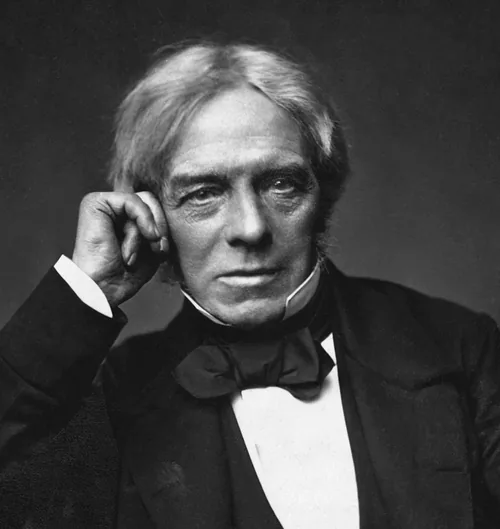
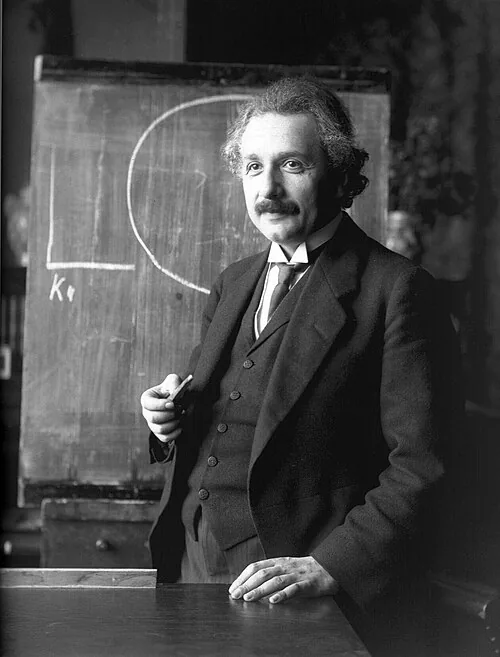
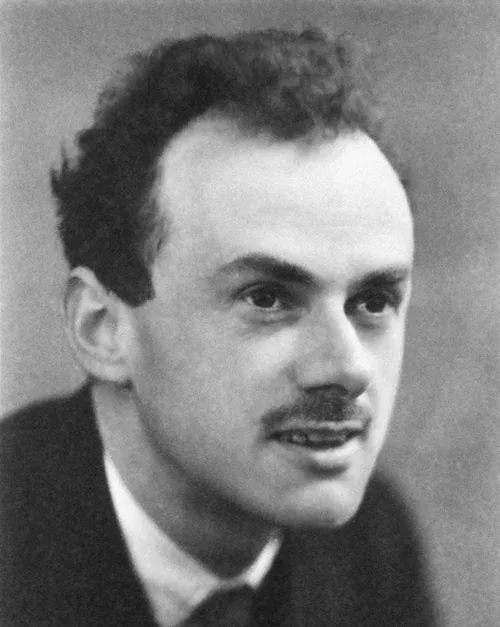
Photograph, about the 1850s, photographer not recorded (Commons file); public domain. Background removed for the portrait above. · Portrait by Ferdinand Schmutzer (1921), public domain. Background removed for the portrait above. · Portrait, 1933, from the Nobel Foundation (Commons file); public domain. Background removed for the portrait above.


An estimate is an inference.
Yours can be measured.
Thirty questions, scored against general-population benchmarks. Your score, your percentile, your ability breakdown and a printable IIF certificate.
Find your IQ score now! →