



What was Michael Faraday’s IQ?
Michael Faraday’s estimated IQ depends on which years of his life you score: Catharine Cox’s 1926 ratings run from 105 to 150.
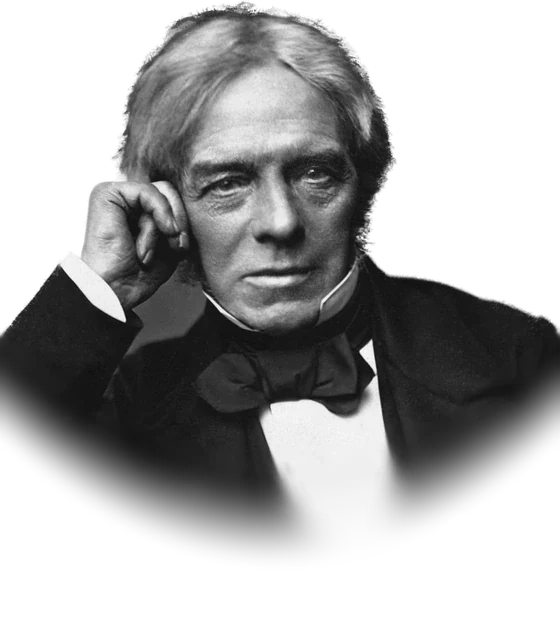
Michael Faraday never took an IQ test, and the 170 that circulates for his IQ score comes from an unsourced 2011 list. What is documented is a bookbinder’s apprentice with a few years of basic schooling who became Fullerian Professor of Chemistry at the Royal Institution, and one retrospective rating: Catharine Cox’s 1926 estimate of 105 for his youth and 150 by age twenty-six.
Michael Faraday’s estimated IQ
- Catharine Cox’s 1926 study rated his record at 105 up to age 17 and 150 once the years to age 26 were added (her table gives probable errors of ±10 and ±7); the average for her 282-person main group was 134.9 on the first rating and 144.7 on the second.
- Only basic day schooling, then a seven-year bookbinding apprenticeship (1805–1812); after four Humphry Davy lectures in 1812 he sent Davy his notes and was appointed Chemical Assistant at the Royal Institution on March 1, 1813.
- Electromagnetic rotation (1821), benzene (1825), electromagnetic induction (1831), the laws of electrolysis (early 1830s), and the magneto-optical effect and diamagnetism (1845), as the Royal Institution dates them.
- Director of the Royal Institution’s laboratory from 1825 and its first Fullerian Professor of Chemistry from 1833, a chair created for him.
Read any Michael Faraday IQ level as a statement about a record, not a person. Cox’s two ratings sit 45 points apart because his youth left almost no record (her reliability coefficients for the data were .11 and .60), not because his mind changed, and her window closes at age 26; the ceiling of 165 credits the decades of work after it. He left no exam rank or earned degree on record to anchor a score, and his mathematics was limited to simple algebra, so the range rests on the quality of his discoveries, a weaker anchor than a test result.
- Born
- September 22, 1791, Newington Butts, Surrey (now London)
- Died
- August 25, 1867, Hampton Court, Middlesex, aged 75
- Education
- Basic day schooling; bookbinding apprenticeship to George Riebau, 1805–1812; otherwise self-taught
- Positions
- Chemical Assistant, Royal Institution (1813); Director of its laboratory (1825); Fullerian Professor of Chemistry (1833–1867)
- Known for
- Electromagnetic induction (1831), laws of electrolysis, the Faraday effect and diamagnetism (1845)
- Honors
- FRS 1824; Royal Medal 1835; Copley Medal 1838; honorary D.C.L., Oxford, June 1832; the farad is named for him
- Cox (1926) ratings
- 105 (record to age 17); 150 (record to age 26)
- Circulating figure
- 170, on a 2011 Patch.com list; no test or source given
What an IQ of 145–165 actually means
Set the claim aside for a moment. If someone genuinely scored in this range, here is what that would represent.
Average is 100 by construction, and about two-thirds of people fall between 85 and 115. Take the test to place your own score on this scale.
| Score range | Classification | Share of people | What it indicates |
|---|---|---|---|
| 85 – 114 | Average | ~68% | The range most people fall into. |
| 115 – 129 | Above average | ~13.6% | Roughly one person in seven. |
| 130 – 144 | Gifted | ~2% | The threshold most high-IQ societies use. |
| Above 144 | Highly gifted | ~0.1% | Figures above this range are extrapolated from the curve rather than measured. |
Percentages are approximate and describe a normal distribution. The same number means different things on tests with different standard deviations.
Thirty questions gives you a measured position on this exact scale — your score, your percentile and the ability breakdown behind it.
Find out in 30 minutes →Who Michael Faraday was
Michael Faraday was born on September 22, 1791, in Newington Butts, then in Surrey, into a family that was not well off. His schooling was a dame’s school and then a common day school between the ages of ten and fourteen, where by Cox’s account he learned little more than the elements of reading, writing and arithmetic. At 14 he was apprenticed to George Riebau, a bookbinder and bookseller in Blandford Street, and he served from 1805 to 1812. He read many of the books that passed through the shop, among them Isaac Watts’s The Improvement of the Mind, and attended lectures on natural philosophy by John Tatum.
In 1812, as the apprenticeship ended, a customer of the shop who was a member of the Royal Institution gave Faraday tickets to the last four lectures of a Humphry Davy course; they ran from February 29 to April 10. Faraday wrote up his notes as a bound volume of about 300 pages and sent it to Davy. When the Institution’s laboratory assistant was dismissed in early 1813, Davy remembered him, and Faraday was appointed Chemical Assistant on March 1, 1813. That fall he left with Davy on an eighteen-month tour of the Continent, where he met André-Marie Ampère in Paris and Alessandro Volta in Milan. He was elected a Fellow of the Royal Society in 1824 and became Director of the Institution’s laboratory in 1825.
The record that supports a high estimate is the work itself. The Royal Institution dates his electromagnetic rotations to 1821, benzene to 1825, electromagnetic induction to 1831, the laws of electrolysis (and the words electrode, cathode and ion) to the early 1830s, and the magneto-optical effect and diamagnetism to 1845; MacTutor gives September 13, 1845 for the first successful demonstration of the Faraday effect. In 1833 he became the first Fullerian Professor of Chemistry at the Royal Institution, a chair created for him. The Institution credits him with founding the Friday Evening Discourses and the Christmas Lectures in the mid-1820s; the first Christmas series, in December 1825, was not his, and his own nineteen series ran from 1827 to 1860, among them the course on The Chemical History of a Candle.
Was Michael Faraday a genius? The people best placed to judge said so without reference to a test. According to BBC Science Focus, Albert Einstein hung portraits of Isaac Newton, Faraday and James Clerk Maxwell on his walls in 1920s Berlin and later in Princeton, and of no other scientists. Faraday’s own mathematics was limited to simple algebra; Maxwell took his work and that of others and summarized it in the set of equations that bear Maxwell’s name. The Royal Institution records that Faraday was twice offered the presidency of the Royal Society and declined both times. The farad, the SI unit of capacitance, is named for him, and the Royal Society’s Michael Faraday Prize, for communicating science in lay terms, has gone to Brian Cox (2012) and Richard Dawkins (1990). For scale, this site’s ranges for Einstein and Newton are 160–180 and 170–190. Where a genius IQ level begins is a convention, not a finding about any one person.
 By Elora Mercer, Celebrity Research WriterFigures checked by Leon Falkner, Data & Research Analyst
Reviewed by Aarav Vardhan, Editor-in-Chief · Last reviewed August 2026

Michael Faraday: the documented record
The estimate above rests on this record. Every entry here is a matter of public fact, which is more than can be said for the number itself.
- 1791Born September 22 in Newington Butts, Surrey.
- 1805At 14, apprenticed to the bookbinder and bookseller George Riebau; the apprenticeship runs to 1812.
- 1812–13Attends four Humphry Davy lectures (February–April 1812), sends Davy his notes, and is appointed Chemical Assistant at the Royal Institution on March 1, 1813.
- 1821Publishes his electromagnetic rotation experiments (October); the historian L. Pearce Williams calls the paper the first conversion of electrical into mechanical energy.
- 1824–25Elected a Fellow of the Royal Society (1824); becomes Director of the Royal Institution’s laboratory and reports benzene (1825).
- 1831Discovers electromagnetic induction.
- 1833Becomes the first Fullerian Professor of Chemistry at the Royal Institution; his laws of electrolysis date to the early 1830s.
- 1845Demonstrates the Faraday effect on September 13 and discovers diamagnetism.
- 1867Dies August 25 at Hampton Court, aged 75.
- 1926Catharine Cox rates his record at 105 (to age 17) and 150 (to age 26) in Genetic Studies of Genius, volume II.
Where the 170 figure came from
Following a claim back to its first appearance is the part almost nobody does — and it is what most people are actually asking.
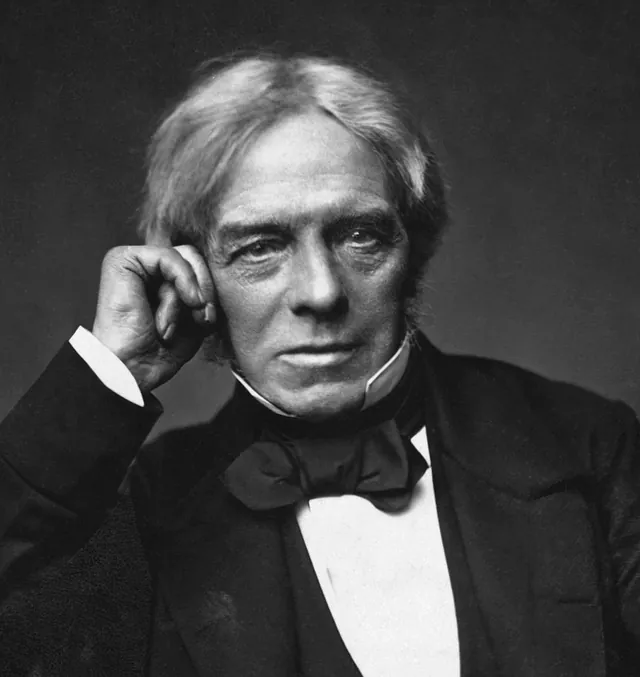
What was Michael Faraday’s IQ, according to the lists? 170, and nothing documented sits behind it. The figure appears on a Patch.com post dated October 29, 2011, “World’s Most Intelligent People 2010 – Intelligent People – Highest IQ”, as one line in a ranked list: Martin Luther at 170, “Michael Faraday with an IQ of 170”, then Galileo at 165, Einstein at 160 and Darwin at 150. The post says it compiled the list from Catharine Cox’s 1926 study “as well as other sources around the net”, and adds that whether IQ tests are accurate “is open to debate”. Neither sentence supplies a test, an examiner or a date for Faraday.
The academic source the list leans on does cover Faraday, and it gives different numbers. In Genetic Studies of Genius, volume II (1926), Cox and two co-raters scored 301 eminent people who lived between 1450 and 1850, working from their biographies and asking not what each child’s IQ probably was but which IQ would most reasonably account for the recorded facts. Michael Faraday’s IQ comes out at 105 on the record to age 17 and 150 once the years from 17 to 26 are added. Two raters put his youth at 110 and one at 100; the average for the 282-person main group was 134.9 on the first rating and 144.7 on the second. Where celebrity IQ numbers come from explains how lists like the Patch one are usually assembled.
The Cox numbers are neither a clean rebuttal nor a clean confirmation. A rating of 105 is thirty points under her group’s average, and it reflects a youth that left almost no record: a dame’s school, then a common day school where, in her summary, he learned little more than the elements of reading, writing and arithmetic, then an apprenticeship at 14. Cox singled his case out as perhaps the most interesting of the ten youths she rated near 105, because of the 150 that follows, and judged that fuller data would consistently raise estimates for that group. The direction of the error is the usual one: the circulating 170 sits 20 points above the only rating by a stated method that we found, and five points above the top of our range. It is not absurd for a record like his, but it is a number without a source, and an IQ of 150 is what the sourced rating says.
Is Michael Faraday smart enough for 170? That is a question about a different kind of evidence. Faraday has no earned degree, rank or exam score on record to anchor a figure, so the natural comparison is with other self-taught figures: this site puts Thomas Edison at 140–160 and Benjamin Franklin at 155–175 on a similar basis, and our 145–165 for Faraday overlaps both. Those ranges differ by less than the method can resolve, so the three are best read as one tier rather than a ranking. Whatever the exact figure, it lies far into the upper tail of the scale (how rare a high IQ score is), and the honest statement is a range with its weakness named.
How we read a number →Apprenticeship 1805–1812, Director of the Laboratory 1825, Fullerian Professorship 1833 (created for him), dated discoveries, founding of the Friday Evening Discourses and Christmas Lectures, and the twice-declined Royal Society presidency.
First series delivered in December 1825; Faraday gave his first of nineteen series two years later.
Contains Faraday: 105 ± 10 (record to age 17, data reliability .11) and 150 ± 7 (to age 26, reliability .60); group means 134.9 and 144.7; pp. 91–92 and 232–233. Establishes that Cox covers him and that the circulating 170 is not hers.
Birth and death, Davy tour (eighteen months abroad), 1821 paper, Fullerian Professorship in February 1833, Faraday effect of September 13, 1845, Royal Medal 1835 and Copley Medal 1838, and biographers’ description of him as “mathematically illiterate”.
Davy lecture dates (February 29 to April 10, 1812) and the customer who gave him tickets, his notes sent to Davy, declining the Royal Society presidency, death on August 25, 1867.
Honors list, the 300-page notes sent to Davy, Oxford D.C.L. of June 1832, Christmas Lectures 1827–1860, Maxwell’s equations, farad naming (adopted in 1881), Faraday Prize 1990 (Dawkins) and 2012 (Cox).
Einstein hung portraits of Newton, Faraday and Maxwell in Berlin in the 1920s and later in Princeton.
Awarded for exemplary communication of scientific ideas in lay terms.
The only page found that prints a number: “Michael Faraday with an IQ of 170”. Cites Cox “as well as other sources around the net”; no test, date or per-person citation.
None appears in the biographies, MacTutor, the Royal Institution pages or Cox’s volume, which gives only retrospective ratings. A 2012 Christian Post list of famous IQs does not name him.
The sources behind our estimate
The figures that circulate for Michael Faraday, what we were able to confirm, and where the two diverge.
One list that circulates puts Michael Faraday’s IQ at 170: a 2011 Patch.com page titled “World’s Most Intelligent People 2010” prints “Michael Faraday with an IQ of 170” in a ranking that gives Einstein 160 and Darwin 150.
No IQ test result exists for Michael Faraday. He died in 1867, and no administration of any test appears in the biographies and reference works checked for this page. The Patch post, contributed by a community member, says it draws on Cox’s 1926 study “as well as other sources around the net”, and concedes that whether IQ tests are accurate “is open to debate”; Faraday’s line carries no test, date or citation. Cox’s own entry for him does not say 170: it says 105 and 150. A 2012 Christian Post list of famous people’s IQs does not name him, and no other page we opened prints a number.
Two of the three numbers are Cox’s own for Faraday and the third is the list’s. They span 65 points because they answer different questions: 105 scores a youth that left almost no record, 150 adds the years of his assistantship and first scientific papers, and 170 has no stated basis. The estimate here brackets Cox’s 150 and puts 170 just above its ceiling.
Want a number that does hold up? Every figure on this page is somebody’s claim. Take the 30-question test and get a percentile you can check rather than a figure you have to trust.
Michael Faraday — frequently asked
What is Michael Faraday’s IQ?
Michael Faraday has no measured IQ, because he died in 1867 and no test result exists. This page estimates 145–165 from his documented record. Catharine Cox’s 1926 study rated his record at 105 up to age 17 and 150 up to age 26, and a 2011 list gives 170 with no source.
Did Michael Faraday ever take an IQ test?
No. Faraday died in 1867, and no IQ test or similar administration appears in his biographies or in the reference works checked for this page. The only ratings of his intelligence by a stated method are retrospective: Catharine Cox’s 1926 estimates, made from biographical records long after his death.
Was Michael Faraday a genius?
By his record, yes in the ordinary sense: Einstein hung his portrait beside Newton’s and Maxwell’s, and his discoveries include electromagnetic induction in 1831. But genius is not a fixed IQ band. Our estimated IQ level for Faraday is 145–165, a range inferred from achievement, not measured.
Is Michael Faraday smart, given how little schooling he had?
Everything documented says yes. Faraday had only basic day schooling, then a bookbinding apprenticeship from age 14, yet he read the science books in the shop, wrote up Humphry Davy’s 1812 lectures as a 300-page volume and was hired at the Royal Institution in 1813. He later held a chair created for him there.
Where does the Michael Faraday IQ of 170 come from?
It appears on a 2011 Patch.com list, “World’s Most Intelligent People 2010”, as “Michael Faraday with an IQ of 170”. The list says it draws on Cox’s 1926 study and other web sources, but Cox’s own ratings for Faraday are 105 and 150. No test, date or citation is attached to the 170.
How does Michael Faraday’s estimated IQ compare with Einstein’s?
On this site, Faraday’s estimated IQ of 145–165 sits slightly below Albert Einstein’s 160–180 and overlaps both Benjamin Franklin’s 155–175 and Thomas Edison’s 140–160. The gaps are smaller than the method can resolve, so the ranges describe a shared tier rather than a ranking.
Why do Cox’s two ratings for Faraday differ by 45 points?
Because the rating to age 17 had almost no recorded youth to work from: a day school, then an apprenticeship at 14. Cox’s reliability coefficient for that data was .11. Adding the record to age 26, with Davy’s assistantship and his first scientific papers, raised the rating to 150 on data with a reliability of .60.
How does my IQ compare with Michael Faraday?
You can find out in about fifteen minutes. The IQ Metrics assessment is 30 questions, scored on the same 100-mean scale used throughout this page, so your result and the estimate above are at least expressed in the same units — one measured, one inferred. Once you have a number, the leaderboard shows where it would sit, and how we score and norm it explains the benchmarking.
Where does this estimate come from?
From the documented record rather than a test — the method is named above and set out in full under how we read a number. Compare it against the other scientists profiles, starting with Albert Einstein.
- Take the 30-question IQ test — get a measured score and percentile of your own
- Average IQ by country — how the scale behaves across populations
- How IQ Metrics scores its assessment — the method behind our own number
- More on how IQ testing works — reliability, error and what a score can and cannot say
- More scientists profiles — same field, same method
More scientists
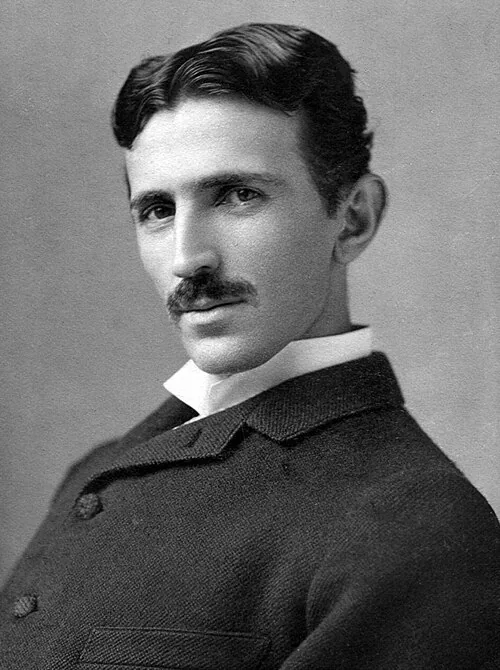
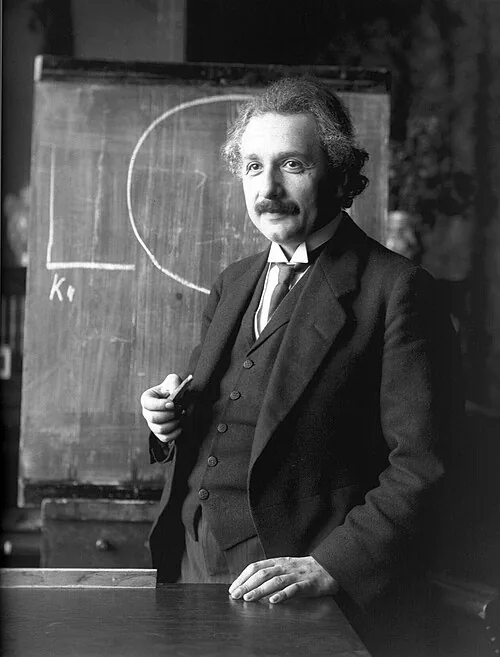
Photograph by Napoleon Sarony (c. 1890), public domain. Background removed for the portrait above. · Portrait by Ferdinand Schmutzer (1921), public domain. Background removed for the portrait above. · Los Alamos National Laboratory badge photograph, via Wikimedia Commons, CC0. Background removed for the portrait above.


An estimate is an inference.
Yours can be measured.
Thirty questions, scored against general-population benchmarks. Your score, your percentile, your ability breakdown and a printable IIF certificate.
Find your IQ score now! →