



What was Paul Dirac’s IQ?
Was Paul Dirac a genius? Landau placed him in class 1 of his scale of physicists, beside Heisenberg and Schrödinger. His IQ level was never measured.
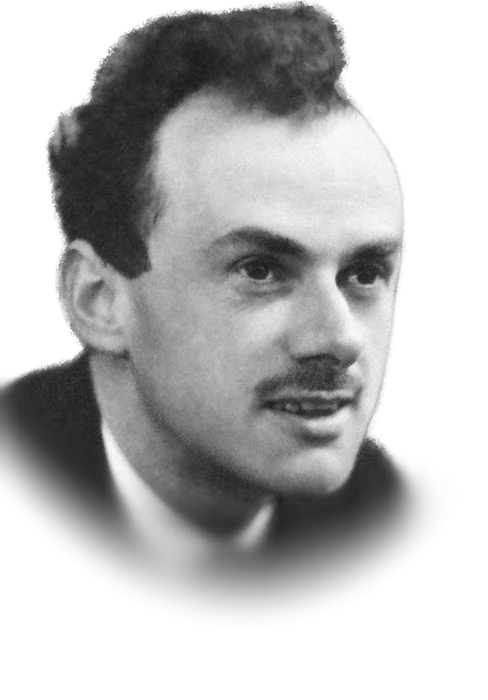
Paul Dirac’s IQ was never measured: no test result has been published for him, and the 180–200 that circulates online cites none. What is documented is two first-class degrees at Bristol, a 1926 Cambridge doctorate that was the first thesis on quantum mechanics submitted anywhere, the Dirac equation of 1928 and the 1933 Nobel Prize in Physics.
Paul Dirac’s estimated IQ
- Two first-class Bristol degrees: a B.Sc. in electrical engineering in 1921 and, after two years of mathematics, a first-class mathematics degree in 1923.
- A Cambridge Ph.D. in June 1926 under Ralph Fowler, titled Quantum mechanics and described as the first thesis on the subject submitted anywhere, with eleven papers already in print.
- The relativistic equation for the electron (1928) and the theory of holes (1930), which required the positively charged particle, the positron, that Carl Anderson observed in 1932.
- Fellow of the Royal Society in 1930, elected on the first occasion his name was put forward, and Lucasian Professor of Mathematics at Cambridge from 1932 to 1969.
- The 1933 Nobel Prize in Physics, shared with Erwin Schrödinger, and class 1 on Lev Landau’s logarithmic scale of physicists, alongside Heisenberg, Bohr and Schrödinger.
No IQ test result for Dirac has been published, so Paul Dirac’s estimated IQ rests on his record alone, and a record sets a floor far more firmly than a ceiling. His output was a small number of decisive results in one field, and Richard Feynman’s documented school score of 125 is a reminder that Nobel-level physics and a test result do not line up neatly. Read the band as what the achievements support, not as a measurement.
- Born
- August 8, 1902, Bristol, England
- Died
- October 20, 1984, Tallahassee, Florida
- Education
- B.Sc. (Engineering), University of Bristol, 1921; mathematics, Bristol, first-class honors, 1923; Ph.D., St John’s College, Cambridge, 1926 (supervisor Ralph Fowler)
- Chair
- Lucasian Professor of Mathematics, University of Cambridge, 1932–1969
- Nobel Prize in Physics
- 1933, shared with Erwin Schrödinger, “for the discovery of new productive forms of atomic theory”
- Royal Society
- Fellow 1930; Royal Medal 1939; Copley Medal 1952
- Peer rating
- Landau’s logarithmic scale of physicists: class 1 (Einstein ½, Newton 0)
- Documented IQ test
- None on record; the 180–200 on one blog list cites no test
What an IQ of 160–180 actually means
Set the claim aside for a moment. If someone genuinely scored in this range, here is what that would represent.
Average is 100 by construction, and about two-thirds of people fall between 85 and 115. Take the test to place your own score on this scale.
| Score range | Classification | Share of people | What it indicates |
|---|---|---|---|
| 85 – 114 | Average | ~68% | The range most people fall into. |
| 115 – 129 | Above average | ~13.6% | Roughly one person in seven. |
| 130 – 144 | Gifted | ~2% | The threshold most high-IQ societies use. |
| Above 144 | Highly gifted | ~0.1% | Figures above this range are extrapolated from the curve rather than measured. |
Percentages are approximate and describe a normal distribution. The same number means different things on tests with different standard deviations.
Thirty questions gives you a measured position on this exact scale — your score, your percentile and the ability breakdown behind it.
Find out in 30 minutes →Who Paul Dirac was
Paul Adrien Maurice Dirac was born in Bristol on August 8, 1902. He attended Bishop Road Primary School, where his exceptional ability in mathematics was already clear to his teachers, and then the secondary school attached to the Merchant Venturers’ Technical College. He studied electrical engineering at the University of Bristol and took his B.Sc. in 1921. That June he won a scholarship to St John’s College, Cambridge, but it did not cover his costs, so he stayed in Bristol for two years of mathematics and graduated with first-class honors in 1923. A grant then took him to Cambridge to begin research, where Ralph Fowler supervised him after Ebenezer Cunningham, whom he had hoped to work with, had no room for another student. Cunningham is quoted as calling him “quite the most original student I have met in the subject of mathematical physics.”
In the summer of 1925 Dirac was given proofs of a paper by Werner Heisenberg to read and saw that its non-commuting quantities had the same structure as the Poisson brackets of classical mechanics, the clue that let him formulate a general, mathematically consistent quantum mechanics. He completed his Ph.D. in June 1926 with a thesis titled Quantum mechanics, the first on the subject submitted anywhere, with eleven papers already in print. He then worked with Niels Bohr in Copenhagen and, from February 1927, at Göttingen, where he overlapped with J. Robert Oppenheimer, Max Born and James Franck, and he was elected a Fellow of St John’s College in 1927. The statistics of particles that obey the exclusion principle carry two names, Enrico Fermi and Dirac, because both saw how the principle would change the statistical mechanics of electrons.
His relativistic equation for the electron followed in 1928. Through the theory of holes of 1930 it required a positively charged particle with the electron’s mass, the positron, which Carl Anderson observed in 1932. The Principles of Quantum Mechanics (1930) merged Heisenberg’s matrix mechanics and Schrödinger’s wave mechanics into one formalism, introduced the Dirac delta function and became a standard textbook. He was elected a Fellow of the Royal Society in 1930, on the first occasion his name was put forward, and became Lucasian Professor of Mathematics at Cambridge in 1932, the chair Newton once held and Stephen Hawking would hold from 1979. In 1931 he proposed that a single magnetic monopole would explain why electric charge comes in discrete units, and a 1933 paper on Lagrangian quantum mechanics became the base on which Richard Feynman later built the path integral. The 1933 Nobel Prize in Physics, shared with Erwin Schrödinger, was awarded “for the discovery of new productive forms of atomic theory.”
Dirac held the Lucasian chair for 37 years, until 1969. The Royal Society awarded him its Royal Medal in 1939 and its Copley Medal in 1952, and he was appointed to the Order of Merit in 1973. After leaving Cambridge he moved to Florida, held visiting posts at the University of Miami and Florida State University, and became a professor of physics at Florida State in Tallahassee in the early 1970s; he died there on October 20, 1984. A slate marker inscribed with his equation was unveiled in Westminster Abbey in November 1995. Whether he was a genius is answered by peers rather than by a test file: Stephen Hawking said in 1995 that no one that century, apart from Einstein, had done more to advance physics, and Abdus Salam made a comparable judgment in 1987. What counts as a genius-level score is a separate question, covered in what is a genius IQ level.
 By Elora Mercer, Celebrity Research WriterFigures checked by Leon Falkner, Data & Research Analyst
Reviewed by Aarav Vardhan, Editor-in-Chief · Last reviewed August 2026

Paul Dirac: the documented record
The estimate above rests on this record. Every entry here is a matter of public fact, which is more than can be said for the number itself.
- 1902Born on August 8 in Bristol, England.
- 1921Takes a B.Sc. in electrical engineering at the University of Bristol; in June wins a scholarship to St John’s College, Cambridge, too small to live on.
- 1923Graduates from Bristol in mathematics with first-class honors and begins research at Cambridge under Ralph Fowler.
- 1925In the summer, reads proofs of Heisenberg’s paper and sees the link to classical Poisson brackets.
- 1926Completes his Cambridge Ph.D. with a thesis titled Quantum mechanics, with eleven papers already in print.
- 1928Proposes the relativistic equation for the electron that now bears his name.
- 1930Publishes The Principles of Quantum Mechanics and is elected a Fellow of the Royal Society.
- 1932Appointed Lucasian Professor of Mathematics at Cambridge; Carl Anderson observes the positron.
- 1933Shares the Nobel Prize in Physics with Erwin Schrödinger.
- 1984Dies on October 20 in Tallahassee, Florida, where he had been a professor of physics at Florida State University since the early 1970s.
Where the 180–200 figure came from
Following a claim back to its first appearance is the part almost nobody does — and it is what most people are actually asking.
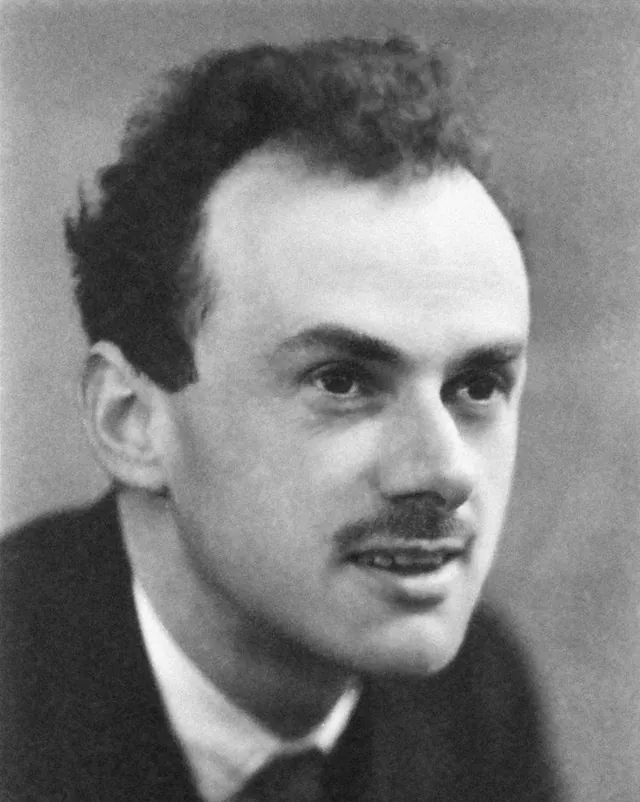
Paul Dirac’s IQ figure traces to one place we could find: a March 18, 2024 post on the physics blog Wonders of Physics, “Which Physicist Had The Highest IQ?”, which lists ten physicists and says Dirac’s IQ “was higher than Einstein’s, somewhere around 180–200.” The post names no test, no year and no source for any entry. It gives Einstein “160 to 190,” Heisenberg “around 155” and Feynman 125, and warns in its own introduction that such numbers might not be accurate. The only reason it offers for Dirac is that he predicted antimatter, which is a reason to admire the physics rather than a measurement of the person.
No second page repeating the 180–200 turned up, and the pages that discuss Dirac’s intellect most directly say the number does not exist. The ranking site Geniuses.Club, in a Paul Dirac IQ guide last reviewed on September 23, 2026, states that no IQ score exists for him, that he took no recorded test, and that he was born too late for Catharine Cox’s 1926 study of historical geniuses, which covered people born between 1450 and 1850. Its table of physicists lists him as “No scholarly estimate.” That is the usual position for twentieth-century scientists, and it is why celebrity IQ numbers so often rest on a single writer’s guess.
Is Paul Dirac smart enough to have outscored Einstein on a test nobody gave? The best-known systematic peer ranking says no, and a Nobel laureate drew it up. Lev Landau sorted theoretical physicists on a logarithmic scale of achievement in which each class accomplished ten times less than the one before: Isaac Newton at 0, Albert Einstein at ½, and Dirac in class 1 with Bohr, Heisenberg, Schrödinger, Fermi and de Broglie. A paper by Simkin and Roychowdhury, using web-page counts as a proxy for fame, reached a similar order from the other direction: Dirac, about a hundred times less famous than Einstein, contributed only about half as much. Landau’s scale rates contribution, not IQ, but it is the closest thing to a verdict from inside the field, and it puts Dirac below Einstein, not above.
Even a real test result would settle less than it seems. Standard tests lose resolution at the top, the problem laid out in the IQ ceiling effect: a score at the ceiling cannot show how far past it a person sits, so a Dirac result would still fix a floor better than a ceiling. What the record can do is anchor a band, here 160–180, to documented achievements and place it beside Heisenberg’s and Einstein’s. That puts the lower end near the level discussed in what an IQ of 160 means, and it leaves the circulating 180–200 with nothing behind it.
How we read a number →Born August 8, 1902, Bristol; B.Sc. (Engineering) 1921; two years of mathematics at Bristol; Ph.D. 1926; Fellow of St John’s 1927; Lucasian Professor 1932; Fellow of the Royal Society 1930; Royal and Copley Medals; the relativistic electron theory (1928), the theory of holes (1930) and Anderson’s positron (1932); The Principles of Quantum Mechanics (1930).
Prize motivation “for the discovery of new productive forms of atomic theory”; prize share 1/2 (with Erwin Schrödinger); affiliation at the time of the award, University of Cambridge; born Bristol, died Tallahassee, October 20, 1984.
Schooling and mathematical ability noted at primary school; Bristol degrees 1921 and 1923; June 1921 Cambridge scholarship too small to live on; Fowler as supervisor; eleven papers before the thesis; Royal Society election on first nomination; Lucasian chair for 37 years; Royal Medal 1939, Copley Medal 1952, Order of Merit 1973; Westminster Abbey memorial, November 1995.
Reports Landau’s logarithmic classification of physicists (Einstein in class ½; Bohr, Schrödinger, Heisenberg, Dirac, Fermi and de Broglie in class 1; each class ten times less than the last) and estimates Dirac’s contribution at about half of Einstein’s despite about a hundredfold less fame.
First-class honors in both Bristol degrees; Ph.D. in June 1926 as the first thesis on quantum mechanics submitted anywhere; Cunningham’s remark on Dirac as a student; Hawking’s 1995 and Salam’s 1987 assessments; Landau’s scale with Newton at 0, Einstein at 0.5 and Dirac at 1. Used for orientation and cross-checked against the Nobel and MacTutor pages where they overlap.
Source of the circulating figure: lists Dirac seventh of ten and says his IQ “was higher than Einstein’s, somewhere around 180–200.” No test, date or source is cited for any entry, and the post says IQ numbers might not be accurate.
Both state that no IQ score or scholarly estimate exists for Dirac, that he is outside the scope of Cox’s 1926 study, and that numbers on ranking sites cite no source. Used here only for what it says about the absence of a figure.
No test result or retrospective estimate appears in the Nobel Prize biography, the MacTutor biography, Wikipedia or the Geniuses.Club guide. Twelve searches on the exact phrasings people type (“Paul Dirac IQ,” “what was Paul Dirac’s IQ,” and variants) returned biographies and no figure other than the Wonders of Physics one.
The sources behind our estimate
The figures that circulate for Paul Dirac, what we were able to confirm, and where the two diverge.
The physics blog Wonders of Physics, in a March 18, 2024 post headed “Which Physicist Had The Highest IQ?”, lists Dirac seventh of ten and says his IQ “was higher than Einstein’s, somewhere around 180–200.”
The figure cites no test, no date and no source. The post’s own introduction says an IQ number might not be accurate, and its order does not follow its figures: Richard Feynman, at 125, is listed second, and Einstein, at “160 to 190,” first. No second page repeating the 180–200 turned up. The ranking site Geniuses.Club points the other way: its Paul Dirac guide and its physicists’ table, both last reviewed September 23, 2026, say that no IQ test or scholarly estimate exists for him, and the guide adds that figures on IQ-list sites cite no source.
The circulating 180–200 starts exactly where this page’s 160–180 band ends, and its claim that Dirac outscored Einstein runs against the one peer ranking on record, in which Lev Landau placed Einstein in class ½ and Dirac in class 1. The error runs in the usual direction: the circulating number is higher than the record supports, and Paul Dirac’s IQ level is better described by a band than by a point.
Want a number that does hold up? Every figure on this page is somebody’s claim. Take the 30-question test and get a percentile you can check rather than a figure you have to trust.
Paul Dirac — frequently asked
What is Paul Dirac’s IQ?
Paul Dirac’s IQ is unknown, because no IQ test result for him has ever been published. One blog list gives 180–200 without citing a test or a source. This site’s estimate, inferred from his record and not measured, is 160–180, resting on two first-class Bristol degrees, a 1926 Cambridge doctorate, a 1933 Nobel Prize and the Lucasian chair.
What was Paul Dirac’s estimated IQ level?
Paul Dirac’s estimated IQ is 160–180 on this site, using the Academic record (completed doctorate) method. It is an inference from documented achievement, not a score, and it overlaps the ranges given here for Albert Einstein (160–180) and Werner Heisenberg (165–185). The 180–200 on one blog list is higher than his record supports.
What was Paul Dirac’s IQ, and did he ever take an IQ test?
No IQ test result for Dirac has been published. The Nobel Prize biography, the St Andrews biography and Wikipedia contain none, and the one IQ-list figure found cites none. He was born in 1902, too late for Catharine Cox’s 1926 study of historical geniuses, so no retrospective estimate exists either, and the only number found online has no source.
Was Paul Dirac a genius?
By the documented record, yes. He wrote what is described as the first doctoral thesis on quantum mechanics, formulated the relativistic electron equation that led to the prediction of antimatter, held Newton’s Lucasian chair for 37 years and shared the 1933 Nobel Prize in Physics. Lev Landau ranked him in class 1 among physicists, alongside Heisenberg and Schrödinger.
Is Paul Dirac smarter than Einstein, as one IQ list claims?
No evidence supports that. One blog says Dirac’s IQ was higher than Einstein’s but cites nothing. Lev Landau’s ranking of physicists put Einstein in class ½ and Dirac in class 1, and this site’s estimated ranges for the two overlap at 160–180. No test result separates them.
How does Paul Dirac’s estimated IQ compare with Werner Heisenberg’s?
This site estimates Dirac at 160–180 and Heisenberg at 165–185: overlapping bands from comparable records, not a ranking. Dirac read Heisenberg’s 1925 paper in proof and tied it to classical Poisson brackets, and Landau placed both in class 1. Neither has a published IQ test result.
What is Paul Dirac best known for?
The Dirac equation of 1928, which brought special relativity into quantum mechanics and led to the prediction of the positron, the electron’s antiparticle; the textbook The Principles of Quantum Mechanics (1930); and a share of the 1933 Nobel Prize in Physics, awarded “for the discovery of new productive forms of atomic theory.” Fermi–Dirac statistics also carries his name.
How does my IQ compare with Paul Dirac?
You can find out in about fifteen minutes. The IQ Metrics assessment is 30 questions, scored on the same 100-mean scale used throughout this page, so your result and the estimate above are at least expressed in the same units — one measured, one inferred. Once you have a number, the leaderboard shows where it would sit, and how we score and norm it explains the benchmarking.
Where does this estimate come from?
From the documented record rather than a test — the method is named above and set out in full under how we read a number. Compare it against the other scientists profiles, starting with Albert Einstein.
- Take the 30-question IQ test — get a measured score and percentile of your own
- Average IQ by country — how the scale behaves across populations
- How IQ Metrics scores its assessment — the method behind our own number
- More on how IQ testing works — reliability, error and what a score can and cannot say
- More scientists profiles — same field, same method
More scientists
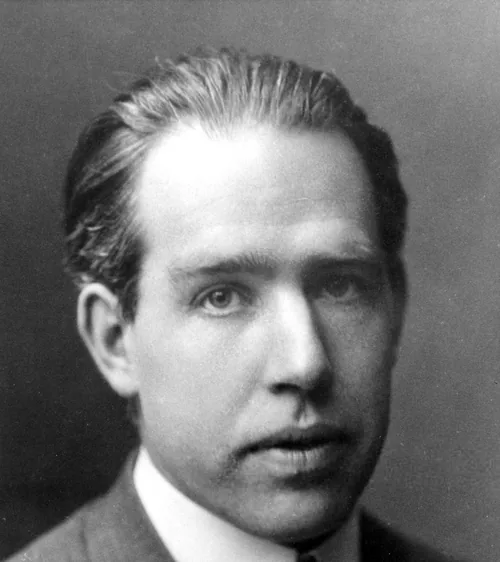
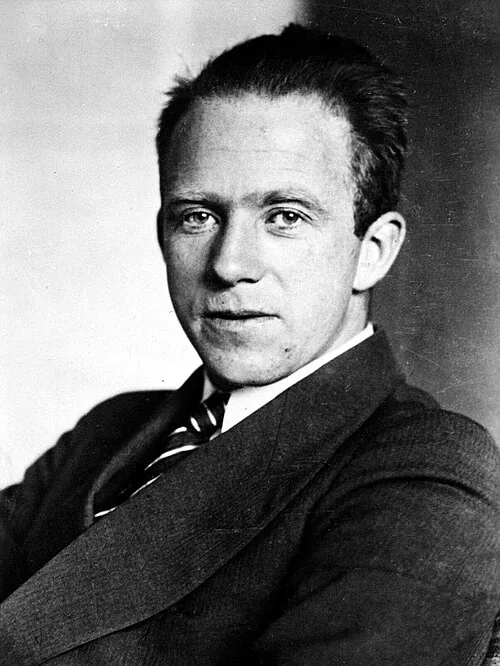
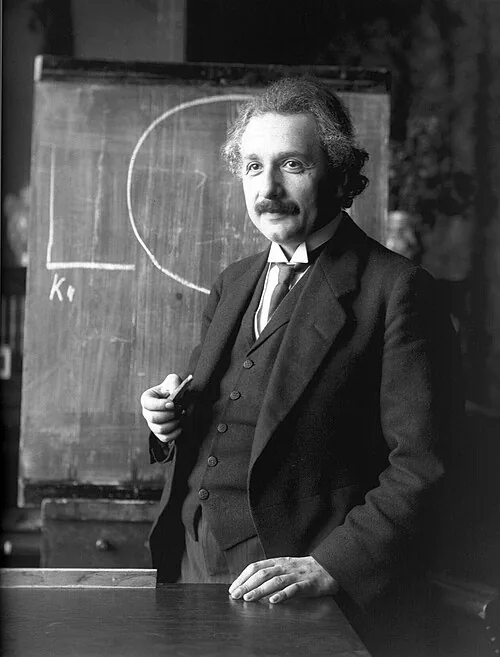
Portrait, about 1922, credited by the American Institute of Physics to AB Lagrelius & Westphal (Stockholm), as reproduced in Niels Bohr’s Nobel Prize biography (Commons file); public domain. Background removed for the portrait above. · Photographer unknown, via Wikimedia Commons, CC BY-SA 3.0 DE. Background removed for the portrait above. · Portrait by Ferdinand Schmutzer (1921), public domain. Background removed for the portrait above.

.jpg)

An estimate is an inference.
Yours can be measured.
Thirty questions, scored against general-population benchmarks. Your score, your percentile, your ability breakdown and a printable IIF certificate.
Find your IQ score now! →