



What was James Garfield’s IQ?
The 141.5 on every president list is a statistical estimate, and Chester Arthur has the identical number.

James Garfield has no IQ test score. The 141.5 that circulates is an estimate by the psychologist Dean Keith Simonton, imputed in 2006 from other ratings, not measured. Our James Garfield IQ estimate is 135–150, resting on a record that runs from a poor Ohio farm to a Williams College degree with honors and a college presidency at 25.
James Garfield’s estimated IQ
- Simonton’s 2006 estimates for Garfield are 129.0, 143.5, 141.2 and 152.3, which average 141.5: tied 9th of the 42 presidents he covered (Political Psychology 27(4), Table 1, our arithmetic for the average and rank).
- A Williams College degree with honors in 1856, after three years at the Western Reserve Eclectic Institute in Hiram, Ohio, where he supported himself as a janitor (Miller Center).
- President of the Eclectic Institute from 1857 to 1861, while formally an instructor in classical languages, followed by the Ohio bar exam in 1861 after studying law on his own (Miller Center).
- The youngest member of the Ohio legislature when he entered it in 1859, then service in the U.S. House from 1863 to 1880 (Miller Center; Wikipedia).
- A published trapezoid proof of the Pythagorean theorem in 1876, in the New England Journal of Education (Wikipedia, citing the Journal).
Every number in Simonton’s table for Garfield is imputed, not read from a record, and he warned that the IQ scores are “more tentative and approximate” than his other two measures. Only eight presidents have a rating rooted in Catharine Cox’s 1926 study, and Garfield is not one of them. We put the range around the table’s average and read the record for the rest.
- Born
- November 19, 1831, Cuyahoga County, Ohio
- Education
- Eclectic Institute, Hiram (1851–1854); Williams College, graduated with honors, 1856
- Teaching
- Instructor in classical languages, then president of the Eclectic Institute, 1857–1861
- Law
- Passed the Ohio bar exam in 1861 after studying on his own
- Public office
- Ohio legislature (1859); U.S. House 1863–1880; President, March 4 – September 19, 1881
- Simonton estimates
- 129.0, 143.5, 141.2, 152.3; average 141.5, tied 9th of 42
- Mathematics
- Trapezoid proof of the Pythagorean theorem, published 1876
- Circulating figure
- 141.5 (Simonton’s average); some lists print 129–152
What an IQ of 135–150 actually means
Set the claim aside for a moment. If someone genuinely scored in this range, here is what that would represent.
Average is 100 by construction, and about two-thirds of people fall between 85 and 115. Take the test to place your own score on this scale.
| Score range | Classification | Share of people | What it indicates |
|---|---|---|---|
| 85 – 114 | Average | ~68% | The range most people fall into. |
| 115 – 129 | Above average | ~13.6% | Roughly one person in seven. |
| 130 – 144 | Gifted | ~2% | The threshold most high-IQ societies use. |
| Above 144 | Highly gifted | ~0.1% | Figures above this range are extrapolated from the curve rather than measured. |
Percentages are approximate and describe a normal distribution. The same number means different things on tests with different standard deviations.
Thirty questions gives you a measured position on this exact scale — your score, your percentile and the ability breakdown behind it.
Find out in 30 minutes →Who James Garfield was
Who was James Garfield? He was born on November 19, 1831, on a frontier farm in Cuyahoga County, Ohio. He never knew his father, and his widowed mother, Eliza, ran the farm. The Miller Center calls him perhaps the poorest man ever to become president. He worked as a carpenter and part-time teacher while attending Geauga Academy, so his schooling was paid for with his own labor.
How good was his education? From 1851 to 1854 he studied at the Eclectic Institute in Hiram, Ohio, earning his keep as a school janitor. He then entered Williams College in Massachusetts as a junior and graduated with honors in 1856. Wikipedia adds that he graduated Phi Beta Kappa and was named salutatorian; we treat that as secondary, because the Miller Center says only “with honors”. Compare other documented academic records in our politicians category.
What did he do next? He returned to the Eclectic Institute as an instructor in classical languages, taught English, history, geology and mathematics, and served as its president from 1857 to 1861. He studied law on his own and passed the Ohio bar exam in 1861. He became the youngest member of the Ohio legislature, served in the U.S. House from 1863 to 1880, and published a proof of the Pythagorean theorem in 1876. Historian William Dunham called it “a very clever proof” (Wikipedia).
How did his presidency end? He was inaugurated on March 4, 1881, shot on July 2 by Charles Guiteau, and died on September 19 of infections from the wounds. Because the term was so short, no policy record supports an intelligence argument, and this page rests on his education and early career. For another president whose estimate is imputed, not Cox-rated, see Gerald Ford.
 By Elora Mercer, Celebrity Research WriterFigures checked by Leon Falkner, Data & Research Analyst
Reviewed by Aarav Vardhan, Editor-in-Chief · Last reviewed November 2026
James Garfield: the documented record
The estimate above rests on this record. Every entry here is a matter of public fact, which is more than can be said for the number itself.
- 1831Born on November 19 in Cuyahoga County, Ohio.
- 1851–1854Studies at the Eclectic Institute in Hiram, Ohio, and works as its janitor.
- 1854Enters Williams College as a junior.
- 1856Graduates from Williams with honors.
- 1857Becomes president of the Eclectic Institute (to 1861).
- 1859Enters the Ohio legislature as its youngest member.
- 1861Passes the Ohio bar exam after studying law on his own.
- 1863Takes his seat in the U.S. House of Representatives (to 1880).
- 1876Publishes his trapezoid proof of the Pythagorean theorem.
- 1881Inaugurated March 4, shot July 2 and dies September 19.
- 2006Simonton publishes the IQ estimates that give Garfield an average of 141.5.
Where the 141.5 figure came from
Following a claim back to its first appearance is the part almost nobody does — and it is what most people are actually asking.
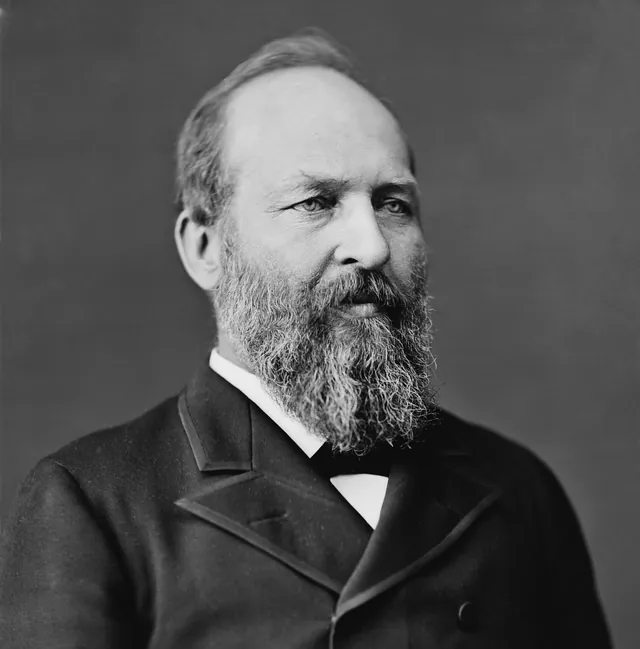
What is James Garfield’s IQ? There is no score, because IQ testing began after his death in 1881. The number people quote, 141.5, comes from Table 1 of Dean Keith Simonton’s 2006 paper in Political Psychology, which gives every president four estimates: 129.0, 143.5, 141.2 and 152.3 for Garfield. Lists usually print the average or the range. For how the whole table is built, see our explainer on U.S. presidents ranked by IQ.
Why are Garfield’s numbers estimates? Only eight presidents have an IQ rating rooted in Catharine Cox’s 1926 study: Washington, John Adams, Jefferson, Madison, John Quincy Adams, Jackson, Lincoln and Grant. For the other 34, Simonton filled the gaps statistically from expert ratings of “intellectual brilliance” and “openness”. His own wording is that the IQ scores must be treated as “more tentative and approximate” than the other two. Garfield and Chester Arthur have the same rating inputs, so they receive the same four numbers.
Where does Garfield rank? On Simonton’s average, 141.5, he is tied 9th of 42 with Chester Arthur. He sits just above Abraham Lincoln at 140.0 and just below Theodore Roosevelt at 142.3 (averages worked out from the same table). Gaps of one or two points are far smaller than the uncertainty in the method, so the order is not a finding. A 141.5 would sit at about the 99.7th percentile on a scale with a standard deviation of 15; our percentile calculator converts any score.
Could Garfield write Latin with one hand and Greek with the other? The legend is often repeated, but it is not in the Miller Center’s biography or in Wikipedia’s long article, and we found no primary source for it, so we leave it out. What the record does show is a student of Greek and Latin at Hiram who later taught classical languages there. See what an IQ of 140 means for how rare the 141.5 estimate would be if it were a measured score.
How we read a number →Table 1 gives Garfield’s four IQ estimates (129.0, 143.5, 141.2, 152.3) and the identical row for Arthur; the paper says the IQ scores are “more tentative and approximate” than the other two scores and that only eight presidents have Cox-based IQs. The DOI and title were checked on Crossref; the average and the ranking are our arithmetic from the table.
Birth date and place, Geauga Academy, the Eclectic Institute 1851–1854, Williams College, graduating with honors in 1856, the Eclectic presidency 1857–1861, the Ohio bar in 1861 and the Ohio legislature. It does not mention Phi Beta Kappa or any two-handed writing.
Phi Beta Kappa and salutatorian at Williams in August 1856, the 1876 trapezoid proof published in the New England Journal of Education with William Dunham’s comment, House service 1863–1880, the shooting on July 2, 1881 and death on September 19. No Latin-and-Greek legend appears.
Not cited for Garfield, who is not among her subjects. It matters because Simonton’s only Cox-based IQs are for eight presidents; the Cox text was read in the archive.org scan geneticstudiesof011555mbp.
Prints “James Garfield: 129-152” and “Chester Arthur: 129-152” in a ranked list of estimated presidential IQs, without noting that the figures are imputed.
Confirms Q34597 is the 20th president of the United States, not a namesake.
Garfield died in 1881, 24 years before the first intelligence scale. The Miller Center biography, Wikipedia and Simonton’s paper contain no test score, school mark or contemporary IQ claim, and no primary source for the Latin-and-Greek story turned up.
Our explainer reads the same Simonton table; Lincoln is 140–160 (Cox method), Theodore Roosevelt 135–150 and Gerald Ford 120–135 on this site.
The sources behind our estimate
The figures that circulate for James Garfield, what we were able to confirm, and where the two diverge.
Presidential IQ rankings print 141.5 for Garfield, or the range 129–152, usually without saying that it is an estimate. 24/7 Wall St’s February 2025 ranking, for example, lists “James Garfield: 129-152” beside Chester Arthur with the same figures.
The numbers trace to Table 1 of Simonton’s 2006 paper. Garfield and Chester Arthur have identical rows there, which shows the IQ columns are model output from the same two inputs, not two separate readings of two men. No test, no school score and no contemporary IQ claim exists for Garfield.
These are the lowest, average and highest of Simonton’s four estimates. Our 135–150 trims both ends, because the extremes depend on a correction for missing biography and the record itself supports a high but not extreme figure.
Want a number that does hold up? Every figure on this page is somebody’s claim. Take the 30-question test and get a percentile you can check rather than a figure you have to trust.
James Garfield — frequently asked
What is James Garfield’s IQ?
James Garfield has no IQ test score. The figure that circulates, 141.5, is the average of four statistical estimates by Dean Keith Simonton (2006), and the estimates range from 129 to 152.3. Our own James Garfield IQ estimate, built from his record, is 135–150.
Where does Garfield rank among presidents by estimated IQ?
He is tied 9th of 42 with Chester Arthur at 141.5 on Simonton’s average, just under Theodore Roosevelt (142.3) and just above Madison (141.25) and Lincoln (140.0). The averages are our arithmetic from Table 1, and the gaps are too small to rank anyone with confidence.
Why does Chester Arthur have the same estimated IQ as Garfield?
Simonton’s model gives the same four IQ estimates to any two presidents with the same intellectual-brilliance and openness inputs. Garfield and Arthur share both, so their rows in Table 1 are identical. That is a sign the numbers are model output, not separate measurements.
Was James Garfield a scholar?
His record says so. He graduated from Williams College with honors in 1856, taught classical languages, and was president of the Eclectic Institute from 1857 to 1861. Wikipedia adds Phi Beta Kappa and salutatorian. He also published a proof of the Pythagorean theorem in 1876.
How does Garfield’s estimated IQ compare with Lincoln’s and Theodore Roosevelt’s?
On Simonton’s averages Garfield is 141.5, Theodore Roosevelt 142.3 and Lincoln 140.0. On this site Garfield is 135–150, Theodore Roosevelt 135–150 and Lincoln 140–160, because Lincoln’s number has a Cox rating behind it. All three are estimates, not scores.
Could Garfield really write Latin with one hand and Greek with the other?
We found no primary source for that story. It is not in the Miller Center biography or in Wikipedia’s article. What is documented is that he studied Greek and Latin at Hiram and later taught classical languages there.
What does an IQ of 141.5 mean?
On a scale with a mean of 100 and a standard deviation of 15, 141.5 is about the 99.7th percentile, roughly 3 people in 1,000. For Garfield it is an estimate from a statistical model, not a test result.
How does my IQ compare with James Garfield?
You can find out in about fifteen minutes. The IQ Metrics assessment is 30 questions, scored on the same 100-mean scale used throughout this page, so your result and the estimate above are at least expressed in the same units — one measured, one inferred. Once you have a number, the leaderboard shows where it would sit, and how we score and norm it explains the benchmarking.
Where does this estimate come from?
From the documented record rather than a test — the method is named above and set out in full under how we read a number. Compare it against the other politics profiles, starting with Thomas Jefferson.
- Take the 30-question IQ test — get a measured score and percentile of your own
- Average IQ by country — how the scale behaves across populations
- How IQ Metrics scores its assessment — the method behind our own number
- More on how IQ testing works — reliability, error and what a score can and cannot say
- More politics profiles — same field, same method
More politics
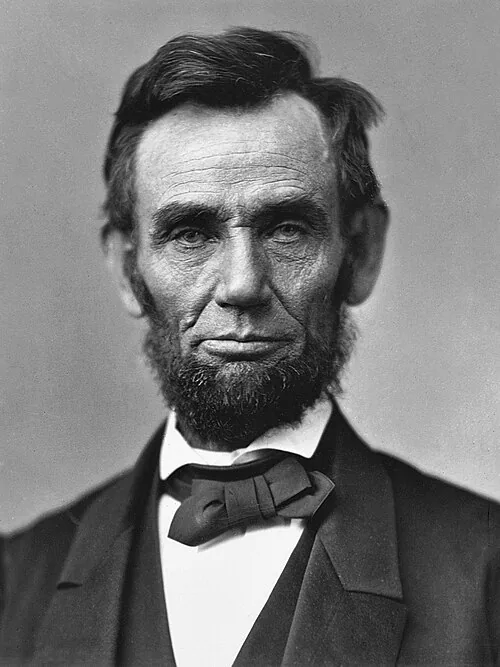
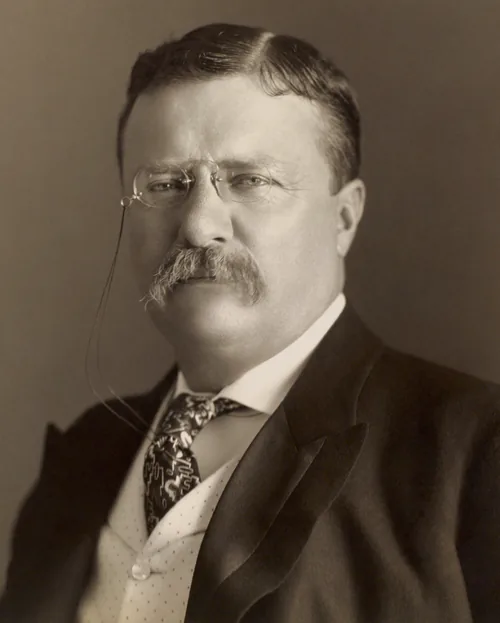

Photograph by Alexander Gardner (8 November 1863), public domain. Background removed for the portrait above. · Photograph by the Pach Brothers (1904; Library of Congress, restored by Adam Cuerden; Commons file), public domain, cropped. · Official presidential portrait of Gerald Ford by David Hume Kennerly (August 1974), a work of the U.S. government in the public domain. Cropped and with background removed for the portrait above.


An estimate is an inference.
Yours can be measured.
Thirty questions, scored against general-population benchmarks. Your score, your percentile, your ability breakdown and a printable IIF certificate.
Find your IQ score now! →