



What is Linus Torvalds’ IQ?
Unlike most profiles here, no site puts a number on Linus Torvalds at all — what circulates instead is a finished degree, a kernel used everywhere, and zero test results.

No IQ test result has been published for Linus Torvalds, and no dedicated estimator site puts a number on him either — a rarity for this list. What can be checked instead: a finished Master’s degree from the University of Helsinki (1997), the Linux kernel he started in 1991, Git, and a shared 2012 Millennium Technology Prize, computing’s closest equivalent to a Nobel.
Linus Torvalds’ estimated IQ
- A completed Master of Science in computer science from the University of Helsinki (enrolled 1988), with a thesis, “Linux: A Portable Operating System,” submitted January 31, 1997 — a finished degree, unlike the unfinished computer-science graduate work behind several other founders on this list.
- Sole author of the Linux kernel’s first versions, begun in January 1991 and announced on Usenet on August 25, 1991 at age twenty-one; the kernel now underlies most cloud computing and every Android device, per the Millennium Technology Prize citation.
- Independently designed Git, the distributed version-control system now standard across software engineering, in roughly ten days beginning April 3, 2005.
- Recognition from outside any testing room: a shared 2012 Millennium Technology Prize (widely described as technology’s Nobel equivalent), honorary doctorates from Stockholm University (1999, its youngest recipient at 29) and the University of Helsinki (2000), and the IEEE Computer Society’s 2014 Computer Pioneer Award.
- Thirty-five years of continuous, publicly contested technical authority over the Linux kernel mailing list, formalized in January 2026 by the project’s first written succession plan, which he signed himself.
No IQ, SAT or entrance-exam score has ever been published for Torvalds, so this range is inferred entirely from a finished degree, technical output and institutional honors, not from any test. It also rests on a shrinking share of solo output: Torvalds has said that by 2006 only about two percent of the kernel’s own code was still his, the rest merged from thousands of contributors, so “his” achievement is now mostly editorial judgment at large scale rather than something a single test could ever have captured.
- Born
- December 28, 1969, Helsinki, Finland
- Full name
- Linus Benedict Torvalds
- Education
- University of Helsinki, Department of Computer Science (1988–1997); M.Sc., thesis “Linux: A Portable Operating System” (January 31, 1997)
- Known for
- Creator of the Linux kernel (1991– ) and of Git (2005)
- Current role
- Chief architect of the Linux kernel; fellow, the Linux Foundation
- Major honor
- 2012 Millennium Technology Prize, shared with Shinya Yamanaka
- Documented test record
- None found: no IQ, SAT or entrance-exam score has been published
What an IQ of 145–160 actually means
Set the claim aside for a moment. If someone genuinely scored in this range, here is what that would represent.
| Score range | Classification | Share of people | What it indicates |
|---|---|---|---|
| 85 – 114 | Average | ~68% | The range most people fall into. |
| 115 – 129 | Above average | ~13.6% | Roughly one person in seven. |
| 130 – 144 | Gifted | ~2% | The threshold most high-IQ societies use. |
| Above 144 | Highly gifted | ~0.1% | Figures above this range are extrapolated from the curve rather than measured. |
Percentages are approximate and describe a normal distribution. The same number means different things on tests with different standard deviations.
Thirty questions gives you a measured position on this exact scale — your score, your percentile and the ability breakdown behind it.
Find out in 30 minutes →Who Linus Torvalds is
Linus Torvalds was born Linus Benedict Torvalds on December 28, 1969, in Helsinki, Finland, to the journalists Anna and Nils Torvalds, part of Finland’s Swedish-speaking minority; his first name was chosen partly after the chemist Linus Pauling. His maternal grandfather, the statistics professor Leo Törnqvist, gave him access to a Commodore VIC-20 around age twelve, an early exposure to programming. He enrolled in the Department of Computer Science at the University of Helsinki in 1988 and, in summer 1989, completed an eleven-month officer-training course with the Finnish Navy’s Nyland Brigade, finishing as a second lieutenant.
In January 1991, Torvalds bought an Intel 80386-based PC and began writing an operating-system kernel, working around the licensing limits of Andrew Tanenbaum’s teaching system Minix. On August 25, 1991, he posted his now-famous announcement to the Usenet group comp.os.minix — “I’m doing a (free) operating system (just a hobby, won’t be big and professional like gnu) for 386(486) AT clones” — and uploaded version 0.01 on September 17. On January 29, 1992, Tanenbaum posted “LINUX is obsolete” to the same newsgroup, arguing that Torvalds’s monolithic design and reliance on x86 hardware were mistakes; the resulting Tanenbaum–Torvalds debate became one of computing’s best-known technical arguments. Linux reached version 1.0 on March 14, 1994.
Torvalds submitted his master’s thesis, “Linux: A Portable Operating System,” to the University of Helsinki on January 31, 1997, completing his M.Sc. in full. It is a routine footnote for this list: Bill Gates and Steve Jobs both left college without any degree, and Larry Page and Sergey Brin left Stanford’s doctoral program without finishing it, while Torvalds saw his own degree through; the link between a completed degree and what that predicts about later achievement is itself debated. He worked at the chip company Transmeta in California from 1997 to 2003, then moved to the nonprofit Open Source Development Labs, later folded into the Linux Foundation, which has employed him since. In April 2005, after a licensing dispute ended the kernel’s use of the proprietary BitKeeper tool, he wrote the first version of Git, a distributed version-control system, in about ten days, then handed day-to-day maintenance to Junio Hamano that summer.
Honors have followed the two projects rather than a company or a fortune: the British Computer Society’s Lovelace Medal (2000), honorary doctorates from Stockholm University (1999, when he was its youngest-ever recipient at 29) and the University of Helsinki (2000), and a share of the 2012 Millennium Technology Prize with the stem-cell biologist Shinya Yamanaka — an award widely described as technology’s equivalent of the Nobel Prize, in the same spirit as the 2024 Chemistry Nobel later awarded to Demis Hassabis. Torvalds has estimated that by 2006 only about two percent of the kernel’s own code was still his, the rest written by thousands of contributors whose changes he merges; in a 2016 TED interview he summarized his role bluntly: “I am not a visionary. I do not have a five-year plan. I’m an engineer.” In January 2026, at 56, he signed the kernel’s first formal written succession plan, drafted by the maintainer Dan Williams following the 2025 Kernel Maintainer Summit in Tokyo.
 By Elora Mercer, Celebrity Research WriterFigures checked by Leon Falkner, Data & Research Analyst
Reviewed by Aarav Vardhan, Editor-in-Chief · Last reviewed August 2026
.jpg)
Linus Torvalds: the documented record
The estimate above rests on this record. Every entry here is a matter of public fact, which is more than can be said for the number itself.
- 1988Enrolls in the Department of Computer Science, University of Helsinki.
- January 1991Buys an Intel 80386-based PC and begins the project that becomes the Linux kernel.
- August–September 1991Posts to Usenet on August 25 announcing the project and uploads Linux version 0.01 on September 17.
- January 29, 1992Andrew Tanenbaum posts “LINUX is obsolete” to comp.os.minix, opening the Tanenbaum–Torvalds debate over kernel design.
- March 14, 1994Releases Linux version 1.0.
- January 31, 1997Submits his master’s thesis, “Linux: A Portable Operating System,” completing his M.Sc. at the University of Helsinki.
- 1999Receives an honorary doctorate from Stockholm University at age 29, its youngest recipient to that point.
- April 3, 2005Begins writing Git in roughly ten days after a licensing dispute ends the kernel’s use of the proprietary BitKeeper tool.
- June 13, 2012Receives the Millennium Technology Prize from President Sauli Niinistö in Helsinki, shared with Shinya Yamanaka.
- January 25, 2026Signs the Linux kernel’s first formal succession plan, drafted by maintainer Dan Williams after the 2025 Kernel Maintainer Summit.
Why no figure circulates
Following a claim back to its first appearance is the part almost nobody does — and it is what most people are actually asking.

Almost nothing circulates for Linus Torvalds, which is unusual on this list. No dedicated IQ-estimator or rating page — the kind of site that assigns a number to Mark Zuckerberg or MrBeast — appears to cover him at all. What turns up instead is thin and unsourced: a single anonymous reply on Answers.com guessing “around 160”; a Quora question that draws opinions but no settled figure; a forum thread on EconJobRumors asking how he compares with the economist Daron Acemoglu, again without a number; and, in 2026, an AI chatbot reply on X that offered a plausible-sounding range “based on his innovations” rather than any source. For how the usual circulating figures get manufactured on other profiles, see where celebrity IQ numbers come from.
The gap has a plausible explanation. Torvalds’s fame runs almost entirely through a technical community — kernel mailing lists, conference talks, computer-history archives — that produces verifiable dates and version numbers rather than viral “genius IQ” rankings. His paper trail is unusually precise for this list: a dated Usenet post announcing the project on August 25, 1991, a numbered first release three weeks later, a submitted thesis in 1997, a signed succession document in 2026. Every one of those is checkable against an institutional or archival record. None of them produces a test score; they produce dates.
What the documented record supports instead is a finished academic credential paired with sustained, externally judged output. Torvalds completed a Master of Science at the University of Helsinki, submitting the thesis “Linux: A Portable Operating System” on January 31, 1997, after building the kernel largely outside any coursework. That combination — a completed degree plus a technical achievement the degree never required — sits closer to what people usually mean by a genius-level result than either fact alone, though it still is not one: no examiner ever scored it on an IQ scale.
Positioned among the business-category estimates on this site, 145–160 sits below Steve Wozniak (150–165), whose record includes a specific eighth-grade test result that Torvalds’s record entirely lacks, and above Charlie Munger (140–155), another profile here with no circulating figure at all, because Torvalds’s record includes a finished technical degree and a still-active, decades-long peer-reviewed role that Munger’s does not. Read plainly, this is a range built from institutions and dates, not from a scatter of guesses to average — because for once, there was no scatter to average.
How we read a number →Q&A and forum threads (Answers.com, Quora, EconJobRumors) and a 2026 AI-chatbot reply on X were checked for a named test, examiner or score; none exists. No dedicated IQ-estimator or rating site of the kind this site cites for other business profiles appears to cover Torvalds at all.
The only specific figure found anywhere: a single anonymous reply guessing “around 160” while stating that no score has ever been published. No test, source or date given.
The thesis itself, hosted by the University of Helsinki’s Department of Computer Science; confirms the degree, the submission date and the thesis title.
University account of Torvalds as a computer-science student, the August 1991 Usenet post and the 1994 version 1.0 release.
Confirms the 2012 prize for the open-source operating system and the role of his grandfather Leo Törnqvist in introducing him to computing as a child.
Stockholm University’s honorary doctorate, awarded 1999 when Torvalds was 29 — some later summaries misdate this honor, so the 1999 date was checked against this contemporaneous coverage.
2014 award citation (“for pioneering development of the Linux kernel using the open-source approach”) and career dates at Transmeta and the Open Source Development Labs.
April 23, 2012 inaugural Internet Hall of Fame induction (Innovators category); BCS Lovelace Medal awarded 2000, presented in person in 2007.
The kernel’s first formal succession plan, drafted by maintainer Dan Williams after the 2025 Kernel Maintainer Summit in Tokyo and merged January 25, 2026 with Torvalds’s sign-off; Greg Kroah-Hartman named as the likely successor.
Source of the “I am not a visionary… I’m an engineer” quote; general biographical cross-check including birth date, family background and the roughly two-percent figure for his own kernel code by 2006. Wikidata Q34253 confirmed as the same person.
The sources behind our estimate
The figures that circulate for Linus Torvalds, what we were able to confirm, and where the two diverge.
Very little circulates at all. No dedicated IQ-estimator or rating page — the kind of site that assigns a number to Mark Zuckerberg or MrBeast — appears to cover Torvalds. What turns up instead is thin: a single anonymous reply on the Q&A site Answers.com guessing “around 160”; a Quora question that draws opinions but no settled figure; a forum thread on EconJobRumors asking how he compares with the economist Daron Acemoglu, again without landing on a number; and, in 2026, an AI chatbot reply on X that offered a plausible-sounding range “based on his innovations” rather than any cited source.
None of the pages checked name a test, an examiner or a date, and none is a dedicated estimator site of the kind this site otherwise cites for business-category profiles: pages that carry a number for Mark Zuckerberg or MrBeast do not have an entry for Torvalds. The one specific figure found anywhere is the Answers.com reply, which states plainly that no score has ever been published before offering its own guess. The documented record holds no test at all — a finished thesis, a kernel, and a version-control system, with no score attached to any of it.
With no number circulating and no test on record, there is nothing to plot against this site’s 145–160 estimate beyond a single unsourced guess of “around 160,” which happens to sit at the top of the range but confirms nothing beyond the fact that even a casual guess aimed high. The absence itself is the finding here: measured against the other business profiles on this site, Torvalds is one of the few for whom online searching produced no scattered numbers to converge or diverge at all.
Want a number that does hold up? Every figure on this page is somebody’s claim. Take the 30-question test and get a percentile you can check rather than a figure you have to trust.
Linus Torvalds — frequently asked
What is Linus Torvalds’s IQ?
No IQ test result has ever been published for Linus Torvalds. This site’s estimate, based on his completed degree, technical achievement and institutional honors rather than any test, is 145–160. Unlike most profiles here, no dedicated estimator site publishes a number for him either — only a single unsourced online guess of “around 160” exists.
Did Linus Torvalds take an IQ test?
No Linus Torvalds IQ test result turned up in any source checked, and none of his interviews mention sitting one. What is documented instead is a completed Master of Science from the University of Helsinki in 1997, following a thesis on Linux’s portability submitted that January.
Where do the Linus Torvalds IQ estimates online come from?
Almost nowhere, which is unusual for this site. No dedicated IQ-estimator page appears to cover him at all; the only specific number found is a single anonymous guess of “around 160” on the Q&A site Answers.com, which itself notes that no score has ever been published.
Is Linus Torvalds a genius?
The documented record — a finished computer-science degree, the Linux kernel and Git, both still central to global computing decades later — supports the popular label better than most, but no IQ result exists to confirm or rule it out. This site’s estimate of his IQ level is 145–160.
Did Linus Torvalds finish his university degree?
Yes. He enrolled in computer science at the University of Helsinki in 1988 and completed a Master of Science in 1997, submitting the thesis “Linux: A Portable Operating System” that January — a finished degree that Bill Gates, Steve Jobs and several other founders on this site never completed.
Is there a real Linus Torvalds IQ score on Reddit or Quora?
No verified score exists for a thread to reference, so any figure quoted for Torvalds on Reddit, Quora or elsewhere is unsourced. A Quora question titled “What is the IQ of Linus Torvalds?” draws opinions rather than a documented result, and no forum thread found names a test or examiner.
How does Linus Torvalds’s estimated IQ compare with Steve Wozniak’s and Charlie Munger’s?
This site’s estimate for Torvalds, 145–160, sits just below Steve Wozniak’s 150–165 and above Charlie Munger’s 140–155. All three rest on achievement and academic record rather than test results, and Munger, like Torvalds, has no circulating IQ figure at all.
How does my IQ compare with Linus Torvalds?
You can find out in about fifteen minutes. The IQ Metrics assessment is 30 questions, scored on the same 100-mean scale used throughout this page, so your result and the estimate above are at least expressed in the same units — one measured, one inferred. Once you have a number, the leaderboard shows where it would sit, and how we score and norm it explains the benchmarking.
Where does this estimate come from?
From the documented record rather than a test — the method is named above and set out in full under how we read a number. Compare it against the other business & tech profiles, starting with Steve Jobs.
- Take the 30-question IQ test — get a measured score and percentile of your own
- Average IQ by country — how the scale behaves across populations
- How IQ Metrics scores its assessment — the method behind our own number
- More on how IQ testing works — reliability, error and what a score can and cannot say
- More business & tech profiles — same field, same method
More business & tech
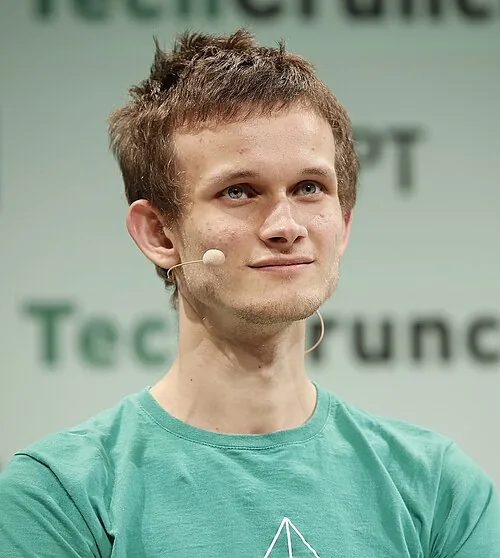
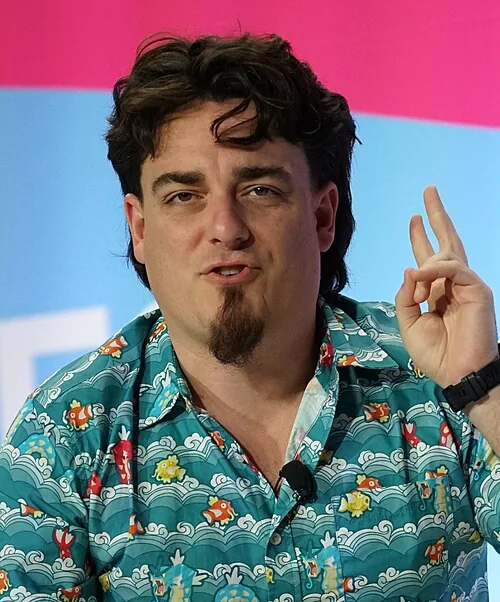

Photograph by John Phillips, CC BY 2.0. Background removed for the portrait above. · Photograph by Xuthoria, CC BY-SA 4.0. Background removed for the portrait above. · Photograph by Tyren Redd, CC BY 4.0. Background removed for the portrait above.
.jpg)
.jpg)
.png)
An estimate is an inference.
Yours can be measured.
Thirty questions, scored against general-population benchmarks. Your score, your percentile, your ability breakdown and a printable IIF certificate.
Find your IQ score now! →