



What is Vitalik Buterin’s IQ?
He wrote Ethereum’s whitepaper alone at nineteen. Nobody wrote the number attached to his name.

No IQ test result for Vitalik Buterin has ever been published, and the Ethereum co-founder has never referenced one himself. What is documented instead is a bronze medal at a real, dated international competition, and a computer-science education at the University of Waterloo that he left without finishing, to build a protocol he had designed alone, at nineteen — a record strong enough on its own that it never needed the number now attached to it.
Vitalik Buterin’s estimated IQ
- Placed in a gifted-education stream in third grade and reported, in a 2017 CNBC profile, to have been able to add three-digit numbers well faster than his classmates.
- Won a bronze medal at the 2012 International Olympiad in Informatics, competing for Canada in Sirmione/Montichiari, Italy — an official score of 224 out of 600, ranking 87th among 310 contestants.
- Enrolled in the computer science program at the University of Waterloo and worked as an undergraduate research assistant to cryptographer Ian Goldberg, according to the university’s own published account of his time there.
- Wrote the Ethereum whitepaper alone in late 2013, at nineteen, combining cryptography, distributed-systems design, game theory and a new smart-contract programming model into a single working proposal, then left Waterloo in 2014 without completing a degree to build it.
- Awarded an honorary doctorate by the University of Basel’s Faculty of Business and Economics in 2018, which the faculty’s own announcement attributed to his contributions to game theory, economic incentives and mechanism design — explicitly noting he held no prior academic degree.
A bronze Olympiad medal and an unfinished degree are real, checkable facts about Buterin’s education and early achievement; they are not a test score, and this range should not be mistaken for one.
- Born
- 31 January 1994, Kolomna, Russia
- Field
- Computer science, cryptography, mechanism design
- Education
- University of Waterloo, computer science, 2012–2014 (no degree completed)
- Known for
- Co-founding Ethereum and writing its whitepaper alone at nineteen
- Competitive programming
- Bronze medal, International Olympiad in Informatics, 2012, representing Canada
- Honorary degree
- Doctorate, University of Basel Faculty of Business and Economics, 2018
What an IQ of 140–155 actually means
Set the claim aside for a moment. If someone genuinely scored in this range, here is what that would represent.
Average is 100 by construction, and about two-thirds of people fall between 85 and 115. Take the test to place your own score on this scale.
| Score range | Classification | Share of people | What it indicates |
|---|---|---|---|
| 85 – 114 | Average | ~68% | The range most people fall into. |
| 115 – 129 | Above average | ~13.6% | Roughly one person in seven. |
| 130 – 144 | Gifted | ~2% | The threshold most high-IQ societies use. |
| Above 144 | Highly gifted | ~0.1% | Figures above this range are extrapolated from the curve rather than measured. |
Percentages are approximate and describe a normal distribution. The same number means different things on tests with different standard deviations.
Thirty questions gives you a measured position on this exact scale — your score, your percentile and the ability breakdown behind it.
Find out in 30 minutes →Who Vitalik Buterin is
Vitalik Buterin was born on 31 January 1994 in Kolomna, Russia, to parents who both worked in computing; his father, Dmitry Buterin, has said he introduced Vitalik to Bitcoin at seventeen. The family emigrated to Canada when Vitalik was six, settling near Toronto. He was placed in a gifted-education stream in third grade and, according to a 2017 CNBC profile, was already notable among classmates for unusually fast mental arithmetic. He later attended the Abelard School, a private school in Toronto, according to Matthew Leising’s book-length account of Ethereum’s founding, Out of the Ether (Wiley, 2020).
In 2012, still a teenager, he won a bronze medal at the International Olympiad in Informatics, representing Canada in Sirmione/Montichiari, Italy, and enrolled that year in the computer science program at the University of Waterloo, where he worked as an undergraduate research assistant to cryptographer Ian Goldberg. He had already been writing for pay about Bitcoin since 2011, co-founding Bitcoin Magazine as its lead writer. In November 2013, at nineteen, he published the Ethereum whitepaper alone, proposing a blockchain that could run arbitrary programs rather than just record transactions. He announced it publicly in January 2014 at the North American Bitcoin Conference in Miami, was awarded a $100,000 Thiel Fellowship the same year, and left Waterloo without finishing his degree to build it full-time.
Ethereum’s genesis block was mined on 30 July 2015, launching the network under the codename Frontier, with Buterin working alongside co-developers including Gavin Wood and Joseph Lubin. He has remained the project’s most prominent researcher and public voice since, primarily through the nonprofit Ethereum Foundation, without holding a formal executive title at any company built on it. In 2018 the University of Basel’s Faculty of Business and Economics awarded him an honorary doctorate for his work on mechanism design; in 2022 Montenegro granted him citizenship in recognition of his role promoting the country as a blockchain hub. Among the university dropouts profiled in this section — Mark Zuckerberg left Harvard, Sam Altman left Stanford, Larry Page and Sergey Brin both left Stanford’s PhD program — Buterin’s case is distinguished by a credential none of the others have: a real, dated, internationally judged competition result, earned before he wrote a line of the protocol he is now known for.
 By Elora Mercer, Celebrity Research WriterFigures checked by Leon Falkner, Data & Research Analyst
Reviewed by Aarav Vardhan, Editor-in-Chief · Last reviewed August 2026
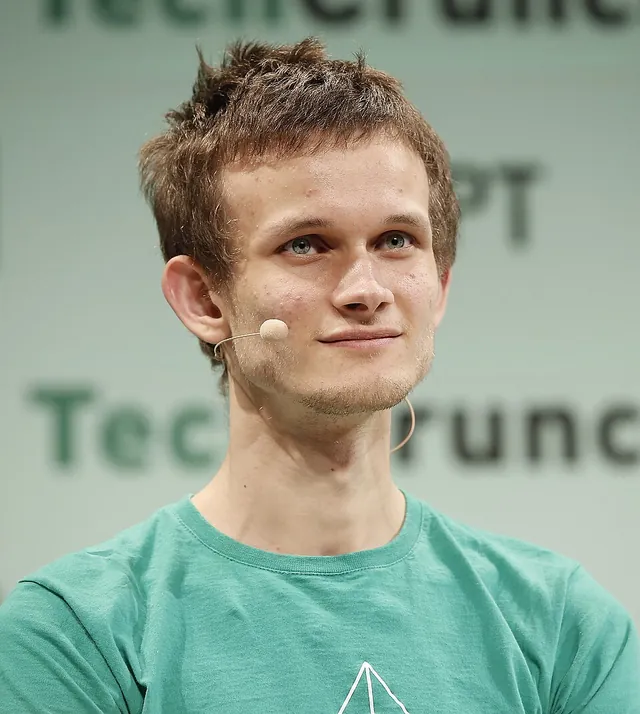
.jpg)
Vitalik Buterin: the documented record
The estimate above rests on this record. Every entry here is a matter of public fact, which is more than can be said for the number itself.
- 1994Born 31 January in Kolomna, Russia.
- 2012Wins a bronze medal at the International Olympiad in Informatics, representing Canada in Sirmione/Montichiari, Italy, and enrolls in computer science at the University of Waterloo.
- 2013Writes the Ethereum whitepaper alone in November, at nineteen, after two years writing for and co-founding Bitcoin Magazine.
- 2014Announces Ethereum publicly in January at the North American Bitcoin Conference in Miami; awarded a $100,000 Thiel Fellowship and leaves Waterloo without completing a degree.
- 2015Ethereum’s genesis block is mined on 30 July, launching the network under the codename Frontier.
- 2018Awarded an honorary doctorate by the University of Basel’s Faculty of Business and Economics, for work on game theory, economic incentives and mechanism design.
- 2022Granted Montenegrin citizenship in April, credited by the government with promoting the country as a blockchain hub.
Where the 257 figure came from
Following a claim back to its first appearance is the part almost nobody does — and it is what most people are actually asking.
The figure is easiest to trace to crypto-community blogging rather than to any psychometric source. A post titled “Vitalik Buterin Genius. IQ 257” has circulated on the blockchain-based blogging platform Steemit — and survives, unchanged, on its later fork Hive — with no test, examiner, or working shown, only the number and a claim of genius. From there, a cluster of celebrity-IQ aggregator sites (celebrityiqs.com, check-iq.org, iqtesta.com and sociosite.net among them) each restate “257” as settled fact, none citing an origin beyond one another.
One of those aggregators, check-iq.org, is more candid than most about its own process: it states the figure “was determined using NodeFlair” — a Singapore-based tech-recruitment and salary-benchmarking platform, not a psychometric testing service — supplemented by an unaffiliated quiz site and a Quora thread, both flagged internally as lower confidence. Stated plainly: the number’s best-documented “methodology” is a careers blog and a crowd-sourced Q&A thread.
The number has also, once, borrowed credibility from a real credential. A 2018 Bitcoin News Asia article headlined its coverage “Vitalik Buterin: The founder of Ethereum has an unusually high IQ of 257” — to report a genuine event, his honorary doctorate from the University of Basel. “257” never appears again anywhere in the article’s own text, which describes only the doctorate and his early aptitude for mathematics. The number lives in the headline alone, attached to real news it has nothing to do with.
How we read a number →The university’s own account: confirms he studied computer science, worked as an undergraduate research assistant to cryptographer Ian Goldberg, and left in 2014 after the Thiel Fellowship award.
Records a bronze medal for Canada — a score of 224 of 600, ranked 87th of 310 contestants, at Sirmione/Montichiari, Italy.
States the Faculty of Business and Economics honoured him for work on game theory, economic incentives and mechanism design, and notes he wrote his papers “without an academic degree.”
Reports his placement in a gifted-education stream in third grade and early aptitude for fast mental arithmetic.
Book-length journalistic account of Ethereum’s founding; cited (pp. 35–40) for his attendance at the Abelard School in Toronto.
No score, clinical assessment, or school-administered test for Buterin appears in his own public writing, university records, or the journalistic profiles of him we reviewed.
check-iq.org states its figure “was determined using NodeFlair” — a tech-recruitment and salary-benchmarking platform — plus an unaffiliated quiz site and a Quora thread, both flagged internally as lower confidence. None is a test administered to Buterin.
Exact publication date and first-appearance record pending audit.
Among the earliest instances of the figure we located in general circulation, with no source offered beyond the title itself.
The figure appears only in the headline; the article body covers his honorary doctorate and never mentions an IQ number again.
The sources behind our estimate
The figures that circulate for Vitalik Buterin, what we were able to confirm, and where the two diverge.
257 is the figure attached to Buterin across a cluster of celebrity-IQ and quiz sites, echoed in crypto-community posts for years, with no test, examiner, or date ever named.
We found no record of Buterin ever taking a standardized IQ test, and no testing body, university, or biographer has published one. One aggregator, check-iq.org, is unusually explicit about its own process: it states the figure “was determined using NodeFlair” — a Singapore-based tech-recruitment and salary-benchmarking platform with no connection to psychometric testing — and names two further sources it separately flags as lower confidence: a generic online IQ quiz site and a Quora thread. None of the three ever tested Buterin. What is checkable in his own record instead: a bronze medal at a real, dated international competition, and a computer-science education confirmed in the University of Waterloo’s own account of his time there.
Unlike most figures on this site, 257 does not fracture into competing variants — every aggregator we checked repeats the identical number, which looks more like sites copying one another than independent estimation. The one attempt we found at an actual independent calculation, a statistics blog reverse-engineering a score from competition results and net worth, lands at approximately 149 with a wide error margin — nowhere near 257, and explicitly labelled speculation by its own author.
Want a number that does hold up? Every figure on this page is somebody’s claim. Take the 30-question test and get a percentile you can check rather than a figure you have to trust.
Vitalik Buterin — frequently asked
What is Vitalik Buterin’s IQ?
No verified score exists. The figure of 257 that circulates on quiz and celebrity-IQ sites cannot be traced to any test, examiner, or date. What is documented is a bronze medal at the 2012 International Olympiad in Informatics and a computer-science education at the University of Waterloo that he left unfinished to build Ethereum.
Did Vitalik Buterin ever take an IQ test?
There is no public record of one. He has never referenced a personal score in interviews or his own writing, and no testing body, university, or biographer has published one.
Where does the “257” IQ figure for Vitalik Buterin come from?
We could not trace it to an original source. It appears identically across several celebrity-IQ aggregator sites; one of them, check-iq.org, names its own sources as a tech-recruitment platform, a quiz site and a Quora thread — none of which tested Buterin. The same number also appears in crypto-community blog posts with no sourcing at all.
Did Vitalik Buterin graduate from the University of Waterloo?
No. He enrolled in computer science in 2012 and worked as an undergraduate research assistant to cryptographer Ian Goldberg, but left in 2014, without completing a degree, after receiving a $100,000 Thiel Fellowship to build Ethereum full-time.
What is Vitalik Buterin’s honorary doctorate for?
The University of Basel’s Faculty of Business and Economics awarded it to him in November 2018 for his contributions to game theory, economic incentives and mechanism design — explicitly noting, in its own announcement, that he held no prior academic degree.
How did Vitalik Buterin do at the International Olympiad in Informatics?
He won a bronze medal for Canada at IOI 2012 in Sirmione/Montichiari, Italy, scoring 224 out of 600 and placing 87th among 310 contestants — a real, dated result, unlike the IQ figure attached to his name.
How does my IQ compare with Vitalik Buterin?
You can find out in about fifteen minutes. The IQ Metrics assessment is 30 questions, scored on the same 100-mean scale used throughout this page, so your result and the estimate above are at least expressed in the same units — one measured, one inferred. Once you have a number, the leaderboard shows where it would sit, and how we score and norm it explains the benchmarking.
Where does this estimate come from?
From the documented record rather than a test — the method is named above and set out in full under how we read a number. Compare it against the other business & tech profiles, starting with Steve Jobs.
- Take the 30-question IQ test — get a measured score and percentile of your own
- Average IQ by country — how the scale behaves across populations
- How IQ Metrics scores its assessment — the method behind our own number
- More on how IQ testing works — reliability, error and what a score can and cannot say
- More business & tech profiles — same field, same method
More business & tech
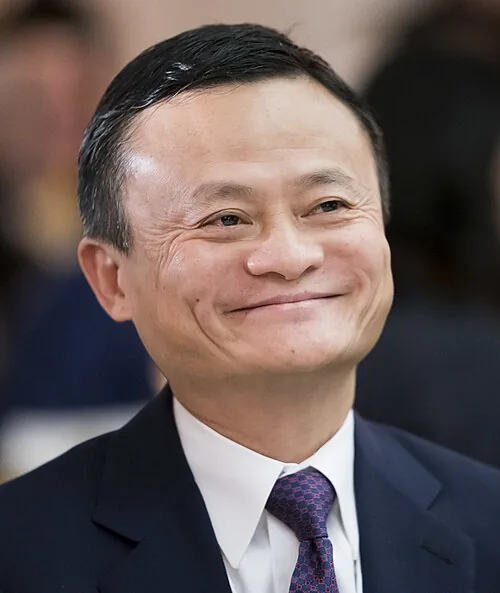
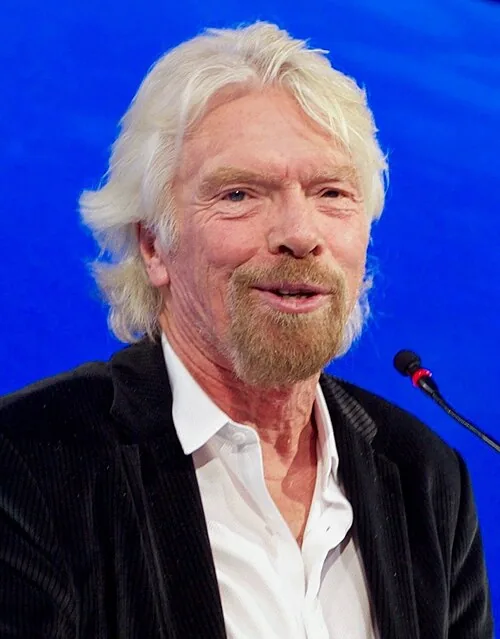
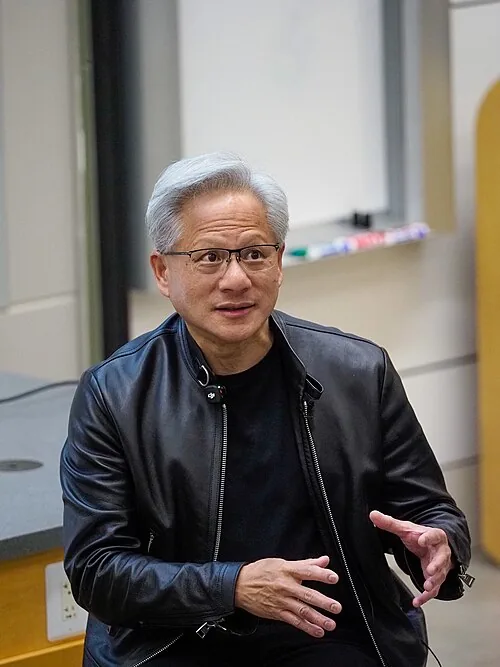
Photograph by Foundations World Economic Forum, CC BY 2.0. Background removed for the portrait above. · Photograph by the U.S. Department of State, public domain. Background removed for the portrait above. · Photograph by Anderseidesvik, CC BY-SA 4.0. Background removed for the portrait above.
_(cropped).jpg)
_(cropped).jpg)

An estimate is an inference.
Yours can be measured.
Thirty questions, scored against general-population benchmarks. Your score, your percentile, your ability breakdown and a printable IIF certificate.
Find your IQ score now! →