


What is Mayim Bialik’s IQ?
A real doctorate, and a number that has nothing to do with it.

Bialik is the rare case where the celebrity-IQ pages did not need to invent anything and did it anyway. She holds a genuine UCLA doctorate in neuroscience. The 163 attached to her name is not from it, or from any test.
Mayim Bialik’s estimated IQ
- BS in neuroscience, with minors in Hebrew and Jewish studies, UCLA, 2000.
- PhD in neuroscience, UCLA, 2007, supervised by James McCracken. The dissertation examined hypothalamic regulation in relation to obsessive-compulsive, affiliative and satiety behaviours in Prader–Willi syndrome.
- The doctorate was completed alongside a working acting career, over roughly seven years — a fact about persistence at least as much as about ability.
A completed doctorate is a strong, checkable record, and it is still not a test score. It is also worth noting that Bialik has consistently pushed back on the genius framing applied to her, and this range should not be read as agreeing with the framing she rejects.
- Born
- 12 December 1975, San Diego, California
- Field
- Acting; neuroscience
- Education
- BS neuroscience (UCLA, 2000); PhD neuroscience (UCLA, 2007)
- Known for
- Blossom, The Big Bang Theory, Jeopardy!
- Circulating figure
- 163, unsourced
What an IQ of 140–155 actually means
Set the claim aside for a moment. If someone genuinely scored in this range, here is what that would represent.
Average is 100 by construction, and about two-thirds of people fall between 85 and 115. Take the test to place your own score on this scale.
| Score range | Classification | Share of people | What it indicates |
|---|---|---|---|
| 85 – 114 | Average | ~68% | The range most people fall into. |
| 115 – 129 | Above average | ~13.6% | Roughly one person in seven. |
| 130 – 144 | Gifted | ~2% | The threshold most high-IQ societies use. |
| Above 144 | Highly gifted | ~0.1% | Figures above this range are extrapolated from the curve rather than measured. |
Percentages are approximate and describe a normal distribution. The same number means different things on tests with different standard deviations.
Thirty questions gives you a measured position on this exact scale — your score, your percentile and the ability breakdown behind it.
Find out in 30 minutes →Who Mayim Bialik is
Mayim Bialik was born in San Diego in 1975 and began acting as a child, taking the title role in NBC’s Blossom from 1991 to 1995. She left acting after the series ended and enrolled at UCLA.
She took a BS in neuroscience in 2000 and stayed for a doctorate, completing it in 2007 under James McCracken with a dissertation on Prader–Willi syndrome. The PhD is real, catalogued and citable, which distinguishes her from most of the actors on this site.
She returned to television as Amy Farrah Fowler on The Big Bang Theory from 2010 to 2019, a neurobiologist character written before she was cast, and later co-hosted Jeopardy!. The overlap between the role and the qualification is the thing that generated the IQ pages.
 By Elora Mercer, Celebrity Research WriterFigures checked by Leon Falkner, Data & Research Analyst
Reviewed by Aarav Vardhan, Editor-in-Chief · Last reviewed August 2026

Mayim Bialik: the documented record
The estimate above rests on this record. Every entry here is a matter of public fact, which is more than can be said for the number itself.
- 1975Born in San Diego.
- 1991Cast as the lead in Blossom.
- 1995Blossom ends; steps back from acting.
- 2000Takes a BS in neuroscience at UCLA.
- 2007Completes a PhD in neuroscience at UCLA.
- 2010Joins The Big Bang Theory as Amy Farrah Fowler.
- 2021Begins co-hosting Jeopardy!.
Where the 163 figure came from
Following a claim back to its first appearance is the part almost nobody does — and it is what most people are actually asking.
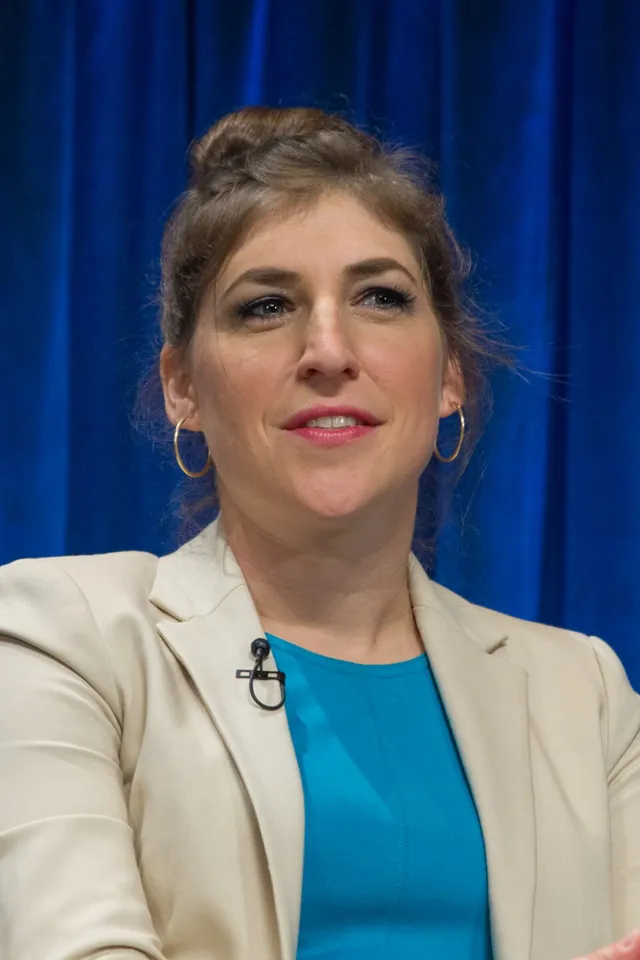
The Bialik pages are a clean example of a specific failure: a real credential being laundered into a fake measurement. Someone reads that she has a neuroscience PhD, concludes that a number ought to exist, and picks one. The next site copies it. Within a few iterations the 163 is being cited as though UCLA issued it.
It matters because the real record is more interesting than the invented one. She was cast in Blossom as a teenager, finished the series, and then went to UCLA and stayed for eleven years — a bachelor’s degree, then a doctorate finished in 2007. She has described choosing the degree partly because the acting work had dried up, which is a more honest account of how careers go than any score implies.
Bialik herself has repeatedly declined the framing. She has said publicly that she is not the character she played, that her degree does not make her a genius, and that she found parts of her training difficult. That is a person describing a documented record accurately. The number was added by other people.
How we read a number →The dissertation itself — a deposited, catalogued document. This is the strongest single item in the file and the one the 163 is usually mistaken for.
Two conferred degrees, verifiable through the institution.
No score has been published by Bialik or anyone else. She has not claimed a tested figure in any interview we could locate.
Asserted on several aggregator pages. Mensa does not publish membership lists, and Bialik has never claimed it.
Source URLs and first-appearance date pending audit.
No original could be located. The figure appears only on celebrity-IQ pages, generally in the same sentence as her doctorate.
The sources behind our estimate
The figures that circulate for Mayim Bialik, what we were able to confirm, and where the two diverge.
163 is the figure most often attached to her, with 150 also common. It typically appears alongside the observation that she “really is a scientist”, as if the degree and the number were the same evidence.
There is no published IQ score for Mayim Bialik, and she has never claimed one. No test name, date or examiner appears on any page carrying the 163. There is also no record of Mensa membership, which several of those pages assert. What is real is the PhD — and a doctorate and an IQ score are different kinds of evidence about different things.
Three numbers, no test between them. The spread exists because each site estimated independently from the same public biography.
Want a number that does hold up? Every figure on this page is somebody’s claim. Take the 30-question test and get a percentile you can check rather than a figure you have to trust.
Mayim Bialik — frequently asked
What is Mayim Bialik’s IQ?
No measured score exists and she has never claimed one. The 163 that circulates has no test, date or examiner behind it. Our 140–155 range is inferred from her completed doctorate, not from a test.
Does Mayim Bialik really have a PhD?
Yes. She holds a PhD in neuroscience from UCLA, awarded in 2007, with a dissertation on hypothalamic regulation in Prader–Willi syndrome. It is a real, catalogued dissertation.
Is Mayim Bialik in Mensa?
There is no record of it. Several celebrity-IQ pages assert membership; none cites a source, and Bialik has never claimed it.
Is Mayim Bialik as smart as Amy Farrah Fowler?
The character is written as a research neurobiologist and Bialik is a qualified one, which is an unusual overlap. Bialik has repeatedly said she is not her character and dislikes the comparison.
How long did Mayim Bialik’s PhD take?
About seven years — she enrolled after her 2000 bachelor’s degree and defended in 2007, working through part of that period.
Where does Bialik rank among actors on this site?
Near the top, alongside Dolph Lundgren. Both hold real graduate qualifications in a science, which is rare in this category and is what the range reflects.
How does my IQ compare with Mayim Bialik?
You can find out in about fifteen minutes. The IQ Metrics assessment is 30 questions, scored on the same 100-mean scale used throughout this page, so your result and the estimate above are at least expressed in the same units — one measured, one inferred. Once you have a number, the leaderboard shows where it would sit, and how we score and norm it explains the benchmarking.
Where does this estimate come from?
From the documented record rather than a test — the method is named above and set out in full under how we read a number. Compare it against the other actors profiles, starting with Natalie Portman.
- Take the 30-question IQ test — get a measured score and percentile of your own
- Average IQ by country — how the scale behaves across populations
- How IQ Metrics scores its assessment — the method behind our own number
- More on how IQ testing works — reliability, error and what a score can and cannot say
- More actors profiles — same field, same method
More actors
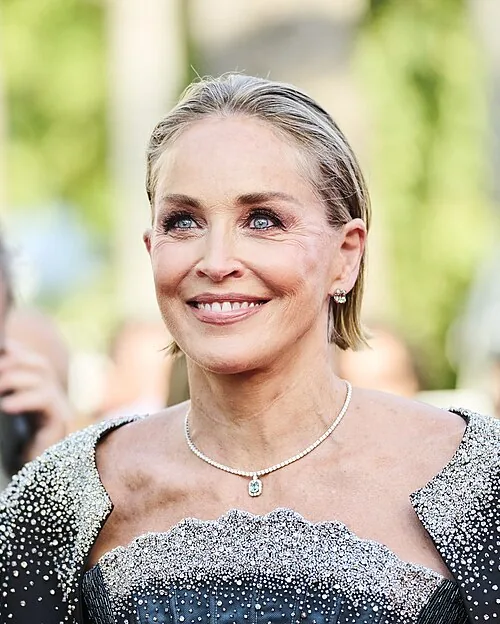
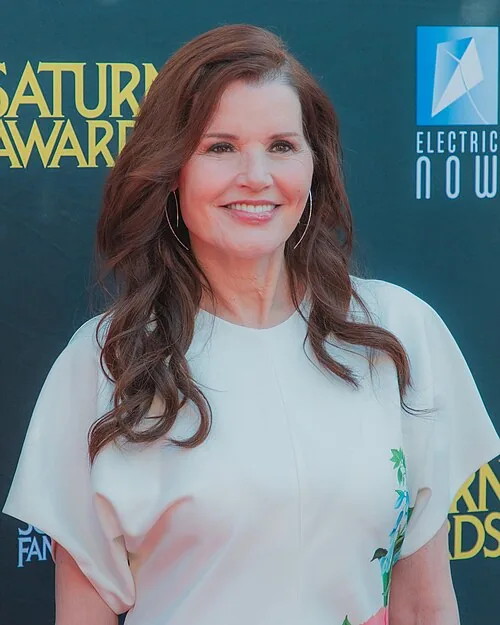
Photograph by Gabriel Hutchinson, CC BY-SA 4.0. Background removed for the portrait above. · Photograph by Kevin Paul, CC BY 4.0. Background removed for the portrait above. · Photograph by Bernhard Holub, CC BY-SA 4.0. Background removed for the portrait above.
.jpg)


An estimate is an inference.
Yours can be measured.
Thirty questions, scored against general-population benchmarks. Your score, your percentile, your ability breakdown and a printable IIF certificate.
Find your IQ score now! →