



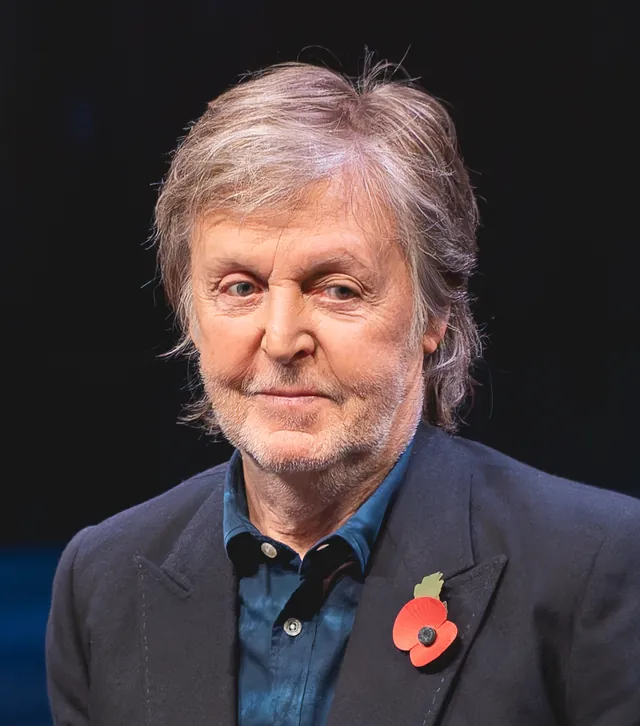
What is Paul McCartney’s IQ?
One of three pupils out of 90 to pass the 11-Plus in 1953, yet he says he cannot read or write musical notation.

No IQ test result for Paul McCartney has ever been published; the figure of 137 that circulates online cites only unnamed “school records,” with no test, date or examiner. The documented record is an 11-Plus pass in 1953, a knighthood in 1997 and a body of songs and orchestral works. Paul McCartney’s IQ is therefore an inference as of November 2026, not a measurement.
Paul McCartney’s estimated IQ
- In 1953 he was one of only three students out of 90 to pass the 11-Plus exam, which took him to the Liverpool Institute grammar school, according to Wikipedia’s biography.
- Songwriting at the highest documented level: Guinness World Records named him the “most successful songwriter” in 2009, with 188 UK charted records as writer or co-writer, per Wikipedia’s summary of the Guinness entry.
- Large-scale composition without notation: the Liverpool Oratorio (1991), written with Carl Davis for the Royal Liverpool Philharmonic Society, reached number one on the UK classical chart, according to Wikipedia.
- Institutional recognition: knighted in 1997 for services to music and appointed a Companion of Honour in 2017, per Wikipedia’s honors table.
- His own words, reported by Global News (October 1, 2018), that he cannot read or write music, which means the record shows musical creativity rather than a school or degree record.
This is an inference from a career, not from a test. Songwriting fame is weakly tied to measured IQ, he has no formal music qualification on record, and the only school-level fact is one selection exam. The range is wide and low-confidence, and it sits below the degree-based musicians on this site for that reason.
- Born
- June 18, 1942, Liverpool, England
- Known for
- Bassist and songwriter of the Beatles; later Wings and a solo career
- Schooling
- Joseph Williams Junior School; Liverpool Institute (after passing the 11-Plus in 1953)
- Formal music training
- None on record; says he cannot read or write musical notation
- Honorary degrees
- University of Sussex (1988); Yale University, Doctor of Music (2008)
- Knighthood
- Knight Bachelor, 1997, for services to music
- Orchestral work
- Liverpool Oratorio (1991, with Carl Davis)
- Circulating figure
- 137, from an unsourced FAQ page citing “school records”
What an IQ of 120–140 actually means
Set the claim aside for a moment. If someone genuinely scored in this range, here is what that would represent.
Average is 100 by construction, and about two-thirds of people fall between 85 and 115. Take the test to place your own score on this scale.
| Score range | Classification | Share of people | What it indicates |
|---|---|---|---|
| 85 – 114 | Average | ~68% | The range most people fall into. |
| 115 – 129 | Above average | ~13.6% | Roughly one person in seven. |
| 130 – 144 | Gifted | ~2% | The threshold most high-IQ societies use. |
| Above 144 | Highly gifted | ~0.1% | Figures above this range are extrapolated from the curve rather than measured. |
Percentages are approximate and describe a normal distribution. The same number means different things on tests with different standard deviations.
Thirty questions gives you a measured position on this exact scale — your score, your percentile and the ability breakdown behind it.
Find out in 30 minutes →Who Paul McCartney is
Who is Paul McCartney? Sir James Paul McCartney was born on June 18, 1942, at Walton Hospital in Liverpool, according to Wikipedia, and is an English musician and songwriter who was bassist and keyboardist of the Beatles. He attended Stockton Wood Road Primary School in Speke and then Joseph Williams Junior School in Belle Vale, and in 1953 passed the 11-Plus for the Liverpool Institute.
In 1954 he met his schoolmate George Harrison on the bus, according to Wikipedia, and the band’s later songwriting partnership with John Lennon is described there as the most successful in music history.
What did Paul McCartney achieve in the Beatles and after? Starting with Sgt. Pepper’s Lonely Hearts Club Band (1967) he became the group’s de facto leader, per Wikipedia, and songs such as “Yesterday,” “Eleanor Rigby” and “Blackbird” rank among the most covered in history. Wikipedia reports more than 2,200 recorded versions of “Yesterday.” After the Beatles he led Wings, with the album Band on the Run (1973) winning a Grammy in 1975.
Did he study music formally? No. Global News (October 1, 2018) reports that in a 60 Minutes interview with Sharyn Alfonsi he said he cannot read or write music: “I don’t see music as dots on a page. It’s something in my head that goes on.” Wikipedia, citing Sounes’s 2010 biography, quotes him in 1995 on receiving an Honorary Fellowship of the Royal College of Music: “kind of amazing for somebody who doesn’t read a note of music.” That did not stop large forms: the Liverpool Oratorio (1991), made with Carl Davis, topped the UK classical chart. Compare the research on creativity and IQ.
What honors does he hold? The Wikipedia honors table lists Member of the Order of the British Empire (1965), an Honorary Doctor of the University from the University of Sussex (1988), a knighthood for services to music (1997), an Honorary Doctor of Music from Yale University (2008) and appointment to the Order of the Companions of Honour (2017). He was inducted into the Rock and Roll Hall of Fame in 1988 with the Beatles and in 1999 as a solo artist, and received 19 Grammy Awards, an Academy Award and a Primetime Emmy Award, per Wikipedia.
 By Elora Mercer, Celebrity Research WriterFigures checked by Leon Falkner, Data & Research Analyst
Reviewed by Aarav Vardhan, Editor-in-Chief · Last reviewed November 2026

Paul McCartney: the documented record
The estimate above rests on this record. Every entry here is a matter of public fact, which is more than can be said for the number itself.
- 1942Born June 18 in Liverpool.
- 1953One of three students out of 90 to pass the 11-Plus; goes to the Liverpool Institute.
- 1954Meets schoolmate George Harrison on the bus.
- 1965Appointed Member of the Order of the British Empire; the Beatles release “Yesterday.”
- 1967Sgt. Pepper’s Lonely Hearts Club Band is released.
- 1988Honorary Doctor of the University from Sussex; Beatles inducted into the Rock and Roll Hall of Fame.
- 1991Liverpool Oratorio premieres, written with Carl Davis.
- 1995Receives an Honorary Fellowship of the Royal College of Music.
- 1997Knighted for services to music.
- 2008Honorary Doctor of Music from Yale University.
- 2018Tells 60 Minutes (September 30) that he cannot read or write music.
Where the 137 figure came from
Following a claim back to its first appearance is the part almost nobody does — and it is what most people are actually asking.
Paul McCartney IQ searches lead to one number, 137. The only page found that states it is a German-language FAQ on kuechenfibel.de, which says that according to school records he took a school-commissioned IQ test in his youth and scored 137, and calls that a fairly high result. It gives no test name, no year, no examiner and no school. Without those, it is a claim, not a result. For how such numbers spread, see where celebrity IQ numbers come from.
Where does the 137 come from? The best candidate for the confusion is the 11-Plus. Wikipedia’s biography says that in 1953 he was one of only three students out of 90 to pass it, which let him attend the Liverpool Institute grammar school. The 11-Plus was a selection exam for secondary schooling, and a pass mark is not a score on an IQ scale; see what an 11-Plus pass mark means. That link between the two is this site’s inference, not something the kuechenfibel.de page says.
What is Paul McCartney’s IQ score if 137 is taken at face value? On the usual scale (mean 100, SD 15) a score of 137 sits at about the 99th percentile. That is high, but the figure cannot be checked, so it carries no more weight than an estimate from his record. For what scores in that region mean, see what counts as a genius-level IQ.
Was Paul McCartney a genius? His documented record is that of an exceptional songwriter and arranger, a description of creative output rather than a test result. His estimated IQ here, 120–140, sits above John Lennon (108–120, from his school record), overlaps Bob Dylan (125–145), and sits below Art Garfunkel (135–150) and Brian May (140–155), whose ranges rest on university study. See also other musicians we have checked.
How we read a number →Birth, schooling, the 1953 11-Plus pass, honors table, Guinness records and the Royal College of Music quotation.
Confirms the identifier Q2599 is the musician Paul McCartney.
Reports his 60 Minutes statements on not reading or writing music.
Interview in which he says he still cannot read or write music.
The page that states 137 “according to school records,” with no test, date or examiner.
No test result appears in Wikipedia’s biography, in the Global News or Gulf News interviews, or in the two aggregator pages read.
The sources behind our estimate
The figures that circulate for Paul McCartney, what we were able to confirm, and where the two diverge.
A German-language FAQ page on kuechenfibel.de says that, according to school records, Paul McCartney took a school-commissioned IQ test in his youth and scored 137.
The kuechenfibel.de page names no test, no date, no examiner and no school, and points to Wikipedia as its source for the answer. The English Wikipedia biography, the 2018 Global News report on his 60 Minutes interview and the 2018 Gulf News interview describe his schooling and career without giving any IQ.
The circulating 137 falls inside the 120–140 estimated range, near its top. That does not make it a measurement: with no test named, 137 is a number attached to a famous name, and the range rests on a career rather than a score.
Want a number that does hold up? Every figure on this page is somebody’s claim. Take the 30-question test and get a percentile you can check rather than a figure you have to trust.
Paul McCartney — frequently asked
What is Paul McCartney’s IQ?
No IQ test result for Paul McCartney has been published. A figure of 137 circulates on a German FAQ site, kuechenfibel.de (2026), citing unnamed “school records.” This site’s estimated range, drawn from his documented record, is 120–140 on a scale with mean 100 and SD 15.
What is Paul McCartney’s IQ score?
Paul McCartney’s IQ score is not documented. The only number found, 137, appears on kuechenfibel.de without a test name, date or examiner. His documented facts, such as passing the 11-Plus in 1953, a 1997 knighthood and 19 Grammy Awards per Wikipedia, support an estimate, not a score.
Did Paul McCartney take an IQ test?
No IQ test taken by Paul McCartney has been published. The kuechenfibel.de page says he took a school-commissioned test but gives no details. What Wikipedia documents is that in 1953 he was one of three students out of 90 to pass the 11-Plus selection exam.
Where does the 137 come from?
The 137 is stated on a German-language FAQ page, kuechenfibel.de (July 9, 2026), which attributes it to school records and names no test, year or school. This site found no primary source for it, so it is treated as unverified.
Was Paul McCartney a genius?
Paul McCartney is widely described as an exceptional songwriter, but “genius” is a label, not an IQ score. Guinness World Records recognized him in 2009 as the most successful songwriter, with 188 UK charted records as writer or co-writer, according to Wikipedia.
Can Paul McCartney read music?
No. Paul McCartney told CBS’s 60 Minutes, in an interview aired on September 30, 2018, that he cannot read or write music: “I don’t see music as dots on a page.” Global News reported the remarks, which show his work rests on musical hearing, not notation.
How does Paul McCartney’s estimated IQ compare with John Lennon’s?
This site’s estimate for Paul McCartney, 120–140, sits above its 108–120 estimate for John Lennon, which rests on his school record. Both are inferences from documented history, not test scores, so the overlap at 120 is too small to rank them.
How does my IQ compare with Paul McCartney?
You can find out in about fifteen minutes. The IQ Metrics assessment is 30 questions, scored on the same 100-mean scale used throughout this page, so your result and the estimate above are at least expressed in the same units — one measured, one inferred. Once you have a number, the leaderboard shows where it would sit, and how we score and norm it explains the benchmarking.
Where does this estimate come from?
From the documented record rather than a test — the method is named above and set out in full under how we read a number. Compare it against the other musicians profiles, starting with Brian May.
- Take the 30-question IQ test — get a measured score and percentile of your own
- Average IQ by country — how the scale behaves across populations
- How IQ Metrics scores its assessment — the method behind our own number
- More on how IQ testing works — reliability, error and what a score can and cannot say
- More musicians profiles — same field, same method
More musicians
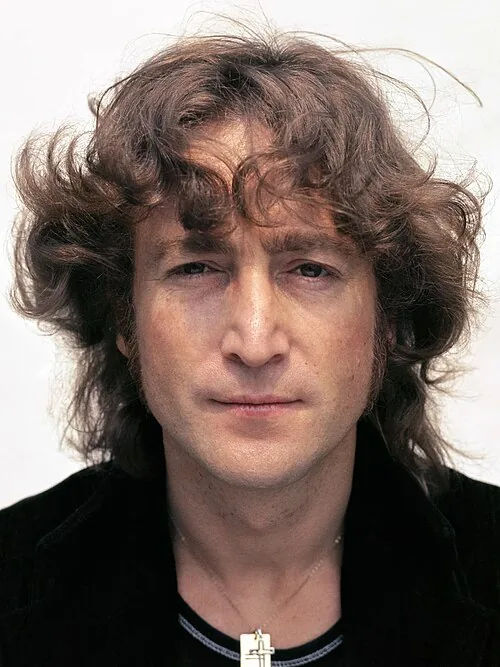
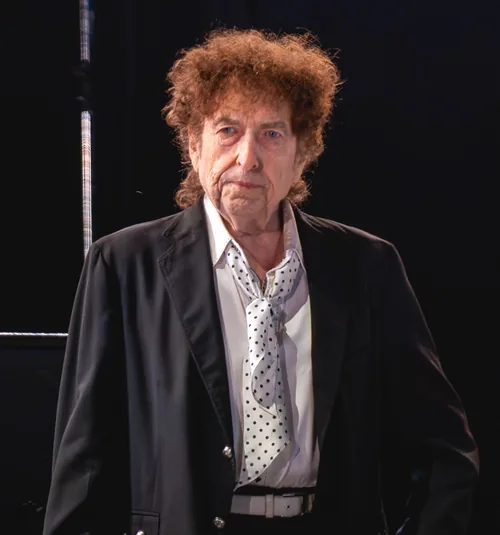
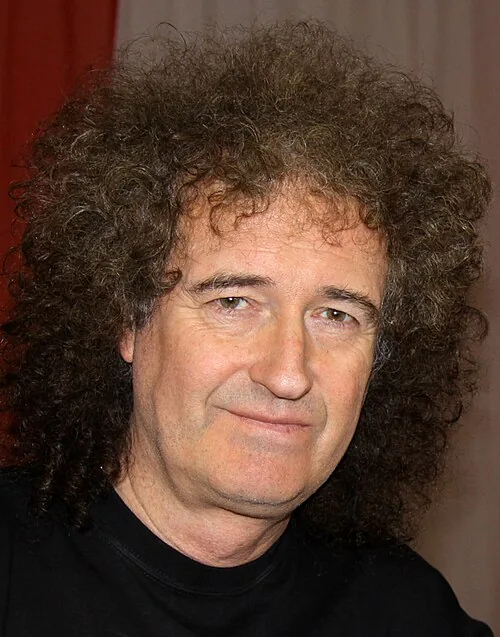
1974 Apple Records / Capitol Records press photograph by Bob Gruen, public domain (published without a copyright notice). Background removed for the portrait above. · Photograph by Raph_PH (Kilkenny, Ireland, July 14, 2019), CC BY 2.0. Cropped and with background removed for the portrait above. · Portrait © David J. Cable / Arcadia Photographic UK, CC BY-SA 2.0. The background-removed portrait above is a derivative work and is likewise offered under the same licence.


An estimate is an inference.
Yours can be measured.
Thirty questions, scored against general-population benchmarks. Your score, your percentile, your ability breakdown and a printable IIF certificate.
Find your IQ score now! →