



What is Bob Dylan’s IQ?
The 106 beside his name is one line in a 2024 gaming essay. The Nobel Prize citation is on the record.
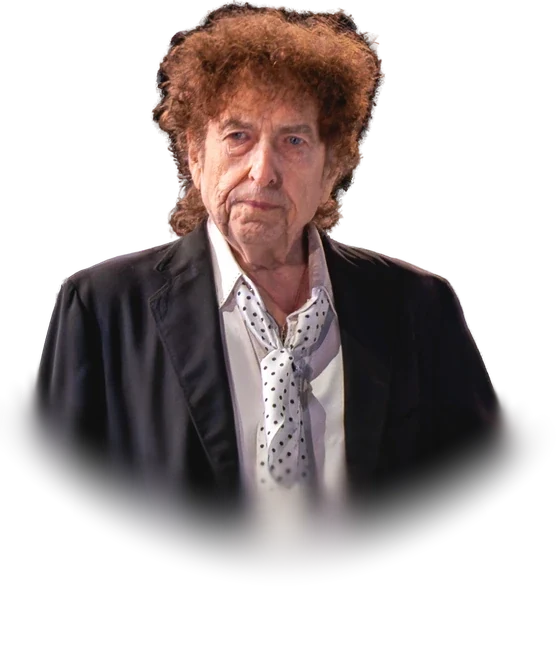
Bob Dylan’s IQ score has never been published, and no IQ test result exists. The 106 that circulates as his IQ traces to one 2024 essay that cites no test; what is documented is the 2016 Nobel Prize in Literature, a 2008 Pulitzer special citation and 10 Grammy Awards.
Bob Dylan’s estimated IQ
- Won the Nobel Prize in Literature in 2016; the announcement of October 13, 2016 gave the motivation “for having created new poetic expressions within the great American song tradition.”
- Received a Pulitzer Prize special citation in 2008 for “profound impact on popular music and American culture, marked by lyrical compositions of extraordinary poetic power.”
- Has won 10 Grammy Awards (the Recording Academy’s artist page lists 10 wins and 38 nominations), including Album of the Year for Time Out of Mind, and received its Lifetime Achievement Award in 1991.
- Wrote Chronicles: Volume One (published October 5, 2004), one of five finalists for the National Book Critics Circle Award in Biography/Autobiography, and The Philosophy of Modern Song (November 1, 2022), a book of commentary on 66 songs by other artists.
- Inducted into the Rock and Roll Hall of Fame in 1988, honored with the Kennedy Center Honors in 1997 and awarded the Presidential Medal of Freedom in 2012.
Nothing here is a test: no school score, transcript or IQ result for Dylan is public, and every honor above is a juried judgment of writing and music. This estimated IQ range is an inference from sustained, publicly judged verbal and musical work; it says little about the numerical and spatial parts of an IQ test, which is why it is wide and its floor cautious.
- Born
- May 24, 1941, Duluth, Minnesota
- Field
- Singer-songwriter, author
- Education
- Hibbing High School (1959); University of Minnesota, 1959–60; no earned degree found
- Known for
- Highway 61 Revisited (1965), Blonde on Blonde (1966), Time Out of Mind (1997), Chronicles: Volume One (2004)
- Honors
- Nobel Prize in Literature (2016); Pulitzer Prize special citation (2008); Presidential Medal of Freedom (2012); Rock and Roll Hall of Fame (1988); 10 Grammy Awards
- Books
- Chronicles: Volume One (October 5, 2004); The Philosophy of Modern Song (November 1, 2022)
- Published IQ test
- None on record
- Circulating IQ figure
- 106, from a 2024 essay on a gaming-and-creativity page with no test or source
What an IQ of 125–145 actually means
Set the claim aside for a moment. If someone genuinely scored in this range, here is what that would represent.
Average is 100 by construction, and about two-thirds of people fall between 85 and 115. Take the test to place your own score on this scale.
| Score range | Classification | Share of people | What it indicates |
|---|---|---|---|
| 85 – 114 | Average | ~68% | The range most people fall into. |
| 115 – 129 | Above average | ~13.6% | Roughly one person in seven. |
| 130 – 144 | Gifted | ~2% | The threshold most high-IQ societies use. |
| Above 144 | Highly gifted | ~0.1% | Figures above this range are extrapolated from the curve rather than measured. |
Percentages are approximate and describe a normal distribution. The same number means different things on tests with different standard deviations.
Thirty questions gives you a measured position on this exact scale — your score, your percentile and the ability breakdown behind it.
Find out in 30 minutes →Who Bob Dylan is
Bob Dylan was born on May 24, 1941, at St. Mary’s Hospital in Duluth, Minnesota, and grew up in Hibbing; Wikipedia says he lived there from age 6 to 18. He formed several bands at Hibbing High School, whose 1959 yearbook carried the caption “Robert Zimmerman: to join ‘Little Richard.’” The Current’s feature “60 years ago today, Bob Dylan graduated from Hibbing High School” (June 5, 2019) puts the graduation in 1959. He enrolled at the University of Minnesota in the fall of 1959, in its College of Science, Literature and Arts according to the Minnesota Daily, and began to perform at the Ten O’Clock Scholar coffeehouse near campus. Wikipedia says he dropped out in May 1960, at the end of his first year; other accounts differ on exactly when in 1960. No earned degree appears in the pages checked, and Wikipedia’s biography mentions an honorary degree from Princeton University in 1970.
He traveled to New York City in January 1961. His debut album, Bob Dylan, was released on March 19, 1962, followed by The Freewheelin’ Bob Dylan in May 1963, Highway 61 Revisited (1965) and Blonde on Blonde (1966). Time Out of Mind (1997) won the Grammy Award for Album of the Year. Wikipedia says he has toured continually since the late 1980s. The Rock and Roll Hall of Fame inducted him in 1988, the Recording Academy gave him its Lifetime Achievement Award in 1991, and in 2001 he won an Academy Award and a Golden Globe for Best Original Song for “Things Have Changed,” from the film Wonder Boys.
Chronicles: Volume One, published by Simon & Schuster on October 5, 2004, covers three points in his career, 1961, 1970 and 1989. It was one of five finalists for the National Book Critics Circle Award in Biography/Autobiography for 2004 and spent 19 weeks on The New York Times hardcover nonfiction list. The Philosophy of Modern Song (Simon & Schuster, November 1, 2022) collects his commentary on 66 songs by other artists. His honors include the Kennedy Center Honors (1997), a Pulitzer Prize special citation (April 7, 2008), the Presidential Medal of Freedom (2012) and the Nobel Prize in Literature, announced on October 13, 2016.
As of October 2026 Dylan is 85 and still touring, with a summer 2026 tour of the United States and a European tour announced in July 2026, according to Wikipedia and Far Out Magazine.
 By Elora Mercer, Celebrity Research WriterFigures checked by Leon Falkner, Data & Research Analyst
Reviewed by Aarav Vardhan, Editor-in-Chief · Last reviewed October 2026

Bob Dylan: the documented record
The estimate above rests on this record. Every entry here is a matter of public fact, which is more than can be said for the number itself.
- 1941Born May 24 in Duluth, Minnesota.
- 1959–60Hibbing High School yearbook captions him “to join ‘Little Richard’”; graduates in 1959, enrolls at the University of Minnesota that fall and leaves in 1960.
- 1961–62Travels to New York City in January 1961; his debut album Bob Dylan is released March 19, 1962.
- 1988Inducted into the Rock and Roll Hall of Fame.
- 2004Chronicles: Volume One is published October 5 by Simon & Schuster.
- 2008Receives a Pulitzer Prize special citation, dated April 7, for lyrical compositions of extraordinary poetic power.
- 2012Awarded the Presidential Medal of Freedom.
- 2016Awarded the Nobel Prize in Literature; announced October 13.
- 2022The Philosophy of Modern Song, 66 essays on songs by other artists, is published November 1.
- 2026As of October 2026, 85 and still touring.
Where the 106 figure came from
Following a claim back to its first appearance is the part almost nobody does — and it is what most people are actually asking.
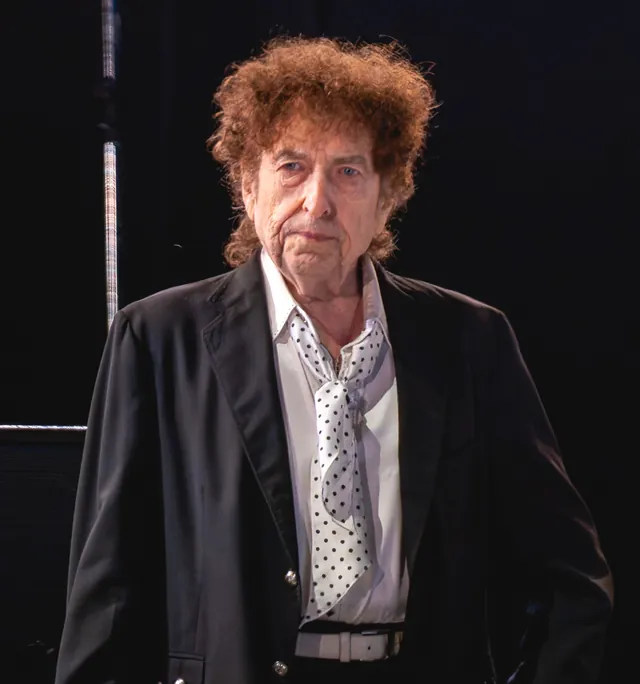
Bob Dylan’s IQ of 106 has no test behind it. The one page found that states the number is an essay on ExpertBeacon, “The Artistic Genius Of Bob Dylan – What Gamers Can Learn,” published on May 12, 2024. Its opening paragraph asks readers whether they knew his IQ “was just average at 106,” and a later line says Dylan’s 106 “suggests decent but unexceptional mental faculties.” It names no IQ test, no age at which one was taken, no examiner and no source. That is the whole trail for the Bob Dylan IQ 106 claim; the rest of the essay argues that IQ tests miss creative skill, a fair general point that is not evidence about Dylan.
Numbers like this usually begin with a biography that sounds like genius and work backward; the pattern is laid out in how celebrity IQ numbers originate. This one runs the other way: most circulating figures sit above the documented record, while 106 sits below the range this page supports. That does not make it more reliable. An IQ of 106 is about the 66th percentile on the usual scale, a little above the average score of 100, and a claim about a named person still needs a named test and a date. The essay also says Dylan “clearly did not excel” at math and logic, a statement with no school record, test or interview behind it.
Is Bob Dylan smart? The talk of “genius” around him rests on literary awards, not on a score. The Nobel Prize in Literature 2016, announced on October 13, 2016, went to him “for having created new poetic expressions within the great American song tradition,” and the 2008 Pulitzer Prize special citation points to “lyrical compositions of extraordinary poetic power.” Those are judgments of the writing by prize bodies; the piece on what was measured and what was guessed for Nobel winners draws the same line, and what a genius IQ level means is a separate, numerical question. Sustained verbal work at this level is real evidence of ability, but a verbal IQ test samples only a slice of it, and the numerical and spatial parts of an IQ test are not touched by any of these awards.
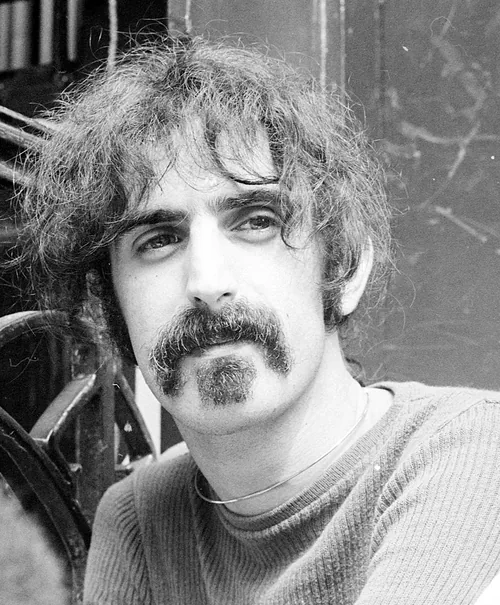
Placed among the other musicians on this site, a Bob Dylan estimated IQ of 125–145 sits above John Lennon’s 108–120, which is held down by a documented record of school failure that has no counterpart in the pages checked for Dylan. It overlaps Frank Zappa’s 130–150 but stops lower, because Zappa’s page also rests on orchestral and studio engineering work, while Dylan’s rests on words and songs. It starts five points above Kendrick Lamar’s 120–135: both have a Pulitzer on the record (Lamar’s Prize for Music in 2018, Dylan’s special citation in 2008), but Dylan adds a Nobel Prize in Literature and two books, one a finalist for a national critics’ award. For how creative achievement relates to test scores, see creativity and IQ.
How we read a number →Prize motivation: “for having created new poetic expressions within the great American song tradition.” Born May 24, 1941, Duluth, MN, USA. Wikipedia gives the announcement date, October 13, 2016.
2008 Special Citation, received April 7, 2008, for “profound impact on popular music and American culture, marked by lyrical compositions of extraordinary poetic power.”
The artist page lists 10 wins and 38 nominations (most recent nomination year 2018); the Lifetime Achievement list gives Bob Dylan, awarded 1991. Wikipedia’s awards list itemizes the 10 competitive wins.
Gives the induction year as 1988; the page’s summary describes him as a songwriter with a poet-like acumen for meter and language.
Birth, Hibbing and University of Minnesota record, album dates, Kennedy Center Honors 1997, Medal of Freedom 2012 (awarded by Barack Obama), the 2001 Oscar and Golden Globe and his 2026 touring. Wikidata Q392 is the American singer-songwriter born May 24, 1941 in Duluth.
Chronicles published October 5, 2004 by Simon & Schuster, an NBCC finalist for 2004 and 19 weeks on the New York Times hardcover nonfiction list; The Philosophy of Modern Song published November 1, 2022, 66 essays on songs.
The Current dates the Hibbing High School graduation to 1959. The Minnesota Daily gives fall 1959 enrollment at the College of Science, Literature and Arts and says accounts conflict on when he left in 1960.
Announces the 2026 European tour; used with Wikipedia for the October 2026 status line.
The one page found that states the figure: his IQ “was just average at 106.” No test, date, age, examiner or source is given, and a claim that math and logic were not his strengths is also unsourced.
The Nobel Prize, Rock and Roll Hall of Fame and Recording Academy pages and the Wikipedia biography mention no test, score report or assessment; the biography pages on his schooling give no score or transcript.
The sources behind our estimate
The figures that circulate for Bob Dylan, what we were able to confirm, and where the two diverge.
106 is the figure that circulates for Bob Dylan’s IQ. The one page found that states it is an ExpertBeacon essay, “The Artistic Genius Of Bob Dylan – What Gamers Can Learn” (page metadata dated May 12, 2024), which says his IQ “was just average at 106.”
No IQ test result for Bob Dylan has ever surfaced. The Nobel Prize, Rock and Roll Hall of Fame and Recording Academy pages and the Wikipedia biography mention none, and the pages checked on his schooling (Hibbing High School, the University of Minnesota) give no score, rank or transcript. The ExpertBeacon essay names no test, date, age or examiner, and its line that math and logic are “areas Dylan clearly did not excel at” is equally unsourced.
The circulating 106 sits 19 points below the bottom of this page’s range, the reverse of the usual pattern, where an inflated number sits above the record. An IQ of 106 is about the 66th percentile, an ordinary result for a large share of people, and the page that prints it gives no reason to think it describes Dylan.
Want a number that does hold up? Every figure on this page is somebody’s claim. Take the 30-question test and get a percentile you can check rather than a figure you have to trust.
Bob Dylan — frequently asked
What is Bob Dylan’s IQ?
No IQ test result for Bob Dylan has been published, so his IQ score is unknown. The 106 that circulates comes from a 2024 essay that cites no test. This site’s estimated range is 125–145, inferred from the 2016 Nobel Prize in Literature, a 2008 Pulitzer special citation and 10 Grammy Awards.
Is Bob Dylan’s IQ 106?
There is no test behind 106. The one page that states it, a 2024 ExpertBeacon essay, names no test, date, age or examiner. An IQ of 106 is about the 66th percentile, and the documented record is of sustained, prize-level writing, which this site reads as pointing higher.
Did Bob Dylan ever take an IQ test?
No test is on record. The Nobel Prize, Rock and Roll Hall of Fame and Recording Academy pages and his Wikipedia biography mention none, and the page that gives 106 names no test, date or age. His documented schooling is Hibbing High School and a short stay at the University of Minnesota.
Is Bob Dylan smart, and is he a genius?
By the record he is a highly accomplished writer: the Swedish Academy honored him in 2016 for new poetic expressions within the great American song tradition. That is a literary judgment by a prize body, not an IQ test, so “genius” describes how his work is rated, not a measured score.
Did Bob Dylan go to college?
Briefly. He enrolled at the University of Minnesota in the fall of 1959 and left in 1960; Wikipedia says May 1960, at the end of his first year, though accounts differ on the month. No earned degree appears in the pages checked, so no academic record anchors his estimated IQ.
How does Bob Dylan’s estimated IQ compare with John Lennon’s?
Bob Dylan’s estimated IQ range here is 125–145 and John Lennon’s is 108–120. Both are inferences, not test scores. Lennon’s is held down by a documented record of school failure, while no comparable school record for Dylan turned up, so his range rests on achievement alone.
Do a Nobel Prize and Grammys prove Bob Dylan has a high IQ?
Not by themselves. Dylan’s Nobel Prize in Literature (2016), Pulitzer special citation (2008) and 10 Grammy Awards are juried judgments of writing and music, not reasoning tests. They support a high-achieving range for a songwriter and author, not a specific score.
How does my IQ compare with Bob Dylan?
You can find out in about fifteen minutes. The IQ Metrics assessment is 30 questions, scored on the same 100-mean scale used throughout this page, so your result and the estimate above are at least expressed in the same units — one measured, one inferred. Once you have a number, the leaderboard shows where it would sit, and how we score and norm it explains the benchmarking.
Where does this estimate come from?
From the documented record rather than a test — the method is named above and set out in full under how we read a number. Compare it against the other musicians profiles, starting with Brian May.
- Take the 30-question IQ test — get a measured score and percentile of your own
- Average IQ by country — how the scale behaves across populations
- How IQ Metrics scores its assessment — the method behind our own number
- More on how IQ testing works — reliability, error and what a score can and cannot say
- More musicians profiles — same field, same method
More musicians
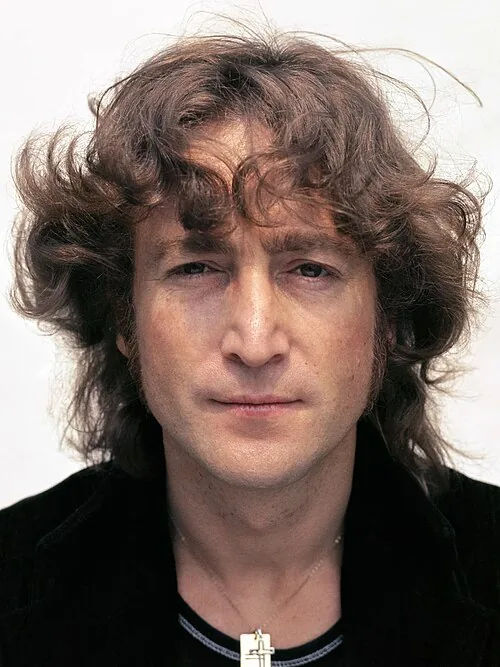
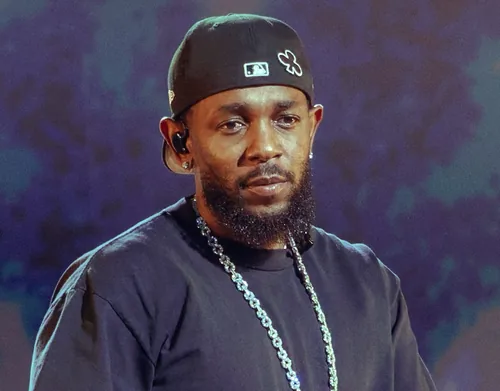
1974 Apple Records / Capitol Records press photograph by Bob Gruen, public domain (published without a copyright notice). Background removed for the portrait above. · Photograph by Raph_PH (July 23, 2025), CC BY 4.0, cropped from a larger picture and desaturated. Background removed for the portrait above. · Photograph by Fotopersbureau De Boer for the Noord-Hollands Archief (June 17, 1970; Commons file), released under CC0 (public domain dedication), cropped.


An estimate is an inference.
Yours can be measured.
Thirty questions, scored against general-population benchmarks. Your score, your percentile, your ability breakdown and a printable IIF certificate.
Find your IQ score now! →