



What is Professor Moriarty’s IQ?
A genius described by a fictional detective.

Moriarty’s intelligence is entirely hearsay: everything we are told about it comes from Sherlock Holmes, who is himself made up.
Professor Moriarty’s estimated IQ
- Holmes states in The Final Problem that Moriarty wrote a treatise on the binomial theorem at twenty-one which had a European vogue, and won a mathematical chair at a small university.
- He is credited in the same passage with The Dynamics of an Asteroid, a book said to be beyond the reach of any reviewer.
- He appears in only two of the sixty Holmes stories, and speaks in one short scene.
There is no person here to measure. The range describes how the character is written — the same basis used for Sherlock Holmes — and it rests on far less text than the reputation implies.
- Created by
- Arthur Conan Doyle
- First appearance
- “The Final Problem”, 1893
- Occupation
- Mathematician; described by Holmes as a criminal organiser
- Attributed works
- A treatise on the binomial theorem; The Dynamics of an Asteroid
- Appearances
- Two of the sixty Holmes stories
What an IQ of 175–195 actually means
Set the claim aside for a moment. If someone genuinely scored in this range, here is what that would represent.
Average is 100 by construction, and about two-thirds of people fall between 85 and 115. Take the test to place your own score on this scale.
| Score range | Classification | Share of people | What it indicates |
|---|---|---|---|
| 85 – 114 | Average | ~68% | The range most people fall into. |
| 115 – 129 | Above average | ~13.6% | Roughly one person in seven. |
| 130 – 144 | Gifted | ~2% | The threshold most high-IQ societies use. |
| Above 144 | Highly gifted | ~0.1% | Figures above this range are extrapolated from the curve rather than measured. |
Percentages are approximate and describe a normal distribution. The same number means different things on tests with different standard deviations.
Thirty questions gives you a measured position on this exact scale — your score, your percentile and the ability breakdown behind it.
Find out in 30 minutes →Who Professor Moriarty is
Professor James Moriarty was created to kill Sherlock Holmes. By 1893 Conan Doyle wanted to be free of the character, and needed an antagonist formidable enough to justify the ending, so he wrote one into existence in a single story and sent both men over the Reichenbach Falls.
The character has since become a fixture of adaptations far beyond the stories. Readers consistently overestimate how much of him Conan Doyle actually wrote: he appears substantively in two of sixty stories and has one brief scene of dialogue with Holmes.
The reputation is therefore almost entirely secondary — built by adaptations, essays and a century of readers, on a foundation of about two thousand words. It is a good illustration of how a figure of any kind, including a number, can be sustained by repetition alone.
 By Elora Mercer, Celebrity Research WriterFigures checked by Leon Falkner, Data & Research Analyst
Reviewed by Aarav Vardhan, Editor-in-Chief · Last reviewed August 2026

Professor Moriarty: the documented record
The estimate above rests on this record. Every entry here is a matter of public fact, which is more than can be said for the number itself.
- 1891The Reichenbach Falls confrontation, as dated within the stories.
- 1893“The Final Problem” is published in The Strand; Moriarty’s only extended appearance.
- 1901Conan Doyle returns to Holmes with The Hound of the Baskervilles, set before the Falls.
- 1903Holmes is brought back alive in “The Adventure of the Empty House”.
- 1914The Valley of Fear begins serialisation, with Moriarty in the background.
Where the 190 figure came from
Following a claim back to its first appearance is the part almost nobody does — and it is what most people are actually asking.
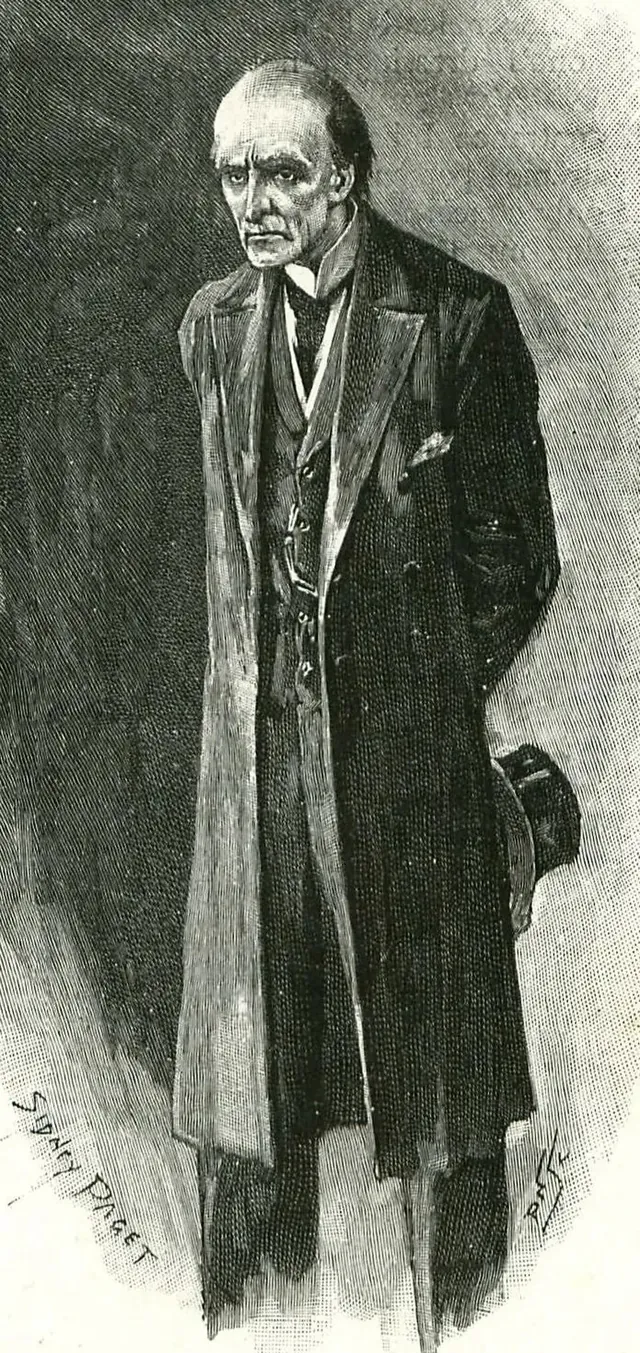
Moriarty belongs on this site as the reductio of everything else on it. Read alongside Sherlock Holmes, he shows the full chain: an invented number, attached to an invented reputation, sourced to an invented witness.
The detail worth keeping is the binomial theorem. It is a real piece of mathematics that any reader in 1893 would have recognised the name of and almost none could evaluate — which is exactly the property that makes it good fiction and bad evidence. The claim is designed to be impressive and uncheckable at the same time.
Most celebrity IQ figures work the same way. They are specific enough to sound measured, and attached to nothing anyone can look up. Moriarty is the honest version, because with him the fiction is admitted at the start.
How we read a number →The first appearance, and the source of the binomial theorem treatise, the mathematical chair and The Dynamics of an Asteroid. Every claim about his intellect originates in this one passage, spoken by Holmes.
His only other substantive appearance. He does not meet Holmes in it.
Generalised by Newton in the 1660s and standard textbook material by the nineteenth century. There was no open problem for a treatise to address in 1893.
We profile characters because the figures circulate. A range here describes how the character is written and how they compare with others in the same fiction — it is not a measurement, because there is no person and no distribution to be ranked within.
The sources behind our estimate
The figures that circulate for Professor Moriarty, what we were able to confirm, and where the two diverge.
Fan estimates cluster around 190 and are sometimes given as higher than Holmes’s own, on the grounds that Moriarty nearly won.
Our 175–195 places him just below Holmes, which is how the stories are written — but the evidence for it is thin. The binomial theorem does not support a treatise. It was fully settled long before 1893 — Newton had generalised it two centuries earlier — and a young mathematician could not have produced a work on it with a “European vogue”. Conan Doyle chose the phrase because it sounded formidable to a lay reader, not because it described a plausible achievement. The Dynamics of an Asteroid is described as unreviewable, which is a way of declining to specify anything at all.
All three are readers’ estimates of a character. None of them can be wrong, which is another way of saying none of them can be right.
Want a number that does hold up? Every figure on this page is somebody’s claim. Take the 30-question test and get a percentile you can check rather than a figure you have to trust.
Professor Moriarty — frequently asked
What is Professor Moriarty’s IQ?
He is fictional, so there is nothing to measure. Conan Doyle never gives a figure. Our 175–195 describes how the character is written — just below Sherlock Holmes — rather than a person.
Is Moriarty smarter than Sherlock Holmes?
The stories present them as near equals, with Holmes narrowly ahead. Since both are written by the same author, the comparison is a question about Conan Doyle’s intentions rather than about ability.
Did Moriarty really write about the binomial theorem?
Within the story, yes. In reality the claim is not plausible: the binomial theorem had been settled for two centuries by 1893, so there was nothing for such a treatise to say.
How many stories does Moriarty appear in?
Two of the sixty — “The Final Problem” and The Valley of Fear — plus passing mentions. His prominence comes almost entirely from adaptations.
Why does this site profile fictional characters at all?
Because the figures circulate and people search for them. We profile the claim and decline to assign a score, which is the same standard applied to Sherlock Holmes.
Can a fictional character have a real IQ?
No. An IQ is a rank within a tested population, and a character has whatever abilities an author wrote for them. The range on this page is a description of the writing, which is why it is given alongside Sherlock Holmes rather than alongside the real people on this site.
How does my IQ compare with Professor Moriarty?
You can find out in about fifteen minutes. The IQ Metrics assessment is 30 questions, scored on the same 100-mean scale used throughout this page, so your result and the estimate above are at least expressed in the same units — one measured, one inferred. Once you have a number, the leaderboard shows where it would sit, and how we score and norm it explains the benchmarking.
Where does this estimate come from?
From the documented record rather than a test — the method is named above and set out in full under how we read a number. Compare it against the other fictional profiles, starting with Sherlock Holmes.
- Take the 30-question IQ test — get a measured score and percentile of your own
- Average IQ by country — how the scale behaves across populations
- How IQ Metrics scores its assessment — the method behind our own number
- More on how IQ testing works — reliability, error and what a score can and cannot say
- More fictional profiles — same field, same method
More fictional

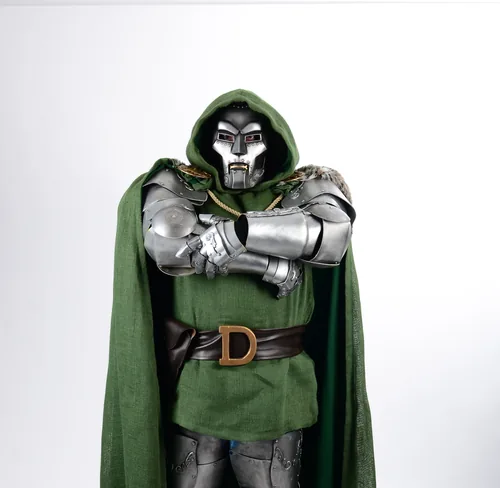

Photograph of actor Anthony Hopkins by Omar David Sandoval Sida (Red Sea International Film Festival, December 2025), CC BY-SA 4.0. Hannibal Lecter is a character created by Thomas Harris, portrayed by Hopkins in The Silence of the Lambs (1991) and its sequels. Background removed for the portrait above. · Photograph of a cosplayer as Doctor Doom by Super Festivals (July 2013), CC BY 2.0. Doctor Doom is a character created by Stan Lee and Jack Kirby for Marvel Comics. Cropped and with background removed for the portrait above. · Photograph of actor Mark Ruffalo by Gage Skidmore (San Diego Comic-Con, July 22, 2017), CC BY-SA 2.0. Bruce Banner is a character created by Stan Lee and Jack Kirby for Marvel Comics, played by Ruffalo in the Marvel Cinematic Universe films. Cropped and with background removed for the portrait above.
.jpg)
.jpg)
_(cropped).jpg)
An estimate is an inference.
Yours can be measured.
Thirty questions, scored against general-population benchmarks. Your score, your percentile, your ability breakdown and a printable IIF certificate.
Find your IQ score now! →