



What is Hannibal Lecter’s IQ?
Thomas Harris never gave Hannibal Lecter a number. The memory palace, the languages and the psychiatric training are documented; the IQ that circulates, 160 to 200, is not — even the sites that print it say so.

No page traces a specific IQ of Hannibal Lecter to Thomas Harris’s four novels, and no test result exists for the fictional forensic psychiatrist; the 160–200 figures that circulate for him are labelled speculation even by the sites that print them, and this site’s estimated IQ level for the character as written is 175–195.
Hannibal Lecter’s estimated IQ
- The novels give him an eidetic memory built into an elaborate “memory palace”; Hannibal’s (1999) acknowledgements credit Frances A. Yates’s The Art of Memory and Jonathan D. Spence’s The Memory Palace of Matteo Ricci, and Scientific American describes the resulting construction as holding “a thousand rooms, miles of corridors, hundreds of facts attached to each object.”
- By Looper’s account of the books, he speaks Lithuanian, German, English and Italian by age ten and is already working on Latin; he adds Japanese after moving to France to live with his aunt, Lady Murasaki.
- He completes medical training in France and, per Hannibal Rising (2006), is offered an internship at Johns Hopkins Hospital in Baltimore; Red Dragon (1981) already introduces him as a former practicing psychiatrist consulted by the FBI on other killers.
- Posing in Florence as “Dr. Fell” after killing the real curator of the Capponi Library, he takes the position, and in the novel’s own words “won the job fairly, demonstrating to the Belle Arti Committee an extraordinary linguistic capability, sight-translating medieval Italian and Latin from the densest Gothic black-letter manuscripts.”
- FBI investigators consult him precisely because his read on other killers’ psychology outperforms their own, in both Red Dragon and The Silence of the Lambs (1988), even while he is himself a suspect or prisoner throughout.
No IQ figure appears anywhere in Harris’s four novels; every trait behind this estimate is authorial design, not a measurement. A 2014 Journal of Forensic Sciences study that screened 400 films for clinically accurate psychopathy (Leistedt and Linkowski) placed the Silence of the Lambs Lecter among the less realistic portrayals, well behind Anton Chigurh and Hans Beckert — a reminder that the “brilliant psychopath” pairing this character popularized is closer to archetype than to case study.
- First appearance
- Red Dragon, published October 1981 by G. P. Putnam’s Sons
- Created by
- Thomas Harris
- Role
- Forensic psychiatrist and cannibalistic serial killer
- Born (in canon)
- January 20, 1933, at Castle Lecter, near Vilnius, Lithuania
- Education (in canon)
- Medical studies in France; internship offered at Johns Hopkins Hospital, Baltimore, per Hannibal Rising
- Novels
- Red Dragon (1981), The Silence of the Lambs (1988), Hannibal (1999), Hannibal Rising (2006)
- Played on screen by
- Brian Cox, Anthony Hopkins, Gaspard Ulliel, Mads Mikkelsen
- Canonical IQ
- None stated in any of the four novels
What an IQ of 175–195 actually means
Set the claim aside for a moment. If someone genuinely scored in this range, here is what that would represent.
Average is 100 by construction, and about two-thirds of people fall between 85 and 115. Take the test to place your own score on this scale.
| Score range | Classification | Share of people | What it indicates |
|---|---|---|---|
| 85 – 114 | Average | ~68% | The range most people fall into. |
| 115 – 129 | Above average | ~13.6% | Roughly one person in seven. |
| 130 – 144 | Gifted | ~2% | The threshold most high-IQ societies use. |
| Above 144 | Highly gifted | ~0.1% | Figures above this range are extrapolated from the curve rather than measured. |
Percentages are approximate and describe a normal distribution. The same number means different things on tests with different standard deviations.
Thirty questions gives you a measured position on this exact scale — your score, your percentile and the ability breakdown behind it.
Find out in 30 minutes →Who Hannibal Lecter is
Hannibal Lecter is a fictional forensic psychiatrist and cannibalistic serial killer created by the American novelist Thomas Harris. He first appears, already imprisoned, in Red Dragon (1981), where FBI profiler Will Graham consults him about a killer nicknamed the Tooth Fairy; he returns as the central consultant in The Silence of the Lambs (1988), in which FBI trainee Clarice Starling interviews him for insight into the murderer known as Buffalo Bill. Harris freed the character for the sequel Hannibal (1999) and went back to his childhood in the prequel Hannibal Rising (2006), the fourth and final novel in the series. Across all four books Lecter is written as a polymath: a physician and psychiatrist fluent in several languages, with connoisseur-level knowledge of art, music and cuisine, who kills selectively and, in his own account, for reasons of taste rather than compulsion.
Hannibal Rising places his birth on January 20, 1933, at Castle Lecter in southeastern Lithuania, to a father descended from the historical Lithuanian warlord Hannibal the Grim and an Italian mother, Simonetta Sforza-Visconti, whose family had ruled Milan for centuries. The novel follows the family’s flight from the eastern front in 1941 and the killing of his younger sister, Mischa, by deserters who cannibalized her in front of him — the trauma Harris uses to explain, without excusing, everything that follows. Lecter is left mute for years afterward, is raised in France by his aunt by marriage, Lady Murasaki, and by Looper’s account of the books can speak Lithuanian, German, English and Italian by age ten, with Latin under way and Japanese added later. He completes his medical studies in France and, per Hannibal Rising, is offered an internship at Johns Hopkins Hospital in Baltimore — the city where the books later place his psychiatric practice and, after his arrest, his cell in the Baltimore State Hospital for the Criminally Insane.
The clearest textual case for the estimate on this page comes from Hannibal (1999). After killing the real curator of the Capponi Library in the Palazzo Capponi, Florence, Lecter takes his position and his name, “Dr. Fell,” and, in the novel’s own account, “won the job fairly, demonstrating to the Belle Arti Committee an extraordinary linguistic capability, sight-translating medieval Italian and Latin from the densest Gothic black-letter manuscripts.” The same novel’s acknowledgements credit Frances A. Yates’s The Art of Memory and Jonathan D. Spence’s The Memory Palace of Matteo Ricci for the “memory palace” Lecter is shown navigating room by room elsewhere in the books; Scientific American describes the resulting construction as holding “a thousand rooms, miles of corridors, hundreds of facts attached to each object.” The same faculty appears earlier, in The Silence of the Lambs, when Starling notices a detailed charcoal view of the Duomo and the Palazzo Vecchio on his cell wall; asked how he drew it without a window, Lecter tells her, “Memory, Agent Starling, is what I have instead of a view.”
On screen, Brian Cox originated the role, credited as “Lecktor,” in Michael Mann’s Manhunter (1986). Anthony Hopkins took over for Jonathan Demme’s The Silence of the Lambs (1991), winning the Academy Award for Best Actor on a performance Guinness World Records credits with the shortest screen time — “a little more than 16 minutes” — of any Best Actor winner; he reprised the role in Ridley Scott’s Hannibal (2001) and Brett Ratner’s Red Dragon (2002). Gaspard Ulliel played the young Lecter in Peter Webber’s Hannibal Rising (2007), and Mads Mikkelsen starred in NBC’s Hannibal, developed by Bryan Fuller, across three seasons from 2013 to 2015. The American Film Institute named Hopkins’s Lecter the greatest villain in 100 years of American film in 2003. The estimate on this page rates the character Harris wrote and these actors performed — not the personal IQ of Hopkins, Cox, Ulliel or Mikkelsen, none of which is published anywhere.
Placed against the other fictional profiles on this site, 175–195 sits in the same tier as Professor Moriarty (175–195), Arthur Conan Doyle’s “Napoleon of crime” and the closest structural match here: both are written as the cultured, criminal equal of the investigator pursuing them, Moriarty against Sherlock Holmes and Lecter against Will Graham and Clarice Starling in turn. The range overlaps Sherlock Holmes (180–200) at the top and Light Yagami (170–190) at the bottom, another character whose intelligence is inseparable from a personal code about who deserves to die. None of the three is a measured score, and the genius IQ level language attached to all of them describes a literary type more than a test result.
 By Elora Mercer, Celebrity Research WriterFigures checked by Leon Falkner, Data & Research Analyst
Reviewed by Aarav Vardhan, Editor-in-Chief · Last reviewed August 2026
.jpg)
Hannibal Lecter: the documented record
The estimate above rests on this record. Every entry here is a matter of public fact, which is more than can be said for the number itself.
- 1933Hannibal Lecter is born January 20 at Castle Lecter in Lithuania, per Hannibal Rising (2006).
- 1941German troops overrun the family’s Lithuanian estate; his sister Mischa is killed, the trauma at the center of Hannibal Rising.
- 1981Red Dragon introduces Lecter as an imprisoned former psychiatrist consulted by FBI profiler Will Graham.
- 1986Manhunter, directed by Michael Mann, gives the character his first screen performance, played by Brian Cox as “Lecktor.”
- 1988The Silence of the Lambs is published; Clarice Starling’s interviews with Lecter include the line “Memory, Agent Starling, is what I have instead of a view.”
- 1991Jonathan Demme’s film of The Silence of the Lambs wins Anthony Hopkins the Academy Award for Best Actor on roughly 16 minutes of screen time.
- 1999Hannibal is published; no longer imprisoned and living in Florence as museum curator “Dr. Fell,” Lecter reenters Clarice Starling’s life.
- 2001–2002Ridley Scott’s Hannibal (2001) and Brett Ratner’s Red Dragon (2002) complete Hopkins’s run as Lecter.
- 2003The American Film Institute names Hopkins’s Lecter the greatest villain in 100 years of American film.
- 2013–2015NBC’s Hannibal, developed by Bryan Fuller, casts Mads Mikkelsen as Lecter across three seasons.
Where the 160–200 figure came from
Following a claim back to its first appearance is the part almost nobody does — and it is what most people are actually asking.

No specific IQ for Hannibal Lecter appears anywhere in Thomas Harris’s four novels, and no page we could read traces one to the books. Numbers circulate regardless: neurolaunch.com offers “160, 180, or the frequently cited 200,” framing all three as “an inference drawn from his behavior rather than a canonical fact”; kidelight.com’s listicle states a flat “170–180” with no source attached; and a Quora thread collects similar reader guesses. A search for the iq of Hannibal Lecter mostly turns up pages exactly like these, which matches what this site has found elsewhere for where celebrity IQ numbers come from: a plausible-sounding figure repeats across quiz and listicle sites until it reads as settled, with nothing underneath it.
A second number circulates for a narrower reason: TV Intelligentsia’s page, titled “Hannibal Lecter IQ: Hannibal Scores 149/200,” could be misread as a character score, and a search for Hannibal Lecter IQ TV show will surface it. The site is explicit that 149/200 rates “the work, not the character, on a published 0 to 200 rubric” for how NBC’s Hannibal (2013–2015) depicts intelligence, not a psychometric claim about Lecter himself, and states plainly that “no clinical IQ test applies to a fictional character” — a rare case of an aggregator saying outright what this site says about most of them.
The 160–200 band that circulates is unusual among the figures this site checks in that it is not absurd on its face — see the estimate above for the standard-deviation math. What it shares with the ceiling problem is that no test is built to discriminate reliably at this range, so nothing could confirm or rule out any single number within it. Our note on the IQ ceiling effect covers why scores this high are effectively unmeasurable rather than simply large, which is exactly why the 160–200 band arrives without a source attached to any one figure in it.
The pairing of “brilliant” and “psychopath” that made Lecter famous is itself a subject of forensic-psychiatry research, and the finding cuts against the character rather than for him. Samuel Leistedt and Paul Linkowski screened 400 films for clinically accurate psychopathy in a 2014 Journal of Forensic Sciences study and placed Anthony Hopkins’s Silence of the Lambs performance among the less realistic portrayals, well behind Anton Chigurh in No Country for Old Men and Hans Beckert in M. Research on IQ and crime does not support the idea that criminal genius of Lecter’s fictional kind is common, or that intelligence and violent psychopathy run together the way the character implies; Harris built an archetype, and forensic psychiatry treats it as one.
How we read a number →Hannibal Lecter: describes him as “a cannibalistic serial killer and former forensic psychiatrist”; lists the four novels and screen actors with years, matching the timeline here; states he witnessed his sister Mischa’s killing; credits the AFI with naming Hopkins’s Lecter the greatest villain in American film in 2003. Red Dragon: October 1981, G. P. Putnam’s Sons; “a world-renowned psychiatrist who killed and ate his victims.” Hannibal: June 8, 1999; Lecter living in Florence as “Dr. Fell.” Hannibal Rising: December 5, 2006; birth in Lithuania, 1933. No IQ figure appears in any of these articles.
States that Anthony Hopkins won the Best Actor Oscar for The Silence of the Lambs (1991) with “little more than 16 minutes” of screen time — the record for the category.
Screened 400 films (1915–2010) and identified 126 fictional psychopathic characters, rated for clinical realism by forensic psychiatrists. Placed Hopkins’s Silence of the Lambs Lecter among the less realistic portrayals, behind Anton Chigurh (No Country for Old Men) and Hans Beckert (M); concludes most cinematic psychopathic villains resemble an “international and universal boogeyman” rather than a clinical profile.
Describes Lecter’s memory palace as rivaling Istanbul’s Topkapi Palace in complexity, “a thousand rooms, miles of corridors, hundreds of facts attached to each object”; notes Harris drew on Frances Yates’s The Art of Memory and the method of loci; assigns no IQ or genius classification.
The Hannibal excerpt states Lecter, as “Dr. Fell,” curator of the Capponi Library, “won the job fairly, demonstrating to the Belle Arti Committee an extraordinary linguistic capability, sight-translating medieval Italian and Latin from the densest Gothic black-letter manuscripts.” IMDb’s quotes page records his line to Starling about the cell drawing of Florence, “Memory, Agent Starling, is what I have instead of a view.”
States his birth date as January 20, 1933, and his father’s descent from “Teutonic warlord Hannibal the Grim”; that by age ten he spoke Lithuanian, German, English and Italian, adding Latin and later Japanese. Single-sourced for some specifics; cross-checked against Wikipedia where the two overlap.
States “Hannibal Lecter doesn’t have an official IQ” and that Harris “never assigned his most famous character a number”; gives 160, 180 and “the frequently cited 200” as the figures that circulate, framing all of them as fan inference rather than canon.
States “Hannibal Lecter’s IQ is estimated to be around 170-180, putting him in the top 0.0001% of the population,” with no citation or methodology given.
Gives NBC’s Hannibal a “149/200 IQ Score” on the site’s own rubric for how a show depicts intelligence, stating this rates “the work, not the character”; adds that “no clinical IQ test applies to a fictional character.”
Checked: Wikipedia’s articles on the character and all four novels, the Bookreporter excerpt of Hannibal, and the aggregator pages above — none states a number. check-iq.org and sociosite.net, which carry figures for several other fictional profiles on this site, have no Hannibal Lecter page as of this check (September 2026).
The sources behind our estimate
The figures that circulate for Hannibal Lecter, what we were able to confirm, and where the two diverge.
No specific IQ for Hannibal Lecter appears in Thomas Harris’s four novels. Numbers circulate anyway: neurolaunch.com names “160, 180, or the frequently cited 200”; kidelight.com’s listicle states a flat “170–180” with no source; and a Quora thread collects similar reader guesses. TV Intelligentsia separately prints “149/200” beside his name in its coverage of the NBC series.
No page we could read traces a specific IQ for Hannibal Lecter to Thomas Harris’s novels. None of the four books states one, and Wikipedia’s articles on the character and on each novel carry no figure either. The sites that do print numbers say so themselves: neurolaunch.com calls its 160/180/200 range “an inference drawn from his behavior rather than a canonical fact”; kidelight.com’s 170–180 comes with no citation; and TV Intelligentsia’s 149/200 turns out to be the site’s own rubric score for the NBC series, not the character, with the page stating outright that “no clinical IQ test applies to a fictional character.” check-iq.org and sociosite.net, the two aggregators that supply figures for several other fictional profiles on this site, carry no Hannibal Lecter page as of this check.
Unlike some profiles on this site, this spread is not absurd on its face: at about 6.7 standard deviations above the mean on the usual 100/15 scale, 200 is extreme but not the eleven-plus-standard-deviation territory some other circulating figures reach, and Wikipedia notes only that reports much above 160 are “considered dubious.” This site’s 175–195 lands inside the commonly cited 160–200 band rather than below it: the documented feats support a genius-tier figure, just not any one number in that band over another.
Want a number that does hold up? Every figure on this page is somebody’s claim. Take the 30-question test and get a percentile you can check rather than a figure you have to trust.
Hannibal Lecter — frequently asked
What is Hannibal Lecter’s IQ?
No IQ figure for Hannibal Lecter appears anywhere in Thomas Harris’s four novels; Harris never ran the character through a test on the page. This site’s character-analysis estimate for the fictional forensic psychiatrist and serial killer, based on his documented traits, is 175–195. Numbers that circulate online, commonly 160, 180 or 200, are explicitly labelled speculation by the sites that print them.
What is Hannibal Lecter’s IQ level in canon?
Canon states no number. What the novels do establish is an eidetic memory built into an elaborate “memory palace,” medical and psychiatric training completed young, fluency in several languages, and connoisseur-level knowledge of Renaissance art, classical music and cuisine — evidence of a documented genius-tier character, not a scored one.
Is Hannibal Lecter a genius?
Within the story, yes: Red Dragon calls him a world-renowned psychiatrist, and in Hannibal he passes for years as a Florentine art curator, winning the post by sight-translating medieval manuscripts for a scholarly committee. Whether that adds up to a specific IQ is a separate question; Harris wrote erudition and menace, not a number, and this site’s 175–195 estimate rates the writing, not a measurement.
Did Hannibal Lecter take an IQ test?
No. He is a fictional character, and no scene in any of the four Thomas Harris novels shows him sitting a test or receiving a score. Any figure attached to his name, including the 160–200 numbers that circulate on fan and listicle sites, is an outside estimate, not something the books report.
What is Hannibal Lecter’s IQ in the TV show?
NBC’s Hannibal (2013–2015), starring Mads Mikkelsen, gives no on-screen IQ either. A “149/200” figure connected to the show comes from TV Intelligentsia’s own rubric for how thoughtfully a series depicts intelligence — a review score for the writing, by the site’s own description, not a psychometric score for the character.
How does Hannibal Lecter’s estimated IQ compare with Professor Moriarty’s?
Closely: this site estimates both fictional masterminds at 175–195. Moriarty is Arthur Conan Doyle’s “Napoleon of crime” opposite Sherlock Holmes; Lecter is Thomas Harris’s forensic psychiatrist opposite Will Graham and Clarice Starling. Both estimates rate a literary archetype — the cultured antagonist smarter than the investigator chasing him — rather than a measured score.
Who has played Hannibal Lecter on screen?
Brian Cox originated the role in Manhunter (1986); Anthony Hopkins played him in The Silence of the Lambs (1991), Hannibal (2001) and Red Dragon (2002), winning the Academy Award for Best Actor for the first on roughly 16 minutes of screen time; Gaspard Ulliel played the young Lecter in Hannibal Rising (2007); and Mads Mikkelsen starred in NBC’s Hannibal (2013–2015). The IQ estimate on this page rates the character these actors portrayed, not any actor’s own intelligence.
How does my IQ compare with Hannibal Lecter?
You can find out in about fifteen minutes. The IQ Metrics assessment is 30 questions, scored on the same 100-mean scale used throughout this page, so your result and the estimate above are at least expressed in the same units — one measured, one inferred. Once you have a number, the leaderboard shows where it would sit, and how we score and norm it explains the benchmarking.
Where does this estimate come from?
From the documented record rather than a test — the method is named above and set out in full under how we read a number. Compare it against the other fictional profiles, starting with Sherlock Holmes.
- Take the 30-question IQ test — get a measured score and percentile of your own
- Average IQ by country — how the scale behaves across populations
- How IQ Metrics scores its assessment — the method behind our own number
- More on how IQ testing works — reliability, error and what a score can and cannot say
- More fictional profiles — same field, same method
More fictional
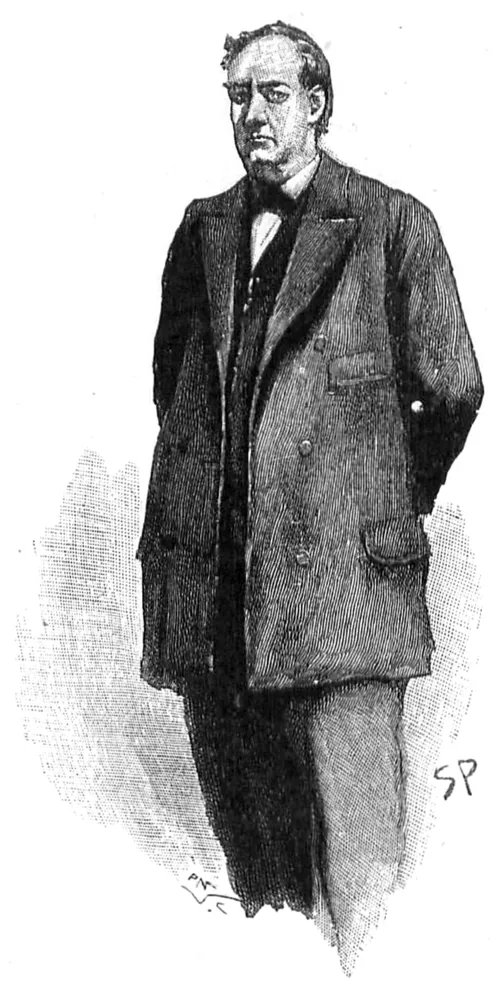
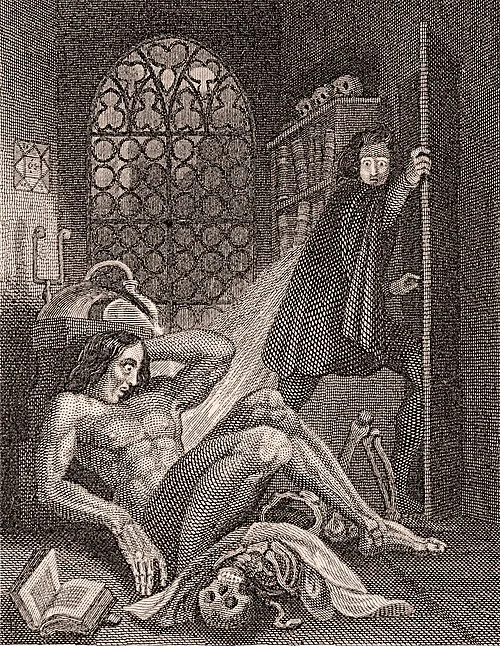
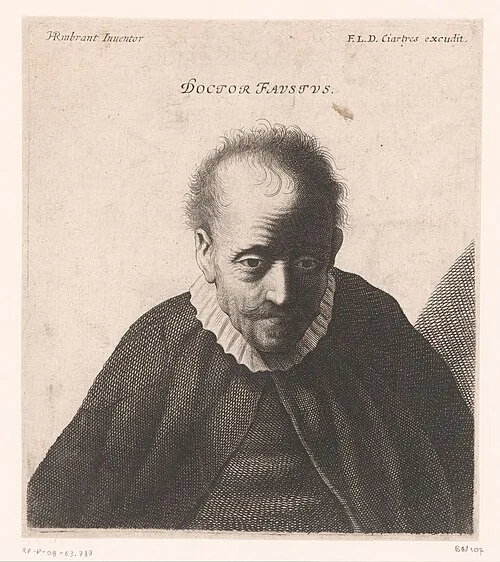
Illustration by Sidney Paget for The Strand Magazine (1893), public domain. Background removed for the portrait above. · Frontispiece by Theodor von Holst for the 1831 edition, public domain. · Print attributed to Jérôme David, after Rembrandt van Rijn, published by François Langlois. Rijksmuseum (object RP-P-OB-63.789), CC0.


An estimate is an inference.
Yours can be measured.
Thirty questions, scored against general-population benchmarks. Your score, your percentile, your ability breakdown and a printable IIF certificate.
Find your IQ score now! →