



What is Ryan Fitzpatrick’s IQ?
A real score of 48, misquoted down to 150.

Fitzpatrick is the rare subject with a genuine, well-documented test score — 48 out of 50 on the NFL Combine’s Wonderlic, still the highest ever recorded by a quarterback. The 150 IQ that gets quoted from it does not even match the standard conversion.
Ryan Fitzpatrick’s estimated IQ
- Scored 48 out of 50 on the Wonderlic Personnel Test at the 2005 NFL Scouting Combine — first reported by the Wall Street Journal — the highest figure on record for an NFL quarterback.
- BA in Economics from Harvard University, 2005; unanimous Ivy League Player of the Year and team captain as a senior, leading Harvard to an undefeated season.
- The Wonderlic correlates with general cognitive ability (r ≈ 0.85–0.93 against the WAIS) but is scored on its own 50-point scale, not an IQ scale.
The Wonderlic is a timed aptitude test built for hiring decisions, not a clinical IQ test, and published Wonderlic-to-IQ conversions are approximations with real error bars. This range should be read as an estimate anchored to a real score, not the score itself.
- Born
- 24 November 1982, Gilbert, Arizona
- Field
- American football (quarterback)
- Education
- BA Economics, Harvard University (2005)
- Known for
- 17 NFL seasons; started for a record 9 teams; highest Wonderlic score on record for a quarterback
What an IQ of 145–160 actually means
Set the claim aside for a moment. If someone genuinely scored in this range, here is what that would represent.
Average is 100 by construction, and about two-thirds of people fall between 85 and 115. Take the test to place your own score on this scale.
| Score range | Classification | Share of people | What it indicates |
|---|---|---|---|
| 85 – 114 | Average | ~68% | The range most people fall into. |
| 115 – 129 | Above average | ~13.6% | Roughly one person in seven. |
| 130 – 144 | Gifted | ~2% | The threshold most high-IQ societies use. |
| Above 144 | Highly gifted | ~0.1% | Figures above this range are extrapolated from the curve rather than measured. |
Percentages are approximate and describe a normal distribution. The same number means different things on tests with different standard deviations.
Thirty questions gives you a measured position on this exact scale — your score, your percentile and the ability breakdown behind it.
Find out in 30 minutes →Who Ryan Fitzpatrick is
Ryan Fitzpatrick was born in 1982 in Gilbert, Arizona, and played quarterback at Harvard, where he was a unanimous Ivy League Player of the Year and team captain in 2004, leading the team to an undefeated season.
After graduating with an economics degree in 2005, he was drafted in the seventh round and went on to a 17-season NFL career, starting for a record nine different franchises — earning the nickname “FitzMagic” for a run of standout performances along the way.
Despite the longevity and the Wonderlic reputation, he never made a Pro Bowl and never played in a playoff game — a detail that belongs in his record as much as the test score does.
 By Elora Mercer, Celebrity Research WriterFigures checked by Leon Falkner, Data & Research Analyst
Reviewed by Aarav Vardhan, Editor-in-Chief · Last reviewed August 2026
.jpg)
Ryan Fitzpatrick: the documented record
The estimate above rests on this record. Every entry here is a matter of public fact, which is more than can be said for the number itself.
- 1982Born in Gilbert, Arizona.
- 2001Begins playing quarterback at Harvard.
- 2004Unanimous Ivy League Player of the Year; team captain; leads Harvard to an undefeated season.
- 2005Graduates Harvard with a BA in Economics; scores 48/50 on the Wonderlic at the NFL Combine; drafted by the St. Louis Rams.
- 2005–2012Plays for the Rams, Bengals and Bills.
- 2015Career-best season, with the New York Jets.
- 2013–2021Plays for the Titans, Texans, Buccaneers, Dolphins and Washington — becomes the first QB to start for nine different NFL teams.
- 2022Retires after a 17-season career.
Where the 150 figure came from
Following a claim back to its first appearance is the part almost nobody does — and it is what most people are actually asking.

Fitzpatrick’s page runs against the usual pattern on this site. Most subjects here have an inflated figure sitting on top of a thin or absent record. Fitzpatrick has a genuinely strong, well-sourced test result — and the number that circulates from it is oddly lower than a straightforward conversion would produce.
The Wonderlic is real, administered, and reported by name — a rarity in this section, where most claims trace to nothing at all. It is still not an IQ test, and treating a 50-point hiring aptitude score as interchangeable with a clinical IQ score is the same kind of category error this site flags elsewhere, just running in an unusual direction here.
Worth noting separately: seventeen NFL seasons and a record nine teams started for produced no Pro Bowl selection and no playoff appearance — a genuine, documented gap between the “smartest player” reputation and what it translated to on the field.
How we read a number →Independently repeat the 48/50 Wonderlic figure; NFL.com also carries Fitzpatrick’s own quote disputing the rumoured perfect score.
Confirms the BA in Economics (2005), team captaincy, and unanimous Ivy League Player of the Year honour.
Used to compute the ~156 figure a 48 would imply — shown here to demonstrate that the circulating 150 does not match the standard conversion of his own real score.
Source URLs and first-appearance date pending audit.
States plainly that the figure is derived from the Wonderlic score, not independently sourced — an unusually transparent aggregator by this site’s standards.
The sources behind our estimate
The figures that circulate for Ryan Fitzpatrick, what we were able to confirm, and where the two diverge.
150 is the IQ figure that circulates for Fitzpatrick, explicitly derived by aggregator sites from his Wonderlic score rather than independently claimed.
The 48-out-of-50 Wonderlic score is real and well-attested, first reported by the Wall Street Journal in September 2005 and repeated since by the NFL’s own website, CBS Sports and Yahoo Sports. What is not real is the conversion: standard published Wonderlic-to-IQ formulas applied to a 48 produce a figure closer to 156, not the 150 that circulates — a rare case on this site where the invented number is lower than what the real evidence would support, and where a rumoured perfect score of 50 has also been explicitly and repeatedly denied by Fitzpatrick himself.
That spread describes the Wonderlic score itself, not an IQ — 48 is the best-attested figure, 49 has been quoted by Fitzpatrick in one instance, and 50 (a perfect score) is a debunked rumour he has personally denied.
Want a number that does hold up? Every figure on this page is somebody’s claim. Take the 30-question test and get a percentile you can check rather than a figure you have to trust.
Ryan Fitzpatrick — frequently asked
What was Ryan Fitzpatrick’s IQ?
No IQ test is on record. What is documented is a Wonderlic aptitude score of 48 out of 50 at the 2005 NFL Combine — the highest ever recorded by a quarterback.
Is the Wonderlic the same as an IQ test?
No. It is a correlated but distinct cognitive-aptitude test used in hiring, scored out of 50. Conversions to an IQ-equivalent figure are approximate.
Did he really score a perfect 50?
No — that is a debunked rumour. Fitzpatrick has said directly that he left one question blank and “definitely didn’t get a 50.”
Where does the 150 figure come from?
Aggregator sites derive it from his Wonderlic score, but the standard conversion formula applied to a 48 produces roughly 156, not 150.
Did he go to Harvard?
Yes — a BA in Economics, graduating in 2005 as unanimous Ivy League Player of the Year.
Did the reputation translate to success on the field?
Not by the usual measures — despite 17 seasons and an NFL-record nine teams started for, he never made a Pro Bowl or played in a playoff game.
How does my IQ compare with Ryan Fitzpatrick?
You can find out in about fifteen minutes. The IQ Metrics assessment is 30 questions, scored on the same 100-mean scale used throughout this page, so your result and the estimate above are at least expressed in the same units — one measured, one inferred. Once you have a number, the leaderboard shows where it would sit, and how we score and norm it explains the benchmarking.
Where does this estimate come from?
From the documented record rather than a test — the method is named above and set out in full under how we read a number. Compare it against the other athletes profiles, starting with Magnus Carlsen.
- Take the 30-question IQ test — get a measured score and percentile of your own
- Average IQ by country — how the scale behaves across populations
- How IQ Metrics scores its assessment — the method behind our own number
- More on how IQ testing works — reliability, error and what a score can and cannot say
- More athletes profiles — same field, same method
More athletes
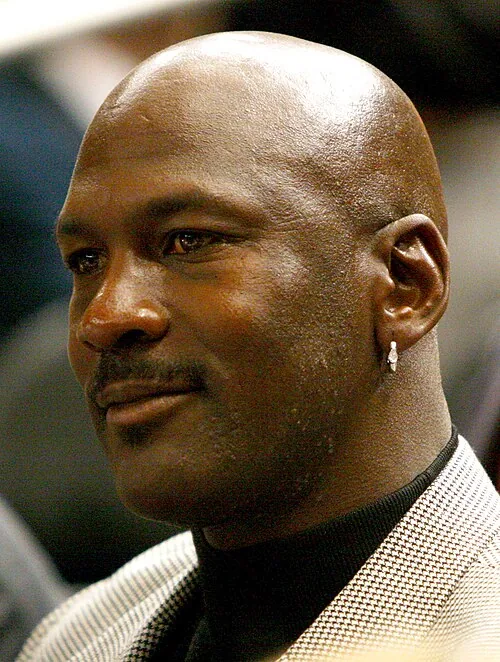
Michael Jordan


Photograph by Joshua Massel, cropped by Commons user Quadzilla99, CC BY-SA 2.0. · Photograph by Super Festivals, CC BY 2.0. Background removed for the portrait above. · Photograph by Wolfgang Jekel (London Chess Classic, 2016), CC BY 2.0. Background removed for the portrait above.


_(cropped).jpeg)
An estimate is an inference.
Yours can be measured.
Thirty questions, scored against general-population benchmarks. Your score, your percentile, your ability breakdown and a printable IIF certificate.
Find your IQ score now! →