



What is Viswanathan Anand’s IQ?
One peak rating, two formulas, two answers: 182 and 191. Neither is a test result.
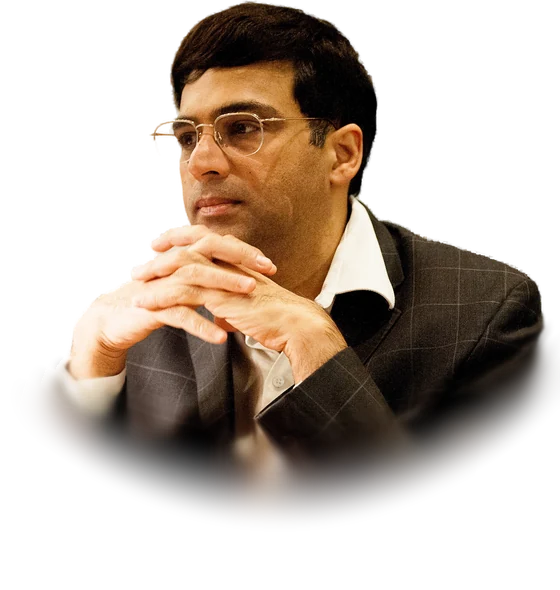
No published IQ test result exists for Viswanathan Anand. The “IQ of Vishy Anand” quoted online, 182 to 191, is the output of Elo-to-IQ formulas and unsourced lists; the documented record (a peak FIDE rating of 2817, five world championship wins, India’s first grandmaster title) supports an estimated IQ of about 140–155.
Viswanathan Anand’s estimated IQ
- Peak FIDE standard rating of 2817 on the March 2011 list, after first passing 2800 in April 2006 and reaching No. 1 in April 2007; still 2739 and 14th among active players on the September 2026 list.
- FIDE World Champion in 2000 and undisputed World Champion from 2007 to 2013, defending the title against Vladimir Kramnik (2008), Veselin Topalov (2010) and Boris Gelfand (2012).
- India’s first grandmaster (FIDE title 1988, after the International Master title in 1985) and 1987 World Junior Champion, the first Asian to win a world chess title.
- Won the 2014 Candidates Tournament at 44 to earn a title rematch, and the FIDE World Rapid Championship in 2003 and 2017: top-level results in classical and rapid chess more than a decade apart.
- Published research finds a positive but modest link between cognitive ability and chess skill (r = .24 across 19 studies in a 2016 meta-analysis, revised to .22 in 2018), which is why this is a band and not a point estimate.
Elo measures chess strength, not general reasoning: among rated players the link between fluid reasoning and chess skill is weak (r = .14 in the 2016 meta-analysis), and the studies it pooled reported ratings only up to 2607, well below his 2817. Viswanathan Anand’s estimated IQ level here is a band inferred from a strong record, not a measurement.
- Born
- December 11, 1969, Mayiladuthurai, Tamil Nadu, India
- Field
- Chess; India’s first grandmaster (FIDE title 1988)
- World titles
- FIDE World Champion 2000; undisputed champion 2007–2013 (title wins 2007, 2008, 2010, 2012)
- Peak FIDE rating
- 2817 (March 2011 list); first passed 2800 in April 2006
- FIDE rating, Sept. 2026
- 2739 standard, 2721 rapid, 2706 blitz; 14th among active players
- Honors
- Rajiv Gandhi Khel Ratna (1991–92, first recipient); Padma Shri 1988; Padma Bhushan 2001; Padma Vibhushan 2008
- Known as
- “The Lightning Kid”, for his speed at the board
- Circulating IQ figures
- 182–191, from formulas and unsourced lists; no test result published
What an IQ of 140–155 actually means
Set the claim aside for a moment. If someone genuinely scored in this range, here is what that would represent.
Average is 100 by construction, and about two-thirds of people fall between 85 and 115. Take the test to place your own score on this scale.
| Score range | Classification | Share of people | What it indicates |
|---|---|---|---|
| 85 – 114 | Average | ~68% | The range most people fall into. |
| 115 – 129 | Above average | ~13.6% | Roughly one person in seven. |
| 130 – 144 | Gifted | ~2% | The threshold most high-IQ societies use. |
| Above 144 | Highly gifted | ~0.1% | Figures above this range are extrapolated from the curve rather than measured. |
Percentages are approximate and describe a normal distribution. The same number means different things on tests with different standard deviations.
Thirty questions gives you a measured position on this exact scale — your score, your percentile and the ability breakdown behind it.
Find out in 30 minutes →Who Viswanathan Anand is
Viswanathan Anand was born on December 11, 1969 in Mayiladuthurai, Tamil Nadu, and learned chess from his mother at six. At 14 he won the Indian National Sub-Junior Championship with nine wins in nine games; at 15 he became the youngest Indian to earn the International Master title (FIDE dates it to 1985); in 1987 he won the World Junior Championship, the first Asian to win a world chess title; and in 1988 he became India’s first grandmaster. In 1991 he won his first major international tournament, finishing ahead of Garry Kasparov and Anatoly Karpov, after which, Britannica notes, a non-Russian was a favorite for the world title for the first time since Bobby Fischer abandoned it in 1975.
The title itself took longer. He lost the 1995 PCA World Championship match to Garry Kasparov on the 107th floor of the World Trade Center’s South Tower in New York, and the 1998 FIDE final to Anatoly Karpov in a rapid playoff in Lausanne. He won the FIDE World Championship, a knockout played in New Delhi and Tehran, in 2000; became undisputed champion by winning the eight-player Mexico City tournament in September 2007 with nine points from fourteen, unbeaten; and then beat Vladimir Kramnik in Bonn in 2008 (6½–4½), Veselin Topalov in Sofia in 2010 (6½–5½) and Boris Gelfand in Moscow in 2012 (on a rapid tiebreak). Magnus Carlsen beat him in Chennai in 2013 (6½–3½) and again in Sochi in 2014 (6½–4½), after Anand had won the Candidates Tournament in Khanty-Mansiysk to earn the rematch.
On the FIDE list he first passed 2800 in April 2006 and first reached world number one in April 2007; his best standard rating, 2817, first appears on the March 2011 list, and he was back at 2816 for three lists in mid-2015. On the September 2026 list he is rated 2739 in standard chess, 2721 in rapid and 2706 in blitz, and is 14th among active players at 56. The “Lightning Kid” nickname, which Britannica ties to his quick tactical calculation and speed-chess titles, has a rapid-play record behind it: he won the FIDE World Rapid Championship in 2003 and again in 2017 in Riyadh.
The Government of India’s Padma Awards directory lists his Padma Shri (1988), Padma Bhushan (2001) and Padma Vibhushan (2008); Britannica adds that he was the first winner of the Rajiv Gandhi Khel Ratna, for 1991–92. His books include Vishy Anand: My Best Games of Chess (1998) and Mind Master: Winning Lessons from a Champion’s Life (2019). He was elected deputy president of FIDE in August 2022.
 By Elora Mercer, Celebrity Research WriterFigures checked by Leon Falkner, Data & Research Analyst
Reviewed by Aarav Vardhan, Editor-in-Chief · Last reviewed August 2026
_(cropped).jpeg)
Viswanathan Anand: the documented record
The estimate above rests on this record. Every entry here is a matter of public fact, which is more than can be said for the number itself.
- 1969Born on December 11 in Mayiladuthurai, Tamil Nadu, India.
- 1987Wins the World Junior Championship at 17, the first Asian to win a world chess title.
- 1988Awarded the grandmaster title, the first for India (International Master in 1985); receives the Padma Shri.
- 1995Loses the PCA World Championship match to Garry Kasparov in New York: one win, four losses, thirteen draws.
- 2000Wins the FIDE World Championship, a knockout played in New Delhi and Tehran.
- 2007Wins the Mexico City tournament, nine points from fourteen and unbeaten, to become undisputed World Champion.
- 2008–12Defends the title against Vladimir Kramnik (Bonn, 2008), Veselin Topalov (Sofia, 2010) and Boris Gelfand (Moscow, 2012, on a rapid tiebreak).
- 2011Reaches his peak FIDE rating, 2817, on the March list.
- 2013–14Loses the title to Magnus Carlsen in Chennai (3½–6½), then loses the 2014 rematch in Sochi after winning the Candidates Tournament.
- 2026September list: rated 2739 in standard chess, 14th among active players.
Where the 182–191 figure came from
Following a claim back to its first appearance is the part almost nobody does — and it is what most people are actually asking.
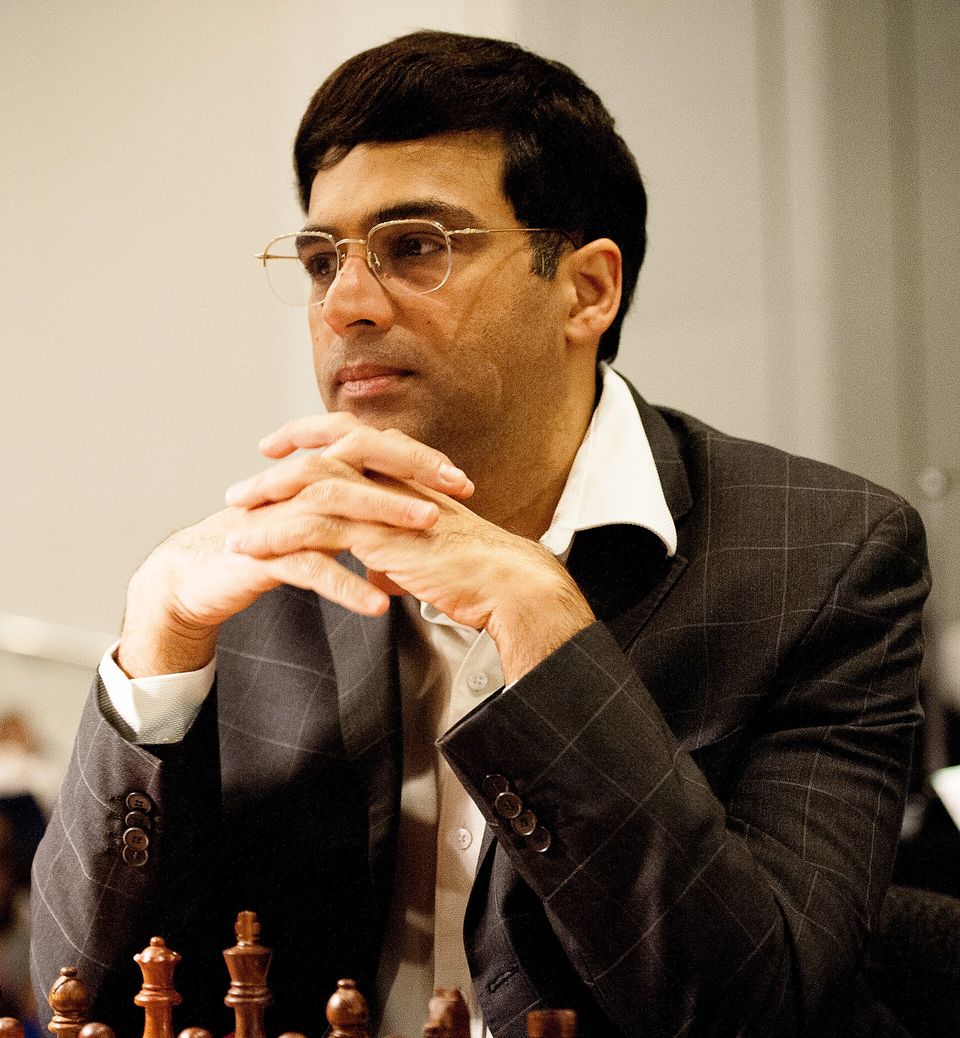
Every figure we could find for the IQ of Viswanathan Anand is either arithmetic or unattributed. The arithmetic: correspondencechess.com (November 3, 2023) runs his rating through 100 + 0.06 × (Elo − 1300) and gets 187 at his 2023 rating of 2754 and 191 at his 2817 peak, and gamelevate.com (January 11, 2024) applies the Levitt Equation to the same peak and gets 182. The unattributed: a grid on worldiqranking.com, seen in a screenshot posted to X on January 5, 2025, lists 190 beside Albert Einstein’s 160, and the opening post of a Chess.com forum thread lists 165–175 for his years as champion; when other members asked for documentation, the poster replied only that it came from a trusted source. None of the four cites a test. For how such figures usually start, see where celebrity IQ numbers come from.
The best-known of these formulas has an author who attached warnings to it. Jonathan Levitt proposed in Genius in Chess (Batsford, 1997) that a player of IQ Y will tend, after many years of tournament play and study, to reach an Elo rating of about 10Y + 1000. He wrote that it should not be taken too seriously and that it cannot be used to deduce a person’s IQ from a rating, because the years of effort it presupposes may not have been put in; his conclusion that a world champion would need an IQ near 180 was drawn “for the sake of speculation”. We could not trace the other formula to an author or a study. Applied to his 2817 peak, the two formulas give 182 and 191; applied to his September 2026 rating of 2739, they give 174 and 186. That is four different “IQs” for one man, and the number follows the FIDE list, not a trait. The check is the one champion on this site with a reported test result: the profile of Garry Kasparov carries a reported 135, while gamelevate.com’s equation gives 185 for his 2851 peak, fifty points higher.
What a published rating can say is real but narrow. Elo is a results-based, continuously updated measure of chess strength against other rated players; it cannot be converted into a general-ability score. The largest synthesis of the research, the 2016 meta-analysis by Burgoyne and colleagues (19 studies, 1,779 players, in Intelligence), found, as originally reported, that cognitive ability correlates with chess skill at r = .24 overall (.22 after a 2018 correction) but at only r = .14 for fluid reasoning among rated players, about 2 percent of the variance; full-scale IQ tests alone explained under 1 percent, from just six effect sizes. Its Elo-rated studies ran from 1311 up to 2607, and the authors flag that rating spreads inside samples were narrower than in the full population, so it says little about a player rated 2817. See what a chess rating can and cannot say about IQ and the wider research on chess and intelligence.
Anand’s own words point the same way. In an October 2023 Forbes India interview he said that when he thinks about other areas of life he asks what his ranking is there, not in chess, and reminds himself that he should “probably not extrapolate too much” from his assumptions. In Mind Master (2019) he retells Adriaan de Groot’s experiment: grandmasters and masters reproduced a real position 93 percent correctly, but on shuffled positions every group, grandmasters included, placed only three or four pieces correctly, which he takes to show that chess players have “contextual memory”, not an inexplicably photographic one. That is a skill tied to chess positions, one reason it can look extraordinary at the board and say little on a general test (how memory relates to IQ). So the range follows the rating, as on the site’s other chess profiles. His 2817 peak is one point above the 2816 of Hikaru Nakamura, whose band is 140–155, so the two share a band; Magnus Carlsen, with a 2882 peak, sits slightly higher at 145–160. As on most pages here, the documented record supports a lower range than the circulating figure.
How we read a number →Standard 2739, rapid 2721 and blitz 2706 on the September 2026 list; grandmaster 1988, International Master 1985; 14th among active players. Top Records shows 2803 on the April 2006 list, No. 1 first on the April 2007 list, and 2817 on the March, May, July and September 2011 lists (2816 in July to September 2015).
Lists Viswanathan Anand for the Padma Shri in 1988, the Padma Bhushan in 2001 and, in the sports field, the Padma Vibhushan in 2008.
Birth date and place; the five FIDE world championship wins (2000, 2007, 2008, 2010, 2012); the “Lightning Kid” nickname; the 1987 World Junior title; the 1988 grandmaster title; the first Rajiv Gandhi Khel Ratna (1991–92); Mind Master (2019). No IQ figure.
Match dates, venues and scores, cross-checked against Britannica where they overlap; the 2003 and 2017 World Rapid titles; his election as FIDE deputy president in Chennai on August 7, 2022. Wikipedia is used for orientation only, and its biography article contains no IQ figure.
The memory passage (de Groot’s experiment, “contextual memory”) and his remark that he should “probably not extrapolate too much” from his chess ranking. Neither mentions IQ.
19 studies, 1,779 players; r = .24 overall (.22 after the 2018 correction); fluid reasoning r = .14 in ranked samples against .32 in unranked; full-scale IQ under 1 percent of variance; Elo ratings in the pooled studies ran from 1311 to 2607.
The Levitt Equation, Elo ≈ 10 × IQ + 1000, with the author’s own warnings that it should not be taken too seriously and cannot be used to deduce a person’s IQ from a rating.
correspondencechess.com gives 187 (Elo 2754) and 191 (Elo 2817) from 100 + 0.06 × (Elo − 1300), calls it an unofficial tool and says his IQ is undisclosed. gamelevate.com gives 182 from the Levitt Equation at 2817 and says he has not taken an IQ test publicly, as far as it knows.
None states a method, examiner, test or date. The forum poster answered requests for documentation only with “a trusted source”. The Short’s title is a headline, not a result.
None appears in FIDE’s profile, Britannica, Wikipedia, the excerpts of his own writing or interview above, or any page that quotes a figure. Chess.com put the question to him on camera (video of May 15, 2024); we could not verify his spoken answer.
The sources behind our estimate
The figures that circulate for Viswanathan Anand, what we were able to confirm, and where the two diverge.
182 to 191 circulates for Viswanathan Anand’s IQ: 190 in a grid of famous people’s scores on worldiqranking.com (shown in a screenshot posted on X on January 5, 2025), 187 and 191 on correspondencechess.com (November 3, 2023), 182 on gamelevate.com (January 11, 2024) and 165–175 in the opening post of a Chess.com forum thread (November 30, 2024). A YouTube Short from May 2, 2025 is titled “Vishy Anand’s IQ is 250?!”
No published IQ test result exists for Viswanathan Anand. We checked each source above; none cites a test, an examiner or a testing date. correspondencechess.com prints its arithmetic, 100 + 0.06 × (Elo − 1300), calls it a fun, unofficial tool that psychologists do not endorse, and says his IQ remains undisclosed. gamelevate.com applies the Levitt Equation to his 2817 peak and adds that, as far as it knows, he has not taken an IQ test publicly. The worldiqranking.com grid and the forum list give their numbers with no method at all. We found no figure from Anand himself: Chess.com put the question to him on camera in May 2024, and a clip channel’s description says he answered that he has never tested his IQ, but we could not check the audio, so we do not rely on it.
Our band ends at 155, and the lowest circulating figure starts 27 points above it. The two figures built on the same 2817 peak also differ from each other by nine points, which is what a formula produces and a measurement does not. An IQ score needs a test, and these figures have none.
Want a number that does hold up? Every figure on this page is somebody’s claim. Take the 30-question test and get a percentile you can check rather than a figure you have to trust.
Viswanathan Anand — frequently asked
What is Viswanathan Anand’s IQ?
No IQ test result has been published for Viswanathan Anand. The figures online, roughly 182 to 191, are outputs of Elo-to-IQ formulas or unsourced lists, not scores. Our estimate, inferred from his chess record (peak FIDE rating 2817, five world championship wins), is a range of 140–155.
What is the IQ of Vishy Anand?
Vishy is the nickname used for Viswanathan Anand, so the IQ of Vishy Anand and the IQ of Viswanathan Anand are one question with one answer: no test result exists. Pages that give a number, such as 187, 190 or 182, either apply a formula to his FIDE rating or list it with no source. Our estimated range is 140–155.
Did Viswanathan Anand ever take an IQ test?
No result from any IQ test has been published, by Anand or anyone else. Chess.com put the question to him on camera in a May 2024 video, and a clip channel’s description says he replied that he has never tested it, but we could not verify the wording.
Where do the 187 and 190 IQ figures for Anand come from?
Neither comes from a test. The 187 is his 2023 rating of 2754 run through the formula 100 + 0.06 × (Elo − 1300) on correspondencechess.com; the 190 appears in a worldiqranking.com grid shown in a screenshot on X, with no method given. Neither cites an examiner or a date.
Does a chess rating of 2817 mean an IQ of 180?
No. An Elo rating measures chess results against other rated players, not general reasoning. A 2016 meta-analysis of 19 studies found chess skill correlated with cognitive ability at r = .24 (revised to .22 in 2018), and, as first reported, only about r = .14 for fluid reasoning among rated players. Most of the variance is unexplained, so a rating cannot be converted into an IQ.
What is Viswanathan Anand’s chess rating?
On the September 2026 FIDE list Viswanathan Anand is rated 2739 in standard chess, 2721 in rapid and 2706 in blitz, 14th among active players. His career-peak standard rating is 2817, first reached on the March 2011 list.
How does Viswanathan Anand’s estimated IQ compare with Magnus Carlsen’s?
Our range for Anand is 140–155, against 145–160 for Magnus Carlsen. Both are inferred from published FIDE ratings, and Carlsen’s peak of 2882 is higher than Anand’s 2817. Neither is a test score, so the gap is smaller than the uncertainty in either range.
Is Viswanathan Anand a genius?
“Genius” is a label, not a measurement, and no test result exists to apply it to. What the record shows is elite chess results sustained for nearly four decades: a peak FIDE rating of 2817, five world championship wins and 14th place among active players in September 2026. That measures one skill, so we do not turn it into a genius-level IQ.
How does my IQ compare with Viswanathan Anand?
You can find out in about fifteen minutes. The IQ Metrics assessment is 30 questions, scored on the same 100-mean scale used throughout this page, so your result and the estimate above are at least expressed in the same units — one measured, one inferred. Once you have a number, the leaderboard shows where it would sit, and how we score and norm it explains the benchmarking.
Where does this estimate come from?
From the documented record rather than a test — the method is named above and set out in full under how we read a number. Compare it against the other athletes profiles, starting with Magnus Carlsen.
- Take the 30-question IQ test — get a measured score and percentile of your own
- Average IQ by country — how the scale behaves across populations
- How IQ Metrics scores its assessment — the method behind our own number
- More on how IQ testing works — reliability, error and what a score can and cannot say
- More athletes profiles — same field, same method
More athletes

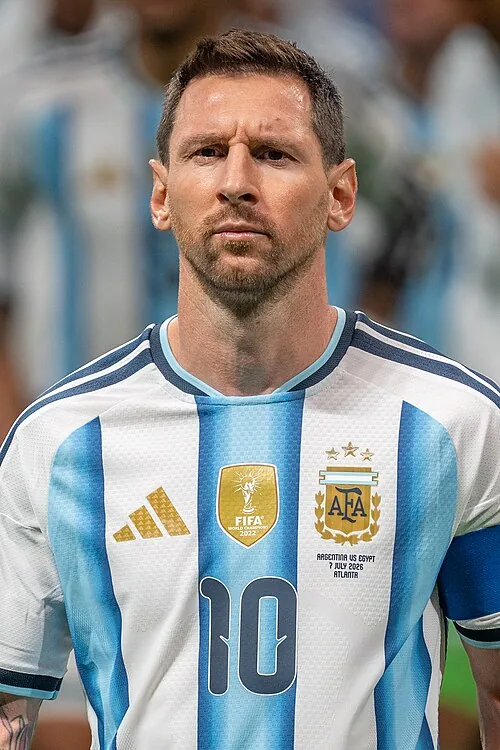
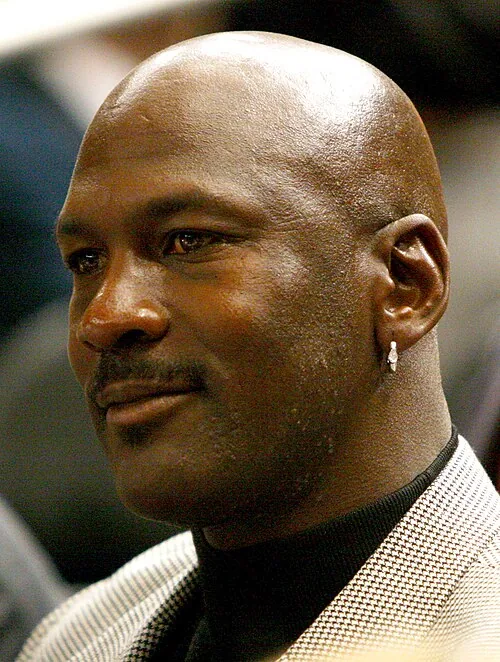
Michael Jordan
Photograph by Barcex, CC BY-SA 4.0. Background removed for the portrait above. · Photograph by Bryan Berlin / WikiPortraits, CC BY-SA 4.0. The background-removed portrait above is a derivative work offered under the same licence. · Photograph by Joshua Massel, cropped by Commons user Quadzilla99, CC BY-SA 2.0.
_(cropped).jpg)


An estimate is an inference.
Yours can be measured.
Thirty questions, scored against general-population benchmarks. Your score, your percentile, your ability breakdown and a printable IIF certificate.
Find your IQ score now! →