



What was Stephen Hawking’s IQ?
He was asked directly, and he answered.
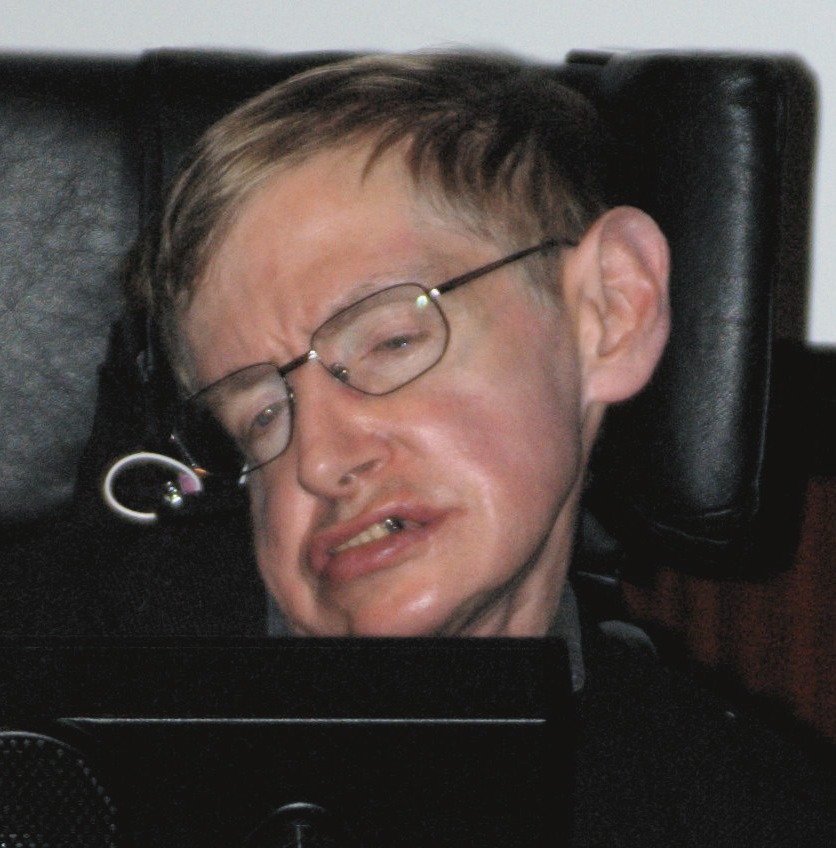
Hawking is the only person profiled here who was asked this question on the record and answered it — and the answer was that the question is for losers.
Stephen Hawking’s estimated IQ
- First-class honours in natural science from University College, Oxford, in 1962 — achieved, by his own later account, on roughly a thousand hours of work across three years.
- A Cambridge PhD in 1966, Properties of Expanding Universes, released openly by the university in 2017 and downloaded heavily enough to overwhelm its repository.
- The Penrose–Hawking singularity theorems from 1970, and the 1974 prediction of black hole radiation, which remains his most consequential result.
- Election to the Royal Society in 1974, and appointment as Lucasian Professor of Mathematics at Cambridge from 1979 to 2009 — the chair once held by Newton.
This is an inference from output, which is exactly the inference Hawking rejected. A record this strong constrains an estimate only loosely: it establishes a floor far more securely than it establishes a ceiling, and the band above should be read as a floor with an open top rather than as a measurement.
- Born
- 8 January 1942, Oxford
- Died
- 14 March 2018, Cambridge
- Field
- Theoretical physics, cosmology
- Education
- University College, Oxford, BA 1962; University of Cambridge, PhD 1966
- Position
- Lucasian Professor of Mathematics, Cambridge, 1979–2009
- On record about IQ
- “I have no idea. People who boast about their IQ are losers.” (2004)
What an IQ of 150–170 actually means
Set the claim aside for a moment. If someone genuinely scored in this range, here is what that would represent.
Average is 100 by construction, and about two-thirds of people fall between 85 and 115. Take the test to place your own score on this scale.
| Score range | Classification | Share of people | What it indicates |
|---|---|---|---|
| 85 – 114 | Average | ~68% | The range most people fall into. |
| 115 – 129 | Above average | ~13.6% | Roughly one person in seven. |
| 130 – 144 | Gifted | ~2% | The threshold most high-IQ societies use. |
| Above 144 | Highly gifted | ~0.1% | Figures above this range are extrapolated from the curve rather than measured. |
Percentages are approximate and describe a normal distribution. The same number means different things on tests with different standard deviations.
Thirty questions gives you a measured position on this exact scale — your score, your percentile and the ability breakdown behind it.
Find out in 30 minutes →Who Stephen Hawking was
Stephen Hawking was born in Oxford in 1942 and read natural science at University College, Oxford, graduating in 1962. He moved to Cambridge for postgraduate work in cosmology and completed his doctorate in 1966.
He was diagnosed with motor neurone disease in 1963, at twenty-one, and given a short prognosis. He lived a further fifty-five years. His 1974 prediction that black holes emit radiation is the result his reputation rests on, and it remains unconfirmed by observation.
He held the Lucasian Chair at Cambridge from 1979 to 2009. A Brief History of Time, published in 1988, sold in the millions and made him the most widely recognised scientist alive. He died in Cambridge in March 2018.
 By Elora Mercer, Celebrity Research WriterFigures checked by Leon Falkner, Data & Research Analyst
Reviewed by Aarav Vardhan, Editor-in-Chief · Last reviewed August 2026

Stephen Hawking: the documented record
The estimate above rests on this record. Every entry here is a matter of public fact, which is more than can be said for the number itself.
- 1942Born in Oxford.
- 1959Goes up to University College, Oxford, to read natural science.
- 1962Graduates with first-class honours and moves to Cambridge.
- 1963Diagnosed with motor neurone disease at twenty-one.
- 1966Completes his doctorate, Properties of Expanding Universes.
- 1970Publishes the singularity theorems with Roger Penrose.
- 1974Predicts black hole radiation; elected to the Royal Society.
- 1979Appointed Lucasian Professor of Mathematics at Cambridge.
- 1988Publishes A Brief History of Time.
- 2004Tells The New York Times Magazine he has no idea what his IQ is.
- 2018Dies in Cambridge.
Where the 160 figure came from
Following a claim back to its first appearance is the part almost nobody does — and it is what most people are actually asking.
Every other profile in this section has to reconstruct where a figure came from. This one does not, because the subject addressed it directly and on the record, and what he said was that the premise was wrong.
The second half of his answer is the more useful part and is almost never quoted. His objection was to the idea of a dividing line at all — that there is a threshold with geniuses above it and everyone else below. That is precisely the belief that keeps celebrity IQ pages in business, and it is the belief this section was built to examine.
The Oxford anecdote is worth setting beside the 160, because it cuts against the mythology in a useful direction. In My Brief History Hawking estimated he had done about a thousand hours of work in three years — roughly an hour a day — and finished on the borderline between a first and a second. At his viva he told the examiners that if they awarded a First he would go to Cambridge, and if a Second he would stay at Oxford. He was given a First.
Compare Richard Feynman, whose school test returned 125 and who was delighted by how ordinary it was. Feynman is the other case here where a documented figure was quietly discarded for being insufficiently impressive. Two of the most influential physicists of the century left behind either a modest number or a refusal, and in both cases the internet supplied something better.
How we read a number →The interview containing both quoted passages. The single most important source on this page, and the reason it does not need to reconstruct a provenance.
His own account of the Oxford years, including the estimate of about a thousand hours of work and the exchange with his viva examiners.
Made openly available by the university in 2017. The examined record behind the estimate above.
The result his standing rests on. Cited here as achievement evidence, since no test evidence exists.
Hawking stated in 2004 that he did not know his IQ. No school or university test result has ever been published, and the 160 has no identified source.
First-appearance date for the 160 pending audit.
Remarkably consistent across sites, which indicates copying from a common source rather than independent reporting.
The sources behind our estimate
The figures that circulate for Stephen Hawking, what we were able to confirm, and where the two diverge.
160, almost universally, and usually presented as being the same as Einstein’s.
Hawking answered this himself. Asked by Deborah Solomon in The New York Times Magazine on 12 December 2004 what his IQ was, he replied: “I have no idea. People who boast about their IQ are losers.” Pressed on how the public could tell whether he really was a genius, he rejected the framing outright: the media, he said, need superheroes in science as everywhere else, “but there is really a continuous range of abilities with no clear dividing line”.
One number, everywhere, with no source. There is no competing figure to compare it against, which removes the usual clue and replaces it with a starker one: the man was asked, and declined to supply a number at all.
Want a number that does hold up? Every figure on this page is somebody’s claim. Take the 30-question test and get a percentile you can check rather than a figure you have to trust.
Stephen Hawking — frequently asked
What was Stephen Hawking’s IQ?
Unknown, and he said so. Asked directly in 2004 he answered: “I have no idea. People who boast about their IQ are losers.” No test result was ever published.
Where does the 160 figure come from?
No identified source. It appears on aggregator pages with no test, method or date, and is usually presented as matching Einstein’s — a figure that is itself an estimate rather than a measurement.
Did Stephen Hawking ever take an IQ test?
No result has ever been made public, and his own answer in 2004 indicates he did not know of one.
What did he actually say about intelligence?
That the media need superheroes in science as in every other sphere, but that ability runs on a continuous range with no clear dividing line. He was rejecting the threshold idea, not just declining the question.
Was he a strong student at Oxford?
He finished on the borderline between a first and a second, and wrote later that he had done roughly a thousand hours of work in three years. He told his viva examiners he would go to Cambridge with a First and stay at Oxford with a Second, and was awarded the First.
Which other scientists are profiled here?
Albert Einstein, Nikola Tesla — whose circulating 310 is the most inflated number in this section — and Richard Feynman, whose documented school score of 125 is routinely dismissed for being too low.
How does my IQ compare with Stephen Hawking?
You can find out in about fifteen minutes. The IQ Metrics assessment is 30 questions, scored on the same 100-mean scale used throughout this page, so your result and the estimate above are at least expressed in the same units — one measured, one inferred. Once you have a number, the leaderboard shows where it would sit, and how we score and norm it explains the benchmarking.
Where does this estimate come from?
From the documented record rather than a test — the method is named above and set out in full under how we read a number. Compare it against the other scientists profiles, starting with Albert Einstein.
- Take the 30-question IQ test — get a measured score and percentile of your own
- Average IQ by country — how the scale behaves across populations
- How IQ Metrics scores its assessment — the method behind our own number
- More on how IQ testing works — reliability, error and what a score can and cannot say
- More scientists profiles — same field, same method
More scientists
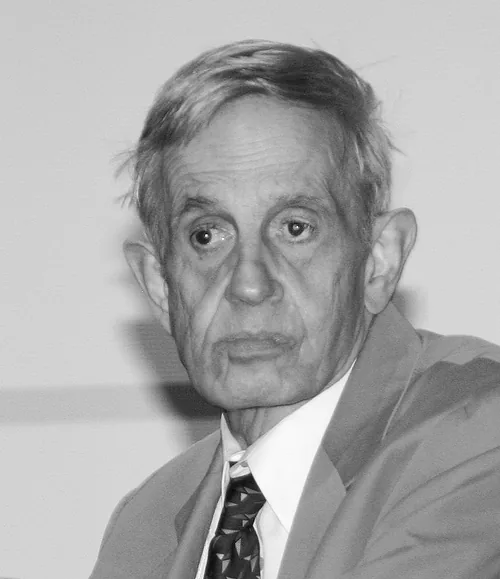
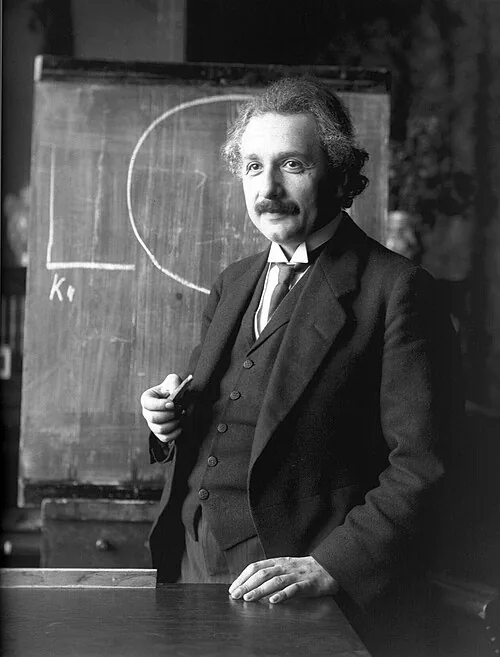
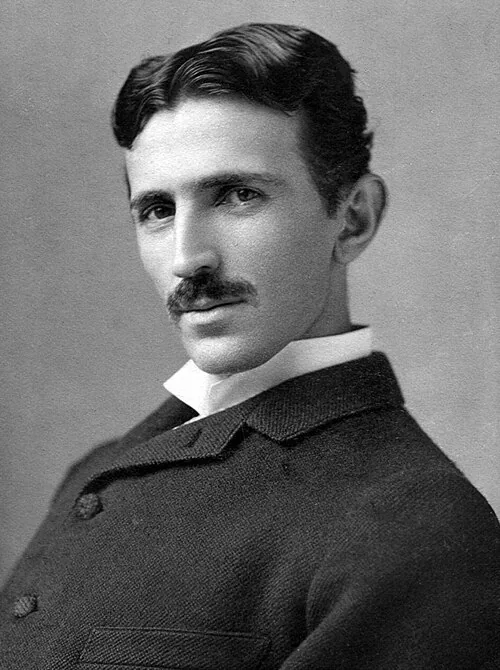
Photograph by Elke Wetzig (University of Cologne, November 2, 2006), CC BY-SA 3.0. Cropped and with background removed for the portrait above. · Portrait by Ferdinand Schmutzer (1921), public domain. Background removed for the portrait above. · Photograph by Napoleon Sarony (c. 1890), public domain. Background removed for the portrait above.


An estimate is an inference.
Yours can be measured.
Thirty questions, scored against general-population benchmarks. Your score, your percentile, your ability breakdown and a printable IIF certificate.
Find your IQ score now! →