



What is Roger Penrose’s IQ?
Is Roger Penrose smart? He was moved down a math set at school for being slow at mental arithmetic, then shared a Nobel Prize for black-hole theory.
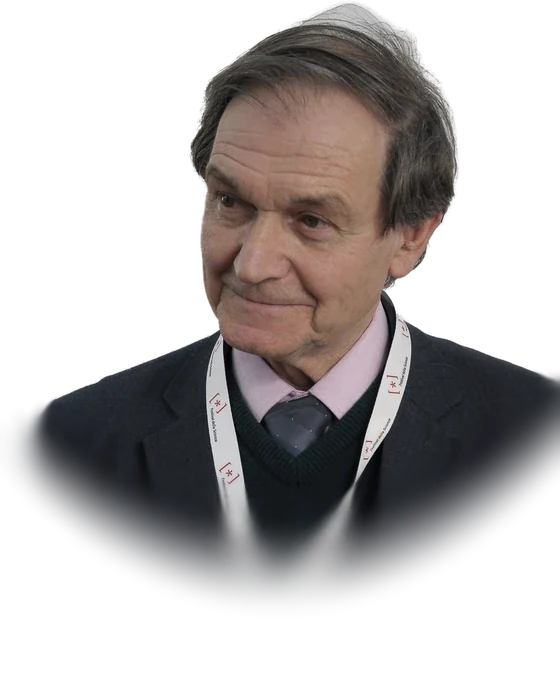
No published IQ test result exists for Roger Penrose, and we found no circulating figure for him. What is documented is a first-class mathematics degree from University College London, a Cambridge Ph.D. (1957), the Rouse Ball chair at Oxford and half of the 2020 Nobel Prize in Physics.
Roger Penrose’s estimated IQ
- A BSc with first-class honors in mathematics from University College London (1952), then a Ph.D. at St John’s College, Cambridge (1957), with a thesis titled Tensor Methods in Algebraic Geometry under John A. Todd.
- A 1965 paper in Physical Review Letters, “Gravitational Collapse and Space-Time Singularities”, proving that a singularity must occur in gravitational collapse, the line of work he later developed with Stephen Hawking in the Penrose–Hawking singularity theorems.
- Professor of Applied Mathematics at Birkbeck College, London, from 1966, then Rouse Ball Professor of Mathematics at the University of Oxford from 1973 until he became emeritus in 1998.
- Fellow of the Royal Society (1972), the Wolf Prize in Physics shared with Hawking (1988), a knighthood (1994), the Order of Merit (2000) and half of the 2020 Nobel Prize in Physics.
- Original constructions in several fields: twistor theory (1967), non-periodic tilings made from only two tiles (first introduced in 1974) and, with his father, a 1958 paper on “impossible objects”.
This is an inference from documented output, not a test result: degrees, a chair and prizes show sustained, original, peer-judged work in geometry and physics, which constrains a Roger Penrose estimated IQ only loosely and sets a floor far more securely than a ceiling. Penrose is also a documented case where speed and ability came apart, since by Wadham College’s account he was moved down a math set for slow mental arithmetic, so a timed test could capture a different profile from the one his record shows.
- Born
- August 8, 1931, Colchester, Essex, England
- Field
- Mathematical physics, general relativity, geometry
- Education
- University College London, BSc mathematics, first-class honors (1952); St John’s College, Cambridge, Ph.D. (1957)
- Position
- Rouse Ball Professor of Mathematics, University of Oxford, 1973–1998; now Emeritus
- Known for
- 1965 singularity theorem; twistor theory; Penrose tilings (1974); the Penrose triangle; The Emperor’s New Mind (1989)
- Honors
- Fellow of the Royal Society (1972); Wolf Prize in Physics (1988); knighted (1994); Order of Merit (2000); Nobel Prize in Physics, half share (2020)
- On record about IQ
- No published test result and no circulating figure
- Status
- Living, age 95, as of October 2026
What an IQ of 155–175 actually means
Set the claim aside for a moment. If someone genuinely scored in this range, here is what that would represent.
| Score range | Classification | Share of people | What it indicates |
|---|---|---|---|
| 85 – 114 | Average | ~68% | The range most people fall into. |
| 115 – 129 | Above average | ~13.6% | Roughly one person in seven. |
| 130 – 144 | Gifted | ~2% | The threshold most high-IQ societies use. |
| Above 144 | Highly gifted | ~0.1% | Figures above this range are extrapolated from the curve rather than measured. |
Percentages are approximate and describe a normal distribution. The same number means different things on tests with different standard deviations.
Thirty questions gives you a measured position on this exact scale — your score, your percentile and the ability breakdown behind it.
Find out in 30 minutes →Who Roger Penrose is
Roger Penrose was born on August 8, 1931, in Colchester, Essex. His family moved to London, Ontario, in 1939 and stayed until the end of the Second World War, and he went on to University College School in London. At University College London he took a BSc with first-class honors in mathematics in 1952, and he then moved to St John’s College, Cambridge, where his Ph.D. in algebraic geometry, with the thesis Tensor Methods in Algebraic Geometry and John A. Todd as supervisor, dates from 1957.
The Roger Penrose record after the doctorate runs through geometry and relativity. He became a Reader at Birkbeck College, London, in 1964 and a Professor of Applied Mathematics there two years later. His paper “Gravitational Collapse and Space-Time Singularities” appeared in Physical Review Letters on January 18, 1965, and in 1967 he developed twistor theory. In 1973 he became Rouse Ball Professor of Mathematics at the University of Oxford, a post he held until he became emeritus in 1998. The Penrose tilings, non-periodic patterns first introduced in 1974 and later developed as the kite-and-dart and rhombus tilings, carry his name, as does the Penrose triangle, on which he collaborated with his father; their 1958 British Journal of Psychology paper is titled “Impossible Objects: A Special Type of Visual Illusion”.
The honors are well documented. He was elected a Fellow of the Royal Society in 1972; he shared the 1988 Wolf Prize in Physics with Hawking, a citation crediting their work on cosmological singularities and the physics of black holes; he was knighted in 1994 and received the Order of Merit in 2000. In 2020 he was awarded half of the Nobel Prize in Physics for showing that black hole formation is a robust prediction of Albert Einstein’s general theory of relativity; the other half went jointly to Reinhard Genzel and Andrea Ghez. Reputation is not a score, and what counts as genius-level is a different question from what a test would show.
His books reach beyond physics. The Emperor’s New Mind (Oxford University Press, 1989) sets out his argument that human consciousness is non-algorithmic. As of October 2026, Penrose is living at age 95; a 2026 conference speaker page lists him as Emeritus Rouse Ball Professor of Mathematics at Oxford and Emeritus Fellow of Wadham College.
 By Elora Mercer, Celebrity Research WriterFigures checked by Leon Falkner, Data & Research Analyst
Reviewed by Aarav Vardhan, Editor-in-Chief · Last reviewed August 2026

Roger Penrose: the documented record
The estimate above rests on this record. Every entry here is a matter of public fact, which is more than can be said for the number itself.
- 1931Born August 8 in Colchester, Essex.
- 1936His father, Lionel Penrose, and John C. Raven publish “A new series of perceptual tests” in the British Journal of Medical Psychology.
- 1952Takes a first-class BSc in mathematics at University College London.
- 1957Completes a Ph.D. at St John’s College, Cambridge.
- 1965Publishes “Gravitational Collapse and Space-Time Singularities” in Physical Review Letters.
- 1973Appointed Rouse Ball Professor of Mathematics at Oxford, having been elected a Fellow of the Royal Society in 1972; emeritus from 1998.
- 1974Introduces the first of the aperiodic Penrose tilings.
- 1988Shares the Wolf Prize in Physics with Stephen Hawking.
- 1994Knighted for services to science.
- 2020Awarded half of the Nobel Prize in Physics.
Why no figure circulates
Following a claim back to its first appearance is the part almost nobody does — and it is what most people are actually asking.
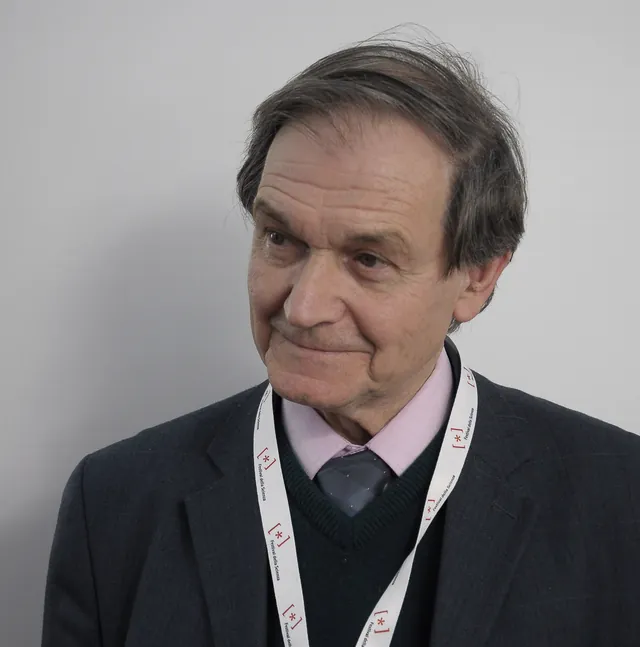
Searches for Roger Penrose IQ, Roger Penrose IQ level and Roger Penrose estimated IQ return biographies, Nobel Prize pages and book listings, not a score, and no page we could open states one. That is unusual in this section, where most pages begin with a number and trace it backward — the usual route a celebrity IQ number takes is an unsourced figure that other pages then repeat. Here the audit runs the other way: with nothing circulating, the useful question is what the documented record supports, and what answer to “what is Roger Penrose’s IQ?” the evidence actually allows.
Is Roger Penrose smart in the way a timed test measures? The one documented school anecdote suggests that speed and ability came apart for him. Wadham College reported on January 16, 2024, that Penrose told students and fellows he had been moved to a lower math set at school for being too slow at mental arithmetic, until a teacher recognized that “speed was not the same as ability” and gave him more time. Roger Penrose’s intelligence, as the published record shows it, is documented in what he proved and built over decades, not in how fast he calculated, and processing speed is a separate ingredient of test performance from the reasoning behind a singularity theorem.
The test link in Roger Penrose’s story belongs to his father. Lionel Penrose, a medical geneticist, co-authored “A new series of perceptual tests: preliminary communication” with John C. Raven in the British Journal of Medical Psychology (volume 16, November 1936), and Wikipedia’s history of Raven’s Progressive Matrices says the tests were originally developed by Raven and Lionel Penrose in 1936; Raven published his Progressive Matrices in 1938. Nothing we opened says Roger took any of them, and a father’s work on a test is no evidence about a son’s score. For how that kind of test is scored today, see Raven’s Progressive Matrices scores explained.
The sensible comparison is with the physicists this site has already profiled. Stephen Hawking shared both the singularity theorems and the 1988 Wolf Prize with Penrose, and a 160 circulates for Hawking with no source, while Penrose has no number at all. Edward Witten, another living theoretical physicist, carries a band of 165–185 on the strength of a Fields Medal. Where a record is this strong and no number circulates, the honest output is a range whose floor is better supported than its ceiling, for the reasons given in the IQ ceiling effect.
How we read a number →No test result or IQ figure for Penrose appears in the MacTutor biography, the Gifford Lectures archive biography, Wadham College’s news page, Wikipedia or Wikidata, and web searches for his IQ, IQ level and estimated IQ returned biographies and book listings rather than a score.
Reports that Penrose, in conversation with the Warden and a Professorial Fellow, said he was moved to a lower math set for being too slow at mental arithmetic, and that a special teacher realized speed was not the same as ability.
Confirms birth on August 8, 1931 in Colchester; University College School; first-class honors BSc in mathematics at UCL; Ph.D. at Cambridge in 1957; Reader at Birkbeck in 1964 and Professor of Applied Mathematics two years later; Rouse Ball chair from 1973 to 1998; Royal Society fellowship (1972), knighthood (1994), Order of Merit (2000); that his father Lionel was a medical geneticist and Fellow of the Royal Society.
Second source for the family’s move to London, Ontario in 1939, the 1957 Ph.D., the Rouse Ball chair from 1973 to retirement in 1998, the 1972 Royal Society election, the 1988 Wolf Prize with Hawking and the 1994 knighthood.
Confirms the 1988 Wolf Prize in Physics, shared with Stephen W. Hawking, for their development of the theory of general relativity, showing the necessity for cosmological singularities and elucidating the physics of black holes.
The American Physical Society record gives the title, author, volume, page and the publication date of January 18, 1965.
Cambridge Core’s record of the review of this paper in the Journal of Mental Science (volume 83, issue 343, March 1937) confirms the title, authors and the November 1936 issue; the page range comes from Wikipedia’s reference list. This is Lionel Penrose’s work, not evidence of any test Roger took.
Orientation for the Cambridge thesis title and supervisor, the BSc year (1952), the half-share Nobel citation with Genzel and Ghez, the Penrose tiling (1974), The Emperor’s New Mind (Oxford University Press, 1989), the statement that Raven and Lionel Penrose developed the tests in 1936, and the February 1958 “Impossible Objects” paper by L. S. Penrose and R. Penrose.
Confirms this is Roger Penrose the English mathematical physicist, born August 8, 1931, with no date of death listed.
Lists him as Emeritus Rouse Ball Professor of Mathematics at Oxford and Emeritus Fellow of Wadham College, and as a 2026 speaker; used for his current titles.
The sources behind our estimate
The figures that circulate for Roger Penrose, what we were able to confirm, and where the two diverge.
Nothing we could find. Searches for Roger Penrose’s IQ, estimated IQ and IQ level returned biographies, encyclopedia entries, Nobel Prize pages and book listings rather than a score, and no page we opened states a figure for him.
No IQ test result for Roger Penrose appears in any source we opened. The MacTutor biography at the University of St Andrews, the Gifford Lectures archive, Wadham College’s news page and Wikipedia describe his schooling, degrees, posts and prizes, and none mentions an IQ score. The closest thing to a test in his family story is his father’s: Lionel Penrose co-authored a 1936 paper on a new series of perceptual tests with John C. Raven. No aggregator page stating a Roger Penrose IQ level turned up in our searches.
With no circulating number there is nothing to audit, so the useful comparison is with documented peers: Stephen Hawking’s band on this site is 150–170 and Edward Witten’s is 165–185. A range of 155–175 for Penrose sits inside that neighborhood, and the spread between its ends is a statement about how loosely a record constrains an IQ, not about Penrose.
Want a number that does hold up? Every figure on this page is somebody’s claim. Take the 30-question test and get a percentile you can check rather than a figure you have to trust.
Roger Penrose — frequently asked
What is Roger Penrose’s IQ?
Roger Penrose’s IQ is not known: no test result has been published and no figure circulates for him. This site’s estimated range, 155–175, is inferred from documented achievement — a Cambridge Ph.D., the Rouse Ball chair at Oxford and half of the 2020 Nobel Prize in Physics — not from a test.
Is Roger Penrose smart?
By the documented record, yes: a Cambridge doctorate, the Rouse Ball chair, the 1988 Wolf Prize, the Order of Merit and a Nobel Prize in Physics. “Genius” has no fixed IQ cutoff, so the record supports a Roger Penrose estimated IQ range, not a verdict on a number.
Did Roger Penrose ever take an IQ test?
No result is public. Penrose has not published or discussed a score, and none appears in the biographies we opened. The test work in his family was his father’s: Lionel Penrose co-authored a 1936 paper on perceptual tests with John C. Raven, but no source we opened says Roger sat that test.
Was Roger Penrose slow at math as a child?
He was slow at mental arithmetic, not at mathematics. Wadham College reported in January 2024 that he was moved to a lower math set for it, until a teacher recognized that speed was not the same as ability. He later took a first-class mathematics degree at University College London.
How does Roger Penrose’s IQ level compare with Stephen Hawking’s and Edward Witten’s?
This site estimates 155–175 for Penrose, 150–170 for Hawking and 165–185 for Witten. The bands overlap, and all three rest on documented achievement rather than a test, so the ranges describe how much each record can support, not a ranking of the three men.
Did Roger Penrose’s father create Raven’s Progressive Matrices?
Not by himself. Lionel Penrose co-authored the 1936 paper “A new series of perceptual tests” with John C. Raven, and Wikipedia says the tests were originally developed by Raven and Lionel Penrose in 1936. Raven published the Progressive Matrices in 1938.
What is Roger Penrose famous for?
Penrose is best known for his 1965 singularity theorem, twistor theory (1967), the Penrose tilings (1974), the Penrose triangle, and The Emperor’s New Mind (1989). He was awarded half of the 2020 Nobel Prize in Physics for showing that black hole formation is a robust prediction of general relativity.
How does my IQ compare with Roger Penrose?
You can find out in about fifteen minutes. The IQ Metrics assessment is 30 questions, scored on the same 100-mean scale used throughout this page, so your result and the estimate above are at least expressed in the same units — one measured, one inferred. Once you have a number, the leaderboard shows where it would sit, and how we score and norm it explains the benchmarking.
Where does this estimate come from?
From the documented record rather than a test — the method is named above and set out in full under how we read a number. Compare it against the other scientists profiles, starting with Albert Einstein.
- Take the 30-question IQ test — get a measured score and percentile of your own
- Average IQ by country — how the scale behaves across populations
- How IQ Metrics scores its assessment — the method behind our own number
- More on how IQ testing works — reliability, error and what a score can and cannot say
- More scientists profiles — same field, same method
More scientists
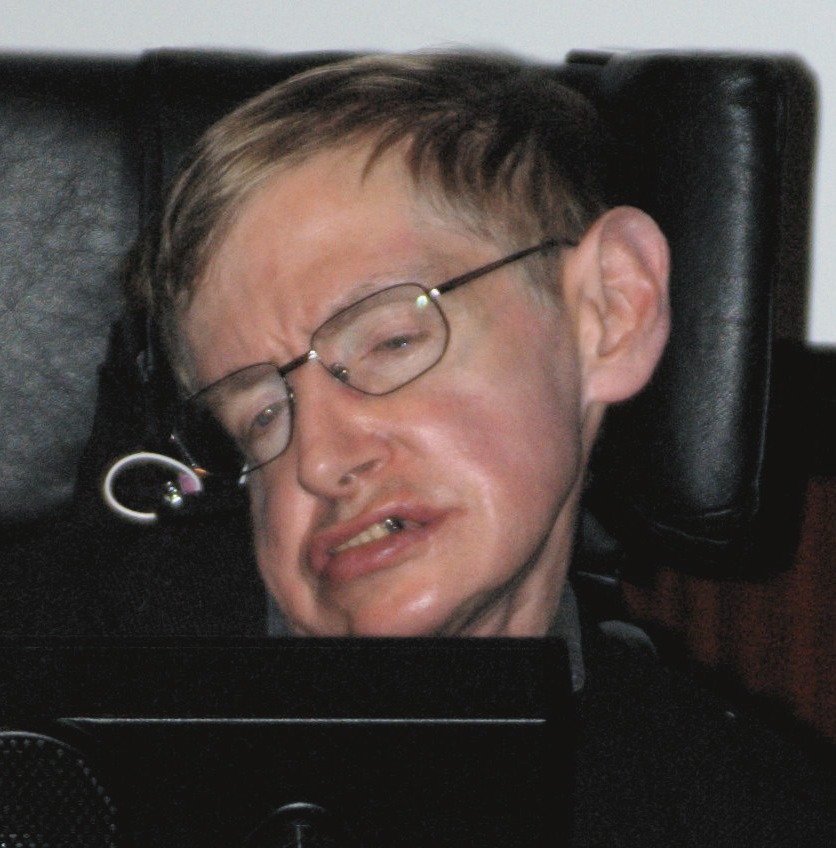
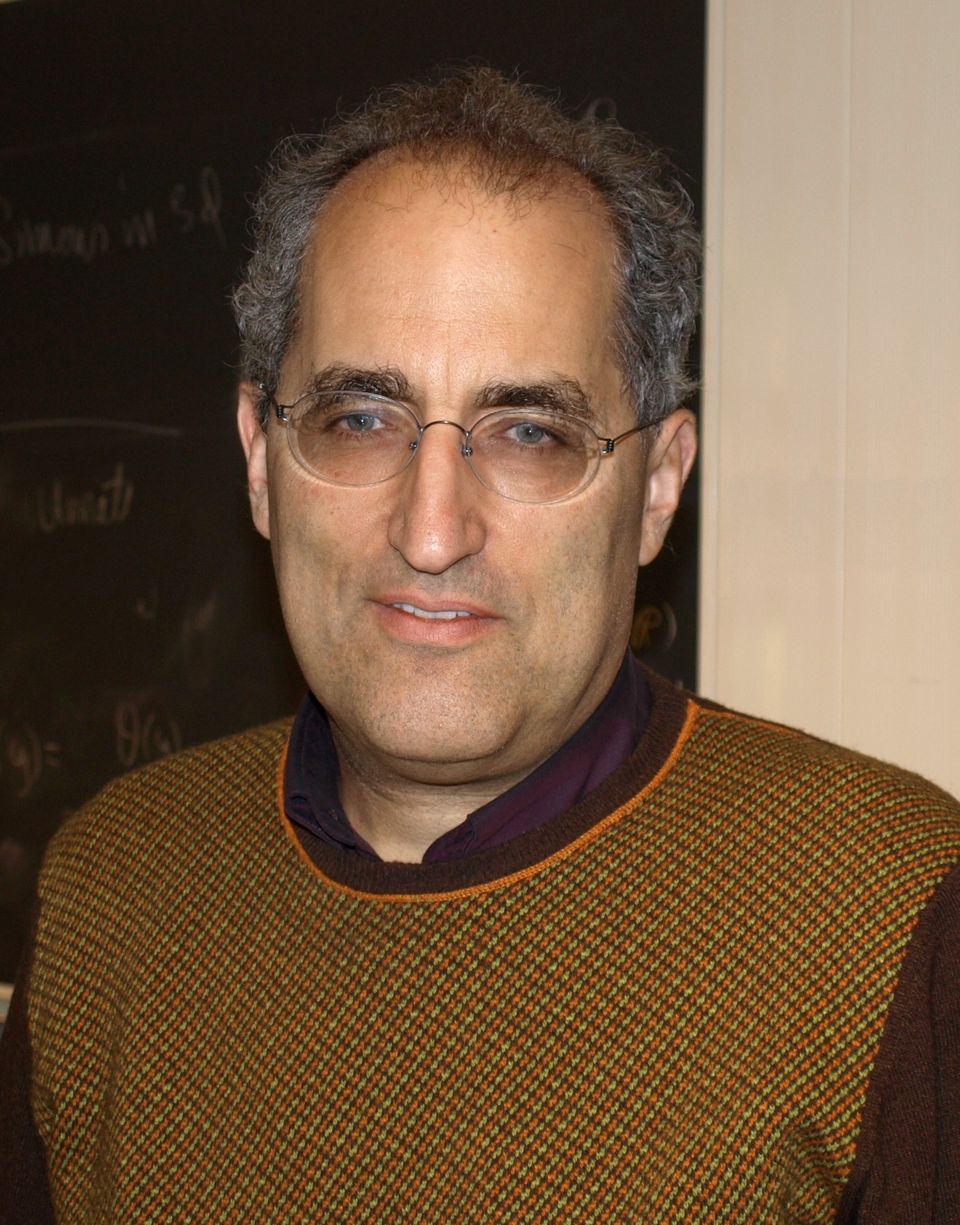
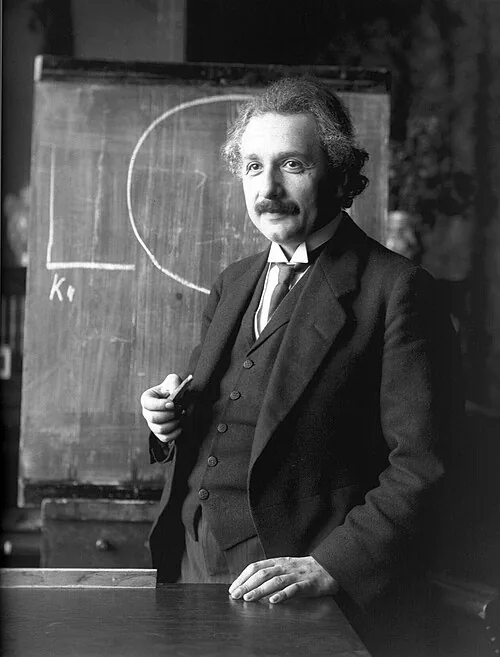
Photograph by ²°¹°°, Paris, 2006, public domain. Cropped from the original. · Photograph by Ojan (Chalmers University of Technology, April 2008), public domain. Background removed for the portrait above. · Portrait by Ferdinand Schmutzer (1921), public domain. Background removed for the portrait above.


An estimate is an inference.
Yours can be measured.
Thirty questions, scored against general-population benchmarks. Your score, your percentile, your ability breakdown and a printable IIF certificate.
Find your IQ score now! →