IQ Metrics
IIF Certified Assessment Start IQ Test
IIF Certified Assessment

Which Part of the Brain, IQ Tests Measures

Which Part of the Brain, IQ Tests Measures

Explore the fascinating world of concepts and brain activity. This article examines intelligence test-measured brain areas to better understand intelligence. This in-depth analysis will attract psychology and neuroscience students and anyone who wants to learn more.

By carefully investigating brain networks, we can understand mental abilities. The essay discusses key brain regions involved in IQ testing, including the frontal cortex, which makes decisions and solves problems, and the parietal lobe, which processes math and spatial information.
Which Part of the Brain, IQ Tests Measures

The connections between brain regions affect our IQ. Recent scientific breakthroughs are affecting psychology and education. Join us as we seek enlightenment via knowledge.

Acquiring knowledge of the structure and function of the brain

The complicated network of brain connections affects our thoughts, feelings, and behaviors; this biological marvel is amazing. Understanding the many brain areas and their functions is crucial to understanding intelligence.

The frontal lobe is crucial to intelligence. Executive processes like problem-solving and decision-making depend on the prefrontal cortex. Reasoning, planning, and working memory are prefrontal cortex functions. Research reveals that those with developed frontal lobes have higher IQs.

The parietal lobe houses another essential IQ test component. You may focus, use your senses, and think numerically and spatially here. It aids numerical, visual, and mental computations. Hyperactive parietal lobes are associated with higher IQs, thinking, and problem-solving skills.

Knowledge and the prefrontal cortex

The top of the brain, the frontal lobe, controls many cognitive functions and intellect. The prefrontal cortex in the frontal lobe controls reasoning, decision-making, and working memory.

According to study, a large, active prefrontal cortex is associated with high IQ. People with higher IQs can think abstractly, handle complicated issues, and store and remember a lot of information in working memory.

Planning, impulse control, and self-control are prefrontal cortex-controlled executive functions. Due to the substantial association between intellect and these abilities, IQ tests examine these mental capacities extensively. The prefrontal cortex with higher IQs is stronger and more efficient, allowing for greater emotion management, complex task execution, and decision-making.

The parietal lobe’s role in IQ testing

The posterior cingulate cortex’s parietal lobe is also significant for IQ assessments. In addition to processing sensory information and paying attention, this region controls mathematical and spatial thinking.

The parietal lobe processes mental, visual, and numerical information. Parietal lobe-strong persons thrive at reasoning, problem-solving, and ecological awareness. High IQ is strongly linked to certain cognitive abilities.

Active parietal lobes improve mental rotation, arithmetic, and visual-spatial puzzle-solving IQ tests. Ability to analyze and understand visual and numerical data in the parietal lobe indicates intelligence.

Intelligence and the temporal lobe

The temporal lobes of the brain process language, hearing, and memory, among other things. Standard intelligence tests don’t easily examine the temporal lobe, but that doesn’t negate its importance in intelligence.

Language comprehension and speech are mediated by the temporal lobe. The brain’s memory center also understands language and recognizes faces. Due to their excellent memory recall and language skills, people with well developed temporal lobes have higher IQs.

The temporal lobe processes, makes meaning, and hears. Auditory memory is needed to remember and recreate tone sequences. Memory and auditory perception affect intelligence and performance, even if IQ tests don’t directly assess them.

Impact of the occipital lobe on cognitive ability

At the very base of the skull sits the occipital lobe, the primary area of the brain that processes and perceives visual information. Although it is implicated in cognitive capacities, the occipital lobe is not explicitly assessed in conventional intelligence exams.

Basic to intelligence is the ability to take in visual information, interpret it, and make sense of it. When it comes to processing visual information and mentally representing objects, forms, and patterns, the occipital lobe is crucial. Visual thinking and problem solving tend to come naturally to people whose occipital lobes are fully developed. On top of that, they usually have better visual-spatial ability.

In addition, the occipital lobe helps in visual memory, which is the capacity to identify and recover previously seen images. This skill is necessary for visual recall tasks, including memorizing complicated visual sequences or patterns. Visual perception and memory are not directly measured by IQ tests, but they have a substantial impact on a person’s cognitive capacity and could affect their performance on the test as a whole.

How the cerebellum affects cognitive processes

The cerebellum has long been related to motor control and homeostasis, but only recently to intellect and other cognitive capacities. This rear of the brain region has more neurons per square inch than any other, suggesting it may affect cognition.

Research shows that the cerebellum affects attention, language, and problem-solving. It helps regulate and organize mental functions, which speeds up data processing and task completion. A properly formed cerebellum improves attention, communication, and problem-solving, which raises IQs.

Recent studies suggest the cerebellum contributes to higher-order cognitive abilities, but more research is needed to fully understand its role in intelligence. Despite being mostly responsible for motor coordination, the cerebellum affects intelligence development.

The role of the brain’s limbic system in IQ tests

The cerebellum has long been related to motor control and homeostasis, but only recently to intellect and other cognitive capacities. This rear of the brain region has more neurons per square inch than any other, suggesting it may affect cognition.

Research shows that the cerebellum affects attention, language, and problem-solving. It helps regulate and organize mental functions, which speeds up data processing and task completion. A properly formed cerebellum improves attention, communication, and problem-solving, which raises IQs.

Recent studies suggest the cerebellum contributes to higher-order cognitive abilities, but more research is needed to fully understand its role in intelligence. Despite being mostly responsible for motor coordination, the cerebellum affects intelligence development. .

The relevance of synapses which link various brain regions

Understanding brain area function is key, but understanding their connections is even more important. A sophisticated brain network of information flows improves cognition and intelligence.

The occipital, frontal, parietal, cerebellar, and limbic systems work together to maintain mental sharpness. All these places are related. When the temporal, parietal, and prefrontal lobes cooperate, language, decision-making, and problem-solving improve. Visual perception and spatial awareness need occipital-parietal data transfer.

The cerebellum’s connections to reasoning and memory regions make it more than a motor control center. It may influence higher-order thinking because to its prefrontal cortex, parietal lobe, and limbic system connections.

Information flow in the brain affects intellect and thinking. By examining cross-domain correlations, intelligence and IQ tests can be better understood.

In sum, IQ testing have its limitations, and intelligence is complex.

Intelligence defies quantification by a single metric due to its complexity and multi-dimensionality. Intelligence tests may be helpful in gauging some cognitive capacities, but they may not account for all aspects of human intellect.

The areas of the brain that are assessed by intelligence tests have an effect on a person’s cognitive capacity and performance. The frontal, parietal, temporal, occipital, cerebellar, and limbic systems are all involved. Intelligence is not limited to a person’s IQ but includes a wide range of emotional, social, and cognitive abilities.

Intelligence requires not only the ability to reason and solve problems on one’s own, but also the capacity to empathize with others, be creative, and have intrinsic motivation. Researchers must continue to probe intelligence’s foundations and find more precise ways to quantify its myriad dimensions.

Finally, IQ tests focus on certain regions of the brain to reveal the chemical basis of intelligence. If we want to know how we gain intelligence, we must study the roles and connections between these domains. It is essential to recognize that IQ tests have limitations, and a more thorough assessment of intelligence is necessary. Since intelligence includes many different types of emotional and social skills, its evaluation requires a comprehensive approach that goes beyond traditional testing.
 

Gifted Cutoff Scores

Gifted Cutoff Scores

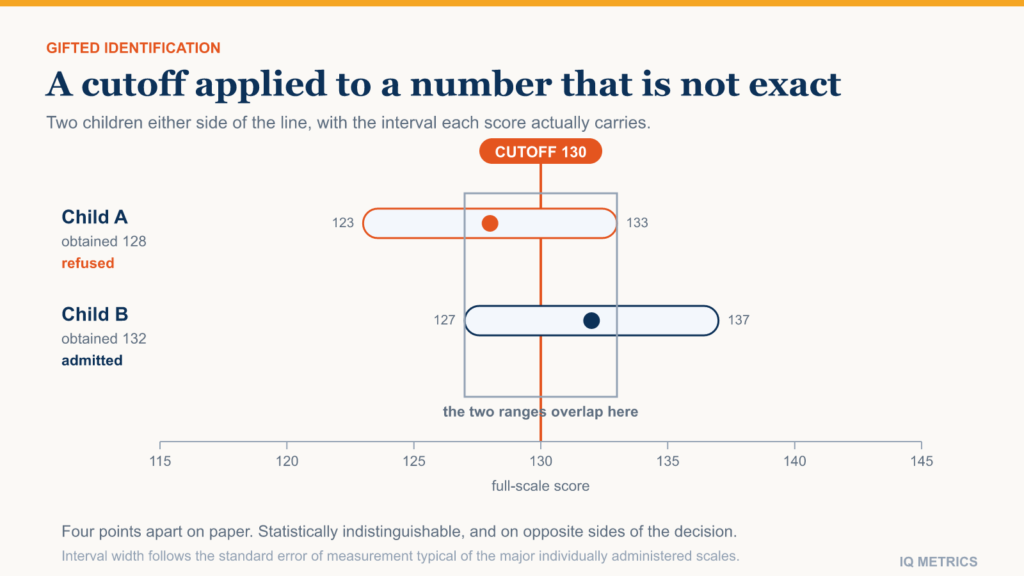
Most gifted programmes draw their line at an IQ of

Stereotype Threat and Test Scores

Stereotype Threat and Test Scores

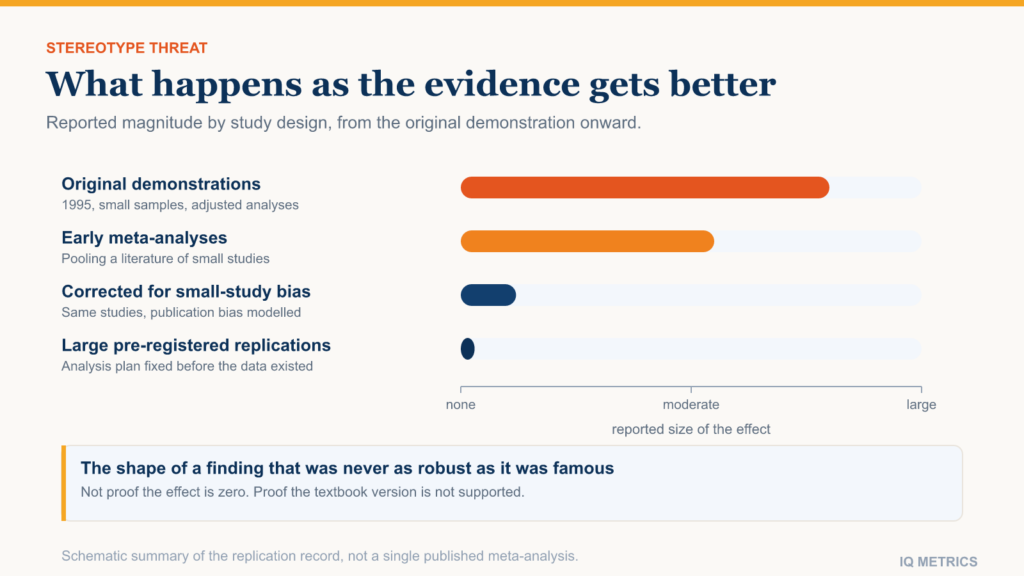
Few findings in psychology have been cited as widely, or

Nutrition and IQ

Nutrition and IQ

The evidence on diet and intelligence looks contradictory until you

What Are The Type of Questions Asked On IQ Test?

What Are The Type of Questions Asked On IQ Test?

Are you ready to put your critical thinking skills to the test? The results of an intelligence test can tell you a lot about your brainpower and problem-solving abilities. What, however, might one expect to see on these kind of tests in terms of question types? In order to decipher the mystery of IQ testing, this article will illuminate the seven most common questions on such tests.

Why It’s Crucial to Ask Questions on an IQ Exam

Intellect tests go beyond simple multiple-choice questions since they also assess other aspects of intellect, such as the capacity to think critically and solve complex problems. Part of these tests is the types of questions that students are asked and must answer. If you want to do better on an IQ exam, it helps to study up on the various question types and how they measure various cognitive talents.

what are the type of questions asked on iq test

Understanding the structure of different types of questions will help you get better at answering them. In addition to enhancing your test scores, this data will reveal your cognitive strengths and places for growth. The seven types of questions that comprise an intelligence test are now going to be examined.

1. Questions on Understanding What Others Said

Verbal comprehension tests can reveal a lot about your reading comprehension and application skills. This question usually begins with a large body of text and then asks multiple-choice questions to measure your understanding and application of the knowledge.

To do well on verbal comprehension tests, review the content and underline the most important parts. Pay attention to context-giving words, phrases, and suggestions. Focus on the details and apply your logic to draw inferences from the material.

Read and analyze academic papers, books, and news stories. Use this strategy to understand the subject and do better on oral reading comprehension assessments.

2. Questions on Mathematical Reasoning

Try mathematical reasoning problems to test your numerical skills and practical application of arithmetic. Understanding these topics may involve elementary to intermediate math reasoning and analysis.

Arithmetic reasoning questions require a thorough understanding of arithmetic topics and principles. To improve problem-solving, solve equations, geometric puzzles, and numerical sequences. This will improve your problem-solving and numerical data analysis skills.

Mental math skills can help you solve mathematical problems fast and accurately. Mental calculations may improve your math skills and problem-solving.

3: Questions on Problems in Spatial Reasoning

Spatial reasoning problems assess spatial awareness. These problems often involve visual puzzles, forms, and patterns that require mental flipping, scaling, or other manipulation.

Improve your spatial awareness and visualization skills to do well on spatial reasoning problems. Enjoy jigsaws, tangrams, and Rubik’s cubes, which require spatial manipulation. These activities can help you relate items and improve your mental management.

You should also learn geometric shape properties. This information will help you spot patterns and solve spatial reasoning challenges.

4. Questions on Logical Reasoning

Logical reasoning challenges assess your ability to analyze evidence and form conclusions. Analogies, syllogisms, and sequences are common in these problems, therefore pattern, correlation, and logical link recognition are crucial.

Logical reasoning issues require analytical and deductive thinking skills. Sudoku, logic grids, and brain teasers improve reasoning. These tasks improve pattern recognition, conclusion-drawing, and problem-solving.

Logical fallacies, conditional assertions, inductive and deductive reasoning, and principles should also be understood better. This comprehension will improve your IQ and other logical reasoning tests.

5. Questions on Visual Perception

Visual perception questions assess visual comprehension. These questions often involve visual patterns, images, and spatial arrangements. You must compare and contrast visual components and develop conclusions about their links.

Visual perception questions require mastering visual observation and pattern identification. Photo sequences, spot-the-differences, and visual analogies are visual pattern puzzles. These exercises can improve your visual vision and help you notice patterns and connections faster.

Learn about visual art’s shapes, colors, lines, and textures. With this knowledge, you can assess visual data and perform better on visual perception tests.

6. Questions on Processing Speed

Questions designed to test your processing speed measure how fast and accurate you are at handling large amounts of data. Timed tasks requiring quick thinking, problem-solving, or pattern-identification are common in these types of inquiries.

Improving your mental agility and quickness of thought is essential if you want to do well on processing speed questions. Speed reading, mental computations, and timed puzzles are all great ways to hone your processing speed. If you want to be better at processing information quickly and working under pressure, try these exercises.

Make plans for how you will keep track of time while taking an IQ exam. Sort the questions in order of difficulty and set aside enough time for each. When you’re not sure an answer to a question, don’t dwell on it. Using this strategy, you can improve your IQ test scores significantly.

7. Questions on IQ Test Preparation Hints

Knowledge, practice, and mental readiness comprise an IQ test preparation plan. Consider the following for optimal preparation:

Discover the format of IQ tests. Locate the test’s question types and segment durations.

Frequently use IQ test prep materials, including practice questions. This helps you understand different queries and improve your answers.

Develop your reasoning, problem-solving, and critical thinking skills. Challenge your brain and become smarter.

Be proficient in time management. Time yourself and practice with a time limit to simulate an exam.

Be mentally and physically ready. Get enough sleep, eat a healthy lunch, and drink enough water before the test. Healthy mind and body improve mental performance.

Remember that IQ tests only evaluate cognitive power momentarily. Maintaining a growth mindset and viewing exams as learning opportunities is key.

In summary

It is possible that intelligence tests will be challenging; however, you can improve your chances of performing well on these tests by becoming familiar with the many question styles that may be included on the official examination. distinct kinds of questions are used to evaluate various cognitive capacities; for instance, verbal understanding and spatial thinking are two quite distinct sorts of thought processes.

Through regular practice and familiarity with these types of questions, you may enhance your ability to perform well on tests, boost your self-confidence, and gain a better understanding of your cognitive abilities. Engage in the mystery of intelligence testing and challenge yourself to the point where you reach your mental boundaries in order to get in touch with your inner genius.

Gifted Cutoff Scores

Gifted Cutoff Scores

Most gifted programmes draw their line at an IQ of

Stereotype Threat and Test Scores

Stereotype Threat and Test Scores

Few findings in psychology have been cited as widely, or

Nutrition and IQ

Nutrition and IQ

The evidence on diet and intelligence looks contradictory until you

What are the Factors that Affect the Results of an IQ Test?

What are the Factors that Affect the Results of an IQ Test?

When you take an IQ test, do you ever find yourself wondering why certain people do better than others? It turns out that your IQ can be affected by a lot of different things. Discover the hidden meaning of these characteristics and how they affect your intelligence in this essay.

How is intelligence quotient (IQ) determined?

A person’s cognitive ability can be measured by their intelligence quotient, or IQ. It is a popular tool for gauging a person’s IQ and comparing it to that of the whole population. Logical reasoning, problem-solving, spatial awareness, and verbal understanding are some of the cognitive abilities that IQ tests usually assess.

What are the factors that affect the results of an IQ test?

One way to determine an individual’s IQ is to compare their test results to those of a standardized population. Scores above or below the average of 100 indicate above-average or below-average intellect, respectively, on the intelligence quotient (IQ). It’s worth noting that IQ ratings might fluctuate over time for a variety of reasons; they are not static.

Possible influences on intelligence quotient results

A person’s IQ and other measures of intellect are heavily influenced by their genes, according to studies. Some cognitive abilities may be passed from parents to children with higher IQ scores, according to studies, which suggests that intelligence might be partially inherited.

The ability to think clearly is strongly influenced by one’s genetic makeup, which determines the way the brain develops and operates. It should be mentioned that heredity is not the only factor that determines IQ. An individual’s intelligence is greatly influenced by their environment.

Context and intelligence quotient

A person’s IQ can be significantly affected by their environment. A person’s intelligence can be shaped by their upbringing, diet, social standing, and exposure to challenging situations.

Among the many environmental influences, education ranks high. People can acquire the information and abilities needed to do well on intelligence tests if they have access to high-quality education. A higher IQ is positively correlated with a higher level of education, according to numerous studies.

There is a strong correlation between socioeconomic position and intelligence tests. More resources and opportunities tend to be available to those from more privileged socioeconomic situations, which may explain why they tend to be smarter. However, IQ levels can be severely affected by a variety of obstacles that people from impoverished backgrounds may encounter.

A person’s physical and nutritional health also play a significant role in determining their IQ. For proper brain development and function, proper diet is paramount. Cognitive deficits and lower IQ scores might result from childhood malnutrition. In a similar vein, IQ scores might drop due to physical health issues that impact cognitive abilities.

Thinking about things from an emotional and mental perspective

A person’s IQ can be significantly impacted by factors related to their emotions and mental health. Cognitive performance is affected by an individual’s mental health, self-esteem, and motivation levels.

High IQ scores are the result of highly motivated individuals. Those who are really motivated to do well on intelligence tests are more likely to study hard for them, which shows in their final results. On the flip side, if you’re not motivated, you might not perform up to par.

Intelligence exams also place a premium on self-esteem. Highly self-esteemed people tend to have faith in themselves and their abilities, which manifests in their mental acuity. Conversely, people who have trouble believing in themselves may have trouble accepting their own abilities, which could lead to lower IQ scores.

A person’s emotional well-being can also have an impact on their IQ test results. Disorders including anxiety, depression, or attention deficit hyperactivity disorder (ADHD) can impede cognitive ability, leading to low scores. Maintaining good mental health is essential if you aspire to reach your full intellectual potential.

A greater understanding of intelligence and its influences can be achieved by familiarizing oneself with these several components. Now that we know what an IQ test is, let’s investigate the fascinating interplay between genetics, upbringing, and mental faculties.

Impact of socioeconomic status and educational attainment on IQ testing

IQ is affected by education and social status. Top-notch knowledge and materials are needed to pass IQ assessments.

A diverse curriculum enhances kids’ intellectual, emotional, and social growth. IQ scores are higher in schools with enough resources, qualified teachers, and a favorable atmosphere. Poor education can hinder intellectual development and lower IQ.

The results of intelligence tests are highly indicative of social status. Wealthier kids can afford books, school supplies, and extracurriculars. They may benefit from a top school or private training to understand the world.

However, low-income people may face problems that lower their IQ. Stress, poor food, and lack of education can reduce IQ.

We must understand that educational and socioeconomic backgrounds affect IQ tests and that everyone deserves a chance to thrive.

Nutrition and exercise affect IQs

Nutrition and fitness may affect IQ. Healthy eating habits are crucial for brain development, especially in childhood and adolescence.

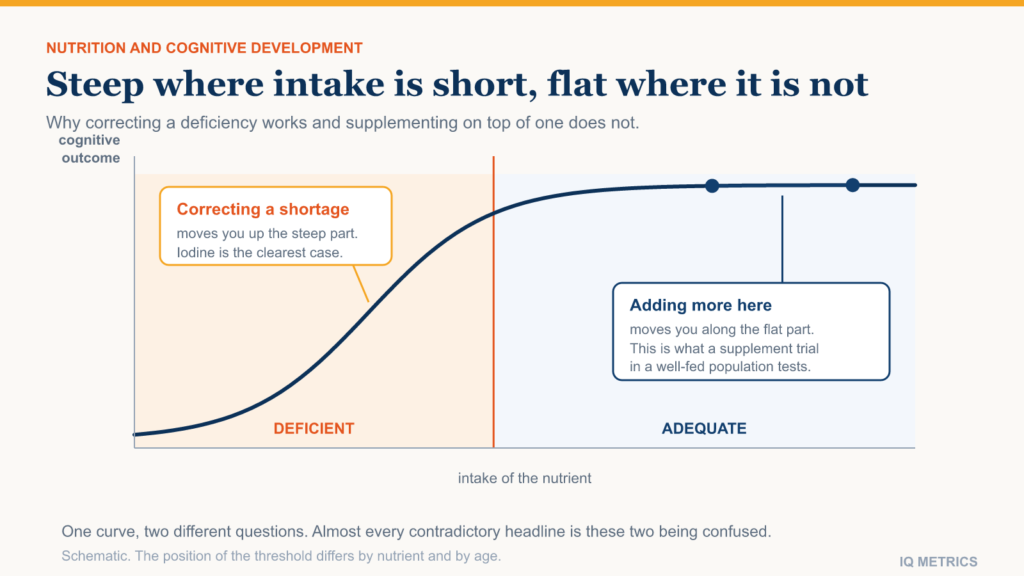
Brain cells develop, connect, and operate best when fed a balanced diet. Dietary deficiencies in iron, iodine, and vitamins can cause low IQs and cognitive impairment. Conversely, a nutritious diet boosts brain function and IQ.

IQ may be affected by physical condition. Chronic diseases and infections can lower mental sharpness. IQ is strongly correlated with general health, demonstrating the need of excellent health for cognitive performance.

Cognitive abilities and IQ can be improved by addressing physical health, promoting healthy diet, and increasing access to good food.

Cultural and societal influences on IQ testing

Intuition is influenced by both culture and society. There is a correlation between IQ evaluations and cultural and socioeconomic characteristics.

Tests of intelligence often take into account the norms and customs of the target population. This shows that differences in cultural norms around intelligence testing could potentially affect the outcomes. People who come from a variety of different backgrounds may have difficulty performing well on some test questions due to the presence of cultural prejudice.

The results of intelligence tests may be influenced by social expectations. A person’s cognitive abilities might be hindered and burdened by prejudice and stereotyping. It is important that the results of IQ tests take into account the cultural and social background.

Flynn effect and intelligentsia shifts

The Flynn effect and other research have shown that one’s intelligence level can vary. Over the course of several generations, the Flynn effect boosts the average IQ of many populations.

IQ has been consistently increasing ever since the Flynn effect was first observed. It’s possible that this could be influenced by more information, healthier eating habits, and places that are more exciting.

One illustration of how intelligence may change and even improve is the Flynn effect. When it comes to checking IQ scores, location and timing are quite important.

Overall, IQ tests are complicated

Mental health, environment, and genes affect IQ. High IQs are caused by many factors, including inheritance. A person’s thought processes are influenced by heredity and environmental factors like diet, culture, finances, and education.

These factors can alter IQ test scores, but everyone should have a chance to reach their full potential regardless of social background or education. Regular exercise and a balanced diet can boost brain capacity and intellect.

Motivation, self-esteem, and mental health greatly impact intelligence. Attention to these subtleties may improve cognition.

Genetics, environment, and psychology interact complexly, so IQ test results must be viewed holistically. Understanding the many variables that determine IQ may help us establish a more egalitarian and welcoming society where people from diverse origins can succeed intellectually.


Gifted Cutoff Scores

Gifted Cutoff Scores

Most gifted programmes draw their line at an IQ of

Stereotype Threat and Test Scores

Stereotype Threat and Test Scores

Few findings in psychology have been cited as widely, or

Nutrition and IQ

Nutrition and IQ

The evidence on diet and intelligence looks contradictory until you

How to Know Our Mental Ability ?

How to Know Our Mental Ability ?

Are you prepared to unleash the power of your mind? Use this detailed guide to find out how to unleash your inner strength. Here, we’ll explore tried-and-true methods for tapping into your mind’s boundless potential.

This course is perfect for you if you want to learn how to concentrate better, remember more, or sharpen your brainpower. Discover the science behind developing your cognitive abilities and get practical advice and exercises to help you reach your full mental potential.

How to know your mental ability ?

We will walk you through every stage of the process of developing your mind to its maximum capacity, from mindfulness activities to memory enhancing strategies. Wave farewell to mental haze and diversions and welcome in enhanced concentration, heightened output, and a more lucid thinking.

‘Unlocking the Power Within: Discover How to Unleash Your Mental Potential in 3000 Words’ is the best resource for anyone looking to enhance their mental capabilities. Indulge in a mind-blowing adventure unlike any other!

Realizing the Influence of the Mind

The mind is a remarkable and complex organ with the ability to perform remarkable feats. It is widely believed that our minds are underappreciated and full of untapped potential. Understanding the power of the mind is the first step in developing one’s potential to its maximum.

When it comes to solving problems, learning new things, and coming up with ideas, the human mind is unrivaled. The human brain is the principal sensory organ for taking in and understanding one’s physical surroundings. However, the majority of us fail to recognize the value of our brains and fail to utilize them to their fullest potential.

To unlock our full potential, we must first accept that our thoughts are not fixed but can evolve and progress. By creating new connections between neurons in our brains, we can enhance our cognitive abilities. By recognizing its potential, we can begin to tap into the limitless power of our thoughts.

The Evidence for Mental Potential Unleashed

Unlocking mental potential requires a scientific grasp of neuroplasticity in the brain. The capacity of the brain to undergo continuous change and adaptation is known as neuroplasticity. Neuroplasticity allows us to train our brains to become smarter, more efficient, and more focused.

Scientific studies have demonstrated that neuroplasticity can be enhanced by the practice of mentally difficult activities, the acquisition of new abilities, and the solving of puzzles. New neural pathways are formed and old ones are reinforced when we challenge our brains to learn and develop.

To top it all off, enhancing brain function is heavily influenced by things like diet, exercise, and sleep. Maintaining brain health and improving cognitive abilities can be achieved with a nutritious diet that is abundant in vitamins, antioxidants, and omega-3 fatty acids. Exercising regularly enhances cognitive function, memory, and blood flow to the brain. For optimal cognitive performance and memory consolidation, getting a good night’s sleep is crucial.

To make educated decisions and implement tactics that support brain health and cognitive enhancement, it is helpful to have a grasp of the science underlying mental potential unlocking.

Unleashing the Power of Your Mindset

When it comes to realizing our full mental capacity, our perspective is absolutely crucial. The ability to rise above adversity, learn from mistakes, and improve one’s skills all depend on one’s growth mentality, as opposed to a fixed one.

The conviction that our talents and intellect are immutable characteristics defines a person with a fixed mindset. A fixed mindset is characterized by a lack of flexibility, an inability to learn from mistakes, and an overconfidence in one’s own talents.

The opposite is true for those who have a growth mentality, which holds that our skills may be enhanced via perseverance, focus, and education.

Overcoming constraints and self-doubt, and seeing problems as chances for growth, is possible when we embrace a growth mindset. The ability to bounce back from adversity and keep pushing forward in pursuit of intellectual growth is within our reach.

A growth mentality can be developed by introspection, kindness toward oneself, and the courage to try new things. We can tap into our maximum mental potential by questioning our assumptions and adopting a growth mindset.

Methods for Heightening Concentration and Focus

It might be difficult to stay focused and attentive in today’s fast-paced, multi-device environment. Still, we may hone our focus and concentration skills with the help of tried-and-true methods.

Practices such as mindfulness meditation have shown to be useful. Being mindful is bringing one’s whole attention, without judgment or preconceptions, to the here and now. Mindfulness meditation, when practiced regularly, can help with concentration, attention, and reducing mental wandering.

Locate a peaceful and cozy spot to sit in order to meditate with mindfulness. Relax into a sitting position while remaining aware of your surroundings; shut your eyes and focus on your breathing. Without attaching any judgment or thoughts to the sensation, simply notice the breath coming in and going out of your body. Bring your focus back to the breath slowly whenever you find that your thoughts are wandering.

In addition to practicing deep work, reducing distractions, and dividing activities into smaller, more manageable portions are other methods for enhancing attention and concentration. When you’re able to focus intently on a mentally taxing task without interruptions, you’re engaging in deep work. Your ability to concentrate and focus will be greatly improved if you follow these steps and make your surroundings more favorable.

Methods for Improving Retention and Memory

Learning, problem-solving, and cognitive activities require a strong memory. Fortunately, you can improve your memory and recall.

Useful mnemonic devices. Mnemonics help remember new information by linking it to old. Visual aids, acronyms, and vivid mental imagery are mnemonic approaches.

Another method is spaced repetition, which involves reviewing content more often. This method uses the spacing effect, which says rereading text regularly improves retention.

Memory consolidation requires enough sleep. While sleeping, our brains consolidate and integrate new knowledge, strengthening our memories. For mental clarity, sleep seven to nine hours per night. Mnemonics, spaced repetition, and sleep improve memory and recall.

Unleashing Your Limitless Mental Potential through Cultivating a Growth Mindset

Having a growth mentality is crucial if you want to tap into your boundless mental potential. You can overcome obstacles, learn from your mistakes, and keep going when things become tough if you adopt a growth mentality.

In order to cultivate a growth mentality, one must first question their self-limiting ideas on their talents. Understand that intelligence and skill are not static characteristics but may be honed with time and work. Take risks and see setbacks as opportunities to grow and develop. Develop a thirst for knowledge and actively seek out challenges that will make you think and do things differently.

Recognize that you will inevitably experience failure and setbacks as you progress through life and practice self-compassion. Recognize them for what they are: lessons and opportunities for improvement, not measures of your ability.

Embracing a growth mindset allows you to tap into your maximum cognitive capacity and unleash boundless opportunities.

The Value of Taking Care of Oneself and One’s Mental Health

Unlocking your mental capacity requires prioritizing self-care and mental well-being. Your mental, emotional, and physical well-being all work hand in hand to provide peak performance and optimal cognitive capacity.

Give yourself time and energy to do things that are good for you physically and mentally. Make sure you get enough sleep, eat healthily, and exercise regularly. Stop what you’re doing every so often to refuel. Get out into nature, spend time with loved ones, or pursue a hobby that makes you happy; these are all great ways to unwind and enjoy life.

Also, take care of your mental health by learning to handle stress well. You may find it more difficult to use your brain’s full capabilities if you’re constantly under stress. Learn to control your stress using practices like deep breathing, meditation, and relaxing hobbies.

When you put your mental health and self-care first, you make the perfect conditions for reaching your full mental potential.

Discovering the Benefits of Meditation and Mindfulness

One of the most effective ways to reach one’s full mental potential is to practice mindfulness and meditation. These activities teach you to be fully present in the moment, which improves your focus, lowers your stress levels, and makes you feel better all over.

During meditation, one trains their mind to concentrate on one thing, like their breath or a mantra. Some of the benefits of meditation include better focus, more self-awareness, and the ability to control one’s emotions.

Conversely, practicing mindfulness entails non judgmental attention to the here and now. Being more attuned to our internal experiences (such as ideas, feelings, and bodily sensations) allows us to respond to them with empathy and clarity when we practice mindfulness.

Make time in your schedule specifically for meditation and mindfulness exercises if you want to make them a regular part of your life. Begin with short sessions and build up to longer ones as you feel more at ease. Discover what works for you by trying out several forms of meditation, such as body scan, loving-kindness, or breath awareness.

You may improve your brain clarity, lower your stress levels, and unlock your entire mental potential by investigating mindfulness and meditation activities.

Maximizing Your Potential through the Use of Visualization and Positive Affirmations

Visualization and positive affirmations can help you reach your full mental potential. If you want to retrain your brain pathways, boost your confidence, and align your subconscious with your goals and aspirations, they can help.

Positive affirmations are short statements that you repeat to yourself to encourage yourself. If you want to retrain your mind to think more positively, incorporating them into your routine can help. These are a few examples of positive affirmations: “I am capable of achieving my goals,” “I am confident and deserving of success,” and “I am constantly growing and learning.”

The practice of visualizing one’s accomplishment of a goal is known as visualization. When you picture yourself having achieved your goals, you tap into your imagination and bring your actions in line with your dreams. Envision yourself excelling, effortlessly accomplishing your objectives, and overcoming any challenges that come your way.

Incorporate daily practices of positive imagery and affirmations to tap into their power. Whether it’s first thing in the morning or when you’re feeling down, just repeat your affirmations. Every day, carve yourself some time to imagine yourself having achieved your goals.

You have the power to rewire your mind for success and tap into your boundless mental potential via the persistent practice of positive imagery and affirmations.

Final Thoughts: Realizing Your Full Mental Potential and Succeeding

You have achieved a great feat. Reading “Unlocking the Power Within: Discover How to Unleash Your Mental Potential in 3000 Words” has been an incredible adventure, and you now have the tools you need to unleash your mental potential.

Keep in mind that you are the only one who can limit your mental capacity. You can tap into your mind’s limitless power by learning the science behind mental potential unlocking, developing a growth mindset, practicing techniques to improve focus and memory, making self-care and mental well-being a priority, exploring meditation and mindfulness, and using positive affirmations and visualization.

Realize your full intellectual potential, tackle obstacles head-on, and never give up on your dreams. As long as you put in the time, work consistently, and have faith in yourself, you can achieve your goals. Tap into your latent abilities and let your mind to lead the way to a successful and satisfying existence.

Gifted Cutoff Scores

Gifted Cutoff Scores

Most gifted programmes draw their line at an IQ of

Stereotype Threat and Test Scores

Stereotype Threat and Test Scores

Few findings in psychology have been cited as widely, or

Nutrition and IQ

Nutrition and IQ

The evidence on diet and intelligence looks contradictory until you

Cognitive Diversity: The Secret to Workplace Efficiency and Success

Cognitive Diversity: The Secret to Workplace Efficiency and Success

In a world where unique ideas are the currency of success, there is a hidden gem transforming workplaces: Cognitive Diversity. Imagine a workplace where every decision, every project, and every team meeting buzzes with dynamic perspectives and innovative solutions. It’s the unsung hero behind the scenes, fueling innovation and problem-solving.

In the modern workplace, cognitive diversity has emerged as a key driver of innovation and efficiency. What exactly is it, and how does it revolutionize the way we work and transform our professional lives?

Cognitive Diversity: The Secret to Workplace Efficiency and Success

Understanding Cognitive Diversity

Cognitive diversity refers to the variety of thought processes, problem-solving approaches, and decision-making styles which are present in a group. Unlike demographic diversity, which focuses on visible traits, cognitive diversity delves into the unseen realm of how individuals usually think and process information.

The spectrum of cognitive abilities includes abilities like analytical thinking, creative ideation, practical problem-solving, and emotional intelligence. Each of these skills plays a very crucial role in tackling complex challenges. For example, while analytical thinkers excel in data-driven decision-making, creative minds can provide out-of-the-box solutions to seemingly impossible tasks.

The Power of Diverse Thinking

The real-world impact of cognitive diversity is substantial. Research has consistently shown that teams with diverse cognitive abilities are better equipped to solve complex tasks than their cognitively homogeneous counterparts. These teams tend to be more innovative, better at predicting trends, and capable of comprehensive problem-solving.

One striking example of cognitive diversity in action can be witnessed at Indian Space Research Organisation (ISRO), with its diverse team of engineers, scientists, and creative thinkers, successfully navigated the complex and unprecedented challenges of the Moon Lander/Rover mission. The analytical team members analyzed the data trends, while the creative members proposed innovative solutions, and the emotionally intelligent members facilitated effective team collaboration, leading to a milestone for humanity.

Assessing Cognitive Diversity

How do we measure and leverage this diversity? This is where tools like IQ tests and other cognitive ability assessments come into play. These tests provide insights into the diverse intellectual strengths within a team, allowing leaders to strategically assign tasks and projects.

However, it’s important to understand that cognitive diversity goes beyond mere IQ scores. It includes a broader range of cognitive abilities and learning styles. Therefore, assessments need to be comprehensive and multi-dimensional to capture the true cognitive landscape of a workforce.

Creating a Cognitive Diversity-Friendly Environment

Leveraging cognitive diversity requires more than just identifying it; there is a need for a cultivating environment where all forms of thinking are valued and utilized. This includes creating teams with a mix of cognitive abilities, encouraging open communication, and fostering a culture of continuous learning and development within the organization.

Moreover, leaders play a very important role in harnessing this diversity. By understanding the unique cognitive strengths of each team member, they can delegate tasks more effectively, encourage collaboration between different thinkers, and create a more inclusive and dynamic work environment.

The Way Forward

As we navigate the complexities of the 21st century, embracing cognitive diversity is no longer an option but a necessity for any organization aiming for the pinnacle of innovation and efficiency. It’s about recognizing that the collective intelligence of a diverse group is far more crucial than the sum of its parts. By valuing and harnessing these diverse abilities, we open the door to a new era of workplace productivity and success.

Are you ready to explore the cognitive diversity within your organization? Discover how IQMetrics can help you unlock the potential of your workforce.

Gifted Cutoff Scores

Gifted Cutoff Scores

Most gifted programmes draw their line at an IQ of

Stereotype Threat and Test Scores

Stereotype Threat and Test Scores

Few findings in psychology have been cited as widely, or

Nutrition and IQ

Nutrition and IQ

The evidence on diet and intelligence looks contradictory until you