
IIF Certified Assessment
Start IQ Test
IIF Certified Assessment
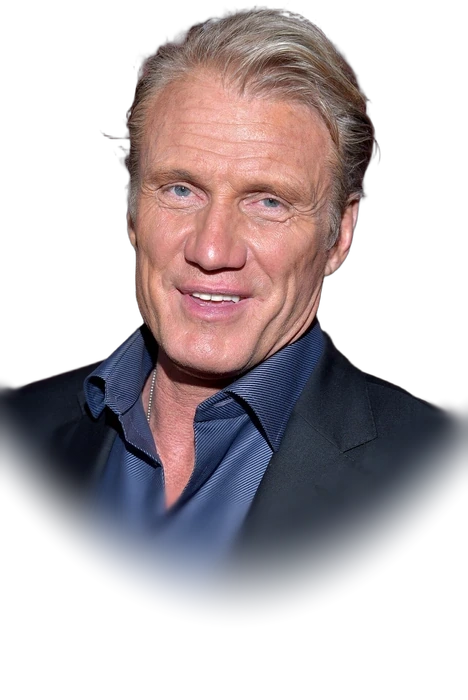
The 160 attached to Lundgren has no source. The chemical engineering master’s and the Fulbright to MIT are real, and they are more interesting than the number.
A completed engineering master’s is a strong signal but a blunt one: it demonstrates sustained quantitative work, not a position on a test distribution. No IQ result for Lundgren has ever been published, and the range above is an inference from credentials alone.
Set the claim aside for a moment. If someone genuinely scored in this range, here is what that would represent.
Average is 100 by construction, and about two-thirds of people fall between 85 and 115. Take the test to place your own score on this scale.
| Score range | Classification | Share of people | What it indicates |
|---|---|---|---|
| 85 – 114 | Average | ~68% | The range most people fall into. |
| 115 – 129 | Above average | ~13.6% | Roughly one person in seven. |
| 130 – 144 | Gifted | ~2% | The threshold most high-IQ societies use. |
| Above 144 | Highly gifted | ~0.1% | Figures above this range are extrapolated from the curve rather than measured. |
Percentages are approximate and describe a normal distribution. The same number means different things on tests with different standard deviations.
Thirty questions gives you a measured position on this exact scale — your score, your percentile and the ability breakdown behind it.
Find out in 30 minutes →Hans “Dolph” Lundgren was born in Spånga, Sweden, in 1957. He studied chemical engineering, first in the United States on scholarships and then at KTH in Stockholm, where he completed a master’s degree in 1982.
A Fulbright award to MIT followed in 1983. He moved to New York, worked security, met Grace Jones, and took a small part in A View to a Kill. The following year he was cast as Ivan Drago in Rocky IV, and the engineering career ended there.
He has since directed and produced as well as acted, and returned to the Drago role in 2018. He remains one of a small number of leading men whose CV includes a graduate degree in a hard science.
The estimate above rests on this record. Every entry here is a matter of public fact, which is more than can be said for the number itself.
Following a claim back to its first appearance is the part almost nobody does — and it is what most people are actually asking.

This is a common shape in the actors category: a real credential exists, a journalist needs a number to make it legible, and an IQ figure is supplied to fill the gap. Once printed, it is quoted as though it were the source of the credential rather than a gloss on it.
The underlying record needs no help. Lundgren spent his twenties on a technical degree at KTH, won a Fulbright to MIT, and then declined it to work as a bouncer in New York while trying to act. He has told the story himself many times, and it does not involve an IQ test. It involves a decision, which is a more interesting thing to read about.
Our 140–155 puts him at the top of the actors category on this site, ahead of Natalie Portman and James Woods, and it is worth being explicit about why: he is the only one of the three who completed a graduate degree in a quantitative field. Woods was admitted to MIT and left; Portman took a Harvard bachelor’s and co-authored published research. All three records are real. The ranking reflects which of them went furthest through formal technical training, and nothing more.
How we read a number →Institutional record. The strongest documented element of the case.
Awarded and not taken up. Publicly and repeatedly confirmed by Lundgren in interviews.
No school, university, military or press record of an administered test has surfaced.
Source URLs and first-appearance date pending audit.
No original could be located. The figure appears in entertainment listicles without attribution.
The figures that circulate for Dolph Lundgren, what we were able to confirm, and where the two diverge.
160 is the figure that circulates, usually in listicles about unexpectedly clever action stars. It is occasionally given as 160 “measured”, with no indication of by whom.
There is no published test result for Dolph Lundgren. What exists instead is a documented academic record that is genuinely unusual for a Hollywood action lead: a master’s in chemical engineering from one of Europe’s better technical universities, and a Fulbright award to MIT that he walked away from. The 160 appears to have been reverse-engineered from those facts by writers who wanted a number to put in a headline.
The spread is narrow because the figure is copied rather than estimated — a sign of a single unsourced original, not of independent agreement.
Want a number that does hold up? Every figure on this page is somebody’s claim. Take the 30-question test and get a percentile you can check rather than a figure you have to trust.
No measured score has ever been published. The 160 that circulates has no traceable source. Our 140–155 range is inferred from his completed engineering master’s and Fulbright award, not from a test.
Yes. He completed a master’s in chemical engineering at the Royal Institute of Technology (KTH) in Stockholm in 1982, after studying in the United States on scholarships.
He was awarded a Fulbright scholarship to MIT in 1983 but did not take it up, moving to New York to pursue acting instead.
No original source could be located. It appears to have been attached to him by entertainment writers as shorthand for the engineering degree, then copied between list pages.
On our estimates, yes — narrowly. He is the only actor profiled here who completed a graduate degree in a quantitative field. See Natalie Portman and James Woods for the comparison.
It implies sustained quantitative work and the discipline to finish it. It does not locate someone on a test distribution, which is why our range is wide and offered as an inference rather than a measurement.
You can find out in about fifteen minutes. The IQ Metrics assessment is 30 questions, scored on the same 100-mean scale used throughout this page, so your result and the estimate above are at least expressed in the same units — one measured, one inferred. Once you have a number, the leaderboard shows where it would sit, and how we score and norm it explains the benchmarking.
From the documented record rather than a test — the method is named above and set out in full under how we read a number. Compare it against the other actors profiles, starting with Natalie Portman.


Portrait © Matthew Yohe, CC BY-SA 3.0. The background-removed portrait above is a derivative work and is likewise offered under the same licence. · Portrait © Debbie Rowe / The Royal Society, CC BY-SA 3.0. The background-removed portrait above is a derivative work and is likewise offered under the same licence. · Portrait by Christopher Smith, U.S. Department of Health and Human Services — a work of the U.S. federal government, public domain. Background removed for the portrait above.
Thirty questions, scored against general-population benchmarks. Your score, your percentile, your ability breakdown and a printable IIF certificate.
Find your IQ score now! →The assessment costs nothing and you always get a real result. Upgrades add precision, analysis and a certificate — never access to the test itself.
Whatever you paid comes off the next tier for 30 days. Start small without losing the money.
Not what you expected? Full refund, no questions, no form to hunt for.
Prices adjust to your country automatically, so the certificate is reachable outside high-income markets.
Coming later: an annual membership (~$89/year) for unlimited retests, practice sets and progress tracking. Monthly billing is deliberately not offered — a once-a-year assessment does not justify a monthly charge, and it would churn.





.jpg)
