



What is Mike Tyson’s IQ?
One real clinical evaluation exists. It never published a number — least of all the one that gets repeated.
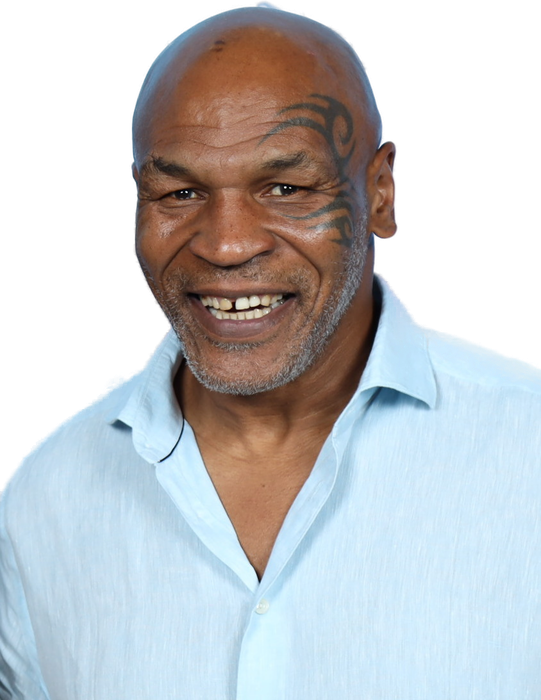
A court-ordered evaluation at Massachusetts General Hospital tested Tyson in 1998. It reported a qualitative finding, never a number — which hasn’t stopped several very different numbers from circulating in its place.
Mike Tyson’s estimated IQ
- The one documented cognitive evaluation on record — court-ordered, conducted at Massachusetts General Hospital in October 1998 using the WAIS-R — found “general intellectual functioning was in the average range.” No numeric score was released.
- Never earned a high school diploma; missed passing a 1994 GED attempt by one point.
- Taught to read by trainer Cus D’Amato around age twelve; has since described extensive reading in history and philosophy, publishing a reading list under his own byline in 2013.
This range is not a reported score. It is the standard numeric band for the qualitative “average” classification the 1998 evaluation actually used, shown because every profile on this site carries a numeric estimate — treat it as an honest translation of a real clinical finding, not a test result. The 78 that circulates most widely has no cited source of any kind.
- Born
- June 30, 1966, Brooklyn, New York
- Field
- Professional boxing (heavyweight)
- Education
- No high school diploma; missed a 1994 GED attempt by one point
- Known for
- Youngest heavyweight champion in history (age 20, 1986)
- Documented evaluation
- WAIS-R, Massachusetts General Hospital, October 1998 — “average range,” no score released
What an IQ of 90–109 actually means
Set the claim aside for a moment. If someone genuinely scored in this range, here is what that would represent.
Average is 100 by construction, and about two-thirds of people fall between 85 and 115. Take the test to place your own score on this scale.
| Score range | Classification | Share of people | What it indicates |
|---|---|---|---|
| 85 – 114 | Average | ~68% | The range most people fall into. |
| 115 – 129 | Above average | ~13.6% | Roughly one person in seven. |
| 130 – 144 | Gifted | ~2% | The threshold most high-IQ societies use. |
| Above 144 | Highly gifted | ~0.1% | Figures above this range are extrapolated from the curve rather than measured. |
Percentages are approximate and describe a normal distribution. The same number means different things on tests with different standard deviations.
Thirty questions gives you a measured position on this exact scale — your score, your percentile and the ability breakdown behind it.
Find out in 30 minutes →Who Mike Tyson is
Michael Gerard Tyson was born June 30, 1966, in Brooklyn, and raised in poverty in Brownsville. He was sent to the Tryon School for Boys as a teenager, where his boxing ability was spotted by counselor Bobby Stewart. Paroled into trainer Cus D’Amato’s custody in Catskill, New York, around age fourteen, Tyson credits D’Amato with teaching him to read — he has said he had almost no interest in books before that.
He never earned a high school diploma and missed passing a GED exam in 1994 by a single point. He turned professional in 1985 and became the youngest heavyweight champion in history in November 1986, at twenty. Since his boxing career, he has spoken and written extensively about reading — his 2013 memoir describes an intensive reading habit built during his prison years, and he published a list of philosophy and history titles under his own byline that same year.
Tyson has also discussed and been filmed playing chess, including a widely covered casual match against Arnold Schwarzenegger. Specific chess ratings sometimes attributed to him online are not independently verifiable and are not used on this page.
 By Elora Mercer, Celebrity Research WriterFigures checked by Leon Falkner, Data & Research Analyst
Reviewed by Aarav Vardhan, Editor-in-Chief · Last reviewed August 2026

Mike Tyson: the documented record
The estimate above rests on this record. Every entry here is a matter of public fact, which is more than can be said for the number itself.
- 1966Born, Brooklyn, New York.
- c. 1980Paroled into Cus D’Amato’s custody, age fourteen; taught to read.
- 1985Turns professional.
- 1986Becomes the youngest heavyweight champion in history, age twenty.
- 1994Misses passing a GED exam by one point.
- 1998Nevada-ordered neuropsychological evaluation finds “average range” intellectual functioning; no score released.
- 2013Publishes a reading list of philosophy and history titles under his own byline.
Where the 78–130 figure came from
Following a claim back to its first appearance is the part almost nobody does — and it is what most people are actually asking.
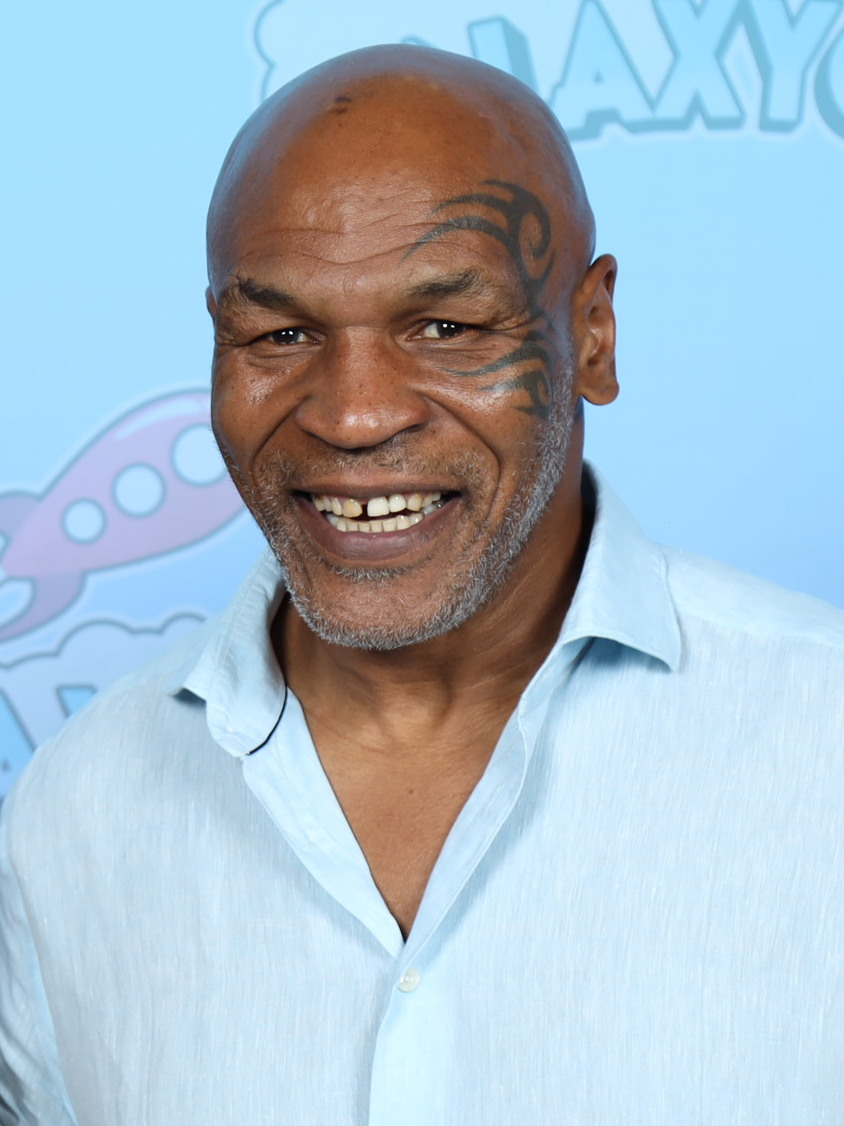
Several different numbers circulate for Tyson, and they disagree with each other by more than 50 points — itself a sign that none of them is a real score. 78 is the most repeated, sometimes paired with outdated clinical language implying intellectual disability; 105 and figures up to 130 also appear on other aggregator sites. None cites a test, an examiner, or a date.
A real evaluation does exist. In October 1998, the Nevada Athletic Commission made neuropsychological testing a condition of relicensing Tyson after the Evander Holyfield ear-biting incident. A team at Massachusetts General Hospital, led by Dr. Thomas Deters, administered the WAIS-R among other instruments over several days. The report’s own language was qualitative: “general intellectual functioning was in the average range,” alongside specific findings of weakness in attention, working memory and motor speed consistent with head trauma. No number was released — not then, and not since.
The range shown here is not that missing number. It is the standard band psychometricians use for the “average” classification the report actually gave, offered as the most honest available estimate. Every figure that circulates instead — 78 included — is untraceable to any test at all.
How we read a number →The only documented cognitive evaluation on record; reported a qualitative range, not a score.
Contemporaneous reporting on the evaluation and relicensing.
Reports his GED attempt, missed by one point.
His published reading list.
The 1998 evaluation is qualitative only; the 78/105/130 figures that circulate trace to no named test.
The sources behind our estimate
The figures that circulate for Mike Tyson, what we were able to confirm, and where the two diverge.
Figures from 78 to 130 circulate across aggregator sites, with 78 — sometimes paired with outdated, stigmatizing classification language — the most repeated.
In October 1998 the Nevada Athletic Commission required Tyson to undergo neuropsychological testing, including the WAIS-R, before relicensing him after the Holyfield fight. Conducted by Dr. Thomas Deters at Massachusetts General Hospital, the report’s finding was that “general intellectual functioning was in the average range,” with specific weaknesses flagged in attention and memory. No numeric score was ever published, then or since.
None of the three figures that circulate traces to that evaluation, or to any other named test.
Want a number that does hold up? Every figure on this page is somebody’s claim. Take the 30-question test and get a percentile you can check rather than a figure you have to trust.
Mike Tyson — frequently asked
What is Mike Tyson’s IQ?
No numeric score has ever been published. A 1998 court-ordered clinical evaluation found his intellectual functioning to be in the “average range” but released no number.
Where does the claim that Mike Tyson’s IQ is 78 come from?
No source or test could be traced for this figure. It sometimes appears paired with outdated, stigmatizing clinical language and should not be treated as documented fact.
Did Mike Tyson ever take a real intelligence test?
Yes — the Nevada Athletic Commission required neuropsychological testing, including the WAIS-R, in October 1998 as a condition of relicensing him. The result was reported only as a qualitative range.
Did Mike Tyson finish high school?
No. He never earned a diploma and missed passing a 1994 GED exam by one point.
How good is Mike Tyson at chess?
He has a documented interest and has been filmed playing, including a casual, widely covered match against Arnold Schwarzenegger, but no independently verified rating exists for him.
What has Mike Tyson said about reading and self-education?
He has described an intensive reading habit beginning under trainer Cus D’Amato and continuing through his prison years, and published a list of philosophy and history titles under his own byline in 2013.
How does my IQ compare with Mike Tyson?
You can find out in about fifteen minutes. The IQ Metrics assessment is 30 questions, scored on the same 100-mean scale used throughout this page, so your result and the estimate above are at least expressed in the same units — one measured, one inferred. Once you have a number, the leaderboard shows where it would sit, and how we score and norm it explains the benchmarking.
Where does this estimate come from?
From the documented record rather than a test — the method is named above and set out in full under how we read a number. Compare it against the other athletes profiles, starting with Magnus Carlsen.
- Take the 30-question IQ test — get a measured score and percentile of your own
- Average IQ by country — how the scale behaves across populations
- How IQ Metrics scores its assessment — the method behind our own number
- More on how IQ testing works — reliability, error and what a score can and cannot say
- More athletes profiles — same field, same method
More athletes


Photograph by Przemysław Jahr, CC BY-SA 3.0. Cropped; background removed for the portrait above. · Photograph by Jay Godwin, LBJ Presidential Library, public domain (U.S. government work). · Photograph by Jeffrey Beall, CC BY 3.0. Cropped from the original.


An estimate is an inference.
Yours can be measured.
Thirty questions, scored against general-population benchmarks. Your score, your percentile, your ability breakdown and a printable IIF certificate.
Find your IQ score now! →