



What was John Nash’s IQ?
John Forbes Nash Jr. wrote a 27-page thesis whose equilibrium concept won a Nobel 44 years later; a professor’s three-sentence letter had already called him a genius. No IQ score is in the record.

No IQ test result has been published for John Forbes Nash Jr. The John Nash IQ score that circulates, 175 or 180 on most pages and lower on a few, cites no test, examiner or date, while the record documents a Princeton Ph.D. at 21, the 1994 Nobel Memorial Prize in Economic Sciences and the 2015 Abel Prize: an estimated IQ of 160–180, an inference and not a score.
John Nash’s estimated IQ
- Bachelor’s and master’s degrees in mathematics from the Carnegie Institute of Technology in 1948; that year his professor Richard Duffin wrote to Princeton’s Solomon Lefschetz that the nineteen-year-old “is a mathematical genius.”
- A Princeton Ph.D. in mathematics in 1950, at 21, under Albert W. Tucker, on a dissertation of about 27 numbered pages, Non-Cooperative Games, whose equilibrium concept earned a share of the 1994 Nobel Memorial Prize in Economic Sciences with John Harsanyi and Reinhard Selten.
- Results in three areas: the equilibrium (Proceedings of the National Academy of Sciences, 1950; Annals of Mathematics, 1951), isometric embedding (Annals, 1954 and 1956; the American Mathematical Society’s Steele Prize, 1999) and the regularity of solutions of elliptic and parabolic equations (American Journal of Mathematics, 1958).
- The 2015 Abel Prize, shared with Louis Nirenberg, for contributions to the theory of nonlinear partial differential equations and its applications to geometric analysis.
This is an inference from documented achievement, not a test result. The Nobel and Abel prizes reward the originality and influence of finished work, and Nash’s record is unusually concentrated: the New York Times obituary reported that colleagues saw his achievements as contained in a small handful of papers published before he was 30. That shows rare ability but gives no way to convert it into a psychometric score. The circulating 175–180 falls inside this range only by coincidence; no page ties it to a test.
- Born
- June 13, 1928, Bluefield, West Virginia
- Died
- May 23, 2015, Monroe Township, New Jersey
- Field
- Mathematics: game theory, differential geometry and partial differential equations
- Education
- B.S. and M.S. in mathematics, Carnegie Institute of Technology (1948); Ph.D. in mathematics, Princeton University (1950), advised by Albert W. Tucker
- Known for
- Nash equilibrium (1950); isometric embedding theorems (1954, 1956); regularity results for elliptic and parabolic equations (1958)
- Career
- MIT 1951–1959 (instructor, then assistant and associate professor); Princeton senior research mathematician from 1995
- Honors
- John von Neumann Theory Prize (1978); Nobel Memorial Prize in Economic Sciences (1994); Steele Prize (1999); Abel Prize (2015)
- Circulating figure
- 150–180 on aggregator pages, most often 175; no published test result
What an IQ of 160–180 actually means
Set the claim aside for a moment. If someone genuinely scored in this range, here is what that would represent.
Average is 100 by construction, and about two-thirds of people fall between 85 and 115. Take the test to place your own score on this scale.
| Score range | Classification | Share of people | What it indicates |
|---|---|---|---|
| 85 – 114 | Average | ~68% | The range most people fall into. |
| 115 – 129 | Above average | ~13.6% | Roughly one person in seven. |
| 130 – 144 | Gifted | ~2% | The threshold most high-IQ societies use. |
| Above 144 | Highly gifted | ~0.1% | Figures above this range are extrapolated from the curve rather than measured. |
Percentages are approximate and describe a normal distribution. The same number means different things on tests with different standard deviations.
Thirty questions gives you a measured position on this exact scale — your score, your percentile and the ability breakdown behind it.
Find out in 30 minutes →Who John Nash was
How smart was John Nash, judged only by what can be checked? John Forbes Nash Jr. was born in Bluefield, West Virginia, on June 13, 1928. He studied at the Carnegie Institute of Technology on a George Westinghouse Scholarship, began in chemical engineering, and moved to mathematics after faculty in the mathematical sciences department recognized his aptitude; he took both a bachelor’s and a master’s degree in mathematics in 1948. He was also accepted at Harvard, the University of Chicago and the University of Michigan, and chose Princeton, whose mathematics chair, Lefschetz, offered him the John S. Kennedy fellowship. He arrived there in 1948.
At Princeton he earned a Ph.D. in mathematics in 1950, at 21, under Albert W. Tucker. His dissertation, Non-Cooperative Games (May 1950), runs to about 27 numbered pages. It opens by crediting the theory of two-person zero-sum games that John von Neumann and Morgenstern published in Theory of Games and Economic Behavior (1944) and defines its own theory by the absence of coalitions, with the equilibrium point, now called the Nash equilibrium, as its basic notion. The result reached print first as a two-page note, “Equilibrium points in n-person games,” in the Proceedings of the National Academy of Sciences (January 1950), and then as “Non-Cooperative Games” in the Annals of Mathematics (September 1951). It earned him a share of the 1994 Nobel Memorial Prize in Economic Sciences with John Harsanyi and Reinhard Selten, cited “for their pioneering analysis of equilibria in the theory of non-cooperative games,” 44 years after the thesis.
After the doctorate Nash consulted for the RAND Corporation and joined MIT in 1951 as a C.L.E. Moore instructor, becoming an assistant professor in 1953 and an associate professor in 1957. “C¹ Isometric Imbeddings” (Annals of Mathematics, November 1954) and “The Imbedding Problem for Riemannian Manifolds” (Annals, January 1956) showed that Riemannian manifolds can be embedded isometrically in Euclidean space, and the second won the American Mathematical Society’s Steele Prize in 1999. “Continuity of Solutions of Parabolic and Elliptic Equations” (American Journal of Mathematics, October 1958) reached results on partial differential equations that Ennio De Giorgi found independently. Three separate fields in about a decade is a record of originality, and how far IQ and creativity overlap is a separate question. Nash left MIT in 1959, and between then and his senior research post at Princeton in 1995 lies a long break in his academic career, during which he received the 1978 John von Neumann Theory Prize and, in 1994, the Nobel.
The last recognition came days before his death. On May 19, 2015, Nash and Louis Nirenberg received the Abel Prize at the University Aula in Oslo, cited for contributions to the theory of nonlinear partial differential equations and its applications to geometric analysis. On May 23, 2015, Nash died in a taxi crash on the New Jersey Turnpike in Monroe Township, New Jersey, on the way home from the ceremony. Princeton’s mathematics department, where he was a senior research mathematician, announced his death, and the New York Times obituary described him as widely regarded as one of the great mathematicians of the 20th century.
 By Elora Mercer, Celebrity Research WriterFigures checked by Leon Falkner, Data & Research Analyst
Reviewed by Aarav Vardhan, Editor-in-Chief · Last reviewed August 2026

John Nash: the documented record
The estimate above rests on this record. Every entry here is a matter of public fact, which is more than can be said for the number itself.
- 1928Born June 13 in Bluefield, West Virginia.
- 1948Richard Duffin’s letter to Princeton’s Solomon Lefschetz, dated February 11, calls him “a mathematical genius”; he receives bachelor’s and master’s degrees in mathematics from Carnegie Tech and arrives at Princeton.
- 1950Publishes “Equilibrium points in n-person games” in the Proceedings of the National Academy of Sciences (January) and completes his Princeton dissertation, Non-Cooperative Games (May), at 21.
- 1951Publishes “Non-Cooperative Games” in the Annals of Mathematics (September) and joins MIT as a C.L.E. Moore instructor.
- 1956Publishes “The Imbedding Problem for Riemannian Manifolds” in the Annals of Mathematics (January), following “C¹ Isometric Imbeddings” (1954).
- 1959Leaves MIT, where he had been an associate professor since 1957.
- 1994Shares the Nobel Memorial Prize in Economic Sciences with John Harsanyi and Reinhard Selten.
- 1995Becomes a senior research mathematician at Princeton, a post he holds until his death.
- 2015Receives the Abel Prize with Louis Nirenberg in Oslo on May 19; dies on May 23 in a taxi crash on the New Jersey Turnpike.
Where the 150–180 figure came from
Following a claim back to its first appearance is the part almost nobody does — and it is what most people are actually asking.

John Nash’s IQ appears online as a number in the mid-to-high 170s, and every version of it is unsourced. check-iq.org headlines 178 and explains that it averaged 180 from a site it calls Geniuses and 175 from the Shuru App, each labeled “Low” confidence by check-iq itself. celebsiq.com and realiqtestonline.com say “over 175” and “around 175 or above” with no date and no source, and Reddit shows the figures passing from person to person: comments from 2022 and 2023 state 180 as fact, one of them citing a ranking on the Hmolpedia site, and neither points to a test. None of these cites a test Nash took, which is the usual pattern for a celebrity IQ number: an estimate appears once, another site averages it with a second guess, and the average is quoted as though it were a finding.
The closest thing to a contemporary verdict on Nash’s mind is a professor’s opinion, not a number. In a letter dated February 11, 1948, Richard Duffin, who taught Nash at Carnegie Tech, told Princeton’s Solomon Lefschetz that Nash was nineteen, would graduate in June and “is a mathematical genius.” Carnegie Mellon reproduces the three-sentence letter, credited to Princeton University Library, but accounts differ on its wording: the New York Times obituary (May 24, 2015) and Princeton Alumni Weekly quote a one-sentence letter reading “This man is a genius,” and realiqtestonline.com renders it as “This individual is exceptionally gifted.” Even the version Carnegie Mellon shows speaks to one field, whereas an IQ figure is meant to summarize general intelligence, or g, and what counts as a genius-level IQ is a separate question from what a mathematics professor meant.
A John Nash IQ level of 175 or 180 is also not a number a test would return. On the scale modern tests use, with a mean of 100 and a standard deviation of 15, 175 is five standard deviations above the mean, about one person in 3.5 million on a normal curve. Wikipedia’s article on the intelligence quotient says reports of scores much higher than 160 are considered dubious, and test ceilings explain why: there are too few items and too few norming-sample members up there. check-iq.org’s own line that only 1 in 10 million people have this kind of intellect is what a normal curve gives for 178, so it restates the number rather than supporting it. What the record can support is a wider band centered a little lower: 160–180 here, built from achievement, whose bottom edge, an IQ of 160, is already about one person in 30,000.
Set beside this site’s other scientists, 160–180 puts Nash level with Alan Turing, whose 160–180 rests on a completed doctorate, and a little below Edward Witten (165–185, from the same kind of record), John von Neumann and Terence Tao (both 170–190). Von Neumann’s theory of two-person zero-sum games is where Nash’s dissertation begins, and Tao’s range rests partly on a documented childhood test. Grigori Perelman’s circulating 238 runs far above his record; Nash’s 175–180 does not, which makes it less far-fetched than Perelman’s but no better sourced. The 2001 film A Beautiful Mind, from Sylvia Nasar’s 1998 biography, won four Academy Awards but invents characters and events, so it is no evidence for an IQ estimate.
How we read a number →No score report, school record or clinician’s account for Nash turned up in Wikipedia, MIT News (1994, 2002), Princeton’s Department of Mathematics pages, the Abel Prize page, Carnegie Mellon’s page, the New York Times obituary (May 24, 2015), Princeton Alumni Weekly or Nash’s own dissertation. No aggregator page below cites a test, and iqtesta.com and opopmedia.co.uk say outright that no official or definitive score exists.
Published September 3, 2024; updated September 6, 2024. States the 178 was “determined using two different sources,” Geniuses (180) and the Shuru App (175), each marked “Low” confidence, and rates the average confidence “Low.” Cites no test.
celebsiq.com: “estimated IQ of over 175,” no date or source, plus an unsourced line about instant recall. realiqtestonline.com: “commonly estimated” at “around 175 or above,” no date or source; it also renders Richard Duffin’s letter as “This individual is exceptionally gifted.”
geniuses.club: “Score 180” in its page title in search results; the profile text did not load. The celebrity list: Nash “reportedly” had about 162, with a disclaimer that such scores may be rumors. Answers.com: a user answer, “around 150.” iqtesta.com: “John Nash IQ – ???”, no IQ officially announced. opopmedia.co.uk (April 5, 2025): no definitive score in public records. Two Reddit comments (November 2022, January 2023) state 180 with no source; one cites a Hmolpedia ranking that could not be opened.
Wikidata confirms John Forbes Nash, American mathematician and economist, born June 13, 1928, died May 23, 2015. Princeton’s department gives the 1950 doctorate, the 1948 Carnegie degrees, the senior research post from 1995 (a second department notice says 1994), the honors (1978 von Neumann Theory Prize, 1994 Nobel, 1999 Steele Prize, 2015 Abel) and the May 23 accident in Monroe Township, New Jersey, on the way home from Oslo. The Abel Prize page gives the citation and the May 19, 2015 ceremony at the University Aula, Oslo.
MIT: C.L.E. Moore instructor 1951, assistant professor 1953, associate professor 1957, left 1959; neither piece mentions IQ. Carnegie Mellon: bachelor’s and master’s degrees in mathematics in 1948, chemical engineering first, and the full text of Duffin’s letter to Lefschetz (“He is a mathematical genius”), credited to Princeton University Library.
The contents page ends with the acknowledgments on page 27 and the text pages carry running numbers: 27 numbered pages plus title page, abstract and contents. The New York Times also says 27, Wikipedia 28 and Princeton Alumni Weekly 26. The introduction credits von Neumann and Morgenstern and bases the new theory on the absence of coalitions.
Titles, journals, volumes and dates as recorded in the publishers’ DOI metadata; the PNAS note runs pages 48–49, which is the basis for calling it a two-page note.
The obituary reports the “27-page doctoral thesis he wrote when he was 21,” his arrival at Princeton in 1948 and colleagues’ view that his achievements sit in a small handful of papers published before he was 30, and quotes the letter as “This man is a genius.” Princeton Alumni Weekly confirms the May 23, 2015 crash and the 1950 Ph.D., also quotes “This man is a genius” and calls the thesis 26 pages. Neither mentions an IQ.
Wikipedia: the acceptances at Harvard, Chicago and Michigan, the Kennedy fellowship, Albert W. Tucker as advisor, De Giorgi’s parallel results, the film’s source book and four Academy Awards; the intelligence quotient article for the mean-100, standard-deviation-15 scale and its statement that reports of scores much higher than 160 are considered dubious. The blog and AwesomeStories both reproduce the letter in full and date it February 11, 1948.
The sources behind our estimate
The figures that circulate for John Nash, what we were able to confirm, and where the two diverge.
That John Nash’s IQ is about 175 to 180: 178 on check-iq.org, “over 175” on celebsiq.com, “around 175 or above” on realiqtestonline.com and 180 in the page title on geniuses.club, repeated in Reddit comments. Lower figures also circulate: 162 on a celebrity list and “around 150” in a user answer on Answers.com.
No published IQ test result exists for John Nash. check-iq.org (published September 3, 2024; updated September 6, 2024) says its 178 was “determined using two different sources,” 180 from a site it calls Geniuses and 175 from the Shuru App, and marks each “Low” confidence. celebsiq.com (“estimated IQ of over 175”) and realiqtestonline.com (“commonly estimated” at “around 175 or above”) give no date or source. geniuses.club shows “Score 180” in its page title, but its profile text did not load for us. A celebrity list on an IQ-quiz site says Nash “reportedly” had about 162 and warns that such scores may be rumors, iqtesta.com is headed “John Nash IQ – ???” and says no IQ has been officially announced, and opopmedia.co.uk (April 5, 2025) says public records give no definitive score. Searches for John Nash Jr.’s IQ, John Forbes Nash’s IQ score and “john nash iq reddit” return the same pages, and a Reddit archive shows comments stating 180 with no test behind it. No biography, obituary or university page we read mentions an IQ.
Read left to right: 150 is the lowest circulating number, from an unsourced user answer; 160–180 is the estimated IQ range this site’s record supports; 175 is the figure most pages repeat; 180 is both the highest circulating number and the top of the range. The repeated figures land inside the documented range, which is coincidence, not confirmation: no page ties any of them to a test.
Want a number that does hold up? Every figure on this page is somebody’s claim. Take the 30-question test and get a percentile you can check rather than a figure you have to trust.
John Nash — frequently asked
What is John Nash’s IQ?
No published IQ test result exists for John Forbes Nash Jr., so his IQ is not known. The John Nash IQ score that circulates, most often 175 or 180, cites no test, examiner or date. This site’s estimated IQ range for Nash, 160–180, is inferred from his Princeton doctorate, Nobel Prize and Abel Prize, not from a score.
Is John Nash’s IQ really 178?
No source supports 178. check-iq.org (September 3, 2024) reached it by averaging 180 from Geniuses and 175 from the Shuru App and rated both “Low” confidence itself. Neither figure cites a test, and no biography, obituary or university page checked mentions an IQ score for Nash.
Did John Nash ever take an IQ test?
There is no public record that he did. Wikipedia, MIT News, Princeton’s mathematics department, the Abel Prize and the New York Times obituary say nothing about an IQ test or score, and the websites that quote a figure cite no test. His documented evaluations are academic: degrees, a professor’s 1948 letter, a dissertation and prizes.
What did Richard Duffin write about John Nash in his recommendation letter?
Duffin, who taught Nash at Carnegie Tech, wrote to Princeton’s Solomon Lefschetz that Nash, nineteen and about to graduate, “is a mathematical genius.” The letter Carnegie Mellon reproduces has three short sentences; some accounts quote a one-line “This man is a genius” instead. Either way it is a professor’s opinion of one field, not an IQ score.
Is John Forbes Nash Jr. a genius?
By documented measure, yes: a Princeton doctorate at 21, the 1994 Nobel Memorial Prize in Economic Sciences, the 2015 Abel Prize and a professor’s 1948 “mathematical genius” letter. “Genius” has no fixed IQ threshold, and this site’s estimate for Nash, 160–180, is an inference from that record, not a test result.
How does John Nash’s estimated IQ compare with John von Neumann’s?
This site estimates 160–180 for Nash and 170–190 for von Neumann, ranges that overlap by ten points, a gap well inside the uncertainty of the method. Both rest on achievement rather than a test. Nash’s 1950 dissertation starts from von Neumann and Morgenstern’s theory of two-person zero-sum games and builds one for games without coalitions.
What does Reddit say about John Nash’s IQ?
Reddit supplies no source. In a Reddit archive, the comments that give a number for Nash say 180 without a test behind it, one citing a ranking on the Hmolpedia site, and most mentions of Nash alongside IQ are passing references. No published test result exists for any thread to cite.
What is John Nash famous for?
Nash is best known for the Nash equilibrium, introduced in a January 1950 paper and his Princeton dissertation, which earned him a share of the 1994 Nobel Memorial Prize in Economic Sciences with John Harsanyi and Reinhard Selten. He also proved isometric embedding theorems and shared the 2015 Abel Prize with Louis Nirenberg.
How does my IQ compare with John Nash?
You can find out in about fifteen minutes. The IQ Metrics assessment is 30 questions, scored on the same 100-mean scale used throughout this page, so your result and the estimate above are at least expressed in the same units — one measured, one inferred. Once you have a number, the leaderboard shows where it would sit, and how we score and norm it explains the benchmarking.
Where does this estimate come from?
From the documented record rather than a test — the method is named above and set out in full under how we read a number. Compare it against the other scientists profiles, starting with Albert Einstein.
- Take the 30-question IQ test — get a measured score and percentile of your own
- Average IQ by country — how the scale behaves across populations
- How IQ Metrics scores its assessment — the method behind our own number
- More on how IQ testing works — reliability, error and what a score can and cannot say
- More scientists profiles — same field, same method
More scientists
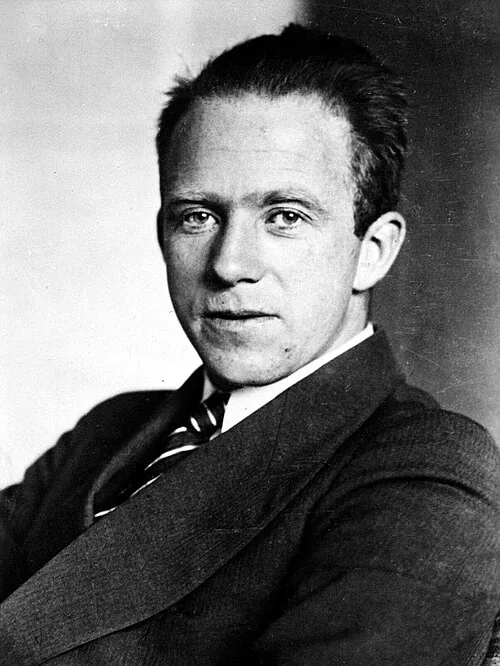


Photographer unknown, via Wikimedia Commons, CC BY-SA 3.0 DE. Background removed for the portrait above. · Photograph by Duncan.Hull, CC BY-SA 4.0. Background removed for the portrait above. · Photograph by Gage Skidmore, CC BY-SA 2.0. Background removed for the portrait above.
.jpg)

.jpg)
An estimate is an inference.
Yours can be measured.
Thirty questions, scored against general-population benchmarks. Your score, your percentile, your ability breakdown and a printable IIF certificate.
Find your IQ score now! →