



What is Grigori Perelman’s IQ?
A perfect 42 at sixteen, a Millennium Prize problem resolved, a Fields Medal and $1 million turned down. A checkable record with no IQ score in it.
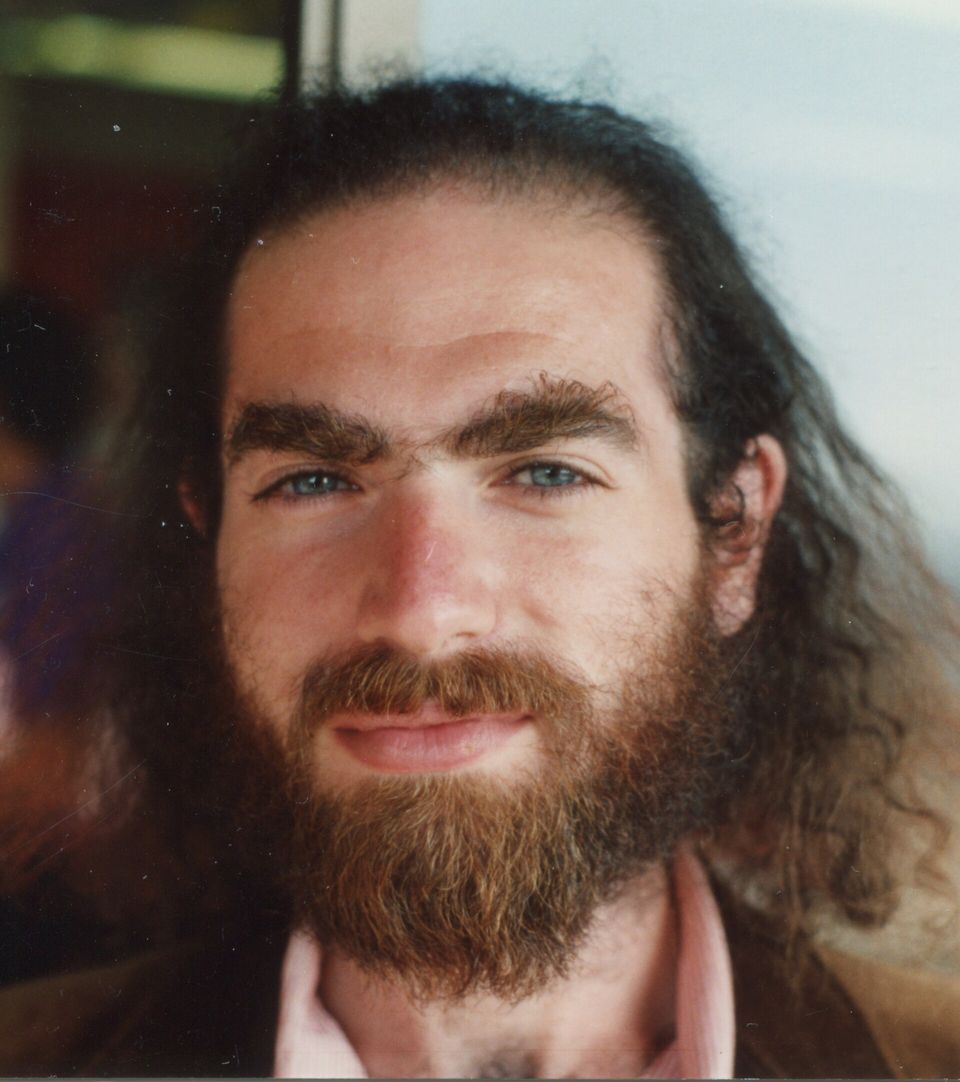
No Grigori Perelman IQ test result has been published. The 238 that circulates as his IQ cites no test, examiner or date, while the documented record — a perfect Olympiad paper and the Poincaré conjecture — supports an estimated IQ range of 165–185, an inference and not a score.
Grigori Perelman’s estimated IQ
- Scored 42 out of 42 at the 1982 International Mathematical Olympiad in Budapest, aged sixteen: 7 on each of six problems, gold, and first place shared with two other contestants among 119.
- Defended his doctoral thesis, Saddle Surfaces in Euclidean Spaces, in 1990 after graduate work at the Leningrad branch of the Steklov Institute and, with Yuri Burago and Mikhail Gromov, co-wrote the 1992 paper on Aleksandrov spaces with curvature bounded below.
- Proved the Cheeger–Gromoll soul conjecture in 1994, a question open since 1972, and gave an invited lecture at the 1994 International Congress of Mathematicians in Zürich.
- Posted three arXiv preprints between November 11, 2002 and July 17, 2003 presenting proofs of the Poincaré and geometrization conjectures; other mathematicians’ expositions checked them, and the Clay Mathematics Institute announced on March 18, 2010 that he had earned the first Millennium Prize.
- Named a 2006 Fields Medalist by the International Mathematical Union, for contributions to geometry and insights into the structure of the Ricci flow; he declined the medal.
No IQ test of Perelman’s has been published, so this range is a judgment about a record, not a measurement, and it is wide on purpose. The Olympiad’s 42 is a ceiling that two other contestants also reached, and no IQ test has items that could grade a Poincaré-level proof, so any single number would rest on assumptions no one can check.
- Born
- June 13, 1966, Leningrad, USSR (now St. Petersburg, Russia)
- Field
- Geometric topology, Riemannian and Aleksandrov geometry, Ricci flow
- Education
- School 239, Leningrad; Leningrad State University (entered 1982, graduated 1987); doctoral thesis defended 1990
- Institution
- Steklov Institute of Mathematics, Leningrad (St. Petersburg) branch; resigned December 2005
- IMO 1982
- 42 of 42, gold medal, joint first of 119 contestants (Budapest)
- Poincaré preprints
- arXiv, November 11, 2002, March 10, 2003 and July 17, 2003
- Honors declined
- Fields Medal (2006); Clay Millennium Prize (2010)
- Published IQ test result
- None
What an IQ of 165–185 actually means
Set the claim aside for a moment. If someone genuinely scored in this range, here is what that would represent.
Average is 100 by construction, and about two-thirds of people fall between 85 and 115. Take the test to place your own score on this scale.
| Score range | Classification | Share of people | What it indicates |
|---|---|---|---|
| 85 – 114 | Average | ~68% | The range most people fall into. |
| 115 – 129 | Above average | ~13.6% | Roughly one person in seven. |
| 130 – 144 | Gifted | ~2% | The threshold most high-IQ societies use. |
| Above 144 | Highly gifted | ~0.1% | Figures above this range are extrapolated from the curve rather than measured. |
Percentages are approximate and describe a normal distribution. The same number means different things on tests with different standard deviations.
Thirty questions gives you a measured position on this exact scale — your score, your percentile and the ability breakdown behind it.
Find out in 30 minutes →Who Grigori Perelman is
Grigori Yakovlevich Perelman was born in Leningrad on June 13, 1966. As a child he attended a mathematics club run by Sergei Rukshin at the Leningrad Palace of Pioneers, and in September 1980 he entered Leningrad’s Special Mathematics and Physics School No. 239, where Valery Ryzhik was his class and mathematics teacher. He was picked for the 1982 Soviet team through training sessions at Chernogolovka in January and Odessa in April, and at the 23rd International Mathematical Olympiad in Budapest (July 5–14, 1982) he scored 42 of 42 and won gold.
He entered Leningrad State University in fall 1982 and graduated in 1987, then did graduate work at the Leningrad branch of the Steklov Institute of Mathematics, where Aleksandr Aleksandrov was his official adviser and Yuri Burago his adviser in practice. His thesis, Saddle Surfaces in Euclidean Spaces, was defended in 1990, and with Burago and Mikhail Gromov he wrote the 1992 paper on Aleksandrov spaces with curvature bounded below. Fellowships took him to New York University’s Courant Institute (fall 1992), Stony Brook (spring 1993) and, for two years, the University of California, Berkeley. In 1994 he proved the Cheeger–Gromoll soul conjecture, open since 1972, and lectured at the International Congress of Mathematicians in Zürich; in 1995 he returned to the Steklov Institute.
On November 11, 2002 he posted “The entropy formula for the Ricci flow and its geometric applications” to arXiv, followed by “Ricci flow with surgery on three-manifolds” on March 10, 2003 and “Finite extinction time for the solutions to the Ricci flow on certain three-manifolds” on July 17, 2003. The three papers presented proofs of Thurston’s geometrization conjecture and of the Poincaré conjecture, posed in 1904 and one of the seven Millennium Prize Problems named by the Clay Mathematics Institute in 2000. They were brief, and checking them took years: Bruce Kleiner and John Lott’s notes (Geometry and Topology, 2008), John Morgan and Gang Tian’s book (American Mathematical Society and Clay, 2007) and other teams supplied the detail. The Institute’s own list shows the Poincaré conjecture as the only Millennium problem solved.
In December 2005 Perelman resigned from the Steklov Institute. On August 22, 2006, at the International Congress of Mathematicians in Madrid, the International Mathematical Union announced that he had declined the Fields Medal, cited for his contributions to geometry and his insights into the structure of the Ricci flow; he was the first person to decline one. Terence Tao, another 2006 medalist, was one of the five mathematicians on the Special Advisory Committee that first recommended Perelman for the Millennium Prize. The Clay Institute announced the award on March 18, 2010 and announced on July 1, 2010 that he had declined it; Interfax quoted him as saying his main reason was his disagreement with the organized mathematical community, and that he considered Richard Hamilton’s contribution no less than his own. As Nature reported in August 2006, he had told The Sunday Telegraph that he had published all his calculations and that this was what he could offer the public.
 By Elora Mercer, Celebrity Research WriterFigures checked by Leon Falkner, Data & Research Analyst
Reviewed by Aarav Vardhan, Editor-in-Chief · Last reviewed August 2026
_(cropped).jpg)
Grigori Perelman: the documented record
The estimate above rests on this record. Every entry here is a matter of public fact, which is more than can be said for the number itself.
- 1966Born in Leningrad on June 13.
- 1980Enters Leningrad’s Special Mathematics and Physics School No. 239.
- 1982Scores 42 of 42 and wins gold at the Budapest International Mathematical Olympiad (July 5–14), joint first of 119; enters Leningrad State University that fall.
- 1990Defends his doctoral thesis, Saddle Surfaces in Euclidean Spaces.
- 1994Proves the Cheeger–Gromoll soul conjecture and lectures at the International Congress of Mathematicians in Zürich.
- 2002Posts the first Ricci-flow preprint to arXiv on November 11.
- 2003Posts the second (March 10) and third (July 17) preprints.
- 2005Resigns from the Steklov Institute in December.
- 2006The International Mathematical Union announces on August 22 that he has declined the Fields Medal.
- 2010The Clay Mathematics Institute announces the first Millennium Prize for the Poincaré conjecture on March 18; on July 1 it announces that Perelman has declined it.
Where the 238 figure came from
Following a claim back to its first appearance is the part almost nobody does — and it is what most people are actually asking.
Grigori Yakovlevich Perelman’s IQ appears online as 238, presented as a record: “the highest IQ ever recorded.” The earliest dated page found that says so is a Mindvalley blog post of March 31, 2022, which names no test, examiner or date. iqtestonline.io gives the same figure, and a post on X in November 2024 and a Facebook post from Russia Unofficial carry the same opening sentence. The wording is the first warning. An IQ score is a position on a scale normed to a mean of 100 and a standard deviation of 15, so 238 would sit more than nine standard deviations above the mean, where no test has items and no norming sample has people. Reports of scores much higher than 160 are treated as dubious, which makes the highest IQ ever recorded a claim to check rather than a fact to repeat.
The lower figures are no better sourced. iqtests.com (April 18, 2024) headlines “IQ Level: 177”, then concedes in its own text that no official test result exists and that a rumored 201 belongs in the domain of hearsay. OpenGenus (January 10, 2021) gives 172 “based on a 2019 study” without naming the study, Topteny lists 172 as “reported”, and the Deccan Chronicle (January 15, 2025) says he has an IQ “surpassing 177 (SD15)” with no source. The iqtests.com page adds that 201 would put him alongside Albert Einstein and Stephen Hawking, which sets one unsourced number against two others; this site’s estimated ranges for them, 160–180 and 150–170, rest on documented records instead. A Grigori Perelman IQ test result would have to come from Perelman, a psychologist or a test publisher, and none has appeared.
What is documented is performance, and the kind matters. At the 1982 International Mathematical Olympiad in Budapest, Perelman scored 7 on each of six problems, and the IMO’s official results put him joint first with two other contestants among 119. That is a real, checkable result, but it is a contest score. Contestants are selected by their countries (MacTutor describes the Soviet team being chosen at sessions in Chernogolovka and Odessa), medals rank them against that year’s field, and 42 is a hard cap, so the paper cannot show how far above it anyone sits, a limitation known as the ceiling effect. Achievement tests and IQ tests answer different questions, and an Olympiad paper belongs to the first kind.
Grigori Perelman’s estimated IQ, 165–185 on this site, is a different kind of number from 238: an inference from a record, not a claim about a score. A Poincaré-level result cannot be converted into an IQ level. An IQ is a position on a scale normed on test-takers; a proof of a conjecture posed in 1904 is research that built on Richard Hamilton’s Ricci-flow program and was then checked for years by other mathematicians, and there is no exchange rate between the two. The range sits beside Emmy Noether’s 165–185 and just under the 170–190 given to Terence Tao and John von Neumann: Tao’s range rests partly on a childhood test result, von Neumann’s on a record across several fields, and Perelman’s on achievement alone. Their circulating figures, 230 and 300, also run far above their records, which is the usual direction of error; for how such numbers start, see where celebrity IQ numbers come from.
How we read a number →Lists “Grigorij Perelman” (USSR) with 7 on each of six problems, a total of 42, rank 1, gold. Two other contestants also scored 42. The edition page gives July 5–14, 30 countries and 119 contestants; the results table shows 10 gold medals.
Titles and submission dates as recorded by arXiv. Kleiner and Lott’s Notes on Perelman’s papers (math/0605667, first posted May 25, 2006) is the independent line-by-line check.
Records the award, the three committees that recommended it (including Terence Tao), the years of checking by other teams and the published expositions. The Millennium Problems page lists the Poincaré conjecture as the one solved problem of seven.
Gives the citation for Perelman (contributions to geometry and insights into the analytical and geometric structure of the Ricci flow) and records that he declined to accept the award.
Summarizes his Aleksandrov-geometry work, the 1994 soul-conjecture proof (Journal of Differential Geometry 40, 209–212) and the three Ricci-flow preprints, and repeats the Fields citation.
Source for School 239, the 1982 team selection, university and thesis dates, the fellowships, the December 2005 resignation and both refusals. It does not mention an IQ.
Contemporary accounts of the declined Fields Medal and the declined Millennium Prize, including Perelman’s own remarks to The Sunday Telegraph (2006) and Interfax (2010). None mentions an IQ figure.
Modern IQ scores are normed to a mean of 100 and a standard deviation of 15; reports of scores much higher than 160 are treated as dubious, and exceptionally high scores are hard to validate because they fall beyond the range standardized tests cover.
238: Mindvalley, iqtestonline.io and the X and Facebook posts. 177, with a rumored 201: iqtests.com, which also says no official result exists. 172 “based on a 2019 study”: OpenGenus; “reported”: Topteny. “Surpassing 177 (SD15)”: Deccan Chronicle. None names a test, examiner or date.
No biography, news report or institutional page read for this profile mentions an IQ test or score for Perelman, and every page that gives a figure cites no test. He has published no result, and no source identifies a test or a tester.
The sources behind our estimate
The figures that circulate for Grigori Perelman, what we were able to confirm, and where the two diverge.
That Perelman holds “the highest IQ ever recorded”: 238, stated on ranking pages and in social-media posts. Lower numbers also circulate: 201, which the page that mentions it calls hearsay, 177 and 172.
Mindvalley’s blog (March 31, 2022) says the highest IQ ever recorded is 238, and iqtestonline.io lists Perelman first at 238 as the person with the highest IQ in the world; a post on X in November 2024 and a Facebook post from Russia Unofficial make the same claim in one opening sentence. None names a test, an examiner or a testing date. iqtests.com (April 18, 2024) headlines “IQ Level: 177” yet says in its body that no official test result exists and that 201 is hearsay. OpenGenus (January 10, 2021) gives 172 “based on a 2019 study” it does not name, Topteny lists 172 as “reported”, and the Deccan Chronicle (January 15, 2025) says “surpassing 177 (SD15)” with no source. None of the biographies, news reports or institutional pages checked — MacTutor, The New Yorker, BBC News, Nature, the Associated Press, the Clay Mathematics Institute release — mentions an IQ.
Four circulating figures, 172 to 238, and no test behind any of them. The two lowest happen to fall inside the range on this page, but agreement with an unsourced number is coincidence, not confirmation; the two highest sit 16 and 53 points above its top.
Want a number that does hold up? Every figure on this page is somebody’s claim. Take the 30-question test and get a percentile you can check rather than a figure you have to trust.
Grigori Perelman — frequently asked
What is Grigori Perelman’s IQ?
No IQ test result for Grigori Perelman has been published, so his IQ is unknown. The 238 that circulates as “the highest IQ ever recorded” cites no test. This site estimates a range of 165–185 from his documented record, a perfect 42 at the 1982 Olympiad and the Poincaré conjecture proof, not from a score.
Did Grigori Perelman take an IQ test?
There is no public record that he did. None of the biographies, news reports or institutional pages checked mentions an IQ test, and every website that quotes a figure for him (238, 201, 177 or 172) names no test, examiner or date. His documented results are competition and research results, not psychometric ones.
Is Grigori Yakovlevich Perelman’s IQ really 238?
No source supports 238. It appears as “the highest IQ ever recorded” on Mindvalley’s blog (March 31, 2022), on iqtestonline.io and in social-media posts, none of which names a test. A score of 238 would sit more than nine standard deviations above the mean of 100, beyond anything a standardized test can measure.
What is Grigori Perelman’s estimated IQ?
This site puts Grigori Perelman’s estimated IQ at 165–185, inferred from documented achievement rather than a test: 42 of 42 at the 1982 International Mathematical Olympiad, proofs of the Poincaré conjecture and a 2006 Fields Medal citation. It is a judgment about a record, deliberately wide, and not a score.
Did Grigori Perelman get a perfect score at the International Mathematical Olympiad?
Yes. At the 1982 International Mathematical Olympiad in Budapest he scored 7 on each of the six problems, 42 in total, and won gold. Two other contestants also scored 42, so he finished joint first among 119. It is a contest result, not an IQ.
How does Grigori Perelman’s estimated IQ compare with Terence Tao’s?
This site’s range is 165–185 for Perelman and 170–190 for Terence Tao, a gap well inside the error of the method. Tao’s range rests partly on a documented childhood test result, while Perelman’s rests on achievement alone because no test result of his has been published.
Can the Poincaré conjecture proof be converted into an IQ score?
No. An IQ is a position on a scale normed on test-takers, and no standardized test has items that could grade a research proof. The proof shows exceptional mathematical ability and years of work, checked by other mathematicians, but it carries no exchange rate into IQ points.
How does my IQ compare with Grigori Perelman?
You can find out in about fifteen minutes. The IQ Metrics assessment is 30 questions, scored on the same 100-mean scale used throughout this page, so your result and the estimate above are at least expressed in the same units — one measured, one inferred. Once you have a number, the leaderboard shows where it would sit, and how we score and norm it explains the benchmarking.
Where does this estimate come from?
From the documented record rather than a test — the method is named above and set out in full under how we read a number. Compare it against the other scientists profiles, starting with Albert Einstein.
- Take the 30-question IQ test — get a measured score and percentile of your own
- Average IQ by country — how the scale behaves across populations
- How IQ Metrics scores its assessment — the method behind our own number
- More on how IQ testing works — reliability, error and what a score can and cannot say
- More scientists profiles — same field, same method
More scientists

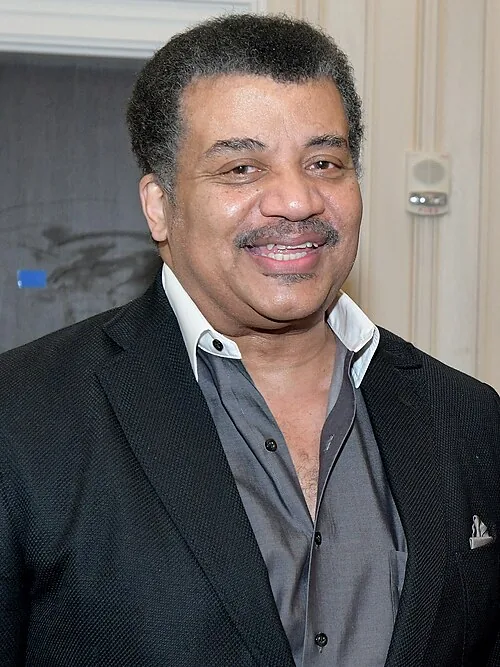
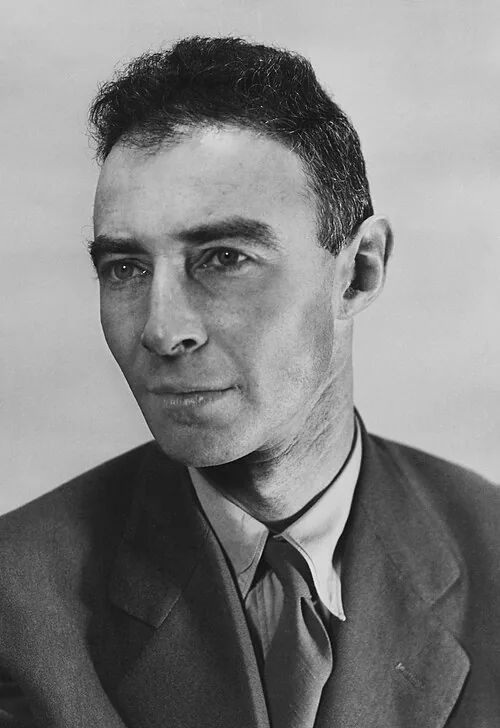
Photograph by the Institute for Pure & Applied Mathematics (2026), CC BY 4.0. Background removed for the portrait above. · Photograph by Maryland GovPics, CC BY 2.0. Background removed for the portrait above. · Photograph from the US National Archives (catalog 558579), public domain.
_(cropped).jpg)
.jpg)
An estimate is an inference.
Yours can be measured.
Thirty questions, scored against general-population benchmarks. Your score, your percentile, your ability breakdown and a printable IIF certificate.
Find your IQ score now! →