



What was Alan Turing’s IQ?
A real genius, and a number nobody administered.

Turing never sat an IQ test — the concept barely existed in a usable form during his schooling, and no test was ever administered to him as an adult. The 185 attached to his name online was grafted onto a real, numberless quote about him decades after his death.
Alan Turing’s estimated IQ
- Cambridge Wrangler with distinction in the Mathematical Tripos, King’s College, 1934; elected a Fellow of King’s in 1935 for independently re-proving the Central Limit Theorem.
- PhD, Princeton University, 1938, under Alonzo Church, introducing the concept later named the Turing machine in his 1936 paper “On Computable Numbers.”
- Led Hut 8 at Bletchley Park from 1939, co-designing the Bombe that broke German naval Enigma traffic, then published the founding paper of the field now called AI, “Computing Machinery and Intelligence” (1950).
This is one of the strongest achievement records on this site, but it remains an inference from output, not a score. No test exists to anchor a range this specific; the number reflects the weight of the record, not a measurement of it.
- Born
- 23 June 1912, Maida Vale, London
- Died
- 7 June 1954, Wilmslow, Cheshire
- Field
- Mathematics, cryptanalysis, computer science
- Education
- King’s College, Cambridge (1934); PhD, Princeton University (1938)
- Known for
- Turing machine, Bletchley Park codebreaking, the Turing Test
- Canonical IQ
- No test on record
What an IQ of 160–180 actually means
Set the claim aside for a moment. If someone genuinely scored in this range, here is what that would represent.
Average is 100 by construction, and about two-thirds of people fall between 85 and 115. Take the test to place your own score on this scale.
| Score range | Classification | Share of people | What it indicates |
|---|---|---|---|
| 85 – 114 | Average | ~68% | The range most people fall into. |
| 115 – 129 | Above average | ~13.6% | Roughly one person in seven. |
| 130 – 144 | Gifted | ~2% | The threshold most high-IQ societies use. |
| Above 144 | Highly gifted | ~0.1% | Figures above this range are extrapolated from the curve rather than measured. |
Percentages are approximate and describe a normal distribution. The same number means different things on tests with different standard deviations.
Thirty questions gives you a measured position on this exact scale — your score, your percentile and the ability breakdown behind it.
Find out in 30 minutes →Who Alan Turing was
Alan Turing was born in London in 1912 and educated at Sherborne School before entering King’s College, Cambridge, in 1931. He graduated a Wrangler with distinction in 1934 and was elected a Fellow the following year. He completed a PhD at Princeton under Alonzo Church in 1938, then returned to Britain.
From September 1939 he worked at the Government Code and Cypher School at Bletchley Park, leading Hut 8’s work against German naval Enigma traffic and co-designing the Bombe, an electromechanical device that dramatically sped up codebreaking. After the war he worked on early computer design at the National Physical Laboratory and the University of Manchester, and in 1950 published “Computing Machinery and Intelligence,” proposing what is now called the Turing Test.
In 1952 he was convicted of gross indecency under British law for a relationship with a man, accepted chemical castration in lieu of prison, and lost his security clearance. He died in 1954. He received a posthumous royal pardon in 2013.
 By Elora Mercer, Celebrity Research WriterFigures checked by Leon Falkner, Data & Research Analyst
Reviewed by Aarav Vardhan, Editor-in-Chief · Last reviewed August 2026

Alan Turing: the documented record
The estimate above rests on this record. Every entry here is a matter of public fact, which is more than can be said for the number itself.
- 1931Enters King’s College, Cambridge.
- 1934Graduates a Wrangler with distinction in the Mathematical Tripos.
- 1936Publishes “On Computable Numbers,” introducing the Turing machine.
- 1938Completes his PhD at Princeton under Alonzo Church.
- 1939Joins Bletchley Park; leads Hut 8’s work against naval Enigma.
- 1950Publishes “Computing Machinery and Intelligence” in Mind.
- 1952Convicted of gross indecency; loses his security clearance.
- 1954Dies at his home in Wilmslow.
Where the 185 figure came from
Following a claim back to its first appearance is the part almost nobody does — and it is what most people are actually asking.
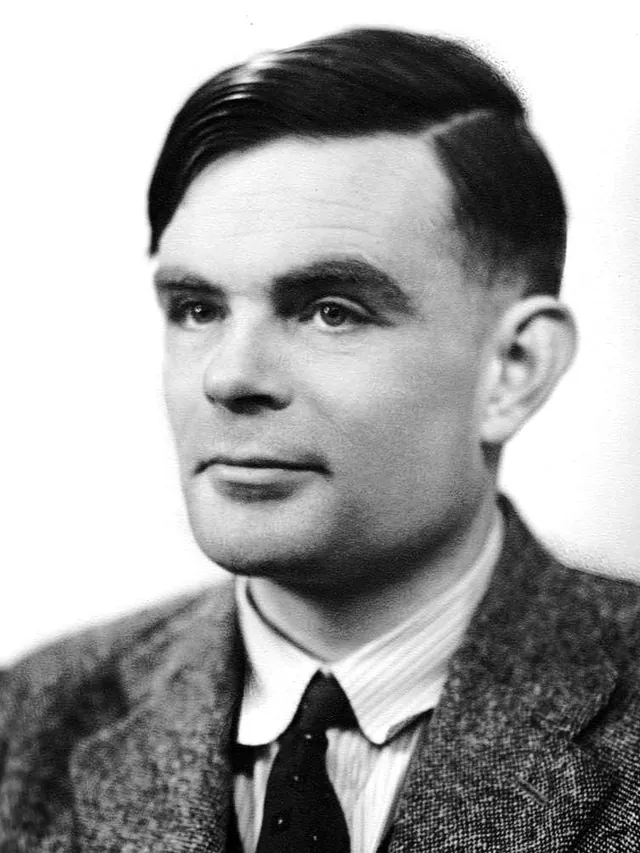
The number usually attached to Turing has a traceable origin, which is unusual on this site — most inflated figures have none at all. Sara Turing’s 1959 biography of her son records his primary-school headmistress telling her, on his departure, “I have had clever boys and hard-working boys, but Alan is a genius.” No number appears anywhere in that account. Later web copies of the same quote insert one: “With an IQ of 185, the odds are he’ll make some original contribution to whatever he goes into.” Standardized IQ testing barely existed in 1918–21 Britain, and no source attributes this figure to a document, a letter or a test. The likeliest explanation is that a real, numberless quote was embellished with an invented figure at some later point in its retelling online.
A second number, “170+,” is sometimes gestured at as a historiometric estimate, in the tradition of Albert Einstein or the Cox 1926 study that anchors several other pages here. No named study individually scores Turing — Cox’s 1926 sample was limited to historical figures born before 1850, decades before Turing’s birth. That figure has no traceable origin either.
Set against J. Robert Oppenheimer, another wartime scientific achievement measured by outcome rather than test: Turing’s codebreaking work is credited with shortening the war, and his 1936 and 1950 papers independently founded two fields. The achievement record here needs no invented number to make its case, which is exactly why it is disappointing that one got attached to it anyway.
How we read a number →Introduces the concept later called the Turing machine.
Proposes the Turing Test; founding paper of the field now called artificial intelligence.
Confirm the 1938 PhD under Alonzo Church, and the Bletchley Park and Hut 8 record respectively.
Source of the headmistress’s “genius” remark — with no number attached.
First-appearance date of the embellished quote pending audit.
No source cites Sara Turing’s book, a school record or a named study for either number.
Confirmed across every biographical source consulted.
Alan Turing — frequently asked
What was Alan Turing’s IQ?
No test was ever administered to him. The “185” figure quoted online was added, at some later point, to a real but numberless quote from his mother’s 1959 biography.
Where does the 185 IQ figure for Turing come from?
Sara Turing’s biography records his headmistress calling him a “genius” with no number attached. Later web copies of the quote insert “185” with no citation to any test or document.
Did Alan Turing ever take an IQ test?
No standardized IQ test of Turing has ever been documented, in childhood or as an adult.
What did Alan Turing actually achieve?
A Cambridge Wrangler distinction, a Princeton PhD, the theoretical paper that founded computer science (1936), leadership of Bletchley Park’s Hut 8 against naval Enigma, and the 1950 paper that founded the field now called artificial intelligence.
Why estimate an IQ range if no test exists?
Because the question is heavily searched and the answers online are invented. Our range reflects the weight of a documented academic and wartime record, not a measurement.
How does Turing compare to other scientists on this site?
Set against Oppenheimer, a comparable wartime-achievement case: both are measured by outcome rather than test, and neither needed an invented number to make the case for how capable they were.
How does my IQ compare with Alan Turing?
You can find out in about fifteen minutes. The IQ Metrics assessment is 30 questions, scored on the same 100-mean scale used throughout this page, so your result and the estimate above are at least expressed in the same units — one measured, one inferred. Once you have a number, the leaderboard shows where it would sit, and how we score and norm it explains the benchmarking.
Where does this estimate come from?
From the documented record rather than a test — the method is named above and set out in full under how we read a number. Compare it against the other scientists profiles, starting with Albert Einstein.
- Take the 30-question IQ test — get a measured score and percentile of your own
- Average IQ by country — how the scale behaves across populations
- How IQ Metrics scores its assessment — the method behind our own number
- More on how IQ testing works — reliability, error and what a score can and cannot say
- More scientists profiles — same field, same method
More scientists
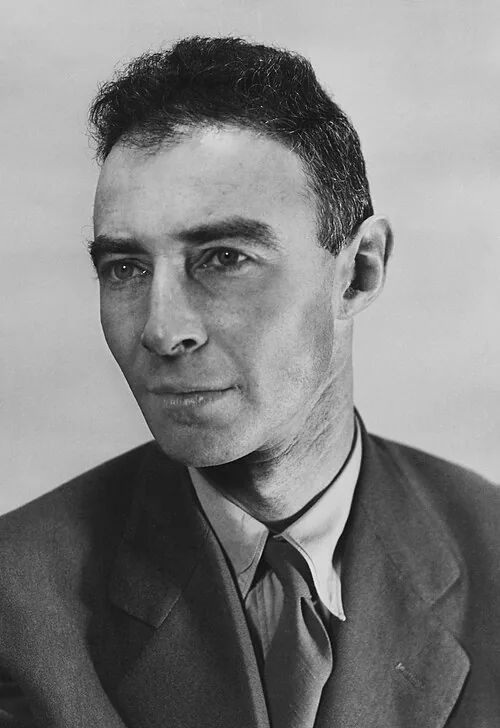
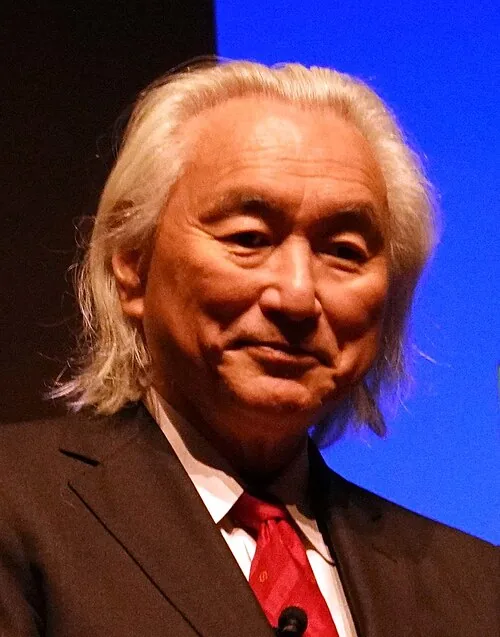
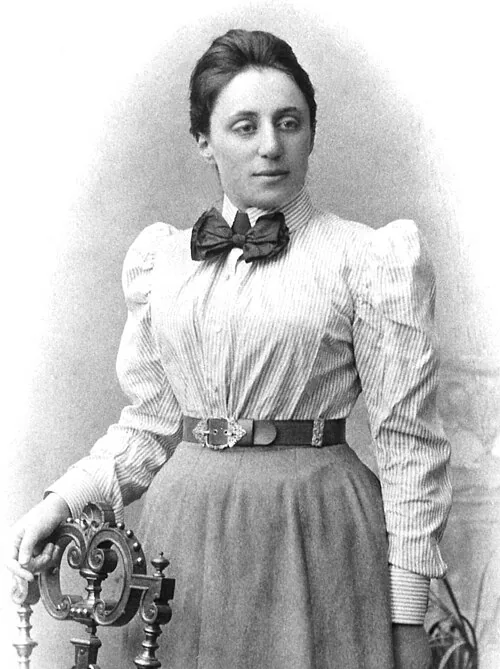
Photograph from the US National Archives (catalog 558579), public domain. · Photograph by Jay Murdock, CC BY-SA 4.0. · Photograph, publisher Mathematical Association of America, via Wikimedia Commons, public domain. Background removed for the portrait above.
.jpg)
.jpg)
.jpg)
An estimate is an inference.
Yours can be measured.
Thirty questions, scored against general-population benchmarks. Your score, your percentile, your ability breakdown and a printable IIF certificate.
Find your IQ score now! →