



What was Enrico Fermi’s IQ?
Ten out of ten from the Rome examiners at seventeen, a physics degree at twenty, a Nobel Prize at thirty-seven: the record is documented, the IQ number is not.
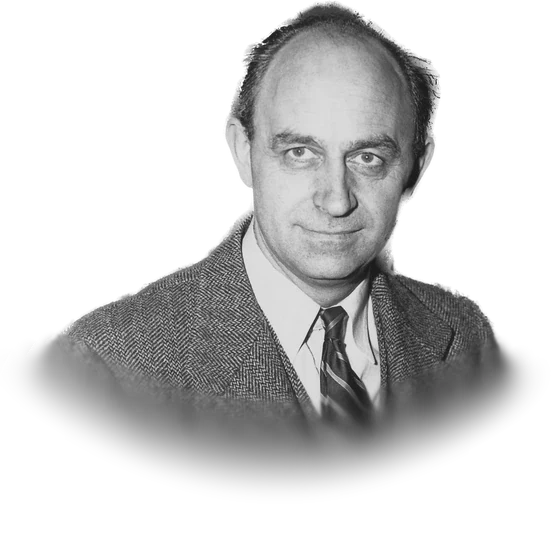
Enrico Fermi’s IQ was never measured, and no page we could open states the 220 that search suggestions attach to his name. What is documented is a 1918 entrance examination marked ten out of ten by his examiners, a physics degree at twenty, a Nobel Prize and the first nuclear reactor, which supports an estimated IQ of 160–180.
Enrico Fermi’s estimated IQ
- The Rome examining commission’s minutes of November 26, 1918 give the seventeen-year-old Fermi ten out of ten, the maximum mark, in algebra, geometry and physics, and say its members would add honors if the rules allowed; he won the Scuola Normale Superiore competition.
- His entrance essay on the distinctive characteristics of sounds began from the differential equation for the vibrations of an elastic rod and solved it; the presiding examiner told him, in Emilio Segrè’s account, that he had never met a student like him.
- Physics degree at Pisa on July 4, 1922, at twenty, with full marks and honors, followed by work with Max Born at Göttingen and Paul Ehrenfest at Leiden.
- First place in the competition for Italy’s first chair of theoretical physics, at the University of Rome (Enrico Persico second), and the Nobel Prize in Physics in 1938 for his work on neutron-induced radioactivity and slow neutrons.
- Directed Chicago Pile-1, the first controlled nuclear chain reaction, on December 2, 1942; Segrè, his student and collaborator, judged him the only physicist of the twentieth century to excel in both theory and experiment.
None of this is a score. Ten out of ten is a ceiling mark: it cannot say whether a candidate is a little or a long way ahead of the rest, and an entrance examination measures preparation as well as ability. The range is an inference from an unusually well-documented record, which narrows the uncertainty but does not turn it into a measurement.
- Born
- September 29, 1901, Rome
- Died
- November 28, 1954, Chicago
- Field
- Experimental and theoretical physics
- Education
- Scuola Normale Superiore and University of Pisa; physics degree, July 4, 1922
- Entrance examination
- Ten out of ten in algebra, geometry and physics from the Rome commission, November 1918
- Nobel Prize
- Physics, 1938
- Known for
- Fermi–Dirac statistics, beta-decay theory, slow neutrons, Chicago Pile-1, Fermi problems
- Circulating figures
- 190 on one IQ-list site; 220 in search suggestions; neither sourced
What an IQ of 160–180 actually means
Set the claim aside for a moment. If someone genuinely scored in this range, here is what that would represent.
Average is 100 by construction, and about two-thirds of people fall between 85 and 115. Take the test to place your own score on this scale.
| Score range | Classification | Share of people | What it indicates |
|---|---|---|---|
| 85 – 114 | Average | ~68% | The range most people fall into. |
| 115 – 129 | Above average | ~13.6% | Roughly one person in seven. |
| 130 – 144 | Gifted | ~2% | The threshold most high-IQ societies use. |
| Above 144 | Highly gifted | ~0.1% | Figures above this range are extrapolated from the curve rather than measured. |
Percentages are approximate and describe a normal distribution. The same number means different things on tests with different standard deviations.
Thirty questions gives you a measured position on this exact scale — your score, your percentile and the ability breakdown behind it.
Find out in 30 minutes →Who Enrico Fermi was
Enrico Fermi was born in Rome on September 29, 1901, and learned physics largely from books rather than people. By thirteen he was working through Andrea Caraffa’s Latin treatise on physics, published in 1840, and the engineer Adolfo Amidei lent him mathematics and physics texts in graded order. With his schoolmate Enrico Persico he built apparatus and measured the acceleration of gravity at Rome and the Earth’s magnetic field. In the summer of 1918 he read O. D. Chwolson’s four-volume Traité de physique, writing to Persico that he had found about a thousand pages he could skip because he already knew them. Segrè judged that by seventeen Fermi’s knowledge of classical physics matched that of an advanced graduate student.
The 1918 competition decided who would win a fellowship place at the Scuola Normale Superiore in Pisa. Fermi sat the papers in Rome, after an influenza epidemic postponed them to November 12–14: algebra, geometry, then physics, with eight hours for the physics paper. The physics paper set an essay on the distinctive characteristics of sounds and their causes and a practical problem on a tangent galvanometer. Fermi opened the essay with the differential equation for the transverse vibrations of an elastic rod; the presiding examiner, Giulio Pittarelli, a professor of descriptive geometry, spoke with him afterward and, by Segrè’s account, told him he had never met a student like him. Fermi won the competition, took his physics degree at Pisa on July 4, 1922 with full marks and honors (a thesis on X-rays under Luigi Puccianti), and received his Scuola Normale diploma, also with honors, on July 7.
With a government scholarship he worked in 1923–24 with Max Born in Göttingen and Paul Ehrenfest in Leiden, then lectured in Florence from 1924 to 1926. Early in 1926 he formulated the statistics of particles that obey Pauli’s exclusion principle; Dirac reached the same result independently a few months later, which is why the name is Fermi–Dirac statistics. In 1926 he also received the Matteucci Medal and won the competition for the first chair of theoretical physics in Italy, at the University of Rome, ahead of Enrico Persico and Aldo Pontremoli. He took it up on January 1, 1927 and, at the Royal Physics Institute in Via Panisperna, gathered the young group later called the Via Panisperna boys: Edoardo Amaldi, Franco Rasetti, Emilio Segrè, Ettore Majorana, Bruno Pontecorvo and Oscar D’Agostino. Colleagues jokingly called him “the Pope” for his apparent infallibility. His theory of beta decay (1933–34), which he regarded as his theoretical masterpiece, was followed by the discovery of slow neutrons in 1934, a finding patented soon after, and by the 1938 Nobel Prize in Physics.
Fermi left Italy for the United States directly from the Nobel ceremony in Stockholm, arriving in New York on January 2, 1939 to take a position at Columbia University. After the discovery of fission he turned to the chain reaction, moved to Chicago in 1942, and on December 2, 1942 directed Chicago Pile-1, the first controlled nuclear chain reaction, at Stagg Field. From 1944 he was at Los Alamos as an associate director of the laboratory; at the Trinity test on July 16, 1945 he dropped scraps of paper, watched how far the blast carried them and estimated about ten kilotons of TNT, roughly half the accepted yield of 18.6 to 21 kilotons. That habit of getting a usable answer from almost no data gave the “Fermi problem” its name. From 1946 he held a professorship at the University of Chicago’s Institute for Nuclear Studies, where his students included Owen Chamberlain, Richard Garwin and T. D. Lee. He died in Chicago on November 28, 1954. Fermium, the Fermi Award and the particles called fermions carry his name.
 By Elora Mercer, Celebrity Research WriterFigures checked by Leon Falkner, Data & Research Analyst
Reviewed by Aarav Vardhan, Editor-in-Chief · Last reviewed August 2026

Enrico Fermi: the documented record
The estimate above rests on this record. Every entry here is a matter of public fact, which is more than can be said for the number itself.
- 1901Born in Rome on September 29.
- 1918Wins the Scuola Normale Superiore competition; the Rome commission gives him ten out of ten in algebra, geometry and physics.
- 1922Takes his physics degree at Pisa on July 4, with full marks and honors, at twenty.
- 1923–24Works with Max Born in Göttingen and Paul Ehrenfest in Leiden.
- 1926–27Formulates Fermi statistics, wins the Matteucci Medal and the competition for Italy’s first chair of theoretical physics, and takes up the Rome chair on January 1, 1927.
- 1934Slow neutrons are discovered at the Via Panisperna institute; the finding is patented.
- 1938Awarded the Nobel Prize in Physics; goes from Stockholm to the United States.
- 1942Directs Chicago Pile-1, the first controlled nuclear chain reaction, on December 2.
- 1945At the Trinity test on July 16, estimates the blast at about ten kilotons from falling scraps of paper.
- 1954Dies in Chicago on November 28.
Where the 190 figure came from
Following a claim back to its first appearance is the part almost nobody does — and it is what most people are actually asking.
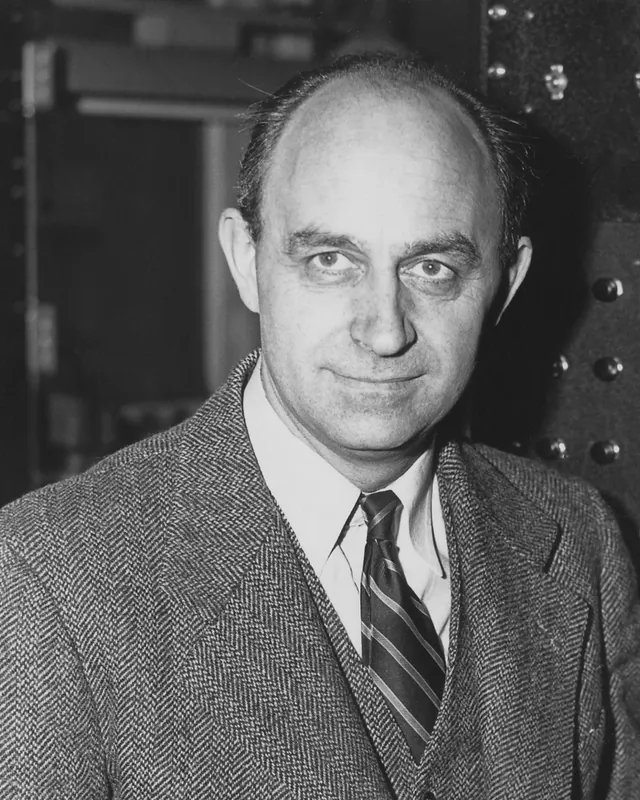
Enrico Fermi’s IQ of 220 is a number searchers supply, not one that a source does. Type his name and “iq” into a search box and “220” is offered as the next word, but none of the pages we could open states it. The one page that gives any figure, the IQ-list site geniuses.club, says 190, names no test, date or examiner, and describes the number as a published estimate rather than a measured score. No IQ test result for Fermi has ever been published, and the biographies that record his reading, exam marks and degrees in detail, including the entry written by his student and collaborator Emilio Segrè, do not mention one.
The arithmetic alone rules 220 out as a measurement. On the usual scale, with a mean of 100 and a standard deviation of 15, it sits eight standard deviations above average, a rarity of about one in 1.6 quadrillion on a normal curve. Ordinary tests have no items that hard and no norm group that large: the highest score a test can report is set by how it was built, and the ceiling effect explains why scores near the top of any test stop separating people. For the general pattern behind round figures like 190 and 220, see where celebrity IQ numbers come from.
What replaces the number is a record that is unusually specific, and its best part is an examination, not an IQ test. In November 1918 the seventeen-year-old Fermi sat the entrance competition for the Scuola Normale Superiore in Pisa at the University of Rome. The examining commission’s minutes of November 26, 1918 give him the maximum mark, ten, in algebra, geometry and physics for the oral examinations, and say its members would have added honors had the regulations allowed. That is an achievement test with a ceiling, not a score against a norm group; achievement tests and IQ tests overlap without being the same measure. Richard Feynman shows how a real school IQ of 125 and a real record can still sit far apart; for Fermi we have the record and no score.
The direction of the error is the usual one: the sourced record supports a high range, but nothing near 220. Read as achievement, it puts Fermi’s estimated IQ at 160–180, level with Einstein’s 160–180 and a few points above Oppenheimer’s 155–175; Oppenheimer directed the Los Alamos laboratory where Fermi served as an associate director from 1944. It overlaps, but tops out a few points lower than, the ranges given to Heisenberg (165–185) and von Neumann (170–190), a gap well inside the uncertainty of any of these estimates. The weakness is stated, not hidden: what counts as a genius-level IQ is a convention, and a single number averages away what made Fermi unusual, his command of both theory and experiment.
How we read a number →Written by Fermi’s first Rome student and later collaborator. Source for his self-teaching, the Pisa essay and the examiner’s verdict, the Rome chair competition, the career through 1954 and the judgment that he excelled in both theory and experiment. Contains no IQ figure.
Gives the exam dates, the oral topics, the commission’s statement that Fermi’s culture was far above that of excellent secondary students, and the marks: ten in algebra, geometry and physics, the maximum. We read the transcription, not the originals.
Birth and death, the 1918 competition, the July 4, 1922 degree with full marks and honors under Luigi Puccianti, the 1926–27 Rome chair, the 1938–54 career and the Atomic Energy Commission prize two weeks before his death.
The entrance exam of November 14, 1918 and the examiner’s forecast, the July 7, 1922 examination, the move to the United States in 1938–39 and the December 2, 1942 chain reaction. No IQ figure.
The 1938 Nobel citation, Chicago Pile-1, the Los Alamos role from August 1944 and the Trinity paper-scraps estimate.
Orientation and cross-checks: doctorate at twenty, the awards list, the Trinity estimate (10 kilotons against 18.6–21), the Via Panisperna group and Fermi problems. The Wikidata item confirms the physicist, 1901–1954. None gives an IQ figure.
Source for the nickname “the Pope”, given jokingly because of his apparent infallibility.
Lists 190 as an estimated IQ and says figures of this kind are published estimates, not measured test scores. Names no test, date, examiner or source. Does not mention 220.
Searched several times in different phrasings (“enrico fermi iq 220”, “IQ of”, “estimated IQ” and others) and read every biography listed here. No test result surfaced, and no page we could open states 220 for Fermi. The 220 appears only as a search suggestion.
The sources behind our estimate
The figures that circulate for Enrico Fermi, what we were able to confirm, and where the two diverge.
A search suggestion pairs his name with “220” (“enrico fermi iq 220”), and one IQ-list site, geniuses.club, gives 190. No page we could open states 220 or ties either figure to a test.
No published IQ test result exists for Fermi, so any Enrico Fermi IQ level is an inference. The sources that follow his schooling closely — the Dictionary of Scientific Biography entry by Emilio Segrè, the MacTutor biography, the University of Pisa physics department’s bio-bibliographic sheet and the 1918 examination minutes — record marks, degrees and appointments but no IQ test. The one page that states a number, geniuses.club, gives 190 with no test, date or examiner and calls it an estimate rather than a measured score. We could not find any page that states 220 for Fermi, so the figure in the search suggestion has no traceable origin.
Our range ends at 180, and the only figure we could trace to a page, 190, has no source behind it. The 220 sits eight standard deviations above average, about one person in 1.6 quadrillion on a normal curve, in territory where tests have no items or norms.
Want a number that does hold up? Every figure on this page is somebody’s claim. Take the 30-question test and get a percentile you can check rather than a figure you have to trust.
Enrico Fermi — frequently asked
What is Enrico Fermi’s IQ?
No IQ test result for Enrico Fermi has ever been published, so his IQ is an estimate: we place it at 160–180, inferred from his 1918 entrance examination, a physics degree at twenty, the 1938 Nobel Prize and the first nuclear reactor. The 220 in search suggestions has no source behind it.
Was Enrico Fermi’s IQ 220?
There is no evidence for it. We could not find any page that states 220 for Fermi or cites a test, and on a standard scale of 15 points 220 is eight standard deviations above average, about one person in 1.6 quadrillion, beyond the range where any IQ test has norms.
How does Enrico Fermi’s estimated IQ compare with Einstein’s and Oppenheimer’s?
On this site Fermi’s estimated IQ level of 160–180 matches Albert Einstein’s 160–180 and sits a few points above J. Robert Oppenheimer’s 155–175. All three are inferred from documented achievement, not from test scores, so the differences between them are well inside the uncertainty.
Was Enrico Fermi a genius?
By the documented record, yes in the ordinary sense of the word: ten out of ten from his 1918 entrance examiners, a physics degree at twenty, a Nobel Prize in 1938 and the first controlled nuclear chain reaction in 1942. His student Emilio Segrè called him the only twentieth-century physicist to excel in both theory and experiment. That is achievement, not an IQ score.
What was Enrico Fermi’s IQ score, and did he ever take an IQ test?
We found no record of an IQ test, so there is no score. What exists is an entrance competition: in November 1918 the Rome examining commission gave the seventeen-year-old Fermi the maximum mark of ten in algebra, geometry and physics. That is an achievement examination with a ceiling, not an IQ test scored against a norm group.
What was Enrico Fermi’s entrance essay at Pisa about?
It was set on the distinctive characteristics of sounds and their causes. At seventeen Fermi began from the differential equation for the vibrations of an elastic rod and solved it, work that led the presiding examiner to predict he would become an important scientist, and he won a place at the Scuola Normale Superiore in Pisa in 1918.
What is a Fermi problem?
A Fermi problem is an order-of-magnitude estimation exercise named for Enrico Fermi, who was known for good approximate calculations from little or no data. At the 1945 Trinity test he estimated the blast at about ten kilotons of TNT by dropping scraps of paper, against an accepted yield roughly twice that.
How does my IQ compare with Enrico Fermi?
You can find out in about fifteen minutes. The IQ Metrics assessment is 30 questions, scored on the same 100-mean scale used throughout this page, so your result and the estimate above are at least expressed in the same units — one measured, one inferred. Once you have a number, the leaderboard shows where it would sit, and how we score and norm it explains the benchmarking.
Where does this estimate come from?
From the documented record rather than a test — the method is named above and set out in full under how we read a number. Compare it against the other scientists profiles, starting with Albert Einstein.
- Take the 30-question IQ test — get a measured score and percentile of your own
- Average IQ by country — how the scale behaves across populations
- How IQ Metrics scores its assessment — the method behind our own number
- More on how IQ testing works — reliability, error and what a score can and cannot say
- More scientists profiles — same field, same method
More scientists
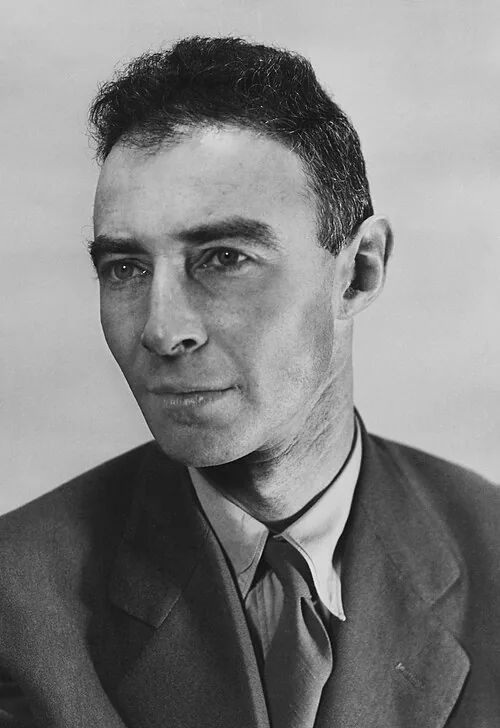
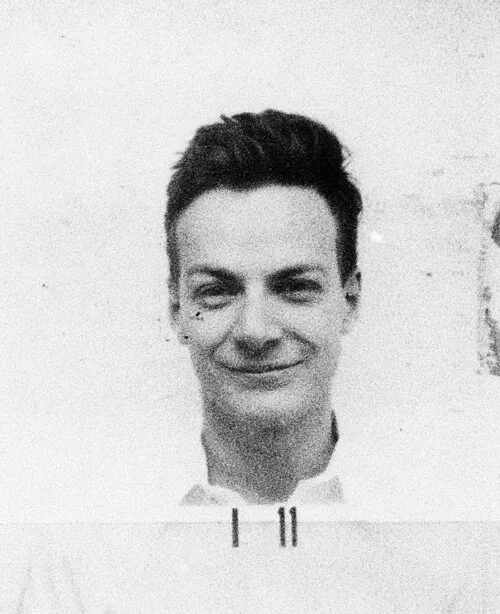
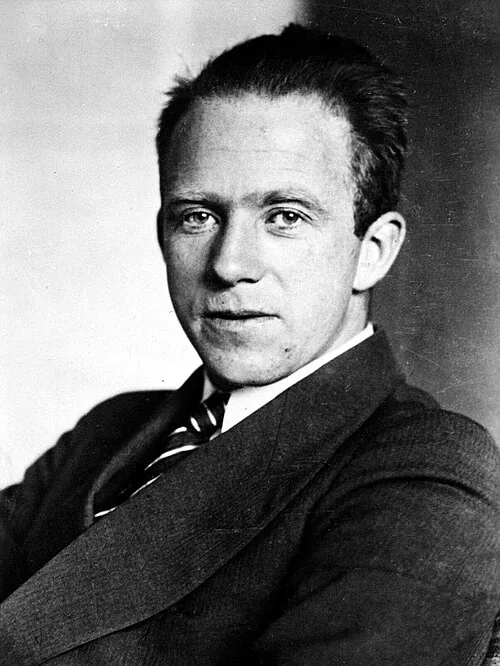
Photograph from the US National Archives (catalog 558579), public domain. · Los Alamos National Laboratory badge photograph, via Wikimedia Commons, CC0. Background removed for the portrait above. · Photographer unknown, via Wikimedia Commons, CC BY-SA 3.0 DE. Background removed for the portrait above.
.jpg)

.jpg)
An estimate is an inference.
Yours can be measured.
Thirty questions, scored against general-population benchmarks. Your score, your percentile, your ability breakdown and a printable IIF certificate.
Find your IQ score now! →