



What is Diogenes’ IQ?
Everything told of him was set down centuries later, and nothing he wrote survives to check it against.
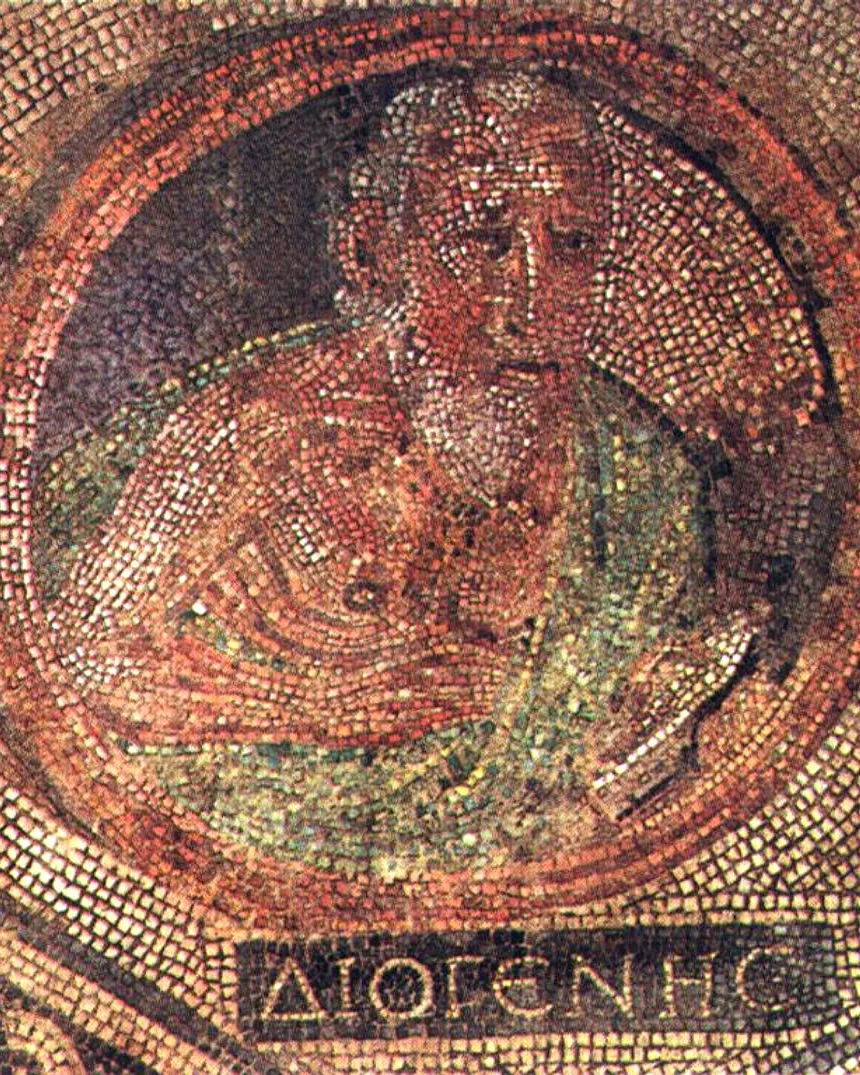
No IQ test result exists for Diogenes of Sinope, who died about 323 BCE, more than 2,200 years before the first intelligence test. What is documented is a set of reported anecdotes; the Diogenes IQ figures that circulate, 170 on geniuses.club and a 139 median from a 2023 Twitter survey, name no test, and this page’s estimate of his IQ level is a wide 125–150.
Diogenes’ estimated IQ
- Argument by counterexample, as reported: told that motion does not exist, he got up and walked about, and when Plato defined man as a featherless biped he brought a plucked fowl into the lecture room with the words “Here is Plato’s man,” after which “having broad nails” was added to the definition (Laërtius 6.39–40).
- A reputation as a debater: Laërtius credits him with “a wonderful gift of persuasion” and names Phocion and Stilpo the Megarian among his hearers (6.75–76).
- A teacher’s role, if the story holds: bought by Xeniades of Corinth, he is said to have been put over his sons and household, teaching the boys to ride, shoot and sling stones and to learn poets and historians by heart (6.30–31, 6.74); the Internet Encyclopedia of Philosophy calls the episode possibly invented.
- A coined self-description: asked where he came from, he answered “I am a citizen of the world” (6.63), which the Internet Encyclopedia of Philosophy reads as giving up his duties to Sinope for allegiance to the cosmos.
- A school that outlived him: the same encyclopedia traces Cynicism from Antisthenes through Diogenes to Crates and on to Zeno of Citium, founder of Stoicism, and says Stoic writers typically list Diogenes among their sages.
Every item above is reported, not documented: Laërtius wrote in the early third century CE, more than five centuries after Diogenes died, and the Internet Encyclopedia of Philosophy sums up the evidence on the Cynics as “apothegms, aphorisms, and ancient hearsay.” Nothing Diogenes wrote survives, so no argument of his own can be judged; that is why the range is wide, why its ceiling sits 15 points under Socrates’ 165, and why a tradition that kept only the witty retorts would make its subject look quick whatever his ability.
- Born
- c. 412/404 BCE, Sinope, on the Black Sea coast of Anatolia (the IEP gives c. 404; Wikipedia c. 413/403)
- Died
- c. 323 BCE, most likely at Corinth (Wikipedia gives c. 324/321)
- Field
- Cynic philosophy
- Father
- Hicesias, a banker or money-changer
- Teacher (reported)
- Antisthenes, in Athens; the IEP notes doubts over the dates
- Main source
- Diogenes Laërtius, Lives of Eminent Philosophers, book 6, early third century CE
- Writings
- None survive; Laërtius lists dialogues, letters and seven tragedies, and notes that some deny he wrote anything
- Cox 1926 status
- Not a subject: Cox’s 301 were born 1450–1850; also absent from Cattell’s 1903 list of 1,000
What an IQ of 125–150 actually means
Set the claim aside for a moment. If someone genuinely scored in this range, here is what that would represent.
Average is 100 by construction, and about two-thirds of people fall between 85 and 115. Take the test to place your own score on this scale.
| Score range | Classification | Share of people | What it indicates |
|---|---|---|---|
| 85 – 114 | Average | ~68% | The range most people fall into. |
| 115 – 129 | Above average | ~13.6% | Roughly one person in seven. |
| 130 – 144 | Gifted | ~2% | The threshold most high-IQ societies use. |
| Above 144 | Highly gifted | ~0.1% | Figures above this range are extrapolated from the curve rather than measured. |
Percentages are approximate and describe a normal distribution. The same number means different things on tests with different standard deviations.
Thirty questions gives you a measured position on this exact scale — your score, your percentile and the ability breakdown behind it.
Find out in 30 minutes →Who Diogenes is
Diogenes of Sinope, known as Diogenes the Cynic, was born in Sinope, a Greek city on the Black Sea coast of Anatolia (modern Sinop, Turkey), around the turn of the fifth to the fourth century BCE; the Internet Encyclopedia of Philosophy gives c. 404–323 BCE and Wikipedia’s current article c. 413/403 – c. 324/321. His father, Hicesias, was a banker or money-changer. Laërtius says Diogenes left Sinope in exile after the coinage was adulterated and came to Athens, where Antisthenes, a follower of Socrates, at first repulsed him and was worn down by his persistence (6.20–21); the IEP notes suspicion of that account because of the likely dates of Diogenes’ arrival and Antisthenes’ death. He is said to have taken to a simple life with a doubled cloak, a wallet and a tub in the Metroön for a home (6.22–23); the Greek word is pithos, a large ceramic jar.
The stories that carry his reputation are short sayings. He lit a lamp in broad daylight and said, “I am looking for a man” (6.41); asked where he came from, he called himself a citizen of the world (6.63); and when Plato was applauded for his definition of man, he plucked a fowl and presented it as Plato’s man (6.40). Laërtius even has him rate intelligence: watching physicians, philosophers and pilots at work, he deemed man “the most intelligent of all animals,” but watching diviners, dream interpreters and the conceited rich he thought “no animal more silly” (6.24). The IEP reads the whole as a practice built on reason, citing his saying that for the conduct of life we need “right reason or a halter” (6.24), and notes that Plato, asked what sort of man Diogenes was, is reported to have answered “A Socrates gone mad” (6.54).
The best-known story pairs him with Alexander the Great. In Laërtius, Alexander finds him sunning himself in the Craneum and offers him any favor he likes; Diogenes answers, “Stand out of my light” (6.38), and Alexander is reported to have said that, had he not been Alexander, he would have liked to be Diogenes (6.32). Plutarch, writing centuries later, tells it in his Life of Alexander (14.1–3): Alexander, just voted leader of the Greek expedition against Persia, goes to the philosopher lying in the sun near Corinth, is asked to stand a little out of the sun, and says that if he were not Alexander he would be Diogenes. Two ancient writers tell it, but both are late, and the scene shows an attitude and a reputation for composure, not a mental level.
Laërtius says pirates captured Diogenes on a voyage to Aegina and sold him in Crete to Xeniades of Corinth, who put him over his sons and household and went about saying “A good genius has entered my house” (6.74). Menippus and Eubulus each wrote a book called The Sale of Diogenes (6.29–30), and the IEP calls the episode possibly invented. Laërtius lists dialogues, letters and seven tragedies under his name but adds that Sosicrates and Satyrus say he left nothing in writing (6.80); the IEP calls it disputed whether he wrote anything, and no text survives. He is reported to have died at Corinth, nearly ninety by Laërtius’s count (6.76), on the day Alexander died according to Demetrius (6.79), a coincidence Wikipedia calls likely legend. His influence is clearer than his biography: the IEP traces Cynicism from Diogenes through Crates to Zeno of Citium, founder of Stoicism, and the Stoic emperor Marcus Aurelius asks in his Meditations (8.3, in Casaubon’s 1634 translation) what Alexander, Caius and Pompeius are beside Diogenes, Heraclitus and Socrates. That is praise for wisdom, not a score; see what a genius IQ level means.
 By Elora Mercer, Celebrity Research WriterFigures checked by Leon Falkner, Data & Research Analyst
Reviewed by Aarav Vardhan, Editor-in-Chief · Last reviewed August 2026

Diogenes: the documented record
The estimate above rests on this record. Every entry here is a matter of public fact, which is more than can be said for the number itself.
- c. 413–400 BCEBorn in Sinope on the Black Sea coast of Anatolia; the IEP gives c. 404, Wikipedia c. 413/403.
- c. 370–340 BCEExile and Athens, dated loosely: scholars place his arrival in Athens between about 370 and 345 BCE, while the debased Sinopean coins cited behind the coinage story date from about 350–340 BCE.
- c. 336 BCEMeets Alexander near Corinth (Wikipedia’s dating); Laërtius (6.38) and Plutarch (Alexander 14) report the “stand out of my light” reply.
- c. 323 BCEDies, most likely at Corinth; Laërtius cites Demetrius that it was the day Alexander died in Babylon (6.79), which Wikipedia calls likely legend.
- Early 3rd century CEDiogenes Laërtius writes his Lives of Eminent Philosophers; book 6 holds most of what is told of Diogenes, more than five centuries after his death.
- 1903Cattell publishes his list of the thousand most eminent men; Diogenes is not on it.
- 1905Binet and Simon publish the first practical intelligence test, some 2,200 years after Diogenes’ death.
- 1926Cox’s study of 301 geniuses, drawn from Cattell’s list, covers people born 1450–1850 and cannot include him.
- 2023A Twitter survey’s median estimate of 139 for “Diogenes” is printed in Ronald Henss’s Substack essay of April 5.
Where the 139–170 figure came from
Following a claim back to its first appearance is the part almost nobody does — and it is what most people are actually asking.
Two Diogenes IQ figures circulate online; the first, 139, traces to one survey. On April 5, 2023, Ronald Henss’s Substack essay “IQ Mania. Who is the most intelligent person of all time?” printed the top of a ranking from a 2023 Twitter survey of estimated IQs for 54 public figures: Newton 160, Kant 149, Aristotle 148, Plato 146, Socrates 145, Nietzsche 144 and, 14th of the 20 names printed, “Diogenes 139.” The essay’s second part, dated April 7, lists him as Diogenes of Sinope, one of nine historical figures in the survey. The survey’s post of March 28, 2023 reports 584 respondents, says estimates below 70 were deleted as troll data and medians used, and names Newton’s 160 at the top; the 139 itself rests on Henss’s transcription, and Henss calls the exercise an impromptu just-for-fun survey with a very atypical sample. A 139 is just under an IQ of 140, about one person in 215 on a textbook curve.
The other figure comes from an aggregator. Geniuses.club’s profile titled “Diogenes” (born in Sinope, died at Corinth) shows an “IQ score” of “≈ 170” and names no test, rater, date or method; its separate “Diogenes of Sinope” profile and biography article show no number. LifeScore’s history index ranks 157 figures, including Socrates, Plato and Aristotle, and does not list him; it says 52 of the 157 have a Cox 1926 estimate and the rest are editorial estimates from the documented record. For how numbers like these get made in general, see where celebrity IQ numbers come from.
The standard historiometric sources cannot supply a figure either. Catharine Cox’s 1926 study, The Early Mental Traits of Three Hundred Geniuses, covers 301 people “who lived between the years 1450 and 1850” (p. 4) and omits eminent men born before 1450 (p. 32); Diogenes’ name appears nowhere in the book’s full text on archive.org. Her subjects were drawn from J. McKeen Cattell’s 1903 list of the thousand most eminent men, which puts Aristotle sixth and Plato tenth and includes Socrates, but not Diogenes. Intelligence testing began with the Binet–Simon scale of 1905 (see the history of intelligence testing), so any number attached to a man who died about 323 BCE is a retrospective guess with no norm group behind it.
Was Diogenes smart? The record is stories, and the stories have a thin pedigree. Almost everything told of his life comes from book 6 of Diogenes Laërtius’s Lives of Eminent Philosophers, written in the early third century CE, more than five centuries after Diogenes died; Wikipedia calls the work generally unreliable as history. The exile shows the problem. Laërtius says (6.20–21) that either Diogenes or his father adulterated the coinage of Sinope, that Diogenes confessed it in his Pordalus, a book that is lost, and that an oracle told him to “alter the political currency,” a phrase in which the Greek nomisma can mean coinage or custom. The Internet Encyclopedia of Philosophy says numismatic evidence makes the adulteration of Sinopean coinage certain and the oracle story questionable. Either way intelligence is untouched: a fraud shows opportunity (on one version his father had charge of the state’s money), and a slogan about defacing custom shows a message, not a score.
How we read a number →The main source for his life; every item in it is reported. Used for the exile and coinage (6.20–21), Antisthenes (6.21), cloak, wallet and tub (6.22–23), the sayings on intelligence and reason (6.24), the sale to Xeniades (6.29–31, 6.74), Alexander (6.32, 6.38), the walk and the plucked fowl (6.39–40), the lamp (6.41), “a Socrates gone mad” (6.54), “a citizen of the world” (6.63), his hearers (6.75–76), his age and the day of death (6.76, 6.79), the contested list of writings (6.80) and the five men named Diogenes (6.81). Written in the early third century CE.
Plutarch: the meeting near Corinth, Diogenes lying in the sun (14.2) and Alexander’s remark that were he not Alexander he would be Diogenes (14.3). Marcus Aurelius sets Alexander, Caius and Pompeius beside Diogenes, Heraclitus and Socrates, whom he credits with insight into the nature of things; Casaubon’s version is a loose seventeenth-century rendering, used only for that comparison.
The reliable summary used throughout: the dates; the exile over defaced currency, with numismatic evidence that Sinopean coinage was adulterated; doubts about the Antisthenes link and the pirates episode (“possibly invented”); the dispute over whether he wrote anything; reason at the center of his practice. The Cynics entry: evidence limited to “apothegms, aphorisms, and ancient hearsay,” no Cynic text survives, the Antisthenes–Diogenes–Crates–Zeno lineage, and the cosmopolitan reading of “citizen of the world.”
Read in full text. Cox’s 301 subjects lived 1450–1850 (p. 4) and men born before 1450 were omitted (p. 32); “Diog”, “Laert”, “Sinope” and “Cynic” occur nowhere in the book. Cattell’s list of 1,000 puts Aristotle sixth and Plato tenth and includes Socrates; Diogenes is not on it.
Wikipedia: dates c. 413/403 – c. 324/321 BCE; father Hicesias a money-changer; scholars split on the coinage story (fiction, or a historical core with debased Sinopean coins of c. 350–340 BCE); nomisma means coinage and custom; the same-day-as-Alexander report likely legend; Corinth the likely place of death; Laërtius generally unreliable. The Stanford Encyclopedia dates Laërtius to the early third century CE; it has no entry on the Cynics or on Diogenes of Sinope. Wikidata Q59180 is the Cynic philosopher (Laërtius is Q59138). Binet–Simon 1905 and the mean-100, SD-15 scale confirmed.
Source of the only figure found: “Diogenes 139” in the printed top 20 (Newton 160, Kant 149, Aristotle 148, Plato 146, Socrates 145, Nietzsche 144). Part 2 lists “Diogenes of Sinope (413 BC – 323 BC)” among nine historical figures. The survey post reports 584 respondents, deletes estimates below 70, uses medians and names Newton’s 160, but shows the full ranking only as an image and its text does not name Diogenes.
The “Diogenes” profile (born Sinope, died Corinth) shows “IQ score ≈ 170” and names no test, rater or method; the “Diogenes of Sinope” profile and the biography article show no number. LifeScore’s index of 157 figures does not list him (52 have a Cox 1926 estimate, the rest are editorial estimates from the documented record).
The site’s own ranges used for the comparisons: Socrates 135–165, Plato 145–165, Aristotle 150–170.
Checked directly: intelligence testing dates from the 1905 Binet–Simon scale, more than 2,200 years after Diogenes died about 323 BCE. None of the pages above cites a test for him, and the figures found are an unsourced 170 and a Twitter-survey median.
The sources behind our estimate
The figures that circulate for Diogenes, what we were able to confirm, and where the two diverge.
Two figures circulate for Diogenes of Sinope: 170, on the Geniuses.club profile “Diogenes”, and 139, a median from a 2023 Twitter survey of estimated IQs for 54 public figures, as printed in Ronald Henss’s Substack essay of April 5, 2023. LifeScore’s history index does not list him.
There is no published IQ test result or IQ score for Diogenes of Sinope, and there could not be one: he died about 323 BCE, more than 2,200 years before the Binet–Simon scale of 1905. Checked in October 2026: Henss’s essay lists “Diogenes 139” in the top 20 of a ranking from the survey (584 respondents, estimates below 70 deleted, medians ranked), and its second part names the man as Diogenes of Sinope; the survey’s own post of March 28, 2023 shows its full ranking only as an image, and its text does not name him. LifeScore’s index of 157 figures does not include Diogenes. Geniuses.club’s profile titled “Diogenes” (born in Sinope, died at Corinth) shows an “IQ score” of “≈ 170” with no test, rater or method named; its separate “Diogenes of Sinope” profile and biography article show no number. Neither Cox’s 1926 study nor Cattell’s 1903 list of eminent men includes him.
Of the two circulating figures, 139 falls inside this page’s 125–150 range, near its middle, while 170 sits 20 points above its ceiling, the usual direction of error. The 139 agrees with the range but confirms nothing: it is a crowd median for a man known through anecdotes, listed beside Plato at 146 and Socrates at 145, and it shares the weakness of the range, since no one rating him had a test, an essay or a book of his to read.
Want a number that does hold up? Every figure on this page is somebody’s claim. Take the 30-question test and get a percentile you can check rather than a figure you have to trust.
Diogenes — frequently asked
What is Diogenes’ IQ?
Diogenes’ IQ was never measured, and could not have been: he died about 323 BCE, more than 2,200 years before the first intelligence test. The figures that circulate, 170 on geniuses.club and 139 from a 2023 Twitter survey, name no test. This site’s estimate of the IQ level of Diogenes the Cynic (Diogenes of Sinope), inferred from reported anecdotes, is a wide 125–150.
Where do the Diogenes IQ estimates of 139 and 170 come from?
The 139 comes from a 2023 Twitter survey in which 584 respondents estimated the IQs of 54 public figures; Ronald Henss’s Substack essay of April 5, 2023 prints “Diogenes 139” in its top 20, below Plato at 146 and Socrates at 145. The 170 is the “IQ score” on the Geniuses.club profile “Diogenes”, with no test, rater or method named. Neither is a test result.
Was Diogenes smart?
The stories say so: Laërtius reports him answering a definition of Plato’s with a plucked fowl, telling Alexander “Stand out of my light,” and drawing hearers such as Phocion and Stilpo. But they were set down centuries later and favor wit, so they show a reputation for sharpness, not a measured level of intelligence, and nothing he wrote survives.
Does the defaced-coinage exile say anything about Diogenes’ intelligence?
No. Ancient sources disagree on whether Diogenes or his father adulterated the coinage of Sinope, and the Greek phrase can also mean altering custom. The Internet Encyclopedia of Philosophy says numismatic evidence confirms the coin adulteration, but a fraud shows opportunity and a slogan shows a message; neither measures intellect.
Is Diogenes one of the philosophers with the highest IQ?
Not on this site’s estimates: the estimated IQ of Diogenes of Sinope is 125–150, against 135–165 for Socrates, 145–165 for Plato and 150–170 for Aristotle, mainly because nothing he wrote survives. In the 2023 Twitter survey he came 14th of the 20 names Henss prints, at 139, behind Kant, Aristotle, Plato, Socrates, Nietzsche and Aquinas.
Was Diogenes in Catharine Cox’s 1926 study of geniuses?
No. Cox’s The Early Mental Traits of Three Hundred Geniuses covers 301 people who lived between 1450 and 1850 and omits men born before 1450; Diogenes’ name does not appear in its text. He is also absent from Cattell’s 1903 list of the thousand most eminent men, so a page citing Cox 1926 for a Diogenes IQ cites a study that excludes him.
Which Diogenes is this page about?
Diogenes of Sinope (c. 412/404 – c. 323 BCE), the Cynic philosopher: not Diogenes Laërtius, who wrote his life in the early third century CE, nor Diogenes of Apollonia, a natural philosopher; Laërtius himself counts five men of that name (6.81).
How does my IQ compare with Diogenes?
You can find out in about fifteen minutes. The IQ Metrics assessment is 30 questions, scored on the same 100-mean scale used throughout this page, so your result and the estimate above are at least expressed in the same units — one measured, one inferred. Once you have a number, the leaderboard shows where it would sit, and how we score and norm it explains the benchmarking.
Where does this estimate come from?
From the documented record rather than a test — the method is named above and set out in full under how we read a number. Compare it against the other historical profiles, starting with Isaac Newton.
- Take the 30-question IQ test — get a measured score and percentile of your own
- Average IQ by country — how the scale behaves across populations
- How IQ Metrics scores its assessment — the method behind our own number
- More on how IQ testing works — reliability, error and what a score can and cannot say
- More historical profiles — same field, same method
More historical
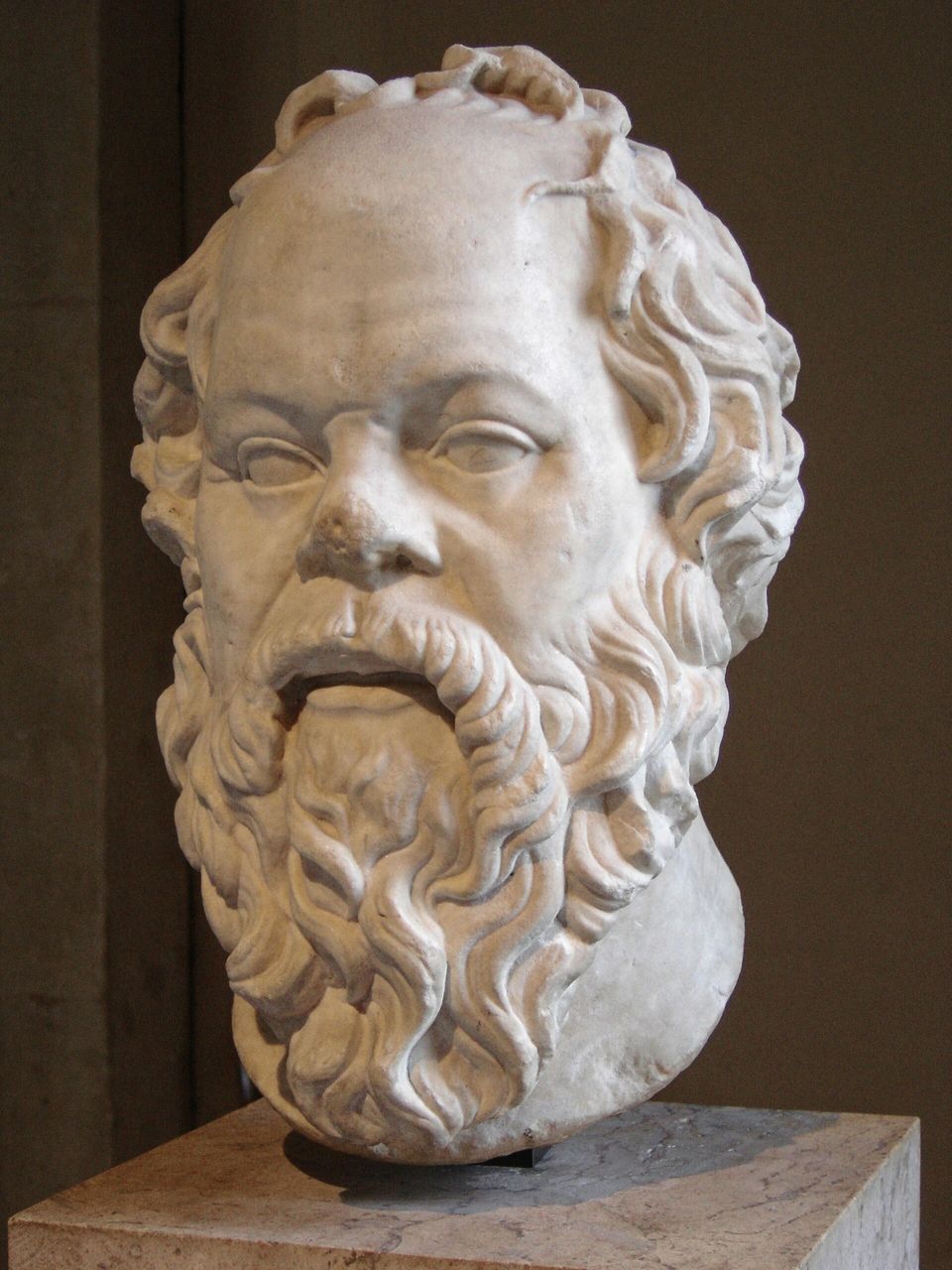
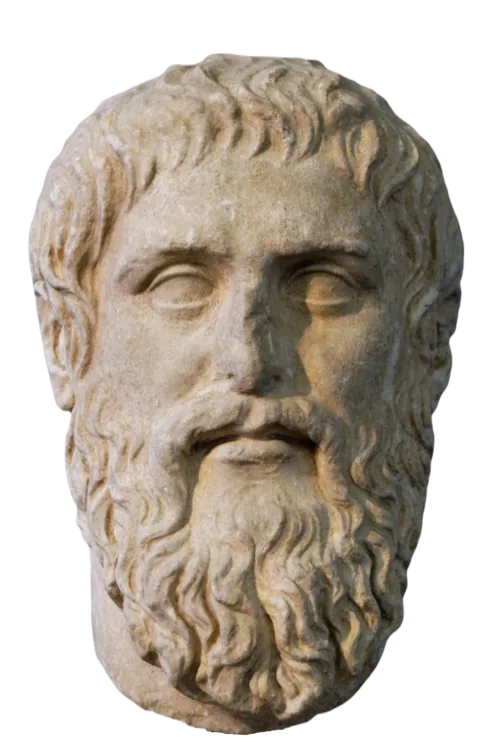
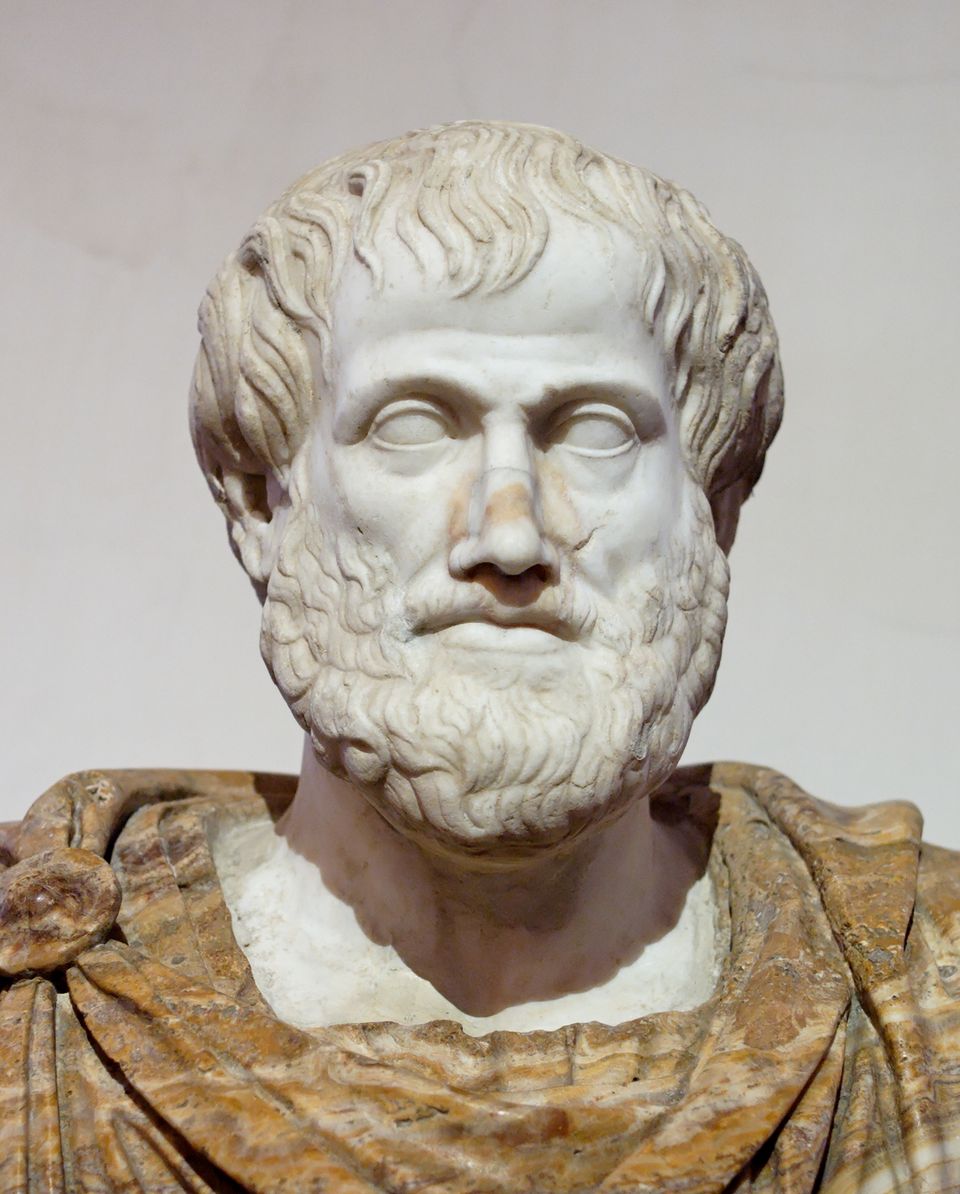
Photograph by Eric Gaba (Wikimedia Commons user: Sting) (July 2005), CC BY-SA 2.5. Roman marble portrait of Socrates, 1st century AD, Louvre Museum. Background removed for the portrait above. · Photograph by Marie-Lan Nguyen, public domain. Background removed for the portrait above. · Photograph by Jastrow (2006), public domain. Roman marble copy after a Greek bronze by Lysippos (c. 330 BCE); the alabaster mantle is a modern addition. Background removed for the portrait above.


An estimate is an inference.
Yours can be measured.
Thirty questions, scored against general-population benchmarks. Your score, your percentile, your ability breakdown and a printable IIF certificate.
Find your IQ score now! →