



What was Alexander the Great’s IQ?
Online guesses run from 150 to 212, but every main account of his reign that survives was written by someone who never met him, and the firsthand histories are lost.
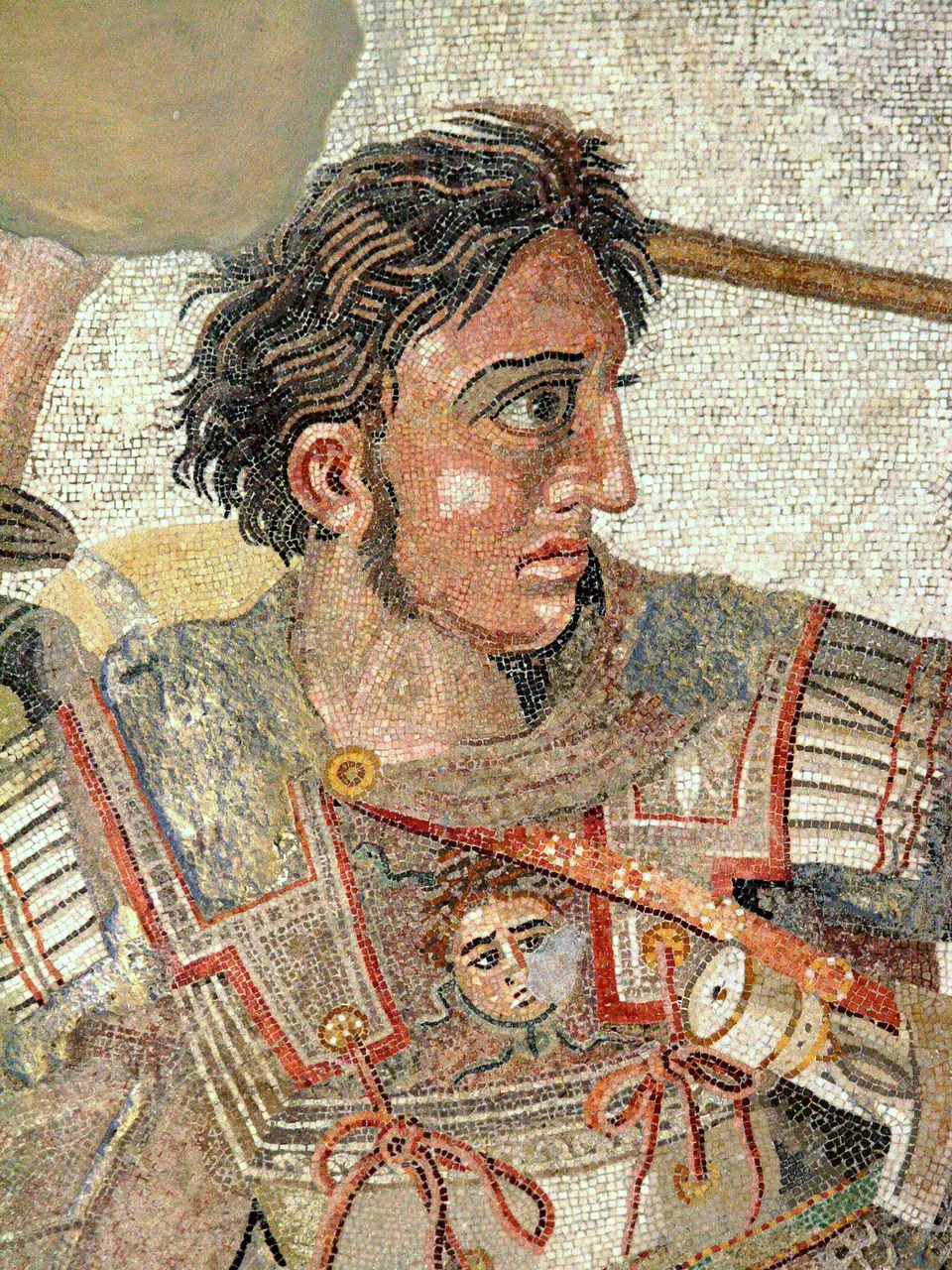
No IQ test result exists for Alexander the Great, who died in 323 BCE, more than 2,200 years before the Binet–Simon test of 1905, and the Alexander the Great IQ estimates online, 150+ and 212, cite none. What is documented is an education under Aristotle, a regency at 16 and a throne at 20. From that record, this page’s estimate of his IQ level is 135–155.
Alexander the Great’s estimated IQ
- Aristotle taught him. The Stanford Encyclopedia of Philosophy dates Philip’s invitation to 343 BCE, when Alexander was thirteen, with tuition lasting only two or three years; Plutarch places the lessons near Mieza and calls Alexander a lover of learning and of reading who carried Aristotle’s edition of the Iliad on campaign.
- He held responsibility early: regent in Macedonia at sixteen with the royal seal (Plutarch), a wing commander at Chaeronea in 338 BCE with his father’s most seasoned generals beside him (Diodorus), and king at twenty in 336 BCE.
- The campaigns show planning as well as nerve: a mole built from the mainland to the island city at Tyre in 332 BCE (Arrian 2.18), and a secret night march and dawn crossing of the Hydaspes against Porus in 326 BCE, using hay-stuffed skins and boats cut into sections and reassembled (Arrian 5.12). Wikipedia’s summary says he never lost a battle.
- He planned cities: according to Arrian he marked out the market square, temples and wall of Alexandria in Egypt himself, and Diodorus says he traced its streets skillfully.
- Arrian calls him very clever at seeing what needed doing before others noticed, and Diodorus credits his acumen and courage with deeds greater than any king’s on record; both were admirers writing centuries later.
Alexander died more than 2,200 years before modern intelligence testing began, so this Alexander the Great IQ level is a modern judgment of a documented record, not a recovered score. That record is thinner than his fame suggests: no original of any letter he wrote survives, the firsthand histories are lost, and every main surviving account was written at least two centuries after his death in admiring or moralizing terms, so it praises command, organization and nerve, not a mind measured against others. The range matches Julius Caesar’s 135–155 on this site and tops out well below Aristotle’s 150–170 and Archimedes’ 160–185 because no treatise, proof or extended text of his own survives to show how far his reasoning went.
- Born
- 356 BCE, Pella, the Macedonian capital (exact date uncertain)
- Died
- June 10 or 11, 323 BCE, Babylon, aged 32
- Field
- King of Macedon and military commander; founded Alexandria in Egypt
- Teacher
- Aristotle, from 343 BCE, when Alexander was thirteen; two or three years of tuition (Stanford Encyclopedia)
- Accession
- 336 BCE, at twenty, after Philip II was assassinated
- Major battles
- Granicus (May 334 BCE), Issus (November 5, 333), Gaugamela (October 1, 331), Hydaspes (May 326)
- Ancient accounts
- Five main surviving accounts, Diodorus (1st century BCE) to Justin (as late as the 4th century CE); firsthand histories lost
- Cox 1926 status
- Not a subject: Cox covers people who lived 1450–1850; Cattell’s 1903 list ranks him 17th of 1,000
What an IQ of 135–155 actually means
Set the claim aside for a moment. If someone genuinely scored in this range, here is what that would represent.
Average is 100 by construction, and about two-thirds of people fall between 85 and 115. Take the test to place your own score on this scale.
| Score range | Classification | Share of people | What it indicates |
|---|---|---|---|
| 85 – 114 | Average | ~68% | The range most people fall into. |
| 115 – 129 | Above average | ~13.6% | Roughly one person in seven. |
| 130 – 144 | Gifted | ~2% | The threshold most high-IQ societies use. |
| Above 144 | Highly gifted | ~0.1% | Figures above this range are extrapolated from the curve rather than measured. |
Percentages are approximate and describe a normal distribution. The same number means different things on tests with different standard deviations.
Thirty questions gives you a measured position on this exact scale — your score, your percentile and the ability breakdown behind it.
Find out in 30 minutes →Who Alexander the Great is
Alexander III of Macedon was born in 356 BCE in Pella, the Macedonian capital, the son of Philip II and Olympias of Epirus. Plutarch tells how, when Persian envoys visited in Philip’s absence, Alexander questioned them about the length of the roads into the interior and the strength of the Persians, until they thought Philip’s much-talked-of ability nothing beside his son’s eagerness to do great things. At thirteen he was handed to Aristotle: the Stanford Encyclopedia dates the invitation to 343 BCE and warns that, for all the historians’ speculation, little concrete is known about what passed between them, while Plutarch places the lessons in the precinct of the nymphs near Mieza. Plutarch says Alexander loved reading and medicine, kept Aristotle’s edition of the Iliad under his pillow with a dagger, and sent from inner Asia for Philistus’s history and tragedies by Euripides, Sophocles and Aeschylus.
In 340 BCE, at sixteen, he was left as regent in Macedonia with the royal seal while Philip campaigned against Byzantium; Plutarch says he put down a revolt of the Maedi and named their resettled city Alexandropolis. At Chaeronea in 338 BCE Philip placed him on one wing with his most seasoned generals beside him, and Diodorus says he was first to break the enemy line. Philip was assassinated at Aigai, probably on October 25, 336 BCE, and Alexander was proclaimed king at twenty; Arrian, whose account is generally rated the most reliable, calls him about twenty and says he then secured from most of the Greek states the command against Persia that they had given his father.
He crossed into Asia in 334 BCE and won the Granicus in May, Issus on November 5, 333 BCE, and Gaugamela on October 1, 331 BCE, at twenty-five. Between them came the siege of Tyre, January to July 332 BCE, where Arrian says he resolved to build a mole from the mainland to the island city, and the founding of Alexandria in Egypt, which sources following Ptolemy place before his visit to the oracle at Siwa and those following Aristobulus after it. In May 326 BCE he crossed the Hydaspes against Porus. The record also holds a costly misjudgment: in 325 BCE the march through the Gedrosian desert, which Arrian says most historians rated the worst hardship of the campaign, lost a great part of the army to heat and thirst, and Nearchus says Alexander knew the route was hard and took it partly to outdo Cyrus and Semiramis.
Alexander died in Babylon on June 10 or 11, 323 BCE by modern reckoning, aged 32, after a fever that Plutarch traces day by day from the court Journals; Plutarch dismisses the poisoning stories as fabrication, and Diodorus and Arrian record them only for completeness. Diodorus closes the reign by saying he accomplished greater deeds than any king before or after him, the kind of reputation people mean by genius (see what a genius IQ level means). A classic comparison in the ancient sources is with Julius Caesar: Plutarch pairs their Lives in one book and reports that in Spain Caesar read a history of Alexander, burst into tears and said that at his age Alexander was already king of so many peoples while he himself had achieved nothing brilliant. That comparison is about ambition, not test scores.
 By Elora Mercer, Celebrity Research WriterFigures checked by Leon Falkner, Data & Research Analyst
Reviewed by Aarav Vardhan, Editor-in-Chief · Last reviewed August 2026
.jpg)
Alexander the Great: the documented record
The estimate above rests on this record. Every entry here is a matter of public fact, which is more than can be said for the number itself.
- 356 BCEBorn at Pella, the Macedonian capital, son of Philip II and Olympias; the exact day is uncertain.
- c. 343–340 BCETutored by Aristotle, invited in 343 BCE when Alexander was thirteen; Plutarch places the lessons near Mieza.
- 340–338 BCERegent in Macedonia at sixteen; at Chaeronea in 338 BCE commands a wing with his father’s most seasoned generals beside him.
- 336 BCEPhilip is assassinated at Aigai, probably on October 25; Alexander is proclaimed king at twenty.
- 334–333 BCECrosses into Asia and wins the Granicus (May 334) and Issus (November 5, 333).
- 332 BCESiege of Tyre, January to July; Arrian says Alexander decided to build a mole from the mainland to the island city.
- 331 BCEFounds Alexandria in Egypt and wins Gaugamela on October 1, at twenty-five.
- 326–325 BCECrosses the Hydaspes against Porus (May 326); loses a great part of the army in the Gedrosian desert (325).
- 323 BCEDies in Babylon in June, aged 32, after a fever recorded in the court Journals.
- 1903 and 1926Cattell ranks him 17th of the 1,000 most eminent men (1903); Cox’s 1926 study, drawn from that list, does not include him.
Where the 150–212 figure came from
Following a claim back to its first appearance is the part almost nobody does — and it is what most people are actually asking.
Every Alexander the Great IQ estimate found online is a retrospective guess, and the pages differ mainly in how candid they are. LifeScore’s profile, reviewed in August 2026, gives 150+ with a working range of 135–160, labels its confidence “very low” and says no verified standardized score exists; its source list includes Cox’s 1926 study, although Cox’s book does not rate Alexander (below). The 212 is the least explained: an unsigned page on the Weebly-hosted site Welcome to Greece says only that his IQ estimate is 212, with no test, date or source. Patrick Garvey’s Ancient Heroes article shows the honest alternative, saying there is no way to estimate Alexander’s IQ with any degree of confidence and no reason to think him a genius in the academic sense. For how numbers like these get made in general, see where celebrity IQ numbers come from.
Nor can Catharine Cox’s 1926 study supply a figure. The Early Mental Traits of Three Hundred Geniuses rates 301 people who lived between 1450 and 1850, drawn from J. McKeen Cattell’s 1903 list of the thousand most eminent men, where Alexander stands 17th, between Milton and Pitt, behind Napoleon (first), Aristotle (sixth) and Julius Caesar (eighth). Cox left out men born before 1450, said that men of ancient times would put her requirement of adequate early-life records in doubt, and set aside the hereditary aristocracy and the nobility, so a king born in 356 BCE falls outside her selection on two counts. He turns up in her book only as the subject of a sermon the young Bossuet preached before he was 17 and in Robert Boyle’s boyhood reading of Quintus Curtius; the only subjects named Alexander are Hamilton, von Humboldt and Pope. Any page that cites Cox 1926 for Alexander the Great cites a study that does not include him. Napoleon, by contrast, is one of her subjects.
The record itself needs a warning label. Every main surviving narrative of Alexander was written long after his death in 323 BCE: Diodorus in the first century BCE, Curtius in the first century CE, Plutarch and Arrian in the first to second, Justin as late as the fourth. The accounts by people who knew him, among them his generals Ptolemy and Nearchus and the campaign historian Callisthenes, are lost, and no original of a letter he wrote survives. Arrian, who built his history on Ptolemy and Aristobulus, warns at the outset that no one has had more written about him, or by writers more at variance with each other, and Plutarch says he is writing Lives, not Histories, because a phrase or a jest often shows character better than a battle. Even the birthday shows the seams: Plutarch’s date, the sixth of Hecatombaeon, was probably moved back two or three months to fit a coincidence with news of three victories, according to his translator, and the familiar tale of Alexander taming Bucephalus by turning the horse toward the sun is Plutarch’s, written more than four centuries later.
Was Alexander the Great smart? The ancient writers say so in the vocabulary of admiration: Arrian calls him very clever at recognizing what needed doing before anyone else noticed, and Diodorus credits his acumen and courage with deeds greater than any king’s on record. That is a reputation, not a measurement. Binet and Simon published their test in 1905 and William Stern coined the term IQ in 1912 (see the history of intelligence testing), so any number for a man who died in 323 BCE is a projection from achievement, with no norm group behind it. A 212 is 7.5 standard deviations above a mean of 100 (SD 15), where Wikipedia’s IQ entry treats reports much higher than 160 as dubious (see the IQ ceiling effect), and even an IQ of 150 is about one person in 2,300. Simonton argues that Cox’s figures measured development within one domain and that her geniuses would probably have scored much lower on a general IQ test, a further reason to keep this page’s range modest.
How we read a number →Written more than four centuries after Alexander’s death; the preface names Ptolemy and Aristobulus as main sources and says no one has been written about by more authors, or by authors more at variance with each other. Source for the accession at about twenty (1.1), the Tyre mole (2.18), Alexandria (3.1–2), the Hydaspes (5.12), the Gedrosian march (6.24–25), the Royal Diary and poisoning stories (7.26–27) and the character sketch (7.28–29).
Written some four centuries after Alexander’s death. Source for the pairing with Caesar and the Lives-not-Histories statement (1), the birth date and Perrin’s note that it was probably moved back two or three months (3), the tutors and Persian envoys (5), Bucephalus (6), Mieza (7), his reading and medicine (8), the regency at sixteen (9), Alexandria (26), the fever, Journals and poisoning stories (75–77), and Caesar’s tears in Spain (Caesar 11).
First century BCE, the oldest surviving narrative. Source for Alexander on one wing at Chaeronea (16.86), the praise of his acumen and courage (17.1), the streets of Alexandria (17.52) and the death, with the poisoning story mentioned for completeness (17.117). The translator’s notes date the death to the 28th of Daesius, June 10, and record that the sources disagree on whether Alexandria was founded before or after the Siwa visit.
Source for Philip’s request in 343 BCE that Aristotle tutor the thirteen-year-old Alexander at Pella, the tuition lasting only two or three years, and the statement that little concrete is known about their interaction.
Read in the archive.org full text of Cox (every “Alexander” checked) and the Wikisource text of Cattell. Cox’s 301 subjects lived 1450–1850; she omitted men born before 1450 and the hereditary aristocracy and nobility; Alexander appears only in Bossuet’s sermon and Boyle’s boyhood reading, and the subjects named Alexander are Hamilton, von Humboldt and Pope. Cattell ranks Napoleon 1, Aristotle 6, Caesar 8, Alexander 17. Simonton (2016) says Cox’s IQs were domain-specific and would probably have been much lower on a general test. No Simonton estimate for Alexander was found.
Cross-checks: the battle table (Granicus May 334, Issus November 5, 333, Tyre January–July 332, Gaugamela October 1, 331, Hydaspes May 326), death on June 10 or 11, 323 BCE aged 32, the summary that he never lost a battle, the five main accounts and their dates, the lost contemporary works, no original letters, and the IQ facts (Binet–Simon 1905, Stern 1912, SD 15, scores much above 160 dubious). Wikidata Q8409 is the king (b. 356 BC, Pella; d. June 10, 323 BC, Babylon).
Sources of the 150+ and 212. LifeScore: 150+, working range 135–160, “very low confidence”, no verified standardized score, Cox’s book in its source list. Weebly page: one sentence giving 212, with no author, date, test or source.
Ancient Heroes states no figure and notes that the best descriptions were written hundreds of years after his death. The Geniuses.club profile, listed in search results as “Alexander The Great IQ Estimate”, showed only “Full profile loading” when checked; its biography article states no IQ.
The site’s own ranges (Caesar 135–155; Napoleon 130–140; Aristotle 150–170; Archimedes 160–185), used for the comparisons above.
Checked directly: intelligence testing dates from 1905 and the term IQ from 1912, more than 2,200 years after Alexander died in 323 BCE. None of the pages above cites a test, and Cox’s study does not include him.
The sources behind our estimate
The figures that circulate for Alexander the Great, what we were able to confirm, and where the two diverge.
Alexander the Great IQ figures online run from 150+ to 212: LifeScore gives 150+, with a working range of 135–160 and a “very low confidence” label, and an unsigned page on the Weebly-hosted site Welcome to Greece says 212. Neither cites a test.
There is no published IQ test result or IQ score for Alexander the Great, and there could not be one: he died in 323 BCE, more than 2,200 years before the Binet–Simon scale appeared in 1905. Checked in September 2026: LifeScore’s profile (reviewed August 2026) gives 150+ as a historiometric estimate and says no verified standardized score exists; the Weebly page gives 212 in a single sentence with no author, date or source; Ancient Heroes states no figure; and Geniuses.club has a profile titled “Alexander The Great IQ Estimate” whose text had not loaded. Cox’s 1926 study does not include him.
The circulating figures are 150 and 212, with nothing between. LifeScore’s 150+ sits inside this page’s 135–155 range and its working range of 135–160 is almost the same, but two readings of one public record agreeing is not confirmation. The 212 sits 57 points above this page’s ceiling, the usual direction of error: on a textbook normal curve (mean 100, SD 15) it is 7.5 standard deviations out, roughly one person in 24 trillion.
Want a number that does hold up? Every figure on this page is somebody’s claim. Take the 30-question test and get a percentile you can check rather than a figure you have to trust.
Alexander the Great — frequently asked
What is Alexander the Great’s IQ?
Alexander the Great’s IQ was never measured, and could not have been: he died in 323 BCE, more than 2,200 years before the Binet–Simon intelligence test of 1905. Online estimates run from 150+ to 212 and none cites a test. This site’s estimate of his IQ level, inferred from his documented record, is 135–155.
Was Alexander the Great smart?
The main ancient writers portray him as unusually able: Aristotle tutored him, he was regent at sixteen and king at twenty, and Arrian called him very clever at seeing what needed doing before others noticed. But those accounts came centuries later and mostly admire him, so they show reputation, not a measured score.
Was Alexander the Great high IQ?
Probably, though no one can say by how much. His record fits an estimated IQ of about 135–155, roughly the top 1% to the top 0.01% on a textbook curve. That is a judgment from history, not a score, and none of the online figures cites a test.
Where do the Alexander the Great IQ estimates of 150+ and 212 come from?
LifeScore gives 150+, with a working range of 135–160 and a “very low confidence” label, as a historiometric estimate from the surviving record. The 212 appears in one sentence on an unsigned Weebly page with no test, date or source.
Was Alexander the Great in Catharine Cox’s 1926 study of three hundred geniuses?
No. Cox’s The Early Mental Traits of Three Hundred Geniuses rates 301 people who lived between 1450 and 1850, omits men born before 1450 and the hereditary nobility, and mentions Alexander only in passing. A page citing Cox 1926 for his IQ cites a study that does not include him.
How does Alexander the Great’s estimated IQ compare with Julius Caesar’s and Aristotle’s?
This site estimates Alexander at 135–155, Julius Caesar at 135–155 and Aristotle at 150–170. Plutarch paired Alexander and Caesar in his Parallel Lives, and Aristotle was Alexander’s tutor. The ranges overlap heavily: no test could separate them, and none of these figures says one outscored another.
How reliable are the ancient sources on Alexander the Great?
Only partly. Every main surviving account was written long after 323 BCE, by Diodorus, Curtius, Plutarch, Arrian and Justin, and the firsthand accounts by Ptolemy, Aristobulus, Callisthenes and Nearchus are lost. Arrian rated Ptolemy and Aristobulus most credible but said no one had been written about by more authors, or by authors more at variance.
Berapa IQ Alexander the Great?
Berapa IQ Alexander the Great means “what is Alexander the Great’s IQ?” in Indonesian. No score exists, because he died in 323 BCE, long before intelligence tests. Online guesses run from 150+ to 212; this site’s estimate, inferred from his record, is 135–155.
How does my IQ compare with Alexander the Great?
You can find out in about fifteen minutes. The IQ Metrics assessment is 30 questions, scored on the same 100-mean scale used throughout this page, so your result and the estimate above are at least expressed in the same units — one measured, one inferred. Once you have a number, the leaderboard shows where it would sit, and how we score and norm it explains the benchmarking.
Where does this estimate come from?
From the documented record rather than a test — the method is named above and set out in full under how we read a number. Compare it against the other historical profiles, starting with Isaac Newton.
- Take the 30-question IQ test — get a measured score and percentile of your own
- Average IQ by country — how the scale behaves across populations
- How IQ Metrics scores its assessment — the method behind our own number
- More on how IQ testing works — reliability, error and what a score can and cannot say
- More historical profiles — same field, same method
More historical
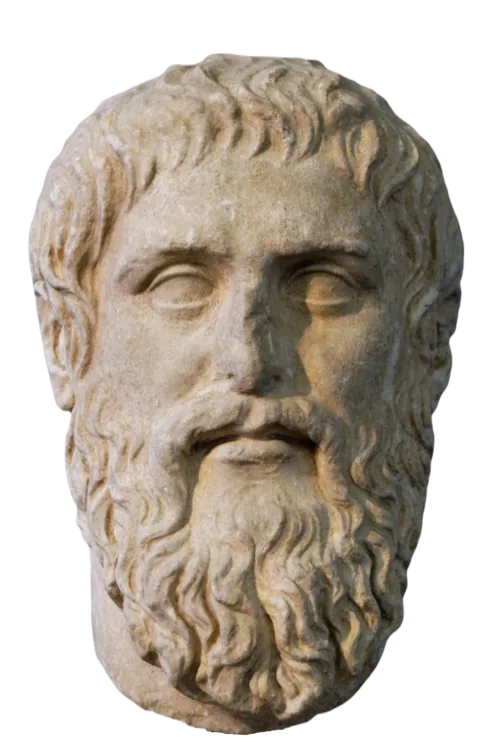

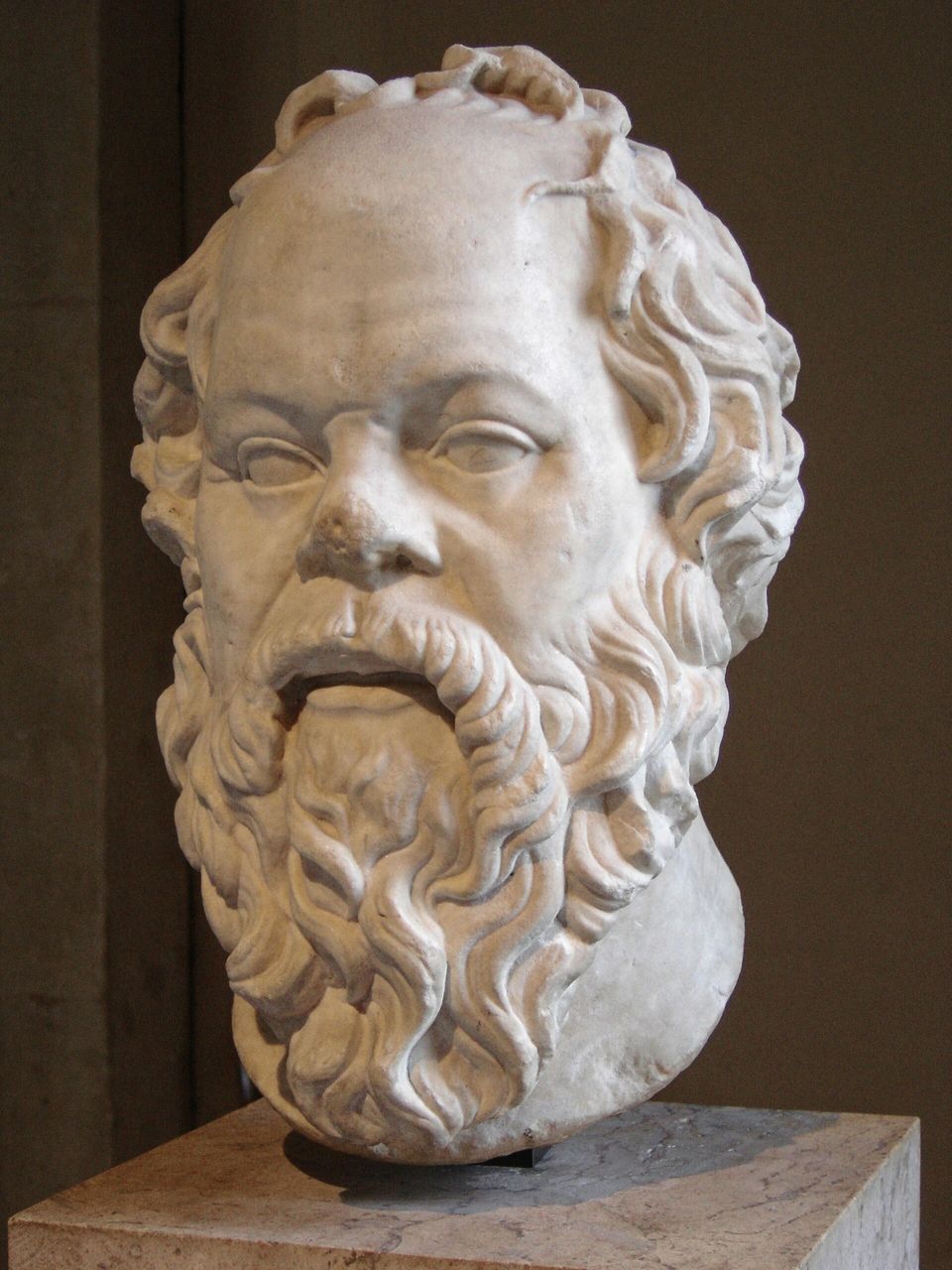
Photograph by Marie-Lan Nguyen, public domain. Background removed for the portrait above. · Photograph by John Jabez Edwin Mayall (1875), public domain. Background removed for the portrait above. · Photograph by Eric Gaba (Wikimedia Commons user: Sting) (July 2005), CC BY-SA 2.5. Roman marble portrait of Socrates, 1st century AD, Louvre Museum. Background removed for the portrait above.


An estimate is an inference.
Yours can be measured.
Thirty questions, scored against general-population benchmarks. Your score, your percentile, your ability breakdown and a printable IIF certificate.
Find your IQ score now! →