



What was Plato’s IQ?
The two numbers that circulate for him are 34 points apart, and neither cites a source.
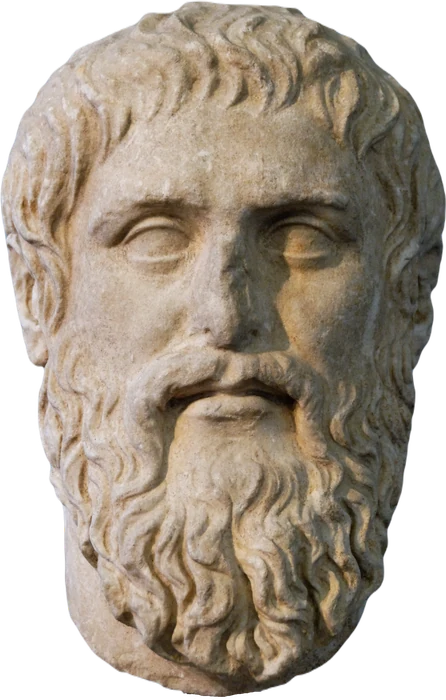
Plato died roughly 2,400 years ago, long before intelligence testing existed, so no test result for him could exist, let alone survive. What is genuinely documented — the Academy, the first institution of higher learning in the Western world, and a virtually complete surviving body of his own writing — is substantial enough to estimate from; the two numbers that circulate for him regardless, 146 and 180, don’t even agree with each other.
Plato’s estimated IQ
- Author of a virtually complete surviving philosophical corpus — some thirty dialogues, including the Republic, Symposium, Phaedo and Apology — an unusually full survival for any writer of antiquity.
- Founded the Academy in Athens, around 387 BCE, an institution widely regarded as the first in the Western world dedicated to higher learning, where he taught for the rest of his life.
- Studied directly under Socrates and, after Socrates’ trial and execution in 399 BCE, built an independent philosophical program of his own rather than simply record his teacher’s views.
- Taught Aristotle, who arrived at the Academy in 367 BCE at about seventeen and studied there for roughly two decades before founding a rival philosophical tradition of comparable historical weight.
Plato died around 2,400 years ago — roughly 2,250 years before intelligence testing was invented in 1905 — so nothing here is closer to a measurement than any other estimate on this site is; if anything it is further, since the surviving record of his personal life (as opposed to his writing) comes mostly through biographers writing centuries later, some of it flagged by classicists as unreliable. This range is a modern, retrospective judgment about the scale of a documented achievement, not a recovered score. Cox’s 1926 historiometric method does not apply here at all: her study covers subjects born between 1450 and 1850, and Plato was born nearly two thousand years before that window opens.
- Born
- c. 428 BCE, Athens (some modern scholars argue for 424–423 BCE)
- Died
- c. 348 BCE, Athens, reportedly in his eighties
- Field
- Philosophy
- Teacher
- Socrates
- Founded
- The Academy, Athens, c. 387 BCE — widely regarded as the first institution of higher learning in the Western world
- Most-cited student
- Aristotle, who studied at the Academy for about twenty years from 367 BCE
- Cox 1926 status
- Not a subject — Cox’s study covers people born 1450–1850, nearly two thousand years after Plato
What an IQ of 145–165 actually means
Set the claim aside for a moment. If someone genuinely scored in this range, here is what that would represent.
Average is 100 by construction, and about two-thirds of people fall between 85 and 115. Take the test to place your own score on this scale.
| Score range | Classification | Share of people | What it indicates |
|---|---|---|---|
| 85 – 114 | Average | ~68% | The range most people fall into. |
| 115 – 129 | Above average | ~13.6% | Roughly one person in seven. |
| 130 – 144 | Gifted | ~2% | The threshold most high-IQ societies use. |
| Above 144 | Highly gifted | ~0.1% | Figures above this range are extrapolated from the curve rather than measured. |
Percentages are approximate and describe a normal distribution. The same number means different things on tests with different standard deviations.
Thirty questions gives you a measured position on this exact scale — your score, your percentile and the ability breakdown behind it.
Find out in 30 minutes →Who Plato is
Plato was born in Athens around 428 BCE (some modern scholars argue instead for 424–423 BCE) to an aristocratic family; his father was Ariston and his mother, Perictione, is said to have descended from the lawgiver Solon, though genealogical claims about ancient Athenian families like this are difficult to verify independently. The later biographer Diogenes Laërtius, writing in the 3rd century CE — roughly six hundred years after Plato’s death — claimed “Plato” was a nickname for a birth name of Aristocles; modern scholarship widely regards this specific claim as false. In his youth Plato became a follower of Socrates, and the trial and execution of Socrates in 399 BCE, which Plato later dramatised in his Apology, is generally credited with turning him away from an anticipated career in Athenian politics.
After Socrates’ death, Plato left Athens for a time, travelling first to Megara and, according to later and less certain tradition, more widely still. In his early forties he visited Syracuse in Sicily, where he became close to Dion, brother-in-law of the ruling tyrant Dionysius I. Ancient sources — chiefly Plato’s own Seventh Letter, whose authenticity is disputed by modern scholars, and later, openly “doubtful” accounts in writers such as Plutarch and Diogenes Laërtius — report that the visit ended badly, with some versions claiming Plato was briefly imprisoned or even sold into slavery before being ransomed; historians treat these specific details with real caution rather than as settled fact. He returned to Sicily twice more, around 367 and 361 BCE, attempting without success to guide the younger ruler Dionysius II toward his own ideal of a philosopher-king. Back in Athens, around 387 BCE, he founded the Academy on ground linked to the hero Academus outside the city walls — regarded as the first institution in the Western world dedicated to higher learning, where philosophy and mathematics were studied side by side.
Nearly everything Plato wrote is believed to survive, an unusual outcome for a writer of antiquity: some thirty dialogues, almost all featuring Socrates as a character, including the Apology, Phaedo, Symposium, Republic, Phaedrus, Theaetetus and Timaeus. Aristotle arrived at the Academy in 367 BCE, at about seventeen years old, and studied there for roughly two decades. Plato died in Athens around 348 BCE, reportedly in his eighties; Diogenes Laërtius records that his final work, the Laws, was left unfinished on wax tablets, and that Plato was buried at the school he founded, though no grave has been archaeologically confirmed. His nephew Speusippus succeeded him as head of the Academy.
 By Elora Mercer, Celebrity Research WriterFigures checked by Leon Falkner, Data & Research Analyst
Reviewed by Aarav Vardhan, Editor-in-Chief · Last reviewed August 2026

Plato: the documented record
The estimate above rests on this record. Every entry here is a matter of public fact, which is more than can be said for the number itself.
- c. 428 BCEBorn in Athens to an aristocratic family.
- 399 BCEWitnesses the trial and execution of his teacher Socrates, an event later credited with turning him away from a political career.
- c. 388 BCEVisits Syracuse in Sicily for the first time, befriending Dion, brother-in-law of the tyrant Dionysius I.
- c. 387 BCEFounds the Academy in Athens — later regarded as the first institution of higher learning in the Western world.
- 367 BCEAristotle, then about seventeen, arrives at the Academy and studies there for roughly twenty years.
- 367 & 361 BCEReturns twice more to Syracuse in unsuccessful attempts to shape Dionysius II into a philosopher-king.
- c. 348 BCEDies in Athens, reportedly in his eighties, leaving his final work, the Laws, unfinished. His nephew Speusippus succeeds him as head of the Academy.
Where the 180 figure came from
Following a claim back to its first appearance is the part almost nobody does — and it is what most people are actually asking.
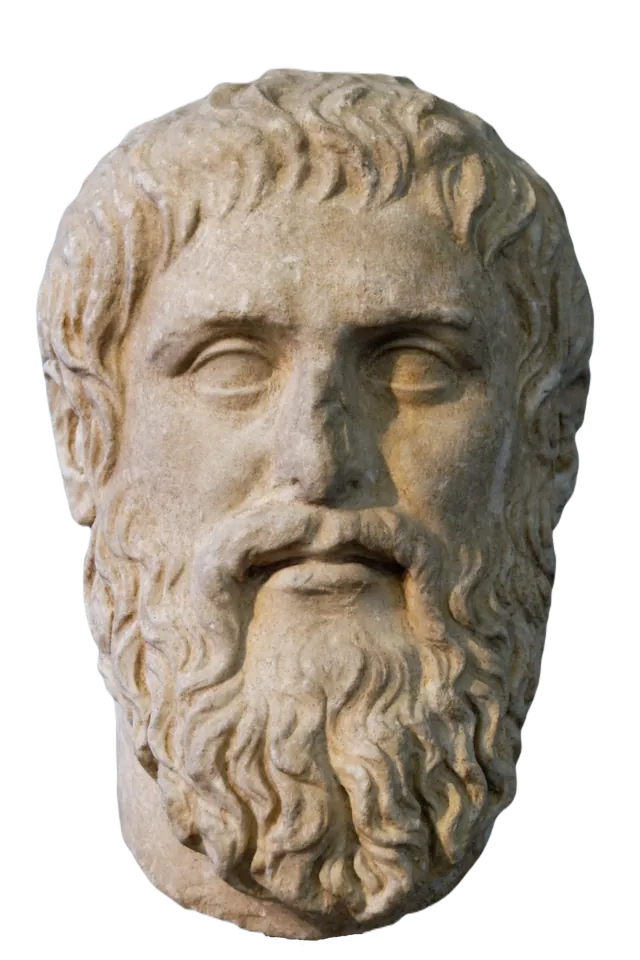
Plato is not a subject of Catharine Cox’s 1926 study, The Early Mental Traits of Three Hundred Geniuses — unlike some of the genuinely pre-modern cases this site profiles under the “Cox 1926” method. Cox’s 301 cases were drawn entirely from people born between 1450 and 1850; Plato was born around 428 BCE, nearly two thousand years before that window opens. Any page that cites “Cox 1926” for Plato specifically is citing a method that could not possibly reach him.
The two numbers that do circulate for him come from much thinner places. The higher one, 180, is published by Geniuses.club, a modern ranking site that files Plato under its own “IQ 180” score category alongside a head-to-head comparison page against Albert Einstein — with no test, study or named methodology stated anywhere this site could establish. The lower one, 146, is reported by a Substack essay surveying exactly this kind of claim, which attributes it to a 2023 Twitter poll run by researcher Emil Kirkegaard, in which 584 self-selected respondents guessed at the IQs of 54 historical figures and public intellectuals from memory. Kirkegaard’s own write-up describes that survey as an unscientific, “just for fun” poll rather than a study, and this site’s own attempt to find Plato’s figure directly on Kirkegaard’s source page did not turn it up in the page text — leaving the 146 figure sourced at one remove.
Set both numbers aside and a real, answerable question remains: how much can honestly be estimated from what Plato is actually documented to have done? That question, not either circulating figure, is the basis for the range above.
How we read a number →The corpus the authorship claim above rests on — an unusually complete survival for an ancient philosopher, transmitted through later manuscript copies rather than anything in Plato’s own hand.
The principal ancient source for the Sicily/Syracuse narrative and for Plato’s own description of Socrates; presumed authentic in antiquity, but its authorship is disputed by modern scholars — described by the Internet Encyclopedia of Philosophy as “the best candidate for authenticity” among the letters attributed to him, which is not the same as settled.
The single largest ancient biographical source for Plato’s life, written roughly six hundred years after his death; modern scholarship treats several of its specific claims — including the “Aristocles” birth-name story and the darker versions of the Sicily episode — as unreliable.
Source for the documented/legendary distinction used throughout this profile, including the flag on Diogenes Laërtius’s reliability and on the Seventh Letter’s disputed authenticity.
Establishes the study’s subject pool as 301 people born between 1450 and 1850 — confirming Plato, born nearly two thousand years earlier, is not among them and that no “Cox 1926” figure for him can be genuine.
Source URLs and first-appearance date pending audit — the page did not fully render for direct review.
Source of the circulating 180 figure; files Plato under the site’s own “IQ 180” category page with no test, study or named methodology stated.
This site’s own check of Kirkegaard’s source post did not surface Plato’s figure in the page text, only in this secondary citation — chain of custody beyond this source is pending audit.
Quotes a ranked list — “Newton 160, Kant 149, Aristotle 148, Plato 146” — attributed to a 2023 Twitter survey of 584 respondents by researcher Emil Kirkegaard; the essay itself argues such estimates are scientifically unjustifiable.
Checked directly: intelligence testing was invented in 1905 (the Binet-Simon scale), roughly 2,250 years after Plato’s death in 348 BCE, so no test result for him exists or could exist.
The sources behind our estimate
The figures that circulate for Plato, what we were able to confirm, and where the two diverge.
Two numbers turn up for Plato online: 180, from the ranking site Geniuses.club, and 146, reported elsewhere as coming from a 2023 informal Twitter survey. Neither cites a real methodology, and the two don’t agree with each other.
There is no published IQ test result for Plato, and there could not be one — intelligence testing was invented in 1905, roughly 2,250 years after his death. The higher figure, 180, comes from Geniuses.club, a modern ranking site that files him under its own “IQ 180” category with no test, study or method cited anywhere this site could find. The lower figure, 146, is reported by a Substack essay on exactly this kind of claim as coming from a 2023 Twitter survey run by researcher Emil Kirkegaard, in which 584 self-selected respondents guessed at historical figures’ IQs from memory — a method its own author does not call scientific. This site’s own attempt to find Plato’s number directly on Kirkegaard’s source page did not turn it up in the page text, leaving that figure sourced at one remove.
A 34-point gap between the only two numbers that exist for him — one an unsourced ranking-site figure, the other a crowd guess whose own source page this site could not independently confirm even mentions Plato.
Want a number that does hold up? Every figure on this page is somebody’s claim. Take the 30-question test and get a percentile you can check rather than a figure you have to trust.
Plato — frequently asked
What was Plato’s IQ?
No test result exists, and none could — intelligence testing wasn’t invented until 1905, roughly 2,250 years after Plato died in 348 BCE. The closest thing to an estimate on this site is an achievement-based range of 145–165, built from his documented record rather than any test.
Is Plato one of the subjects in Catharine Cox’s 1926 study of three hundred geniuses?
No. Cox’s The Early Mental Traits of Three Hundred Geniuses covers 301 people born between 1450 and 1850. Plato was born around 428 BCE, nearly two thousand years before that window opens, so her method — and any number citing “Cox 1926” for him — simply does not reach him.
Where do the numbers 146 and 180 for Plato come from?
The 180 figure is published by the ranking site Geniuses.club with no methodology given. The 146 figure is reported, by a Substack essay on this kind of claim, as coming from a 2023 informal Twitter survey by researcher Emil Kirkegaard, in which 584 self-selected respondents guessed at historical figures’ IQs from memory. Neither is a test result, and this site could not independently confirm Plato’s figure on Kirkegaard’s own source page.
Did Plato really found the world’s first university?
He founded the Academy in Athens, around 387 BCE, on grounds linked to the hero Academus — an institution widely described as the first in the Western world dedicated to higher learning. It taught philosophy and mathematics rather than granting degrees in the modern sense, so “first university” is a loose but commonly used description rather than a precise one.
Was Plato’s real name Aristocles?
This comes from Diogenes Laërtius, writing about six hundred years after Plato’s death, who claimed “Plato” was a nickname referring to his build and that his birth name was Aristocles. Modern scholarship widely regards this specific claim as false.
Was Plato really sold into slavery in Sicily?
Some ancient sources say so, but historians treat the story with real caution. It traces to Plato’s own Seventh Letter, whose authorship is disputed, and to later writers like Plutarch and Diogenes Laërtius, whose fuller and darker versions of the episode are described by classicists as doubtful rather than established fact.
How does my IQ compare with Plato?
You can find out in about fifteen minutes. The IQ Metrics assessment is 30 questions, scored on the same 100-mean scale used throughout this page, so your result and the estimate above are at least expressed in the same units — one measured, one inferred. Once you have a number, the leaderboard shows where it would sit, and how we score and norm it explains the benchmarking.
Where does this estimate come from?
From the documented record rather than a test — the method is named above and set out in full under how we read a number. Compare it against the other historical profiles, starting with Isaac Newton.
- Take the 30-question IQ test — get a measured score and percentile of your own
- Average IQ by country — how the scale behaves across populations
- How IQ Metrics scores its assessment — the method behind our own number
- More on how IQ testing works — reliability, error and what a score can and cannot say
- More historical profiles — same field, same method
More historical

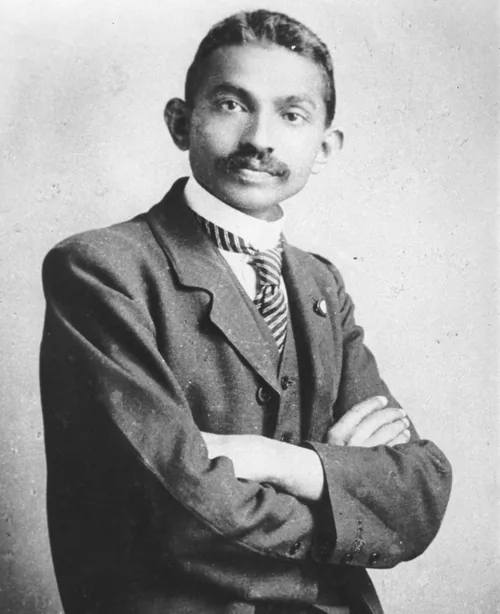
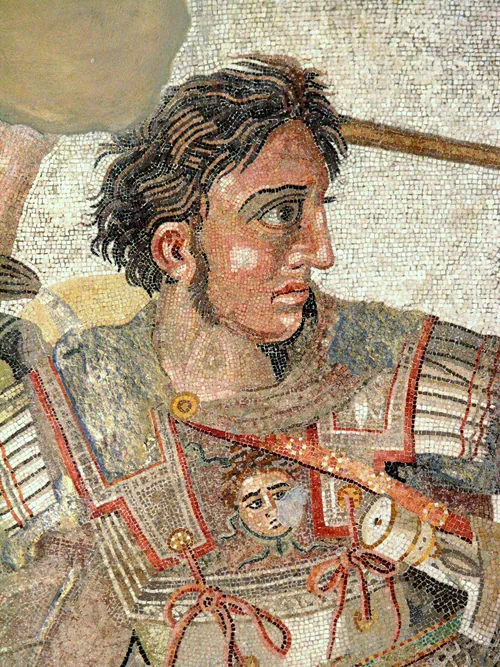
Portrait by Domenico Fetti (circa 1620), via Wikimedia Commons, public domain. · Photograph by an unknown photographer (1906), via Wikimedia Commons, public domain. Background removed for the portrait above. · Detail of the Alexander Mosaic from the House of the Faun, Pompeii (c. 100 BCE; now in the National Archaeological Museum of Naples), via Wikimedia Commons, public domain.


.jpg)
An estimate is an inference.
Yours can be measured.
Thirty questions, scored against general-population benchmarks. Your score, your percentile, your ability breakdown and a printable IIF certificate.
Find your IQ score now! →