



What was Marcus Aurelius’ IQ?
Book 1 of his Meditations names his tutors; the 180 online names nothing: no test, no rater, no method.
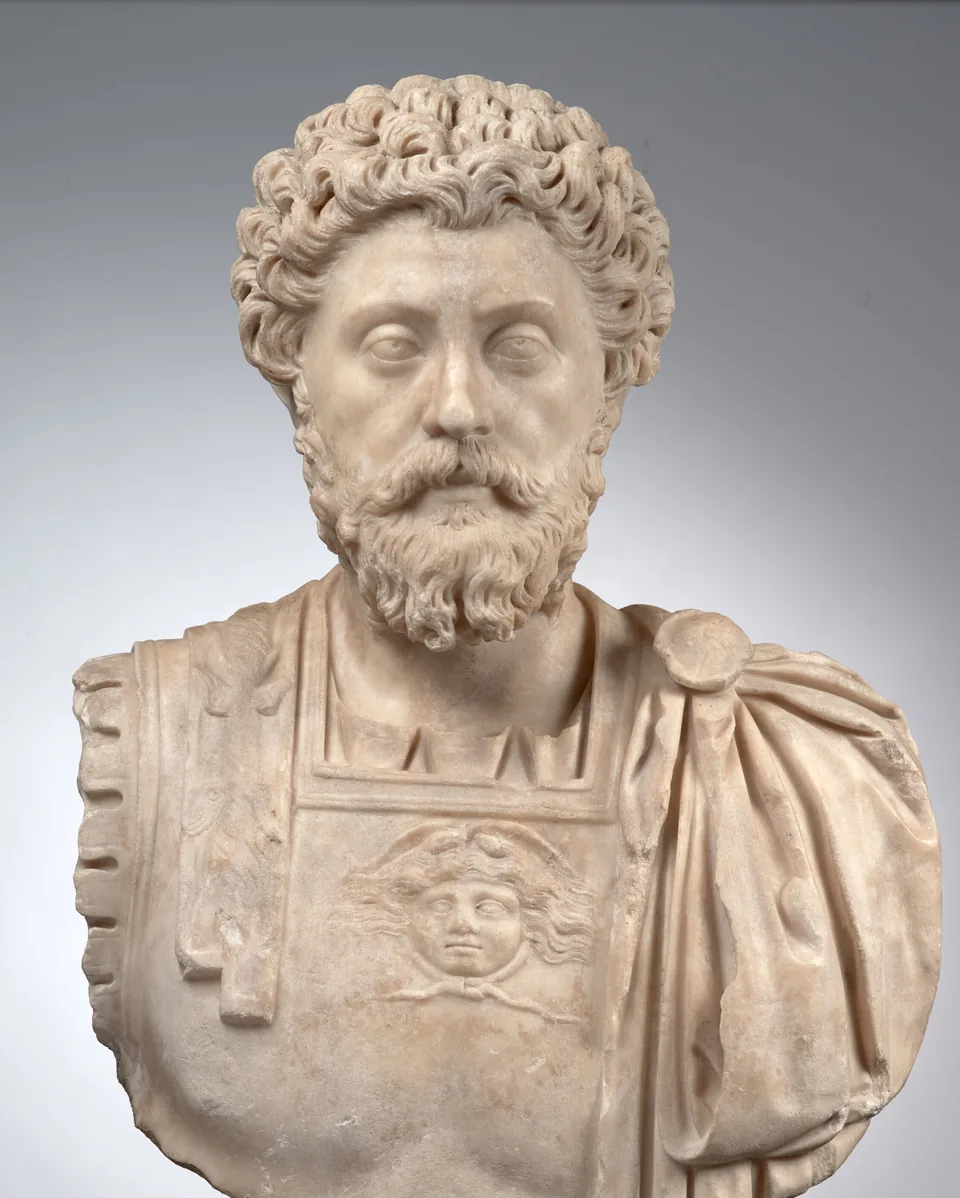
No IQ test result exists for Marcus Aurelius, who died in 180 CE, more than 1,700 years before the Binet–Simon test of 1905. What is documented is an education under named tutors, a private notebook in Greek and nineteen years as emperor; the Marcus Aurelius IQ of 180 online cites no test, and this page’s estimated IQ for him is 130–150.
Marcus Aurelius’ estimated IQ
- Cassius Dio (Roman History 72.35) names Fronto and “Claudius Herodes” as his teachers of rhetoric and Junius Rusticus and Apollonius as his teachers of philosophy, and says he was always “steeping himself in Greek and Latin rhetorical and philosophical learning”.
- The twelve books of the Meditations survive, in Greek. Book 1 alone has sixteen entries on the relatives and teachers he learned from, and the Stanford Encyclopedia of Philosophy credits the work with vivid imagery and calls him among the most quotable of philosophers.
- His correspondence with the rhetoric teacher Fronto began before he was twenty and ran into his imperial years; in a letter of 145–147 he reports that reading the Stoic Aristo of Chios made him realize he would never again argue both sides of a question, as rhetorical practice required.
- Dio says he owed his advancement most of all to “his own natural gifts”, and the Historia Augusta says that as a boy in the Salian priesthood he learned every formula himself; both are admiring accounts written after his death.
- J. McKeen Cattell’s 1903 list of the thousand most eminent men, ordered by the space six biographical dictionaries gave each name, prints “Aurelius” 50th, between Frederick the Great and Hegel. That measures reputation, not ability.
Marcus Aurelius died more than 1,700 years before intelligence testing began, so this range is a modern judgment of a documented record, not a recovered score. The record is mostly schooling and a notebook, which show opportunity and effort more than reasoning power; he reached the throne by adoption, not by competition; and the Meditations are reminders written to himself, not arguments. That is why the ceiling stays 15 points under Plato’s 165 and the whole range sits five points under Julius Caesar’s 135–155; Cox’s 1926 method (subjects born 1450–1850) cannot reach him.
- Born
- April 26, 121 CE, Rome (a villa on the Caelian Hill, per the Historia Augusta)
- Died
- March 17, 180 CE, aged 58, at Vindobona (Vienna) or Sirmium (Sremska Mitrovica) — Tertullian names Sirmium, Aurelius Victor Vindobona
- Emperor
- March 161 (probably March 7) to March 17, 180; co-emperor Lucius Verus 161–169, Commodus from 177
- Tutors
- Fronto (Latin oratory), Herodes Atticus (Greek oratory), Junius Rusticus, Apollonius and Sextus (Stoic philosophy), Alexander of Cotiaeum (grammar)
- Writings
- Meditations (twelve books, in Greek, a private notebook; the title is a later editor’s); letters to Fronto
- Cattell 1903
- Printed as “Aurelius”, 50th of the 1,000 most eminent men
- Cox 1926 status
- Not a subject — Cox’s study omits men born before 1450
- Circulating figure
- 180 (Geniuses.club): no test, rater or method
What an IQ of 130–150 actually means
Set the claim aside for a moment. If someone genuinely scored in this range, here is what that would represent.
Average is 100 by construction, and about two-thirds of people fall between 85 and 115. Take the test to place your own score on this scale.
| Score range | Classification | Share of people | What it indicates |
|---|---|---|---|
| 85 – 114 | Average | ~68% | The range most people fall into. |
| 115 – 129 | Above average | ~13.6% | Roughly one person in seven. |
| 130 – 144 | Gifted | ~2% | The threshold most high-IQ societies use. |
| Above 144 | Highly gifted | ~0.1% | Figures above this range are extrapolated from the curve rather than measured. |
Percentages are approximate and describe a normal distribution. The same number means different things on tests with different standard deviations.
Thirty questions gives you a measured position on this exact scale — your score, your percentile and the ability breakdown behind it.
Find out in 30 minutes →Who Marcus Aurelius is
Marcus Aurelius was born in Rome on April 26, 121 CE — the Historia Augusta gives the sixth day before the Kalends of May and a villa on the Caelian Hill — and was reared by his paternal grandfather after his father, the praetor Marcus Annius Verus, died. The same biography says the emperor Hadrian called him Verissimus, a superlative of his name Verus, enrolled him in the equestrian order at six and made him a member of the college of the Salii in his eighth year. In 138 Hadrian chose Antoninus Pius as his successor on condition that Pius adopt both Marcus and Lucius Verus, and Marcus, until then Annius, began to be called Aurelius.
The education is the best-documented part of his life. The Historia Augusta lists Euphorion in literature, Geminus in drama and Andron in geometry; grammar under Alexander of Cotiaeum and three Latin grammarians; oratory under the Greeks Aninius Macer, Caninius Celer and Herodes Atticus and the Latin Cornelius Fronto; Stoic philosophy under Apollonius of Chalcedon, Sextus of Chaeronea, Junius Rusticus, Claudius Maximus and Cinna Catulus, with Rusticus the teacher from whom he took most; and law under Lucius Volusius Maecianus. Cassius Dio names Fronto and “Claudius Herodes” for rhetoric and Rusticus and Apollonius for philosophy, and Herodes Atticus, according to Wikipedia, was invited to Rome by Antoninus Pius in 140 to teach Marcus and Lucius Verus. Some of Fronto’s letters to Marcus, and Marcus’s replies, survive in a palimpsest that Angelo Mai found in the Ambrosian Library in Milan in 1815; the Stanford Encyclopedia of Philosophy says they include what seem to be rhetorical exercises in praise of sleep and of smoke and dust.
The Meditations are twelve books in Greek, kept as a personal notebook. The title is not his: the Stanford Encyclopedia of Philosophy attributes “Meditations” to the modern editor Casaubon, while the Greek title ta eis heauton, “to himself”, derives from a manuscript now lost, may itself be a later addition and is first recorded around 900 by Arethas. Two books end with place notes, “Among the Quadi at the Granua” (Book 1) and “This in Carnuntum” (Book 2), and the Internet Encyclopedia of Philosophy dates the notebook, probably, to about 171–175. Alexander the Great and Julius Caesar appear in Book 3 (3.3) among men who, whatever they had done, died too, and in Book 8 (8.3) he asks what Alexander, Gaius and Pompeius are beside Diogenes the Cynic, Heraclitus and Socrates, who, he says, were acquainted with things and their causes.
Antoninus Pius died in March 161, probably on March 7 according to Wikipedia, and Marcus became emperor, sharing the title with Lucius Verus until 169 and, from 177, with his son Commodus. Marcus died on March 17, 180, aged 58, either at Vindobona (Vienna) or at Sirmium (Sremska Mitrovica): Tertullian’s Apologeticum 25 names Sirmium and Aurelius Victor’s De Caesaribus 16 names Vindobona, a disagreement the Loeb edition of the Historia Augusta records in a footnote. Cassius Dio counts nineteen years and eleven days of rule. The Historia Augusta, which supplies most of the early detail above, is a late source: Wikipedia says its lives are now believed to be the work of one author writing from about 395, but that its lives of Hadrian, Antoninus, Marcus and Lucius are considered largely reliable.
 By Elora Mercer, Celebrity Research WriterFigures checked by Leon Falkner, Data & Research Analyst
Reviewed by Aarav Vardhan, Editor-in-Chief · Last reviewed August 2026

Marcus Aurelius: the documented record
The estimate above rests on this record. Every entry here is a matter of public fact, which is more than can be said for the number itself.
- April 26, 121Born in Rome, in a villa on the Caelian Hill according to the Historia Augusta.
- c. 127–128Hadrian enrolls him in the equestrian order at six and the college of the Salii in his eighth year (Historia Augusta).
- 138Hadrian chooses Antoninus Pius as successor (January 24, per Wikipedia) on condition that Pius adopt Marcus and Lucius Verus; Marcus begins to be called Aurelius.
- 140Consul for the first time; Antoninus Pius invites Herodes Atticus to Rome to teach Marcus and Lucius Verus.
- 145–147Writes to Fronto that reading the Stoic Aristo of Chios has convinced him never again to argue both sides of a question, as rhetorical practice requires.
- March 161Becomes emperor when Antoninus Pius dies (probably on March 7), alongside Lucius Verus.
- c. 171–175The Internet Encyclopedia of Philosophy’s probable dating of the Meditations; Books 1 and 2 end with place notes (“Among the Quadi at the Granua”, “This in Carnuntum”).
- March 17, 180Dies aged 58 at Vindobona or Sirmium (Aurelius Victor names the first, Tertullian the second).
- c. 900Arethas of Caesarea is the first to record the title ta eis heauton, “to himself”; “Meditations” is a later editor’s title.
- 1903Cattell’s ranking of the 1,000 most eminent men prints “Aurelius” 50th; Cox’s 1926 study, drawn from that list, omits everyone born before 1450.
Where the 180 figure came from
Following a claim back to its first appearance is the part almost nobody does — and it is what most people are actually asking.
The one Marcus Aurelius IQ figure found is Geniuses.club’s 180: its profile shows an “IQ score” panel reading “≈ 180” beside a short biography, but names no test, rater, date or source for the number. The site’s ranking page says its scores draw on cited estimates in published biographies and psychometric literature and that historical IQ figures are reconstructions, not test results; that page does not list Marcus Aurelius. For how figures like these get made and repeated, see where celebrity IQ numbers come from.
The first practical intelligence test appeared in 1905 (see the history of intelligence testing), so every number for a man who died in 180 CE is retrospective, and the early historiometric studies cannot supply a Marcus Aurelius estimated IQ either. J. McKeen Cattell’s 1903 list ranks the thousand most eminent men by the space six biographical dictionaries gave each, and prints him only as “Aurelius”, 50th, between Frederick the Great and Hegel; Julius Caesar is 8th and Alexander the Great 17th. That is a ranking of reputation, the standing people have in mind when they ask for a genius IQ level, not a score. Catharine Cox’s 1926 Early Mental Traits of Three Hundred Geniuses built its main group of 282 subjects by cutting Cattell’s list, omitting among others eminent men born before 1450; Marcus Aurelius, born in 121 CE, falls about 1,330 years short of her earliest birth year, and a search of the full text of her book finds no “Aurelius”. Any page that cites Cox 1926 for him cites a study that does not include him.
How smart was Marcus Aurelius? The surviving evidence is strongest on his schooling and weakest on how he reasoned. Cassius Dio says his education was of great assistance to him and adds that he owed his advancement most of all to “his own natural gifts”, a remark about character as much as intellect. Book 1 of the Meditations is his own version: sixteen entries on relatives and teachers, then a seventeenth thanking the gods. Rusticus has one of the longest teacher entries (1.7): he taught Marcus to read carefully rather than settle for a superficial understanding of a book, and gave him the discourses of Epictetus out of his own collection. Fronto gets one sentence (1.11), crediting a lesson about envy, duplicity and hypocrisy rather than rhetoric, and Herodes Atticus, whom Dio and the Historia Augusta both place among his teachers, is not named anywhere in the twelve books. Schooling of this quality reflects what was learned more than the capacity to learn, mostly the crystallized side of intelligence, and access to such tutors followed his family’s standing as much as any ability.
The Meditations cut both ways as evidence. The Internet Encyclopedia of Philosophy calls them a personal notebook written by Marcus to himself and for his own use, not a theoretical treatise arguing for a doctrine, and judges that from a modern perspective he is certainly not in the first rank of ancient philosophers: “no Plato or Aristotle”, as it puts it. That is one reason this page’s ceiling is lower than the ceilings in the ranges for Plato and Aristotle. The Stanford Encyclopedia of Philosophy adds that outside Book 1 the organization is hard to make out, that he gathers sayings from other thinkers without much scruple about whether they fit Stoicism, and that when he states a claim he is not always expressing a belief but trying to produce an effect in himself. A notebook of reminders shows what its author read, valued and wanted to remember; it does not show how well he could solve a problem he had not seen before, which is what an IQ test samples. A Marcus Aurelius IQ of 180 would sit 5.3 standard deviations above the mean, where Wikipedia’s IQ entry treats reports much higher than 160 as dubious (see the IQ ceiling effect).
How we read a number →Source for the seventeen entries of Book 1, Rusticus and Epictetus (1.7), Fronto (1.11), Alexander and Caius Caesar (3.3), Alexander, Gaius and Pompeius against Diogenes, Heraclitus and Socrates (8.3) and the place notes ending Books 1 and 2. Herodes does not occur. The Gutenberg glossary names Diogenes as the Cynic and Caius as Julius Caesar; its introduction gives April 26, 121 and March 17, 180.
Source for the birth (1.5), the teachers (2–3), Hadrian’s role (4.1–2), the Salian formulas (4.4), the adoption and the name Aurelius (5), and, in the Loeb footnote, Sirmium (Tertullian, Apologeticum 25) against Vindobona (Aurelius Victor, De Caesaribus 16). A late source, though the Marcus life is rated largely reliable.
Fifty-eight years, ten months and twenty-two days of life and nineteen years and eleven days as emperor (72.34); the teachers, “his own natural gifts” and “steeping himself in Greek and Latin rhetorical and philosophical learning” (72.35). An admirer’s account.
The Fronto correspondence and the letter of 145–147, the title due to Casaubon, the agreement that he wrote for his own moral improvement, the loose organization and borrowed sayings, the vivid imagery. It mentions no IQ.
Hadrian oversaw his early education; adoption in 138; rhetoric under Fronto abandoned for philosophy; a personal notebook for his own use, probably c. 171–175; the Greek title first recorded c. 900 by Arethas; “no Plato or Aristotle”. It mentions no IQ.
Cattell prints “Aurelius” 50th of 1,000; Aurelian is listed separately, so the entry is by elimination the emperor. Cox’s Group A of 282 was cut from Cattell’s list, omitting “eminent men born before 1450” (p. 32); a second group of 19 makes 301; her full text has no “Aurelius”.
Cross-checks: reign March 7, 161 – March 17, 180 and co-emperors, consulships, Hadrian’s choice on January 24, 138, the Vindobona and Sirmium note, the Historia Augusta’s reliability, the Meditations in Koine Greek, Mai’s 1815 palimpsest, Herodes invited in 140, and Binet–Simon 1905 with mean 100, SD 15. Wikidata Q1430 is Marcus Aurelius, “16th Roman Emperor from 161 to 180 and Stoic philosopher”, born 121-04-26, died 180-03-17.
Source of the 180: an “IQ score” panel reading “≈ 180”, with no test, rater, date or method. The ranking page, which does not list him, says historical IQ figures are reconstructions, not test results.
Checked directly: testing dates from 1905, more than 1,700 years after he died. None of the pages above cites a test and neither encyclopedia mentions IQ.
The sources behind our estimate
The figures that circulate for Marcus Aurelius, what we were able to confirm, and where the two diverge.
Geniuses.club shows Marcus Aurelius an “IQ score” of “≈ 180” and names no test, rater or method.
There is no published IQ test result or IQ score for Marcus Aurelius, and there could not be one: he died in 180 CE, more than 1,700 years before the Binet–Simon scale appeared in 1905. Checked in October 2026: Geniuses.club’s profile shows an “IQ score” of “≈ 180” with no test, rater, date or method, and the Stanford and Internet Encyclopedias of Philosophy mention no IQ for him. Cattell’s 1903 ranking puts him 50th of the thousand most eminent men but ranks reputation, and Cox’s 1926 study does not include him.
The one figure that circulates, 180, sits 30 points above this page’s ceiling, the usual direction of error. On the standard scale (mean 100, SD 15) it is 5.3 standard deviations out, roughly one person in 20 million; this page’s ceiling of 150 is about one person in 2,300 and its floor of 130 about one in 44.
Want a number that does hold up? Every figure on this page is somebody’s claim. Take the 30-question test and get a percentile you can check rather than a figure you have to trust.
Marcus Aurelius — frequently asked
What is Marcus Aurelius’s IQ?
Marcus Aurelius’s IQ was never measured, and could not have been: he died in 180 CE, more than 1,700 years before the first intelligence test. The one figure found, 180 on Geniuses.club, names no test or method. This site’s estimate of his IQ level, inferred from his documented education and writing, is 130–150.
Was Marcus Aurelius smart?
By every surviving account, yes, though no one can say how smart in IQ terms. Cassius Dio says he trained in rhetoric and philosophy under Fronto, Herodes, Junius Rusticus and Apollonius, and the Meditations show a widely read writer in Greek. Schooling and a notebook show effort more than reasoning power, and no test result exists.
Was Marcus Aurelius a genius?
By reputation he ranks high: J. McKeen Cattell’s 1903 list of the thousand most eminent men prints “Aurelius” 50th. But that ranks fame, not ability, and the Internet Encyclopedia of Philosophy says he is certainly not in the first rank of ancient philosophers. The Marcus Aurelius genius label rests on reputation and a notebook, not an IQ score.
Where does the Marcus Aurelius estimated IQ of 180 come from?
It appears on Geniuses.club’s Marcus Aurelius profile as an “IQ score” of “≈ 180”, with no test, rater, date or method named; the site’s ranking page says historical IQ figures are reconstructions, not test results.
Was Marcus Aurelius in Catharine Cox’s 1926 study of three hundred geniuses?
No. Cox’s The Early Mental Traits of Three Hundred Geniuses covers 301 people and omits eminent men born before 1450; Marcus Aurelius, born in 121 CE, falls about 1,330 years short of her cutoff. Cattell’s 1903 ranking, the list she started from, prints him as “Aurelius”, 50th of 1,000, but that is a rank, not an IQ.
How does Marcus Aurelius’s estimated IQ compare with Julius Caesar’s and Socrates’?
This site estimates Marcus Aurelius at 130–150, Julius Caesar at 135–155 and Socrates at 135–165. The ranges overlap heavily, so no test could separate them. Marcus himself, in Meditations 8.3, asks what Alexander, Gaius and Pompeius are beside Diogenes, Heraclitus and Socrates: a philosopher’s ranking, not a score.
Did Marcus Aurelius write the Meditations for other people to read?
Probably not. The Stanford Encyclopedia of Philosophy says scholars now generally agree he wrote the twelve Greek books for his own moral improvement, as reminders of Stoic doctrines. The title “Meditations” is a later editor’s; the Greek title, first recorded around 900, means “to himself”. A private notebook shows what he read and valued, not how he reasoned.
Who taught Marcus Aurelius?
Cassius Dio names Fronto and Herodes for rhetoric and Junius Rusticus and Apollonius for philosophy. The Historia Augusta adds Alexander of Cotiaeum for grammar, Sextus of Chaeronea, Claudius Maximus and Cinna Catulus among his Stoic teachers, and Lucius Volusius Maecianus for law. In Meditations 1.7 he credits Rusticus with the discourses of Epictetus.
How does my IQ compare with Marcus Aurelius?
You can find out in about fifteen minutes. The IQ Metrics assessment is 30 questions, scored on the same 100-mean scale used throughout this page, so your result and the estimate above are at least expressed in the same units — one measured, one inferred. Once you have a number, the leaderboard shows where it would sit, and how we score and norm it explains the benchmarking.
Where does this estimate come from?
From the documented record rather than a test — the method is named above and set out in full under how we read a number. Compare it against the other historical profiles, starting with Isaac Newton.
- Take the 30-question IQ test — get a measured score and percentile of your own
- Average IQ by country — how the scale behaves across populations
- How IQ Metrics scores its assessment — the method behind our own number
- More on how IQ testing works — reliability, error and what a score can and cannot say
- More historical profiles — same field, same method
More historical
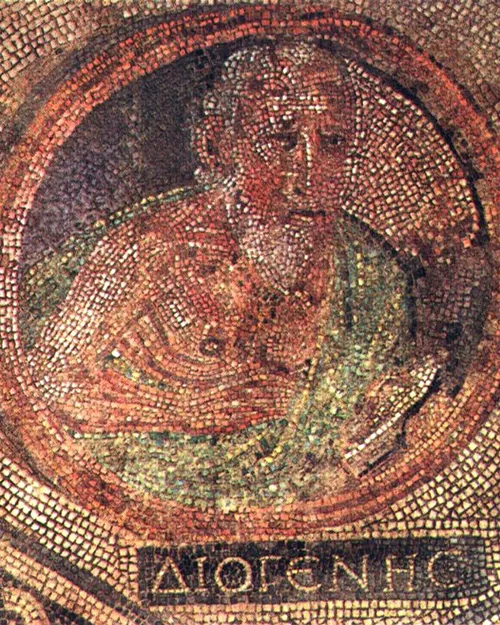
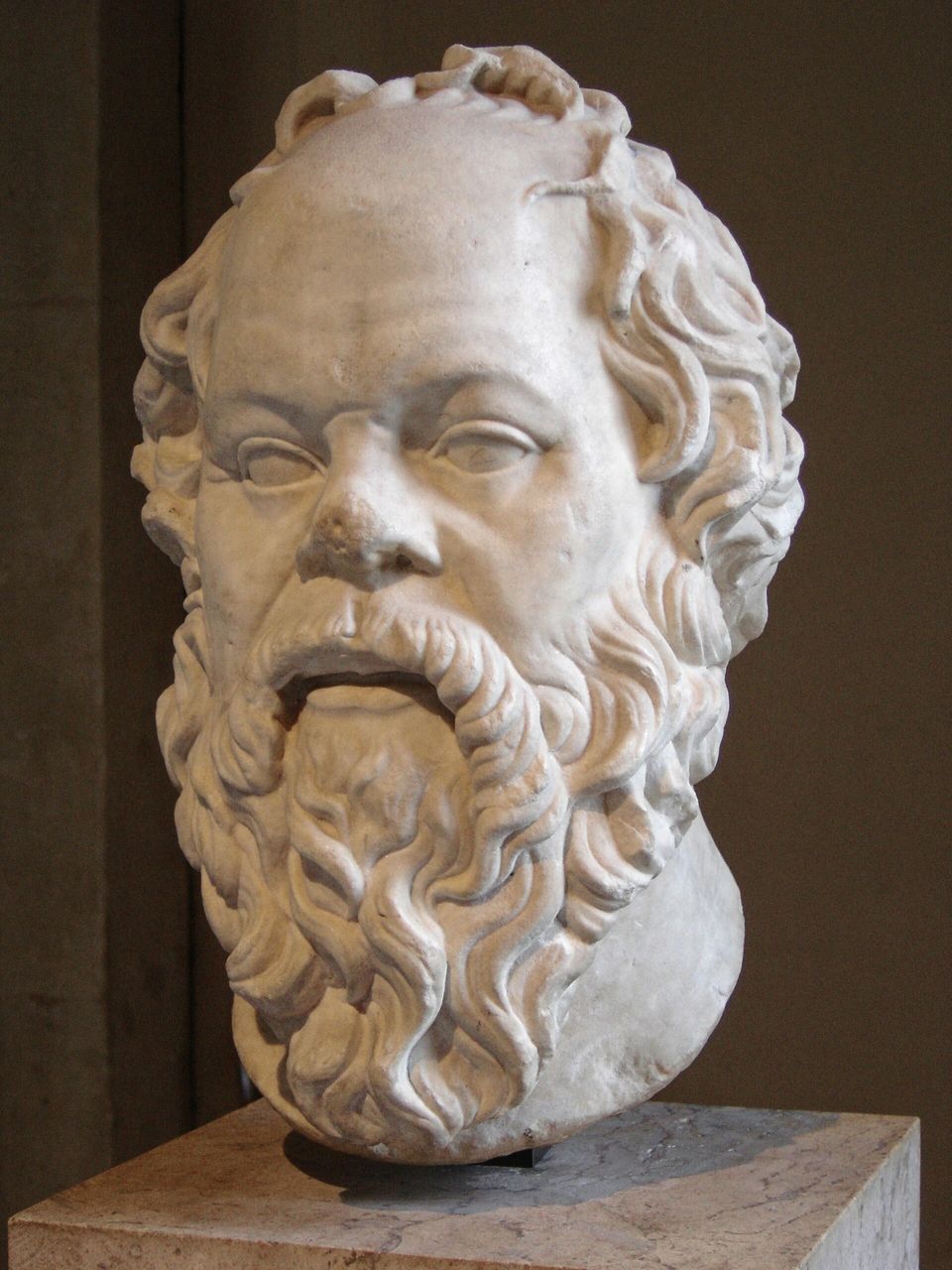
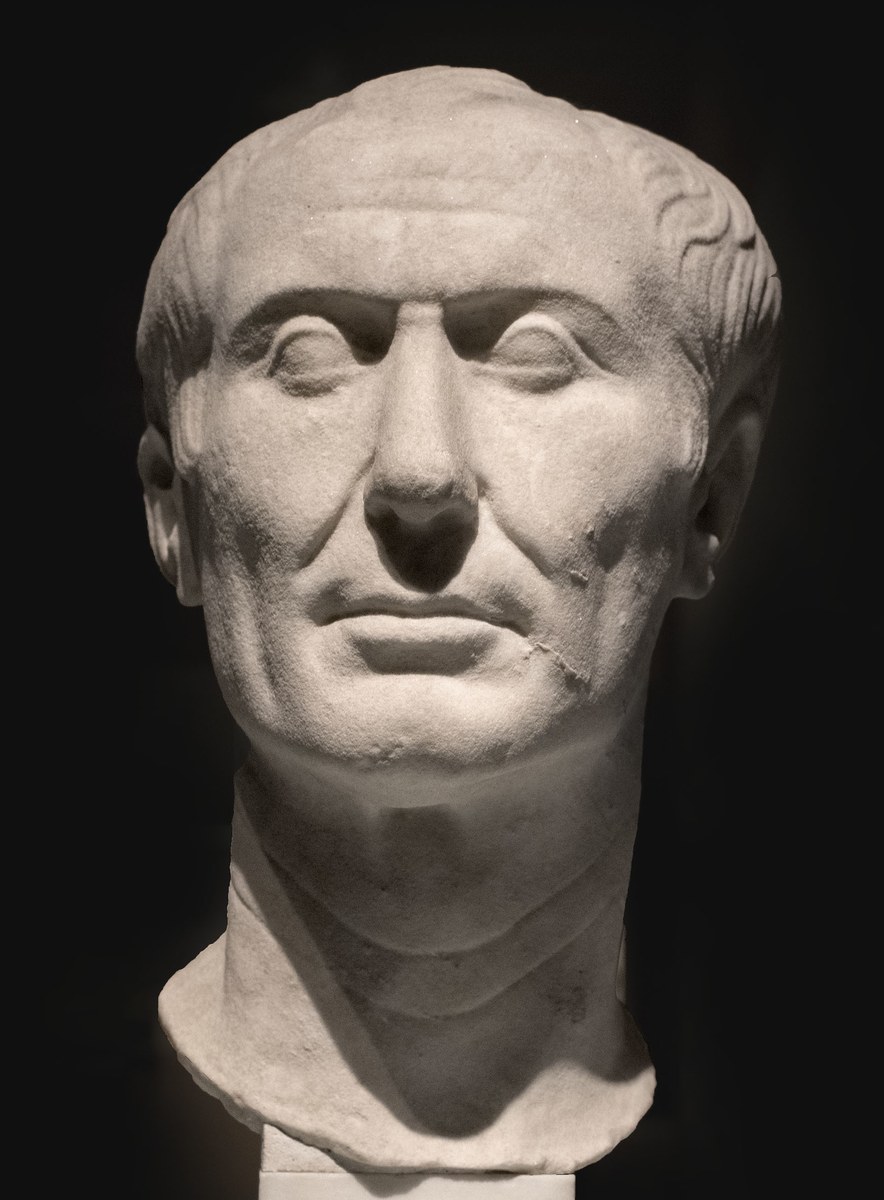
Roman floor mosaic of Diogenes of Sinope (2nd or 3rd century CE; from a villa in Cologne; Römisch-Germanisches Museum; Commons file), public domain, cropped. · Photograph by Eric Gaba (Wikimedia Commons user: Sting) (July 2005), CC BY-SA 2.5. Roman marble portrait of Socrates, 1st century AD, Louvre Museum. Background removed for the portrait above. · Photograph by Ángel M. Felicísimo, public domain. Background removed for the portrait above.


_(cropped).jpg)
An estimate is an inference.
Yours can be measured.
Thirty questions, scored against general-population benchmarks. Your score, your percentile, your ability breakdown and a printable IIF certificate.
Find your IQ score now! →