



What was Vincent van Gogh’s IQ?
What the record shows is reading, languages and self-teaching: 820 letters and a craft begun at 27.
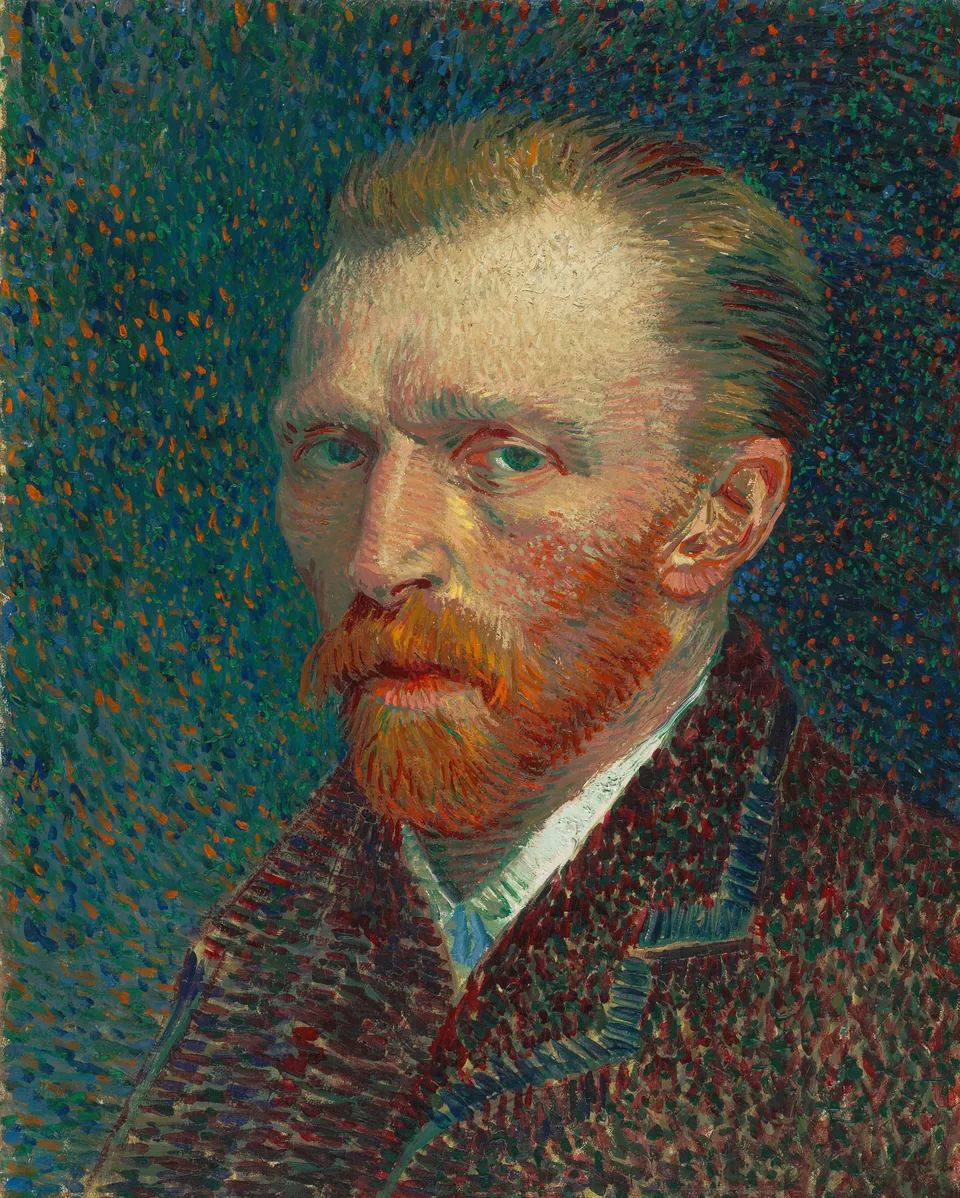
Vincent van Gogh’s IQ was never measured: he died in 1890, fifteen years before the Binet–Simon test of 1905, and the 165 and 155 that circulate online name no test. What is documented is eighteen months of secondary school with good marks in languages, 820 surviving letters and a craft learned from age 27, which supports an estimated IQ of about 125–145.
Vincent van Gogh’s estimated IQ
- Good marks, especially in languages, during about eighteen months at the Willem II high school in Tilburg (September 3, 1866 – March 19, 1868), his only secondary schooling.
- 820 surviving letters, 651 of them to his brother Theo, written in Dutch until 1886 and almost always in French afterward, plus five in English; the edition’s editors rate his French very good, though with frequent mistakes.
- A documented reading life: seven Zola novels in the summer of 1882, and Dickens, George Eliot, Carlyle, Hugo, Shakespeare and Balzac in other years, all traced in his letters.
- A craft built by self-instruction from August 1880, at 27: copying prints and drawing manuals, brief lessons with Anton Mauve, then nearly 900 paintings and more than 1,100 works on paper by 1890.
Cox-style estimates read childhood and youth, and Van Gogh’s school years show good marks but no distinction, with little early sign of artistic talent according to the Van Gogh Museum. The range therefore rests on adult evidence of reading, language and self-education, and a large body of art shows a craft, not general ability.
- Born
- March 30, 1853, Zundert, Netherlands
- Died
- July 29, 1890, Auvers-sur-Oise, France
- Field
- Painting and drawing
- Education
- Village school, Zundert; boarding school, Zevenbergen (1864–66); Willem II high school, Tilburg (1866–68); self-taught as an artist
- Before art
- Art dealer (Goupil & Cie, 1869–76), assistant teacher, bookshop assistant, evangelist trainee
- Letters
- 820 surviving, 651 to his brother Theo; Dutch to 1886, then mostly French; five in English
- Output
- Nearly 900 paintings and more than 1,100 works on paper, 1880–90 (the Met)
- Known for
- The Potato Eaters (1885); the paintings he made in Arles from 1888
What an IQ of 125–145 actually means
Set the claim aside for a moment. If someone genuinely scored in this range, here is what that would represent.
Average is 100 by construction, and about two-thirds of people fall between 85 and 115. Take the test to place your own score on this scale.
| Score range | Classification | Share of people | What it indicates |
|---|---|---|---|
| 85 – 114 | Average | ~68% | The range most people fall into. |
| 115 – 129 | Above average | ~13.6% | Roughly one person in seven. |
| 130 – 144 | Gifted | ~2% | The threshold most high-IQ societies use. |
| Above 144 | Highly gifted | ~0.1% | Figures above this range are extrapolated from the curve rather than measured. |
Percentages are approximate and describe a normal distribution. The same number means different things on tests with different standard deviations.
Thirty questions gives you a measured position on this exact scale — your score, your percentile and the ability breakdown behind it.
Find out in 30 minutes →Who Vincent van Gogh was
Vincent Willem van Gogh was born on March 30, 1853, in Zundert, a village in North Brabant in the south of the Netherlands, the son of the Reverend Theodorus van Gogh, a Dutch Reformed minister, and Anna Cornelia Carbentus. After the village school and lessons at home from a governess, he entered Jan Provily’s boarding school in Zevenbergen on October 1, 1864, and on September 3, 1866 the Willem II high school in Tilburg, where, the Van Gogh Museum says, he earned good marks, especially for languages. He left on March 19, 1868, eleven days before his fifteenth birthday; the museum gives the reason as unknown and adds that he never went back to school. The editors of his letters count it as eighteen months of secondary education.
On July 30, 1869, aged sixteen, he became a junior apprentice at the art dealers Goupil & Cie in The Hague, through his uncle Vincent (“Uncle Cent”), who had set up the firm’s branch there. He worked for Goupil in The Hague, London and Paris until it dismissed him with effect from April 1, 1876. He then assisted at boarding schools in Ramsgate and Isleworth, teaching chiefly French at Ramsgate by his own account, worked in a bookshop in Dordrecht from January 9, 1877, and from May 14, 1877 prepared in Amsterdam for theological studies, taking Latin and Greek lessons from Maurits Mendes da Costa. That plan was dropped after about a year; in 1878 he took a three-month trial as an evangelist trainee in Brussels, and from February 1879 he held a six-month evangelist post in the Borinage, a coal-mining district in Belgium.
In August 1880, at twenty-seven, he decided to become an artist. The Metropolitan Museum describes him as largely self-taught: he copied prints and worked through drawing manuals such as Charles Bargue’s Exercises au fusain and Cours de dessin, mastering black and white before color. Formal instruction was brief and intermittent. He enrolled at the Académie Royale des Beaux-Arts in Brussels on December 15, 1880 (whether he attended is not known), took lessons from his cousin by marriage Anton Mauve in The Hague in late 1881 and early 1882, enrolled at the Antwerp academy on January 18, 1886, and worked in Fernand Cormon’s Paris studio from March to June 1886. The Potato Eaters, his first large figure composition, dates from 1885. The profiles of Michelangelo and Pablo Picasso put the same question to other artists’ records.
The correspondence begins with a surviving letter to his brother Theo dated The Hague, September 29, 1872. The edition by the Van Gogh Museum and the Huygens Institute counts 820 surviving letters by Vincent, 651 of them to Theo, plus 83 he received, and estimates that at least 290 more of his letters are lost. Up to 1886 he wrote almost entirely in Dutch and afterward almost always in French (Dutch to French is roughly two to one in the editors’ count), with five letters in English. His reading, traced in the same edition, runs from Dickens, George Eliot and Carlyle to Hugo, Shakespeare and Balzac, and includes seven Zola novels in the summer of 1882. Between 1880 and 1890 he produced nearly 900 paintings and more than 1,100 works on paper, by the Met’s count. He moved to Arles on February 20, 1888, and died at Auvers-sur-Oise on July 29, 1890.
 By Elora Mercer, Celebrity Research WriterFigures checked by Leon Falkner, Data & Research Analyst
Reviewed by Aarav Vardhan, Editor-in-Chief · Last reviewed August 2026
.jpg)
Vincent van Gogh: the documented record
The estimate above rests on this record. Every entry here is a matter of public fact, which is more than can be said for the number itself.
- 1853Born March 30 in Zundert, the son of a Dutch Reformed minister.
- 1864–66Boarding school at Zevenbergen from October 1, 1864, then the Willem II high school in Tilburg from September 3, 1866; good marks, especially for languages.
- 1868Leaves Tilburg on March 19, eleven days before turning fifteen, and never returns to school.
- 1869Becomes a junior apprentice at the art dealers Goupil & Cie, The Hague, on July 30.
- 1876Dismissed by Goupil from April 1; assists at boarding schools in Ramsgate and Isleworth, teaching chiefly French at Ramsgate.
- 1877Bookshop assistant in Dordrecht from January 9; prepares in Amsterdam for theological studies from May 14.
- 1880Decides in August to become an artist, aged 27; enrolls at the Brussels academy on December 15.
- 1886Enrolls at the Antwerp academy on January 18; moves to Paris and works in Cormon’s studio from March.
- 1888Arrives in Arles on February 20.
- 1890Settles in Auvers-sur-Oise on May 20; dies there on July 29.
Where the 135–165 figure came from
Following a claim back to its first appearance is the part almost nobody does — and it is what most people are actually asking.
The Van Gogh IQ score of 165 comes from a chain of aggregator lists, not from a test. check-iq.org, in a page headed “Van Gogh Had an Estimated IQ of 165” (published November 13, 2024), says it derived the number from two other sites, Geni and IQ Test Prep, and labels both Low confidence. It then applies a Flynn-effect adjustment to reach “approximately 185 in 2024”. IQ Test Prep’s own note says many of its scores are unverified or estimates. That is the loop traced in where celebrity IQ numbers come from, and an IQ level of 165 (see what an IQ of 160 means) is a very large claim to rest on it.
Van Gogh’s intelligence is the stated basis for the 155 on thegeniusindex.com: a “precocious linguistic ability”, literary knowledge, fast mastery of technique and philosophical depth in his writing, with no test or source named. Part of that is documented. The Van Gogh Museum says he earned good marks, especially for languages, at Tilburg, and the letters edition lists his reading year by year. Part is not. The edition’s language essay describes Dutch, French and five letters in English and makes no claim of fluency in German, which the page asserts; the German evidence is poems by German authors copied into his albums, an inquiry in 1876 about whether he could teach it and a biography’s report of Bible passages he translated in 1877, and none of it measures fluency. The editors trace his French to exposure (the art trade from sixteen, a year in Paris with Goupil, nearly three years in the Borinage and Brussels, his reading) and call it very good but not flawless. For the wider question, see the bilingual advantage and IQ.
The lower figures are easier to explain. lifescoretest.com calls its 135+ (working range 120 to 145) an editorial estimate with very low confidence and says no verified standardized result is cited, and geniuses.club shows a dash. Those two say plainly that the figure is an inference or absent, and the 135+ sits inside this page’s range; the highest numbers have the least behind them.
The two classic historiometric sources do not rate him. Born in 1853, Van Gogh falls three years outside the 1450–1850 window of Catharine Cox’s 301 subjects (1926), and her volume has no entry for him; he is also absent from James McKeen Cattell’s 1903 list of the 1,000 most eminent men, drawn from six biographical dictionaries. That leaves a range built from adult evidence, as with Leonardo da Vinci and the self-educated Benjamin Franklin. It sits lower than theirs because his documented record is narrower, and because a large body of art shows a craft pursued for a decade, not general ability (compare creativity and IQ). Genius in the artistic sense is a judgment on the work; the IQ meaning is a threshold (see genius IQ level).
How we read a number →Dated schooling and career record from Zevenbergen (October 1, 1864) and Tilburg (September 3, 1866 – March 19, 1868) to Goupil, Amsterdam, Brussels, the Borinage, the decision to become an artist (August 1880), Antwerp (January 18, 1886) and Arles (February 20, 1888). It also dates his reading year by year.
820 letters by Vincent, 651 to Theo; 903 surviving in all; at least 290 of his own lost. Dutch to 1886, French afterward, five letters in English; 18 months of secondary school; his French judged very good but not flawless. No mention of German fluency.
An employer’s reply asking whether he could teach French, German and drawing, and his own account of teaching the Ramsgate boys chiefly French.
Good marks at Tilburg, especially for languages; left in 1867–68 for unknown reasons and never went back to school; little early sign of artistic talent; decided on art at 27; first surviving letter to Theo dated The Hague, September 29, 1872.
Decade-long career, 1880–90: nearly 900 paintings and more than 1,100 works on paper; largely self-taught from prints and drawing manuals; Aurier’s article of January 1890; standing in modern art by the First World War.
Cattell’s list of the 1,000 most eminent men has no entry for Van Gogh. Cox’s 301 subjects were born 1450–1850, and her full text has no entry for him.
check-iq.org: 165 derived from Geni and IQ Test Prep, each marked Low confidence. The Genius Index: 155 based on languages, reading, quick mastery of technique and the depth of his writing; no test or source named.
LifeScore: editorial 135+, working range 120–145, very low confidence, no verified result cited. Geniuses.club: figure shown as a dash.
Binet and Simon published a preliminary version of their intelligence test in 1905. The Van Gogh article cites a 1990 biography (Callow) for Bible passages translated into English, French and German at Dordrecht.
Van Gogh died in 1890; no test result, school record or study found in the sources above gives him an IQ. Every figure online is a retrospective estimate or a copy of another list.
The sources behind our estimate
The figures that circulate for Vincent van Gogh, what we were able to confirm, and where the two diverge.
Pages that appear in search results for “Vincent van Gogh IQ” give 165 (check-iq.org), 155 (thegeniusindex.com) and an editorial 135+ (lifescoretest.com); geniuses.club shows a dash.
No IQ test result exists for Van Gogh, and the two highest figures name no test. What the record holds is a note of good school marks in languages, a long correspondence, a reading list and a self-taught craft. The pages above either derive their number from other lists (check-iq.org), assert it from his languages and writing (thegeniusindex.com), label it an editorial estimate (lifescoretest.com) or leave it blank (geniuses.club).
A Vincent van Gogh IQ score of 155 or 165 sits above the range the record can support and comes with nothing underneath it; the lowest circulating figure, the 135+, sits inside that range. The error runs upward, as it usually does, and the highest figure is the one furthest from any evidence.
Want a number that does hold up? Every figure on this page is somebody’s claim. Take the 30-question test and get a percentile you can check rather than a figure you have to trust.
Vincent van Gogh — frequently asked
What is Vincent van Gogh’s IQ?
Vincent van Gogh’s IQ was never measured. The best-supported estimate is about 125–145, inferred from his schooling, languages, reading and 820 surviving letters; the 165 and 155 that circulate online name no test. He died in 1890, fifteen years before the Binet–Simon test of 1905.
Did Vincent van Gogh ever take an IQ test?
No. Van Gogh died in 1890, fifteen years before Alfred Binet and Théodore Simon published their intelligence test in 1905, and no test result, school record or study that we found gives him a score. Any IQ attached to his name is a retrospective estimate by someone reading his biography.
Where do the Van Gogh IQ scores of 165 and 155 come from?
The 165 on check-iq.org is derived from two aggregator lists, Geni and IQ Test Prep, which the page itself rates Low confidence. The 155 on thegeniusindex.com rests on his languages, reading and writing, with no test named.
Was Van Gogh smart?
The record points to a capable, well-read learner. He earned good marks in languages at secondary school, taught French at a boys’ boarding school in 1876, wrote 820 surviving letters in Dutch, French and English, and read Dickens, Hugo, Shakespeare and Zola. That shows strong verbal ability and self-directed learning, though not a number.
Was Van Gogh a genius?
As an artist he is treated as a major figure: the critic Albert Aurier wrote the first full-length article on him in January 1890, and by the First World War he was regarded as a vanguard figure of modern art. That is a judgment of his work, not an IQ, and nothing in the record supports a score as high as 165.
How many letters did Van Gogh write, and in what languages?
The Van Gogh Letters edition counts 820 surviving letters by Vincent, 651 of them to his brother Theo, and estimates that at least 290 more are lost. He wrote almost all in Dutch until 1886 and almost always in French afterward, with five letters in English.
How does Van Gogh’s estimated IQ compare with Leonardo da Vinci’s?
Lower. This site places Leonardo at 175–195, from about 7,200 surviving notebook pages on anatomy, hydraulics and optics, and Van Gogh at 125–145, from letters, languages and reading. Both are inferences from records, not test results; Van Gogh’s record is narrower, and his craft began at 27.
What was Van Gogh’s education?
He attended the village school in Zundert, a boarding school in Zevenbergen (1864–66) and the Willem II high school in Tilburg (1866–68), leaving at fourteen. He prepared for theology in Amsterdam in 1877–78 but never entered university, then trained as an artist largely on his own, enrolling at academies in Brussels (1880) and Antwerp (1886).
How does my IQ compare with Vincent van Gogh?
You can find out in about fifteen minutes. The IQ Metrics assessment is 30 questions, scored on the same 100-mean scale used throughout this page, so your result and the estimate above are at least expressed in the same units — one measured, one inferred. Once you have a number, the leaderboard shows where it would sit, and how we score and norm it explains the benchmarking.
Where does this estimate come from?
From the documented record rather than a test — the method is named above and set out in full under how we read a number. Compare it against the other historical profiles, starting with Isaac Newton.
- Take the 30-question IQ test — get a measured score and percentile of your own
- Average IQ by country — how the scale behaves across populations
- How IQ Metrics scores its assessment — the method behind our own number
- More on how IQ testing works — reliability, error and what a score can and cannot say
- More historical profiles — same field, same method
More historical
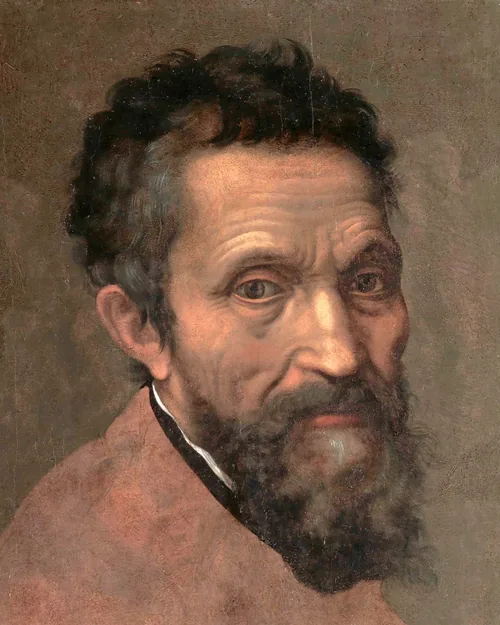
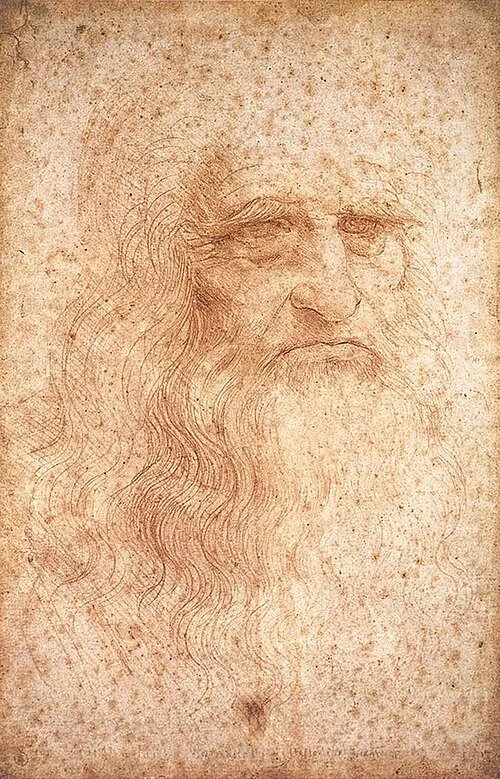
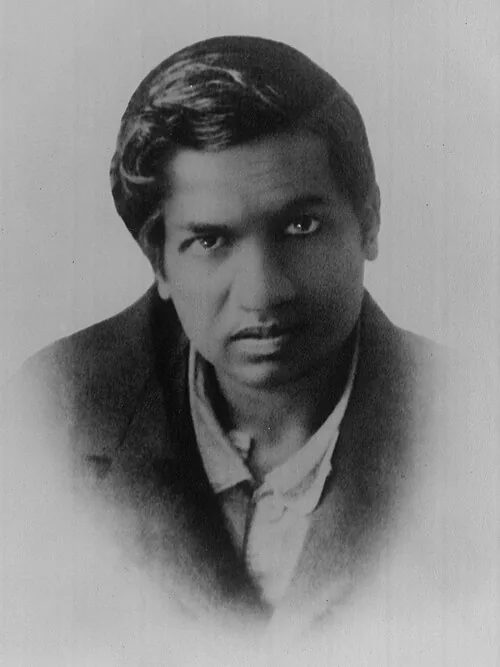
Portrait attributed to Daniele da Volterra (about 1545; The Metropolitan Museum of Art, object 436771; Commons file), public domain, cropped. · Presumed self-portrait, red chalk, c. 1512, via Wikimedia Commons, public domain. · Photograph (1913) held by Trinity College, Cambridge, via Wikimedia Commons, CC BY 4.0.
.jpg)

.jpg)
An estimate is an inference.
Yours can be measured.
Thirty questions, scored against general-population benchmarks. Your score, your percentile, your ability breakdown and a printable IIF certificate.
Find your IQ score now! →