



What was Leonardo da Vinci’s IQ?
The number attached to the word genius.
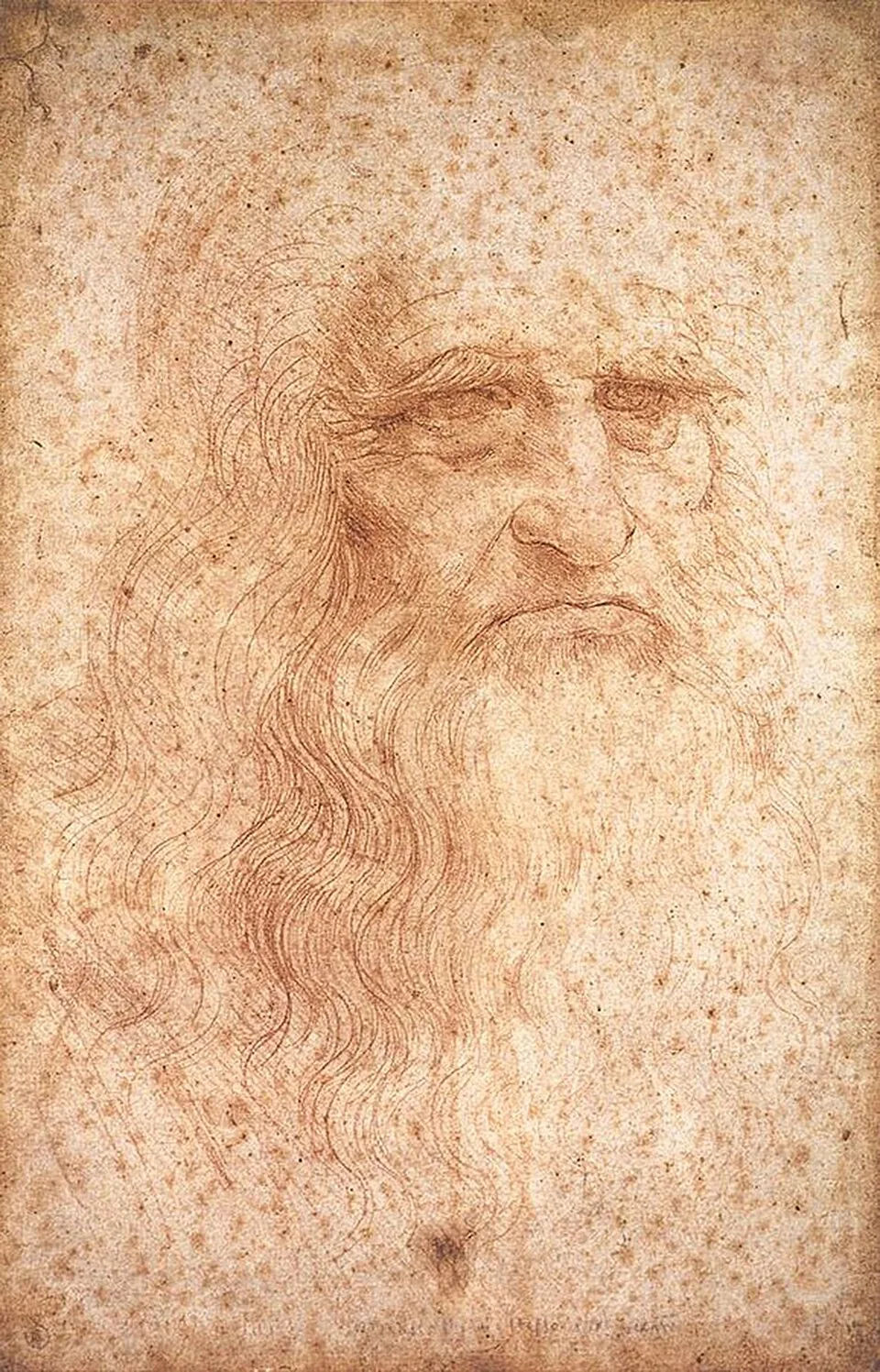
Leonardo attracts the highest estimates of any historical figure, and he is the one for whom the method that produces them works least well.
Leonardo da Vinci’s estimated IQ
- Roughly 7,200 surviving notebook pages covering anatomy, hydraulics, optics, geology, mechanics and painting.
- Anatomical drawings from dissections in the 1500s that were not surpassed for centuries, including a wax cast of the ventricles of the brain.
- A body of painting — The Last Supper, the Mona Lisa — that changed the technical vocabulary of European art.
The historiometric method normally reads a documented childhood, and Leonardo’s barely exists — born outside marriage in a village, no university, self-taught in Latin as an adult. This range therefore rests on the adult work alone, and is the least constrained estimate on the site.
- Born
- 15 April 1452, near Vinci, Republic of Florence
- Died
- 2 May 1519, Amboise, France
- Field
- Painting, engineering, anatomy, hydraulics
- Education
- Workshop apprenticeship; no formal schooling or university
- Known for
- The Last Supper, the Mona Lisa, the notebooks
What an IQ of 175–195 actually means
Set the claim aside for a moment. If someone genuinely scored in this range, here is what that would represent.
Average is 100 by construction, and about two-thirds of people fall between 85 and 115. Take the test to place your own score on this scale.
| Score range | Classification | Share of people | What it indicates |
|---|---|---|---|
| 85 – 114 | Average | ~68% | The range most people fall into. |
| 115 – 129 | Above average | ~13.6% | Roughly one person in seven. |
| 130 – 144 | Gifted | ~2% | The threshold most high-IQ societies use. |
| Above 144 | Highly gifted | ~0.1% | Figures above this range are extrapolated from the curve rather than measured. |
Percentages are approximate and describe a normal distribution. The same number means different things on tests with different standard deviations.
Thirty questions gives you a measured position on this exact scale — your score, your percentile and the ability breakdown behind it.
Find out in 30 minutes →Who Leonardo da Vinci was
Leonardo was born in 1452 near Vinci, in Tuscany, the son of a notary and a woman he was not married to. He received no formal education beyond basic reading, writing and arithmetic, and was apprenticed in his teens to Andrea del Verrocchio’s workshop in Florence.
From 1482 he worked in Milan for Ludovico Sforza, describing himself in his letter of introduction primarily as a military engineer and mentioning painting last. He completed remarkably little. The notebooks are full of projects begun and abandoned, and the contemporary complaints about his unreliability are numerous.
He died in France in 1519 at the court of Francis I. The notebooks were dispersed and largely unstudied until the nineteenth century, which means the reputation that attracts a three-figure IQ estimate is itself mostly a modern construction.
 By Elora Mercer, Celebrity Research WriterFigures checked by Leon Falkner, Data & Research Analyst
Reviewed by Aarav Vardhan, Editor-in-Chief · Last reviewed August 2026

Leonardo da Vinci: the documented record
The estimate above rests on this record. Every entry here is a matter of public fact, which is more than can be said for the number itself.
- 1452Born near Vinci, outside marriage; little of his childhood is documented.
- c.1466Apprenticed to Andrea del Verrocchio in Florence.
- 1482Enters the service of Ludovico Sforza in Milan as a military engineer.
- 1495Begins The Last Supper; completed around 1498.
- c.1503Begins the Mona Lisa, and works on it intermittently for the rest of his life.
- 1510Anatomical studies with Marcantonio della Torre.
- 1516Moves to France at the invitation of Francis I.
- 1519Dies at Amboise.
Where the 180 figure came from
Following a claim back to its first appearance is the part almost nobody does — and it is what most people are actually asking.
Leonardo is the case that stretches the method furthest, and the range above should be read with that in mind: it is an inference from what he built, not a reading of what he was measured at.
The reason is worth spelling out. He was not admitted to anything, sat no examinations, held no chair, published nothing in his lifetime, and left his notebooks unorganised and largely unread for two centuries. Every input a historiometric estimate uses — school records, precocious publication, institutional recognition, contemporary testimony about a child — is missing. What survives is the work of a man from about thirty onward.
He also lacked a formal education and knew it, describing himself as an unlettered man and teaching himself Latin in his forties. A strict Cox-style score would place him below an aristocrat of no distinction whose tutors happened to keep notes. That is the method failing, not a finding about Leonardo — and it is why our range is drawn from the notebooks instead.
How we read a number →Around 7,200 surviving pages, roughly a quarter of what is believed to have existed. The primary evidence for everything on this page.
Produced with the anatomist Marcantonio della Torre. Includes the wax cast of the cerebral ventricles and the studies of the heart valves.
The earliest substantial biography, written thirty years after Leonardo’s death and the source of several stories repeated as fact since.
No school records, no juvenilia, no contemporary account of him as a child. The specific gap that makes a historiometric estimate impossible.
Source URLs and first-appearance date pending audit. The 180 is often attributed to Cox (1926); we have not been able to confirm that attribution against the published table.
The higher figures have no attribution of any kind.
The sources behind our estimate
The figures that circulate for Leonardo da Vinci, what we were able to confirm, and where the two diverge.
Figures between 180 and 220 circulate freely, and Leonardo is routinely listed as having the highest IQ in history.
Our 175–195 is built from the surviving work, not from the usual inputs. Retrospective IQ estimates are normally built from records of early achievement measured against age, and Leonardo’s early life is close to undocumented: an illegitimate birth in 1452 near Vinci, no formal schooling, no university, an apprenticeship beginning around fourteen. The adult record is vast and the childhood record is empty — so this range carries wider error than any other on the site, and the 220 still has nothing behind it.
A forty-point spread with no source behind any of the three. The figures rise over time, which is what happens to a number that is being repeated rather than checked.
Want a number that does hold up? Every figure on this page is somebody’s claim. Take the 30-question test and get a percentile you can check rather than a figure you have to trust.
Leonardo da Vinci — frequently asked
What was Leonardo da Vinci’s IQ?
He was never tested — he died in 1519, nearly four centuries before intelligence testing. Our 175–195 range is inferred from the surviving notebooks and completed work. The 200 to 220 figures in circulation have no source at all.
Is Leonardo da Vinci the highest IQ in history?
No measurement exists to support that or any other ranking. Our estimate places him at the top of the historical figures profiled here, but that is a comparison of inferred ranges, not of test results.
Why is Leonardo’s range wider than Mozart’s?
Because the method reads childhood records. Mozart’s were kept meticulously by his father; Leonardo’s essentially do not exist, so his range has to be inferred from adult work and carries far more uncertainty.
Did Leonardo da Vinci go to university?
No. He had no formal schooling beyond the basics and taught himself Latin as an adult, describing himself as an unlettered man.
How many of Leonardo’s notebooks survive?
About 7,200 pages, thought to be roughly a quarter of what he produced. They were dispersed after his death and largely unstudied until the nineteenth century.
Does an enormous body of work prove a high IQ?
It proves the work. Output reflects opportunity, patronage, health and length of life alongside ability, and none of those can be separated out after five hundred years.
How does my IQ compare with Leonardo da Vinci?
You can find out in about fifteen minutes. The IQ Metrics assessment is 30 questions, scored on the same 100-mean scale used throughout this page, so your result and the estimate above are at least expressed in the same units — one measured, one inferred. Once you have a number, the leaderboard shows where it would sit, and how we score and norm it explains the benchmarking.
Where does this estimate come from?
From the documented record rather than a test — the method is named above and set out in full under how we read a number. Compare it against the other historical profiles, starting with Isaac Newton.
- Take the 30-question IQ test — get a measured score and percentile of your own
- Average IQ by country — how the scale behaves across populations
- How IQ Metrics scores its assessment — the method behind our own number
- More on how IQ testing works — reliability, error and what a score can and cannot say
- More historical profiles — same field, same method
More historical
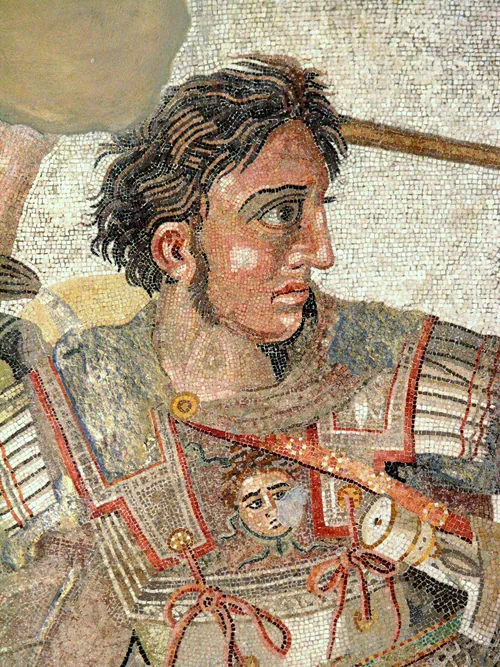
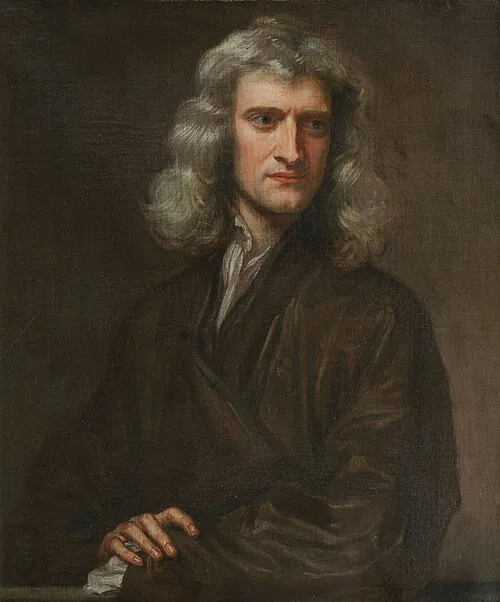
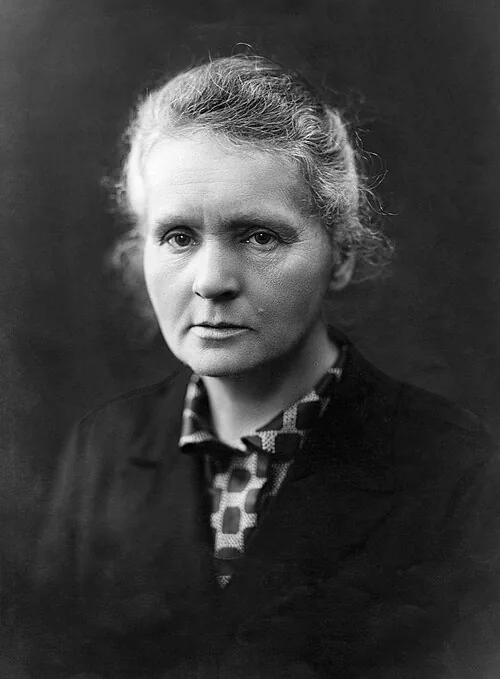
Detail of the Alexander Mosaic from the House of the Faun, Pompeii (c. 100 BCE; now in the National Archaeological Museum of Naples), via Wikimedia Commons, public domain. · Portrait by Godfrey Kneller (1689), public domain. · Photograph by Henri Manuel (c. 1920), public domain. Background removed for the portrait above.
.jpg)


An estimate is an inference.
Yours can be measured.
Thirty questions, scored against general-population benchmarks. Your score, your percentile, your ability breakdown and a printable IIF certificate.
Find your IQ score now! →