



What was Pablo Picasso’s IQ?
A museum says he finished his art-school entrance test in one day. That is a story about drawing, not an IQ score.
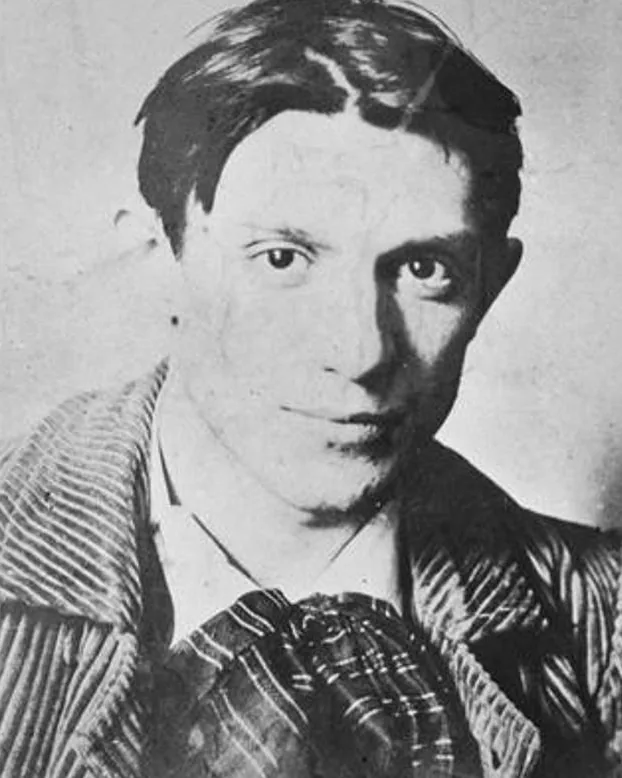
No published IQ test result exists for Pablo Picasso: the 175 quoted online comes from ranking sites that name no test, while the documented record shows a drawing student admitted to the Llotja art school in Barcelona in September 1895. This page’s estimated Picasso IQ level, inferred from that record, is 130–150.
Pablo Picasso’s estimated IQ
- A museum-documented training record: a drawing class at the school of fine arts in La Coruña from 1892, the Llotja in Barcelona from September 1895, and the Real Academia de San Fernando in Madrid from October 1897.
- Dated early works in museum collections: an academic study of a plaster cast (1893–1894), a Llotja entrance drawing (1895), The First Communion shown in April 1896, and Science and Charity (1897), which won an honorable mention in Madrid and a gold medal in Málaga.
- Original work in one visual domain from the 1890s to the early 1970s: Cubism developed with Georges Braque from 1907, the year of Les Demoiselles d’Avignon, and Guernica (1937).
- A field-level reference only: Cox’s 1926 table prints a corrected childhood estimate of 140 for her artists as a group, against 155 for scientists and 170 for philosophers (Table 20A, p. 83); this range is centered there because no figure exists for Picasso himself.
Nothing in the surviving record measures verbal, numerical or abstract reasoning, which IQ tests also sample; the schooling anecdotes come from a friend’s memoir rather than report cards, and his eminence lies in one visual domain. Cox did not rate Picasso, so her group figure is only a loose anchor, and the range is wide for that reason.
- Born
- October 25, 1881, Málaga, Spain
- Died
- April 8, 1973, Mougins, France
- Field
- Painting, drawing, sculpture, printmaking, ceramics
- Education
- Drawing class, school of fine arts, La Coruña (1892–95); Llotja, Barcelona (1895–97); Real Academia de San Fernando, Madrid (from October 1897)
- Early teacher
- His father, José Ruiz Blasco, an art teacher and museum curator
- Known for
- Cubism with Georges Braque; Les Demoiselles d’Avignon (1907); Guernica (1937)
- Published IQ test result
- None found
- Circulating IQ figures
- 175 (geniuses.club, check-iq.org); 145+ (LifeScore)
What an IQ of 130–150 actually means
Set the claim aside for a moment. If someone genuinely scored in this range, here is what that would represent.
Average is 100 by construction, and about two-thirds of people fall between 85 and 115. Take the test to place your own score on this scale.
| Score range | Classification | Share of people | What it indicates |
|---|---|---|---|
| 85 – 114 | Average | ~68% | The range most people fall into. |
| 115 – 129 | Above average | ~13.6% | Roughly one person in seven. |
| 130 – 144 | Gifted | ~2% | The threshold most high-IQ societies use. |
| Above 144 | Highly gifted | ~0.1% | Figures above this range are extrapolated from the curve rather than measured. |
Percentages are approximate and describe a normal distribution. The same number means different things on tests with different standard deviations.
Thirty questions gives you a measured position on this exact scale — your score, your percentile and the ability breakdown behind it.
Find out in 30 minutes →Who Pablo Picasso was
Pablo Ruiz Picasso was born on October 25, 1881, in Málaga, Spain. His father, José Ruiz Blasco, taught drawing at the Málaga School of Fine Arts and was curator of the city’s municipal museum; the Musée national Picasso-Paris says Picasso began painting in 1888 with his encouragement, and dates his first oil painting, The Little Yellow Picador, to the age of eight. In 1891 his father’s post moved to La Coruña, on Spain’s northwest coast. Picasso, then ten, was enrolled at the Instituto de la Guarda and, from 1892, in a drawing class at the city’s school of fine arts, where his father taught. The Museu Picasso in Barcelona dates his academic exercises there to 1892–95 and holds a sketchbook with a page dated February 6, 1894; the Paris museum holds two oils it dates to early 1895, The Barefoot Girl and Man with a Cap, painted when he was thirteen.
In 1895 his father was appointed to teach at the Llotja, Barcelona’s school of fine arts (“La Lonja” in the Paris museum’s spelling), and Picasso entered it as a pupil in September 1895, weeks before his fourteenth birthday. The entrance-exam story is a reported one. The Musée national Picasso-Paris says he owed his place to exceptional results in the entrance exams for the higher drawing classes and finished the test in one day when a month was allowed; English Wikipedia says a week, citing a 2005 art book; the Museu Picasso’s own essay on a portrait of 1896 says only that he passed the drawing section, which included life drawing of a model and a statue, without difficulty. None of the three points to a record of the sitting. What survives is the drawing: the Museu Picasso holds a black-pencil sheet it catalogs as his entrance drawing to the Llotja (1895), a gift from Picasso in 1970. His The First Communion was shown at a Barcelona exhibition in April 1896, and Science and Charity (1897) won an honorable mention at the National Exhibition of Fine Arts in Madrid and the gold medal at the Provincial Exhibition in Málaga. In October 1897 he enrolled at the Real Academia de San Fernando in Madrid (the Royal Academy of San Fernando), left the city the following spring, spent the summer of 1898 in Horta de Sant Joan, and returned to Barcelona in 1899. Early prodigy in one domain, as with Mozart in music, is good evidence of skill in that domain; it is not a score.
Picasso first visited Paris in 1900 for the Exposition Universelle and settled there in April 1904. In 1907 he painted Les Demoiselles d’Avignon (now at the Museum of Modern Art, New York), and in November 1907 the poet Guillaume Apollinaire arranged his first meeting with the painter Georges Braque; the Paris museum describes Cubism as the result of their collaboration and friendship. In 1937 he painted Guernica in his studio on the rue des Grands-Augustins in Paris for the Spanish pavilion at the International Exhibition; the painting is now at the Museo Reina Sofía in Madrid. He also wrote: the museum’s timeline records poems from 1935 and a six-act play, Desire Caught by the Tail, in 1941 (its war-years page dates the play 1942). He died on April 8, 1973, in Mougins, France.
How smart was Picasso at school? The record is mostly one retold anecdote. The Paris museum says he disliked ordinary school, was bored and did not concentrate, drawing through lessons, and it takes this from the memoir of his friend Jaime Sabartès; no school report is cited on the museum pages checked. What is documented is institutional: three art-school enrollments in a row, exhibitions and prizes for work made by 1897, and dated work from the 1890s to the early 1970s. Those show early, exceptional drawing and painting skill. They do not show how he would have scored on verbal, numerical or abstract reasoning, and how far school performance tracks test scores is its own question (does IQ predict school success).
 By Elora Mercer, Celebrity Research WriterFigures checked by Leon Falkner, Data & Research Analyst
Reviewed by Aarav Vardhan, Editor-in-Chief · Last reviewed August 2026

Pablo Picasso: the documented record
The estimate above rests on this record. Every entry here is a matter of public fact, which is more than can be said for the number itself.
- 1881Born October 25 in Málaga, Spain.
- 1888Begins painting, encouraged by his father, an art teacher.
- 1892Begins a drawing class at the school of fine arts in La Coruña, where his father teaches.
- 1895Enters the Llotja school of fine arts in Barcelona in September; a museum says he finished the entrance test in one day, a month having been allowed.
- 1896The First Communion is shown at an exhibition in Barcelona in April.
- 1897Paints Science and Charity, awarded an honorable mention in Madrid and a gold medal in Málaga; enrolls at the Real Academia de San Fernando in October.
- 1900First visit to Paris, for the Exposition Universelle.
- 1907Paints Les Demoiselles d’Avignon; in November meets Georges Braque, his partner in developing Cubism.
- 1937Paints Guernica in Paris for the Spanish pavilion at the International Exhibition.
- 1973Dies on April 8 in Mougins, France.
Where the 175 figure came from
Following a claim back to its first appearance is the part almost nobody does — and it is what most people are actually asking.
Pablo Picasso’s IQ of 175 comes from ranking pages, not from a test. Geniuses.club lists him 11th in its “Greatest Art Geniuses” ranking at 175 and, on a comparison page, pairs him with Leonardo da Vinci (200 against Picasso’s 175), both labeled “Estimated IQ”. Check-iq.org’s page “Pablo Picasso Had an IQ of 175” (published November 1, 2024; updated February 12, 2025) says its figure is the average of the scores provided by two other sites, Past Factory and Geni. Both read 175, so the average repeats one number. For how figures like these travel, see where celebrity IQ numbers come from.
Picasso’s IQ score of 175 is five standard deviations above a mean of 100 on the usual 15-point scale, a level where the ceiling effect limits what ordinary tests can report, and no page that quotes it names the test that would have to stand behind it. LifeScore’s 145+ (working range 130–155, reviewed September 2026) is more candid: it labels its own evidence “very low” confidence and calls the basis an editorial comparison. The direction of the error is the usual one: what survives in the museums supports a lower number than 175, stated as a range, and none of it is a score.
Picasso cannot be placed with the historiometric tables that give some historical figures a printed number. Catharine Cox’s 1926 study covers geniuses who “lived between the years 1450 and 1850” (p. 4); Picasso was born in 1881, and the book does not rate him. Cattell’s 1903 ranking of eminent men lists only men no longer living, and Picasso, then 21, is not on it. People inside Cox’s window, such as Galileo, carry a printed Cox figure; Picasso has none, so every number attached to him is a modern writer’s judgment. LifeScore lists Cox’s book among its sources even though the book contains no rating of him.
Was Picasso a genius? The Musée national Picasso-Paris speaks of “remarkable technical skill” in his entrance work, but whether artistic genius shows up as a high IQ is a separate question from whether it shows up at all. Howard Gardner’s Creating Minds (1993) takes Picasso and Albert Einstein as two of seven case studies, one outstanding example for each of his “intelligences”; the framework behind it, covered on multiple intelligences, is criticized by mainstream psychology for lacking psychometric evidence. How far creative eminence tracks test scores is contested (see creativity and IQ), and a “genius” IQ level is a statistical label, not a verdict on an artist. The same questions apply to the other artists in this section, such as Michelangelo and Vincent van Gogh.
How we read a number →Birth on October 25, 1881 in Málaga; his father’s posts as a drawing teacher; the Llotja entrance exam told as one day against a month (September 1895); The First Communion (April 1896); Science and Charity (1897); enrollment at San Fernando (October 1897); Les Demoiselles d’Avignon (1907) and Braque; Guernica (1937); death on April 8, 1973 in Mougins.
Holds a black-pencil sheet, 47 × 61 cm (MPB 110.886R), cataloged as his Llotja entrance drawing and given by Picasso in 1970. Dates his academic exercises to La Coruña (1892–95) and the Llotja (1895–97) and shows a La Coruña sketchbook page dated February 6, 1894. The essay says he passed the drawing section of the entrance exam without difficulty; none of these pages gives a timing for the exam.
Defines its subjects as people who “lived between the years 1450 and 1850” (p. 4); the text has no entry for Picasso. Table 20A (p. 83) prints group values only: artists 122 obtained and 140 corrected, scientists 155 and philosophers 170 (corrected childhood estimates).
A list of the 1,000 most eminent men, restricted to men no longer living. Picasso, then 21, does not appear.
Source of the 175: rank 11 in its art ranking (born 1881), and 175 against Leonardo’s 200 on the comparison page, labeled “Estimated IQ”. The pages call such figures “reconstructions, not test results” and name no test, rater, date or source; the site’s Picasso biography post (August 2, 2026) states no IQ.
Also gives 175. Stated method: the average of Past Factory and Geni, each 175 with “Low” confidence.
Gives 145+ with a working range of 130–155, “very low” confidence and a basis it calls “No documented estimate; editorial comparison”. Lists Cox (1926) among its sources, though Cox’s book does not rate Picasso.
Checked: the Musée national Picasso-Paris and Museu Picasso pages above and the three aggregator pages. None cites a test, a psychologist or a date of testing. Picasso lived until 1973, after the Binet–Simon scale (1905) and the Stanford–Binet (1916), but no sitting is on record.
Confirms the dates and places of birth and death and tells the Llotja admission as a week, citing Isabelle de Maison Rouge, Picasso, Le Cavalier Bleu (2005), p. 50. Wikidata describes Q5593 as the Spanish painter and sculptor (1881–1973).
The publisher’s description says Gardner examines seven individuals, among them Picasso and Einstein, one outstanding example of each of his “intelligences”. Wikipedia says the theory has been criticized by mainstream psychology for its lack of empirical evidence.
The sources behind our estimate
The figures that circulate for Pablo Picasso, what we were able to confirm, and where the two diverge.
Two figures circulate for Picasso’s IQ: 175, on geniuses.club (11th in its art ranking) and check-iq.org, and 145+ with a working range of 130–155 on LifeScore.
None of the three sites names a test, a psychologist or a date of testing. Checked in October 2026: geniuses.club says only that its scores rest on “historical records and psychometric research”, and its Leonardo–Picasso page labels both numbers “Estimated IQ” while calling such figures “reconstructions, not test results”. Check-iq.org says its 175 is the average of Past Factory and Geni, both at 175 with “Low” confidence. LifeScore, last reviewed September 2026, labels its evidence “very low” confidence and cites no verified score. Cox’s 1926 book, which LifeScore lists among its sources, does not rate Picasso.
A 45-point spread with no test behind it. The 175 appears on two sites, and one of them says it is an average of two inputs that both read 175. LifeScore’s 145+ falls inside this page’s range, and LifeScore itself calls its confidence “very low”.
Want a number that does hold up? Every figure on this page is somebody’s claim. Take the 30-question test and get a percentile you can check rather than a figure you have to trust.
Pablo Picasso — frequently asked
What is Pablo Picasso’s IQ?
No published IQ test result exists for Pablo Picasso. The 175 quoted on geniuses.club and check-iq.org names no test, and LifeScore’s 145+ carries a “very low” confidence label. This site’s estimate for the Picasso IQ level is 130–150, inferred from his documented training and work; it is a range, not a score he earned.
Did Pablo Picasso take an IQ test?
No IQ test sitting is on record for Picasso, and no result has been published. He lived until 1973, after the Binet–Simon scale of 1905 and the Stanford–Binet of 1916, but none of the pages that quote a Picasso IQ names a test, a tester or a date. The figures found are estimates made from his biography.
Was Picasso a genius?
The Musée national Picasso-Paris describes technical mastery in his early work, and he entered the Llotja art school in Barcelona weeks before his fourteenth birthday, developed Cubism with Georges Braque and painted Les Demoiselles d’Avignon (1907) and Guernica (1937). Whether that makes him a genius is a judgment about art; no source turns it into an IQ number.
How smart was Picasso?
The record shows exceptional drawing and painting ability from childhood: a gold medal in Málaga for Science and Charity (1897) and three art schools by sixteen. It also shows, by a friend’s memoir, a boy bored in ordinary school. Nothing in it measures verbal, numerical or abstract reasoning, so “how smart” cannot be answered as an IQ.
Where does the Picasso IQ score of 175 come from?
It appears on geniuses.club, which ranks Picasso 11th among its art geniuses, and on check-iq.org, which says it averaged two inputs, Past Factory and Geni, that both read 175. Neither page names a test or a rater. Geniuses.club itself calls historical IQ figures “reconstructions, not test results”.
Is Picasso in Catharine Cox’s study of 301 geniuses?
No. Cox’s 1926 study covers geniuses who lived between 1450 and 1850; Picasso was born in 1881, and the book does not rate him. Cattell’s 1903 list of eminent men, restricted to men no longer living, does not include him either, so no historiometric table gives Picasso a figure of his own.
Did Picasso really finish his art-school entrance exam in a day?
That is how the Musée national Picasso-Paris tells it: a month was allowed and he finished in one day. English Wikipedia says a week. Neither points to a record of the sitting, so treat both as a reported story; the Museu Picasso in Barcelona does hold a drawing cataloged as his 1895 Llotja entrance drawing.
How does Picasso’s estimated IQ compare with Leonardo da Vinci’s?
This site’s estimate for Picasso, 130–150, sits below its 175–195 range for Leonardo da Vinci. Leonardo’s range rests on notebooks covering anatomy, hydraulics and optics; Picasso’s documented work is almost entirely visual art, so less of it bears on reasoning. Geniuses.club pairs them at 200 and 175, with no source.
How does my IQ compare with Pablo Picasso?
You can find out in about fifteen minutes. The IQ Metrics assessment is 30 questions, scored on the same 100-mean scale used throughout this page, so your result and the estimate above are at least expressed in the same units — one measured, one inferred. Once you have a number, the leaderboard shows where it would sit, and how we score and norm it explains the benchmarking.
Where does this estimate come from?
From the documented record rather than a test — the method is named above and set out in full under how we read a number. Compare it against the other historical profiles, starting with Isaac Newton.
- Take the 30-question IQ test — get a measured score and percentile of your own
- Average IQ by country — how the scale behaves across populations
- How IQ Metrics scores its assessment — the method behind our own number
- More on how IQ testing works — reliability, error and what a score can and cannot say
- More historical profiles — same field, same method
More historical
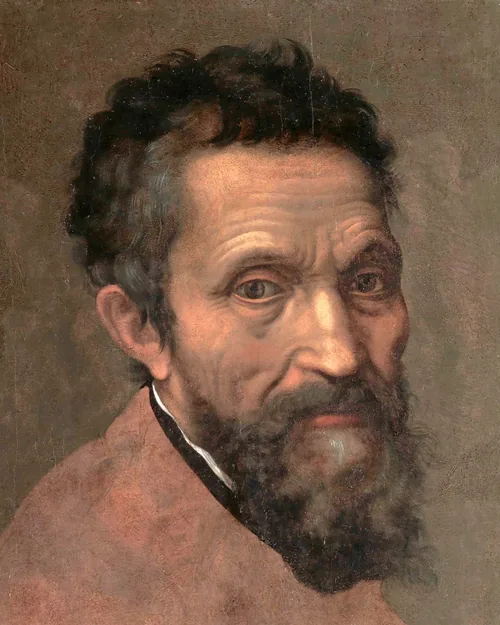
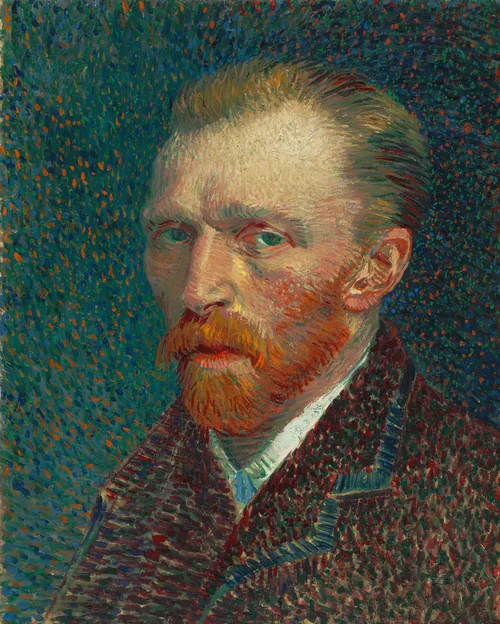
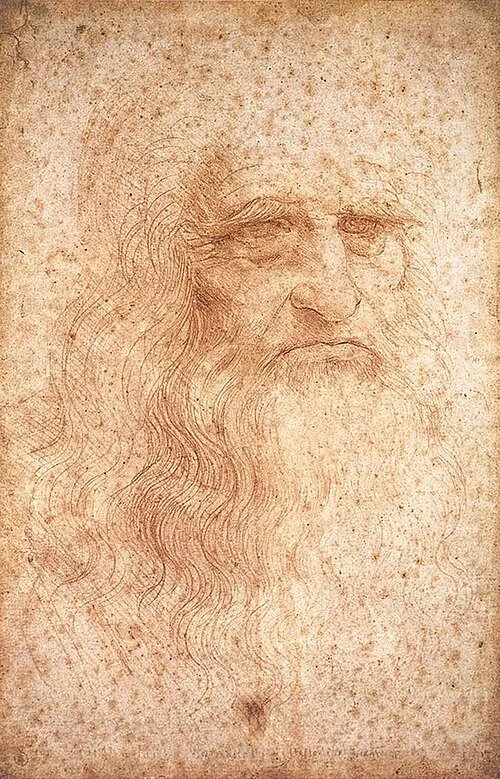
Portrait attributed to Daniele da Volterra (about 1545; The Metropolitan Museum of Art, object 436771; Commons file), public domain, cropped. · Self-portrait by Vincent van Gogh (1887; Art Institute of Chicago; Commons file), public domain, cropped. · Presumed self-portrait, red chalk, c. 1512, via Wikimedia Commons, public domain.
.jpg)
.jpg)

An estimate is an inference.
Yours can be measured.
Thirty questions, scored against general-population benchmarks. Your score, your percentile, your ability breakdown and a printable IIF certificate.
Find your IQ score now! →