



What was Michelangelo’s IQ?
The IQ scores online are 145, 177 and 180: Cox’s 1926 table prints 145 and 180, and the 177 has no source.
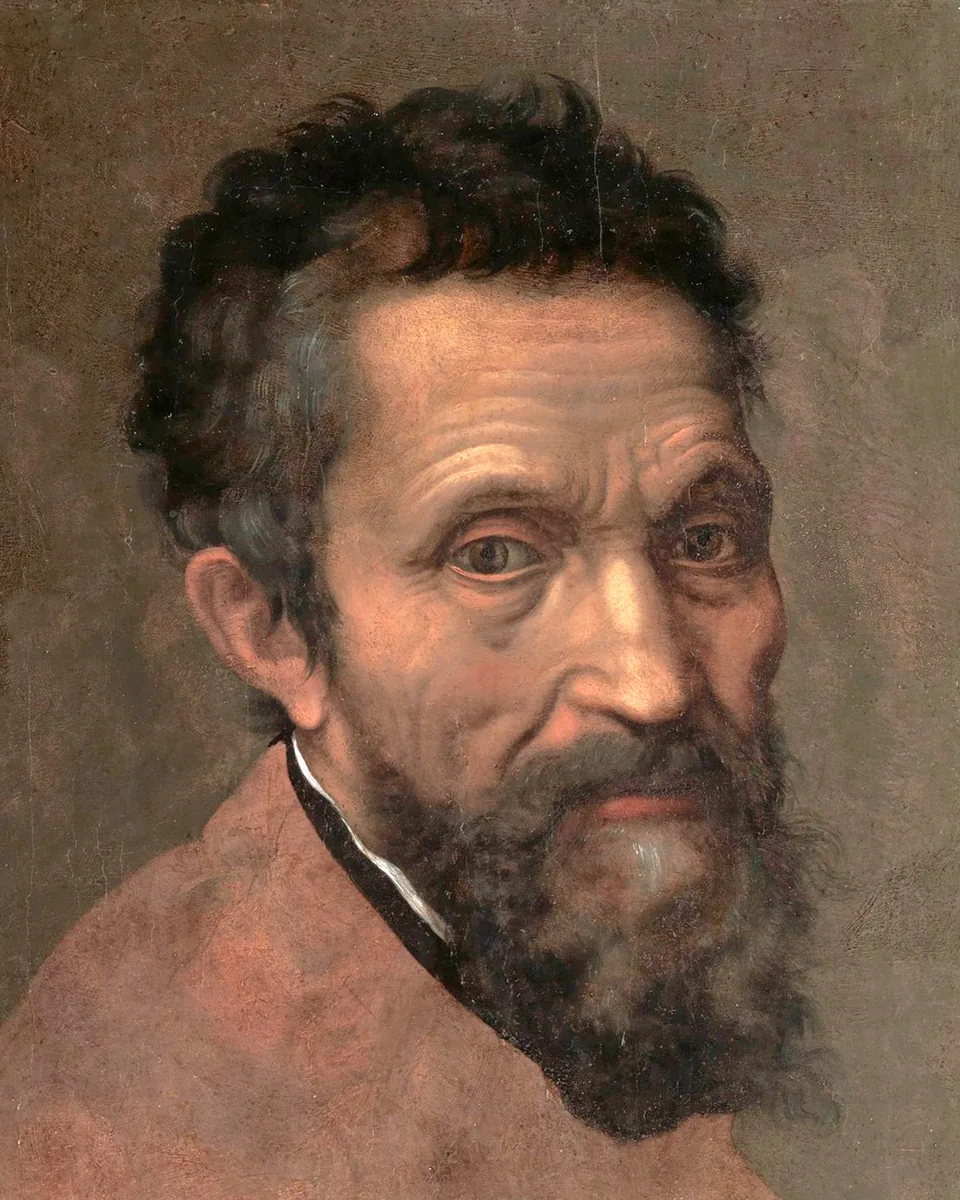
Michelangelo Buonarroti’s IQ was never measured: he died in 1564, 341 years before the first practical intelligence test. The only estimate with a published table behind it is Catharine Cox’s 1926 rating of his early record — 145 up to age 17 and 160 to age 26, corrected to 160 and 180 — made on records she scored at only .43 reliability.
Michelangelo’s estimated IQ
- Catharine Cox’s 1926 study prints Michelangelo’s estimated IQ as 145 for his years up to 17 and 160 for ages 17 to 26 (Table 12A; case study, pp. 543–545), built from three raters’ judgments; for the first figure Lewis Terman gave 130, Maud Merrill 160 and Cox 140.
- Her correction for thin records raises those two figures to 160 and 180 (Table 12A, columns 24–25); on the same table Leonardo da Vinci also ends at a corrected 180, from lower raw figures (135 and 150) and records she scored .20.
- The record behind the rating is dated, not invented: a three-year apprenticeship with Domenico Ghirlandaio from April 1, 1488, the Pietà (1498–1499) and, at 26, the commission for David on August 16, 1501.
- Cattell’s 1903 list of the 1,000 most eminent men ranks him 28th, and Cox’s table places him 15th of her 282 subjects on that order; eminence is not intelligence, but it is the filter that brought his case into her sample.
The weakness is the record, not the arithmetic: Cox scored the reliability of his data at .43 (her scale topped out at .82), called his case “another example of the difficulty of rating artistic production”, and built it from four books in editions dated 1881 to 1909, not from Vasari or Condivi directly. Her correction is, in her own words, “a crude approximation”, so read 145–180 as a historiometric rating of biography, not a test result.
- Born
- March 6, 1475, Caprese (now Caprese Michelangelo), Tuscany; Vasari writes 1474, Florentine style
- Died
- February 18, 1564, Rome
- Education
- Grammar under Francesco da Urbino, Florence; apprenticed to Domenico Ghirlandaio from April 1, 1488 (three-year contract)
- Known for
- Pietà (1498–1499), David (1501–1504), Sistine Chapel ceiling (1508–1512), Last Judgment (1536–1541), architect of St. Peter’s from 1546
- Cox 1926 rating
- 145 (to age 17) and 160 (ages 17–26); corrected 160 and 180; data reliability .43
- Cattell 1903 rank
- 28th of the 1,000 most eminent men; 15th of Cox’s 282 on that order
- Surviving writing
- 302 numbered poems (Girardi, 1960); 342 autograph letters at Casa Buonarroti
- Documented IQ test
- None possible — he died 341 years before Binet and Simon (1905)
What an IQ of 145–180 actually means
Set the claim aside for a moment. If someone genuinely scored in this range, here is what that would represent.
Average is 100 by construction, and about two-thirds of people fall between 85 and 115. Take the test to place your own score on this scale.
| Score range | Classification | Share of people | What it indicates |
|---|---|---|---|
| 85 – 114 | Average | ~68% | The range most people fall into. |
| 115 – 129 | Above average | ~13.6% | Roughly one person in seven. |
| 130 – 144 | Gifted | ~2% | The threshold most high-IQ societies use. |
| Above 144 | Highly gifted | ~0.1% | Figures above this range are extrapolated from the curve rather than measured. |
Percentages are approximate and describe a normal distribution. The same number means different things on tests with different standard deviations.
Thirty questions gives you a measured position on this exact scale — your score, your percentile and the ability breakdown behind it.
Find out in 30 minutes →Who Michelangelo was
Michelangelo di Lodovico Buonarroti Simoni was born on March 6, 1475, at Caprese in the Casentino, near Arezzo, where his father Lodovico was serving as podestà (mayor) of Chiusi and Caprese. Vasari and his father’s own record give the year as 1474, counting the Florentine way from the Incarnation; the modern-style year is 1475. The family returned to Florence, and both early biographers say his father then sent him to study grammar under a master named Francesco da Urbino. Condivi (1553) says the boy gave up letters for drawing, and Vasari says he drew in secret in his spare time; Cox, working from later books, writes that he “apparently” attended “the common school for less than one year”.
On April 1, 1488, when he was 13, his father bound him to the Florence workshop of Domenico Ghirlandaio and Domenico’s brother David for three years, with the workshop paying him 24 florins in all (six, eight and ten a year). Vasari says he copied the entry from Ghirlandaio’s own account book to answer Condivi, who had written that Ghirlandaio gave the boy no help, so the two early biographies contradict each other here. Both then place him in the sculpture garden that Lorenzo de’ Medici kept near San Marco, where, Vasari adds, Bertoldo, a pupil of Donatello, was keeper, and both tell how the boy copied an antique faun’s head in marble. Vasari says he lived in Lorenzo’s house until Lorenzo’s death in 1492.
The dated record then runs in a straight line. The Pietà now in St. Peter’s was made in 1498–1499 for Cardinal Jean Bilhères de Lagraulas. The Florence cathedral works assigned the David to him on August 16, 1501, for 400 ducats; on January 25, 1504 a committee of artists that included Leonardo da Vinci, Sandro Botticelli, Filippino Lippi and Perugino chose the statue’s site at the entrance of the Palazzo Vecchio, and it was unveiled on September 8, 1504. He signed the contract for the Sistine Chapel ceiling for Julius II on May 8, 1508, and it was complete by October 31, 1512, with nine scenes from Genesis and twelve Prophets and Sibyls. He painted the Last Judgment between 1536 and 1541, and in 1546 succeeded Antonio da Sangallo the Younger as architect of St. Peter’s Basilica, whose dome, built to his design with some changes, was finished after his death.
The writing that survives is also dated and countable. He composed poems from about 1503 to 1560, almost none of them published in his lifetime, and the first edition, published in 1623 by his great-nephew, rewrote the texts rather than following the manuscripts. Enzo Noè Girardi’s 1960 critical edition (Bari: Laterza) numbers 302 poems, and Casa Buonarroti in Florence holds 342 of his autograph letters in volumes IV and V of the Buonarroti Archive, part of a family archive of 169 volumes and more than 25,000 papers. Two admirers published his life while he was alive: Giorgio Vasari (Lives, 1550, enlarged in 1568, after his death) and Ascanio Condivi (Life, 1553, prepared with Michelangelo’s participation). Both are early biographies, not neutral records. He died in Rome on February 18, 1564.
 By Elora Mercer, Celebrity Research WriterFigures checked by Leon Falkner, Data & Research Analyst
Reviewed by Aarav Vardhan, Editor-in-Chief · Last reviewed August 2026
.jpg)
Michelangelo: the documented record
The estimate above rests on this record. Every entry here is a matter of public fact, which is more than can be said for the number itself.
- 1475Born on March 6 at Caprese in the Casentino; Vasari writes 1474, the Florentine way of dating the year.
- 1488April 1: his father binds him to Domenico Ghirlandaio’s workshop in Florence for three years, an entry Vasari copied from Ghirlandaio’s account book.
- c.1489–1492Works in Lorenzo de’ Medici’s sculpture garden and lives in his household until Lorenzo’s death in 1492.
- 1498–1499Carves the Pietà now in St. Peter’s, commissioned by Cardinal Jean Bilhères de Lagraulas.
- 1501–1504David: assigned by the cathedral works on August 16, 1501; unveiled on September 8, 1504.
- 1508–1512Sistine Chapel ceiling: contract signed May 8, 1508; complete by October 31, 1512.
- 1536–1541Paints the Last Judgment in the Sistine Chapel.
- 1546Succeeds Antonio da Sangallo the Younger as architect of St. Peter’s Basilica.
- 1564Dies in Rome on February 18.
- 1926Cox’s volume prints his estimated IQ as 145 and 160, corrected to 160 and 180.
Where the 145–180 figure came from
Following a claim back to its first appearance is the part almost nobody does — and it is what most people are actually asking.
Michelangelo’s IQ is a retrospective estimate, not a measurement, and the figures that can be traced lead to one book: Catharine Cox’s 1926 The Early Mental Traits of Three Hundred Geniuses. Cox rated 301 historical figures born between 1450 and 1850; Michelangelo, born in 1475, is one of the 282 in her main group. Her table prints 145 for his years up to age 17 (she calls it AI) and 160 for ages 17 to 26 (AII), then corrects them to 160 and 180 for the thinness of the record. No test could exist for him: Binet and Simon’s scale appeared in 1905, 341 years after he died (see the history of intelligence testing).
The Michelangelo IQ score on “smartest people” pages comes in three versions, and only two have a traceable origin. check-iq.org’s “Michelangelo’s IQ Is Reported to Be 145” (published August 5, 2024) credits 145 to “Genetic Studies of Genius”, the series whose second volume is Cox’s; the number is her uncorrected childhood figure, but the page never names her or the table. The 180 on older charts, such as the “IQ (SB)” table “from aceviper.net” on drdianehamilton.com and a 2011 Patch.com post, equals her corrected young-adult figure; the chart names no study, and the Patch post names Cox only as one source beside “other sources around the net”. The 177, which geniuses.club shows as an “Estimated IQ” from “the most cited estimates”, has no method on any page we opened (for how such lists are built, see where celebrity IQ numbers come from).
How far should 145 to 180 be trusted? Cox flagged the case herself. On p. 125 she calls Michelangelo’s ratings (Terman 130, Merrill 160, Cox 140 for the childhood figure) “another example of the difficulty of rating artistic production”, yet adds that further work on how artistic ability relates to intelligence “will probably give more than sufficient warrant” for the 145, since his early achievement was “clearly extraordinary”, and she names him among the cases whose true upper limit “may have been considerably above 180”. Her reliability score for his data is .43 on a scale where none passed .82, and artists have the lowest mean reliability of the ten professional groups in her Table 20A (.23 for the childhood rating). The case study (pp. 543–545) cites four books, in editions dated 1881 to 1909, rather than Vasari or Condivi, and her correction, a regression-to-the-mean adjustment toward each group’s average, is by her own account a crude approximation. A rating built that way can be read, but it cannot be checked.
Was Michelangelo a genius? His work and its dates are documented, but that measures eminence, not IQ: J. McKeen Cattell’s 1903 list of the 1,000 most eminent men prints him 28th, and Cox, who built her sample from the top half of that list, places him 15th of her 282. On her table he ends level with Leonardo da Vinci at 180 for ages 17 to 26, though Leonardo’s raw figures (135 and 150) rest on records she scored at just .20, and ten points below Isaac Newton’s 190, though Newton’s childhood figures (130, corrected to 150) sit under Michelangelo’s. Galileo shares his 145 group, which is why this range lands close to the Galileo profile’s 150–185, built the same way. Anyone born after her 1850 cut-off, such as Vincent van Gogh or Pablo Picasso, has no Cox figure at all. For what a score of 160 or 180 would mean, see what counts as a genius IQ level.
How we read a number →Read in two archive.org scans, with the Table 12A row and p. 125 checked on the page images. Prints AI 145 ± 8 and AII 160 ± 8, data reliability .43 for both, corrected estimates 160 and 180, rater values 130 (Terman), 160 (Merrill) and 140 (Cox) for the first figure, and the remark on “the difficulty of rating artistic production”. Method statements: p. 52 (the correction as “a crude approximation”), p. 66 (two ratings per subject), pp. 81–83 (reliability scale, correction formula), Table 20A (artists’ mean reliability .23). Also prints Leonardo da Vinci at 135 and 150, corrected 155 and 180.
Confirms the 301 subjects (Group A 282, Group B 19), the 1450–1850 birth window, the top-half-of-Cattell selection, the two estimates (to age 16 and 17 to 26) with reliability-based corrected versions, and that Cox dropped Shakespeare for want of a documented childhood.
Prints the thousand most eminent men in order of eminence, in groups of one hundred. Michelangelo is 28th by position in the first group’s printed order, between Scott and Socrates. An eminence ranking, not an IQ.
The two early biographies, both written in his lifetime. They supply the March 6 birth (Vasari: 1474), the grammar school of Francesco da Urbino, the April 1, 1488 Ghirlandaio entry (Vasari, copied from Ghirlandaio’s book), the Medici garden and the 1546 appointment, and they contradict each other on how much Ghirlandaio taught him.
David dated 1501–1504, assigned August 16, 1501 for 400 ducats, site chosen January 25, 1504 by a committee that included Leonardo da Vinci, unveiled September 8, 1504; ceiling contract May 8, 1508 and complete by October 31, 1512; Last Judgment 1536–1541; Pietà 1498–1499.
The Buonarroti Archive has 169 volumes and more than 25,000 papers; 342 autograph letters form volumes IV and V. Neither page gives a count of his poems.
The contents list numbers 302 poems before an appendix. Acme: poems from 1503 to 1560, almost none printed in his lifetime, first edition 1623 by his great-nephew. Incontri: the 2016 Bompiani edition reorders the corpus.
Identity check for the Italian artist (1475–1564): born March 6, 1475, Caprese; died February 18, 1564, Rome; the footnote on the Florentine-style 1474; grammar under Francesco da Urbino; architect of St. Peter’s from 1546.
145 (credited to “Genetic Studies of Genius”), 177 (“the most cited estimates”; “Finances Online”, low confidence; a list said to average Buzan 1994 and Cox 1926) and 180 (an “IQ (SB)” chart “from aceviper.net”; a 2011 post). None shows a test, and none gives a method for the 177.
Michelangelo died in 1564; the Binet–Simon scale dates to 1905. Cox’s volume, Cattell’s list and the pages above contain no test, only retrospective estimates.
The sources behind our estimate
The figures that circulate for Michelangelo, what we were able to confirm, and where the two diverge.
Three numbers circulate for Michelangelo’s IQ: 177 on geniuses.club (an “Estimated IQ”) and in a December 2023 list on possible11.com; 145 on check-iq.org, which credits “Genetic Studies of Genius”; and 180 on an older “IQ (SB)” chart reproduced on drdianehamilton.com and in a 2011 Patch.com post.
Cox’s 1926 table prints 145 and 160 for Michelangelo, corrected to 160 and 180. check-iq.org’s 145 is her uncorrected childhood figure, and the page names the right series, “Genetic Studies of Genius”, without naming Cox or the table. The 180 on the older chart equals her corrected young-adult figure, as do the chart’s numbers for Galileo (185) and Benjamin Franklin (160), though the chart names no study. The 177 is stated without a source by geniuses.club (“the most cited estimates”), credited by check-iq.org to “Finances Online” at “Low” confidence, and placed ninth on a possible11.com list that says it averages Tony Buzan’s 1994 Book of Genius and Cox’s 1926 study without showing the arithmetic.
A 35-point scatter that is really two sources: Cox’s own uncorrected and corrected figures at the ends, and a 177 three points under her top number with no method behind it. Unusually, none of the three falls outside the span her table prints; what the pages drop is the .43 reliability and the fact that 180 is an upward correction, not a rating of his record.
Want a number that does hold up? Every figure on this page is somebody’s claim. Take the 30-question test and get a percentile you can check rather than a figure you have to trust.
Michelangelo — frequently asked
What is Michelangelo’s IQ?
Michelangelo’s IQ is unknown: he never took an IQ test and died in 1564, 341 years before the first practical one. The only estimate with a published table behind it is Catharine Cox’s 1926 rating from biographies, 145 for his years up to 17 and 160 for ages 17 to 26, corrected to 160 and 180. Our estimated range is 145–180.
Is Michelangelo’s IQ 177 or 180?
Neither is a measured score. 180 is Catharine Cox’s corrected 1926 estimate for his ages 17 to 26, and her uncorrected childhood figure is 145. The 177 has no method on any page we opened: geniuses.club attributes it to “the most cited estimates”, check-iq.org credits “Finances Online” at low confidence, and a possible11.com list says it averages Buzan’s 1994 book and Cox’s 1926 study.
How did Cox estimate Michelangelo’s IQ?
Three raters, Lewis Terman, Maud Merrill and Catharine Cox, read a case study of his life and each estimated two IQs: one from the data for his first 17 years, and one adding or subtracting for ages 17 to 26. The averages were 145 and 160, on data she rated .43 for reliability; her correction for thin records raised them to 160 and 180.
Was Michelangelo a genius?
In the sense of eminence, yes, and it is documented: the Pietà (1498–1499), David (1501–1504), the Sistine ceiling (1508–1512) and the Last Judgment (1536–1541), and Cattell’s 1903 list ranks him 28th of the 1,000 most eminent men. Whether that means a genius-level IQ cannot be tested; Cox’s 145–180 is an inference from biography, not a score.
How does Michelangelo’s estimated IQ compare with Leonardo da Vinci’s?
On Catharine Cox’s 1926 table they end level: both are corrected to 180 for ages 17 to 26. Michelangelo’s uncorrected figures are higher, 145 and 160 against Leonardo’s 135 and 150, on records she scored .43 against .20. Online lists give Leonardo anywhere from 180 to 220; no test exists for either.
Did Michelangelo go to school?
Yes, as a boy. Both early biographers say his father sent him to study grammar in Florence under Francesco da Urbino; Condivi adds that he gave up letters for drawing. On April 1, 1488, at 13, he was bound to Domenico Ghirlandaio’s workshop for three years, paid 24 florins in all, and he then worked in Lorenzo de’ Medici’s sculpture garden.
How many of Michelangelo’s poems and letters survive?
Girardi’s 1960 critical edition numbers 302 poems, written from about 1503 to 1560 and almost all unpublished in his lifetime. Casa Buonarroti in Florence holds 342 of his autograph letters in volumes IV and V of its Buonarroti Archive. Vasari (1550, 1568) and Condivi (1553) wrote the earliest biographies.
How does my IQ compare with Michelangelo?
You can find out in about fifteen minutes. The IQ Metrics assessment is 30 questions, scored on the same 100-mean scale used throughout this page, so your result and the estimate above are at least expressed in the same units — one measured, one inferred. Once you have a number, the leaderboard shows where it would sit, and how we score and norm it explains the benchmarking.
Where does this estimate come from?
From the documented record rather than a test — the method is named above and set out in full under how we read a number. Compare it against the other historical profiles, starting with Isaac Newton.
- Take the 30-question IQ test — get a measured score and percentile of your own
- Average IQ by country — how the scale behaves across populations
- How IQ Metrics scores its assessment — the method behind our own number
- More on how IQ testing works — reliability, error and what a score can and cannot say
- More historical profiles — same field, same method
More historical
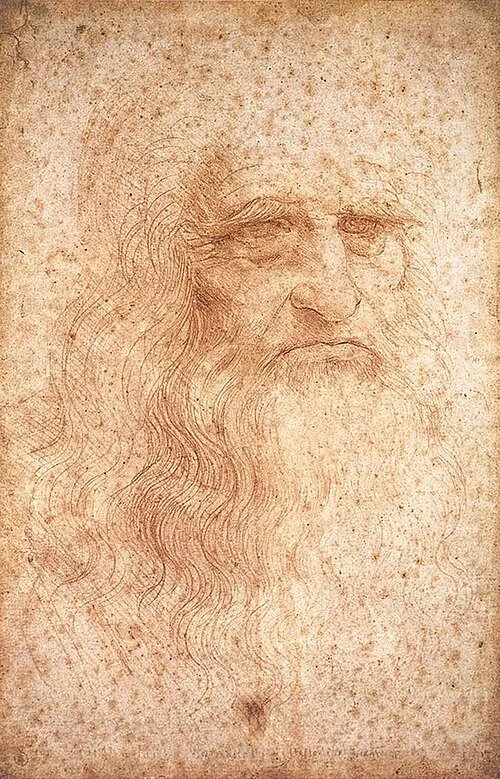
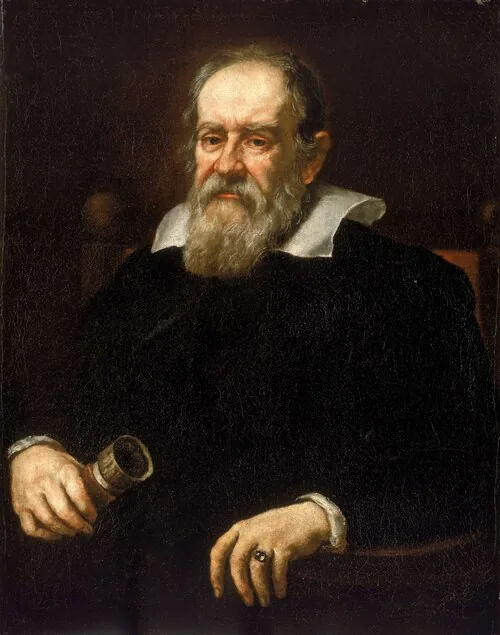
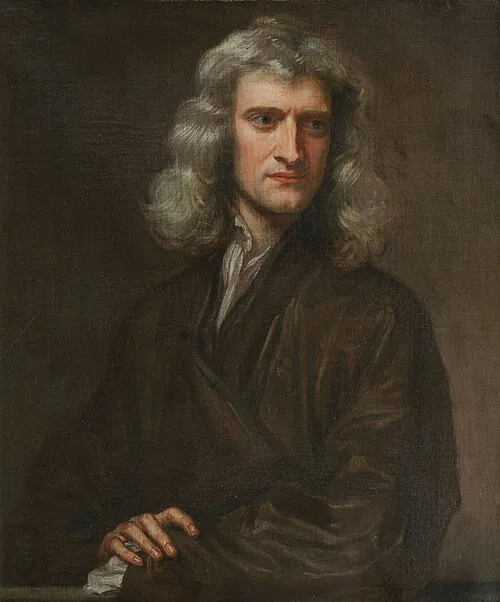
Presumed self-portrait, red chalk, c. 1512, via Wikimedia Commons, public domain. · Portrait by Justus Sustermans (1636), via Wikimedia Commons, public domain. · Portrait by Godfrey Kneller (1689), public domain.


An estimate is an inference.
Yours can be measured.
Thirty questions, scored against general-population benchmarks. Your score, your percentile, your ability breakdown and a printable IIF certificate.
Find your IQ score now! →