Can adults grow new brain cells? Every human neurogenesis study scored
We read every primary human study we could find that looked for new neurons in the adult brain, 1998-2026, and scored what each one concluded in its authors’ own words.

By Leon Falkner, Data & Research Analyst · Reviewed by Aarav Vardhan, Editor-in-Chief · Published 6 November 2026 · 14 min read
About this study
- Report type
- Data study: our ledger of primary human studies, scored
- Data
- 49 studies (46 with new tissue, 3 re-analyses), 1998-2026; 27 about the hippocampus
- Sources
- Europe PMC searches, 101 abstracts read, 23 full texts from PubMed Central, OpenAlex metadata
- Years
- Studies 1998 to 2026; searches and citation counts as of 6 November 2026
- Licence
- CC BY 4.0 (our dataset and charts)
- Version
- 2026.11
- Sources
- 59
Most studies say yes, in small numbers: 32 of 49 human studies published 1998-2026 report new neurons in adult brains, 9 of them rare or declining with age. Ten found none and 7 are mixed. In the hippocampus, 21 of 27 studies report some. IQ Metrics Research ledger, as of 6 November 2026.
01 Key findings
- Most studies say yes, in small numbers. 32 of 49 human studies report new neurons in adult brains (9 of them rare or declining); 10 found none; 7 are mixed.IQ Metrics ledger, 1998-2026
- The hippocampus is where the debate is. 27 of 49 studies are about it; 21 report new neurons, 5 found none.IQ Metrics ledger
- Carbon-14 draws a map. Bomb-pulse dating found new neurons in the hippocampus, striatum and amygdala, and none in the neocortex or olfactory bulb.Spalding, Ernst, Roeder, Bhardwaj, Bergmann, Huttner
- The newest methods lean yes. 8 of 10 single-cell RNA studies (since 2022) report new or immature neurons in adults; one, Franjic 2022, found none.IQ Metrics ledger
- The tissue question is mostly unreported. Only 6 of 49 studies state how long the brains waited before fixation.IQ Metrics ledger
- Small samples. The 15 studies that state a sample examined 440 brains in all; 31 do not state one in the text we could read.IQ Metrics calculation
02 Statistics to quote
human studies (1998-2026) report new neurons in adult brains; 9 of them say rare or declining.
IQ Metrics ledgerstudies found no new neurons in adults; 7 are mixed or unclear.
IQ Metrics ledgerhippocampus studies report new neurons in adults (14 found, 7 rare or declining, 5 not found).
IQ Metrics ledgernew neurons added in each adult hippocampus, from carbon-14 dating (Spalding et al. 2013).
Spalding et al. 2013oldest donor age in a study reporting persistent hippocampal neurogenesis (Tobin et al. 2019, donors 79-99).
Tobin et al. 2019examined in the 15 studies that state a number; 31 new-tissue studies do not.
IQ Metrics calculationstudies state how long the tissue waited before fixation, the variable both sides of the debate argue about.
IQ Metrics ledgercarbon-14 dating studies found no new neurons: all in the neocortex or olfactory bulb. The other 3 found them in hippocampus, striatum and amygdala.
IQ Metrics ledgersingle-cell RNA studies (since 2022) report new or immature neurons in adults; 1 found none.
IQ Metrics ledgercitations of the most cited study, Eriksson et al. 1998, the first direct evidence (OpenAlex, 6 November 2026).
OpenAlexneocortical neurons a day, if 10% are lost evenly from age 20 to 90 (our arithmetic on Pakkenberg and Gundersen 1997).
IQ Metrics calculationof amygdala neurons renewed in adults, by carbon-14 dating of 12 brains (Roeder et al. 2022).
Roeder et al. 202203 Can adults grow new brain cells?
Most human studies say yes, in small numbers: 32 of the 49 primary studies we found (1998-2026) report new neurons in adult brains, 9 of them describing the numbers as rare or falling with age, while 10 found none and 7 are mixed. Adult neurogenesis, the birth of new neurons after childhood, is well established in rodents [53]; in people it has been argued about for almost three decades because nobody can watch it happen in a living human brain. Every study works on tissue after death or surgery, with a marker or a dating method that is indirect in its own way.
We built our own ledger to count the answers. We searched Europe PMC eight ways for 1998-2026, added 15 named leads, read 101 abstracts by hand and kept 49 primary studies of adult human brain tissue that state a finding about new neurons in adults [1]. For each one we copied the authors’ own conclusion sentence, coded it with a rule we wrote before coding (found, rare or declining, not found, mixed), and checked the sentence by script against the saved abstract or full text. We never re-judged a study: a paper that said “very limited, if any” is coded as its authors wrote it.
- Adult neurogenesis
- The birth of new neurons in the brain after childhood, from stem or progenitor cells. In rodents it happens throughout life in the hippocampus and in the walls of the lateral ventricles [53].
- Hippocampus and dentate gyrus
- The hippocampus, in each temporal lobe, is essential for forming and retrieving memories [56]; its dentate gyrus is where adult-born neurons appear in rodents and where most human studies look.
- Doublecortin (DCX)
- A protein made by young, migrating neurons. Many human studies count DCX-stained cells as immature neurons; others show DCX in neurons that are not new [34] [37].
- BrdU (bromodeoxyuridine)
- A molecule taken into the DNA of dividing cells. Cancer patients who had received BrdU during their treatment provided the first direct evidence of new neurons in adult humans [4].
- Carbon-14 (bomb-pulse) dating
- Nuclear weapons tests raised carbon-14 in the air until 1963, and the level in a cell’s DNA follows the air at the time the DNA was made. Measuring it dates when a group of neurons was born [7].
- Single-nucleus RNA sequencing
- Reads which genes are active in thousands of single cell nuclei from frozen tissue, so cell types, including young neurons, can be recognised by their gene profiles [40].
- Post-mortem interval (fixation delay)
- The time between death and preserving the tissue. Longer delays can weaken staining for markers such as DCX, one reason why studies disagree [32] [55].
- Immature neuron
- A neuron that still carries young-neuron markers. It may be newly born, or, as in the amygdala and cortex, an old neuron that stays immature for decades [31].
04 How many studies have looked for new neurons in adult humans?
We count 49 primary human studies from 1998 to 2026 that looked for new neurons in the adult brain and state what they found: 46 with new tissue and 3 re-analyses of other groups’ data. They come from 509 unique records in our searches and leads, 329 of which passed a scripted title rule; we read 101 abstracts in full and left 52 out, mostly comments, letters and disease-only comparisons. The count is a lower bound: a study our searches did not find is not in it, and we list every record we read and dropped.
From 509 records to 49 primary studies: how we built the ledger
Stage 1: unique records from eight Europe PMC title searches (1998 to 2026) and 15 named leads. Stage 2: titles that name a neurogenesis object and are not animal- or culture-only. Stage 3: abstracts read by hand. Stage 4: primary studies of adult human brain tissue that state a finding about new neurons in adults. As of 6 November 2026.
Source: Europe PMC [1]; OpenAlex [2]; screening by IQ Metrics (data/screen_decisions.tsv)
Data table
| stage | count | pct_of_first | pct_of_previous |
|---|---|---|---|
| Unique records from 8 Europe PMC searches + 15 named leads | 509 | 100 | 100 |
| Passed the scripted title rule | 329 | 64.6 | 64.6 |
| Abstract read by hand | 101 | 19.8 | 30.7 |
| Primary adult human studies (the ledger) | 49 | 9.6 | 48.5 |
| New tissue (not re-analyses) | 46 | 9 | 93.9 |
| State how many brains | 15 | 3 | 32.6 |
Embed this chart
Paste this HTML into your page: it carries the numbers and the credit link to this figure.
The studies cluster in time. The first decade gave a handful of papers, led by the 1998 BrdU study of Eriksson and colleagues [4]. Interest jumped in 2018, when two high-profile papers reached opposite conclusions in the same year: Sorrells and colleagues found no young neurons in adult hippocampi [28], and Boldrini and colleagues found “preserved neurogenesis” in healthy older people [26]. 27 of the 49 studies in our ledger appeared in 2018 or later.
49 human studies, 1998 to 2026, by brain region and what each found
Every study in the ledger by publication year and the brain region its conclusion is about; colour = the verdict coded from the authors' own sentence. 27 of the 49 are about the hippocampus. 27 studies appeared in 2018 or later. As of 6 November 2026.
Source: Our ledger of 49 studies [4] [5] [6] [7] [8] [9] [10] [11] [12] [13] [14] [15] [16] [17] [18] [19] [20] [21] [22] [23] [24] [25] [26] [27] [28] [29] [30] [31] [32] [33] [34] [35] [36] [37] [38] [39] [40] [41] [42] [43] [44] [45] [46] [47] [48] [49] [50] [51] [52]; coding by IQ Metrics (data/CODING.md)
Data table
| region | type | from | to | label | detail |
|---|---|---|---|---|---|
| Hippocampus | event | 1998 | Eriksson 1998 | Eriksson 1998 (BrdU / IdU, new): Found in adults | |
| Hippocampus | event | 2010 | Knoth 2010 | Knoth 2010 (Immunostaining, new): Rare or declining | |
| Hippocampus | event | 2013 | Spalding 2013 | Spalding 2013 (Carbon-14, new): Found in adults | |
| Hippocampus | event | 2015 | Bayer 2015 | Bayer 2015 (Immunostaining, new): Found in adults | |
| Hippocampus | event | 2016 | Dennis 2016 | Dennis 2016 (Immunostaining, new): Not found | |
| Hippocampus | event | 2017 | Mathews 2017 | Mathews 2017 (Bulk RNA, new): Rare or declining | |
| Hippocampus | event | 2018 | Boldrini 2018 | Boldrini 2018 (Immunostaining, new): Found in adults | |
| Hippocampus | event | 2018 | Cipriani 2018 | Cipriani 2018 (Immunostaining, new): Not found | |
| Hippocampus | event | 2018 | Sorrells 2018 | Sorrells 2018 (Immunostaining, new): Not found | |
| Hippocampus | event | 2019 | Moreno-Jiménez 2019 | Moreno-Jiménez 2019 (Immunostaining, new): Found in adults | |
| Hippocampus | event | 2019 | Seki 2019 | Seki 2019 (Immunostaining, new): Rare or declining | |
| Hippocampus | event | 2019 | Tobin 2019 | Tobin 2019 (Immunostaining, new): Found in adults | |
| Hippocampus | event | 2020 | Kumar 2020 | Kumar 2020 (Bulk RNA, re-analysis): Rare or declining | |
| Hippocampus | event | 2021 | Sorrells 2021 | Sorrells 2021 (Immunostaining, new): Not found | |
| Hippocampus | event | 2021 | Terreros-Roncal 2021 | Terreros-Roncal 2021 (Immunostaining, new): Found in adults | |
| Hippocampus | event | 2022 | Franjic 2022 | Franjic 2022 (Single-cell RNA, new): Not found | |
| Hippocampus | event | 2022 | Wang 2022 | Wang 2022 (Single-cell RNA, new): Rare or declining | |
| Hippocampus | event | 2022 | Zhou 2022 | Zhou 2022 (Single-cell RNA, new): Found in adults | |
| Hippocampus | event | 2023 | Tosoni 2023 | Tosoni 2023 (Single-cell RNA, re-analysis): Mixed or unclear | |
| Hippocampus | event | 2024 | Cao 2024 | Cao 2024 (Immunostaining, new): Found in adults | |
| Hippocampus | event | 2024 | Simard 2024 | Simard 2024 (Single-cell RNA, new): Rare or declining | |
| Hippocampus | event | 2024 | Yao 2024 | Yao 2024 (Single-cell RNA, new): Rare or declining | |
| Hippocampus | event | 2025 | Dumitru 2025 | Dumitru 2025 (Single-cell RNA, new): Found in adults | |
| Hippocampus | event | 2025 | Márquez-Valadez 2025 | Márquez-Valadez 2025 (Immunostaining, new): Found in adults | |
| Hippocampus | event | 2025 | Zhou 2025 | Zhou 2025 (Single-cell RNA, re-analysis): Found in adults | |
| Hippocampus | event | 2026 | Disouky 2026 | Disouky 2026 (Single-cell RNA, new): Found in adults | |
| Hippocampus | event | 2026 | Tosoni 2026 | Tosoni 2026 (Single-cell RNA, new): Found in adults | |
| SVZ and olfactory path | event | 2000 | Weickert 2000 | Weickert 2000 (Immunostaining, new): Found in adults | |
| SVZ and olfactory path | event | 2004 | Sanai 2004 | Sanai 2004 (Immunostaining, new): Not found | |
| SVZ and olfactory path | event | 2006 | Quiñones-Hinojosa 2006 | Quiñones-Hinojosa 2006 (Immunostaining, new): Rare or declining | |
| SVZ and olfactory path | event | 2007 | Baer 2007 | Baer 2007 (Immunostaining, new): Found in adults | |
| SVZ and olfactory path | event | 2007 | Curtis 2007 | Curtis 2007 (BrdU / IdU, new): Found in adults | |
| SVZ and olfactory path | event | 2011 | Sanai 2011 | Sanai 2011 (Immunostaining, new): Rare or declining | |
| SVZ and olfactory path | event | 2011 | Wang 2011 | Wang 2011 (Immunostaining, new): Found in adults | |
| SVZ and olfactory path | event | 2025 | Snapyan 2025 | Snapyan 2025 (Immunostaining, new): Found in adults | |
| Olfactory bulb | event | 2012 | Bergmann 2012 | Bergmann 2012 (Carbon-14, new): Not found | |
| Olfactory bulb | event | 2014 | Lötsch 2014 | Lötsch 2014 (Bulk RNA, new): Found in adults | |
| Striatum | event | 2014 | Ernst 2014 | Ernst 2014 (Carbon-14, new): Found in adults | |
| Striatum | event | 2025 | Herold 2025 | Herold 2025 (Immunostaining, new): Mixed or unclear | |
| Amygdala | event | 2013 | Martí-Mengual 2013 | Martí-Mengual 2013 (Immunostaining, new): Mixed or unclear | |
| Amygdala | event | 2019 | Sorrells 2019 | Sorrells 2019 (Immunostaining, new): Mixed or unclear | |
| Amygdala | event | 2022 | Roeder 2022 | Roeder 2022 (Carbon-14, new): Found in adults | |
| Hypothalamus | event | 2014 | Batailler 2014 | Batailler 2014 (Immunostaining, new): Found in adults | |
| Neocortex and cortex | event | 2005 | Spalding 2005 | Spalding 2005 (Carbon-14, new): Not found | |
| Neocortex and cortex | event | 2006 | Bhardwaj 2006 | Bhardwaj 2006 (Carbon-14, new): Not found | |
| Neocortex and cortex | event | 2008 | Liu 2008 | Liu 2008 (Immunostaining, new): Mixed or unclear | |
| Neocortex and cortex | event | 2014 | Huttner 2014 | Huttner 2014 (Carbon-14, new): Not found | |
| Neocortex and cortex | event | 2022 | Coviello 2022 | Coviello 2022 (Immunostaining, new): Mixed or unclear | |
| Neocortex and cortex | event | 2023 | Li 2023 | Li 2023 (Immunostaining, new): Mixed or unclear |
Embed this chart
Paste this HTML into your page: it carries the numbers and the credit link to this figure.
The nearest existing synthesis is a 2024 systematic review of adult primates by Elliott and colleagues, which searched three databases to June 2023 and synthesised 112 papers on humans and other primates, including disease and imaging studies [54]. Our ledger is narrower and newer: human brain tissue only, one coded verdict per study in the authors’ words, the 10 studies published from 2024 on, and an open file that anyone can re-sort. The 2018 consensus review by Kempermann and co-authors sets out the open questions we track [53].
The balance has shifted with time. Before 2018, 14 of 22 studies reported new neurons in adults; from 2018 to 2021, 6 of 10; and since 2022, 12 of 17, with a single “not found” (Franjic 2022) [37]. Newer studies are not automatically better, but they use more brains, faster tissue handling or single-cell methods, and several were designed to answer the 2018 critique directly.
Since 2022, 12 of 17 new studies report new neurons in adults
Studies in the ledger by period of publication and verdict. 2018 is the year of the two opposing papers (Sorrells and Boldrini); 2022 the first single-nucleus RNA studies. Only one study since 2022 found no new neurons (Franjic 2022). As of 6 November 2026.
Source: Our ledger [4] [5] [6] [7] [8] [9] [10] [11] [12] [13] [14] [15] [16] [17] [18] [19] [20] [21] [22] [23] [24] [25] [26] [27] [28] [29] [30] [31] [32] [33] [34] [35] [36] [37] [38] [39] [40] [41] [42] [43] [44] [45] [46] [47] [48] [49] [50] [51] [52]; counts by IQ Metrics
Data table
| period | Found in adults | Rare or declining | Mixed or unclear | Not found | total |
|---|---|---|---|---|---|
| 1998-2009 | 4 | 1 | 1 | 3 | 9 |
| 2010-2017 | 6 | 3 | 1 | 3 | 13 |
| 2018-2021 | 4 | 2 | 1 | 3 | 10 |
| 2022-2026 | 9 | 3 | 4 | 1 | 17 |
Embed this chart
Paste this HTML into your page: it carries the numbers and the credit link to this figure.
05 Does the adult hippocampus grow new neurons?
Yes in most studies: 21 of 27 hippocampus studies report new neurons in adults, 7 of them as rare or declining, and 5 found none. The strongest single number is from carbon-14 dating: Spalding and colleagues estimate that “700 new neurons are added in each hippocampus per day”, an annual turnover of 1.75% within the third of neurons that renew, with “a modest decline during aging” [18]. The same paper concludes that the rates are comparable in middle-aged humans and mice.
The “found” side rests mostly on immunostaining. Boldrini and colleagues counted thousands of immature neurons in whole hippocampi from 28 people aged 14 to 79 who died suddenly, with post-mortem intervals of 4 to 26 hours [26]. Moreno-Jiménez and colleagues, using brain samples obtained under tightly controlled conditions, reported thousands of immature neurons in healthy people “up to the ninth decade of life” and fewer as Alzheimer’s disease advanced [29]. Tobin and colleagues found neuroblasts and immature neurons in 18 people aged 79 to 99 [32], and Dumitru and colleagues in Jonas Frisén’s group found proliferating neural progenitors in adults by single-nucleus RNA sequencing and Ki67 staining [46].
The “not found” side is smaller but cited heavily. Sorrells and colleagues examined 59 specimens and report that in adults aged 18 to 77 “young neurons were not detected in the dentate gyrus” [28]; their 2021 follow-up adds that DCX is also found in adult amygdala and cortex neurons that are not new [34]. Dennis and colleagues found that after age 3 the only dividing cells in the human neurogenic niches were microglia [24], Cipriani and colleagues judged the adult neurogenic potential “negligible” [27], and Franjic and colleagues found neurogenesis signatures in adult mice, pigs and macaques “but not humans” [37].
How old were the oldest brains? 10 studies state it
Age of the oldest donor each study examined, in years, with its verdict. Tobin et al. report neurogenesis "persistent through the tenth decade of life" in donors aged 79 to 99; Knoth et al. detected DCX up to 100 years but in exponentially falling numbers; Sorrells et al. found no young neurons in adults up to 77. As of 6 November 2026.
Source: [13] [41] [32] [40] [25] [38] [26] [28] [24] [30]
Data table
| label | value |
|---|---|
| Knoth 2010 (rare) | 100 |
| Li 2023 (mixed) | 100 |
| Tobin 2019 (found) | 99 |
| Zhou 2022 (found) | 92 |
| Mathews 2017 (rare) | 88 |
| Roeder 2022 (found) | 86 |
| Boldrini 2018 (found) | 79 |
| Sorrells 2018 (not found) | 77 |
| Dennis 2016 (not found) | 59 |
| Seki 2019 (rare) | 49 |
Embed this chart
Paste this HTML into your page: it carries the numbers and the credit link to this figure.
Between the two sides sit the “rare or declining” studies, 7 in the hippocampus. Knoth and colleagues traced DCX across 54 people from birth to 100 and found the number of DCX cells falling exponentially with age [13]; Mathews and colleagues found decreasing proliferation and immature-neuron gene expression across 26 adults aged 18 to 88 [25]; Seki and colleagues, with surgical tissue fixed at once, concluded that hippocampal neuron production in adults is low [30]; and Simard and colleagues found “very low levels” with spatial transcriptomics [44]. Our pages on memory and IQ and on how much the brain can store explain what the hippocampus does for memory.
06 Why do neurogenesis studies disagree?
Neurogenesis studies disagree mainly over markers and tissue: 16 of 27 immunostaining studies report new neurons, while carbon-14 dating, which reads a cell’s birth date from its DNA, splits cleanly by brain region. Immunostaining for DCX, PSA-NCAM or Ki67 depends on how fast tissue is fixed, which antibody is used and whether the marker is specific to new cells; the protocol paper of the Llorens-Martín group shows how slight changes in method flip results [55]. A marker study found DCX transcripts in both hippocampus and prefrontal cortex and concluded that such markers are not definitive indicators of adult neurogenesis [57].
Does the method decide the answer? Verdicts by the method behind each study
Number of studies per method (the family of the decisive evidence) and verdict. Carbon-14 dating splits by region: new neurons in the hippocampus, striatum and amygdala, none in the neocortex or olfactory bulb. Immunostaining (DCX, PSA-NCAM, Ki67) gives every kind of answer. As of 6 November 2026.
Source: Our ledger [4] [5] [6] [7] [8] [9] [10] [11] [12] [13] [14] [15] [16] [17] [18] [19] [20] [21] [22] [23] [24] [25] [26] [27] [28] [29] [30] [31] [32] [33] [34] [35] [36] [37] [38] [39] [40] [41] [42] [43] [44] [45] [46] [47] [48] [49] [50] [51] [52]; coding by IQ Metrics
Data table
| method | Found in adults | Rare or declining | Mixed or unclear | Not found |
|---|---|---|---|---|
| BrdU / IdU | 2 | 0 | 0 | 0 |
| Carbon-14 | 3 | 0 | 0 | 4 |
| Immunostaining | 12 | 4 | 6 | 5 |
| Single-cell RNA | 5 | 3 | 1 | 1 |
| Bulk RNA | 1 | 2 | 0 | 0 |
Embed this chart
Paste this HTML into your page: it carries the numbers and the credit link to this figure.
Tissue handling is the variable both sides argue about, yet only 6 of the 49 studies state the longest delay between death and fixation for their samples. In those six, the one study that found no young neurons allowed up to 48 hours for autopsy samples [28], while studies that found them allowed 12 to 36 hours [51] [26] [49], and two “rare” studies used fresh or surgical tissue [30] [45]. Six points cannot settle the question, and several papers that make the delay argument state it only in tables or paywalled methods we could not read.
Only 6 of 49 studies state how long their tissue waited: 0 to 48 hours
Longest post-mortem interval or time to fixation a paper states for its samples, in hours (surgical tissue fixed at once = 0). The study that found no young neurons allowed up to 48 hours; three that found them allowed 12 to 36. Six points cannot settle whether delay explains the split. As of 6 November 2026.
Source: [30] [45] [51] [26] [49] [28]; compiled by IQ Metrics
Data table
| label | value |
|---|---|
| Seki 2019 (rare) | 0 |
| Yao 2024 (rare) | 5 |
| Disouky 2026 (found) | 12 |
| Boldrini 2018 (found) | 26 |
| Snapyan 2025 (found) | 36 |
| Sorrells 2018 (not found) | 48 |
Embed this chart
Paste this HTML into your page: it carries the numbers and the credit link to this figure.
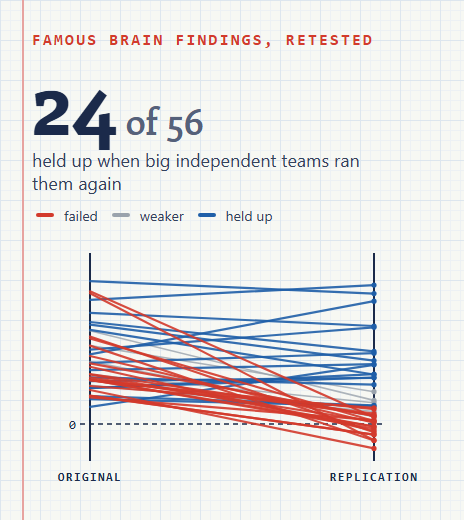
Single-cell methods did not end the argument. Single-nucleus RNA sequencing arrived in this field in 2022; 8 of the 10 single-cell studies report new or immature neurons in adults, and one, Franjic 2022, found none. Tosoni and colleagues re-analysed the published datasets in 2023 and argued that they “can be confounded by methodological, conceptual, and biological factors” [42]; Zhou and colleagues had reported immature granule cells across the lifespan in 2022 [40]; since the re-analysis, Dumitru and colleagues [46], Disouky and colleagues [51] and Tosoni and colleagues [52] have all reported neurogenic cells in adult hippocampi. The debate is a good example of why we track which famous brain findings hold up when retested.
07 Where in the adult brain do new neurons appear?
New neurons in adults are reported mainly in the hippocampus, the striatum and the amygdala, and not in the neocortex: all 6 neocortex and cortex studies in our ledger are “not found” or “mixed”. Carbon-14 dating showed that neurons of the adult neocortex are as old as the person [7] [8], even after a stroke [21]. In the striatum, Ernst and colleagues found that “in adult humans new neurons integrate”, apparently interneurons only [20]; in the amygdala, Roeder and colleagues estimate an overall renewal rate of more than 2.7% a year [38].
Method, brain region, verdict: how 49 studies flow
Width = number of studies. Left: the method behind the decisive evidence. Middle: the region the conclusion is about ("Other" = striatum, hypothalamus, olfactory bulb). Right: the verdict in the authors' words. Every neocortex and cortex study is "not found" or "mixed"; the hippocampus gives every answer. As of 6 November 2026.
Source: Our ledger [4] [5] [6] [7] [8] [9] [10] [11] [12] [13] [14] [15] [16] [17] [18] [19] [20] [21] [22] [23] [24] [25] [26] [27] [28] [29] [30] [31] [32] [33] [34] [35] [36] [37] [38] [39] [40] [41] [42] [43] [44] [45] [46] [47] [48] [49] [50] [51] [52]; coding by IQ Metrics
Data table
| from | to | studies |
|---|---|---|
| BrdU / IdU | Hippocampus | 1 |
| Immunostaining | SVZ and olfactory pathway | 7 |
| Carbon-14 | Neocortex and cortex | 3 |
| BrdU / IdU | SVZ and olfactory pathway | 1 |
| Immunostaining | Neocortex and cortex | 3 |
| Immunostaining | Hippocampus | 13 |
| Carbon-14 | Other regions | 2 |
| Immunostaining | Amygdala | 2 |
| Carbon-14 | Hippocampus | 1 |
| Immunostaining | Other regions | 2 |
| Bulk RNA | Other regions | 1 |
| Bulk RNA | Hippocampus | 2 |
| Single-cell RNA | Hippocampus | 10 |
| Carbon-14 | Amygdala | 1 |
| Hippocampus | Found in adults | 14 |
| SVZ and olfactory pathway | Found in adults | 5 |
| SVZ and olfactory pathway | Not found | 1 |
| Neocortex and cortex | Not found | 3 |
| SVZ and olfactory pathway | Rare or declining | 2 |
| Neocortex and cortex | Mixed or unclear | 3 |
| Hippocampus | Rare or declining | 7 |
| Other regions | Not found | 1 |
| Amygdala | Mixed or unclear | 2 |
| Other regions | Found in adults | 3 |
| Hippocampus | Not found | 5 |
| Amygdala | Found in adults | 1 |
| Hippocampus | Mixed or unclear | 1 |
| Other regions | Mixed or unclear | 1 |
Embed this chart
Paste this HTML into your page: it carries the numbers and the credit link to this figure.
The olfactory system, the second big source of new neurons in rodents, looks different in people. Neuroblasts are reported in the adult human subventricular zone and its migratory stream [15] [11], but carbon-14 dating found “very limited, if any” new neurons in the adult olfactory bulb itself [16], and Sanai and colleagues found the infant migratory corridors “nearly extinct by adulthood” [14]; a large stream of young neurons into the frontal lobe is seen only in infants [58]. Immature-looking neurons in the adult amygdala and cortex are a separate case: Sorrells and colleagues read them as neurons that stay immature for decades rather than new ones [31], so we code those studies “mixed”.
08 How many human brains have been examined for new neurons?
At least 440 brains: that is the total in the 15 studies that state how many people they examined, in the text we could read. The other 31 new-tissue studies give no number in the text we could open (it may sit in supplementary tables or paywalled methods), so the true total is higher. Of the counted brains, 244 were in studies that found new neurons, 107 in “rare or declining” studies and 88 in studies that found none.
Every brain counted: 440 brains in the 15 studies that state how many they examined
One square = one person whose brain tissue a study examined (all ages, as the paper counts them), coloured by that study's verdict: 244 in studies that found new neurons, 107 rare or declining, 88 not found, 1 mixed. 31 of 46 new-tissue studies do not state the number in the text we could read, so this is a floor. IQ Metrics calculation. As of 6 November 2026.
440 brainsone square = one brain
Source: Sample sizes read in each paper [13] [24] [25] [26] [28] [30] [32] [37] [38] [40] [43] [45] [47] [48] [49]; sum by IQ Metrics
Data table
| brain | group | label | detail |
|---|---|---|---|
| boldrini2018-1 | Found in adults | Boldrini 2018 | Boldrini 2018: 28 brains examined (all ages); verdict found |
| boldrini2018-2 | Found in adults | Boldrini 2018 | Boldrini 2018: 28 brains examined (all ages); verdict found |
| boldrini2018-3 | Found in adults | Boldrini 2018 | Boldrini 2018: 28 brains examined (all ages); verdict found |
| boldrini2018-4 | Found in adults | Boldrini 2018 | Boldrini 2018: 28 brains examined (all ages); verdict found |
| boldrini2018-5 | Found in adults | Boldrini 2018 | Boldrini 2018: 28 brains examined (all ages); verdict found |
| boldrini2018-6 | Found in adults | Boldrini 2018 | Boldrini 2018: 28 brains examined (all ages); verdict found |
| boldrini2018-7 | Found in adults | Boldrini 2018 | Boldrini 2018: 28 brains examined (all ages); verdict found |
| boldrini2018-8 | Found in adults | Boldrini 2018 | Boldrini 2018: 28 brains examined (all ages); verdict found |
| boldrini2018-9 | Found in adults | Boldrini 2018 | Boldrini 2018: 28 brains examined (all ages); verdict found |
| boldrini2018-10 | Found in adults | Boldrini 2018 | Boldrini 2018: 28 brains examined (all ages); verdict found |
| boldrini2018-11 | Found in adults | Boldrini 2018 | Boldrini 2018: 28 brains examined (all ages); verdict found |
| boldrini2018-12 | Found in adults | Boldrini 2018 | Boldrini 2018: 28 brains examined (all ages); verdict found |
| boldrini2018-13 | Found in adults | Boldrini 2018 | Boldrini 2018: 28 brains examined (all ages); verdict found |
| boldrini2018-14 | Found in adults | Boldrini 2018 | Boldrini 2018: 28 brains examined (all ages); verdict found |
| boldrini2018-15 | Found in adults | Boldrini 2018 | Boldrini 2018: 28 brains examined (all ages); verdict found |
| boldrini2018-16 | Found in adults | Boldrini 2018 | Boldrini 2018: 28 brains examined (all ages); verdict found |
| boldrini2018-17 | Found in adults | Boldrini 2018 | Boldrini 2018: 28 brains examined (all ages); verdict found |
| boldrini2018-18 | Found in adults | Boldrini 2018 | Boldrini 2018: 28 brains examined (all ages); verdict found |
| boldrini2018-19 | Found in adults | Boldrini 2018 | Boldrini 2018: 28 brains examined (all ages); verdict found |
| boldrini2018-20 | Found in adults | Boldrini 2018 | Boldrini 2018: 28 brains examined (all ages); verdict found |
| boldrini2018-21 | Found in adults | Boldrini 2018 | Boldrini 2018: 28 brains examined (all ages); verdict found |
| boldrini2018-22 | Found in adults | Boldrini 2018 | Boldrini 2018: 28 brains examined (all ages); verdict found |
| boldrini2018-23 | Found in adults | Boldrini 2018 | Boldrini 2018: 28 brains examined (all ages); verdict found |
| boldrini2018-24 | Found in adults | Boldrini 2018 | Boldrini 2018: 28 brains examined (all ages); verdict found |
| boldrini2018-25 | Found in adults | Boldrini 2018 | Boldrini 2018: 28 brains examined (all ages); verdict found |
| boldrini2018-26 | Found in adults | Boldrini 2018 | Boldrini 2018: 28 brains examined (all ages); verdict found |
| boldrini2018-27 | Found in adults | Boldrini 2018 | Boldrini 2018: 28 brains examined (all ages); verdict found |
| boldrini2018-28 | Found in adults | Boldrini 2018 | Boldrini 2018: 28 brains examined (all ages); verdict found |
| tobin2019-1 | Found in adults | Tobin 2019 | Tobin 2019: 18 brains examined (all ages); verdict found |
| tobin2019-2 | Found in adults | Tobin 2019 | Tobin 2019: 18 brains examined (all ages); verdict found |
| tobin2019-3 | Found in adults | Tobin 2019 | Tobin 2019: 18 brains examined (all ages); verdict found |
| tobin2019-4 | Found in adults | Tobin 2019 | Tobin 2019: 18 brains examined (all ages); verdict found |
| tobin2019-5 | Found in adults | Tobin 2019 | Tobin 2019: 18 brains examined (all ages); verdict found |
| tobin2019-6 | Found in adults | Tobin 2019 | Tobin 2019: 18 brains examined (all ages); verdict found |
| tobin2019-7 | Found in adults | Tobin 2019 | Tobin 2019: 18 brains examined (all ages); verdict found |
| tobin2019-8 | Found in adults | Tobin 2019 | Tobin 2019: 18 brains examined (all ages); verdict found |
| tobin2019-9 | Found in adults | Tobin 2019 | Tobin 2019: 18 brains examined (all ages); verdict found |
| tobin2019-10 | Found in adults | Tobin 2019 | Tobin 2019: 18 brains examined (all ages); verdict found |
| tobin2019-11 | Found in adults | Tobin 2019 | Tobin 2019: 18 brains examined (all ages); verdict found |
| tobin2019-12 | Found in adults | Tobin 2019 | Tobin 2019: 18 brains examined (all ages); verdict found |
| tobin2019-13 | Found in adults | Tobin 2019 | Tobin 2019: 18 brains examined (all ages); verdict found |
| tobin2019-14 | Found in adults | Tobin 2019 | Tobin 2019: 18 brains examined (all ages); verdict found |
| tobin2019-15 | Found in adults | Tobin 2019 | Tobin 2019: 18 brains examined (all ages); verdict found |
| tobin2019-16 | Found in adults | Tobin 2019 | Tobin 2019: 18 brains examined (all ages); verdict found |
| tobin2019-17 | Found in adults | Tobin 2019 | Tobin 2019: 18 brains examined (all ages); verdict found |
| tobin2019-18 | Found in adults | Tobin 2019 | Tobin 2019: 18 brains examined (all ages); verdict found |
| roeder2022-1 | Found in adults | Roeder 2022 | Roeder 2022: 12 brains examined (all ages); verdict found |
| roeder2022-2 | Found in adults | Roeder 2022 | Roeder 2022: 12 brains examined (all ages); verdict found |
| roeder2022-3 | Found in adults | Roeder 2022 | Roeder 2022: 12 brains examined (all ages); verdict found |
| roeder2022-4 | Found in adults | Roeder 2022 | Roeder 2022: 12 brains examined (all ages); verdict found |
| roeder2022-5 | Found in adults | Roeder 2022 | Roeder 2022: 12 brains examined (all ages); verdict found |
| roeder2022-6 | Found in adults | Roeder 2022 | Roeder 2022: 12 brains examined (all ages); verdict found |
| roeder2022-7 | Found in adults | Roeder 2022 | Roeder 2022: 12 brains examined (all ages); verdict found |
| roeder2022-8 | Found in adults | Roeder 2022 | Roeder 2022: 12 brains examined (all ages); verdict found |
| roeder2022-9 | Found in adults | Roeder 2022 | Roeder 2022: 12 brains examined (all ages); verdict found |
| roeder2022-10 | Found in adults | Roeder 2022 | Roeder 2022: 12 brains examined (all ages); verdict found |
| roeder2022-11 | Found in adults | Roeder 2022 | Roeder 2022: 12 brains examined (all ages); verdict found |
| roeder2022-12 | Found in adults | Roeder 2022 | Roeder 2022: 12 brains examined (all ages); verdict found |
| zhou2022-1 | Found in adults | Zhou 2022 | Zhou 2022: 72 brains examined (all ages); verdict found |
| zhou2022-2 | Found in adults | Zhou 2022 | Zhou 2022: 72 brains examined (all ages); verdict found |
| zhou2022-3 | Found in adults | Zhou 2022 | Zhou 2022: 72 brains examined (all ages); verdict found |
| zhou2022-4 | Found in adults | Zhou 2022 | Zhou 2022: 72 brains examined (all ages); verdict found |
| zhou2022-5 | Found in adults | Zhou 2022 | Zhou 2022: 72 brains examined (all ages); verdict found |
| zhou2022-6 | Found in adults | Zhou 2022 | Zhou 2022: 72 brains examined (all ages); verdict found |
| zhou2022-7 | Found in adults | Zhou 2022 | Zhou 2022: 72 brains examined (all ages); verdict found |
| zhou2022-8 | Found in adults | Zhou 2022 | Zhou 2022: 72 brains examined (all ages); verdict found |
| zhou2022-9 | Found in adults | Zhou 2022 | Zhou 2022: 72 brains examined (all ages); verdict found |
| zhou2022-10 | Found in adults | Zhou 2022 | Zhou 2022: 72 brains examined (all ages); verdict found |
| zhou2022-11 | Found in adults | Zhou 2022 | Zhou 2022: 72 brains examined (all ages); verdict found |
| zhou2022-12 | Found in adults | Zhou 2022 | Zhou 2022: 72 brains examined (all ages); verdict found |
| zhou2022-13 | Found in adults | Zhou 2022 | Zhou 2022: 72 brains examined (all ages); verdict found |
| zhou2022-14 | Found in adults | Zhou 2022 | Zhou 2022: 72 brains examined (all ages); verdict found |
| zhou2022-15 | Found in adults | Zhou 2022 | Zhou 2022: 72 brains examined (all ages); verdict found |
| zhou2022-16 | Found in adults | Zhou 2022 | Zhou 2022: 72 brains examined (all ages); verdict found |
| zhou2022-17 | Found in adults | Zhou 2022 | Zhou 2022: 72 brains examined (all ages); verdict found |
| zhou2022-18 | Found in adults | Zhou 2022 | Zhou 2022: 72 brains examined (all ages); verdict found |
| zhou2022-19 | Found in adults | Zhou 2022 | Zhou 2022: 72 brains examined (all ages); verdict found |
| zhou2022-20 | Found in adults | Zhou 2022 | Zhou 2022: 72 brains examined (all ages); verdict found |
| zhou2022-21 | Found in adults | Zhou 2022 | Zhou 2022: 72 brains examined (all ages); verdict found |
| zhou2022-22 | Found in adults | Zhou 2022 | Zhou 2022: 72 brains examined (all ages); verdict found |
First 80 of 440 rows; the Data button gives all of them.
Embed this chart
Paste this HTML into your page: it carries the numbers and the credit link to this figure.
Samples are small for a question about the whole species. The largest study in our count, Zhou and colleagues, used 62 post-mortem specimens from fetal life to 92 years plus 10 surgical specimens [40]; Sorrells and colleagues used 59 [28]; Márquez-Valadez and colleagues 59, including 14 healthy controls [48]. Most studies examined a few dozen brains or fewer, and some include children and fetal tissue in the same count. Ages matter too: the oldest donors are in Tobin’s study (79 to 99) and Knoth’s (up to 100) [32] [13].
Bigger samples came late: brains examined per study, by year
15 studies that state how many brains they examined, by publication year (across) and brains (up, log scale); bubble area = OpenAlex citations. The largest is Zhou 2022 (72 specimens, fetal to 92 years); the smallest examined one human brain. As of 6 November 2026.
Brains examined (log scale)
Publication year
Source: Sample sizes from each paper; citations from OpenAlex [2]; plotted by IQ Metrics
Data table
| study | year | n_brains | group | citations |
|---|---|---|---|---|
| Knoth 2010 | 2010 | 54 | rare | 645 |
| Dennis 2016 | 2016 | 23 | none | 262 |
| Mathews 2017 | 2017 | 26 | rare | 123 |
| Boldrini 2018 | 2018 | 28 | found | 1337 |
| Sorrells 2018 | 2018 | 59 | none | 1407 |
| Seki 2019 | 2019 | 17 | rare | 53 |
| Tobin 2019 | 2019 | 18 | found | 587 |
| Franjic 2022 | 2022 | 6 | none | 308 |
| Roeder 2022 | 2022 | 12 | found | 36 |
| Zhou 2022 | 2022 | 72 | found | 302 |
| Cao 2024 | 2024 | 30 | found | 37 |
| Yao 2024 | 2024 | 10 | rare | 18 |
| Herold 2025 | 2025 | 1 | mixed | 1 |
| Márquez-Valadez 2025 | 2025 | 59 | found | 22 |
| Snapyan 2025 | 2025 | 25 | found | 13 |
Embed this chart
Paste this HTML into your page: it carries the numbers and the credit link to this figure.
09 Which neurogenesis studies are cited most?
The 1998 study by Eriksson and colleagues is the most cited, with 6,330 citations in OpenAlex on 6 November 2026, followed by Spalding 2013 (1,825), Moreno-Jiménez 2019 (1,550) and Sorrells 2018 (1,407) [2]. Of the 26 hippocampus studies published after Eriksson’s, 20 report new neurons in adults and 5 found none, so the most-cited claim is supported by most, not all, later work.
The 1998 study still leads with 6,330 citations; all 49 studies by year and citations
Each dot is one study: publication year (across) and OpenAlex citations on 6 November 2026 (up, log scale), coloured by verdict. Newer papers have had less time to be cited. The four most cited: Eriksson 1998 (6,330); Spalding 2013 (1,825); Moreno-Jiménez 2019 (1,550); Sorrells 2018 (1,407). As of 6 November 2026.
Citations (OpenAlex, log scale)
Publication year
Source: Citation counts from OpenAlex [2] for the 49 studies of our ledger
Data table
| study | year | citations | group |
|---|---|---|---|
| Eriksson 1998 | 1998 | 6330 | found |
| Weickert 2000 | 2000 | 130 | found |
| Sanai 2004 | 2004 | 1307 | none |
| Spalding 2005 | 2005 | 626 | none |
| Bhardwaj 2006 | 2006 | 452 | none |
| Quiñones-Hinojosa 2006 | 2006 | 554 | rare |
| Baer 2007 | 2007 | 42 | found |
| Curtis 2007 | 2007 | 887 | found |
| Liu 2008 | 2008 | 110 | mixed |
| Knoth 2010 | 2010 | 645 | rare |
| Sanai 2011 | 2011 | 845 | rare |
| Wang 2011 | 2011 | 309 | found |
| Bergmann 2012 | 2012 | 373 | none |
| Martí-Mengual 2013 | 2013 | 43 | mixed |
| Spalding 2013 | 2013 | 1825 | found |
| Batailler 2014 | 2014 | 98 | found |
| Ernst 2014 | 2014 | 929 | found |
| Huttner 2014 | 2014 | 127 | none |
| Lötsch 2014 | 2014 | 58 | found |
| Bayer 2015 | 2015 | 44 | found |
| Dennis 2016 | 2016 | 262 | none |
| Mathews 2017 | 2017 | 123 | rare |
| Boldrini 2018 | 2018 | 1337 | found |
| Cipriani 2018 | 2018 | 165 | none |
| Sorrells 2018 | 2018 | 1407 | none |
| Moreno-Jiménez 2019 | 2019 | 1550 | found |
| Seki 2019 | 2019 | 53 | rare |
| Sorrells 2019 | 2019 | 145 | mixed |
| Tobin 2019 | 2019 | 587 | found |
| Kumar 2020 | 2020 | 20 | rare |
| Sorrells 2021 | 2021 | 130 | none |
| Terreros-Roncal 2021 | 2021 | 282 | found |
| Coviello 2022 | 2022 | 23 | mixed |
| Franjic 2022 | 2022 | 308 | none |
| Roeder 2022 | 2022 | 36 | found |
| Wang 2022 | 2022 | 120 | rare |
| Zhou 2022 | 2022 | 302 | found |
| Li 2023 | 2023 | 31 | mixed |
| Tosoni 2023 | 2023 | 74 | mixed |
| Cao 2024 | 2024 | 37 | found |
| Simard 2024 | 2024 | 18 | rare |
| Yao 2024 | 2024 | 18 | rare |
| Dumitru 2025 | 2025 | 94 | found |
| Herold 2025 | 2025 | 1 | mixed |
| Márquez-Valadez 2025 | 2025 | 22 | found |
| Snapyan 2025 | 2025 | 13 | found |
| Zhou 2025 | 2025 | 24 | found |
| Disouky 2026 | 2026 | 53 | found |
| Tosoni 2026 | 2026 | 13 | found |
Embed this chart
Paste this HTML into your page: it carries the numbers and the credit link to this figure.
Per year since publication, “not found” papers are cited more than “found” papers (median 24.4 against 19.3 a year, our calculation). That does not mean they are more right. The “not found” group holds the 2018 Nature paper that started the current debate, and a paper that starts a debate is cited by both sides. Citation counts measure attention, not truth; we show them because press and search engines lean on the most-cited claim.
Are "not found" papers cited more? Citations per year, by verdict
OpenAlex citations divided by years since publication (counting the publication year), one dot per study. Median: 19.3 a year for "found", 24.4 for "not found". Box = middle half, whiskers = lowest and highest study. A citation is not an endorsement: critics cite a paper too. IQ Metrics calculation. As of 6 November 2026.
Citations per year since publication (OpenAlex).
Source: OpenAlex [2]; our ledger; per-year rates by IQ Metrics
Data table
| verdict | n | low | q1 | median | q3 | high |
|---|---|---|---|---|---|---|
| Found in adults | 23 | 2.1 | 7.3 | 19.3 | 66 | 218.3 |
| Rare or declining | 9 | 2.9 | 6 | 12.3 | 26.4 | 52.8 |
| Mixed or unclear | 7 | 0.5 | 3.8 | 5.8 | 13 | 18.5 |
| Not found | 10 | 9.8 | 21.6 | 24.4 | 49.7 | 156.3 |
Embed this chart
Paste this HTML into your page: it carries the numbers and the credit link to this figure.
10 How many brain cells do you lose a day?
No study counts brain cells lost per day; the often-quoted figure is arithmetic on cross-sectional counts. Pakkenberg and Gundersen counted neocortical neurons in 94 Danish brains aged 20 to 90: about 19 billion in women and 23 billion in men, with “approximately 10% of all neocortical neurons” lost over the life span [59]. Spread evenly over those 70 years, that is about 74,000 to 90,000 neocortical neurons a day (IQ Metrics calculation), an average, not a measured daily loss.
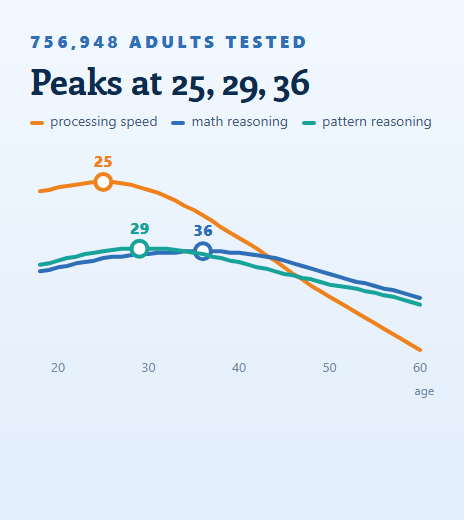
The two numbers measure different things and should not be subtracted: the loss is across the whole neocortex, where carbon-14 found no adult-born neurons at all [8], while the 700 a day are added in the hippocampus alone [18]. How thinking changes across adult life is a separate question: our studies of peak brain age and IQ and age show which abilities change and when, and are human brains shrinking looks at brain size over a much longer time.
11 Do other animals grow new neurons as adults?
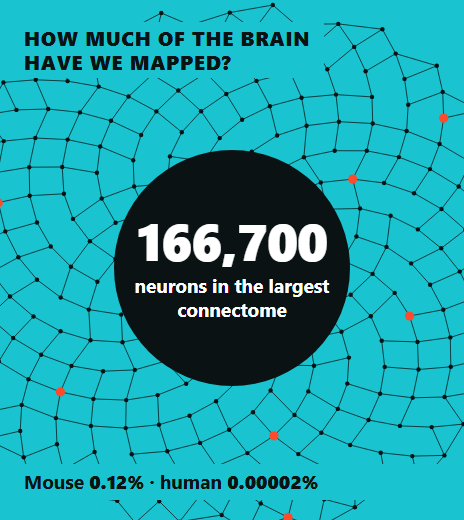
Many mammals do, but not all. Franjic and colleagues found clear signatures of adult hippocampal neurogenesis in mice, pigs and macaques with the same single-nucleus method that found none in humans [37]; in rhesus monkeys, Sorrells and colleagues saw hippocampal neurogenesis diminish during juvenile development [28]. Patzke and colleagues examined 71 mammal species and found that whales, dolphins and porpoises show “no clear signs of adult hippocampal neurogenesis” [56]. Our connectome study shows how much of these brains has been mapped cell by cell.
- Mouse, pig, macaque (adults): neurogenesis signatures found [37]
- Rhesus monkey: high in infancy, diminishing in juveniles [28]
- Whales, dolphins, porpoises: no DCX staining in the dentate gyrus [56]
- Humans: 21 of 27 hippocampus studies report new neurons in adults (this ledger)
12 What does this mean, and what does it not show?
The ledger shows what researchers concluded, not whether new neurons matter for thinking. A few studies link neuroblast numbers to better memory in old age or to cognitive resilience [32] [51] [52], but these are links in small post-mortem samples, not causes. We found no primary human study in our ledger that tested whether exercise, diet or brain training grows new neurons in people; such claims rest on animal work. Our news story on whether brain-training apps work and the study on languages and brain ageing cover what has been tested in people.
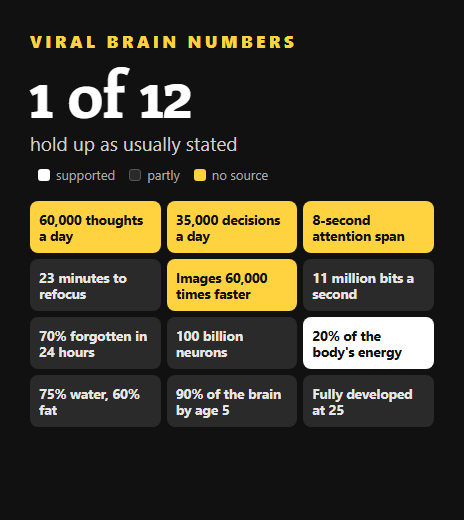
Two cautions apply to every number here. First, the verdicts are the authors’ readings of their own data, coded without re-judging; a “found” study using DCX staining and a “not found” study using the same marker may disagree about what the marker means. Second, disease-focused studies (Alzheimer’s, epilepsy, Parkinson’s, addiction) are kept only when they also state a finding about adults in general or their healthy controls. The brain statistics fact check traces other popular brain numbers to their sources, and the memory game is a quick way to test the memory the hippocampus supports.
New neurons or not, your reasoning can be measured today.
Our IQ test measures pattern reasoning and compares your result with adults, with a percentile.
Take the IQ test13 Every human neurogenesis study in our ledger
Every study in our ledger (49 rows)
Oldest first. Brains = people whose tissue the paper examined, all ages, as stated; "-" = not stated in the text we could read. Ages = adult donors (or the oldest donor). The verdict is coded from the sentence quoted, the authors' own words. The CSV adds journal, DOI, tissue, delay, citations and licence. As of 6 November 2026.
| Eriksson 1998 [4] | 1998 | Hippocampus | BrdU / IdU | – | – | Found in adults | “we demonstrate that new neurons, as defined by these markers, are generated from dividing progenitor cells in the dentate gyrus of adult humans” | Cancer patients given BrdU during treatment |
| Weickert 2000 [5] | 2000 | SVZ and olfactory pathway | Immunostaining | – | – | Found in adults | “Our results show that neuroblast-like cells exist in the human SEZ and support the theory that SEZ of postnatal human brain has neurogenic potential” | – |
| Sanai 2004 [6] | 2004 | SVZ and olfactory pathway | Immunostaining | – | – | Not found | “Unexpectedly, we find no evidence of chains of migrating neuroblasts in the SVZ or in the pathway to the olfactory bulb” | – |
| Spalding 2005 [7] | 2005 | Neocortex | Carbon-14 | – | – | Not found | “occipital neurons are as old as the individual, supporting the view that postnatal neurogenesis does not take place in this region” | – |
| Bhardwaj 2006 [8] | 2006 | Neocortex | Carbon-14 | – | – | Not found | “neurons in the human cerebral neocortex are not generated in adulthood at detectable levels but are generated perinatally” | Also patients given BrdU |
| Quiñones-Hinojosa 2006 [9] | 2006 | SVZ and olfactory pathway | Immunostaining | – | – | Rare or declining | “However, compared to rodents, the adult human SVZ appears to be devoid of chain migration or large numbers of newly formed young neurons” | – |
| Baer 2007 [10] | 2007 | SVZ and olfactory pathway | Immunostaining | – | – | Found in adults | “Thus, our data surprisingly reveal that these TFs are differentially expressed in the adult human SVZ where Sox-2 and Pax-6 specify a glial and neuronal fate, respectively” | – |
| Curtis 2007 [11] | 2007 | SVZ and olfactory pathway | BrdU / IdU | – | – | Found in adults | “contains progenitor cells with migratory characteristics and cells that incorporate 5-bromo-2′-deoxyuridine and become mature neurons in the OB” | – |
| Liu 2008 [12] | 2008 | Cortex | Immunostaining | – | – | Mixed or unclear | “cells expressing doublecortin (Dcx), a microtubule-associated protein expressed in migrating neuroblasts, were present in the hippocampus and temporal cortex of the normal and MTLE adult human brain” | Temporal lobe epilepsy |
| Knoth 2010 [13] | 2010 | Hippocampus | Immunostaining | 54 | up to 100 | Rare or declining | “Total numbers of DCX expressing cells declined exponentially with increasing age, and co-expression of DCX with the other markers decreased” | – |
| Sanai 2011 [14] | 2011 | SVZ and olfactory pathway | Immunostaining | – | – | Rare or declining | “this germinal activity subsides in older children and is nearly extinct by adulthood” | – |
| Wang 2011 [15] | 2011 | SVZ and olfactory pathway | Immunostaining | – | – | Found in adults | “We provide evidence that neuroblasts exist continuously in the anterior ventral SVZ and RMS of the adult human brain” | – |
| Bergmann 2012 [16] | 2012 | Olfactory bulb | Carbon-14 | – | – | Not found | “establishing that there is very limited, if any, postnatal neurogenesis in the human olfactory bulb” | – |
| Martí-Mengual 2013 [17] | 2013 | Amygdala | Immunostaining | – | – | Mixed or unclear | “Our results demonstrate that cells coexpressing doublecortin and PSA-NCAM, but lacking neuronal nuclear antigen expression, were present in the amygdala of adult humans” | – |
| Spalding 2013 [18] | 2013 | Hippocampus | Carbon-14 | – | – | Found in adults | “In adult humans, 700 new neurons are added in each hippocampus per day, corresponding to an annual turnover of 1.75% of the neurons within the renewing fraction, with a modest decline during aging” | – |
| Batailler 2014 [19] | 2014 | Hypothalamus | Immunostaining | – | – | Found in adults | “This study provides further confirmation of the existence of an adult hypothalamic neurogenic niche and argues for the potential existence of a migratory path within the hypothalamus” | – |
| Ernst 2014 [20] | 2014 | Striatum | Carbon-14 | – | – | Found in adults | “We show, using histological and carbon-14 dating approaches, that in adult humans new neurons integrate in the striatum, which is adjacent to this neurogenic niche” | Also Huntington’s disease |
| Huttner 2014 [21] | 2014 | Neocortex | Carbon-14 | – | – | Not found | “Using immunohistochemistry; transcriptome, genome and ploidy analyses; and determination of nuclear bomb test-derived (14)C concentration in neuronal DNA, we found neither to be the case” | Stroke |
| Lötsch 2014 [22] | 2014 | Olfactory bulb | Bulk RNA | – | – | Found in adults | “This provides a novel, functional genomics perspective supporting the existence of neurogenesis in the adult human olfactory bulb” | – |
| Bayer 2015 [23] | 2015 | Hippocampus | Immunostaining | – | – | Found in adults | “The age-dependent increase of differentiating cells in the healthy controls was not observed in the addicts” | Heroin addiction |
| Dennis 2016 [24] | 2016 | Hippocampus | Immunostaining | 23 | up to 59 | Not found | “However, after 3 years of age, microglia were the only proliferating cells found in either niche or in the adjacent parenchyma” | – |
| Mathews 2017 [25] | 2017 | Hippocampus | Bulk RNA | 26 | 18-88 | Rare or declining | “These data are the first to demonstrate normal age-related decreases at specific stages of adult human hippocampal neurogenesis” | – |
| Boldrini 2018 [26] | 2018 | Hippocampus | Immunostaining | 28 | up to 79 | Found in adults | “Thus, healthy older subjects without cognitive impairment, neuropsychiatric disease, or treatment display preserved neurogenesis” | – |
| Cipriani 2018 [27] | 2018 | Hippocampus | Immunostaining | – | – | Not found | “while their neurogenic potential seems negligible in the adult” | Also Alzheimer’s disease |
| Sorrells 2018 [28] | 2018 | Hippocampus | Immunostaining | 59 | 18-77 | Not found | “In adult patients with epilepsy and healthy adults (18-77 years; n = 17 post-mortem samples from controls; n = 12 surgical resection samples from patients with epilepsy), young neurons were not detected in the dentate gyrus” | Also epilepsy (surgical samples) |
| Moreno-Jiménez 2019 [29] | 2019 | Hippocampus | Immunostaining | – | – | Found in adults | “we identified thousands of immature neurons in the DG of neurologically healthy human subjects up to the ninth decade of life” | Also Alzheimer’s disease |
| Seki 2019 [30] | 2019 | Hippocampus | Immunostaining | 17 | up to 49 | Rare or declining | “The large number of PSA-NCAM+ cells and few DCX+/HuB+/Ki-67+ cells observed in the controls suggest that immature-type neurons are not recently generated neurons, and that the level of hippocampal neuronal production in adult humans is low” | Epilepsy (controls: other temporal surgery) |
| Sorrells 2019 [31] | 2019 | Amygdala | Immunostaining | – | – | Mixed or unclear | “Immature PL neurons persist into old age, yet local progenitor proliferation sharply decreases in infants” | – |
| Tobin 2019 [32] | 2019 | Hippocampus | Immunostaining | 18 | 79-99 | Found in adults | “Here, we demonstrate that hippocampal neurogenesis is persistent through the tenth decade of life and is detectable in patients with mild cognitive impairments and Alzheimer’s disease” | Also MCI and Alzheimer’s disease |
| Kumar 2020 [33] | 2020 | Hippocampus | Bulk RNA (re-analysis) | – | – | Rare or declining | “Our findings indicate that the progression of neurogenesis from progenitor cells is highly restricted in the human brain from childhood onwards” | – |
| Sorrells 2021 [34] | 2021 | Hippocampus | Immunostaining | – | – | Not found | “Analysis of available RNA-sequencing datasets supports the view that DG neurogenesis is rare or absent in the adult human brain” | – |
| Terreros-Roncal 2021 [35] | 2021 | Hippocampus | Immunostaining | – | – | Found in adults | “We found that adult-born dentate granule cells showed abnormal morphological development and changes in the expression of differentiation markers” | ALS, Huntington’s, Parkinson’s, Lewy body and frontotemporal dementia |
| Coviello 2022 [36] | 2022 | Cortex | Immunostaining | – | – | Mixed or unclear | “Our findings confirm the presence of immature neurons in several regions of the cerebral cortex of humans of different ages and define their lineage” | Epilepsy surgery; psychiatric brain bank |
| Franjic 2022 [37] | 2022 | Hippocampus | Single-cell RNA | 6 | – | Not found | “Integrated cross-species analysis revealed robust transcriptomic and histologic signatures of neurogenesis in the adult mouse, pig, and macaque but not humans” | – |
| Roeder 2022 [38] | 2022 | Amygdala | Carbon-14 | 12 | 44-86 | Found in adults | “In conclusion, we provide evidence for postnatal neurogenesis in the human amygdala with cell turnover rates comparable to the hippocampus” | – |
| Wang 2022 [39] | 2022 | Hippocampus | Single-cell RNA | – | – | Rare or declining | “the proinflammatory status of astrocytes probably contributes to the decrease and variability of AHN in adults and elderly individuals” | – |
| Zhou 2022 [40] | 2022 | Hippocampus | Single-cell RNA | 72 | up to 92 | Found in adults | “Together, our findings suggest the presence of a substantial number of imGCs in the adult human hippocampus via low-frequency de novo generation and protracted maturation” | Also Alzheimer’s disease |
| Li 2023 [41] | 2023 | Cortex | Immunostaining | – | up to 100 | Mixed or unclear | “while both layer II and amygdalar DCX + neurons persist in the temporal lobe lifelong” | – |
| Tosoni 2023 [42] | 2023 | Hippocampus | Single-cell RNA (re-analysis) | – | – | Mixed or unclear | “We argue that, although promising, the single-cell transcriptomic profiling of AHN in the human brain can be confounded by methodological, conceptual, and biological factors” | – |
| Cao 2024 [43] | 2024 | Hippocampus | Immunostaining | 30 | – | Found in adults | “In this study, we observed a significant presence of neurogenic cells in the hippocampus’s dentate gyrus (DG) region in 30 individuals” | Also Alzheimer’s disease |
| Simard 2024 [44] | 2024 | Hippocampus | Single-cell RNA | – | – | Rare or declining | “Our findings indicate very low levels of hippocampal neurogenesis throughout life and the existence of a local reserve of plasticity in the adult human hippocampus” | – |
| Yao 2024 [45] | 2024 | Hippocampus | Single-cell RNA | 10 | – | Rare or declining | “help to explain why adult hippocampal neurogenesis is infrequently observed in humans” | Also stroke |
| Dumitru 2025 [46] | 2025 | Hippocampus | Single-cell RNA | – | – | Found in adults | “In adults, using antibodies against the proliferation marker Ki67 and machine learning algorithms, we found proliferating neural progenitor cells” | – |
| Herold 2025 [47] | 2025 | Striatum | Immunostaining | 1 | – | Mixed or unclear | “Additionally, signs of persistent neuronal plasticity were observed with Doublecortin+ cells in the human caudate nucleus but not in the macaque” | – |
| Márquez-Valadez 2025 [48] | 2025 | Hippocampus | Immunostaining | 59 | – | Found in adults | “modulate both AHN and the cells that compose the niche, not only in patients with these disorders but also in neurologically healthy control individuals” | Depression, schizophrenia, bipolar disorder |
| Snapyan 2025 [49] | 2025 | SVZ and olfactory pathway | Immunostaining | 25 | – | Found in adults | “Overall, our data indicate that long-term deep brain stimulation of the subthalamic nucleus promotes cell proliferation and neurogenesis in the subventricular zone that are reduced in Parkinson’s disease” | Huntington’s, Parkinson’s, deep brain stimulation |
| Zhou 2025 [50] | 2025 | Hippocampus | Single-cell RNA (re-analysis) | – | – | Found in adults | “We further identified human-specific transcriptomic features of imGCs” | – |
| Disouky 2026 [51] | 2026 | Hippocampus | Single-cell RNA | – | – | Found in adults | “we analysed the profiles of 355,997 nuclei isolated from the hippocampus samples and identified neural stem cells, neuroblasts and immature granule neurons” | Also preclinical and clinical Alzheimer’s disease |
| Tosoni 2026 [52] | 2026 | Hippocampus | Single-cell RNA | – | – | Found in adults | “we identified persistent populations of immature neurons across all donor groups” | Also Alzheimer’s disease and resilience |
Source: Our ledger; Europe PMC [1]; PMC full texts [3]; coding by IQ Metrics
Records we read and left out (52) and why
Reasons follow the inclusion rules in our coding file (I1 to I3). Leaving a paper out says nothing about its quality; reviews and comments are context, not studies.
| Ayhan 2021 | no stated finding: single-nucleus atlas of epilepsy surgery tissue; neither abstract nor text states a result on adult neurogenesis |
| Cao 2026 | comment: research highlight on Dumitru et al. 2025 |
| Le Maître 2018 | disease comparison only: alcohol abuse vs controls, no statement about the control adults |
| Monje 2007 | disease comparison only: cancer treatment |
| Sgubin 2007 | disease comparison only: subarachnoid hemorrhage (surgical samples) |
| Engel 2011 | disease comparison only: epilepsy vs autopsy controls, Western blot |
| Paradisi 2010 | culture: neurosphere assay of epilepsy surgery tissue |
| Bayat 2022 | disease comparison only: COVID-19 |
| Murray 2016 | no stated finding: PSA-NCAM distribution as plasticity, no neurogenesis statement |
| Murray 2018 | no stated finding: PSA-NCAM interneurons, no neurogenesis statement |
| Pellegrino 2018 | stem-cell markers only: hypothalamic NPC marker profile |
| Baig 2024 | stem-cell markers only: SVZ stem-cell atlas |
| Ghibaudi 2023 | marker method study: antibody detection across species |
| Cho 2024 | marker method study: DCX transcript breadth (context) |
| Flor-García 2020 | protocol (context) |
| Gallardo-Caballero 2026 | protocol |
| Paredes 2016 | no adult donor: infant frontal lobe (context) |
| Oladimeji 2013 | thesis |
| Wiseman 2022 | comment |
| Gage 2025 | comment |
| Gage 2025 | comment |
| Lee 2018 | comment |
| Nogueira 2018 | letter |
| Arellano 2018 | comment |
| Lima 2019 | comment |
| Kheirbek 2013 | comment |
| Kempermann 2014 | comment |
| Macklis 2012 | comment |
| Sanai 2007 | comment |
| Alvarez-Buylla 2022 | comment |
| Arellano 2022 | comment |
| Terreros-Roncal 2022 | comment (authors’ response) |
| Terreros-Roncal 2022 | comment (authors’ response) |
| Dennis 2017 | comment (authors’ response) |
| Marucci 2017 | comment |
| Liu 2022 | comment |
| Tartt 2018 | comment (perspective) |
| Terstege 2022 | comment (perspective) |
| Johansson 1999 | culture |
| Pagano 2000 | culture |
| Roy 2000 | culture |
| Mezey 2003 | transplanted cells (bone marrow) |
| Déry 2013 | behavioural proxy |
| Déry 2015 | behavioural proxy |
| Charvet 2018 | modelling of other species’ data, no tissue |
| Korr 1999 | no adult donor: developing cortex |
| Yang 2014 | no adult donor: prenatal |
| Durante 2020 | olfactory epithelium (outside the brain) |
| Hahn 2005 | olfactory epithelium (outside the brain) |
| Song 2026 | olfactory epithelium (outside the brain) |
| Altuna 2019 | disease comparison only: DNA methylation in Alzheimer’s disease |
| Zaben 2021 | culture: epileptic hippocampus progenitors |
Source: Europe PMC [1]; screening by IQ Metrics
14 How we built the dataset
- 01
Search
Eight title searches in Europe PMC for 1998-2026 (neurogenesis and human hippocampus; DCX; new or immature neurons; other regions; carbon-14 dating; transcriptomics; human tissue in the abstract; region markers), plus 15 named leads by DOI or title: 509 unique records. Preprints excluded.
- 02
Screen
A scripted title rule kept 329 records; we read 101 abstracts by hand and kept 49 studies that pass three written rules: primary research, adult human brain tissue examined directly, and a stated finding about new neurons in adults.
- 03
Read and code
For each study we copied the authors’ conclusion sentence and coded it found, rare or declining, not found or mixed (rules written before coding). Sample sizes, ages and tissue delays were typed only where stated, each with a check string. 23 full texts came from PubMed Central [3]; the rest from abstracts.
- 04
Check
A script found every quoted sentence and every typed number (81 checks) in the saved abstract or full text; OpenAlex flags no retraction among the 49 studies [2].
- 05
Compute
Counts by verdict, method, region and period; brains examined; citations per year. All IQ Metrics calculations, scripted from the cached files.
Read every number with these in mind
- A count of studies is not a vote on the truth. One careful study can outweigh several weak ones; we report what each set of authors concluded.
- The ledger is a lower bound: 49 studies found by our searches and leads. Absence from it means we did not find a study, not that none exists.
- Verdicts come from the authors’ own sentence about adults; markers such as DCX are interpreted differently by different groups.
- Sample sizes, ages and delays are blank where the paper gives them only in a supplement or paywalled text we could not read (15 of 46 new-tissue studies state a sample size).
- Citation counts change daily and measure attention, not correctness.
- Nothing here is medical advice, and no study in the ledger tested a way to grow new neurons in people.
Sources
- EMBL-EBI. Europe PMC REST API: 8 title searches 1998-2026 and 15 named leads (core records with abstracts). 2026. europepmc.org/RestfulWebServiceMetadata open; abstracts cited as facts
- OurResearch. OpenAlex: works metadata (citation counts, licences, retraction flags) for the 49 studies and 7 context papers. 2026. openalex.orgCC0 (metadata)
- US National Library of Medicine. NCBI E-utilities: PubMed Central full texts (23 of the 49 studies, plus 4 context papers). 2026. www.ncbi.nlm.nih.gov/books/NBK25501US government service; each article keeps its own licence
- Nature medicine 1998. Eriksson et al.: Neurogenesis in the adult human hippocampus. Nature medicine 1998. 1998. doi.org/10.1038/3305Publisher licence: facts cited, no text, table or figure copied
- The Journal of comparative neurology 2000. Weickert et al.: Localization of epidermal growth factor receptors and putative neuroblasts in human subependymal zone. The Journal of comparative neurology 2000. 2000. doi.org/10.1002/1096-9861(20000731)423:3<359::aid-cne1>3.0.co;2-0Public domain (open access)
- Nature 2004. Sanai et al.: Unique astrocyte ribbon in adult human brain contains neural stem cells but lacks chain migration. Nature 2004. 2004. doi.org/10.1038/nature02301Publisher licence: facts cited, no text, table or figure copied
- Cell 2005. Spalding et al.: Retrospective birth dating of cells in humans. Cell 2005. 2005. doi.org/10.1016/j.cell.2005.04.028Publisher licence: facts cited, no text, table or figure copied
- Proceedings of the National Academy of Sciences of the United States of America 2006. Bhardwaj et al.: Neocortical neurogenesis in humans is restricted to development. Proceedings of the National Academy of Sciences of the United States of America 2006. 2006. doi.org/10.1073/pnas.0605177103Publisher licence: facts cited, no text, table or figure copied
- The Journal of comparative neurology 2006. Quiñones-Hinojosa et al.: Cellular composition and cytoarchitecture of the adult human subventricular zone: a niche of neural stem cells. The Journal of comparative neurology 2006. 2006. doi.org/10.1002/cne.20798Publisher licence: facts cited, no text, table or figure copied
- Experimental neurology 2007. Baer et al.: Sox-2 is expressed by glial and progenitor cells and Pax-6 is expressed by neuroblasts in the human subventricular zone. Experimental neurology 2007. 2007. doi.org/10.1016/j.expneurol.2006.12.008Publisher licence: facts cited, no text, table or figure copied
- Science (New York, N.Y.) 2007. Curtis et al.: Human neuroblasts migrate to the olfactory bulb via a lateral ventricular extension. Science (New York, N.Y.) 2007. 2007. doi.org/10.1126/science.1136281Publisher licence: facts cited, no text, table or figure copied
- The European journal of neuroscience 2008. Liu et al.: Doublecortin expression in the normal and epileptic adult human brain. The European journal of neuroscience 2008. 2008. doi.org/10.1111/j.1460-9568.2008.06518.xPublisher licence: facts cited, no text, table or figure copied
- PloS one 2010. Knoth et al.: Murine features of neurogenesis in the human hippocampus across the lifespan from 0 to 100 years. PloS one 2010. 2010. doi.org/10.1371/journal.pone.0008809CC BY (open access)
- Nature 2011. Sanai et al.: Corridors of migrating neurons in the human brain and their decline during infancy. Nature 2011. 2011. doi.org/10.1038/nature10487Publisher licence: facts cited, no text, table or figure copied
- Cell research 2011. Wang et al.: Identification and characterization of neuroblasts in the subventricular zone and rostral migratory stream of the adult human brain. Cell research 2011. 2011. doi.org/10.1038/cr.2011.83Publisher licence: facts cited, no text, table or figure copied
- Neuron 2012. Bergmann et al.: The age of olfactory bulb neurons in humans. Neuron 2012. 2012. doi.org/10.1016/j.neuron.2012.03.030Publisher licence: facts cited, no text, table or figure copied
- The European journal of neuroscience 2013. Martí-Mengual et al.: Cells expressing markers of immature neurons in the amygdala of adult humans. The European journal of neuroscience 2013. 2013. doi.org/10.1111/ejn.12016Publisher licence: facts cited, no text, table or figure copied
- Cell 2013. Spalding et al.: Dynamics of hippocampal neurogenesis in adult humans. Cell 2013. 2013. doi.org/10.1016/j.cell.2013.05.002Publisher licence: facts cited, no text, table or figure copied
- The Journal of comparative neurology 2014. Batailler et al.: DCX-expressing cells in the vicinity of the hypothalamic neurogenic niche: a comparative study between mouse, sheep, and human tissues. The Journal of comparative neurology 2014. 2014. doi.org/10.1002/cne.23514Publisher licence: facts cited, no text, table or figure copied
- Cell 2014. Ernst et al.: Neurogenesis in the striatum of the adult human brain. Cell 2014. 2014. doi.org/10.1016/j.cell.2014.01.044Publisher licence: facts cited, no text, table or figure copied
- Nature neuroscience 2014. Huttner et al.: The age and genomic integrity of neurons after cortical stroke in humans. Nature neuroscience 2014. 2014. doi.org/10.1038/nn.3706Open to read (publisher terms): facts cited, no text, table or figure copied
- Brain structure & function 2014. Lötsch et al.: Functional genomics suggest neurogenesis in the adult human olfactory bulb. Brain structure & function 2014. 2014. doi.org/10.1007/s00429-013-0618-3Publisher licence: facts cited, no text, table or figure copied
- Drug and alcohol dependence 2015. Bayer et al.: Alterations of neuronal precursor cells in stages of human adult neurogenesis in heroin addicts. Drug and alcohol dependence 2015. 2015. doi.org/10.1016/j.drugalcdep.2015.09.005Publisher licence: facts cited, no text, table or figure copied
- Neuropathology and applied neurobiology 2016. Dennis et al.: Human adult neurogenesis across the ages: An immunohistochemical study. Neuropathology and applied neurobiology 2016. 2016. doi.org/10.1111/nan.12337Publisher licence: facts cited, no text, table or figure copied
- Aging cell 2017. Mathews et al.: Evidence for reduced neurogenesis in the aging human hippocampus despite stable stem cell markers. Aging cell 2017. 2017. doi.org/10.1111/acel.12641CC BY (open access)
- Cell stem cell 2018. Boldrini et al.: Human Hippocampal Neurogenesis Persists throughout Aging. Cell stem cell 2018. 2018. doi.org/10.1016/j.stem.2018.03.015Publisher licence: facts cited, no text, table or figure copied
- Cerebral cortex (New York, N.Y. : 1991) 2018. Cipriani et al.: Hippocampal Radial Glial Subtypes and Their Neurogenic Potential in Human Fetuses and Healthy and Alzheimer's Disease Adults. Cerebral cortex (New York, N.Y. : 1991) 2018. 2018. doi.org/10.1093/cercor/bhy096Publisher licence: facts cited, no text, table or figure copied
- Nature 2018. Sorrells et al.: Human hippocampal neurogenesis drops sharply in children to undetectable levels in adults. Nature 2018. 2018. doi.org/10.1038/nature25975Publisher licence: facts cited, no text, table or figure copied
- Nature medicine 2019. Moreno-Jiménez et al.: Adult hippocampal neurogenesis is abundant in neurologically healthy subjects and drops sharply in patients with Alzheimer's disease. Nature medicine 2019. 2019. doi.org/10.1038/s41591-019-0375-9Publisher licence: facts cited, no text, table or figure copied
- Scientific reports 2019. Seki et al.: Analysis of proliferating neuronal progenitors and immature neurons in the human hippocampus surgically removed from control and epileptic patients. Scientific reports 2019. 2019. doi.org/10.1038/s41598-019-54684-zCC BY (open access)
- Nature communications 2019. Sorrells et al.: Immature excitatory neurons develop during adolescence in the human amygdala. Nature communications 2019. 2019. doi.org/10.1038/s41467-019-10765-1CC BY (open access)
- Cell stem cell 2019. Tobin et al.: Human Hippocampal Neurogenesis Persists in Aged Adults and Alzheimer's Disease Patients. Cell stem cell 2019. 2019. doi.org/10.1016/j.stem.2019.05.003Publisher licence: facts cited, no text, table or figure copied
- IBRO reports 2020. Kumar et al.: Transcriptomic analysis of the signature of neurogenesis in human hippocampus suggests restricted progenitor cell progression post-childhood. IBRO reports 2020. 2020. doi.org/10.1016/j.ibror.2020.08.003CC BY-NC-ND: facts cited, no text, table or figure copied
- The Journal of neuroscience : the official journal of the Society for Neuroscience 2021. Sorrells et al.: Positive Controls in Adults and Children Support That Very Few, If Any, New Neurons Are Born in the Adult Human Hippocampus. The Journal of neuroscience : the official journal of the Society for Neuroscience 2021. 2021. doi.org/10.1523/jneurosci.0676-20.2020CC BY-NC-SA: facts cited, no text, table or figure copied
- Science (New York, N.Y.) 2021. Terreros-Roncal et al.: Impact of neurodegenerative diseases on human adult hippocampal neurogenesis. Science (New York, N.Y.) 2021. 2021. doi.org/10.1126/science.abl5163Publisher licence: facts cited, no text, table or figure copied
- Frontiers in neuroanatomy 2022. Coviello et al.: Phenotype and Distribution of Immature Neurons in the Human Cerebral Cortex Layer II. Frontiers in neuroanatomy 2022. 2022. doi.org/10.3389/fnana.2022.851432CC BY (open access)
- Neuron 2022. Franjic et al.: Transcriptomic taxonomy and neurogenic trajectories of adult human, macaque, and pig hippocampal and entorhinal cells. Neuron 2022. 2022. doi.org/10.1016/j.neuron.2021.10.036CC BY-NC-ND: facts cited, no text, table or figure copied
- Communications biology 2022. Roeder et al.: Evidence for postnatal neurogenesis in the human amygdala. Communications biology 2022. 2022. doi.org/10.1038/s42003-022-03299-8CC BY (open access)
- Cell research 2022. Wang et al.: Transcriptome dynamics of hippocampal neurogenesis in macaques across the lifespan and aged humans. Cell research 2022. 2022. doi.org/10.1038/s41422-022-00678-yPublisher licence: facts cited, no text, table or figure copied
- Nature 2022. Zhou et al.: Molecular landscapes of human hippocampal immature neurons across lifespan. Nature 2022. 2022. doi.org/10.1038/s41586-022-04912-wPublisher licence: facts cited, no text, table or figure copied
- Molecular neurobiology 2023. Li et al.: Doublecortin-Expressing Neurons in Human Cerebral Cortex Layer II and Amygdala from Infancy to 100 Years Old. Molecular neurobiology 2023. 2023. doi.org/10.1007/s12035-023-03261-7CC BY (open access)
- Neuron 2023. Tosoni et al.: Mapping human adult hippocampal neurogenesis with single-cell transcriptomics: Reconciling controversy or fueling the debate?. Neuron 2023. 2023. doi.org/10.1016/j.neuron.2023.03.010CC BY-NC-ND: facts cited, no text, table or figure copied
- Brain pathology (Zurich, Switzerland) 2024. Cao et al.: Reduced neurogenesis in human hippocampus with Alzheimer's disease. Brain pathology (Zurich, Switzerland) 2024. 2024. doi.org/10.1111/bpa.13225CC BY-NC-ND: facts cited, no text, table or figure copied
- Journal of psychiatry & neuroscience : JPN 2024. Simard et al.: Spatial transcriptomic analysis of adult hippocampal neurogenesis in the human brain. Journal of psychiatry & neuroscience : JPN 2024. 2024. doi.org/10.1503/jpn.240026CC BY-NC-ND: facts cited, no text, table or figure copied
- eLife 2024. Yao et al.: Deciphering molecular heterogeneity and dynamics of human hippocampal neural stem cells at different ages and injury states. eLife 2024. 2024. doi.org/10.7554/elife.89507CC BY (open access)
- Science (New York, N.Y.) 2025. Dumitru et al.: Identification of proliferating neural progenitors in the adult human hippocampus. Science (New York, N.Y.) 2025. 2025. doi.org/10.1126/science.adu9575Publisher licence: facts cited, no text, table or figure copied
- The Journal of comparative neurology 2025. Herold et al.: Adult Striatal Neurogenesis-A Comparative Approach Between Pigeons, Mice, Macaques, and Human. The Journal of comparative neurology 2025. 2025. doi.org/10.1002/cne.70107CC BY (open access)
- Cell stem cell 2025. Márquez-Valadez et al.: Human adult hippocampal neurogenesis is shaped by neuropsychiatric disorders, demographics, and lifestyle-related factors. Cell stem cell 2025. 2025. doi.org/10.1016/j.stem.2025.08.010CC BY-NC-ND: facts cited, no text, table or figure copied
- Annals of neurology 2025. Snapyan et al.: Adult Neurogenesis in the Subventricular Zone of Patients with Huntington's and Parkinson's Diseases and following Long-Term Treatment with Deep Brain Stimulation. Annals of neurology 2025. 2025. doi.org/10.1002/ana.27181CC BY-NC: facts cited, no text, table or figure copied
- Nature neuroscience 2025. Zhou et al.: Cross-species analysis of adult hippocampal neurogenesis reveals human-specific gene expression but convergent biological processes. Nature neuroscience 2025. 2025. doi.org/10.1038/s41593-025-02027-9CC BY-NC-ND: facts cited, no text, table or figure copied
- Nature 2026. Disouky et al.: Human hippocampal neurogenesis in adulthood, ageing and Alzheimer's disease. Nature 2026. 2026. doi.org/10.1038/s41586-026-10169-4CC BY-NC-ND: facts cited, no text, table or figure copied
- Cell stem cell 2026. Tosoni et al.: Transcriptional profiles of immature neurons in aged human hippocampus track Alzheimer's pathology and cognitive resilience. Cell stem cell 2026. 2026. doi.org/10.1016/j.stem.2026.04.002CC BY (open access)
- Cell stem cell 2018. Kempermann et al.: Human Adult Neurogenesis: Evidence and Remaining Questions. Cell stem cell 2018. 2018. doi.org/10.1016/j.stem.2018.04.004Review (context, not counted); Publisher licence: facts cited, no text, table or figure copied
- Molecular Psychiatry 2024. Elliott et al.: Hippocampal neurogenesis in adult primates: a systematic review. Molecular Psychiatry 2024. 2024. doi.org/10.1038/s41380-024-02815-ySystematic review (context, not counted); Publisher licence: facts cited, no text, table or figure copied
- Nature Protocols 2020. Flor-García et al.: Unraveling human adult hippocampal neurogenesis. Nature Protocols 2020. 2020. doi.org/10.1038/s41596-019-0267-yProtocol (context, not counted); Publisher licence: facts cited, no text, table or figure copied
- Brain Structure and Function 2013. Patzke et al.: In contrast to many other mammals, cetaceans have relatively small hippocampi that appear to lack adult neurogenesis. Brain Structure and Function 2013. 2013. doi.org/10.1007/s00429-013-0660-1Animal study (context); Publisher licence: facts cited, no text, table or figure copied
- Cells Tissues Organs 2024. Cho et al.: Reconsidering Neurogenetic Indication in the Human Brain: Broad Expression of Doublecortin Transcript in the Hippocampal and Cortical Cell Populations. Cells Tissues Organs 2024. 2024. doi.org/10.1159/000540976Marker study (context, not counted); CC BY-NC: facts cited, no text, table or figure copied
- Science 2016. Paredes et al.: Extensive migration of young neurons into the infant human frontal lobe. Science 2016. 2016. doi.org/10.1126/science.aaf7073Infant study (context, not counted); CC BY (open access)
- The Journal of comparative neurology 1997. Pakkenberg and Gundersen: Neocortical neuron number in humans: effect of sex and age. The Journal of comparative neurology 1997. 1997. doi.org/10.1002/(sici)1096-9861(19970728)384:2<312::aid-cne10>3.0.co;2-kNeuron counts (context); Publisher licence: facts cited, no text, table or figure copied
Version history
- 2026.116 November 2026First release. Next update due May 2027 (searches re-run every six months, since new single-cell studies appear several times a year); sooner if a study in the ledger is corrected or retracted.
Leon Falkner, Data & Research Analyst. Leon owns the arithmetic on IQ Metrics: the percentile tables, the score converter and the figures in everyone else's drafts. On the research desk Leon pulls the data, builds each index and writes the method. More about Leon.
Questions
Can adults grow new brain cells?
Most studies say yes, in small numbers. Of 49 human studies published 1998-2026, 32 report new neurons in adult brains (9 of them rare or declining), 10 found none and 7 are mixed. In the hippocampus 21 of 27 report some.
Do brain cells regenerate?
Only in a few places, according to the studies. New neurons are reported in the adult hippocampus, striatum and amygdala; carbon-14 dating found none in the neocortex or the olfactory bulb, and none in the cortex after a stroke.
How many new neurons does the adult brain make each day?
About 700 a day in each hippocampus, according to the carbon-14 study by Spalding and colleagues in 2013: 1.75% a year of the third of neurons that renew. No other region has a daily estimate.
How many brain cells do you lose a day?
No study measures it day by day. Pakkenberg and Gundersen found about 10% fewer neocortical neurons between ages 20 and 90; spread evenly, that is roughly 74,000 to 90,000 a day (our arithmetic), an average and not a daily count.
What is adult neurogenesis?
Adult neurogenesis is the birth of new neurons after childhood from stem or progenitor cells. It is well shown in mice and rats; in humans 32 of 49 studies report it, mostly in the hippocampus, with disputes over markers and tissue quality.
Does neurogenesis continue into old age?
Some studies say so. Tobin and colleagues report neurogenesis in donors aged 79 to 99, and Boldrini and colleagues preserved neurogenesis up to 79; Knoth and colleagues found DCX cells to age 100 but falling exponentially with age.
Why do scientists disagree about adult neurogenesis in humans?
Mostly because of markers and tissue. Young-neuron markers such as DCX also appear in old neurons, staining fades with slow fixation, and only 6 of 49 studies state their tissue delay. Different methods give different answers.
Does exercise grow new brain cells in humans?
Not shown in people by any study in our ledger. None of the 49 human studies tested exercise; the claim comes from animal research. Human studies can only count cells after death, so they cannot test a habit directly.
Where in the brain does neurogenesis happen in adults?
Mainly the hippocampus (27 of 49 studies are about it), plus the striatum, amygdala and the wall of the lateral ventricles. All 6 studies of the neocortex or cortex in our ledger found no new neurons or only immature ones of unclear age.
Do other animals grow new neurons as adults?
Many do. Adult mice, pigs and macaques show clear signatures of hippocampal neurogenesis, while whales, dolphins and porpoises show no clear signs of it in a study of 71 mammal species.
Share it, cite it, download it
You may reuse everything on this page under CC BY 4.0: in articles, reports, lessons and posts. The one condition is credit to IQ Metrics with a link to this page.
Cite this study
Version 2026.11. Citing the version lets readers find the exact numbers.
Archived copy with a DOI: 10.5281/zenodo.23999177 (report PDF and data on Zenodo).
Falkner, L. (2026). Can adults grow new brain cells? Every human neurogenesis study scored (Version 2026.11) [Data set]. IQ Metrics Research. https://iqmetrics.org/research/can-adults-grow-new-brain-cells/ (DOI: 10.5281/zenodo.23999177)
Falkner, Leon. "Can adults grow new brain cells? Every human neurogenesis study scored." IQ Metrics Research, 6 Nov. 2026, iqmetrics.org/research/can-adults-grow-new-brain-cells/. DOI: 10.5281/zenodo.23999177.
Falkner, Leon. "Can adults grow new brain cells? Every human neurogenesis study scored." IQ Metrics Research. November 6, 2026. https://iqmetrics.org/research/can-adults-grow-new-brain-cells/. DOI: 10.5281/zenodo.23999177.
@misc{iqmetrics2026canadultsgrownewbraincells, author = {Falkner, Leon}, title = {Can adults grow new brain cells? Every human neurogenesis study scored}, institution = {IQ Metrics}, year = {2026}, version = {2026.11}, doi = {10.5281/zenodo.23999177}, url = {https://iqmetrics.org/research/can-adults-grow-new-brain-cells/} }
Source: Leon Falkner, "Can adults grow new brain cells? Every human neurogenesis study scored." IQ Metrics Research, version 2026.11, https://iqmetrics.org/research/can-adults-grow-new-brain-cells/ (DOI 10.5281/zenodo.23999177)
Embed the key numbers
Paste this into an article or post. It lists the main numbers and credits the source.
Get the data
One row per primary human study (49 rows) that looked for new neurons in the adult brain and states a finding: bibliographic data, region, method, sample, ages, tissue delay, disease focus, the verdict coded from the authors’ own sentence (quoted), OpenAlex citations and licence. Empty = not stated in the text we could read.
| Column | What it holds |
|---|---|
study_id, year, first_author, journal, doi | Our id, publication year, first author, journal and DOI |
region, other_regions | The brain region the conclusion is about; results for other regions in the same paper |
method, design, tissue | Family of the decisive evidence (BrdU / IdU, carbon-14, immunostaining, single-cell RNA, bulk RNA); new tissue or re-analysis; post-mortem, surgical or both |
healthy_adult_controls | Whether healthy adult donors were examined (yes / no) |
n_brains, n_adults | People whose brain tissue was examined (all ages) and adults among them, as stated |
age_min_adult, age_max | Youngest adult donor and oldest donor, years, as stated |
tissue_delay_h_max | Longest stated post-mortem interval or time to fixation, hours (0 = fixed at once after surgery) |
oldest_with_new_or_immature_neurons | Oldest donor in whom the authors report new or immature neurons, as stated |
disease_focus, rate_stated | Disease studied alongside (if any); any rate the authors give |
verdict, authors_sentence, sentence_read_in | Found in adults / Rare or declining / Not found / Mixed or unclear, the sentence it is coded from, and where we read it (abstract or full text) |
citations_openalex_2026_11_06 | OpenAlex cited_by_count on 6 November 2026 |
licence, text_read, note | Licence of the paper as recorded by OpenAlex or Europe PMC; whether we read the full text or the abstract; our note |
For journalists, researchers and teachers
Everything on this page may be quoted, charted and republished with credit. No embargo, no permission needed, no sign-up. If you need a number that is not here, ask.
Summary you can paste
Plain news style. Edit freely; keep the credit.
IQ Metrics Research built a ledger of 49 primary human studies (1998-2026) that looked for new neurons in the adult brain, coding each verdict from the authors' own conclusion sentence. 32 report new neurons in adults (9 of them rare or declining), 10 found none and 7 are mixed; in the hippocampus 21 of 27 report some. Only 6 studies state how long their tissue waited before fixation. Source: IQ Metrics Research, https://iqmetrics.org/research/can-adults-grow-new-brain-cells/
Angles for a story
- 32 of 49 studies say yes, 10 say no: the scorecard (Figure 2)
- The method decides the map: carbon-14 finds new neurons in three regions and none in the cortex (Figure 5)
- The forgotten variable: only 6 of 49 studies state their tissue delay (Figure 6)
- New neurons at 99? The oldest brains examined (Figure 4)
- Single-cell sequencing was meant to settle it: 8 of 10 say yes (why studies disagree)
- “How many brain cells do you lose a day?” The arithmetic behind the number (the section)
Quotes you can use
Attributable as written, with the name and title. For a different angle or a quote on a specific figure, ask through the contact page.
Most studies now say adults do make new neurons, but few say many. The honest headline is a trickle, not a fountain.
Leon Falkner, Data & Research Analyst, IQ Metrics ResearchBoth sides of this debate argue about how fast the tissue was preserved, yet only six of 49 papers state it. That is the gap we would close first.
Leon Falkner, Data & Research Analyst, IQ Metrics ResearchWe coded every study in its authors’ own words. We did not decide who is right; we counted what each team concluded.
Leon Falkner, Data & Research Analyst, IQ Metrics Research
Files
- CSV of every study: year, authors, journal, DOI, region, method, brains, ages, tissue delay, verdict, the authors’ sentence, citations, licence (CC BY 4.0)
- Every figure as a print-ready PNG: use the Image button under each figure
- Embed code and data table under every figure
- Share images for social media in three sizes, with the credit line built in
- Citations in APA, MLA, Chicago, BibTeX and plain text
Terms, contact and corrections
Credit: “IQ Metrics Research, Can adults grow new brain cells? (2026)” with a link to this page. On air or in print, “IQ Metrics” and the page address are enough.
What it covers: primary studies of adult human brain tissue, 1998-2026, found by our Europe PMC searches and named leads; reviews and comments are context only.
Contact: the research team, through the contact page. Corrections are made on this page with a dated note in the version history.