



What was Alexander Graham Bell’s IQ?
He left school at 15 with an undistinguished record, then held U.S. patent 174,465 for the telephone at 29.
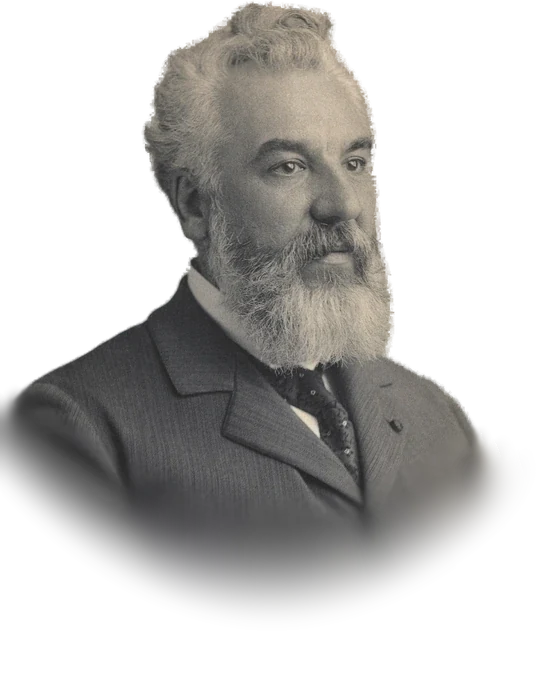
Alexander Graham Bell’s IQ was never measured. A 2025 list on 24/7 Wall St. gives “IQ estimated between 160 and 180,” without a test, a method or a source. The documented record is a school record described as undistinguished, a Boston University professorship in vocal physiology and the 1876 telephone patent. Bell’s IQ is therefore an inference, as of November 2026.
Alexander Graham Bell’s estimated IQ
- He opened his “School of Vocal Physiology and Mechanics of Speech” in Boston in October 1872, teaching his father’s system, according to Wikipedia.
- In 1873 he became a professor of vocal physiology and elocution at Boston University, per The Canadian Encyclopedia.
- On March 7, 1876, the U.S. Patent Office issued him patent 174,465, and on March 10 he got his telephone to work, according to Wikipedia.
- Honors include the Volta Prize (1880), membership of the National Academy of Sciences (1883) and the Albert Medal (1902), and he served as second president of the National Geographic Society (1898–1903), per Wikipedia.
- Later work in optical telecommunications, hydrofoils and aeronautics, according to Wikipedia’s summary.
This is an inference from a career, not from a test. His school record was undistinguished and he left the Royal High School at 15, so the range rests on applied invention and teaching rather than on formal academic results. It sits below the circulating 160–180, which no source supports.
- Born
- March 3, 1847, Edinburgh, Scotland
- Died
- August 2, 1922, Beinn Bhreagh, Nova Scotia
- Schooling
- Taught at home; left the Royal High School, Edinburgh, at 15
- Teaching
- Professor of vocal physiology and elocution, Boston University (1873)
- Telephone patent
- U.S. patent 174,465, issued March 7, 1876
- Honors
- Volta Prize (1880); National Academy of Sciences (1883); Albert Medal (1902)
- Society role
- Second president of the National Geographic Society, 1898–1903
- Circulating figure
- 160–180, from a 2025 list that names no test
What an IQ of 140–160 actually means
Set the claim aside for a moment. If someone genuinely scored in this range, here is what that would represent.
Average is 100 by construction, and about two-thirds of people fall between 85 and 115. Take the test to place your own score on this scale.
| Score range | Classification | Share of people | What it indicates |
|---|---|---|---|
| 85 – 114 | Average | ~68% | The range most people fall into. |
| 115 – 129 | Above average | ~13.6% | Roughly one person in seven. |
| 130 – 144 | Gifted | ~2% | The threshold most high-IQ societies use. |
| Above 144 | Highly gifted | ~0.1% | Figures above this range are extrapolated from the curve rather than measured. |
Percentages are approximate and describe a normal distribution. The same number means different things on tests with different standard deviations.
Thirty questions gives you a measured position on this exact scale — your score, your percentile and the ability breakdown behind it.
Find out in 30 minutes →Who Alexander Graham Bell was
Who was Alexander Graham Bell? He was born on March 3, 1847, in Edinburgh, Scotland, and died on August 2, 1922, at Beinn Bhreagh, Nova Scotia, according to Wikipedia. As a child he was schooled at home by his father, then enrolled at the Royal High School in Edinburgh, which he left at 15 after only the first four forms. Wikipedia lists the University of Edinburgh and University College London as his education.
What did Bell do for the deaf? Wikipedia says he taught his father’s system to deaf pupils. In October 1872 he opened his School of Vocal Physiology and Mechanics of Speech in Boston, which attracted a large number of deaf pupils, and in 1873 he became a professor of vocal physiology and elocution at Boston University, according to The Canadian Encyclopedia.
What did Bell invent? A patent application for his telephone was filed on February 14, 1876, and U.S. patent 174,465 was issued on March 7, 1876, per Wikipedia. He was a co-founder of the Bell Telephone Company. Later he served as second president of the National Geographic Society from 1898 to 1903 and received the Volta Prize in 1880 and the Albert Medal in 1902.
 By Elora Mercer, Celebrity Research WriterFigures checked by Leon Falkner, Data & Research Analyst
Reviewed by Aarav Vardhan, Editor-in-Chief · Last reviewed November 2026

Alexander Graham Bell: the documented record
The estimate above rests on this record. Every entry here is a matter of public fact, which is more than can be said for the number itself.
- 1847Born March 3 in Edinburgh.
- c. 1862Leaves the Royal High School at age 15 after the first four forms.
- 1872Opens his School of Vocal Physiology and Mechanics of Speech in Boston.
- 1873Becomes professor of vocal physiology and elocution at Boston University.
- 1876Files the patent application on February 14; patent 174,465 is issued March 7; the telephone works on March 10.
- 1880Receives the Volta Prize.
- 1883Elected to the National Academy of Sciences.
- 1898Becomes second president of the National Geographic Society, serving until 1903.
- 1902Receives the Albert Medal.
- 1922Dies August 2 in Nova Scotia.
Where the 160–180 figure came from
Following a claim back to its first appearance is the part almost nobody does — and it is what most people are actually asking.
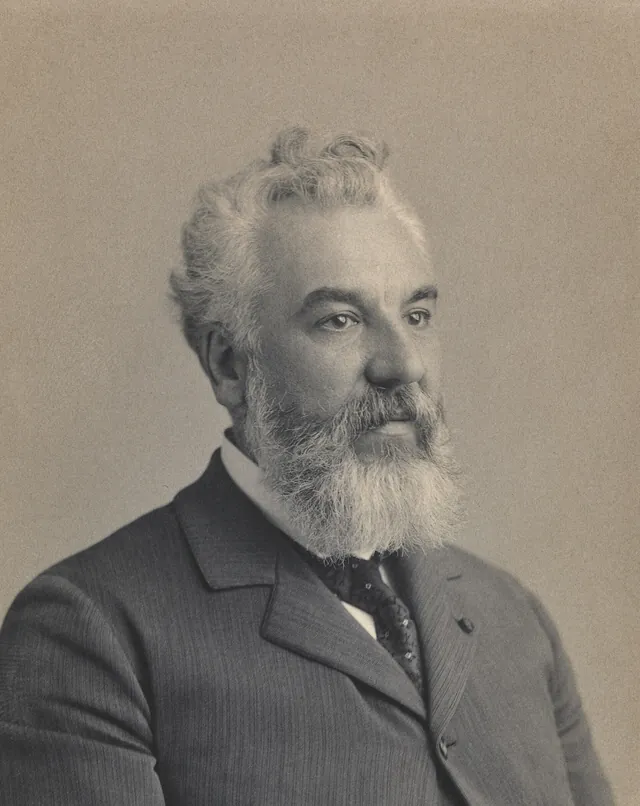
Alexander Graham Bell IQ searches lead to one range, 160–180, on a 24/7 Wall St. list of the smartest inventors dated June 10, 2025. The article says Bell’s invention revolutionized global communication “thanks to his IQ estimated between 160 and 180,” and elsewhere admits that many inventors never took an IQ test. It gives no method, test or source. For how such numbers spread, see where celebrity IQ numbers come from.
What is Alexander Graham Bell’s IQ level? It is not documented. The 160–180 range is not supported by any test, and the direction of the error is the usual one: this site’s inferred range, 140–160, is lower. It matches Thomas Edison (140–160) and overlaps Katherine Johnson (135–155) and sits below Nikola Tesla (160–175) and Albert Einstein (160–180). All are inferences from records, not test scores.
Was Alexander Graham Bell a genius? His documented record is that of an exceptional applied inventor and teacher. Wikipedia says he left the Royal High School in Edinburgh at 15 having completed only the first four forms, and calls his school record undistinguished. He was 29 when patent 174,465 was issued on March 7, 1876. For when scientists and inventors make their breakthroughs, see the research on age at breakthrough.
How are estimates for people of Bell’s era built? From dated achievements, and with large error bars. The research on the IQ of historical geniuses sets out the method and its limits. See also other scientists we have checked, or compare yourself with the same scale in the IQ Metrics test.
How we read a number →Birth and death dates, schooling, the 1872 school, patent 174,465, honors, National Geographic Society presidency and later work.
Boston University professorship in 1873 and the patent of March 7, 1876.
States “IQ estimated between 160 and 180” for Bell; names no test, method or source, and says many inventors never took an IQ test.
Confirms the identifier Q34286 is the Canadian-American scientist and inventor of the telephone.
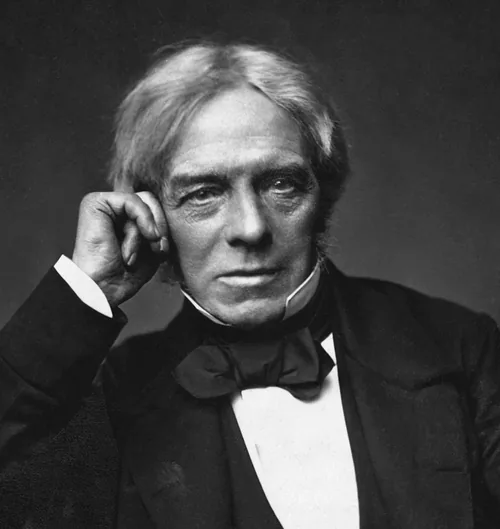
Platinum print from about 1895 in the Smithsonian National Portrait Gallery, released under CC0.
No test result appears in Wikipedia’s biography, The Canadian Encyclopedia or the one list that gives a range.
The sources behind our estimate
The figures that circulate for Alexander Graham Bell, what we were able to confirm, and where the two diverge.
A June 10, 2025 article on 24/7 Wall St., “Who Was the Smartest Inventor Ever?”, says Bell’s invention revolutionized communication “thanks to his IQ estimated between 160 and 180.”
The 24/7 Wall St. list gives no test, method or source for the range, and the same article says many of the inventors never took an IQ test. Wikipedia’s biography and The Canadian Encyclopedia describe his schooling, teaching and patents without giving any IQ.
The circulating range begins where this site’s range ends. Nothing in the documented record, an undistinguished school record, teaching posts and patents, supports a figure equal to the 160–180 this site gives Albert Einstein.
Want a number that does hold up? Every figure on this page is somebody’s claim. Take the 30-question test and get a percentile you can check rather than a figure you have to trust.
Alexander Graham Bell — frequently asked
What was Alexander Graham Bell’s IQ?
No IQ test result for Alexander Graham Bell exists. A 2025 list on 24/7 Wall St. gives an “IQ estimated between 160 and 180,” with no test or source. This site’s estimated range, inferred from his documented record, is 140–160 on a scale with mean 100 and SD 15.
What was Alexander Graham Bell’s IQ level?
Alexander Graham Bell’s IQ level is not documented. The only range found, 160–180, appears on 24/7 Wall St. without a test or method. His record, from a Boston University professorship to patent 174,465 in 1876, supports an estimate, not a score.
Where does the 160–180 come from?
The 160–180 appears in a June 10, 2025 article on 24/7 Wall St. that ranks inventors and says many of them never took an IQ test. It cites no test, date or examiner, so this site treats it as an unverified opinion.
Was Alexander Graham Bell a genius?
Alexander Graham Bell was an exceptional inventor and teacher, but “genius” is a label, not an IQ score. Wikipedia says his school record was undistinguished and he left the Royal High School at 15, so his reputation rests on applied work.
Did Alexander Graham Bell take an IQ test?
No IQ test taken by Alexander Graham Bell has been published. He died in 1922, and Wikipedia’s biography and The Canadian Encyclopedia record schooling, teaching and patents, not an IQ. His school record is described as undistinguished.
When did Alexander Graham Bell get the telephone patent?
The U.S. Patent Office issued Alexander Graham Bell patent 174,465 on March 7, 1876, after the application was filed on February 14, 1876, according to Wikipedia. He was 29, and on March 10 he got his telephone to work.
How does Alexander Graham Bell’s estimated IQ compare with Thomas Edison’s?
This site’s estimate for Alexander Graham Bell, 140–160, equals its 140–160 estimate for Thomas Edison and sits below its 160–175 estimate for Nikola Tesla. All are inferences from documented achievement, not test scores, so they are too close to rank.
How does my IQ compare with Alexander Graham Bell?
You can find out in about fifteen minutes. The IQ Metrics assessment is 30 questions, scored on the same 100-mean scale used throughout this page, so your result and the estimate above are at least expressed in the same units — one measured, one inferred. Once you have a number, the leaderboard shows where it would sit, and how we score and norm it explains the benchmarking.
Where does this estimate come from?
From the documented record rather than a test — the method is named above and set out in full under how we read a number. Compare it against the other scientists profiles, starting with Albert Einstein.
- Take the 30-question IQ test — get a measured score and percentile of your own
- Average IQ by country — how the scale behaves across populations
- How IQ Metrics scores its assessment — the method behind our own number
- More on how IQ testing works — reliability, error and what a score can and cannot say
- More scientists profiles — same field, same method
More scientists
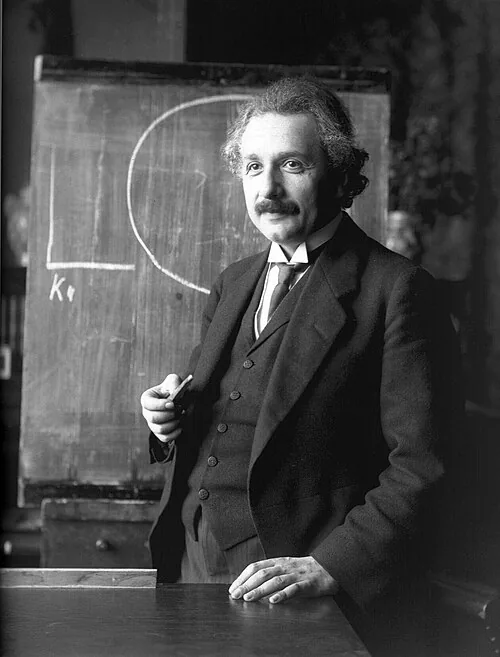
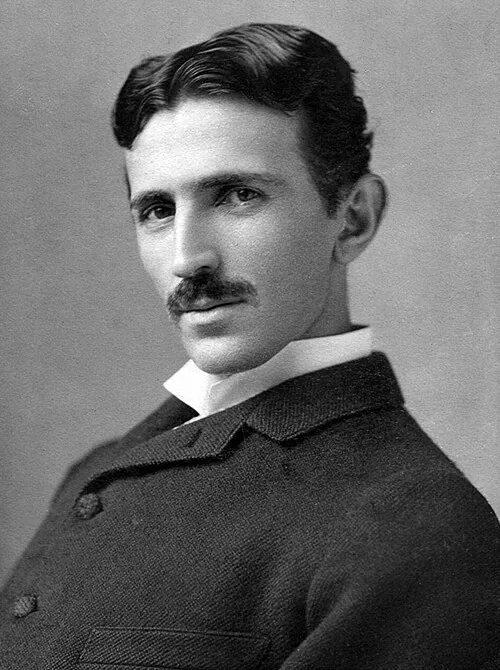
Portrait by Ferdinand Schmutzer (1921), public domain. Background removed for the portrait above. · Photograph by Napoleon Sarony (c. 1890), public domain. Background removed for the portrait above. · Photograph, about the 1850s, photographer not recorded (Commons file); public domain. Background removed for the portrait above.


An estimate is an inference.
Yours can be measured.
Thirty questions, scored against general-population benchmarks. Your score, your percentile, your ability breakdown and a printable IIF certificate.
Find your IQ score now! →