



What was Katherine Johnson’s IQ?
Finished college at 18, spent 33 years at Langley — and the “get the girl” line about John Glenn is her own recollection, as NASA itself reports it.
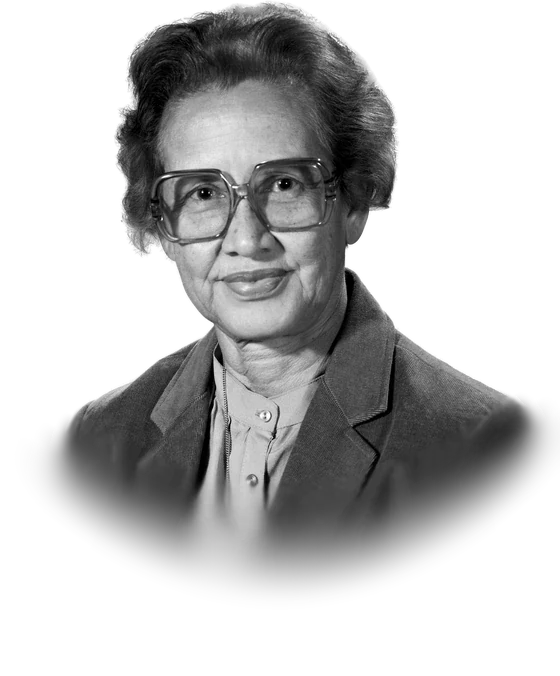
No published IQ test result exists for Katherine Johnson, so any number given for her IQ level is a guess, not a measurement. What is documented is a B.S. in mathematics and French, summa cum laude, at 18 (1937), 33 years at NACA and NASA, and the 2015 Presidential Medal of Freedom — a record that supports an estimated IQ of 135–155.
Katherine Johnson’s estimated IQ
- A B.S. in mathematics and French from West Virginia State College in 1937, at age 18, with the highest honors: NASA says “highest honors”, and West Virginia State University and the WVU Archives say summa cum laude.
- Grade acceleration: NASA says she was a high school freshman by age 10 and graduated from high school at 14; the West Virginia Encyclopedia says 13. The exact age varies by source, but every account has her years ahead of her age group.
- One of three students chosen by West Virginia State’s president, Dr. John W. Davis, to be offered places at West Virginia University’s graduate school, where she enrolled in the graduate mathematics program (NASA dates this to 1939, WVU Libraries to 1940).
- Thirty-three years at NACA and NASA Langley (June 1953 to 1986): trajectory analysis for Alan Shepard’s May 1961 Freedom 7 flight, verification of an electronic computer’s orbit calculation for John Glenn in 1962, and the 1969 Apollo 11 trajectory (NASA; the White House’s Medal of Freedom citation).
- Co-author, with engineer Ted Skopinski, of NASA Technical Note D-233 (September 1, 1960) on satellite position and azimuth angle, which NASA says was the first time a woman in the Flight Research Division received credit as an author of a research report.
This is an inference from schooling and career records, not a test result. Grade acceleration and an early degree are coarse signals; NASA’s biography lists one degree, the 1937 B.S., so there is no completed doctorate to anchor the estimate the way other scientists’ records allow; and much of her documented work, such as hand-checking trajectory equations and verifying machine output, shows accuracy and applied mathematical skill inside team projects, which an IQ test captures only in part. Sources also disagree on details (13 or 14 at high school graduation; 13, 21 or 26 research reports), so the range leans on what they agree on: the 1937 degree and the 1953–1986 NASA career.
- Full name
- Katherine Coleman Goble Johnson; credited by NASA as Katherine G. Johnson
- Born
- August 26, 1918, White Sulphur Springs, West Virginia
- Died
- February 24, 2020, Newport News, Virginia, aged 101
- Education
- B.S. in mathematics and French, West Virginia State College, 1937, at 18, with the highest honors; one of three students chosen to integrate West Virginia University’s graduate school
- Career
- NACA and NASA Langley Research Center, June 1953 to 1986: West Area Computing, then the Flight Research and Space Mechanics divisions
- Known for
- Trajectory analysis for Freedom 7 (May 5, 1961); verifying an electronic computer’s orbit calculation for Friendship 7 (1962); the Apollo 11 trajectory (1969)
- Honors
- Presidential Medal of Freedom (November 24, 2015); Katherine G. Johnson Computational Research Facility (May 5, 2016); Congressional Gold Medal authorized November 8, 2019
- IQ test result
- None published; the estimated range of 135–155 is an inference
What an IQ of 135–155 actually means
Set the claim aside for a moment. If someone genuinely scored in this range, here is what that would represent.
| Score range | Classification | Share of people | What it indicates |
|---|---|---|---|
| 85 – 114 | Average | ~68% | The range most people fall into. |
| 115 – 129 | Above average | ~13.6% | Roughly one person in seven. |
| 130 – 144 | Gifted | ~2% | The threshold most high-IQ societies use. |
| Above 144 | Highly gifted | ~0.1% | Figures above this range are extrapolated from the curve rather than measured. |
Percentages are approximate and describe a normal distribution. The same number means different things on tests with different standard deviations.
Thirty questions gives you a measured position on this exact scale — your score, your percentile and the ability breakdown behind it.
Find out in 30 minutes →Who Katherine Johnson was
How smart is Katherine Johnson, judged only by what can be checked? She was born on August 26, 1918, in White Sulphur Springs, West Virginia. NASA’s 2015 profile notes that school for African-American children normally stopped at eighth grade there, so her father drove the family 120 miles to Institute, West Virginia, where she could go on to high school on the campus of West Virginia State College, a historically Black college. In her own account for NASA she counted everything as a child, from the steps up to church to the dishes and silverware she washed. NASA says she was a high school freshman by age 10, graduated from high school at 14 and earned a B.S. in mathematics and French in 1937, at 18, with the highest honors; she had found a mentor in math professor W. W. Schieffelin Claytor, the third African American to earn a PhD in mathematics.
After graduating she took a teaching job at a Black public school in Virginia. In 1939, NASA’s biography says, West Virginia quietly integrated its graduate schools, and West Virginia State’s president, Dr. John W. Davis, selected her and two men as the first Black students offered places at West Virginia University; she left her teaching job and enrolled in the graduate mathematics program. West Virginia University Libraries dates the selection to 1940 and says she left after a semester of classes. In 1953, after years as a teacher, she began working for the National Advisory Committee for Aeronautics, NASA’s predecessor.
She was hired at NACA’s Langley laboratory in Hampton, Virginia, in June 1953, into the all-Black West Area Computing section headed by Dorothy Vaughan; Public Law 116-68 calls it the segregated West Area Computing unit and her job that of a computer. Two weeks into her tenure, Vaughan assigned her to a project in the Maneuver Loads Branch of the Flight Research Division. In 1960 she and engineer Ted Skopinski published NASA Technical Note D-233, “Determination of Azimuth Angle at Burnout for Placing a Satellite Over a Selected Earth Position”, which NASA says was the first time a woman in the Flight Research Division had received credit as an author of a research report. After Project Mercury she joined the Space Mechanics Division, and in 1962 she co-authored a report on the orbital behavior of the Echo I satellite.
NASA says she did trajectory analysis for Alan Shepard’s Freedom 7 flight (May 5, 1961), and the White House’s 2015 Medal of Freedom citation calls him the first American in space. For John Glenn’s three-orbit Friendship 7 flight on February 20, 1962, both that citation and Public Law 116-68 record that she verified the calculation made by an electronic computer (collectSPACE identifies the machines as IBM 7090s at Goddard Space Flight Center). The famous words are retold rather than documented: NASA’s biography reports Glenn asking for “the girl” to run the same equations by hand, as Johnson remembers it, and collectSPACE reported in January 2017 that Margot Lee Shetterly, author of Hidden Figures, had not found a document giving the date. Johnson calculated the 1969 Apollo 11 trajectory, and NASA says Apollo 13’s aborted 1970 mission made use of her earlier research on backup parameters and charts. She worked on the Space Shuttle and the Earth Resources Technology Satellite and retired in 1986 after 33 years. President Obama presented her with the Presidential Medal of Freedom on November 24, 2015, at 97; NASA named the Katherine G. Johnson Computational Research Facility on May 5, 2016; Congress authorized a Congressional Gold Medal on November 8, 2019; and she died on February 24, 2020, at 101. What counts as genius-level intelligence is a separate question from what a test would show, even for a record this dense with dates and named work.
 By Elora Mercer, Celebrity Research WriterFigures checked by Leon Falkner, Data & Research Analyst
Reviewed by Aarav Vardhan, Editor-in-Chief · Last reviewed August 2026

Katherine Johnson: the documented record
The estimate above rests on this record. Every entry here is a matter of public fact, which is more than can be said for the number itself.
- 1918Born August 26 in White Sulphur Springs, West Virginia.
- 1937Earns a B.S. in mathematics and French at West Virginia State College, at 18, with the highest honors, after finishing high school at 14 (NASA; the West Virginia Encyclopedia says 13) and starting it by age 10.
- 1939Selected by West Virginia State’s president as one of three Black students offered places at West Virginia University’s graduate school (WVU Libraries dates the selection to 1940).
- 1953Hired at NACA’s Langley laboratory in June, in the West Area Computing section headed by Dorothy Vaughan.
- 1960Co-authors NASA Technical Note D-233 with Ted Skopinski, published September 1.
- 1961–62Trajectory analysis for Alan Shepard’s Freedom 7 flight (May 5, 1961); verifies an electronic computer’s orbit calculation for John Glenn’s Friendship 7 flight (February 20, 1962).
- 1969Calculates the Apollo 11 trajectory to the Moon.
- 1986Retires after 33 years at Langley.
- 2015Receives the Presidential Medal of Freedom on November 24, at 97.
- 2020Dies February 24, at 101.
Why no figure circulates
Following a claim back to its first appearance is the part almost nobody does — and it is what most people are actually asking.
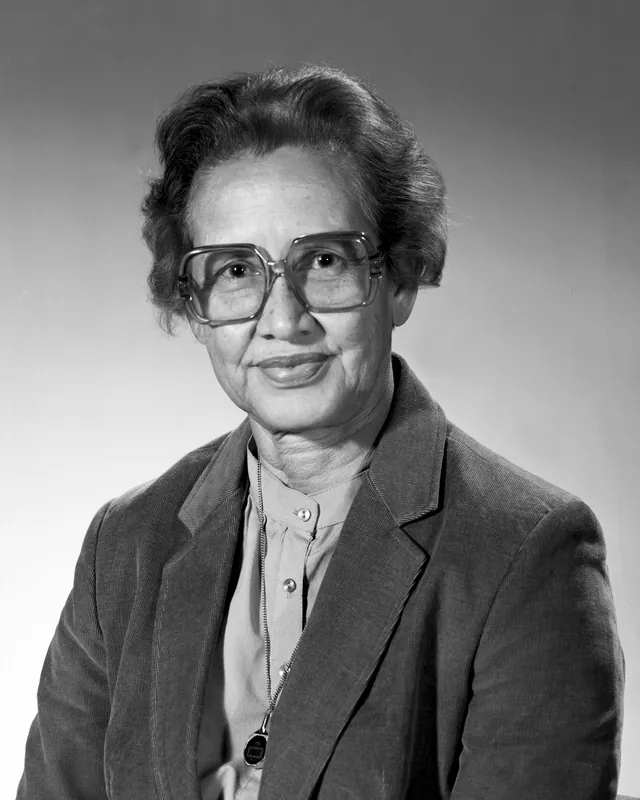
Katherine Johnson’s IQ has never been published from a test, and the one figure that turns up for it comes with no test that anyone can point to. As of September 2026, search results list a calendar-uk.co.uk FAQ page, “What IQ did Katherine Johnson have?”, as giving an estimate of 162; the page blocks automated readers, so what it cites, if anything, could not be checked. The aggregator geniuses.club, which says it publishes an IQ number only when a named outlet has reported one, has a Katherine Johnson page that reports none. The gap between a number and a test is the usual pattern for a celebrity IQ number: a precise-looking figure on one page, and nothing on the pages that would have to hold the test.
Katherine Johnson’s IQ as a kid is as undocumented as her adult score. Intelligence scales already existed when she was born: Binet and Simon published a preliminary version of their test in 1905 and a Stanford revision appeared in 1916 (the history of intelligence testing), so the missing score is not a matter of dates, and no record of her taking one turned up in the sources checked. On the usual scale (mean 100, standard deviation 15) a 162 sits just over four standard deviations above average, the territory of an IQ around 160, and a figure that precise needs a test, a date and a norm group, none of which any source supplies. What exists for her childhood is a school record of acceleration: NASA says she was a high school freshman by age 10 and graduated from high school at 14.
The documented record is strong, but its details vary between sources, and that variation is itself worth knowing. NASA’s 2015 profile and the WVU Archives have her graduating from high school at 14 and from college at 18; the West Virginia Encyclopedia says she finished her secondary coursework at 13 and began college the next year; West Virginia State University says she was enrolling in college classes by 15; and NASA’s longer Langley biography has her attending the high school on the college campus by 13 and enrolling in the college itself at 18. Every account agrees on the 1937 degree in mathematics and French, and those that give her age at graduation say 18. As of September 2026, NASA’s own pages also count her research reports differently: 13 on one page, 26 in the Langley biography, with MacTutor’s biography giving 21. A school and degree record measures achievement, not IQ, but a record this consistent at its endpoints is the kind of evidence a range can rest on.
Katherine Johnson’s estimated IQ of 135–155 sits below Carl Sagan (145–165), whose NASA mission work came with a University of Chicago doctorate and more than 300 papers, and overlaps Neil deGrasse Tyson (140–155), estimated from a completed doctorate. It is lower than Ada Lovelace (155–175), whose range rests on a single 1843 paper and a tutor’s written assessment. Johnson’s evidence is a bachelor’s degree at 18, a 33-year career in trajectory analysis and space mechanics, and government records naming specific flights, so the range is offered with the caution above attached. The 162 that turns up in search results sits seven points above its top, the usual direction: sourced records almost always point lower than the number that circulates. For what a score in this territory means, see what an IQ of 140 means.
How we read a number →None found. NASA’s Langley biography, its 2015 profile and its People of NASA page, West Virginia State University’s alumni page, the WVU Archives finding aid, the WVU Libraries article and the West Virginia Encyclopedia entry were each checked for IQ and intelligence-test wording and contain none; MacTutor and Wikipedia mention none either.
States that no IQ figure for her appears in any source used on the page and that the site publishes a number only when a named outlet has reported one. The sitemaps of lifescoretest.com and corebrain.app list no Katherine Johnson profile. A calendar-uk.co.uk FAQ page that search results list with 162 blocks automated readers and could not be opened, so it is not counted as a source.
Born August 26, 1918; B.S. in mathematics and French, 1937, highest honors; mentor W. W. Schieffelin Claytor; high school freshman by 10 and graduate at 14, college at 18 (2015 profile) versus in the college-campus high school by 13 and enrolling in the college itself at 18 (biography); the 1939 graduate-school selection; hired June 1953; the Glenn recheck, with the “get the girl” words as Johnson’s recollection; 26 reports; retired 1986; Medal of Freedom at 97.
The 1960 report with Ted Skopinski; 13 research reports (a different count from the Langley biography); Apollo 11 and the Apollo 13 backup charts; the Space Mechanics Division and the 1962 Echo I report; death on February 24, 2020, at 101; the facility named on May 5, 2016.
The citation for Katherine G. Johnson: hired at Langley, the 1961 Shepard trajectory, the 1962 verification of the first electronic-computer flight calculation for Glenn’s orbit, and the 1969 Apollo 11 trajectory; awards presented at the White House on November 24.
Findings: born August 26, 1918, in White Sulphur Springs; began in 1953 as a computer in the segregated West Area Computing unit; calculated the Freedom 7 trajectory and was asked to verify the electronic computers’ calculations for Friendship 7; retired from NASA in 1986.
The abstract presents expressions relating a satellite’s orbital-plane position to latitude and longitude on a rotating earth, and one for the azimuth angle at burnout.
Summa cum laude in 1937, at 18; enrolling in college classes by 15 (West Virginia State University) or graduating from high school at 14 (WVU Archives); one of three students chosen by West Virginia State’s president to integrate WVU’s graduate school, in 1940 per WVU Libraries; at Langley from the summer of 1953.
Places her in West Virginia State High School from 1928 to 1932 and ready for high school at age ten, gives the 1937 B.S. summa cum laude and 21 papers co-authored at NASA, and records her retirement in 1986 after 33 years.
e-WV: secondary coursework finished at 13, college the next year, graduated 1937 at 18. collectSPACE: Shetterly’s account cites Johnson, no document giving the date, IBM 7090s at Goddard. Wikipedia: the 1905 Binet–Simon test and 1916 Stanford revision; Friendship 7 launched February 20, 1962. Wikidata Q11740 is Katherine Johnson, born 1918-08-26, died 2020-02-24.
The sources behind our estimate
The figures that circulate for Katherine Johnson, what we were able to confirm, and where the two diverge.
Search results list one page with a figure: a calendar-uk.co.uk FAQ headed “What IQ did Katherine Johnson have?”, reported as giving an estimate of 162. Elsewhere she is described in terms of ability, such as NASA’s “brilliance with numbers”, with no score attached.
No published IQ test result exists for Katherine Johnson. NASA’s own pages on her list her ages, degrees and missions but no test, so a Katherine Johnson NASA IQ figure has no NASA record behind it; West Virginia State University, the WVU Archives, WVU Libraries and the West Virginia Encyclopedia describe her schooling and career without one. geniuses.club, which says it publishes an IQ number only when a named outlet has reported one, states that none of the sources it used gives a figure for her, and the sitemaps of lifescoretest.com and corebrain.app list no Katherine Johnson profile. The calendar-uk.co.uk page behind the 162 blocks automated readers, so what it cites, if anything, could not be checked for this profile.
Read left to right: 135 and 155 are the ends of the range this site’s record supports; 162 is the one figure found, seven points above the top of that range and tied to no test that could be found.
Want a number that does hold up? Every figure on this page is somebody’s claim. Take the 30-question test and get a percentile you can check rather than a figure you have to trust.
Katherine Johnson — frequently asked
What is Katherine Johnson’s IQ?
No published IQ test result exists for Katherine Johnson (credited by NASA as Katherine G. Johnson), so no measured IQ level can be reported. IQ Metrics’ estimated range, inferred from her 1937 degree at 18 and 33 years of trajectory work at NACA and NASA, is 135–155; the one figure found, 162, comes with no test that could be found.
Did Katherine Johnson take an IQ test?
No test result is public. NASA’s biographies, West Virginia State University, the West Virginia University Archives and the West Virginia Encyclopedia describe her grades, degrees and work without mentioning an intelligence test, and geniuses.club says none of the sources it used reports an IQ figure for her.
What was Katherine Johnson’s IQ as a kid?
No childhood IQ score is on record. What is documented is acceleration: NASA says she was a high school freshman by age 10 and graduated from high school at 14, though the West Virginia Encyclopedia says 13. Skipping grades shows fast school progress, not a score.
Where does the IQ of 162 for Katherine Johnson come from?
Search results attribute an estimate of 162 to a calendar-uk.co.uk FAQ page titled “What IQ did Katherine Johnson have?” The page blocks automated readers, so what it cites could not be checked, and no test, date or study for 162 turned up in NASA, university or archive sources.
Is Katherine Johnson a genius?
Her documented record is very strong: a B.S. in mathematics and French at 18 with the highest honors, 33 years at NACA and NASA including trajectory analysis for Freedom 7 and Apollo 11, and the Presidential Medal of Freedom in 2015. “Genius” has no fixed IQ cutoff, so the record supports an estimated range of 135–155 rather than a label.
Is the Hidden Figures story about Katherine Johnson and John Glenn true?
The verification is documented: the White House’s 2015 Medal of Freedom citation and Public Law 116-68 both say she verified an electronic computer’s orbit calculation for Glenn in 1962. The “get the girl” words come from her own recollection, as NASA reports it, and Hidden Figures author Margot Lee Shetterly said she had not found a document giving the date.
How does Katherine Johnson’s estimated IQ compare with Carl Sagan’s?
This site estimates 135–155 for Katherine Johnson and 145–165 for Carl Sagan. Both rest on documented achievement, not a test; Sagan’s sits higher because his record includes a doctorate, a Cornell professorship and more than 300 papers, while Johnson’s is a bachelor’s degree at 18 and a 33-year NASA career.
How does my IQ compare with Katherine Johnson?
You can find out in about fifteen minutes. The IQ Metrics assessment is 30 questions, scored on the same 100-mean scale used throughout this page, so your result and the estimate above are at least expressed in the same units — one measured, one inferred. Once you have a number, the leaderboard shows where it would sit, and how we score and norm it explains the benchmarking.
Where does this estimate come from?
From the documented record rather than a test — the method is named above and set out in full under how we read a number. Compare it against the other scientists profiles, starting with Albert Einstein.
- Take the 30-question IQ test — get a measured score and percentile of your own
- Average IQ by country — how the scale behaves across populations
- How IQ Metrics scores its assessment — the method behind our own number
- More on how IQ testing works — reliability, error and what a score can and cannot say
- More scientists profiles — same field, same method
More scientists
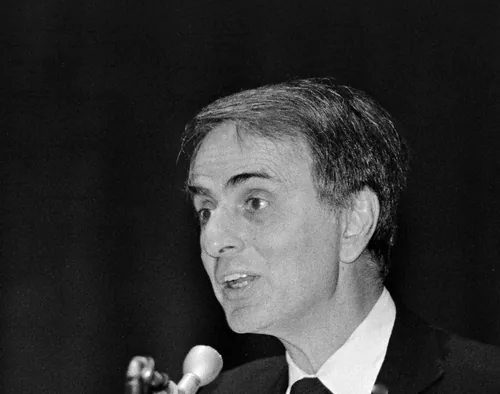
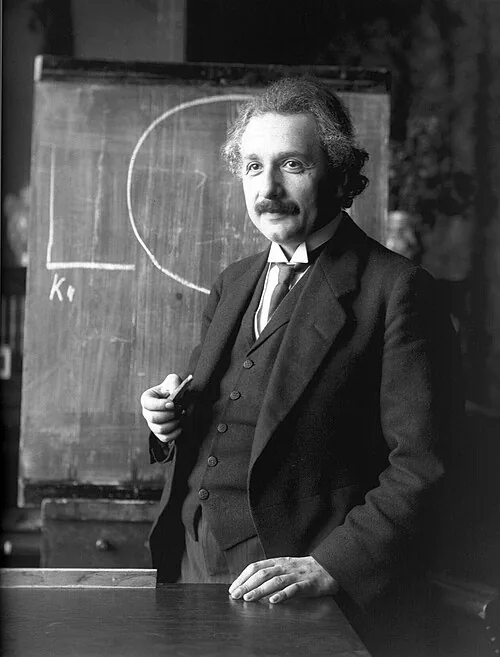
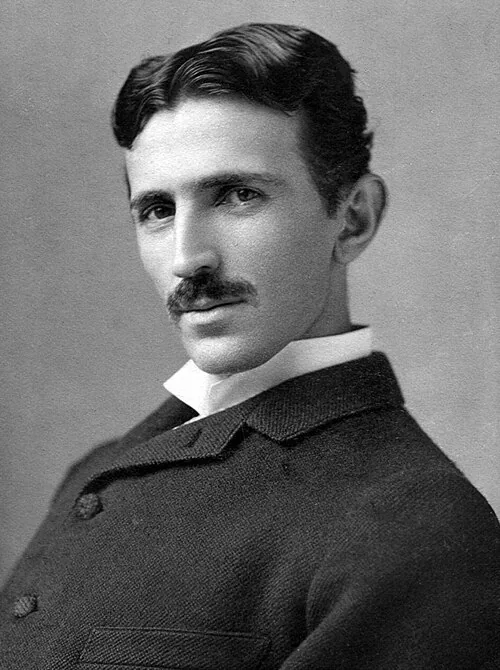
Photograph by Kenneth C. Zirkel (Cornell University, c. 1987), CC BY-SA 4.0. Background removed for the portrait above. · Portrait by Ferdinand Schmutzer (1921), public domain. Background removed for the portrait above. · Photograph by Napoleon Sarony (c. 1890), public domain. Background removed for the portrait above.


An estimate is an inference.
Yours can be measured.
Thirty questions, scored against general-population benchmarks. Your score, your percentile, your ability breakdown and a printable IIF certificate.
Find your IQ score now! →