



What was G. W. F. Hegel’s IQ?
Cox rated his childhood record at 150 and 145, corrected to 170 and 165, on data she graded at .60.
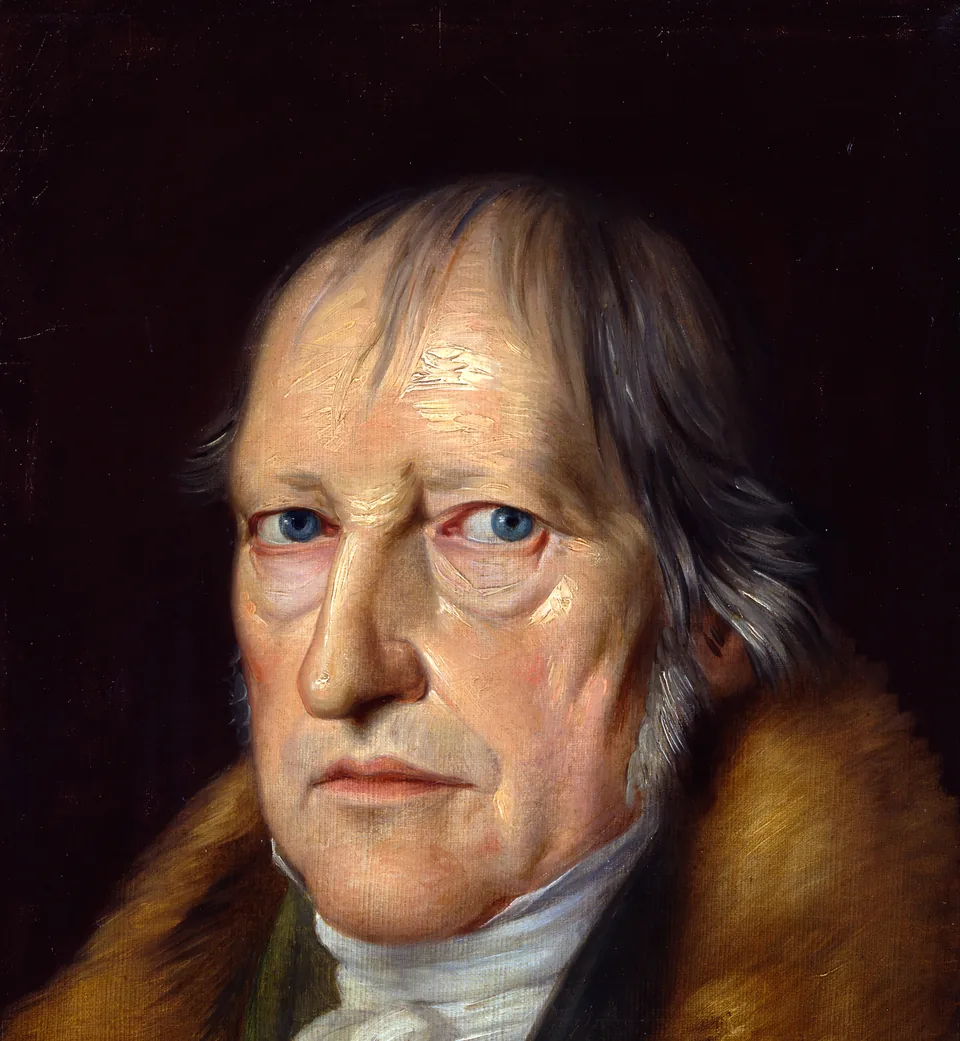
G. W. F. Hegel has no IQ test score; he died in 1831. The numbers that exist are Catharine Cox’s 1926 estimates from his childhood record: 150 and 145 as obtained, and 170 and 165 after correction. Our Hegel IQ estimate is 150–170, and the data behind it are only moderately reliable (.60).
G. W. F. Hegel’s estimated IQ
- Cox rated his record to age 17 at IQ 150 and his record from 17 to 26 at 145, both on data she graded at .60. Her corrected estimates are 170 and 165 (Early Mental Traits of Three Hundred Geniuses, case study pp. 580–582 and Table 12A).
- In her account his mother taught him from his fifth year, he went to a Latin school before he was six, and at ten his father arranged private tutors in Latin, mathematics and surveying. At 12 he knew the definitions of the idea clara, and at 14 the principles of Wolff’s logic.
- He kept a diary from 14½, began a book of definitions at 15 and, at 16, translated Longinus’s On the Sublime as an out-of-school task. He entered the University of Tübingen at 18 “with an excellent school record behind him”.
- He completed the Phenomenology of Spirit in late 1806, was appointed to the chair of philosophy at Heidelberg in 1816 and took the chair at Berlin in 1818 (Stanford Encyclopedia of Philosophy).
Cox rated biographies of childhood, never tests, and her corrected figures are an adjustment of her own. Simonton (2006) notes that her corrected scores “may be overestimates”. We keep our range between her obtained and corrected figures, with the weak .60 reliability in mind.
- Born
- August 27, 1770, Stuttgart
- Education
- University of Tübingen, 1788–1793
- Cox ratings
- 150 to age 17 and 145 from 17 to 26; corrected 170 and 165
- Cox data reliability
- .60
- Eminence rank
- 29th on Cattell’s list, as printed in Cox’s Table 12A
- Major works
- Phenomenology of Spirit (1807); Science of Logic; Encyclopaedia (1817); Philosophy of Right (1821)
- Chairs
- Heidelberg (1816); Berlin (1818)
- Died
- 1831
What an IQ of 150–170 actually means
Set the claim aside for a moment. If someone genuinely scored in this range, here is what that would represent.
Average is 100 by construction, and about two-thirds of people fall between 85 and 115. Take the test to place your own score on this scale.
| Score range | Classification | Share of people | What it indicates |
|---|---|---|---|
| 85 – 114 | Average | ~68% | The range most people fall into. |
| 115 – 129 | Above average | ~13.6% | Roughly one person in seven. |
| 130 – 144 | Gifted | ~2% | The threshold most high-IQ societies use. |
| Above 144 | Highly gifted | ~0.1% | Figures above this range are extrapolated from the curve rather than measured. |
Percentages are approximate and describe a normal distribution. The same number means different things on tests with different standard deviations.
Thirty questions gives you a measured position on this exact scale — your score, your percentile and the ability breakdown behind it.
Find out in 30 minutes →Who G. W. F. Hegel was
Who was Hegel? Georg Wilhelm Friedrich Hegel was born in Stuttgart on August 27, 1770. He studied at Tübingen from 1788 to 1793, first philosophy and then theology, and made friends there with the poet Friedrich Hölderlin and the philosopher Friedrich von Schelling. After graduating he worked as a private tutor in Bern and then Frankfurt.
What did he publish? He moved to Jena in 1801 and published his first philosophical work that year. He completed the Phenomenology of Spirit in late 1806, and it appeared in 1807. After a short spell as a newspaper editor, he was headmaster of a gymnasium in Nuremberg from 1808 to 1815, where he wrote the Science of Logic.
What came after? He took the chair of philosophy at Heidelberg in 1816 and published the Encyclopaedia of the Philosophical Sciences in 1817. In 1818 he became professor at Berlin, the most prestigious post in German philosophy. His Elements of the Philosophy of Right appeared in 1821, and he died in 1831. Compare other thinkers in our historical figures category.
 By Elora Mercer, Celebrity Research WriterFigures checked by Leon Falkner, Data & Research Analyst
Reviewed by Aarav Vardhan, Editor-in-Chief · Last reviewed November 2026

G. W. F. Hegel: the documented record
The estimate above rests on this record. Every entry here is a matter of public fact, which is more than can be said for the number itself.
- 1770Born on August 27 in Stuttgart.
- 1788Enters the University of Tübingen at 18 (to 1793).
- 1801Moves to Jena and publishes his first philosophical work.
- 1807The Phenomenology of Spirit is published.
- 1808Becomes headmaster of a gymnasium in Nuremberg (to 1815).
- 1816Appointed to the chair of philosophy at Heidelberg.
- 1818Takes the chair of philosophy at the University of Berlin.
- 1821Publishes Elements of the Philosophy of Right.
- 1831Dies.
- 1926Cox publishes her estimates of 150 and 145, corrected to 170 and 165.
Where the 165–170 figure came from
Following a claim back to its first appearance is the part almost nobody does — and it is what most people are actually asking.
What was Hegel’s IQ? Nobody tested him. Catharine Cox, a student of Lewis Terman, rated the childhoods of 301 eminent people from 1450 to 1850 by reading their biographies, and Hegel is one of them. His case study is on pages 580 to 582 of her second volume, and the figures sit in her fold-out Table 12A. For how her method works and what it can and cannot show, see our research on the IQ of historical geniuses.
Why did his rating fall on the longer record? Cox’s text for ages 17 to 26 describes a student whom the “semimonastic discipline and narrow atmosphere” of Tübingen repelled, who found solace in riding, dancing and drinking, and who then spent three years as a tutor in Switzerland. It is a less precocious record than his childhood, and the rating moves from 150 to 145, or from 170 to 165 corrected. The change is small, and her data at both ages carry the same .60 reliability.
How does Hegel compare? Among philosophers on this site he sits level with Immanuel Kant and René Descartes (both 150–170) and below John Stuart Mill (165–185) and Gottfried Leibniz (180–195). Friedrich Nietzsche is 150–165, from an academic record rather than Cox. See philosophers ranked by IQ for the full table, and what an IQ of 170 means for the top of our range.
How we read a number →Read in the archive.org scan. The case study gives “AI IQ 150”, “AII IQ 145” and a data reliability of .60; Table 12A gives corrected estimates of 170 and 165 for Hegel (Cattell rank 29). The text describes the Latin school before six, tutors at ten, the diary at 14½, the translation of Longinus at 16, entry to Tübingen at 18 and the “semimonastic discipline”.
Says that Cox’s corrected scores “may be overestimates”. The DOI and title were checked on Crossref.
Born 1770 in Stuttgart; Tübingen 1788–1793 and the friendships with Hölderlin and Schelling; tutoring in Bern and Frankfurt; Jena in 1801; the Phenomenology of Spirit (published 1807); Nuremberg 1808–1815; the Heidelberg chair in 1816, the Encyclopaedia in 1817, the Berlin chair in 1818 and the Philosophy of Right in 1821; death in 1831.
Confirms Q9235 is the German philosopher and theologian (1770–1831).
Hegel died in 1831. Cox’s table, the Stanford entry and a general web search for “Hegel IQ” gave no test score and no sourced figure other than Cox’s.
On this site Kant and Descartes are 150–170, Mill 165–185, Leibniz 180–195 and Nietzsche 150–165.
The sources behind our estimate
The figures that circulate for G. W. F. Hegel, what we were able to confirm, and where the two diverge.
The only numbers published for Hegel are Catharine Cox’s of 1926: 150 and 145 as obtained, corrected to 170 and 165 in her Table 12A. People type “hegel iq”, “gwf hegel iq”, “what was hegel’s iq” and “was hegel a genius”.
Cox’s table prints 150 for his record to age 17 and 145 for ages 17 to 26, from her ratings of biographical data, and 170 and 165 after a statistical correction. She graded the reliability of the data at .60. No test, school mark or contemporary IQ claim exists, and a general web search for the figure turned up no page that gives one.
The obtained figures are 145 and 150 and the corrected ones are 165 and 170. Our 150–170 spans both sets, and the 5-point fall on the longer record is smaller than the uncertainty in her method.
Want a number that does hold up? Every figure on this page is somebody’s claim. Take the 30-question test and get a percentile you can check rather than a figure you have to trust.
G. W. F. Hegel — frequently asked
What was Hegel’s IQ?
Hegel has no IQ test score. Catharine Cox’s 1926 study estimated his childhood record at 150 and 145, corrected to 170 and 165, from biographies and not tests. Our Hegel IQ estimate, between her obtained and corrected figures, is 150–170.
Why did Hegel’s rating fall on the longer record?
Cox rated his record to age 17 at 150 and his record from 17 to 26 at 145. The later text describes a seminary student repelled by its discipline who then worked as a tutor. The 5-point difference is small, and both ratings rest on data she graded at .60.
Was Hegel a child prodigy?
Cox’s record says his schooling started early: his mother taught him from his fifth year, he attended a Latin school before six and had private tutors at ten. She writes of an unusually broad education and a deep, critical mind, which is why she rated him highly.
Hegel vs Kant vs Leibniz: who rates highest?
On this site Leibniz is 180–195, Hegel 150–170 and Kant 150–170, all from Cox’s method. The gaps reflect Cox’s ratings of each man’s early record, and the ranges are estimates, not test scores.
What did Hegel publish and when?
The Phenomenology of Spirit came out in 1807 and the Science of Logic during his Nuremberg years, 1808–1815. The Encyclopaedia of the Philosophical Sciences followed in 1817 and the Elements of the Philosophy of Right in 1821.
Is Hegel’s IQ 170?
That figure is Cox’s corrected estimate for his record to age 17, and 165 is her corrected figure for ages 17 to 26. Neither is a test score, and her data for him carry a reliability of only .60, so we give a range of 150–170.
How does my IQ compare with G. W. F. Hegel?
You can find out in about fifteen minutes. The IQ Metrics assessment is 30 questions, scored on the same 100-mean scale used throughout this page, so your result and the estimate above are at least expressed in the same units — one measured, one inferred. Once you have a number, the leaderboard shows where it would sit, and how we score and norm it explains the benchmarking.
Where does this estimate come from?
From the documented record rather than a test — the method is named above and set out in full under how we read a number. Compare it against the other historical profiles, starting with Isaac Newton.
- Take the 30-question IQ test — get a measured score and percentile of your own
- Average IQ by country — how the scale behaves across populations
- How IQ Metrics scores its assessment — the method behind our own number
- More on how IQ testing works — reliability, error and what a score can and cannot say
- More historical profiles — same field, same method
More historical
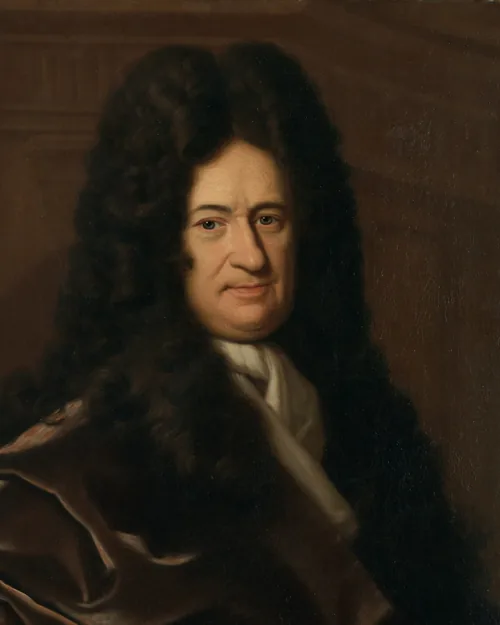
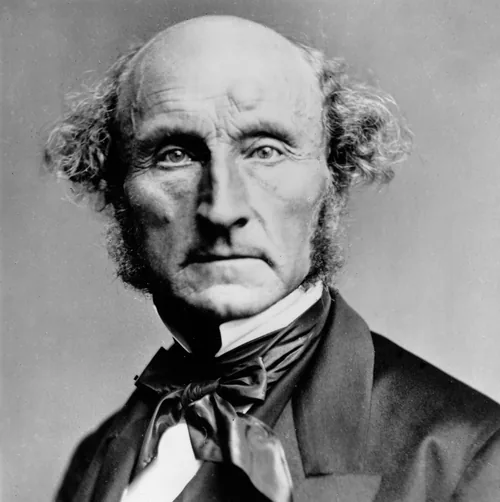
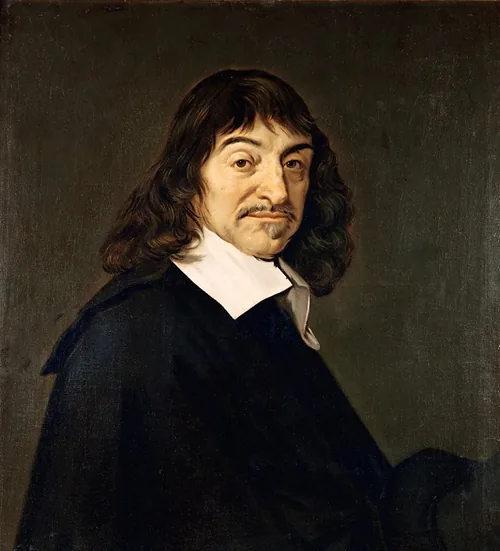
Portrait by Christoph Bernhard Francke (about 1695; Herzog Anton Ulrich-Museum, Braunschweig; Commons file), public domain, cropped. · Photograph of John Stuart Mill by the London Stereoscopic Company, about 1870 (Commons file). Public domain. Cropped for the portrait above. · Portrait of René Descartes, a painting after Frans Hals, Louvre, Paris (inventory 1317; Commons file). Public domain. It is a painted portrait made after Hals’s original, not a photograph. Cropped for the portrait above.


An estimate is an inference.
Yours can be measured.
Thirty questions, scored against general-population benchmarks. Your score, your percentile, your ability breakdown and a printable IIF certificate.
Find your IQ score now! →