



What was John Stuart Mill’s IQ?
Greek from about age three, a history of Rome at six, and Cox’s highest childhood rating of all 301 subjects.
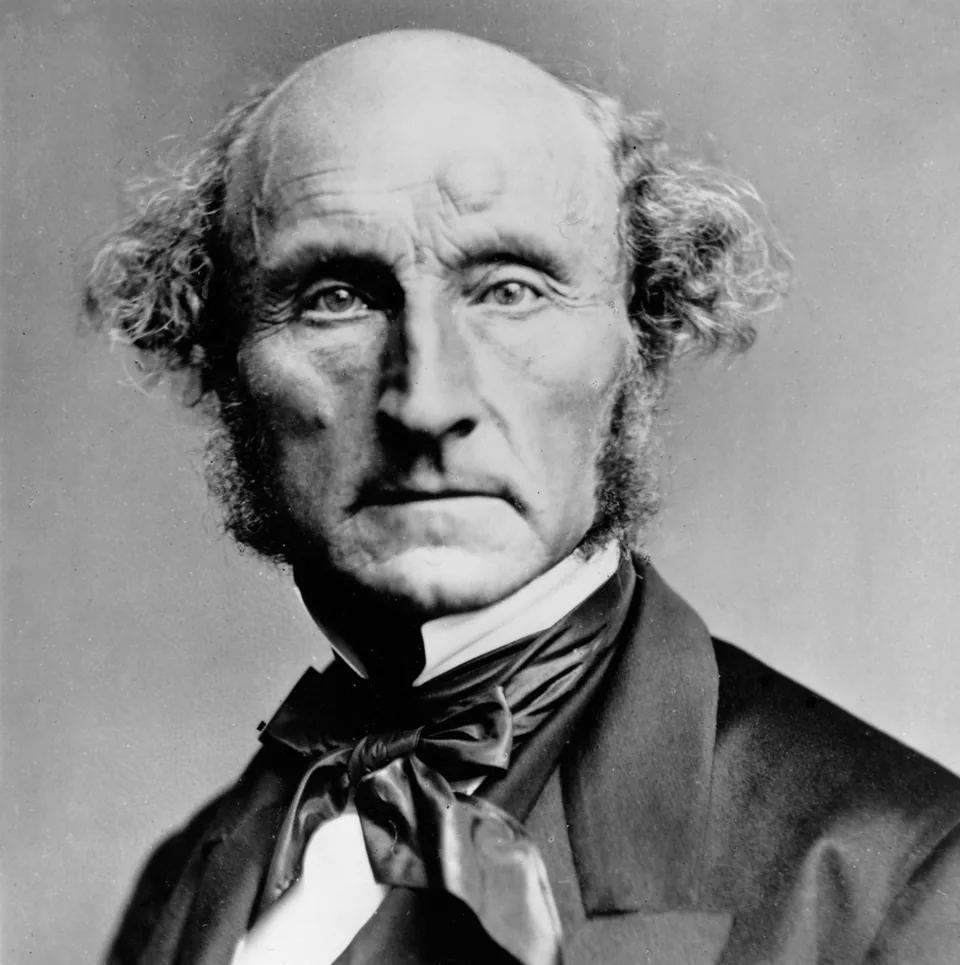
John Stuart Mill never took an IQ test (he died in 1873), so the John Stuart Mill IQ of 190 is a retrospective estimate: Catharine Cox’s 1926 rating of his first 17 years, on a ratio scale, from biographical records. Her rating for ages 17 to 26 was 170. The documented record is a home education under his father James Mill, A System of Logic (1843) and On Liberty (1859).
John Stuart Mill’s estimated IQ
- Cox (1926) printed 190 (±4) for Mill’s first 17 years and 170 (±4) for ages 17 to 26, with a reliability coefficient of .82 for the record of his early years, which she called more complete than that of any other eminent man in her study.
- His own Autobiography says he was told he began Greek at three years old, and that he began Latin in his eighth year; Cox’s case study adds geometry and algebra at eight, conic sections at nine and fluxions at eleven.
- Published A System of Logic (1843), Principles of Political Economy (1848), On Liberty (1859) and Utilitarianism (1861).
- Worked for the East India Company from 1823 to 1858, and sat as Member of Parliament for the City of Westminster from July 25, 1865, to November 17, 1868.
Cox’s numbers describe how the recorded facts of a childhood compare with the average child of the same age, not a position among adults, and Cox herself wrote that Mill’s first rating is too high as a measure of his standing among the great minds. The range sits a little below the circulating 190 for that reason, and a range from a biography can be off by many points.
- Born
- May 20, 1806, Pentonville, London
- Died
- May 7, 1873, Avignon, France
- Education
- Taught at home by his father James Mill; studied law with John Austin
- Known for
- A System of Logic (1843), On Liberty (1859), Utilitarianism (1861)
- Career
- East India Company, 1823–1858; MP for Westminster, 1865–1868
- Cox (1926) ratings
- 190 (ages 0–17), 170 (ages 17–26)
- Cox reliability of data
- .82 for the early record
- Published IQ test result
- None
What an IQ of 165–185 actually means
Set the claim aside for a moment. If someone genuinely scored in this range, here is what that would represent.
Average is 100 by construction, and about two-thirds of people fall between 85 and 115. Take the test to place your own score on this scale.
| Score range | Classification | Share of people | What it indicates |
|---|---|---|---|
| 85 – 114 | Average | ~68% | The range most people fall into. |
| 115 – 129 | Above average | ~13.6% | Roughly one person in seven. |
| 130 – 144 | Gifted | ~2% | The threshold most high-IQ societies use. |
| Above 144 | Highly gifted | ~0.1% | Figures above this range are extrapolated from the curve rather than measured. |
Percentages are approximate and describe a normal distribution. The same number means different things on tests with different standard deviations.
Thirty questions gives you a measured position on this exact scale — your score, your percentile and the ability breakdown behind it.
Find out in 30 minutes →Who John Stuart Mill was
John Stuart Mill was born in London on May 20, 1806, the eldest son of James Mill, a Scottish philosopher and the author of The History of British India. He was educated at home by his father and did not attend a school or university; his Autobiography describes the daily lessons, the walks on which he reported his reading, and the study of Greek authors before he learnt any Latin. John Stuart Mill’s IQ is therefore tied to an unusual education as much as to ability.
Did John Stuart Mill take an IQ test? No. He died on May 7, 1873, in Avignon, and the first practical intelligence scale appeared in 1905. In the Autobiography he writes that he has no remembrance of when he began Greek and has been told it was at three years old, and that he learnt no Latin until his eighth year. Cox’s case study, based on that book and on Bain’s John Stuart Mill: A Criticism with Personal Recollections (1882), adds that he began a history of Rome at six and studied logic from about twelve and political economy at thirteen. Her work is part of the history of intelligence testing, but it estimates what a record implies; it does not test anyone.
At 17 he followed his father into the East India Company, where he worked from 1823 until 1858, when the Company’s territories passed to the Crown. In 1843 he published A System of Logic, in 1848 the Principles of Political Economy, in 1859 On Liberty and in 1861 Utilitarianism. On Liberty appeared when he was 52 and the Logic when he was 37, dates that can be set beside the age-at-breakthrough data study of when scientists and artists made their breakthroughs.
Mill was elected Member of Parliament for the City of Westminster for the Liberal Party on July 25, 1865, and served until November 17, 1868. He was Rector of the University of St Andrews from 1865 to 1868 and gave his inaugural address there on February 1, 1867. He was elected a foreign honorary member of the American Academy of Arts and Sciences in 1856 and a member of the American Philosophical Society in 1867. Anyone curious about their own result can try the IQ Metrics test, but Mill’s place rests on his published work, not a score.
 By Elora Mercer, Celebrity Research WriterFigures checked by Leon Falkner, Data & Research Analyst
Reviewed by Aarav Vardhan, Editor-in-Chief · Last reviewed November 2026

John Stuart Mill: the documented record
The estimate above rests on this record. Every entry here is a matter of public fact, which is more than can be said for the number itself.
- 1806Born May 20 in Pentonville, London, the eldest son of James Mill.
- c. 1809Begins Greek at about three years old, as he was later told.
- c. 1814Begins to learn Latin in his eighth year.
- 1823Starts work at the East India Company, aged 17.
- 1843Publishes A System of Logic.
- 1848Publishes Principles of Political Economy.
- 1859Publishes On Liberty.
- 1865Elected MP for the City of Westminster on July 25; also becomes Rector of St Andrews.
- 1868Leaves Parliament on November 17.
- 1873Dies May 7 in Avignon; the Autobiography is published the same year.
- 1926Cox publishes ratings of 190 and 170 for Mill.
Where the 190 figure came from
Following a claim back to its first appearance is the part almost nobody does — and it is what most people are actually asking.
Mill’s IQ of 190 comes from one book: Catharine Cox’s The Early Mental Traits of Three Hundred Geniuses (Stanford University Press, 1926), Volume II of Lewis Terman’s Genetic Studies of Genius. Cox gave each subject two ratings, one for the record to age 17 and one to age 26, each the average of three independent estimates, with a reliability coefficient for the data. For Mill she printed 190 (±4) and 170 (±4) in Table 39 and in the heading of his case study, which opens on page 707. These are ratio IQs, mental age over chronological age, as in the usual reading of a 190, not scores from any test.
What is John Stuart Mill’s IQ score? The only sourced answer is Cox’s 190 for his first 17 years and 170 for ages 17 to 26, both retrospective estimates made 53 years after his death. The 190 is the highest first-period rating in her book: Mill is the only subject in her chapter “Cases Rated at AI IQ 190 to 200,” and he is not among the fourteen names she says “probably rated at 200 IQ or even higher.” She credited the unusual completeness of the record, not a test: his early years are documented year by year in his own Autobiography and in the biography by Alexander Bain.
Was John Stuart Mill a genius? His documented record is that of a major philosopher and economist whose work shaped liberal thought, and Cox’s ratings place him among the most precocious children she studied. She was also frank about the limits: she wrote that his first rating is too high when read as relative standing, and that on the second rating fifteen subjects stand above him, including Leibnitz and Goethe. Two other subjects of her method with profiles here are Leibniz and Newton. The error runs one way: the sourced childhood figure is the highest, and the later-life figure is lower.
How does the number compare with other historical figures? Cox’s method underlies the ranking of historical geniuses’ IQ estimates on this site. Francis Galton, whose grades of eminence Cox used to describe Mill as belonging to the “illustrious,” has a lower range here, and the blog posts that repeat 190 rarely mention that the 170 exists. See also other historical figures we have checked.
How we read a number →Mill rated 190 (±4) for the first 17 years and 170 (±4) to age 26, with reliability .82 for the early record; Cox states the first rating is relatively too high and that fifteen subjects rank above him on the second.
Born in London May 20, 1806; Greek “when I was three years old” as he was told; no Latin until his eighth year; his account of elections and Parliament.
Born May 20, 1806, in Pentonville; main works Logic (1843), On Liberty (1859), Utilitarianism (1861); elected MP for Westminster in 1865; almost thirty-five years at the East India Company.
MP dates July 25, 1865 – November 17, 1868; died May 7, 1873, in Avignon; East India Company 1823–1858; Rector of St Andrews 1865–1868; honorary memberships.
Confirms the identifier is the British philosopher and political economist (1806–1873).
States that Mill “was given an IQ of 190 for his development up to 17 and 170 for 17 to 26,” and that Cox’s subjects were rated on development, not population standing.
Lists “174 – John Stuart Mill” in a list compiled from Cox’s data and other web sources; names no test.
Searched for any page stating a measured score; the only figures found are retrospective estimates from Cox (1926) and lists derived from it.
The sources behind our estimate
The figures that circulate for John Stuart Mill, what we were able to confirm, and where the two diverge.
Mill’s IQ is given as 190 on blogs that repeat Cox’s 1926 study; one list of “the highest IQs on record” prints 174 for him.
No IQ test result for Mill exists; the first intelligence scale (Binet and Simon, 1905) came 32 years after his death. A blog post on Cox’s study states that Mill “was given an IQ of 190 for his development up to 17 and 170 for 17 to 26” and notes that the subjects were rated on development, not on their standing in a population. A separate list headed “The Highest IQs On Record” prints “174 – John Stuart Mill” among figures built from Cox’s data “as well as other sources around the net,” with no test named. Cox’s own pages print 190 and 170, not 174.
The 190 is Cox’s rating for the first 17 years only. Her rating for ages 17 to 26 is 170, which sits inside the range used here, and the 174 on one list matches neither of her printed values.
Want a number that does hold up? Every figure on this page is somebody’s claim. Take the 30-question test and get a percentile you can check rather than a figure you have to trust.
John Stuart Mill — frequently asked
What was John Stuart Mill’s IQ?
John Stuart Mill’s IQ was never measured, because he died in 1873, before intelligence tests existed. The figure that circulates, 190, is Catharine Cox’s 1926 retrospective rating of his first 17 years, with 170 for ages 17 to 26. This site estimates a range of 165–185.
What is John Stuart Mill’s IQ score?
No IQ score from a test exists for Mill. Catharine Cox’s 1926 study, Early Mental Traits of Three Hundred Geniuses, rated him 190 (±4) for his first 17 years and 170 (±4) for ages 17 to 26, using ratio IQ, from biographical records.
How smart was John Stuart Mill?
Mill was an exceptionally precocious scholar. By his own Autobiography he began Greek at about age three and Latin in his eighth year, and he went on to write A System of Logic (1843) and On Liberty (1859). Cox called his early record the most complete of any eminent man in her study.
Did John Stuart Mill take an IQ test?
No. Mill died on May 7, 1873, and the first practical intelligence scale, by Alfred Binet and Théodore Simon, appeared in 1905. The numbers attached to his name come from Catharine Cox’s 1926 study of biographical records.
Was John Stuart Mill a genius?
By the record, yes in the ordinary sense of the word: a major philosopher and economist, author of On Liberty and the Principles of Political Economy. Cox’s own commentary adds that his first rating of 190 is relatively too high, and that fifteen subjects rank above him on the second.
Where does the 190 come from?
The 190 comes from Table 39 and the Mill case study in Catharine Cox’s 1926 book, where it is the rating for his first 17 years. The rating for ages 17 to 26 is 170. Blogs that repeat 190 often drop the second number.
When did John Stuart Mill learn Greek?
Mill’s Autobiography says he has no remembrance of beginning Greek and was told it was when he was three years old. He learnt no Latin until his eighth year, and by then he had read Herodotus and Xenophon’s Cyropaedia in Greek.
How does my IQ compare with John Stuart Mill?
You can find out in about fifteen minutes. The IQ Metrics assessment is 30 questions, scored on the same 100-mean scale used throughout this page, so your result and the estimate above are at least expressed in the same units — one measured, one inferred. Once you have a number, the leaderboard shows where it would sit, and how we score and norm it explains the benchmarking.
Where does this estimate come from?
From the documented record rather than a test — the method is named above and set out in full under how we read a number. Compare it against the other historical profiles, starting with Isaac Newton.
- Take the 30-question IQ test — get a measured score and percentile of your own
- Average IQ by country — how the scale behaves across populations
- How IQ Metrics scores its assessment — the method behind our own number
- More on how IQ testing works — reliability, error and what a score can and cannot say
- More historical profiles — same field, same method
More historical
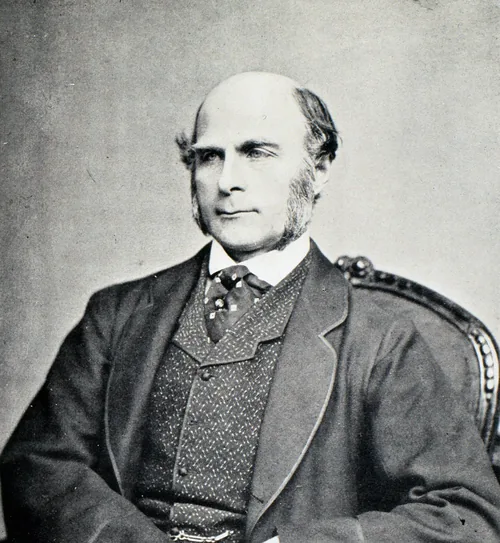
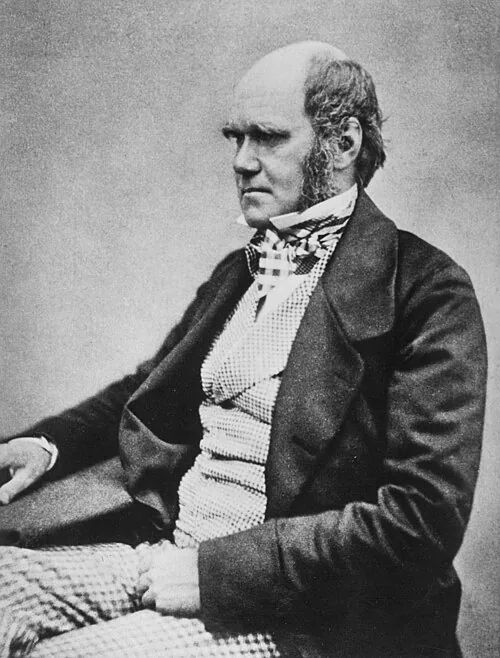
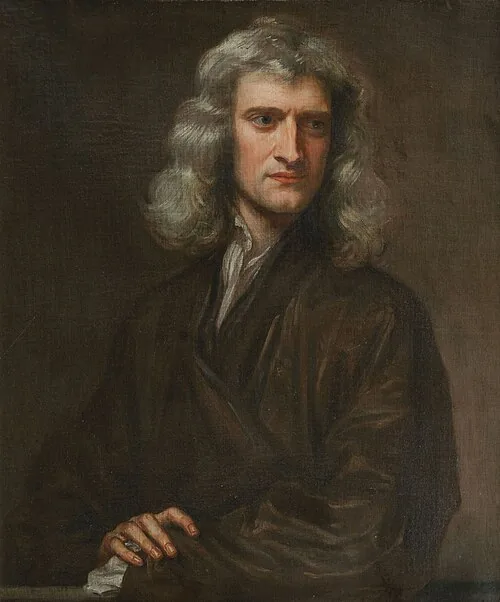
Photograph of Francis Galton, probably from the 1850s or early 1860s, scanned from Karl Pearson’s The Life, Letters and Labours of Francis Galton (Commons file); photographer not stated; public domain. Cropped for the portrait above. · Photograph by Maull & Fox (1854), public domain. Background removed for the portrait above. · Portrait by Godfrey Kneller (1689), public domain.


An estimate is an inference.
Yours can be measured.
Thirty questions, scored against general-population benchmarks. Your score, your percentile, your ability breakdown and a printable IIF certificate.
Find your IQ score now! →