



What was José Raúl Capablanca’s IQ?
Unbeaten for eight years and world champion at 32: the chess record is documented, and no IQ score has ever been published.

José Raúl Capablanca has no published IQ score. What is documented is a chess record: world champion from 1921 to 1927, and 63 games without a defeat between 1916 and 1924. Our Capablanca IQ estimate is 140–155, drawn from that record, not from a test.
José Raúl Capablanca’s estimated IQ
- He narrowly beat the Cuban champion Juan Corzo in a match in November and December 1901, around his 13th birthday, and beat the US champion Frank Marshall in 1909 by 8 wins, 1 loss and 14 draws (Wikipedia).
- He won the 1911 San Sebastián tournament ahead of Akiba Rubinstein, Aron Nimzowitsch and Siegbert Tarrasch (Wikipedia).
- He took the world title from Emanuel Lasker in 1921 and held it until Alexander Alekhine beat him in 1927 (Wikipedia).
- From February 10, 1916 to March 21, 1924 he lost no game: 63 games, 40 won and 23 drawn, including the title match with Lasker. As an adult he lost only 34 serious games (Wikipedia).
- Mikhail Botvinnik regarded his book Chess Fundamentals as the best chess book ever written, and Bobby Fischer said he had “a real light touch” (Wikipedia).
A chess record shows skill at chess, not an IQ score. He played before FIDE ratings began, so there is no official rating for his peak, and the range rests on results. It is a judgment, not a measurement.
- Born
- November 19, 1888, Havana
- Early match
- Beat Cuban champion Juan Corzo, November–December 1901
- Education
- Columbia University, left to play chess (dates differ by source)
- Tournament win
- San Sebastián, 1911
- World champion
- 1921–1927 (beat Lasker; lost to Alekhine)
- Unbeaten run
- February 10, 1916 to March 21, 1924: 63 games, 40 wins, 23 draws
- Died
- March 8, 1942, New York City
- Circulating IQ figure
- None with a source
- Documented IQ test
- None published
What an IQ of 140–155 actually means
Set the claim aside for a moment. If someone genuinely scored in this range, here is what that would represent.
| Score range | Classification | Share of people | What it indicates |
|---|---|---|---|
| 85 – 114 | Average | ~68% | The range most people fall into. |
| 115 – 129 | Above average | ~13.6% | Roughly one person in seven. |
| 130 – 144 | Gifted | ~2% | The threshold most high-IQ societies use. |
| Above 144 | Highly gifted | ~0.1% | Figures above this range are extrapolated from the curve rather than measured. |
Percentages are approximate and describe a normal distribution. The same number means different things on tests with different standard deviations.
Thirty questions gives you a measured position on this exact scale — your score, your percentile and the ability breakdown behind it.
Find out in 30 minutes →Who José Raúl Capablanca was
Who was Capablanca? He was born José Raúl Capablanca y Graupera on November 19, 1888, in Havana, then part of the Spanish Empire. He was the third world chess champion, from 1921 to 1927. He died in New York City on March 8, 1942, aged 53 (Wikipedia).
What did he study? Wikipedia says he passed the entrance examinations for Columbia College in New York in 1905 and left in 1908 to concentrate on chess. It adds that, according to Columbia University, he enrolled in its School of Mines, Engineering and Chemistry in September 1910 to study chemical engineering, and left after one semester when his financial support was withdrawn. The sources disagree on dates, and we give both.
How did he play? Wikipedia describes him as renowned for his endgame skill and speed of play. In 1922 he gave a simultaneous exhibition in Cleveland against 103 opponents, winning 102 and drawing one. See other chess players in our athletes category.
 By Elora Mercer, Celebrity Research WriterFigures checked by Leon Falkner, Data & Research Analyst
Reviewed by Aarav Vardhan, Editor-in-Chief · Last reviewed November 2026

José Raúl Capablanca: the documented record
The estimate above rests on this record. Every entry here is a matter of public fact, which is more than can be said for the number itself.
- 1888Born on November 19 in Havana.
- 1901Narrowly beats Cuban champion Juan Corzo in a match.
- 1909Beats Frank Marshall in a match: 8 wins, 1 loss, 14 draws.
- 1911Wins the San Sebastián tournament.
- 1916Loses to Oscar Chajes on February 10, then goes eight years without a defeat.
- 1921Wins the world championship from Emanuel Lasker.
- 1922Plays 103 opponents at once in Cleveland: 102 wins, 1 draw.
- 1924Loses to Richard Réti in New York on March 21, ending the run at 63 games.
- 1927Loses the title to Alexander Alekhine.
- 1942Dies in New York City on March 8.
Why no figure circulates
Following a claim back to its first appearance is the part almost nobody does — and it is what most people are actually asking.
What is Capablanca’s IQ? No source we found gives one, and he died in 1942, before FIDE ratings began. What survives is a chess record, which we use for a 140–155 estimate. For why chess numbers drift between pages, see our article on chess players ranked by IQ and our page on chess ratings and IQ.
Was Capablanca a prodigy? Wikipedia says he narrowly beat the Cuban champion Juan Corzo in a match in November and December 1901, around his 13th birthday. It also says he then finished fourth of six in the April 1902 national championship and lost both his games with Corzo. That is a prodigy’s record, and an honest one: strong early, not unbeaten.
How does he compare with other chess players? Bobby Fischer is 160–180 on this site, Garry Kasparov 135–155 and Paul Morphy 135–155, another player from before the rating era. Magnus Carlsen is 145–160, on a published rating. All are estimates, not test scores.
How we read a number →Born November 19, 1888 in Havana and died March 8, 1942 in New York; the 1901 match with Corzo and the 1902 championship; Columbia College (1905, left 1908) and, citing Columbia University, the School of Mines semester of September 1910; the 1909 Marshall match; San Sebastián 1911; the 1921 and 1927 title matches; the 63-game run from February 10, 1916 to March 21, 1924; the Cleveland exhibition of 1922. It contains no IQ.
Confirms Q160702 is the Cuban chess player (1888–1942). Wikidata lists the birth date as November 6, 1888; Wikipedia gives November 19, which we use.
The photograph used as the portrait above; public domain, with the source named on Wikimedia Commons.
None in Wikipedia. A general web search for “Capablanca IQ” found forum threads and no page naming a test, a tester or a date.
Our article on chess players ranked by IQ traces each chess figure to its source; our chess ratings page covers ratings and IQ.
On this site Fischer is 160–180, Carlsen 145–160, Kasparov 135–155 and Morphy 135–155.
The sources behind our estimate
The figures that circulate for José Raúl Capablanca, what we were able to confirm, and where the two diverge.
People type “capablanca iq”, “capablanca chess iq” and “capablanca vs fischer”. We found no page that gives him a sourced IQ score.
No IQ score for Capablanca has a source. A general web search for “Capablanca IQ” found forum threads about chess champions’ IQs and no page that names a test, a tester or a date for him. Wikipedia’s long biography gives chess results and no score.
No circulating figure exists to compare, so the range stands alone. On this site Bobby Fischer is 160–180, Magnus Carlsen 145–160 and Garry Kasparov 135–155. We place Capablanca in the same band as Carlsen and Paul Morphy, on results alone.
Want a number that does hold up? Every figure on this page is somebody’s claim. Take the 30-question test and get a percentile you can check rather than a figure you have to trust.
José Raúl Capablanca — frequently asked
What is Capablanca’s IQ?
No IQ score for José Raúl Capablanca has a source, and he died in 1942. Our Capablanca IQ estimate, built from his chess record, is 140–155. It is an estimate, not a test result.
What was Capablanca’s chess IQ?
No test measured it. His record is 63 games without a defeat between 1916 and 1924, the world title from 1921 to 1927 and 102 wins in a 103-board exhibition in 1922. A chess record is not an IQ score; see our page on chess ratings and IQ.
Was Capablanca a chess prodigy?
He was strong early: Wikipedia says he narrowly beat the Cuban champion in 1901, around his 13th birthday. He also lost both games to the same opponent in April 1902, so the record is strong rather than flawless.
Why was Capablanca called unbeatable?
From February 1916 to March 1924 he lost no game in 63, with 40 wins and 23 draws, including his 1921 title match against Lasker. As an adult he lost only 34 serious games, according to Wikipedia.
How does Capablanca’s estimated IQ compare with Fischer’s and Kasparov’s?
On this site Fischer is 160–180, Kasparov 135–155 and Capablanca 140–155. All three are estimates, and Capablanca’s rests on results alone because no rating exists for his peak.
Did Capablanca go to college?
Yes, briefly. He studied at Columbia University in New York and left to play chess full time. Wikipedia gives 1905 to 1908 and, citing Columbia, a semester of chemical engineering from September 1910. To see where a score lands, try our IQ test.
How does my IQ compare with José Raúl Capablanca?
You can find out in about fifteen minutes. The IQ Metrics assessment is 30 questions, scored on the same 100-mean scale used throughout this page, so your result and the estimate above are at least expressed in the same units — one measured, one inferred. Once you have a number, the leaderboard shows where it would sit, and how we score and norm it explains the benchmarking.
Where does this estimate come from?
From the documented record rather than a test — the method is named above and set out in full under how we read a number. Compare it against the other athletes profiles, starting with Magnus Carlsen.
- Take the 30-question IQ test — get a measured score and percentile of your own
- Average IQ by country — how the scale behaves across populations
- How IQ Metrics scores its assessment — the method behind our own number
- More on how IQ testing works — reliability, error and what a score can and cannot say
- More athletes profiles — same field, same method
More athletes
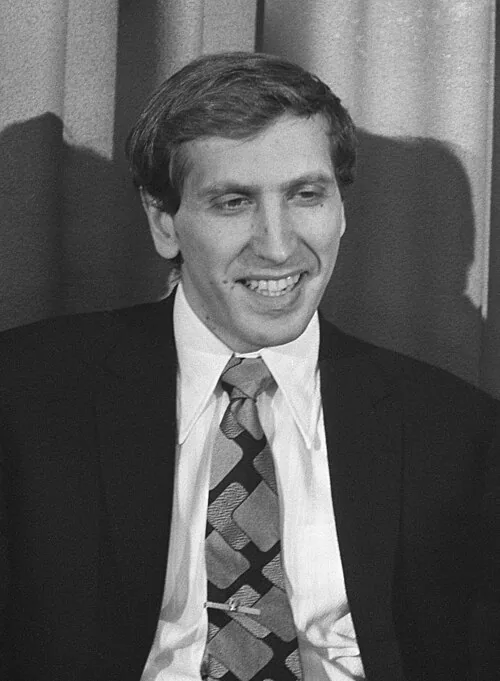
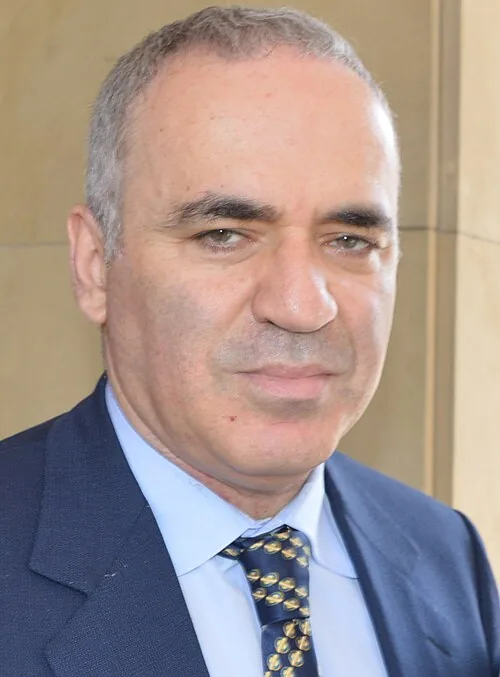
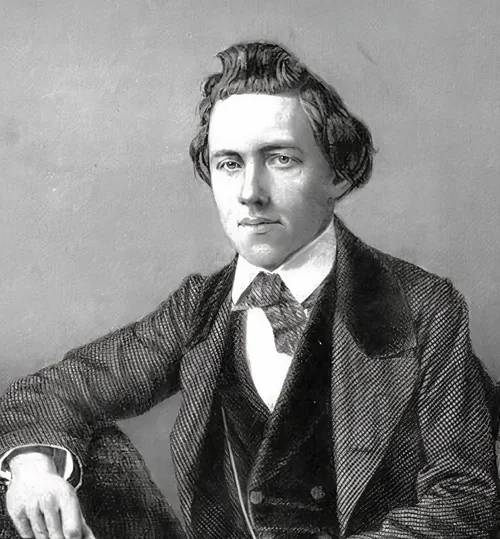
Photograph by Bert Verhoeff for Anefo (1972), CC0. Background removed for the portrait above. · Photograph by Fryta 73 (2015), CC BY-SA 2.0. Background removed for the portrait above. · Engraved portrait of Paul Morphy (made before 1885; Commons file), cropped; public domain (published before 1885, artist unknown).


An estimate is an inference.
Yours can be measured.
Thirty questions, scored against general-population benchmarks. Your score, your percentile, your ability breakdown and a printable IIF certificate.
Find your IQ score now! →