



What was Arthur Schopenhauer’s IQ?
No IQ test exists and Cox’s 1926 study does not rate him; the record is a doctorate at 25 and a major book at 30.
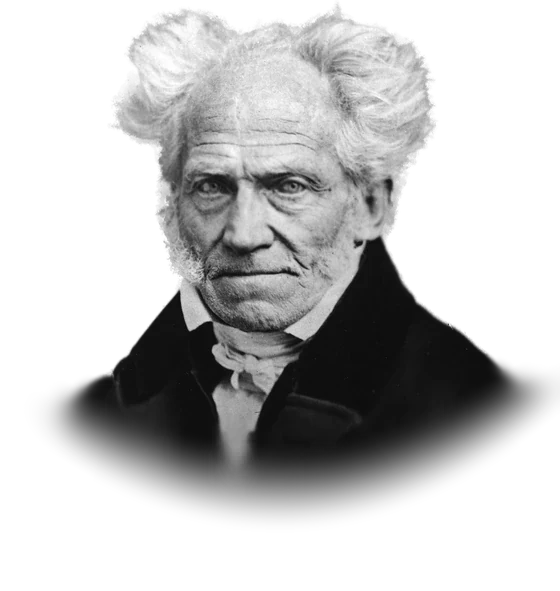
Arthur Schopenhauer’s IQ is not on record: no test result exists, no sourced estimate circulates, and Catharine Cox’s 1926 study of 301 geniuses does not rate him. Our Arthur Schopenhauer IQ estimate is 145–165. It rests on a doctorate awarded when he was 25 and on The World as Will and Representation, which he published in 1818 at 30.
Arthur Schopenhauer’s estimated IQ
- He studied at Göttingen from 1809, first medicine and then philosophy, and at the University of Berlin from 1811 to 1813, in courses ranging from physics and astronomy to history and poetry (Stanford Encyclopedia of Philosophy).
- In 1813, at 25, he submitted his dissertation On the Fourfold Root of the Principle of Sufficient Reason to the University of Jena and was awarded a doctorate in philosophy in absentia (Stanford Encyclopedia of Philosophy).
- He completed The World as Will and Representation in March 1818 and published it that December, aged 30, with the date 1819 on the title page (Stanford Encyclopedia of Philosophy).
- He published an expanded edition in 1844 and Parerga and Paralipomena in 1851, after which, within a couple of years, he received the recognition he had long hoped for (Stanford Encyclopedia of Philosophy).
No test, school mark or childhood record exists, and his main work sold very poorly at first (Wikipedia), so influence is a weak guide to ability here. The range follows his documented education and the scope of his work. It sits slightly below the Cox-rated philosophers on this site, because he is not one of Cox’s subjects.
- Born
- February 22, 1788, Danzig (now Gdańsk)
- Died
- September 21, 1860, Frankfurt
- Education
- Göttingen from 1809; University of Berlin, 1811 to 1813
- Doctorate
- University of Jena, 1813, awarded in absentia
- Main work
- The World as Will and Representation, December 1818
- Later work
- Parerga and Paralipomena, 1851
- Cox 1926
- Not among the 301 subjects
- Documented IQ test
- None (died 1860)
What an IQ of 145–165 actually means
Set the claim aside for a moment. If someone genuinely scored in this range, here is what that would represent.
| Score range | Classification | Share of people | What it indicates |
|---|---|---|---|
| 85 – 114 | Average | ~68% | The range most people fall into. |
| 115 – 129 | Above average | ~13.6% | Roughly one person in seven. |
| 130 – 144 | Gifted | ~2% | The threshold most high-IQ societies use. |
| Above 144 | Highly gifted | ~0.1% | Figures above this range are extrapolated from the curve rather than measured. |
Percentages are approximate and describe a normal distribution. The same number means different things on tests with different standard deviations.
Thirty questions gives you a measured position on this exact scale — your score, your percentile and the ability breakdown behind it.
Find out in 30 minutes →Who Arthur Schopenhauer was
Who was Arthur Schopenhauer? He was born on February 22, 1788, in Danzig, now Gdańsk, the son of a successful merchant, Heinrich Floris Schopenhauer, and of Johanna Schopenhauer, who became a well-known writer. He gave up a merchant apprenticeship, with his mother’s encouragement, to study at the Ernestine Gymnasium in Gotha (Wikipedia; Stanford Encyclopedia).
What was his education? He left the Gotha gymnasium after writing a satirical poem about a schoolmaster. He studied at Göttingen from 1809 and at Berlin from 1811 to 1813, hearing Fichte and Schleiermacher. In 1813 he wrote his dissertation and received a doctorate from Jena in absentia (Wikipedia; Stanford Encyclopedia).
What did he publish? He completed The World as Will and Representation in March 1818, and it appeared that December. Sales were very poor. He settled in Frankfurt in 1833, expanded the book in 1844 and published Parerga and Paralipomena in 1851. Recognition followed, helped by an unsigned 1853 review. He died on September 21, 1860 (Wikipedia; Stanford Encyclopedia).
 By Elora Mercer, Celebrity Research WriterFigures checked by Leon Falkner, Data & Research Analyst
Reviewed by Aarav Vardhan, Editor-in-Chief · Last reviewed November 2026

Arthur Schopenhauer: the documented record
The estimate above rests on this record. Every entry here is a matter of public fact, which is more than can be said for the number itself.
- 1788Born on February 22 in Danzig.
- 1809Enters the University of Göttingen, first for medicine and then philosophy.
- 1811Enrolls at the University of Berlin.
- 1813Writes his dissertation and is awarded a doctorate by Jena in absentia.
- 1818Completes The World as Will and Representation in March; it is published in December.
- 1820Schedules his Berlin lectures against Hegel’s; few students attend.
- 1833Settles permanently in Frankfurt.
- 1844Publishes an expanded edition with a second volume.
- 1851Publishes Parerga and Paralipomena.
- 1853An unsigned review in the Westminster Review helps bring recognition.
- 1860Dies on September 21.
Why no figure circulates
Following a claim back to its first appearance is the part almost nobody does — and it is what most people are actually asking.

What is Schopenhauer’s IQ? No test exists and no source we opened gives a number. Our estimate is 145–165. Cox’s 1926 study, the usual source for historical IQs, does not include him, as our philosophers ranked by IQ page also notes. For a score in this range, see what an IQ of 150 means.
Schopenhauer vs Hegel: who was smarter? Nobody measured either. On this site Hegel is 150–170 and Immanuel Kant 150–170, both set by Cox’s scores. In 1820 Schopenhauer scheduled his Berlin lectures at the same hour as Hegel’s and few students came, according to the Stanford Encyclopedia. That shows who had the audience, not who reasoned better.
Whom did he build on? Wikipedia says he built on Kant’s transcendental idealism. Compare Baruch Spinoza at 150–170 and Friedrich Nietzsche at 150–165 on this site. See all historical figures.
How we read a number →Life section read: born in Danzig on February 22, 1788; Göttingen and Berlin; the 1813 dissertation and the doctorate from Jena in absentia; the book completed in March 1818 and published in December with the date 1819; the 1820 lectures against Hegel; Frankfurt from June 1833; Parerga and Paralipomena in 1851; the 1853 review. It gives no IQ.
Death date, the Gotha gymnasium and the satirical poem, the merchant apprenticeship, the very poor sales of the 1818 book, and the debt to Kant. It contains no IQ.
Full text searched on archive.org: no mention of Schopenhauer, so he is not one of the 301 rated subjects.
Confirms Q38193 is the German philosopher (1788–1860).
Photograph by Johann Schäfer, March 1859, from the Frankfurt am Main University Library; public domain (author died in 1904).
He died in 1860, before intelligence tests existed. A search for his estimated IQ found articles on his ideas about intelligence and no figure.
Our philosophers page says Schopenhauer, Nietzsche and Russell are not among Cox’s 301 and gives no number for him. On this site Kant, Hegel and Spinoza are 150–170 and Nietzsche 150–165.
The sources behind our estimate
The figures that circulate for Arthur Schopenhauer, what we were able to confirm, and where the two diverge.
People type “schopenhauer iq”, “arthur schopenhauer estimated iq” and “schopenhauer vs hegel”. A search for his estimated IQ found articles on his ideas about intelligence and no number. No figure with a source circulates for him.
We found no IQ score or sourced estimate for Arthur Schopenhauer. Cox’s 1926 study covered people born between 1450 and 1850, and he was born in 1788, yet in her full text, which we searched on archive.org, his name never appears. Our philosophers page says the same. Articles that quote him on intelligence cite his philosophy, not a measurement.
No circulating number sits beside the range. It sits just below Kant, Hegel and Spinoza (all 150–170 on this site), whose ranges follow Cox’s ratings, and it overlaps Friedrich Nietzsche (150–165), the other philosopher of his century left out of her study.
Want a number that does hold up? Every figure on this page is somebody’s claim. Take the 30-question test and get a percentile you can check rather than a figure you have to trust.
Arthur Schopenhauer — frequently asked
What is Schopenhauer’s IQ?
No IQ test result exists for Arthur Schopenhauer, who died in 1860, and no sourced estimate circulates. Our Arthur Schopenhauer IQ estimate is 145–165, drawn from his doctorate and his major work. It is an estimate, not a test result.
Is there an estimated IQ for Arthur Schopenhauer?
We found none with a source. Cox’s 1926 study of 301 geniuses, the usual source for historical IQs, does not rate him, and its full text never names him. Articles that quote him on intelligence cite his philosophy, not a measurement.
Schopenhauer vs Hegel: who was smarter?
No test exists for either. On this site Hegel is 150–170 and Schopenhauer 145–165, both estimates. Schopenhauer scheduled his 1820 Berlin lectures against Hegel’s and drew few students, which shows audience, not intelligence.
What degrees did Schopenhauer have?
He received a doctorate in philosophy from the University of Jena in 1813, in absentia, for his dissertation On the Fourfold Root of the Principle of Sufficient Reason, says the Stanford Encyclopedia of Philosophy. He had studied at Göttingen and Berlin.
Why did The World as Will and Representation sell poorly?
Wikipedia says the book sold very poorly after it appeared in December 1818. We found no source that explains why, so we state no cause. Recognition came only after Parerga and Paralipomena in 1851 and a review in 1853.
How does Schopenhauer’s estimated IQ compare with Kant’s?
On this site Immanuel Kant is 150–170 and Schopenhauer 145–165. Kant’s range follows Cox’s ratings and Schopenhauer’s follows his education and work, so the ranges overlap and the gap is not a measurement. Place any score with our IQ percentile calculator.
When did Schopenhauer become famous?
Late. Parerga and Paralipomena appeared in 1851 and, within a couple of years, he received the recognition he had hoped for, helped by an unsigned review in the Westminster Review in 1853. He died in 1860. To measure your own reasoning, try our IQ test.
How does my IQ compare with Arthur Schopenhauer?
You can find out in about fifteen minutes. The IQ Metrics assessment is 30 questions, scored on the same 100-mean scale used throughout this page, so your result and the estimate above are at least expressed in the same units — one measured, one inferred. Once you have a number, the leaderboard shows where it would sit, and how we score and norm it explains the benchmarking.
Where does this estimate come from?
From the documented record rather than a test — the method is named above and set out in full under how we read a number. Compare it against the other historical profiles, starting with Isaac Newton.
- Take the 30-question IQ test — get a measured score and percentile of your own
- Average IQ by country — how the scale behaves across populations
- How IQ Metrics scores its assessment — the method behind our own number
- More on how IQ testing works — reliability, error and what a score can and cannot say
- More historical profiles — same field, same method
More historical
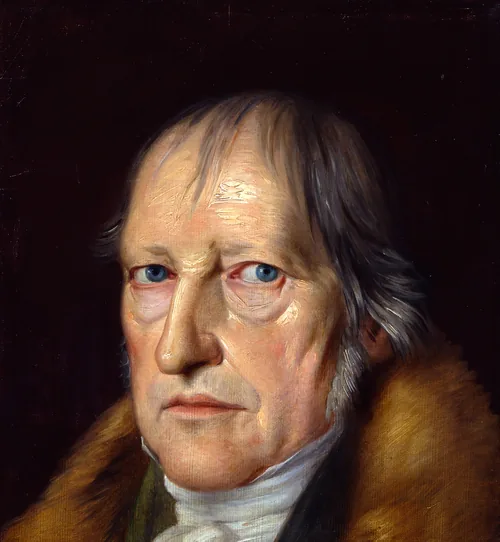
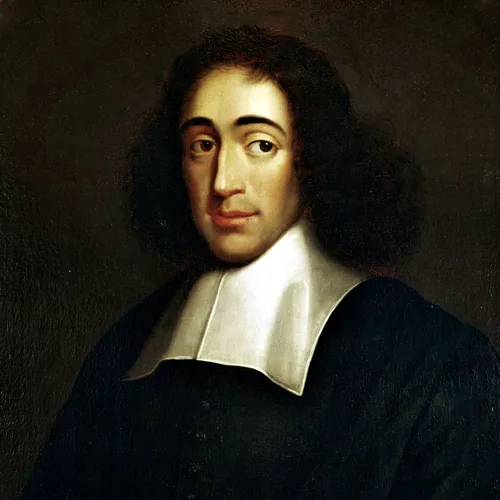
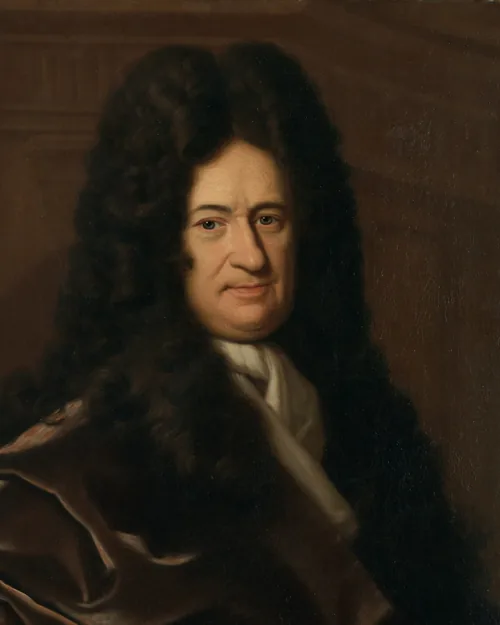
Painting of G. W. F. Hegel by Jakob Schlesinger (1831, Alte Nationalgalerie, Berlin). Public domain. It is a painted portrait, not a photograph. Cropped for the portrait above. · Portrait of Baruch Spinoza, anonymous (about 1665; Herzog August Bibliothek, Wolfenbüttel), via Wikimedia Commons. Public domain. It is a painted portrait, not a photograph. Cropped for the portrait above. · Portrait by Christoph Bernhard Francke (about 1695; Herzog Anton Ulrich-Museum, Braunschweig; Commons file), public domain, cropped.


An estimate is an inference.
Yours can be measured.
Thirty questions, scored against general-population benchmarks. Your score, your percentile, your ability breakdown and a printable IIF certificate.
Find your IQ score now! →