



What was Alexander Hamilton’s IQ?
Cox printed 135 and 140 in 1926 and corrected them to 150 and 155; the 155 online is the second.
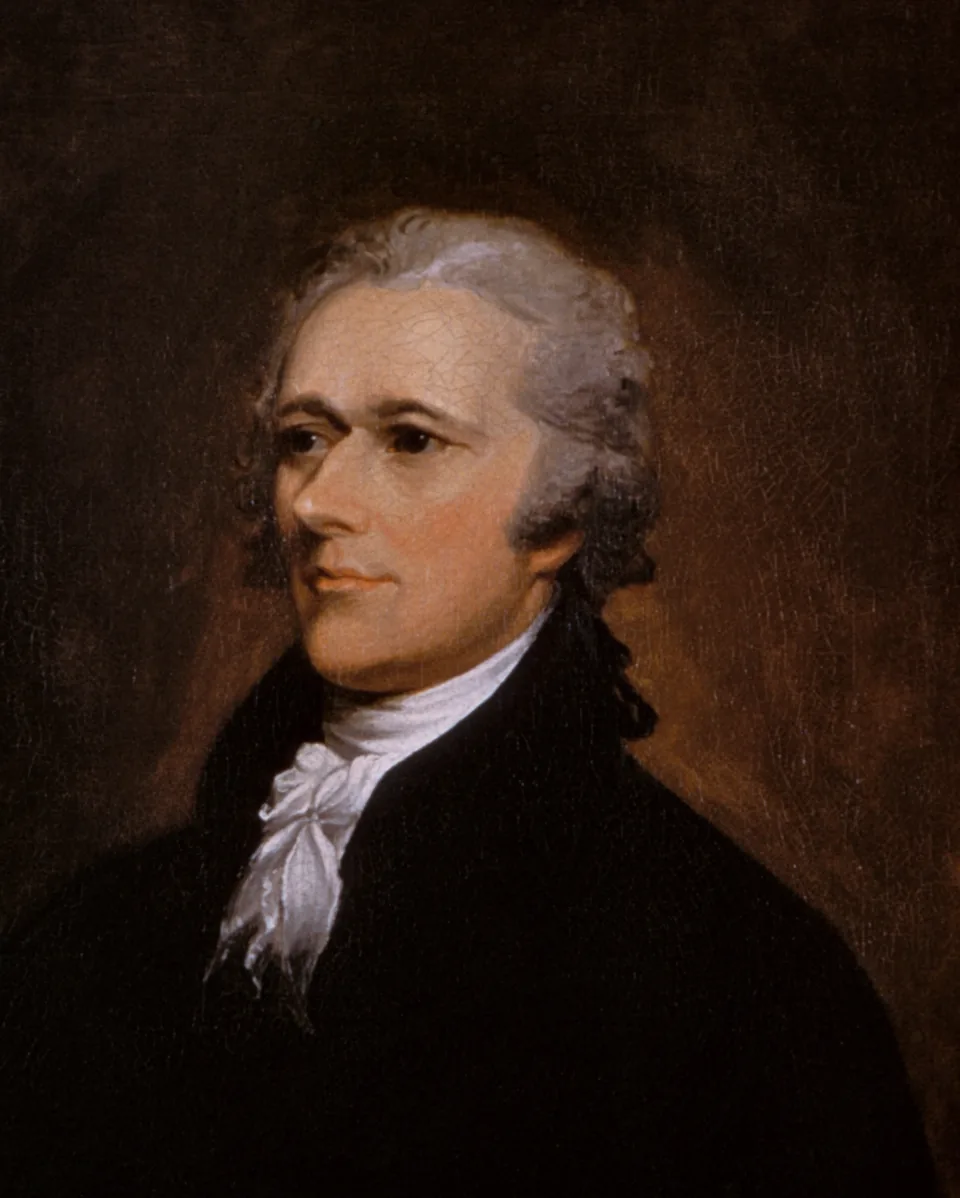
Alexander Hamilton passed the New York bar after about six months of study and wrote 51 of the 85 Federalist essays, but no IQ test result exists for him, and the 155 that circulates as his IQ score cites no test, study or method. This page estimates his IQ at 140–160, inferred from the documented record.
Alexander Hamilton’s estimated IQ
- Catharine Cox’s 1926 study rated him from biography at 135 for the years to age 17 and 140 for ages 17 to 26, on records she graded at reliability .53 and .60 (Table 28, page 113; case summary, pages 409–410). The 140 is the floor of this range.
- Cox’s fold-out Table 12A prints corrected estimates of 150 and 155 for him: her correction rule, applied to the printed 140 with her Statesmen average of 142 (Table 20B), gives about 157, which her tables round to 155. The circulating 155 matches that figure, and it sits inside the range.
- Largely self-educated as a teenage clerk on St. Croix, he was sent to the mainland on money raised by local businessmen after a 1772 letter on a hurricane was printed in the Royal Danish American Gazette.
- He passed the New York bar in 1782 within about six months of study, wrote 51 of the 85 Federalist essays (Library of Congress authorship table) and served as the first Secretary of the Treasury from September 11, 1789 to January 31, 1795.
Every figure here is a retrospective inference from biography, not a test score: Cox’s ratings stop at age 26, rest on records she graded .53 and .60, and read what he had done by each age, which the disputed birth year (1755 or 1757) could shift. The top five points of this range are a judgment about his adult record, which her ratings never covered.
- Born
- January 11, 1755 or 1757 (sources disagree), on the island of Nevis, British West Indies
- Died
- July 12, 1804, New York City
- Field
- Statesman, lawyer and first US Secretary of the Treasury
- Education
- Largely self-taught on St. Croix; Barber’s academy, Elizabethtown, New Jersey; King’s College (now Columbia), 1774–1776, left without graduating
- Law
- Passed the New York bar in 1782 after about six months of study
- Office
- First US Secretary of the Treasury, September 11, 1789 – January 31, 1795
- Known for
- 51 of the 85 Federalist essays; the 1790–91 reports on public credit, a national bank and manufactures
- In Cox’s 1926 study?
- Yes — 135 (to age 17) and 140 (ages 17 to 26); corrected 150 and 155 in Table 12A
What an IQ of 140–160 actually means
Set the claim aside for a moment. If someone genuinely scored in this range, here is what that would represent.
Average is 100 by construction, and about two-thirds of people fall between 85 and 115. Take the test to place your own score on this scale.
| Score range | Classification | Share of people | What it indicates |
|---|---|---|---|
| 85 – 114 | Average | ~68% | The range most people fall into. |
| 115 – 129 | Above average | ~13.6% | Roughly one person in seven. |
| 130 – 144 | Gifted | ~2% | The threshold most high-IQ societies use. |
| Above 144 | Highly gifted | ~0.1% | Figures above this range are extrapolated from the curve rather than measured. |
Percentages are approximate and describe a normal distribution. The same number means different things on tests with different standard deviations.
Thirty questions gives you a measured position on this exact scale — your score, your percentile and the ability breakdown behind it.
Find out in 30 minutes →Who Alexander Hamilton is
Alexander Hamilton was born on January 11 on the island of Nevis, in the British West Indies, in either 1755 or 1757. The Treasury Department, the National Archives and the House of Representatives’ history office give 1757, the National Park Service writes c. 1755, and the National Constitution Center notes that historians dispute the year. As a teenager he clerked for the St. Croix trading firm Beekman and Cruger, and the National Park Service describes him as largely self-educated by then. A letter on a hurricane, printed in the Royal Danish American Gazette in 1772, led local businessmen to raise money to send him to the mainland, and he prepared at Francis Barber’s academy in Elizabethtown, New Jersey.
He tried and failed to gain advanced standing at Princeton, then entered King’s College in New York. Columbia’s own history page dates his entry to the fall of 1774 and his attendance to 1774–1776, while the National Archives and the National Park Service say 1773. He left to take part in the Revolution, and Columbia Magazine states that he never graduated; he later served the reconstituted Columbia College as a regent from 1784 and a trustee from 1787. As a student he published two anonymous pamphlets defending the Continental Congress, A Full Vindication of the Measures of Congress (December 1774) and The Farmer Refuted (February 1775).
In 1776 Hamilton became captain of the New York Provincial Company of Artillery. From 1777 he served on George Washington’s staff as aide-de-camp with the rank of lieutenant colonel, and in 1781 he led troops in the capture of a British redoubt at Yorktown. After the war he studied law and passed the New York bar in 1782, within about six months, according to the National Constitution Center.
In 1787–88 he wrote 51 of the 85 essays of The Federalist, printed in New York newspapers under the pen name Publius: the Library of Congress’s authorship table assigns 51 essays to Hamilton alone, and the National Constitution Center counts 51 for Hamilton, 29 for James Madison and five for John Jay. He took office as the first Secretary of the Treasury on September 11, 1789 and served until January 31, 1795. His reports of 1790–91 set out plans for public credit, a national bank and manufactures; the First Bank of the United States was chartered in 1791, and the Report on Manufactures was submitted on December 5, 1791. He died in New York City on July 12, 1804, the day after a duel with Aaron Burr. J. McKeen Cattell’s 1903 list of the 1,000 most eminent men, a ranking of reputation rather than intelligence, puts “A. Hamilton” sixteenth in its third hundred, behind Washington, Franklin and Jefferson in the first.
 By Elora Mercer, Celebrity Research WriterFigures checked by Leon Falkner, Data & Research Analyst
Reviewed by Aarav Vardhan, Editor-in-Chief · Last reviewed August 2026

Alexander Hamilton: the documented record
The estimate above rests on this record. Every entry here is a matter of public fact, which is more than can be said for the number itself.
- 1755 or 1757Born on January 11 on the island of Nevis; historians dispute the year.
- 1772A letter on a hurricane is printed in the Royal Danish American Gazette; local businessmen raise money to send him to the mainland.
- 1774Enters King’s College in the fall, per Columbia (the National Archives and National Park Service say 1773); publishes A Full Vindication of the Measures of Congress in December.
- 1776Becomes captain of the New York Provincial Company of Artillery and leaves King’s College without graduating.
- 1777–1781Serves as aide-de-camp to George Washington with the rank of lieutenant colonel; leads troops in the capture of a British redoubt at Yorktown in 1781.
- 1782Passes the New York bar after about six months of study.
- 1787–1788Writes 51 of the 85 Federalist essays, printed in New York newspapers under the name Publius.
- 1789Takes office as the first US Secretary of the Treasury on September 11; serves until January 31, 1795.
- 1790–1791Submits reports on public credit, a national bank and manufactures; the First Bank of the United States is chartered in 1791.
- 1804Dies in New York City on July 12.
Where the 155 figure came from
Following a claim back to its first appearance is the part almost nobody does — and it is what most people are actually asking.
The Alexander Hamilton IQ score that circulates, 155, arrives without a source. geniuses.club, the only page found that prints a figure for him, is titled “Alexander Hamilton IQ Estimate — Biography & Key Facts (2026)” and gives the number twice, as “IQ score: 155” and as an “estimated IQ of 155”, above a long biography. It names no test, study, rater or method and carries no disclaimer, which is how a figure from a 1926 table can end up looking like a measurement. For the wider pattern, see the site’s article on where celebrity IQ numbers come from.
In 1926 Catharine Cox estimated IQs for 301 historical figures of the 15th to 19th centuries from the records of their lives, because none of them could be tested. Each subject was rated twice, each time as the average of three raters’ judgments, once for the years to the 17th birthday and once for the years to the 26th. For Hamilton the tables print 135 and 140, each with a probable error of 7 points, on data graded at reliability coefficients of .53 and .60 (Table 28, page 113; the case summary on pages 409–410 repeats both). On page 87 Cox writes of the childhood IQ of “an Alexander Hamilton” as “no higher than 140”. Her summary also says he “qualified for the B. A. degree”, but Columbia Magazine states that he never graduated from King’s College. Do not confuse him with the other Hamilton on her list, the Scottish philosopher Sir William Hamilton (1788–1856), whom she rated 140 and 160.
Cox also corrected her ratings, and the fold-out Table 12A (facing page 60) prints the corrected estimates for every subject: for Hamilton, 150 and 155. Her rule (Formula a, with the group averages in Tables 20A and 20B) adds to an obtained score the gap between the subject’s professional-group average and 100, multiplied by one minus the reliability of the record. For Hamilton’s 140, with the Statesmen average of 142 and reliability .60, that is 140 + 42 × 0.40, about 157, printed as 155 (her tables round to the nearest five); for his first period it is about 151, printed as 150. The same table prints corrected estimates on the same basis for Thomas Jefferson, Benjamin Franklin and Abraham Lincoln. So the 155 that circulates matches Cox’s own corrected figure with its label dropped, though the page that prints it does not say so. The correction is a statistical adjustment, a form of regression to the mean toward the group’s average rather than toward 100, and nobody observed it.
The 1926 scores have limits that matter more than the last digit. They cover only the years to 26, so the Federalist essays (1787–88) and the Treasury years (1789–1795) sit outside what was rated. They use the old ratio definition of IQ, so they are not modern test scores. And they read what he had done by each age, while Cox dates his birth to 1757 and the National Park Service writes c. 1755; two years either way would move the age attached to every milestone. That is why this page gives Alexander Hamilton’s IQ level as a range, 140–160, rather than a point: level with Lincoln’s 140–160, above George Washington’s 125–145, and a notch below Jefferson’s 150–170 and Franklin’s 155–175. Whether a range like that counts as genius depends on the definition; see what a genius IQ level means.
How we read a number →AI is the average of three raters’ judgments for the period to the 17th birthday and AII for the period to the 26th (p. 87, note 1). Reliability coefficients of the data: .53 and .60. Page 87 says his childhood IQ was “no higher than 140”. Tables 20A and 20B give the group averages (Statesmen: 135 first period, 142 second) used in the correction rule. Table 12A (fold-out facing p. 60; read in a second archive.org scan, item geneticstudiesof0002cath_c2h2) prints his corrected estimates: AI 150, AII 155.
The 1,000 most eminent men are printed in order of eminence in groups of one hundred. “A. Hamilton” is the sixteenth name in the third group, behind Washington, Franklin and Jefferson (first group) and J. Adams (second). An eminence ranking, not an IQ.
Prints “IQ score: 155” and “estimated IQ of 155”. Names no test, study, rater or method and carries no disclaimer; the rest of the page is a biography.
Lists obtained and corrected scores for Jefferson (150 / 160), Franklin (145 / 160), Lincoln (140 / 150) and J. Q. Adams (165 / 175), the figures Cox’s correction rule gives for their second period. Hamilton is not on the page.
Treasury: service dates Sept. 11, 1789 – Jan. 31, 1795, birth year given as 1757, the First Bank of the United States chartered in 1791. Library of Congress: 85 essays by Hamilton, Madison and Jay under the pen name Publius, printed in New York newspapers in 1787 and 1788; its authorship table assigns 51 essays to Hamilton alone.
Columbia 250: an unsuccessful attempt at advanced standing at Princeton, entry to King’s College in the fall of 1774, a 1774–1776 header, regent 1784–1787 and trustee from 1787. Columbia Magazine: he never graduated, having withdrawn to fight in the Revolution; he enrolled in 1774.
National Archives: born 1757; Barber’s Academy at Elizabethtown; entered King’s College in 1773 before the Revolution interrupted his studies; artillery captaincy, then Washington’s staff in 1777 as lieutenant colonel; reports of 1790–91. National Park Service: c. 1755; clerk for the trading company of Beekman and Cruger on St. Croix, and largely self-educated; captain of the New York Provincial Company of Artillery in 1776; passed the bar; he never completed his course of studies.
House: died in New York City on July 12, 1804; born January 11, 1757. Constitution Center: born January 11, 1755 or 1757, a dispute among historians; a collection sent him to a colonial college; the legal examination passed within six months in 1782; 51, 29 and 5 Federalist essays for Hamilton, Madison and Jay. Library of Congress blog: the 1772 letter in the Royal Danish American Gazette led island businessmen to raise funds to send him to North America.
Orientation and cross-checks only: the Report on Manufactures date (December 5, 1791) and the pamphlet dates (December 1774, February 1775). Wikidata confirms Q178903 is the Founding Father: “American Founding Father and statesman (1755/1757–1804)”.
None found. He died in 1804. Checked: Cox’s 1926 full text, Cattell’s 1903 list, the geniuses.club page and the Treasury, Library of Congress, Columbia, National Archives and National Park Service pages above.
The sources behind our estimate
The figures that circulate for Alexander Hamilton, what we were able to confirm, and where the two diverge.
The Alexander Hamilton IQ estimate that circulates is 155. geniuses.club prints “IQ score: 155” and “estimated IQ of 155” on a page titled “Alexander Hamilton IQ Estimate — Biography & Key Facts (2026)”, with no test, study, rater or method named and no disclaimer.
No published IQ test result exists for Alexander Hamilton. Catharine Cox’s 1926 study does rate him, from biography alone, and her tables print 135 (to age 17) and 140 (ages 17 to 26), not 155. Her fold-out Table 12A prints corrected estimates of 150 and 155 (her correction rule applied to the 140 gives about 157, shown to the nearest five), so the circulating number matches a corrected Cox figure with its label dropped. geniuses.club, the only page found that prints a figure, cites nothing.
The circulating 155 sits inside this page’s 140–160 range, near the top and 15 points above the 140 Cox actually printed for his later period. Because it is a formula adjustment of that 140, not an observed rating, it is the least safe number to quote on its own.
Want a number that does hold up? Every figure on this page is somebody’s claim. Take the 30-question test and get a percentile you can check rather than a figure you have to trust.
Alexander Hamilton — frequently asked
What is Alexander Hamilton’s IQ?
No measured IQ exists for Alexander Hamilton, who died in 1804, long before intelligence tests. IQ Metrics’ estimated range is 140–160, inferred from his documented record. The 155 that circulates has no test behind it; Catharine Cox’s 1926 study printed 135 and 140 from biography.
How high was Alexander Hamilton’s IQ score, and where does 155 come from?
Cox’s 1926 study printed 135 for his first 17 years and 140 for ages 17 to 26, both estimated from biography, and corrected them to 150 and 155 in its Table 12A. The 155 on geniuses.club, which names no source, matches the corrected second figure; either way it is not a test score.
Did Alexander Hamilton take an IQ test?
No. Hamilton died on July 12, 1804, long before intelligence tests existed, and no published IQ test result exists for him. Every figure attached to his name, whether 135, 140 or 155, is a retrospective estimate from biography. A site that prints one without a method is repeating a number, not reporting a result.
Was Alexander Hamilton a genius?
That is a judgment, not a score. The record is substantial: a largely self-taught clerk, a New York lawyer after about six months of study, and the author of 51 of the 85 Federalist essays. No test result exists; IQ Metrics’ estimate is 140–160.
Is Alexander Hamilton smart, judging by his record?
The record points to very high ability. He was largely self-educated as a teenage clerk on St. Croix, passed the New York bar in 1782 after about six months of study, wrote 51 of the 85 Federalist essays and became the first Treasury Secretary. That supports an estimated IQ of 140–160, not a measured score.
How does Alexander Hamilton’s estimated IQ compare with Benjamin Franklin’s?
It is a little lower. IQ Metrics estimates 140–160 for Hamilton, 155–175 for Benjamin Franklin, 150–170 for Thomas Jefferson and 125–145 for George Washington. Cox’s printed scores for ages 17 to 26 also put Hamilton (140) below Jefferson (150) and Franklin (145) and above Washington (135).
Did Alexander Hamilton graduate from college?
No. Columbia’s history page says Hamilton entered King’s College in the fall of 1774 and attended until 1776, and Columbia Magazine says he never graduated, having withdrawn to fight in the Revolution. Cox’s 1926 summary says he qualified for the B.A., which Columbia’s account does not support. He later served Columbia as a regent and trustee.
How does my IQ compare with Alexander Hamilton?
You can find out in about fifteen minutes. The IQ Metrics assessment is 30 questions, scored on the same 100-mean scale used throughout this page, so your result and the estimate above are at least expressed in the same units — one measured, one inferred. Once you have a number, the leaderboard shows where it would sit, and how we score and norm it explains the benchmarking.
Where does this estimate come from?
From the documented record rather than a test — the method is named above and set out in full under how we read a number. Compare it against the other historical profiles, starting with Isaac Newton.
- Take the 30-question IQ test — get a measured score and percentile of your own
- Average IQ by country — how the scale behaves across populations
- How IQ Metrics scores its assessment — the method behind our own number
- More on how IQ testing works — reliability, error and what a score can and cannot say
- More historical profiles — same field, same method
More historical
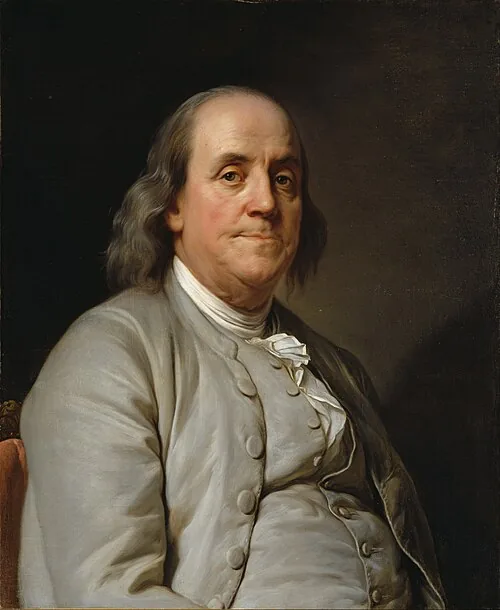
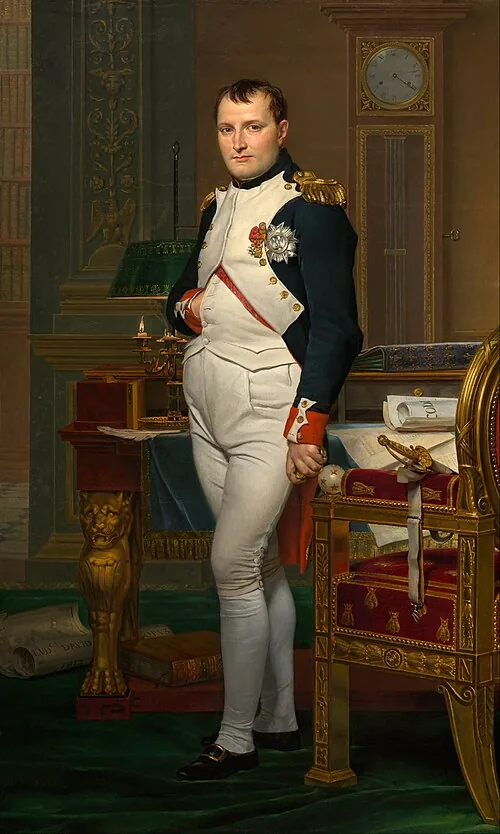
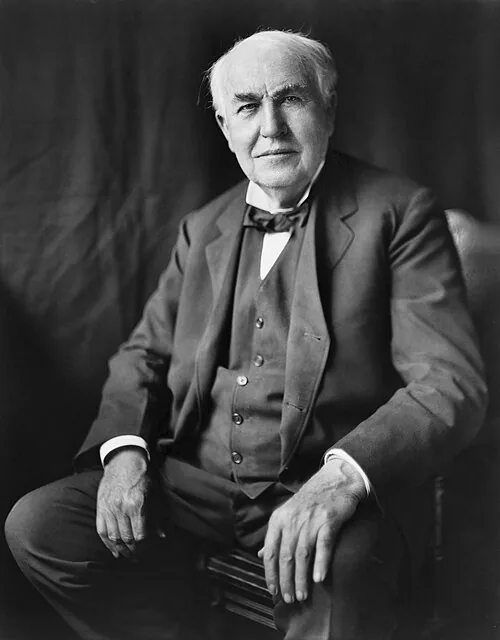
Portrait by Joseph-Siffred Duplessis (c. 1785), public domain. · Portrait by Jacques-Louis David (1812), via Wikimedia Commons, public domain. · Photograph by Louis Bachrach, Bachrach Studios, restored by Michel Vuijlsteke, public domain. Background removed for the portrait above.


An estimate is an inference.
Yours can be measured.
Thirty questions, scored against general-population benchmarks. Your score, your percentile, your ability breakdown and a printable IIF certificate.
Find your IQ score now! →