



What was Napoleon’s IQ?
Cox rated him 140. Sites online inflate that to 145.
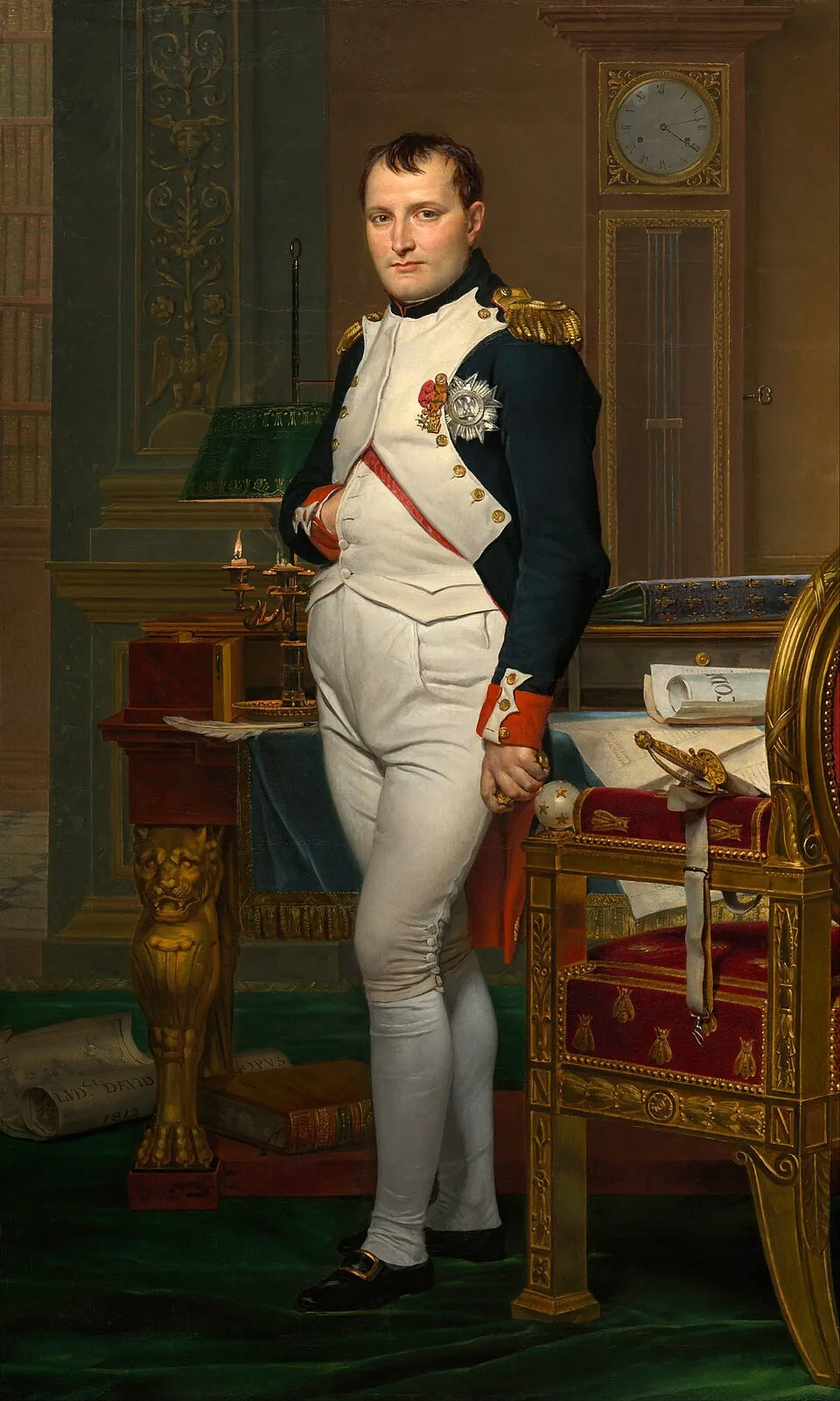
Napoleon Bonaparte is a genuine subject of Catharine Cox’s 1926 historiometric study — one of 301 historical figures rated from documented childhood and early-adult achievement. Her real published estimate, verified from the original 1926 text, is lower than what most sites now quote for him.
Napoleon’s estimated IQ
- Cox’s 1926 study places Napoleon in the chapter for subjects with a childhood (“AI”) IQ of 130 to 140, and its verified original text gives him “AI IQ 135” and, for early adulthood, “AII IQ 140.”
- Ranked 42nd of 58 graduates at the École Militaire, Paris, in 1785, commissioned second lieutenant of artillery — a real, checkable class rank, not a distinguished one.
- Cox’s own text records that he “held the first place” in mathematics at the military school of Brienne.
- Promoted general of brigade at 24, an unusually rapid rise verified across multiple biographies.
Cox’s method rests on documented childhood and early-career achievement read more than a century later, with a stated reliability coefficient of only .60 to .75 for Napoleon’s case — meaningfully lower confidence than for subjects with richer surviving records. Treat the 130–140 range as Cox’s own considered estimate, not a modern-equivalent test score.
- Born
- 15 August 1769, Ajaccio, Corsica
- Died
- 5 May 1821, Saint Helena
- Field
- Military command, politics, law
- Education
- École Militaire, Paris (commissioned 1785)
- Known for
- Emperor of the French; the Napoleonic Code
What an IQ of 130–140 actually means
Set the claim aside for a moment. If someone genuinely scored in this range, here is what that would represent.
Average is 100 by construction, and about two-thirds of people fall between 85 and 115. Take the test to place your own score on this scale.
| Score range | Classification | Share of people | What it indicates |
|---|---|---|---|
| 85 – 114 | Average | ~68% | The range most people fall into. |
| 115 – 129 | Above average | ~13.6% | Roughly one person in seven. |
| 130 – 144 | Gifted | ~2% | The threshold most high-IQ societies use. |
| Above 144 | Highly gifted | ~0.1% | Figures above this range are extrapolated from the curve rather than measured. |
Percentages are approximate and describe a normal distribution. The same number means different things on tests with different standard deviations.
Thirty questions gives you a measured position on this exact scale — your score, your percentile and the ability breakdown behind it.
Find out in 30 minutes →Who Napoleon was
Napoleon Bonaparte was born in Ajaccio, Corsica, in 1769 and educated at French military schools, graduating from the École Militaire in Paris in 1785 and being commissioned into the artillery.
He rose rapidly through the ranks during the French Revolution and its wars, becoming a general at 24 and First Consul of France by 1799. He crowned himself Emperor in 1804 and went on to dominate continental Europe militarily for a decade.
His legal reforms, codified in the Napoleonic Code, remain influential in civil law systems today. Defeated at Waterloo in 1815, he was exiled to Saint Helena, where he died in 1821.
 By Elora Mercer, Celebrity Research WriterFigures checked by Leon Falkner, Data & Research Analyst
Reviewed by Aarav Vardhan, Editor-in-Chief · Last reviewed August 2026

Napoleon: the documented record
The estimate above rests on this record. Every entry here is a matter of public fact, which is more than can be said for the number itself.
- 1769Born in Ajaccio, Corsica.
- 1785Graduates the École Militaire 42nd of 58; commissioned in the artillery.
- 1793Rises to prominence at the Siege of Toulon.
- 1794Promoted general of brigade at 24.
- 1799Becomes First Consul of France.
- 1804Crowns himself Emperor of the French.
- 1815Defeated at Waterloo; exiled to Saint Helena.
- 1821Dies on Saint Helena.
- 1926Cox publishes her AI/AII estimates for Napoleon.
Where the 140 figure came from
Following a claim back to its first appearance is the part almost nobody does — and it is what most people are actually asking.
Napoleon’s case is a useful companion to Galileo and Newton on this site, all three genuine Cox subjects, because it shows the citation drift running in the ordinary, less dramatic direction — a few points added, rather than a wholesale invention like Tesla’s. It is still drift. The real number is checkable, and it is not what circulates.
Cox’s own text is more interesting than either number in isolation: it records a middling class rank at graduation (42nd of 58) alongside a first-place standing in mathematics specifically at his earlier school, Brienne — a genuinely uneven academic record, not a uniform picture of brilliance, which is exactly the kind of nuance a single number erases.
The Duke of Wellington, who defeated him at Waterloo, is recorded as saying Napoleon’s presence on a battlefield “was worth forty thousand men” — a real, widely cited assessment of his military judgement specifically, and a different kind of evidence than Cox’s retrospective psychometric estimate.
How we read a number →Verified from the original OCR’d text (archive.org): “AI IQ 135… AII IQ 140,” reliability coefficients .60 and .75.
Independently confirm the 42nd-of-58 ranking.
A widely cited contemporary military judgement, distinct from any psychometric claim.
No original source located; both diverge from Cox’s actual published numbers.
The sources behind our estimate
The figures that circulate for Napoleon, what we were able to confirm, and where the two diverge.
Figures of 142 and 145 circulate online for “Napoleon IQ”, both usually presented as settled fact.
The original 1926 text is publicly archived and readable. Catharine Cox’s The Early Mental Traits of Three Hundred Geniuses gives Napoleon an “AI IQ” of 135 and an “AII IQ” of 140 — not 142 or 145. The higher figures circulating today do not match the study most sites credit for them.
A few points of drift, in the same upward direction each time, is what happens when a number gets copied without anyone checking the original.
Want a number that does hold up? Every figure on this page is somebody’s claim. Take the 30-question test and get a percentile you can check rather than a figure you have to trust.
Napoleon — frequently asked
What was Napoleon’s IQ?
Catharine Cox’s 1926 historiometric study, verified against its original text, gives him an IQ of 135 in childhood (“AI”) and 140 in early adulthood (“AII”) — not the 142 or 145 that circulate online today.
Is Napoleon really in Cox’s 1926 study?
Yes, confirmed directly from the archived original text, in the chapter for subjects rated 130 to 140.
Why do online sources give a different number?
Most repeat each other rather than the original 1926 text; the figures drift upward each time, from 140 to 142 to 145.
How reliable is Cox’s estimate for Napoleon?
Cox herself rated the reliability of the underlying data at .60 for his childhood estimate and .75 for early adulthood — moderate confidence, lower than for subjects with richer surviving school records.
Was Napoleon a good student?
Mixed. He ranked 42nd of 58 at graduation from the École Militaire, but Cox’s text notes he held first place in mathematics at his earlier school, Brienne.
How does Napoleon compare to other Cox subjects on this site?
His case sits alongside genuine Cox subjects like Galileo and Newton, but with a smaller citation drift — a few points added rather than an invented figure with no basis at all.
How does my IQ compare with Napoleon?
You can find out in about fifteen minutes. The IQ Metrics assessment is 30 questions, scored on the same 100-mean scale used throughout this page, so your result and the estimate above are at least expressed in the same units — one measured, one inferred. Once you have a number, the leaderboard shows where it would sit, and how we score and norm it explains the benchmarking.
Where does this estimate come from?
From the documented record rather than a test — the method is named above and set out in full under how we read a number. Compare it against the other historical profiles, starting with Isaac Newton.
- Take the 30-question IQ test — get a measured score and percentile of your own
- Average IQ by country — how the scale behaves across populations
- How IQ Metrics scores its assessment — the method behind our own number
- More on how IQ testing works — reliability, error and what a score can and cannot say
- More historical profiles — same field, same method
More historical
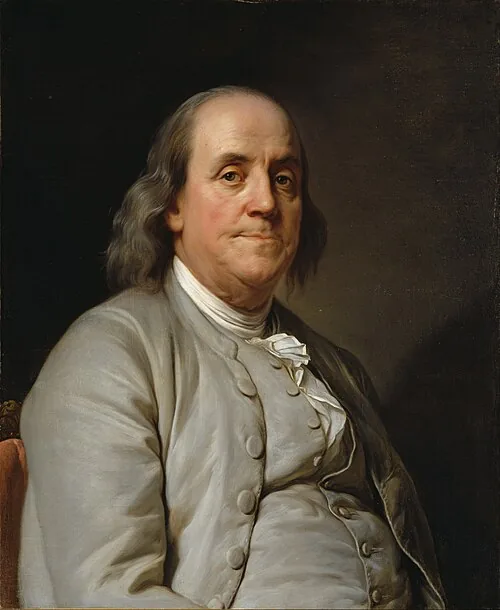
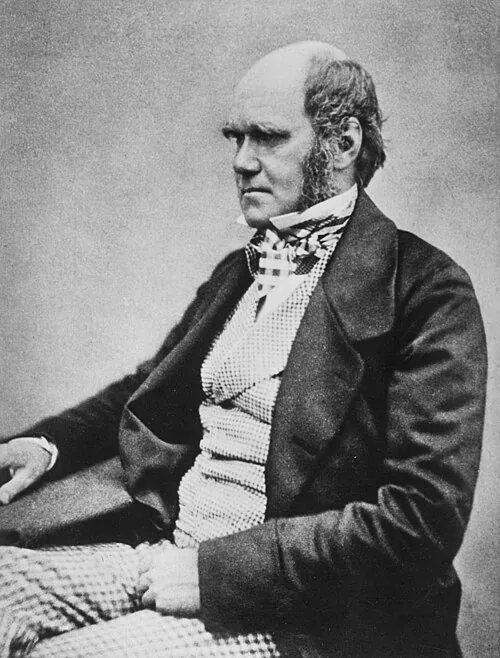
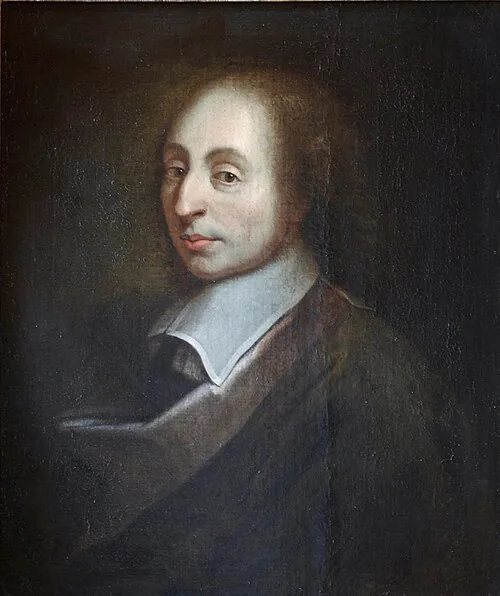
Portrait by Joseph-Siffred Duplessis (c. 1785), public domain. · Photograph by Maull & Fox (1854), public domain. Background removed for the portrait above. · Portrait, copy after François II Quesnel, via Wikimedia Commons, public domain.


An estimate is an inference.
Yours can be measured.
Thirty questions, scored against general-population benchmarks. Your score, your percentile, your ability breakdown and a printable IIF certificate.
Find your IQ score now! →