



What is Alicia Keys’ IQ?
Deferred Columbia. The number came from somewhere else.

Keys graduated as valedictorian of her New York high school class and was accepted into Columbia University at sixteen — a documented, checkable record she set aside for a recording contract before attending a single class. No test score attaches to any of it.
Alicia Keys’ estimated IQ
- Began classical piano training at seven and attended Manhattan’s Professional Performing Arts School, a competitive-entry public school.
- Graduated as valedictorian of her high school class at sixteen.
- Was accepted to Columbia University at sixteen and deferred enrolment to pursue a recording career, ultimately not attending, by her own account in interviews and her 2020 memoir More Myself.
This is an academic-record estimate, not a test score — Keys has never referenced an IQ test. Valedictorian status and an Ivy League acceptance at sixteen support a solidly above-average range; they do not, on their own, support the considerably higher figures aggregator sites attach to her.
- Born
- 25 January 1981, New York City
- Field
- R&B, songwriting, piano
- Education
- Professional Performing Arts School, Manhattan (valedictorian); accepted to Columbia University, deferred
- Known for
- Songs in A Minor (2001); more than a dozen Grammy Awards
- Documented record
- Valedictorian; Ivy League acceptance at sixteen; no published IQ test result
What an IQ of 130–145 actually means
Set the claim aside for a moment. If someone genuinely scored in this range, here is what that would represent.
Average is 100 by construction, and about two-thirds of people fall between 85 and 115. Take the test to place your own score on this scale.
| Score range | Classification | Share of people | What it indicates |
|---|---|---|---|
| 85 – 114 | Average | ~68% | The range most people fall into. |
| 115 – 129 | Above average | ~13.6% | Roughly one person in seven. |
| 130 – 144 | Gifted | ~2% | The threshold most high-IQ societies use. |
| Above 144 | Highly gifted | ~0.1% | Figures above this range are extrapolated from the curve rather than measured. |
Percentages are approximate and describe a normal distribution. The same number means different things on tests with different standard deviations.
Thirty questions gives you a measured position on this exact scale — your score, your percentile and the ability breakdown behind it.
Find out in 30 minutes →Who Alicia Keys is
Alicia Keys was born Alicia Augello Cook in 1981 and raised in Manhattan’s Hell’s Kitchen neighbourhood. She began classical piano lessons at seven and attended the Professional Performing Arts School, graduating as valedictorian of her class at sixteen.
Accepted to Columbia University the same year, she deferred enrolment to focus on a recording contract and never returned to attend. Her 2001 debut album, Songs in A Minor, drawing on her classical training, sold more than twelve million copies worldwide and won five Grammy Awards; she has since won more than a dozen more across a two-decade recording career.
 By Elora Mercer, Celebrity Research WriterFigures checked by Leon Falkner, Data & Research Analyst
Reviewed by Aarav Vardhan, Editor-in-Chief · Last reviewed August 2026
.jpg)
Alicia Keys: the documented record
The estimate above rests on this record. Every entry here is a matter of public fact, which is more than can be said for the number itself.
- 1981Born in Manhattan, New York City.
- 1988Begins classical piano training at age seven.
- 1997Graduates valedictorian of her class at the Professional Performing Arts School; accepted to Columbia University and defers enrolment.
- 2001Releases her debut album, Songs in A Minor.
- 2002Wins five Grammy Awards, including Best New Artist.
Where the 154 figure came from
Following a claim back to its first appearance is the part almost nobody does — and it is what most people are actually asking.
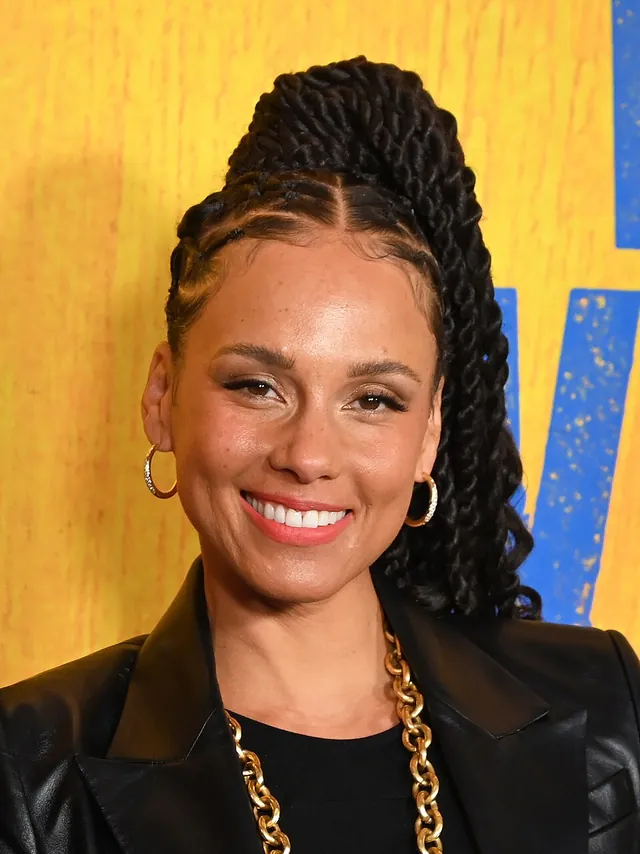
Keys’s page follows the section’s most common pattern closely: a real, well-documented early-academic achievement — competitive-school admission, valedictorian standing, an Ivy League acceptance at sixteen — gets converted into a specific IQ figure by aggregator sites with no test behind any of it.
What makes the record checkable rather than anecdotal is that Keys has told it herself, in detail, in her 2020 memoir More Myself, including the decision to defer Columbia for a Columbia Records contract — an overlap in name that has nothing to do with the university she was admitted to and chose not to attend.
How we read a number →First-person source for the Professional Performing Arts School attendance, valedictorian standing and the Columbia University acceptance and deferral.
No school, industry or media record of a test score for Keys has surfaced.
Source URLs and first-appearance date pending audit.
Typical source of the 154 figure; none reviewed cite a test or a named methodology.
The sources behind our estimate
The figures that circulate for Alicia Keys, what we were able to confirm, and where the two diverge.
Figures around 154 appear on “smartest musicians” listicles, generally citing her academic record without noting that the record itself does not include a test score.
The valedictorian and Columbia-acceptance details are genuinely documented — Keys discusses both in her own memoir. Neither is an IQ test. A listicle number built from “graduated top of her class” follows the same pattern as several other entries on this site: a real, checkable achievement standing in for a measurement that was never taken.
The lower two numbers track what a valedictorian record and an early Ivy League acceptance can defensibly support. The 154 is the number that tends to appear once those facts are run through a listicle rather than read directly.
Want a number that does hold up? Every figure on this page is somebody’s claim. Take the 30-question test and get a percentile you can check rather than a figure you have to trust.
Alicia Keys — frequently asked
What is Alicia Keys’s IQ?
No test result has ever been published. A figure around 154 circulates on musician-focused listicles, built from her academic record rather than from any administered test.
Did Alicia Keys really get into Columbia University?
Yes — she was accepted at sixteen, by her own account in her memoir More Myself, and deferred enrolment to pursue a recording contract, ultimately not attending.
Was Alicia Keys valedictorian of her high school?
Yes, at Manhattan’s Professional Performing Arts School, at age sixteen.
Has Alicia Keys ever taken an IQ test?
There is no record of one in her interviews or her memoir.
Is Alicia Keys classically trained?
Yes — she began piano lessons at seven and studied classical piano through her school years, an influence she has said shapes her songwriting and production.
How does Alicia Keys’s case compare with other musicians on this site?
It follows the most common pattern in this category: a genuine, checkable early-academic achievement gets converted into a specific IQ figure by listicle sites that cite no test.
How does my IQ compare with Alicia Keys?
You can find out in about fifteen minutes. The IQ Metrics assessment is 30 questions, scored on the same 100-mean scale used throughout this page, so your result and the estimate above are at least expressed in the same units — one measured, one inferred. Once you have a number, the leaderboard shows where it would sit, and how we score and norm it explains the benchmarking.
Where does this estimate come from?
From the documented record rather than a test — the method is named above and set out in full under how we read a number. Compare it against the other musicians profiles, starting with Brian May.
- Take the 30-question IQ test — get a measured score and percentile of your own
- Average IQ by country — how the scale behaves across populations
- How IQ Metrics scores its assessment — the method behind our own number
- More on how IQ testing works — reliability, error and what a score can and cannot say
- More musicians profiles — same field, same method
More musicians
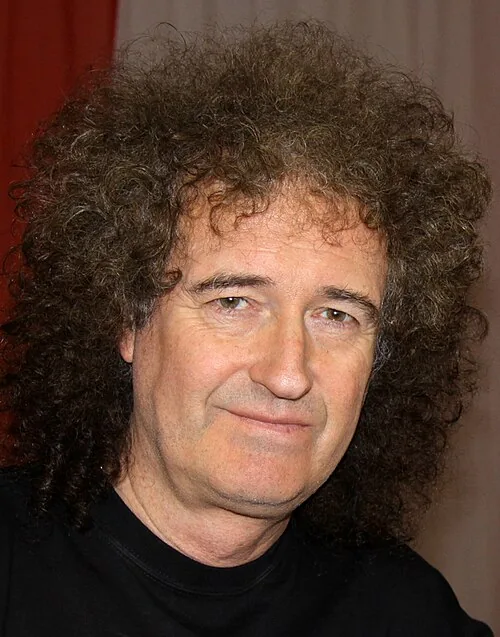
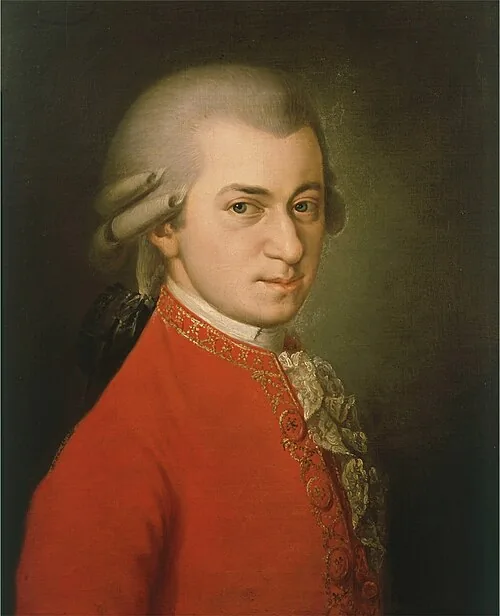
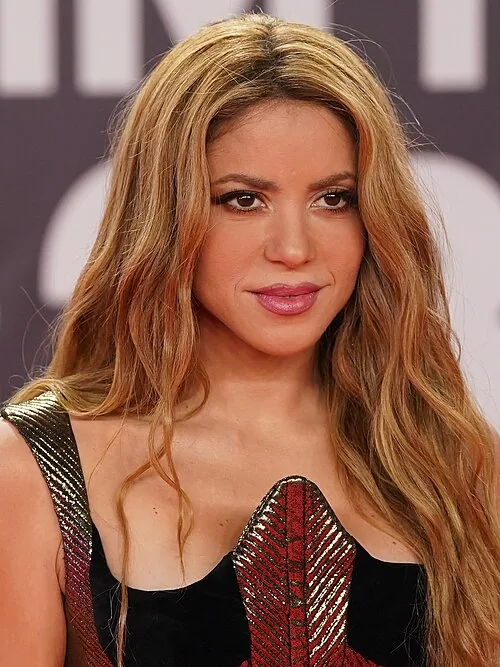
Portrait © David J. Cable / Arcadia Photographic UK, CC BY-SA 2.0. The background-removed portrait above is a derivative work and is likewise offered under the same licence. · Portrait by Barbara Krafft (1819), public domain. Background removed for the portrait above. · Photograph by the Junta de Andalucía (2023), CC BY-SA 2.0. Background removed for the portrait above.
.jpg)
.jpg)
02.jpg)
An estimate is an inference.
Yours can be measured.
Thirty questions, scored against general-population benchmarks. Your score, your percentile, your ability breakdown and a printable IIF certificate.
Find your IQ score now! →