



What is Shakira’s IQ?
A number repeated for twenty years, and a Mensa membership nobody can find.

The claim is 140 and Mensa membership. Mensa does not publish member lists, which is precisely why the claim has survived unchallenged for two decades.
Shakira’s estimated IQ
- Founded the Pies Descalzos Foundation in 1997, at 20, building schools in Colombia; it has operated continuously since.
- Appointed to President Obama’s Advisory Commission on Educational Excellence for Hispanics in 2011, a documented federal appointment.
- Works in Spanish, English and Portuguese, and has written and performed in all three; has studied Italian, French and Arabic.
- Writing credits on the large majority of her own catalogue, across more than three decades.
This is the weakest evidence base of the three musicians profiled here, and the range reflects that rather than any judgement about her. There is no test, no transcript and no completed degree on record — only a public record of sustained, self-directed work. Multilingualism in particular is a poor proxy: it tracks childhood environment at least as strongly as ability.
- Born
- 2 February 1977, Barranquilla, Colombia
- Field
- Songwriting and performance
- Languages
- Spanish, English, Portuguese
- Founded
- Fundación Pies Descalzos (1997)
- Appointed
- US Advisory Commission on Educational Excellence for Hispanics (2011)
What an IQ of 125–140 actually means
Set the claim aside for a moment. If someone genuinely scored in this range, here is what that would represent.
Average is 100 by construction, and about two-thirds of people fall between 85 and 115. Take the test to place your own score on this scale.
| Score range | Classification | Share of people | What it indicates |
|---|---|---|---|
| 85 – 114 | Average | ~68% | The range most people fall into. |
| 115 – 129 | Above average | ~13.6% | Roughly one person in seven. |
| 130 – 144 | Gifted | ~2% | The threshold most high-IQ societies use. |
| Above 144 | Highly gifted | ~0.1% | Figures above this range are extrapolated from the curve rather than measured. |
Percentages are approximate and describe a normal distribution. The same number means different things on tests with different standard deviations.
Thirty questions gives you a measured position on this exact scale — your score, your percentile and the ability breakdown behind it.
Find out in 30 minutes →Who Shakira is
Shakira Isabel Mebarak Ripoll was born in Barranquilla, Colombia, in 1977, and signed her first record deal at 13. Her breakthrough came with Pies Descalzos in 1995 and ¿Dónde Están los Ladrones? in 1998.
She crossed into the English-language market with Laundry Service in 2001, having reportedly learned to write lyrics in English for the purpose. She has written or co-written most of her own catalogue in more than one language, which is a less common credential than the IQ figure it is usually cited to support.
Her foundation has built and run schools in Colombia since 1997, and she has spoken on education policy at the World Economic Forum and to the United Nations. That is the part of the record with documents behind it.
 By Elora Mercer, Celebrity Research WriterFigures checked by Leon Falkner, Data & Research Analyst
Reviewed by Aarav Vardhan, Editor-in-Chief · Last reviewed August 2026
02.jpg)
Shakira: the documented record
The estimate above rests on this record. Every entry here is a matter of public fact, which is more than can be said for the number itself.
- 1977Born in Barranquilla, Colombia.
- 1990Signs her first record contract at 13.
- 1995Pies Descalzos released.
- 1997Founds the Pies Descalzos Foundation at 20.
- 2001Laundry Service released, her first English-language album.
- 2011Appointed to the US Advisory Commission on Educational Excellence for Hispanics.
Where the 140 figure came from
Following a claim back to its first appearance is the part almost nobody does — and it is what most people are actually asking.

The 140-plus-Mensa pairing is one of the most durable claims in this section, and it is durable for a structural reason rather than an evidential one: an organisation that keeps its membership private cannot issue a denial. Anyone can be said to be a member. Nobody can be shown not to be.
The frequently repeated detail that she took university courses in Los Angeles under an assumed name belongs in the same category. It is plausible, it is widely printed, and we could not trace it to a registrar, a course listing or a first-person statement. We list it below as unverified rather than dropping it, because absence of a source is itself information.
The documented record is narrower but real: a foundation running since 1997, a federal advisory appointment in 2011, and three decades of writing credits. Our 125–140 rests on that record, and its upper bound touches the circulating figure — the difference being that ours is anchored to things that can be checked.
How we read a number →A documented federal appointment and the strongest institutional record in this profile.
Registered foundation with a continuous public record of school construction in Colombia.
No interview, profile or document in which a score is stated by her or by anyone who administered a test.
Mensa International does not publish member lists. The claim is therefore unfalsifiable, which is why it persists rather than why it is credible.
Source URLs and first-appearance date pending audit.
Appears in celebrity profiles from the early 2000s onward with no original attribution located.
The sources behind our estimate
The figures that circulate for Shakira, what we were able to confirm, and where the two diverge.
140 is the standard figure, usually paired with a claim that she is a member of Mensa. Both appear in celebrity profiles going back roughly twenty years.
Mensa does not publish its membership list, so the claim cannot be confirmed — and it cannot be refuted either. That asymmetry is the whole mechanism. An unfalsifiable claim attached to a famous name survives indefinitely because there is no document anyone can produce to end it. We found no interview in which Shakira states a score, and no test result of any kind.
The tight clustering around 140 indicates a single unsourced original being copied, not several independent estimates converging.
Want a number that does hold up? Every figure on this page is somebody’s claim. Take the 30-question test and get a percentile you can check rather than a figure you have to trust.
Shakira — frequently asked
What is Shakira’s IQ?
No measured score has ever been published. The 140 that circulates has no traceable source. Our 125–140 range is inferred from her documented work and public appointments, not from a test.
Is Shakira a member of Mensa?
There is no way to confirm it. Mensa does not publish membership lists, so the claim can be neither verified nor disproved — which is the main reason it has survived unchallenged for twenty years.
Did Shakira study at university?
She is widely reported to have taken History of Western Civilization courses in Los Angeles under an assumed name. We could not trace this to any institutional record and list it as unverified.
How many languages does Shakira speak?
She works in Spanish, English and Portuguese, and has studied Italian, French and Arabic. Multilingualism reflects environment and effort at least as much as test-measured ability.
Where did the 140 figure come from?
No original could be located. It appears in celebrity profiles from the early 2000s onward, always without attribution, and has been copied since.
How does Shakira compare with other musicians on this site?
Her range sits below Brian May and Mozart, because their cases rest on a completed doctorate and a historiometric study respectively. Hers rests on a public record of work, which is real but a weaker basis for a number.
How does my IQ compare with Shakira?
You can find out in about fifteen minutes. The IQ Metrics assessment is 30 questions, scored on the same 100-mean scale used throughout this page, so your result and the estimate above are at least expressed in the same units — one measured, one inferred. Once you have a number, the leaderboard shows where it would sit, and how we score and norm it explains the benchmarking.
Where does this estimate come from?
From the documented record rather than a test — the method is named above and set out in full under how we read a number. Compare it against the other musicians profiles, starting with Brian May.
- Take the 30-question IQ test — get a measured score and percentile of your own
- Average IQ by country — how the scale behaves across populations
- How IQ Metrics scores its assessment — the method behind our own number
- More on how IQ testing works — reliability, error and what a score can and cannot say
- More musicians profiles — same field, same method
More musicians
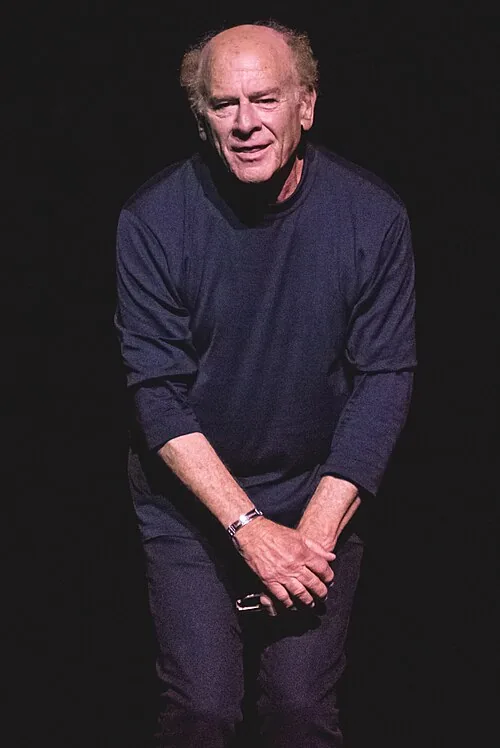
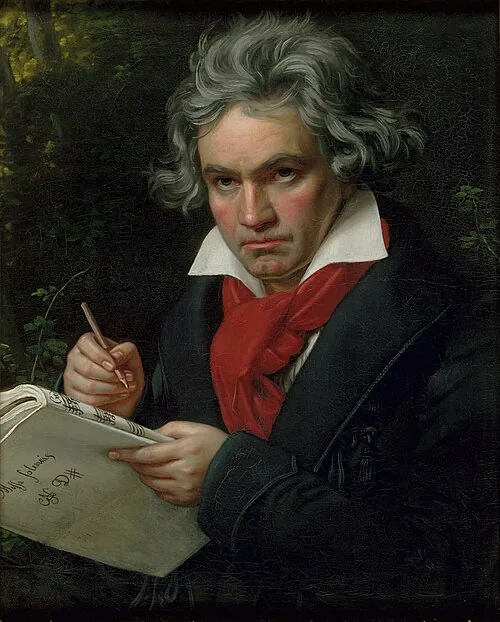

Photograph by Raph_PH, CC BY 2.0. Background removed for the portrait above. · Portrait by Joseph Karl Stieler (1820), public domain. · Photograph by Philip Romano, CC BY-SA 4.0. Background removed for the portrait above.
.jpg)


An estimate is an inference.
Yours can be measured.
Thirty questions, scored against general-population benchmarks. Your score, your percentile, your ability breakdown and a printable IIF certificate.
Find your IQ score now! →