



What is Dario Amodei’s IQ?
No IQ test result exists for Dario Amodei; the documented record is a Princeton biophysics doctorate, co-authorship of the GPT-2 and GPT-3 papers, and Anthropic’s climb to a $965 billion valuation.
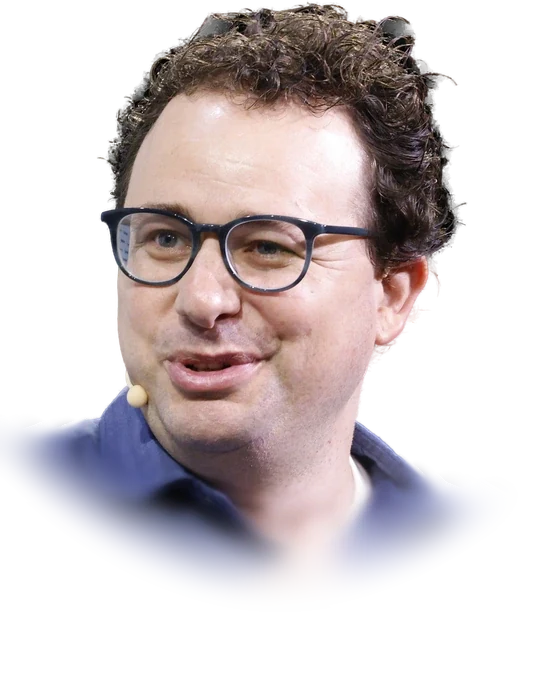
No published IQ test result exists for Dario Amodei, and no aggregator site states a number for his IQ either, despite heavy search demand for the term. What is documented is a Ph.D. in biophysics from Princeton, a co-authorship on OpenAI’s GPT-2 and GPT-3 papers that had drawn roughly 199,000 citations combined by September 2026, and the 2021 co-founding of Anthropic, which he leads as CEO.
Dario Amodei’s estimated IQ
- A B.S. in physics from Stanford University, after beginning undergraduate study at the California Institute of Technology, then a Ph.D. in biophysics from Princeton University (2011), where he was a 2007 Hertz Foundation Fellow; his dissertation, on the collective behavior of neural circuits and advised by Michael J. Berry and William Bialek, later won the Hertz Foundation’s doctoral thesis prize.
- Roughly seven years of published deep-learning research at Baidu, Google Brain and OpenAI, where as vice president of research he led the teams behind GPT-2 (2019) and GPT-3 (2020); Google Scholar credits his publication record with about 199,000 citations combined as of September 2026, including more than 83,000 for the GPT-3 paper alone.
- Co-invention of reinforcement learning from human feedback, in a 2017 paper with Paul Christiano and others, and co-authorship of “Concrete Problems in AI Safety” (2016), the kind of technical safety work he later cited as a reason for leaving OpenAI.
- Co-founded Anthropic in January 2021 with seven other researchers and has run it as CEO through a rise to a $965 billion valuation in a May 2026 funding round, up from $183 billion after a September 2025 round, per Wikipedia.
- Named among TIME’s 2025 Person of the Year, “Architects of AI,” a group profile that also discusses Elon Musk, Jensen Huang, Sam Altman, Mark Zuckerberg and Demis Hassabis, and listed separately on the magazine’s TIME100 for 2025.
No IQ, SAT or ACT score has been published for Dario Amodei, so this range is inferred entirely from degrees and research impact, not from any test. A citation count measures a paper’s adoption across a fast-moving field more than any one co-author’s ability — the GPT-3 paper lists 31 co-authors and the GPT-2 paper six — so part of this record is a team’s, not only his, and the range leans on it more than a test-anchored estimate would need to.
- Born
- January 13, 1983, San Francisco, California
- Education
- B.S. in physics, Stanford University (after beginning at Caltech); Ph.D. in biophysics, Princeton University (2011)
- Known for
- Co-authoring OpenAI’s GPT-2 and GPT-3 papers as vice president of research; co-founding and leading Anthropic, maker of Claude
- Research record
- About 199,000 citations across his publications on Google Scholar (September 2026), including 83,000+ for the GPT-3 paper alone
- Current role
- CEO and co-founder, Anthropic (as of September 2026)
- Honors
- TIME100 (2025); named among TIME Person of the Year, “Architects of AI” (2025); Hertz Foundation Fellow (2007) and doctoral thesis prize
- Circulating IQ figure
- None found: no aggregator page or test result states a number
- Test record
- None found: no IQ, SAT or ACT score published
What an IQ of 145–160 actually means
Set the claim aside for a moment. If someone genuinely scored in this range, here is what that would represent.
| Score range | Classification | Share of people | What it indicates |
|---|---|---|---|
| 85 – 114 | Average | ~68% | The range most people fall into. |
| 115 – 129 | Above average | ~13.6% | Roughly one person in seven. |
| 130 – 144 | Gifted | ~2% | The threshold most high-IQ societies use. |
| Above 144 | Highly gifted | ~0.1% | Figures above this range are extrapolated from the curve rather than measured. |
Percentages are approximate and describe a normal distribution. The same number means different things on tests with different standard deviations.
Thirty questions gives you a measured position on this exact scale — your score, your percentile and the ability breakdown behind it.
Find out in 30 minutes →Who Dario Amodei is
How smart is Dario Amodei, judged only by what can be checked? He was born on January 13, 1983, in San Francisco, California, per Wikidata. He began his undergraduate studies at the California Institute of Technology before transferring to Stanford University, where he completed a B.S. in physics. He then moved to Princeton University for graduate work in biophysics, and in 2011 completed a Ph.D. dissertation, “Network-Scale Electrophysiology: Measuring and Understanding the Collective Behavior of Neural Circuits,” advised by Michael J. Berry and William Bialek; he had been named a Hertz Foundation Fellow in 2007, and the dissertation later won the foundation’s doctoral thesis prize. A completed doctorate at a research university is a documented, checkable credential; how closely it tracks IQ is a separate question, addressed at whether IQ predicts school success.
After a postdoctoral fellowship at Stanford University School of Medicine, Amodei moved into industry AI research: at Baidu’s Silicon Valley AI lab, from November 2014 to October 2015, he co-authored “Deep Speech 2,” a speech-recognition paper, then worked as a senior research scientist at Google Brain. He joined OpenAI in July 2016 and rose to vice president of research, a role in which he helped set the organization’s technical direction. He co-authored “Concrete Problems in AI Safety” (2016) and a 2017 paper on reinforcement learning from human feedback, then led the teams that built GPT-2, released in February 2019, and GPT-3, a 175-billion-parameter model released in June 2020 whose paper is among the most-cited in computer science.
Amodei left OpenAI at the end of 2020, and on January 26, 2021 he co-founded Anthropic with his sister Daniela Amodei and six other researchers, Tom Brown, Chris Olah, Sam McCandlish, Jack Clark, Jared Kaplan and Ben Mann, after concluding that AI capability was advancing faster than safety research could keep up with. He has been Anthropic’s CEO since its founding; Daniela Amodei is its president. The company, maker of the Claude family of models, employed about 2,500 people and reported roughly $4.5 billion in 2025 revenue, per Wikipedia, and raised $65 billion in a May 2026 funding round that valued it at $965 billion.
Amodei has written publicly about AI’s trajectory since before Anthropic existed and continued after founding it; his October 2024 essay “Machines of Loving Grace” laid out how he thinks the technology could improve human welfare. TIME named him among its 2025 Person of the Year, “Architects of AI,” and separately listed him on its TIME100 for 2025. As of September 27, 2026, news organizations including TechCrunch and The Wrap continued to describe him simply as Anthropic’s CEO, the title he has held without interruption since January 2021; that same month he was also set to brief the United Nations Security Council on AI risk. Dario Amodei’s estimated IQ here, 145–160, is inferred from that record and from nothing measured.
 By Elora Mercer, Celebrity Research WriterFigures checked by Leon Falkner, Data & Research Analyst
Reviewed by Aarav Vardhan, Editor-in-Chief · Last reviewed August 2026
.jpg)
Dario Amodei: the documented record
The estimate above rests on this record. Every entry here is a matter of public fact, which is more than can be said for the number itself.
- 1983Born January 13 in San Francisco, California.
- 2007Named a Hertz Foundation Fellow during graduate study in biophysics at Princeton University.
- 2011Completes his Princeton Ph.D. dissertation on the collective behavior of neural circuits, advised by Michael J. Berry and William Bialek; begins a postdoctoral fellowship at Stanford University School of Medicine.
- 2014–2015Works on speech recognition at Baidu’s Silicon Valley AI lab, co-authoring the “Deep Speech 2” paper.
- 2016Joins OpenAI in July; later becomes vice president of research.
- 2019–2020Leads OpenAI’s development of GPT-2 (February 2019) and GPT-3 (June 2020).
- 2021Leaves OpenAI and co-founds Anthropic on January 26 with Daniela Amodei and six other researchers; becomes CEO.
- 2024Publishes the essay “Machines of Loving Grace” on October 15.
- 2025Named to TIME100 and among TIME’s “Architects of AI” Person of the Year, discussed alongside other AI industry leaders.
- 2026Anthropic raises $65 billion in May at a $965 billion valuation; as of September, Amodei remains CEO and briefs the United Nations Security Council on AI risk.
Why no figure circulates
Following a claim back to its first appearance is the part almost nobody does — and it is what most people are actually asking.
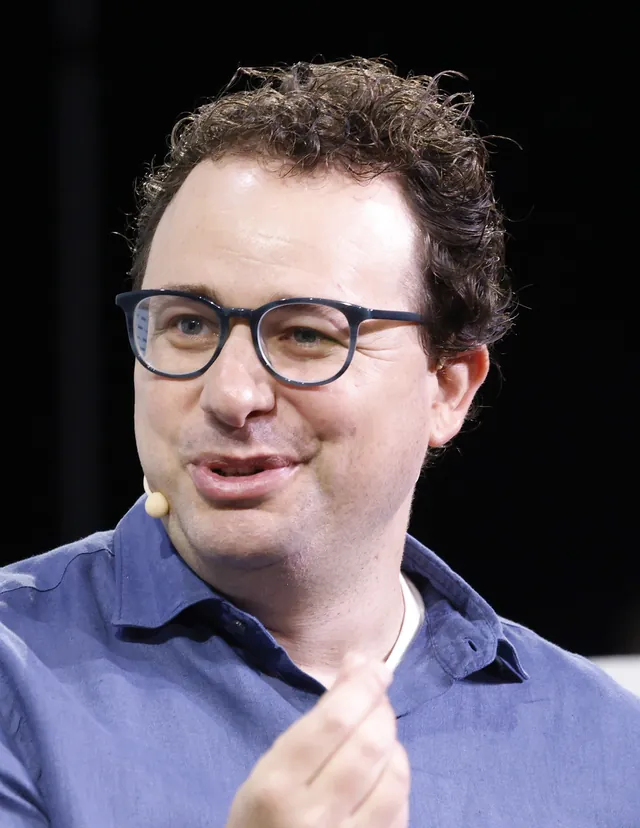
No number for Dario Amodei’s IQ circulates the way one does for many of his peers in this category. Search demand for the phrase is real and concentrated, “Dario Amodei IQ,” “Dario Amodei IQ score” and “Dario Amodei IQ estimate” all return heavy autocomplete traffic, but the pages people land on discuss his degrees, Anthropic’s valuation and his standing as an “Architect of AI,” not a test result. A geniuses.club page titled, in search results, “IQ of Dario Amodei — Score 185” looked like an exception; opened directly, twice, it showed only a loading placeholder, with no figure anywhere in its visible text or underlying code. For how numbers like that usually take hold before a page even finishes loading, see where celebrity IQ numbers come from.
What stands in place of a score is an unusually dense record for this category: a Princeton doctorate in biophysics, then a research career that produced two of the most-cited papers in computer science. Google Scholar credited his publication record with roughly 199,000 citations as of September 2026, including more than 83,000 for the GPT-3 paper he co-wrote at OpenAI. A citation count is not a test, and it rewards a team as much as any one author, but it is a real, checkable measure of impact in exactly the field his company now works in. Amodei runs the kind of organization this site has in mind elsewhere when it asks whether AI models have a g factor; no equivalent single number yet exists for the people who build them.
Placed among this site’s business profiles, the 145–160 estimated here matches Demis Hassabis’s 145–160: both hold a completed doctorate and both co-founded a frontier AI laboratory, though Hassabis’s record additionally includes a Nobel Prize in Chemistry (2024, for AlphaFold) that Amodei’s does not. It sits above Sam Altman’s 138–150 and Sundar Pichai’s 135–150, neither of whom completed a doctorate, and level with the lower end of Jensen Huang’s 150–165, an engineer with a completed master’s degree and three decades running Nvidia. None of the four has a published test score; all four estimates rest on degrees and achievement, not measurement.
Outside the lab, Amodei has become one of the more visible faces of the current AI boom: TIME named him among its 2025 Person of the Year, “Architects of AI,” a package that discusses him alongside Musk, Huang, Altman, Zuckerberg and Hassabis, and separately named him to its TIME100 for 2025. He has also written publicly about where the technology is headed, in essays such as “Machines of Loving Grace” (October 2024). None of that is a test, and this site does not treat prominence as a score; whether it adds up to genius-level ability is a separate, unanswered question from what a number would show.
How we read a number →Checked: Wikipedia, Wikidata, darioamodei.com, and searches for “Dario Amodei IQ,” “Dario Amodei IQ score” and “Dario Amodei genius.” A geniuses.club page (title seen in search results: “IQ of Dario Amodei — Score 185”) was opened twice and rendered only a loading placeholder, no figure in visible text or underlying HTML/JSON, so it is not counted as a stated source. iq.wiki has a page under his name but is a general biography wiki unrelated to IQ scores. A 2023 Twitter survey of estimated IQs for 54 public figures does not include him. No aggregator site of the kind that scores his business-category peers (e.g. Sundar Pichai, MrBeast) has built him a page.
Confirmed by direct lookup as Dario Amodei: “CEO and co-founder of Anthropic”; born January 13, 1983, San Francisco; educated at Princeton University; previously vice president of research at OpenAI (ended December 2020); notable work “Scaling Laws for Autoregressive Generative Modeling”; 2007 Hertz Fellow; TIME 100 (2025).
Education path (Caltech, transferred to Stanford for a B.S. in physics; M.S./Ph.D. in biophysics at Princeton, 2011, dissertation “Network-Scale Electrophysiology: Measuring and Understanding the Collective Behavior of Neural Circuits,” advised by Michael J. Berry and William Bialek); postdoc at Stanford School of Medicine; career at Baidu, Google Brain and OpenAI (VP of Research, GPT-2/GPT-3); co-founding of Anthropic in 2021 as CEO. No IQ test mentioned.
Confirms Ph.D. from Princeton University (field listed as biophysics/physics), undergraduate study at Stanford, thesis “Network-Scale Electrophysiology…”; lists a Hertz Thesis Prize (dated inconsistently on the page, 2011 in one place and 2012 in another) and career line: Co-Founder and CEO at Anthropic; VP of Research at OpenAI (led GPT-2 and GPT-3); Senior Research Scientist at Google Brain; postdoctoral scholar at Stanford School of Medicine. Does not mention Caltech.
Self-published bio lists current title “CEO of Anthropic, a public benefit corporation…”; doctorate in biophysics from Princeton as a Hertz Fellow; postdoc at Stanford School of Medicine; prior roles at Google Brain and OpenAI (VP of Research, GPT-2/GPT-3); “Machines of Loving Grace” essay dated October 15, 2024 (date corroborated by his October 15, 2024 post on X linking the essay).
Re-read directly: total citations 199,474; h-index 67; i10-index 101. Top papers: “Language models are few-shot learners” (2020, GPT-3), 83,303 citations; “Language models are unsupervised multitask learners” (2019, GPT-2), 24,951; “Evaluating large language models trained on code” (2021), 11,823; “Scaling laws for neural language models” (2020), 9,183; “Deep reinforcement learning from human preferences” (2017), 8,661.
Founded January 26, 2021, by Dario Amodei, Daniela Amodei, Jared Kaplan, Jack Clark, Chris Olah, Ben Mann, Sam McCandlish and Tom Brown, after directional differences at OpenAI; Dario Amodei is CEO; most recent funding round May 2026, $65 billion raised at a $965 billion post-money valuation; about 2,500 employees and roughly $4.5 billion in 2025 revenue.
The Person of the Year article discusses Amodei by name as Anthropic’s CEO within its “Architects of AI” package, alongside Jensen Huang, Sam Altman, Mark Zuckerberg, Elon Musk and Demis Hassabis, also named in the piece. Separately, the TIME100 2025 profile of Amodei (blurb credited to Ashton Kutcher) opens: “As the CEO of Anthropic, Dario Amodei navigates the precipice between technological revolution and ethical obligation.”
Both pieces, read directly, refer to Amodei simply as “Anthropic CEO” as of their September 27, 2026 publication dates, confirming his title has not changed as of that date.
The sources behind our estimate
The figures that circulate for Dario Amodei, what we were able to confirm, and where the two diverge.
No page was found that states a specific number for Dario Amodei’s IQ. A search-result title for a geniuses.club page read “IQ of Dario Amodei — Score 185,” but the page itself, opened twice, showed only a loading placeholder, with no figure, date or methodology anywhere in its visible text or underlying code, so it does not count as a source that actually states one. None of the aggregator sites that publish figures for his peers in this category, the kind behind Sundar Pichai’s 145 or MrBeast’s 106–135, has a Dario Amodei page at all.
Searches for “Dario Amodei IQ,” “Dario Amodei IQ score” and “Dario Amodei genius” return Wikipedia, Wikidata, his own website and press coverage of Anthropic, not a number. A page titled with his name exists on iq.wiki, but despite the name it is a general biography wiki unconnected to any cognitive test; its content is three career milestones, none of them a score. Forum and social-media searches turned up no citable mirror of a stated figure either. What recurs instead is unsupported “genius” framing tied to his degrees and to Anthropic’s size, never to a test.
With no stated figure to weigh against it, the only numbers on this page are the ends of this site’s own range, 145 and 160, wide enough to cover a completed doctorate and an unusually large citation record without asserting a score that has never been measured.
Want a number that does hold up? Every figure on this page is somebody’s claim. Take the 30-question test and get a percentile you can check rather than a figure you have to trust.
Dario Amodei — frequently asked
What is Dario Amodei’s IQ?
Dario Amodei’s IQ is unknown: no IQ test result has been published for him, and no aggregator site states a specific number either. This site’s estimate, 145–160, is inferred from his Princeton doctorate, his co-authorship of the GPT-2 and GPT-3 papers, and Anthropic’s scale, not from any test.
Is Dario Amodei a genius?
The record shows real, checkable achievement: a completed Princeton doctorate in biophysics, co-authorship of two of the most-cited papers in computer science, and the co-founding of a company valued at $965 billion in 2026. None of that is a measured score, so “genius” here describes achievement, not a test result.
Did Dario Amodei take an IQ test?
No Dario Amodei IQ test result has been published, and none of the sources checked for this page, including Wikipedia, Wikidata and his own website, mentions him sitting one. No SAT or ACT score is public either, so no number here can be checked against a real measurement.
Why does searching “Dario Amodei IQ” turn up no real number?
Because none of the sites that usually publish these figures has built him a page. A search-result title for one aggregator, geniuses.club, suggested a score, but the page itself would not render any figure on repeated attempts, so it cannot be counted as a source that actually states one.
What is Dario Amodei’s academic background?
He began at the California Institute of Technology, transferred to Stanford University for a B.S. in physics, then earned a Ph.D. in biophysics at Princeton University in 2011, advised by Michael J. Berry and William Bialek. He was a 2007 Hertz Foundation Fellow, and his dissertation later won the foundation’s doctoral thesis prize.
Did Dario Amodei study at Caltech?
Briefly, yes. He began his undergraduate studies at the California Institute of Technology before transferring to Stanford University, where Wikipedia and the Hertz Foundation both confirm he completed his B.S. in physics. His graduate work, a Ph.D. in biophysics, followed at Princeton University.
How does Dario Amodei’s estimated IQ compare with Sam Altman’s and Demis Hassabis’s?
This site’s estimate for Amodei, 145–160, sits above Sam Altman’s 138–150 and matches Demis Hassabis’s 145–160. Amodei and Hassabis both completed a doctorate and both co-founded a frontier AI lab; Altman, OpenAI’s CEO and Amodei’s former employer, has no completed degree. None of the three has a published test score.
How does my IQ compare with Dario Amodei?
You can find out in about fifteen minutes. The IQ Metrics assessment is 30 questions, scored on the same 100-mean scale used throughout this page, so your result and the estimate above are at least expressed in the same units — one measured, one inferred. Once you have a number, the leaderboard shows where it would sit, and how we score and norm it explains the benchmarking.
Where does this estimate come from?
From the documented record rather than a test — the method is named above and set out in full under how we read a number. Compare it against the other business & tech profiles, starting with Steve Jobs.
- Take the 30-question IQ test — get a measured score and percentile of your own
- Average IQ by country — how the scale behaves across populations
- How IQ Metrics scores its assessment — the method behind our own number
- More on how IQ testing works — reliability, error and what a score can and cannot say
- More business & tech profiles — same field, same method
More business & tech
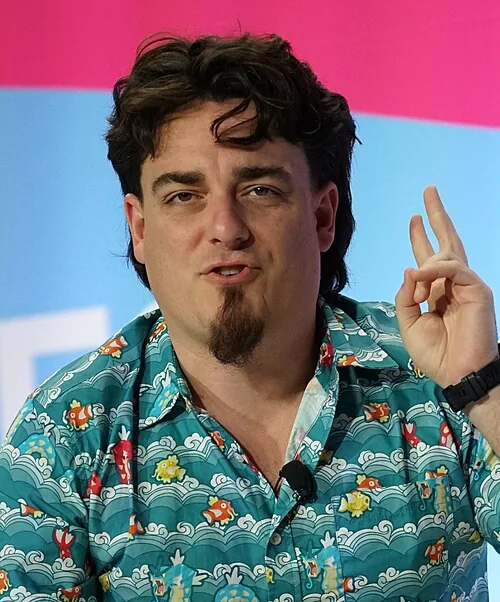

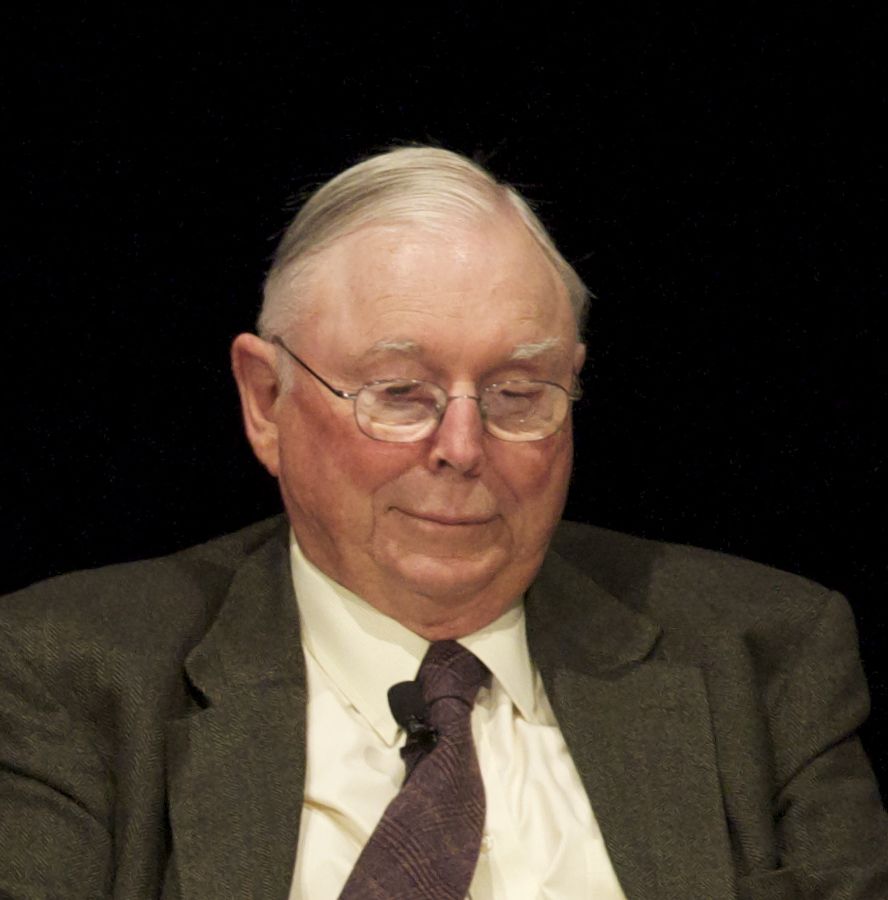
Photograph by Xuthoria, CC BY-SA 4.0. Background removed for the portrait above. · Photograph by Tyren Redd, CC BY 4.0. Background removed for the portrait above. · Photograph by Nick Webb (May 2010), CC BY 2.0. Cropped and with background removed for the portrait above.
.jpg)
.png)

An estimate is an inference.
Yours can be measured.
Thirty questions, scored against general-population benchmarks. Your score, your percentile, your ability breakdown and a printable IIF certificate.
Find your IQ score now! →