



What is Jensen Huang’s IQ?
A Stanford degree finished at night, on top of a full-time job — the number next to it was never tested.
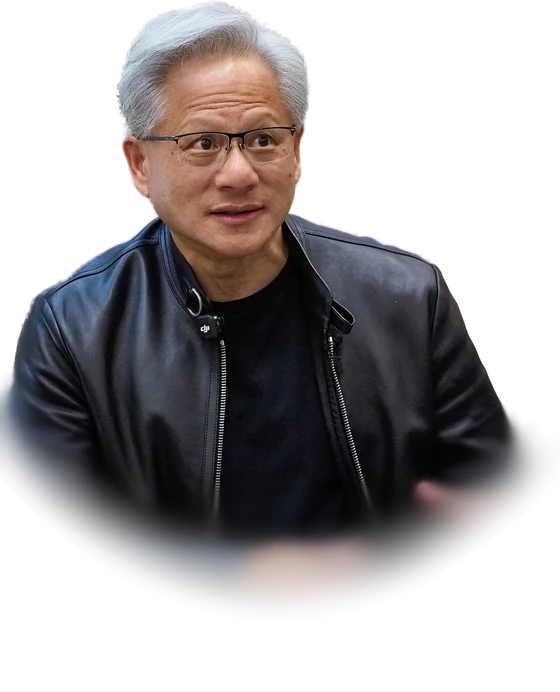
Jensen Huang’s engineering education is checkable at every point — a bachelor’s degree finished on schedule, a Stanford master’s finished at night while he held a full-time chip-design job, and more than three decades running the company he co-founded without a break. The IQ figure attached to him, 180 or sometimes 185, cannot be traced to a test, an examiner, or even one dominant source.
Jensen Huang’s estimated IQ
- Earned a BSEE from Oregon State University in 1984, graduating with highest honors, then an MSEE from Stanford in 1992 — completed through night classes over several years while working full time as a chip designer, first at Advanced Micro Devices, then at LSI Logic.
- Co-founded Nvidia on 5 April 1993 with Chris Malachowsky and Curtis Priem, and has served as president and CEO continuously since — a tenure of more than three decades that is highly unusual for a public company of Nvidia’s size.
- Elected to the National Academy of Engineering in 2024, one of the highest professional distinctions available to an engineer in the United States, for contributions to high-performance GPUs and the computing shift they enabled.
- Received the IEEE Founders Medal (2020) and the Semiconductor Industry Association’s Robert N. Noyce Award (2021), two of the semiconductor industry’s senior honors.
No IQ test result for Huang has ever been published by any testing body, biographer, or primary document, and Huang has never referenced one himself. This range reflects a genuinely uncommon academic record — a finished graduate engineering degree earned nights and weekends on top of a full-time job — rather than a measured score, and stops short of the historiometric range this site reserves for documented child-prodigy cases.
- Born
- 17 February 1963, Tainan, Taiwan
- Education
- Oregon State University BSEE, 1984 (highest honors); Stanford MSEE, 1992, completed while working full time
- Co-founded Nvidia
- 5 April 1993, with Chris Malachowsky and Curtis Priem
- National Academy of Engineering
- Elected 2024, for contributions to GPU computing
- Known for
- Co-founding and continuously leading Nvidia since 1993
- Documented IQ test
- None on record — “180” and “185” both circulate with no traceable source
What an IQ of 150–165 actually means
Set the claim aside for a moment. If someone genuinely scored in this range, here is what that would represent.
Average is 100 by construction, and about two-thirds of people fall between 85 and 115. Take the test to place your own score on this scale.
| Score range | Classification | Share of people | What it indicates |
|---|---|---|---|
| 85 – 114 | Average | ~68% | The range most people fall into. |
| 115 – 129 | Above average | ~13.6% | Roughly one person in seven. |
| 130 – 144 | Gifted | ~2% | The threshold most high-IQ societies use. |
| Above 144 | Highly gifted | ~0.1% | Figures above this range are extrapolated from the curve rather than measured. |
Percentages are approximate and describe a normal distribution. The same number means different things on tests with different standard deviations.
Thirty questions gives you a measured position on this exact scale — your score, your percentile and the ability breakdown behind it.
Find out in 30 minutes →Who Jensen Huang is
Huang was born in Tainan, Taiwan, on 17 February 1963, moved with his family to Thailand as a young child, and was sent at age nine to live with relatives in Tacoma, Washington, before the family reunited in Beaverton, Oregon. He skipped two grades and graduated high school at sixteen — the same years in which his table tennis mentor, Lou Bochenski, wrote to Sports Illustrated in 1978 calling him “perhaps the most promising junior ever to play table tennis” in the Pacific Northwest. He enrolled at Oregon State University to study electrical engineering, met fellow engineering student Lori Mills in a lab class — they married in 1985 — and graduated with highest honors in 1984.
He moved to Silicon Valley for a chip-design job at Advanced Micro Devices, then spent several years at LSI Logic, rising to direct one of its divisions, while attending Stanford at night to finish a master’s degree in electrical engineering, awarded in 1992. The following year, at a Denny’s booth in East San Jose, he co-founded Nvidia with two engineers he had worked alongside in the graphics chip industry, Chris Malachowsky and Curtis Priem of Sun Microsystems, and became president and CEO at thirty. The company nearly failed within its first five years — a redesigned chip, the RIVA 128, reversed its fortunes in 1997 — and Huang has led it without interruption ever since, through its 1999 IPO and into its current position as one of the most valuable companies in the world.
Among the founders profiled in this section, Huang’s education is the outlier for being complete rather than interrupted. Larry Page and Sergey Brin both left Stanford’s computer-science PhD program to build Google; Sam Altman left Stanford’s undergraduate program after two years to build Loopt; Steve Wozniak left Berkeley to build Apple and did not finish his degree until 1986, a decade later. Huang never left. He added a Stanford graduate degree on top of a full-time job instead of subtracting a bachelor’s degree to start a company sooner — the opposite trade every one of those four made.
 By Elora Mercer, Celebrity Research WriterFigures checked by Leon Falkner, Data & Research Analyst
Reviewed by Aarav Vardhan, Editor-in-Chief · Last reviewed August 2026

Where the 180 figure came from
Following a claim back to its first appearance is the part almost nobody does — and it is what most people are actually asking.
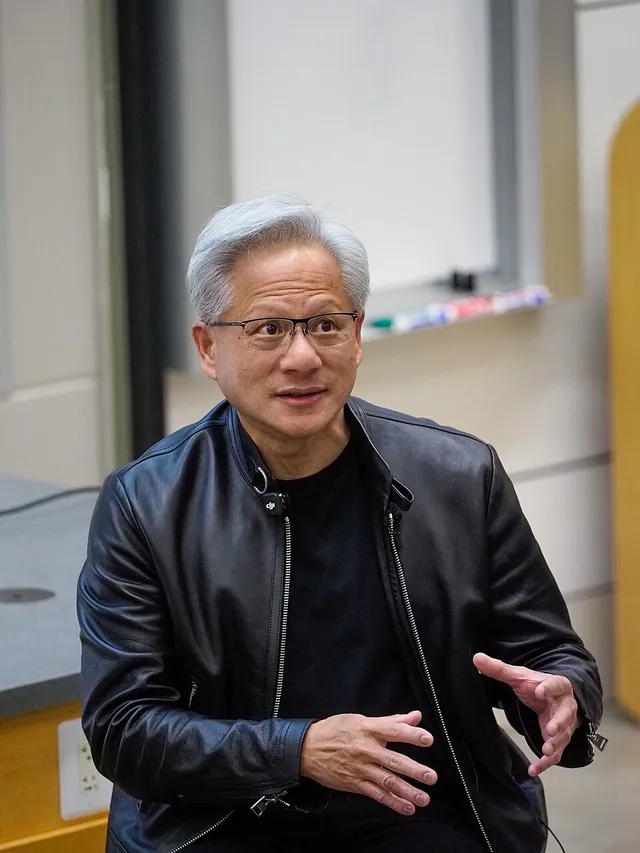
“180” is already doing work elsewhere on this site — it is the same unsourced figure attached to Henry Kissinger and Bertrand Russell, two men across two centuries with nothing else in common. Huang’s case adds a wrinkle neither of theirs has: a second figure, 185, circulates almost as often, and after checking, we could not say which of the two has the stronger claim to being “the” number attached to him.
The clearest statement on the number’s worth comes, unusually, from a competitor rather than from us. riotiq.com, which runs its own “celebrity IQ” vertical, writes about Huang: “The ‘180’ or ‘185’ attached to his name on celebrity IQ sites cites no test, no examiner, and no date.” We went looking for a better-sourced version of either number and did not find one. A dedicated aggregator page for a score of exactly 180 currently lists no one at all, and a separate aggregator page listing “facts” about him asserts only that he “has a high IQ,” with nothing to back it. That is a thinner trail than most figures on this site leave.
Huang’s own most recent public statement anywhere near this subject does not help either figure. Days before this page was published, on the podcast “A Bit Personal,” he was asked to name the smartest person he has ever met and declined, offering his own definition instead: technical problem-solving is “a commodity” now, he said, and someone “truly, truly smart” — able to sense a problem before it is visible to anyone else — “might actually score horribly on the SAT.” He was describing a hypothetical person, not himself, and he has never addressed his own IQ in public. But it is a strange coincidence that the closest thing on record to a Huang position on standardized test scores is an argument against taking them too seriously.
How we read a number →States the company was “Founded on April 5, 1993, by Jensen Huang, Chris Malachowsky, and Curtis Priem,” and lists Huang’s continuous roles and honors, including National Academy of Engineering election and the IEEE Founders Medal.
Confirms the 1984 BSEE and his 2013 Hall of Fame induction, with his own recollection of the professors who shaped his interest in engineering.
No score, school record, or clinician’s account for Huang appears in Nvidia’s own materials, his university records, or any biographical profile we could locate.
First-appearance date and earliest publisher for “180” and “185” pending audit.
riotiq.com states the figures “cite no test, no examiner, and no date.” We could not find an earlier or better-sourced origin for either number.
Records his on-the-record definition of “smart”: a truly smart person, he said, “might actually score horribly on the SAT.” He was describing a hypothetical person, not himself, and has never addressed his own IQ.
The sources behind our estimate
The figures that circulate for Jensen Huang, what we were able to confirm, and where the two diverge.
Both 180 and 185 circulate for Huang, usually on “smartest tech CEO” roundups and celebrity-IQ ranking sites, with neither figure clearly more common than the other.
We could not trace “180” or “185” to a test, an examiner, or a date — and neither could a rival celebrity-IQ site. riotiq.com states plainly on its own Jensen Huang page: “The ‘180’ or ‘185’ attached to his name on celebrity IQ sites cites no test, no examiner, and no date.” Our own check turned up the same gap: one aggregator’s dedicated page for a score of exactly 180 currently lists no one at all, Huang included, and the aggregator pages that do mention his IQ stop at the vague claim that he “has a high IQ,” with no number attached. What is checkable instead: a Stanford graduate degree completed at night, and an elected seat in the National Academy of Engineering.
A two-number spread with no third figure competing for attention is unusual for this site — most inflated claims accumulate variants over time. Huang’s fame is comparatively recent, and neither number has had long enough in circulation to fracture into the wider spreads seen elsewhere.
Want a number that does hold up? Every figure on this page is somebody’s claim. Take the 30-question test and get a percentile you can check rather than a figure you have to trust.
Jensen Huang — frequently asked
What is Jensen Huang’s IQ?
No verified score exists. The figures of 180 and 185 that circulate online cannot be traced to a test, an examiner, or a date — a gap even a rival celebrity-IQ site acknowledges. What is documented is his engineering education: a BSEE from Oregon State (1984) and an MSEE from Stanford (1992), the second one earned at night while he worked full time.
Did Jensen Huang ever take an IQ test?
There is no public record of one. He has never referenced a score in interviews, and no testing body, biographer, or company document has published one.
Where do the “180” and “185” IQ figures for Jensen Huang come from?
We could not trace either one to an origin. riotiq.com, a rival celebrity-IQ site, states that both figures “cite no test, no examiner, and no date.” A dedicated aggregator list of people scored at exactly 180 does not include Huang, and other “facts about” roundups mention only that he “has a high IQ,” without a number.
Did Jensen Huang finish his Stanford degree?
Yes — an MSEE, awarded in 1992. He completed it through night classes over several years while working full time as a chip designer, first at Advanced Micro Devices, then at LSI Logic, before co-founding Nvidia in 1993.
How did Jensen Huang found Nvidia?
He co-founded it on 5 April 1993 with Chris Malachowsky and Curtis Priem, two engineers he knew from the graphics chip industry, reportedly over a meal at a Denny’s in East San Jose. He has been president and CEO without interruption since.
What engineering honors has Jensen Huang received, apart from business rankings?
He was elected to the National Academy of Engineering in 2024, and has received the IEEE Founders Medal (2020) and the Semiconductor Industry Association’s Robert N. Noyce Award (2021) — honors from engineering bodies rather than business or media rankings.
How does my IQ compare with Jensen Huang?
You can find out in about fifteen minutes. The IQ Metrics assessment is 30 questions, scored on the same 100-mean scale used throughout this page, so your result and the estimate above are at least expressed in the same units — one measured, one inferred. Once you have a number, the leaderboard shows where it would sit, and how we score and norm it explains the benchmarking.
Where does this estimate come from?
From the documented record rather than a test — the method is named above and set out in full under how we read a number. Compare it against the other business & tech profiles, starting with Steve Jobs.
- Take the 30-question IQ test — get a measured score and percentile of your own
- Average IQ by country — how the scale behaves across populations
- How IQ Metrics scores its assessment — the method behind our own number
- More on how IQ testing works — reliability, error and what a score can and cannot say
- More business & tech profiles — same field, same method
More business & tech
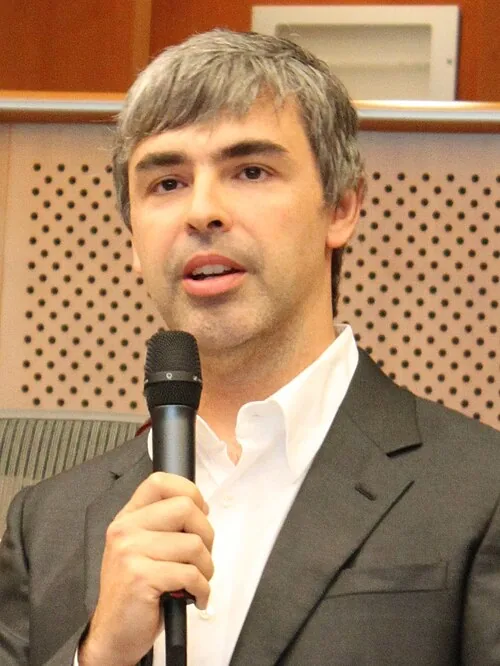
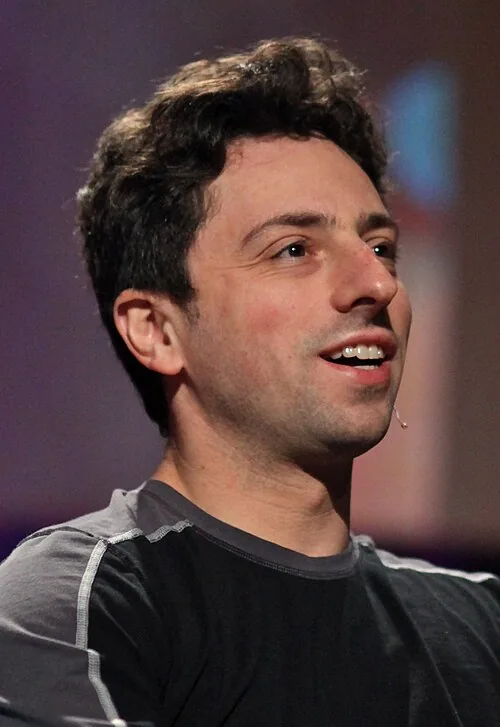

Photograph by Stansfield PL, CC BY-SA 3.0. Background removed for the portrait above. · Photograph by Steve Jurvetson, CC BY 2.0. Background removed for the portrait above. · Photograph by Village Global, CC BY 2.0. Background removed for the portrait above.
.jpg)
.jpg)

An estimate is an inference.
Yours can be measured.
Thirty questions, scored against general-population benchmarks. Your score, your percentile, your ability breakdown and a printable IIF certificate.
Find your IQ score now! →