



What was Erwin Schrödinger’s IQ?
Outstanding at school, a doctorate at twenty-two, the wave equation at thirty-eight: the record is specific, the IQ number is missing.
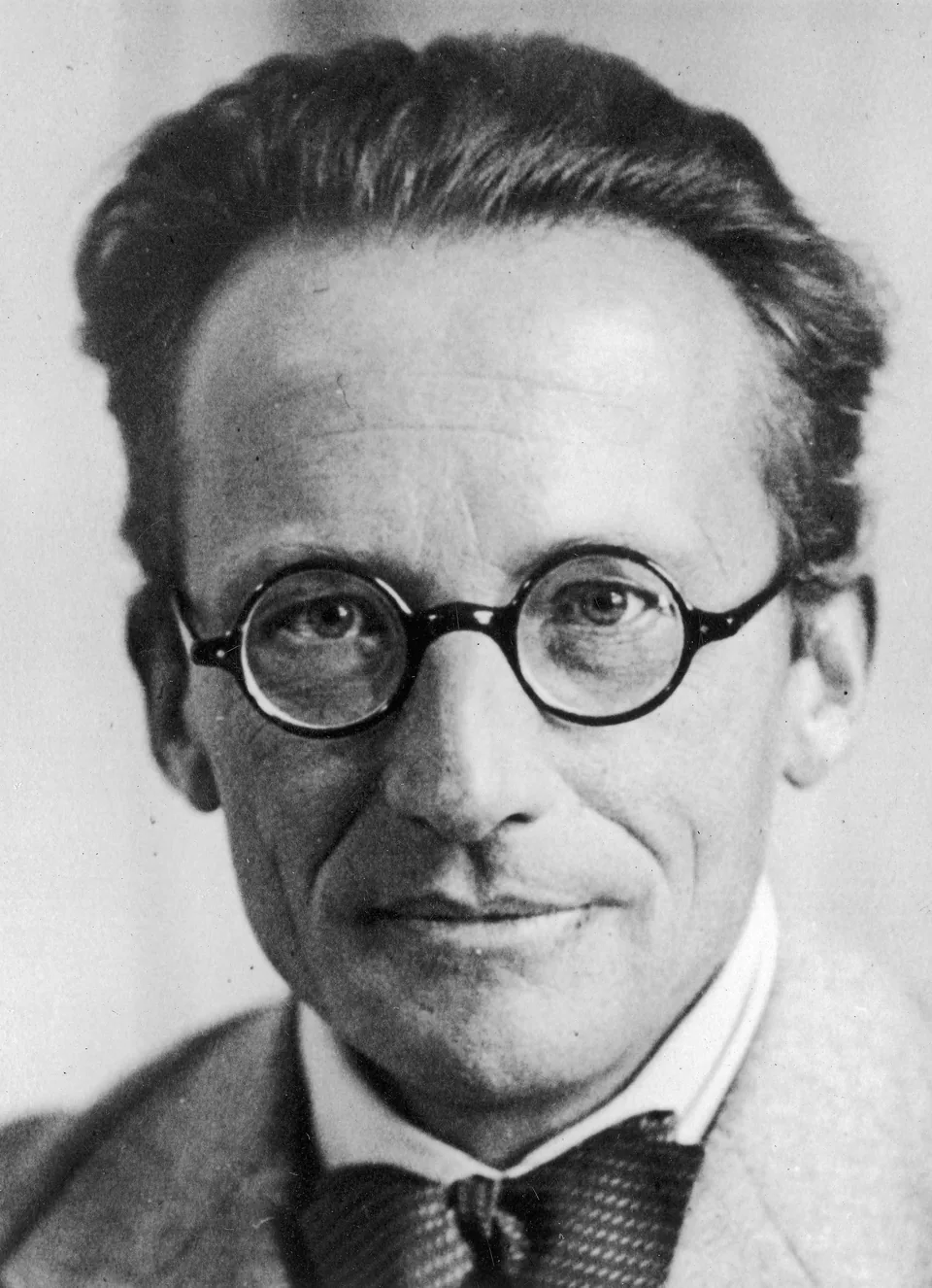
Erwin Schrödinger’s IQ has never been measured, and no page we found attaches a number to his name. What is documented is a Zurich chair in 1921, Max Planck’s chair in Berlin in 1927 and the 1933 Nobel Prize in Physics, shared with Paul Dirac “for the discovery of new productive forms of atomic theory.”
Erwin Schrödinger’s estimated IQ
- Entered Vienna’s Akademisches Gymnasium in fall 1898 and, per the University of Vienna’s physics library, remained “an outstanding student” through school, graduating with honors on July 11, 1906.
- Doctorate from the University of Vienna on May 20, 1910, aged 22, under Friedrich Hasenöhrl; habilitation followed on September 1, 1914.
- Sent the first of the 1926 wave-mechanics papers to the Annalen der Physik on January 26, 1926, aged 38, and by early March had shown that his wave mechanics and Heisenberg’s matrix mechanics are mathematically equivalent.
- Held the Zurich chair of theoretical physics from late 1921 (formerly Einstein’s and Max von Laue’s) and, from October 1, 1927, Max Planck’s chair in Berlin.
- Nobel Prize in Physics 1933, shared with Paul Dirac, “for the discovery of new productive forms of atomic theory.”
No IQ test result for Schrödinger has been published, and the school record that survives is qualitative: “outstanding,” “graduated with honors,” a classmate’s recollection, his own account of being a good student in every subject. None gives a rank, a grade average or a score. The range reflects a documented record in theoretical physics, one whose breakthrough came at thirty-eight rather than in his twenties, not a measured aptitude.
- Born
- August 12, 1887, Vienna, Austria-Hungary
- Died
- January 4, 1961, Vienna, Austria
- School
- Akademisches Gymnasium, Vienna, from 1898; graduated with honors July 11, 1906
- Doctorate
- University of Vienna, May 20, 1910, aged 22, under Friedrich Hasenöhrl
- Chairs and posts
- Zurich (1921); Berlin (1927, succeeding Max Planck); fellow of Magdalen College, Oxford (1933); Graz (1936–1938)
- Nobel Prize in Physics
- 1933, shared with Paul Dirac, “for the discovery of new productive forms of atomic theory”
- Dublin
- Director, School of Theoretical Physics, Dublin Institute for Advanced Studies, 1940–1956
- Documented IQ test
- None on record; no circulating figure found
What an IQ of 155–175 actually means
Set the claim aside for a moment. If someone genuinely scored in this range, here is what that would represent.
| Score range | Classification | Share of people | What it indicates |
|---|---|---|---|
| 85 – 114 | Average | ~68% | The range most people fall into. |
| 115 – 129 | Above average | ~13.6% | Roughly one person in seven. |
| 130 – 144 | Gifted | ~2% | The threshold most high-IQ societies use. |
| Above 144 | Highly gifted | ~0.1% | Figures above this range are extrapolated from the curve rather than measured. |
Percentages are approximate and describe a normal distribution. The same number means different things on tests with different standard deviations.
Thirty questions gives you a measured position on this exact scale — your score, your percentile and the ability breakdown behind it.
Find out in 30 minutes →Who Erwin Schrödinger was
Erwin Schrödinger was born in Vienna on August 12, 1887. Tutored at home, he entered the Akademisches Gymnasium in 1898, where the curriculum leaned on Latin and Greek, and graduated with honors on July 11, 1906. At the University of Vienna he attended Friedrich Hasenöhrl’s lectures on theoretical physics five days a week for eight successive semesters, alongside Wilhelm Wirtinger’s mathematics and Franz Exner’s experimental physics, and was awarded his doctorate on May 20, 1910 for a dissertation on the conduction of electricity on the surface of insulators in moist air. He became Exner’s assistant at the university’s Second Physics Institute, wrote a 1913 radium study with K. W. F. Kohlrausch that won the Imperial Academy of Sciences’ Haitinger Prize, and received his habilitation on September 1, 1914.
After short posts at Jena, Stuttgart and Breslau in 1920 and 1921, Schrödinger accepted the chair of theoretical physics at Zurich in late 1921, the chair formerly held by Einstein and Max von Laue. In December 1925 he completed a paper on Einstein’s gas theory, and on January 26, 1926 he sent the first of the papers titled “Quantisierung als Eigenwertproblem” to the Annalen der Physik. It contains the wave equation that bears his name, and MacTutor counts six papers on wave mechanics from him that year. By early March 1926 he had shown that his wave mechanics and the matrix mechanics of Heisenberg and the Göttingen school were mathematically equivalent. Max Born’s reading of the wave function’s square as a probability, which Schrödinger regarded as a misinterpretation, and the 1927 interpretation of Heisenberg and Niels Bohr became the standard view; Schrödinger never changed his attitude toward it.
On October 1, 1927 he took up the Berlin chair of theoretical physics, succeeding Max Planck after Arnold Sommerfeld had declined it, and joined the Prussian Academy of Sciences; his colleagues there included Albert Einstein. In November 1933 he moved to Oxford and was made a fellow of Magdalen College within days. The same month he learned that the Nobel Prize in Physics for 1933 was his, shared with Paul Dirac, “for the discovery of new productive forms of atomic theory.” In 1935 a three-part essay, “The Present Situation in Quantum Mechanics,” introduced the cat paradox, written in discussion of the Einstein–Podolsky–Rosen paper. He then held a post at Graz (1936–1938) and a guest professorship at Ghent before reaching Dublin in October 1939.
In Dublin Schrödinger spent seventeen years as the first Director of the School of Theoretical Physics at the Dublin Institute for Advanced Studies, and was an honorary professor at Trinity College Dublin from 1940 to 1956. His lectures at Trinity in February 1943, published by Cambridge University Press in 1944 as What Is Life?, were acknowledged by Francis Crick as an influence on young molecular biologists. The Dictionary of Scientific Biography notes that he wrote and spoke four modern languages besides Greek and Latin, and that Sommerfeld spoke of a special “Schrödinger style” of exposition. He returned to Vienna in 1956 to a chair of his own at the university, received the prize of the City of Vienna, was first recipient of the Austrian Academy of Sciences’ Erwin Schrödinger Prize, and had been elected a Foreign Member of the Royal Society in 1949. He died in Vienna on January 4, 1961.
 By Elora Mercer, Celebrity Research WriterFigures checked by Leon Falkner, Data & Research Analyst
Reviewed by Aarav Vardhan, Editor-in-Chief · Last reviewed August 2026
.jpg)
Erwin Schrödinger: the documented record
The estimate above rests on this record. Every entry here is a matter of public fact, which is more than can be said for the number itself.
- 1887Born in Vienna on August 12.
- 1906Graduates from the Akademisches Gymnasium with honors on July 11, after entering in 1898.
- 1910Awarded his University of Vienna doctorate on May 20, under Friedrich Hasenöhrl.
- 1921Accepts the chair of theoretical physics at Zurich, late in the year.
- 1926Sends the first wave-mechanics paper to the Annalen der Physik on January 26; shows its equivalence to matrix mechanics by early March.
- 1927Takes up Max Planck’s chair of theoretical physics in Berlin on October 1.
- 1933Moves to Oxford and is awarded the Nobel Prize in Physics, shared with Paul Dirac.
- 1935Publishes the three-part essay “The Present Situation in Quantum Mechanics,” containing the cat paradox.
- 1939Arrives in Dublin in October; directs the School of Theoretical Physics at the Dublin Institute for Advanced Studies until 1956.
- 1943Delivers the “What Is Life?” lectures at Trinity College Dublin in February; the book follows in 1944.
- 1961Dies in Vienna on January 4.
Why no figure circulates
Following a claim back to its first appearance is the part almost nobody does — and it is what most people are actually asking.
Erwin Schrödinger’s IQ is not recorded in anything we could open, and no figure for it appears to circulate. Searches run for this page in October 2026, including “Erwin Schrodinger IQ,” “Erwin Schrödinger IQ,” “Schrodinger IQ” and “Erwin Schrödinger estimated IQ,” returned biographies, encyclopedia entries and a Wikipedia article, but no page that states a score for him.
A Schrödinger IQ figure, if one surfaces, would follow a familiar pattern. Albert Einstein’s 160 is the standard example: published once, copied widely and never traced to a test, a process our guide to where celebrity IQ numbers come from documents. Anyone offering a number for Schrödinger should be able to name the test, the year and who administered it. None of the sources opened for this page can do that, because none reports a test.
The estimated IQ for Erwin Schrödinger on this page therefore rests on a record, and the nearest thing to a measurement in it is his schooling, which is qualitative. He entered Vienna’s Akademisches Gymnasium in the fall of 1898 after being tutored at home. The University of Vienna’s physics library says he “remains an outstanding student throughout his school career” and graduated with honors on July 11, 1906. In his own account he was a good student in every subject, fond of mathematics and physics and equally of the strict logic of the ancient grammars. A classmate recalled that he took in the physics and mathematics lessons during class, without homework. We could not find the claim that he ranked first in his class every year in any source we opened, so this page does not use it.
Was Schrödinger a genius? By the record, he did foundational work: the wave equation, a shared Nobel Prize and Planck’s Berlin chair. But genius is a judgment about achievement, and an IQ is a score from a test he never sat on any record we found. The range sits where it does because the documented timeline, a doctorate at twenty-two, a Zurich chair at thirty-four and wave mechanics at thirty-eight, is slower than that of Werner Heisenberg, who formulated matrix mechanics at twenty-three. A range this high lies near what most tests can report at all (see the IQ ceiling effect), so read it as an inference about a record, in the territory described on our page on the genius IQ level.
How we read a number →Says he passed the entrance exam in September 1898, “remains an outstanding student throughout his school career,” and graduated with honors on July 11, 1906. Source of the school record used here.
Schrödinger’s own account of his school years and a classmate’s recollection; doctorate on May 20, 1910; habilitation on September 1, 1914; Zurich 1921, Berlin on October 1, 1927, Oxford and the Nobel Prize, Dublin from fall 1939; the 1935 essay with the cat paradox; death on January 4, 1961.
Hasenöhrl and Exner at Vienna, the 1913 Haitinger Prize work, the Zurich chair formerly held by Einstein and von Laue, the January 26, 1926 first wave-mechanics paper, the equivalence with matrix mechanics, Planck’s Berlin chair, the 1933 prize shared with Dirac, seventeen years in Dublin, and languages. It gives Alpbach as place of death; MacTutor, Wikipedia and Wikidata say Vienna.
Lists “1921-1927 Professor in Zurich” and the 1933 Nobel Prize in Physics “for the discovery of new productive forms of atomic theory.”
Calls him the first Director of the School of Theoretical Physics at the Dublin Institute for Advanced Studies and an honorary professor at Trinity College from 1940 to 1956; places the “What is Life?” lectures at Trinity in 1943.
Used for orientation and cross-checks: the 1933 citation, the Magdalen College fellowship, death in Vienna, the 1944 Cambridge University Press edition of the February 1943 lectures, the 1935 Naturwissenschaften paper. Gives his Dublin retirement as 1955, against 1956 in MacTutor and Trinity.
Confirms the identifier belongs to this person: born August 12, 1887; died January 4, 1961 in Vienna.
No school, university, institutional or biographical source opened for this page reports a test result, and no web page found by searches for “Erwin Schrodinger IQ,” “Erwin Schrödinger IQ,” “Schrodinger IQ” and related phrasings states a figure for him.
The sources behind our estimate
The figures that circulate for Erwin Schrödinger, what we were able to confirm, and where the two diverge.
No specific figure was found. Searches for “Erwin Schrodinger IQ,” “Erwin Schrödinger IQ” and “Schrodinger IQ” returned biographies and encyclopedia entries.
We found no IQ figure for Schrödinger, and no test result behind one. The biographies we read (the University of Vienna physics library’s, MacTutor at the University of St Andrews, and the Dictionary of Scientific Biography) describe his school years, degrees and posts, and report no test either.
With no circulating number to set against it, the only spread on this page is our own: twenty points, the width of an inference from a record rather than a measurement. If a figure for Schrödinger does surface, ask which test, which year and who administered it. Without those it is the same kind of guess as this range, minus the stated method.
Want a number that does hold up? Every figure on this page is somebody’s claim. Take the 30-question test and get a percentile you can check rather than a figure you have to trust.
Erwin Schrödinger — frequently asked
What is Erwin Schrödinger’s IQ?
Erwin Schrödinger has no verified IQ: no test result has been published, and we found no figure attached to his name. Our estimated range is 155–175, inferred from documented achievement, namely a Vienna doctorate at 22, chairs at Zurich and Berlin, the 1926 wave equation and the 1933 Nobel Prize in Physics, not from a score.
Was Schrödinger a genius?
By the record, he did foundational work: the 1926 wave equation, a Nobel Prize in Physics in 1933 shared with Paul Dirac, and Max Planck’s chair in Berlin. But genius is a judgment about achievement, not a test result. No IQ test measured Schrödinger on any record we found, so no score confirms or limits the word.
Did Erwin Schrödinger ever take an IQ test?
No record of one exists in the sources we opened, including the University of Vienna physics library biography, MacTutor and the Dictionary of Scientific Biography. His school record is qualitative: an outstanding student who graduated from Vienna’s Akademisches Gymnasium with honors on July 11, 1906, with no published rank, grade average or score.
What is Erwin Schrödinger’s estimated IQ based on?
Erwin Schrödinger’s estimated IQ of 155–175 rests on graduating with honors in 1906, a doctorate under Friedrich Hasenöhrl at 22, wave mechanics published in 1926, and the 1933 Nobel Prize. It is an inference from a record, with the stated weakness that the school and university sources carry no scores.
How does Schrödinger’s estimated IQ compare with Einstein’s and Heisenberg’s?
Our range for Schrödinger, 155–175, sits slightly below Werner Heisenberg’s 165–185 and Albert Einstein’s 160–180 on this site. All three are inferences, and none was tested. The gap reflects timing: Heisenberg formulated matrix mechanics at 23, Schrödinger’s wave equation came at 38. That is a difference in precocity, not a measured difference in ability.
Was Schrödinger first in his class at school?
We could not confirm that. The sources we opened say he was an outstanding student throughout his school career and graduated with honors on July 11, 1906, and a classmate recalled that he absorbed physics and mathematics in class without homework. None states a class rank, so the claim that he came first every year is unverified.
What is Erwin Schrödinger best known for?
Schrödinger is best known for the wave equation of quantum mechanics, published in 1926, and for the 1935 cat paradox. He shared the 1933 Nobel Prize in Physics with Paul Dirac, directed the School of Theoretical Physics at the Dublin Institute for Advanced Studies, and gave the 1943 “What Is Life?” lectures, published in 1944.
How does my IQ compare with Erwin Schrödinger?
You can find out in about fifteen minutes. The IQ Metrics assessment is 30 questions, scored on the same 100-mean scale used throughout this page, so your result and the estimate above are at least expressed in the same units — one measured, one inferred. Once you have a number, the leaderboard shows where it would sit, and how we score and norm it explains the benchmarking.
Where does this estimate come from?
From the documented record rather than a test — the method is named above and set out in full under how we read a number. Compare it against the other scientists profiles, starting with Albert Einstein.
- Take the 30-question IQ test — get a measured score and percentile of your own
- Average IQ by country — how the scale behaves across populations
- How IQ Metrics scores its assessment — the method behind our own number
- More on how IQ testing works — reliability, error and what a score can and cannot say
- More scientists profiles — same field, same method
More scientists
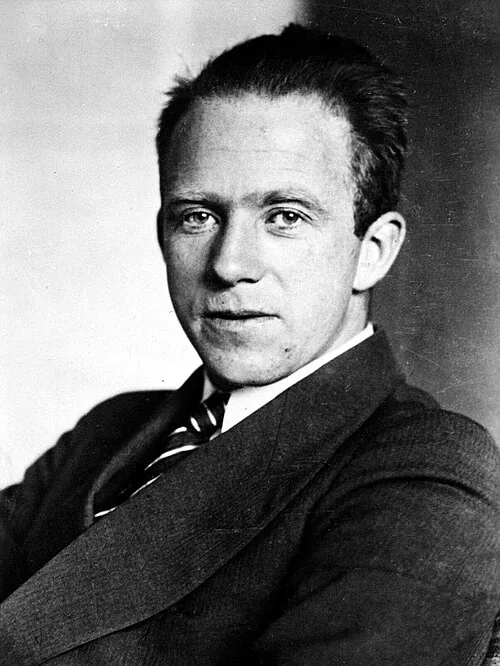
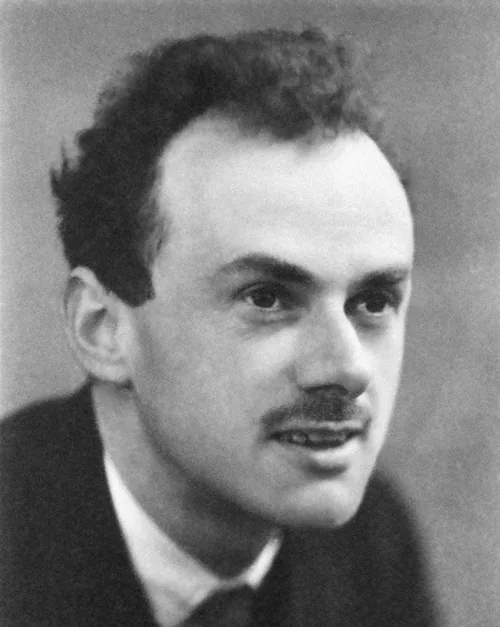
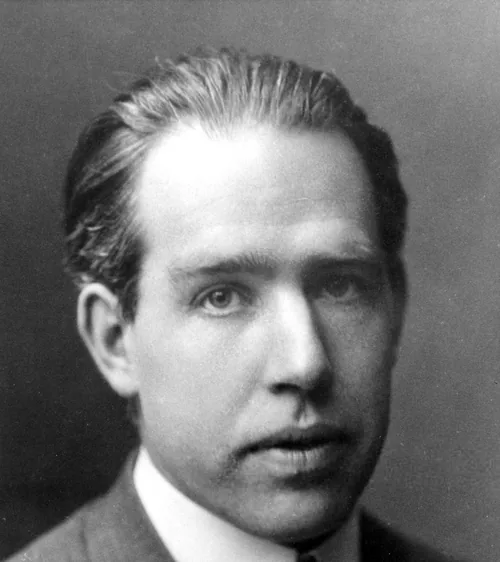
Photographer unknown, via Wikimedia Commons, CC BY-SA 3.0 DE. Background removed for the portrait above. · Portrait, 1933, from the Nobel Foundation (Commons file); public domain. Background removed for the portrait above. · Portrait, about 1922, credited by the American Institute of Physics to AB Lagrelius & Westphal (Stockholm), as reproduced in Niels Bohr’s Nobel Prize biography (Commons file); public domain. Background removed for the portrait above.
.jpg)


An estimate is an inference.
Yours can be measured.
Thirty questions, scored against general-population benchmarks. Your score, your percentile, your ability breakdown and a printable IIF certificate.
Find your IQ score now! →