



What was Niels Bohr’s IQ?
Niels Bohr’s IQ level has no test behind it. What survives is an institute in Copenhagen that physicists from across Europe came to visit.
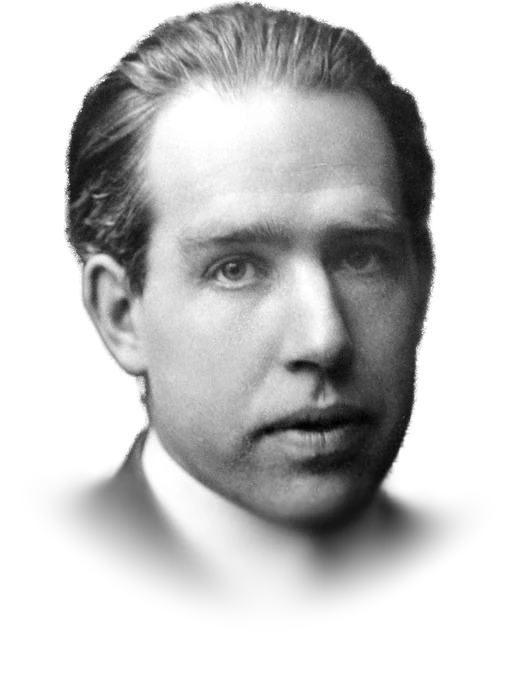
Niels Bohr’s IQ was never measured: no test result for him has been published, and none of the “highest IQ” lists we checked attaches a number to his name. What is documented is a Copenhagen doctorate in 1911, the 1913 atomic model and the 1922 Nobel Prize in Physics; his estimated IQ here, 160–180, is inferred from that record, not from a test.
Niels Bohr’s estimated IQ
- Doctorate from the University of Copenhagen in 1911, with a thesis on the electron theory of metals defended on May 13, aged 25; as a student he had already won the Royal Danish Academy of Sciences and Letters’ gold medal for a prize essay on measuring the surface tension of liquids.
- The 1913 trilogy in Philosophical Magazine (July, September, November): electrons in quantized “stationary states” around the nucleus, and a derivation of the Balmer formula for hydrogen from the model, published when he was 27.
- A Chair of Theoretical Physics at the University of Copenhagen created for him in 1916, and the Institute for Theoretical Physics, opened on March 3, 1921, with Bohr as director.
- The 1922 Nobel Prize in Physics “for his services in the investigation of the structure of atoms and of the radiation emanating from them.”
- His principle of complementarity and his answers to Einstein at the 1927 and 1930 Solvay conferences, and, in 1935, to the Einstein–Podolsky–Rosen paper.
No IQ test result for Bohr has been published, so this is an inference from a record documented in degrees, posts and prizes, not a measure of his reasoning. His milestones arrive later than Heisenberg’s (a doctorate at 25 against 21, a Nobel Prize at 37 against 31), which is why the range starts one notch lower. Much of what made Bohr central, the institute and the debates, is not something a test has items for, so the range describes the level of the documented work, not a measured ability.
- Born
- October 7, 1885, Copenhagen, Denmark
- Died
- November 18, 1962, Copenhagen, Denmark
- Doctorate
- University of Copenhagen, thesis defended May 13, 1911, aged 25
- Chair and institute
- Chair of Theoretical Physics, Copenhagen, 1916; Institute for Theoretical Physics opened March 3, 1921, with Bohr as director
- Nobel Prize in Physics
- 1922, “for his services in the investigation of the structure of atoms and of the radiation emanating from them”
- Known for
- The 1913 atomic model, complementarity, the debates with Einstein; element 107, bohrium, is named for him
- Documented IQ test
- None on record, and no figure circulates; Landau’s personal ranking puts him in class 1 of theoretical physicists
What an IQ of 160–180 actually means
Set the claim aside for a moment. If someone genuinely scored in this range, here is what that would represent.
| Score range | Classification | Share of people | What it indicates |
|---|---|---|---|
| 85 – 114 | Average | ~68% | The range most people fall into. |
| 115 – 129 | Above average | ~13.6% | Roughly one person in seven. |
| 130 – 144 | Gifted | ~2% | The threshold most high-IQ societies use. |
| Above 144 | Highly gifted | ~0.1% | Figures above this range are extrapolated from the curve rather than measured. |
Percentages are approximate and describe a normal distribution. The same number means different things on tests with different standard deviations.
Thirty questions gives you a measured position on this exact scale — your score, your percentile and the ability breakdown behind it.
Find out in 30 minutes →Who Niels Bohr was
Niels Henrik David Bohr was born in Copenhagen on October 7, 1885. He took his school-leaving examination at Gammelholm Latin School in 1903, the year he enrolled at the University of Copenhagen. As a student he won the Royal Danish Academy of Sciences and Letters’ gold medal for a prize essay on measuring the surface tension of liquids by a method Lord Rayleigh proposed in 1879 (the competition was set in 1905). He earned his master’s degree in 1909 and his doctorate in 1911, with a thesis on the electron theory of metals that he defended on May 13, 1911, when he was 25.
In September 1911, on a Carlsberg Foundation fellowship, Bohr went to England and met J. J. Thomson at the Cavendish Laboratory in Cambridge, then took up post-doctoral work with Ernest Rutherford at the Victoria University of Manchester, returning to Denmark in July 1912. In 1913 he published the trilogy for which he is best known, three papers in Philosophical Magazine in July, September and November, in which electrons travel in orbits of quantized “stationary states” around the nucleus and emit a quantum of energy when they drop from a higher-energy orbit to a lower one; the first paper derived the Balmer formula for the hydrogen spectrum from the model. Bohr was back in Manchester from October 1914 to July 1916, and by the end of that stay had been appointed to the Chair of Theoretical Physics at Copenhagen, a position created especially for him. The Institute for Theoretical Physics, now the Niels Bohr Institute, opened on March 3, 1921, with Bohr as its director, funded first by the Carlsberg Foundation and later by the Rockefeller Foundation; physicists from across Europe visited to confer with him. The 1922 Nobel Prize in Physics followed, “for his services in the investigation of the structure of atoms and of the radiation emanating from them.”
In a paper presented at the Como Conference in September 1927, Bohr emphasized that Werner Heisenberg’s uncertainty relations could be derived from classical considerations about the resolving power of optical instruments. The philosophical principle he conceived, complementarity, holds that items can have apparently mutually exclusive properties, such as being a wave or a stream of particles, depending on the experimental framework. That October, at the fifth Solvay Conference in Brussels, Einstein presented the first of his critiques of quantum indeterminacy; at the sixth Solvay Congress in 1930 his photon-box thought experiment, aimed at the time–energy uncertainty relation, was by Leon Rosenfeld’s account a real shock for Bohr, who answered it with gravitational redshift and time dilation. When Einstein, Podolsky and Rosen published their paper on the completeness of quantum mechanics in 1935, Bohr replied five months later with a paper bearing the identical title. Despite the disagreement, the two men kept a mutual admiration for the rest of their lives.
In September 1943, warned that he was in danger of arrest in German-occupied Denmark, Bohr and his wife escaped by sea to Sweden on September 29; he arrived in Scotland on October 6. In the United States he went by the name “Nicholas Baker” and, as a consultant, paid a series of extended visits over about two years to the weapons laboratory at Los Alamos, directed by J. Robert Oppenheimer, who credited him with an important contribution to the work on modulated neutron initiators. Bohr received the Copley Medal in 1938 and the first Atoms for Peace Award in 1957, and died in Copenhagen on November 18, 1962. Element 107, bohrium, first synthesized in 1981 at the GSI Helmholtz Centre in Darmstadt, is named for him; the name was recognized internationally in 1997.
 By Elora Mercer, Celebrity Research WriterFigures checked by Leon Falkner, Data & Research Analyst
Reviewed by Aarav Vardhan, Editor-in-Chief · Last reviewed August 2026

Niels Bohr: the documented record
The estimate above rests on this record. Every entry here is a matter of public fact, which is more than can be said for the number itself.
- 1885Born in Copenhagen on October 7.
- 1911Defends his doctoral thesis on the electron theory of metals on May 13; in September goes to Cambridge on a Carlsberg Foundation fellowship, then to Rutherford in Manchester.
- 1913Publishes the three-paper “trilogy” on atomic structure in Philosophical Magazine (July, September, November).
- 1916Appointed to the Chair of Theoretical Physics at the University of Copenhagen, created for him.
- 1921The Institute for Theoretical Physics opens on March 3, with Bohr as director.
- 1922Awarded the Nobel Prize in Physics.
- 1927Presents a paper at the Como Conference in September; meets Einstein’s first critique of quantum theory at the fifth Solvay Conference in October.
- 1935Replies, five months after publication, to the Einstein–Podolsky–Rosen paper with a paper of the identical title.
- 1943Escapes by sea to Sweden on September 29; reaches Scotland on October 6; later visits Los Alamos as a consultant under the name “Nicholas Baker.”
- 1962Dies in Copenhagen on November 18.
Why no figure circulates
Following a claim back to its first appearance is the part almost nobody does — and it is what most people are actually asking.
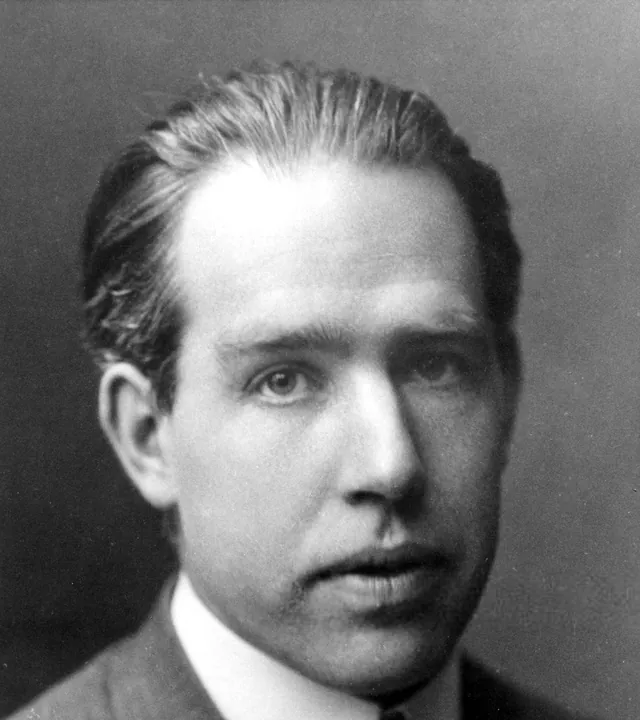
The Niels Bohr IQ question has an unusual answer: there is no number to trace. Most famous physicists carry an unsourced figure (see how celebrity IQ numbers are made), but the lists we opened leave Bohr out or mention him only as the other side of Albert Einstein’s quantum debates. Science ABC’s list of the highest IQs in the world names him in Einstein’s entry and gives him no score; Briefly’s top-35 list and All That’s Interesting’s list give him no score; and a public Substack “Database of IQ Estimations,” published in October 2023, has no entry for him.
What does circulate for Bohr is a different kind of number. The Nobel Prize–winning physicist Lev Landau kept a personal logarithmic ranking of theoretical physicists in which each class down meant ten times less achievement than the one before. According to an arXiv paper by Simkin and Roychowdhury, Landau put Einstein in class ½ and, in class 1, Bohr, Erwin Schrödinger, Werner Heisenberg, Paul Dirac and Enrico Fermi. It ranks contribution, not test performance, and it carries no IQ, but it is the nearest thing to a public rating of Bohr’s standing, and it sets him beside Heisenberg, whose range on this site is 165–185.
Niels Bohr’s intelligence is more often illustrated by an anecdote than by any number: the “barometer question,” in which an examinee asked how to find a building’s height with a barometer offers a rope, shadows and a pendulum instead of the expected pressure-difference answer. It is an anecdote, not a record. Alexander Calandra’s essay “Angels on a Pin” appeared in 1959 in Pride, was reprinted in Current Science in 1964 and included in the 1969 edition of his book The Teaching of Elementary Science and Mathematics, and was told as a first-person story from the Sputnik era; it does not name Bohr. The versions that place the exam at the University of Copenhagen and make the student Bohr are later ones (Snopes, as summarized on Wikipedia, cites versions from 1988 and 1999), and we found no record in the sources we opened that ties the story to his actual examinations.
Niels Bohr’s estimated IQ of 160–180 therefore rests on the record, the same way the estimates for Heisenberg (165–185) and J. Robert Oppenheimer (155–175) do: a Copenhagen doctorate at 25, the 1913 atomic model, a Nobel Prize in 1922. Estimates reconstructed from biographies tend to land in this band for the eminent anyway. A 1978 paper by Walberg, Rasher and Hase, which estimated IQs for 282 eminent figures from biographical sources, reported a mean of 158.9 for the whole group, so the figure says as much about the method as about Bohr. For scale, an IQ of 160 sits four standard deviations above the mean on a scale with a standard deviation of 15, a range where the ceiling of most tests, not the person, sets the limit (see the IQ ceiling effect).
How we read a number →Danish national biographical lexicon: born 7.10.1885 in Copenhagen; school-leaving exam 1903 (Gammelholm); magisterkonferens 1909; dr.phil. 1911; professor at Copenhagen 1916; the institute founded 1921; Nobel Prize 1922; died 18.11.1962.
Confirms the 1922 Nobel Prize in Physics, the 1943 flight from Denmark to Sweden, and work on the Manhattan Project under the pseudonym Nicholas Baker as a knowledgeable consultant.
Orientation and dates: education and the 1911 defense (May 13), Cambridge and Manchester 1911–12, the 1913 trilogy, the 1916 chair, the 1921 institute opening, the 1922 Nobel citation, Como 1927, the 1943 escape, Los Alamos visits, Copley Medal 1938, Atoms for Peace Award 1957. Does not mention an IQ.
Solvay 1927 and 1930 and the 1935 EPR reply; the institute’s founding year and Carlsberg and Rockefeller funding; element 107 first synthesized in 1981 at GSI Darmstadt and named bohrium in 1997; Oppenheimer as first director of Los Alamos.
Describes Landau’s logarithmic ranking of theoretical physicists: Einstein in class ½; Bohr, Schrödinger, Heisenberg, Dirac and Fermi in class 1; each lower class achieved ten times less. A scale of achievement, not an IQ.
IQ estimates made from biographical sources for 282 eminent figures; mean estimated IQ 158.9 for the whole group. Used to explain the method, not to support a figure for Bohr, who is not mentioned.
Calandra’s “Angels on a Pin” (Pride, 1959; reprinted in Current Science, 1964; in the 1969 edition of his book) does not name Bohr; the more recent versions (1988 and 1999, per Snopes) do. Treated as an anecdote of disputed provenance, not a record.
Opened to look for a circulating figure. None gives Bohr an IQ number; Science ABC mentions him only as Einstein’s debating opponent.
No school, university, military or archive record of an IQ test for Bohr appears in any biography, list or paper we opened, and no figure circulates for him.
The sources behind our estimate
The figures that circulate for Niels Bohr, what we were able to confirm, and where the two diverge.
No specific figure is attached to Bohr. Searches for “Niels Bohr IQ” and “Niels Bohr estimated IQ” return biographies, and the “highest IQ” lists we opened either leave him out or mention him only as Einstein’s opponent in the quantum debates. The closest thing to a public rating is physicist Lev Landau’s personal ranking of theoretical physicists, which puts Bohr in its first class: a scale of achievement, not an IQ.
No IQ test result for Bohr has been published, and no figure circulates for him. We checked Science ABC’s list of the people with the highest IQ in the world, Briefly’s top-35 list, All That’s Interesting’s highest-IQ list and a public Substack “Database of IQ Estimations” (October 2023): none gives Bohr a number. A 1978 Gifted Child Quarterly paper that estimated IQs for 282 eminent people from biographies does not mention him. Landau’s scale, as described in an arXiv paper, ranks achievement: Einstein in class ½; Bohr, Schrödinger, Heisenberg, Dirac and Fermi in class 1.
With no circulating figure there is nothing to correct downward. The 20-point spread is the width of the inference itself, the same width the site uses for Einstein and Oppenheimer, and it should be read as a band around a documented record, not as a measurement.
Want a number that does hold up? Every figure on this page is somebody’s claim. Take the 30-question test and get a percentile you can check rather than a figure you have to trust.
Niels Bohr — frequently asked
What is Niels Bohr’s IQ?
Niels Bohr’s IQ is not known: no test result for him has been published, and none of the “highest IQ” lists we checked gives him a number. An estimate from his documented record, a Copenhagen doctorate in 1911, the 1913 atomic model and the 1922 Nobel Prize in Physics, puts his estimated IQ at about 160–180, as an inference rather than a measurement.
How does Niels Bohr’s estimated IQ compare with Einstein’s and Heisenberg’s?
On this site Niels Bohr’s estimated IQ level is 160–180, the same band as Albert Einstein’s 160–180 and one notch below Werner Heisenberg’s 165–185. Bohr’s milestones come later than Heisenberg’s: a doctorate at 25 against 21, and a Nobel Prize at 37 against 31. All of these are inferences from records, not test scores.
Did Niels Bohr ever take an IQ test?
No IQ test taken by Bohr appears in any source we opened, and no score has been published. The exams on his record are academic ones: a master’s degree in 1909 and the defense of his doctoral thesis at the University of Copenhagen on May 13, 1911. Any IQ number for him would be a reconstruction made after the fact.
Is Niels Bohr smart, and was he a genius?
His record shows it without an IQ number. Bohr took a doctorate at 25, published the 1913 atomic model at 27, won the 1922 Nobel Prize in Physics and directed the Copenhagen institute that theorists traveled to. Lev Landau’s personal ranking put him in class 1, beside Heisenberg, Schrödinger, Dirac and Fermi. “Genius” is a label, not a test result.
What did Niels Bohr win the Nobel Prize for?
Bohr won the 1922 Nobel Prize in Physics “for his services in the investigation of the structure of atoms and of the radiation emanating from them.” The work behind it was his 1913 trilogy in Philosophical Magazine, which placed electrons in quantized stationary states around the nucleus and derived the Balmer formula for hydrogen.
Is the story of Bohr and the barometer true?
It is an anecdote, not a record. Alexander Calandra’s essay “Angels on a Pin” (Pride, 1959) told the barometer story as a first-person account and did not name Bohr; versions that name Bohr and the University of Copenhagen are later, according to Snopes (1988 and 1999). We found no record linking it to Bohr’s actual exams.
What was Niels Bohr’s role at Los Alamos?
After escaping occupied Denmark for Sweden on September 29, 1943, Bohr went to the United States under the name “Nicholas Baker” and paid a series of extended visits to Los Alamos over about two years as a consultant. J. Robert Oppenheimer credited him with an important contribution to the work on modulated neutron initiators.
How does my IQ compare with Niels Bohr?
You can find out in about fifteen minutes. The IQ Metrics assessment is 30 questions, scored on the same 100-mean scale used throughout this page, so your result and the estimate above are at least expressed in the same units — one measured, one inferred. Once you have a number, the leaderboard shows where it would sit, and how we score and norm it explains the benchmarking.
Where does this estimate come from?
From the documented record rather than a test — the method is named above and set out in full under how we read a number. Compare it against the other scientists profiles, starting with Albert Einstein.
- Take the 30-question IQ test — get a measured score and percentile of your own
- Average IQ by country — how the scale behaves across populations
- How IQ Metrics scores its assessment — the method behind our own number
- More on how IQ testing works — reliability, error and what a score can and cannot say
- More scientists profiles — same field, same method
More scientists
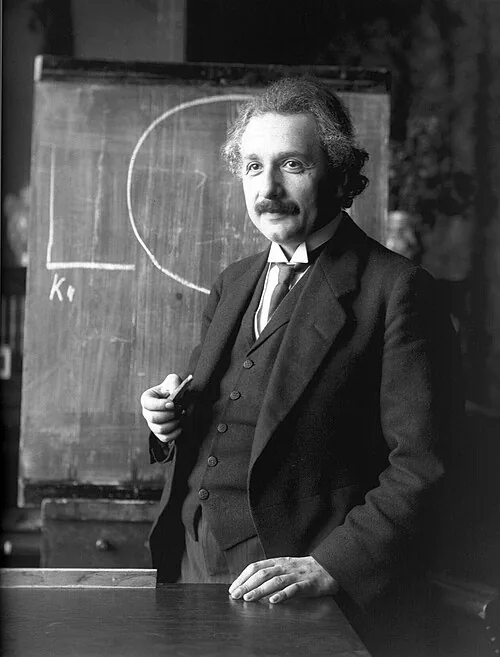
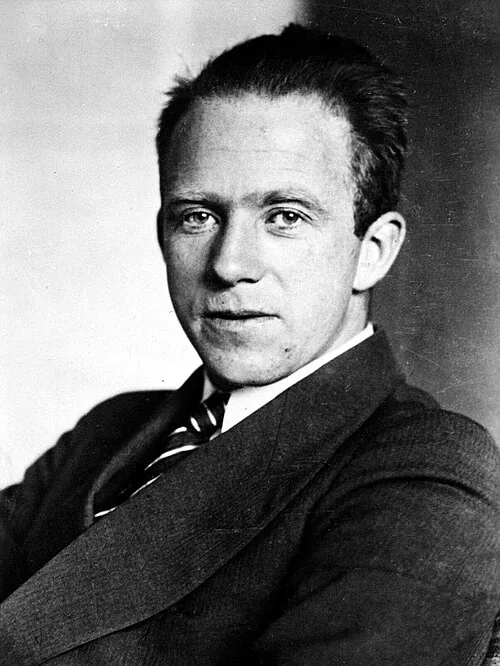
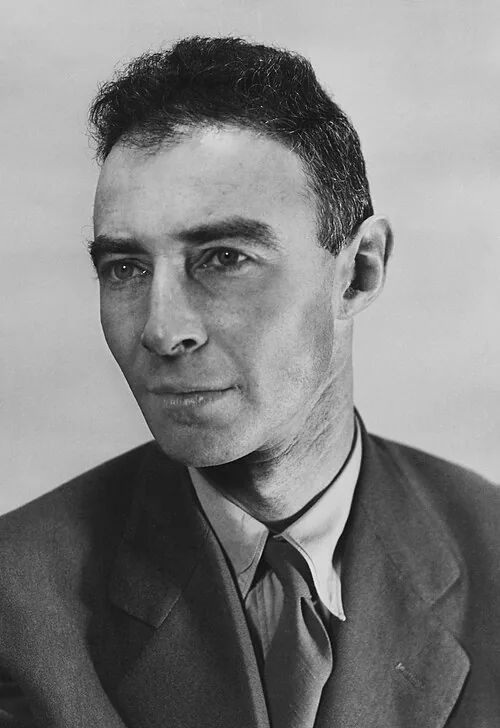
Portrait by Ferdinand Schmutzer (1921), public domain. Background removed for the portrait above. · Photographer unknown, via Wikimedia Commons, CC BY-SA 3.0 DE. Background removed for the portrait above. · Photograph from the US National Archives (catalog 558579), public domain.

.jpg)
.jpg)
An estimate is an inference.
Yours can be measured.
Thirty questions, scored against general-population benchmarks. Your score, your percentile, your ability breakdown and a printable IIF certificate.
Find your IQ score now! →