



What is Jeff Bezos’ IQ?
Top of his class, and still an estimate.

Two numbers circulate for him and neither is sourced. What is documented is one of the most complete academic records in this section — which is a different kind of evidence, and a better one.
Jeff Bezos’ estimated IQ
- Graduated Princeton in 1986 with highest honours, holding a BSE in electrical engineering and computer science.
- Elected to Phi Beta Kappa and to Tau Beta Pi, the engineering honour society — two independent academic distinctions on the record.
- High-school valedictorian and a National Merit Scholar, giving an unusually complete documented academic trail for a living subject.
This is an estimate inferred from a documented record, not a test result. Historiometric estimates carry wide error margins and cannot be treated as equivalent to an administered assessment.
- Born
- 12 January 1964, Albuquerque
- Field
- E-commerce, cloud computing, spaceflight
- Education
- Princeton University — BSE, 1986, highest honours
- Honours
- Phi Beta Kappa; Tau Beta Pi; National Merit Scholar
- Known for
- Amazon, Blue Origin
- Nationality
- American
What an IQ of 145–155 actually means
Set the claim aside for a moment. If someone genuinely scored in this range, here is what that would represent.
Average is 100 by construction, and about two-thirds of people fall between 85 and 115. Take the test to place your own score on this scale.
| Score range | Classification | Share of people | What it indicates |
|---|---|---|---|
| 85 – 114 | Average | ~68% | The range most people fall into. |
| 115 – 129 | Above average | ~13.6% | Roughly one person in seven. |
| 130 – 144 | Gifted | ~2% | The threshold most high-IQ societies use. |
| Above 144 | Highly gifted | ~0.1% | Figures above this range are extrapolated from the curve rather than measured. |
Percentages are approximate and describe a normal distribution. The same number means different things on tests with different standard deviations.
Thirty questions gives you a measured position on this exact scale — your score, your percentile and the ability breakdown behind it.
Find out in 30 minutes →Who Jeff Bezos is
Jeff Bezos graduated from Princeton in 1986 with a BSE in electrical engineering and computer science, with highest honours and elected to two honour societies. He worked at D. E. Shaw before founding Amazon in 1994, and founded the spaceflight company Blue Origin in 2000.
His record is the cleanest test of this section’s method. When the documented evidence is this strong, the temptation to convert it into a single number is strongest too — and it is still a conversion nobody has the instrument to make.
 By Elora Mercer, Celebrity Research WriterFigures checked by Leon Falkner, Data & Research Analyst
Reviewed by Aarav Vardhan, Editor-in-Chief · Last reviewed August 2026
_(cropped).jpg)
Jeff Bezos: the documented record
The estimate above rests on this record. Every entry here is a matter of public fact, which is more than can be said for the number itself.
- 1982Graduates high school as valedictorian in Miami; a National Merit Scholar.
- 1986Graduates Princeton with highest honours, BSE in electrical engineering and computer science.
- 1990Joins D. E. Shaw; becomes a senior vice-president by 1992.
- 1994Founds Amazon in Seattle.
- 1997Amazon goes public.
- 2000Founds Blue Origin.
- 2006Launches Amazon Web Services.
- 2021Steps down as Amazon CEO; flies on Blue Origin’s first crewed launch.
Where the 145 figure came from
Following a claim back to its first appearance is the part almost nobody does — and it is what most people are actually asking.

Both 145 and 150 appear across “smartest billionaires” listicles, presented as settled and cited to nothing. Neither names an administering body, a date, or a method. We could not find a first publication for either.
What makes this profile worth writing is the contrast. The unsourced figures sit alongside an academic record that is unusually well documented: valedictorian, National Merit Scholar, Princeton BSE with highest honours, Phi Beta Kappa and Tau Beta Pi. Every one of those is checkable.
So the honest position is that we know a great deal about how Bezos performed academically and nothing at all about how he would score on a reasoning test. Those are different claims, and conflating them is precisely the move this section exists to resist.
How we read a number →BSE in electrical engineering and computer science, awarded with highest honours. A matter of public record and the strongest single input to the estimate.
Two independent academic honour societies, both with published membership criteria. Cited as documented distinction, not as a score.
Source URLs and first-appearance date pending audit.
Identifying the earliest published instance of each is the open task for this profile.
No IQ test result for Bezos appears in any primary or contemporary source we could locate. Recorded as a documented absence.
The sources behind our estimate
The figures that circulate for Jeff Bezos, what we were able to confirm, and where the two diverge.
The lower of the two figures that circulate most widely across IQ listicles, published without attribution in every instance we checked.
We haven’t found a record of Jeff Bezos sitting an IQ test. What the record does contain is a valedictorian year, a National Merit scholarship, a Princeton BSE awarded with highest honours, and election to two honour societies. That is a documented academic trail — it is simply not a test score, and we have not presented it as one.
A five-point gap between the two figures published most often, with no method attached to either. As on every other profile here, the existence of a second number is the clue about how the first was arrived at.
Want a number that does hold up? Every figure on this page is somebody’s claim. Take the 30-question test and get a percentile you can check rather than a figure you have to trust.
Jeff Bezos — frequently asked
What is Jeff Bezos’s IQ?
No verified score exists. Our estimate of 145–155 is inferred from an unusually complete academic record, not from a test. The figures circulating online are unsourced.
Has Jeff Bezos ever taken an IQ test?
There is no public record of one. No score appears in his public statements, in Amazon filings, or in the reporting on him.
Where do the figures of 145 and 150 come from?
From IQ listicles, which publish both without attribution. Two different numbers for one person is the usual signal that neither traces to an assessment.
What did Jeff Bezos study at Princeton?
Electrical engineering and computer science. He graduated in 1986 with highest honours and was elected to both Phi Beta Kappa and Tau Beta Pi.
Why estimate from grades rather than a test?
Because grades are what the record actually contains. Class rank, honours and degree classification are documented and checkable; the IQ figures attached to him are neither.
How does my IQ compare with Jeff Bezos?
You can find out in about fifteen minutes. The IQ Metrics assessment is 30 questions, scored on the same 100-mean scale used throughout this page, so your result and the estimate above are at least expressed in the same units — one measured, one inferred. Once you have a number, the leaderboard shows where it would sit, and how we score and norm it explains the benchmarking.
Where does this estimate come from?
From the documented record rather than a test — the method is named above and set out in full under how we read a number. Compare it against the other business & tech profiles, starting with Steve Jobs.
- Take the 30-question IQ test — get a measured score and percentile of your own
- Average IQ by country — how the scale behaves across populations
- How IQ Metrics scores its assessment — the method behind our own number
- More on how IQ testing works — reliability, error and what a score can and cannot say
- More business & tech profiles — same field, same method
More business & tech

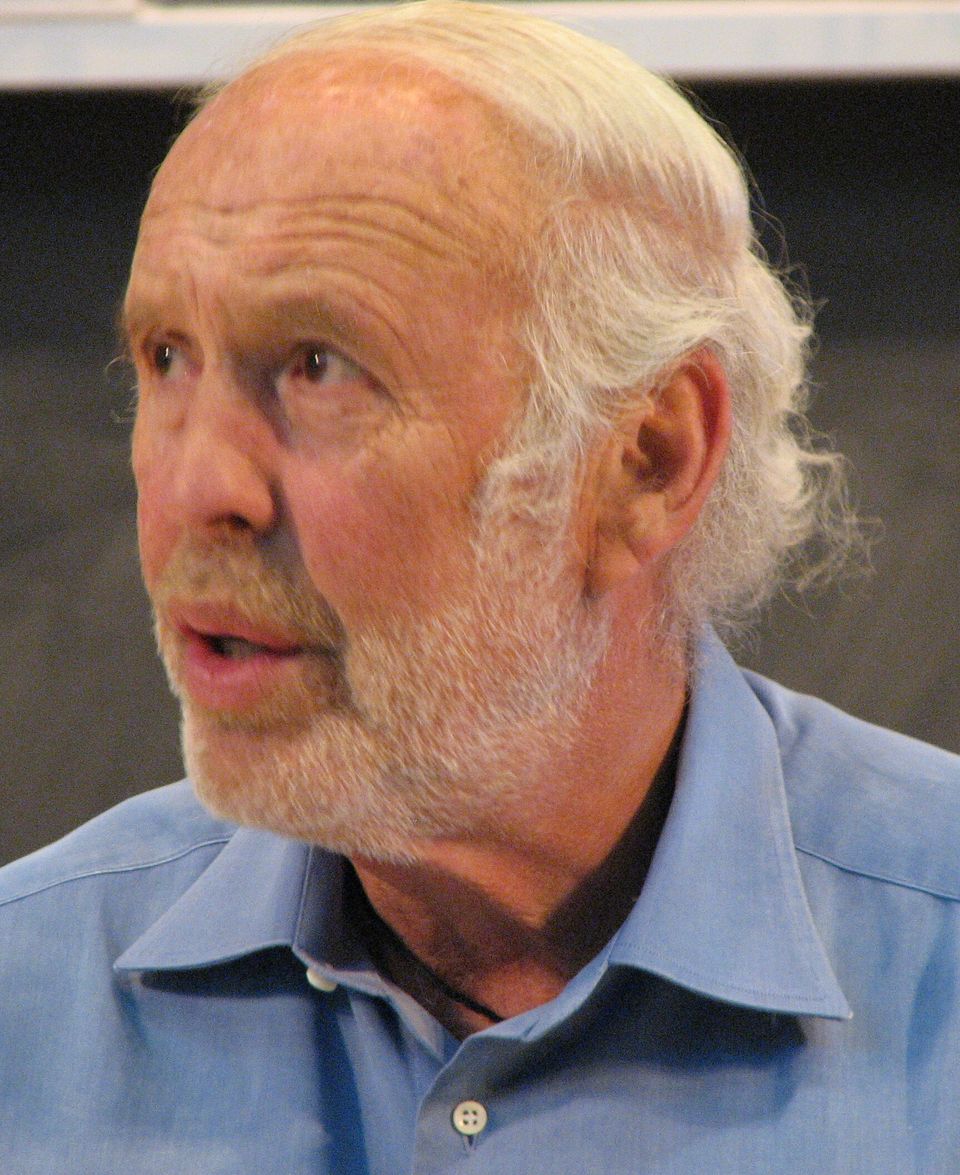

Photograph by Krd (LinuxCon Europe, October 2014; cropped by Von Sprat), CC BY-SA 4.0. Background removed for the portrait above. · Photograph by Gleuschk (MSRI, May 2007), CC BY-SA 3.0. Background removed for the portrait above. · Photograph by Gage Skidmore (Scottsdale, Arizona, 2022), CC BY-SA 3.0. Background removed for the portrait above.
.jpg)
.jpg)

An estimate is an inference.
Yours can be measured.
Thirty questions, scored against general-population benchmarks. Your score, your percentile, your ability breakdown and a printable IIF certificate.
Find your IQ score now! →