


What is Peter Thiel’s IQ?
A national-master chess rating and a Stanford law degree are on the record; the IQ test that 155 and 160 would need is not.
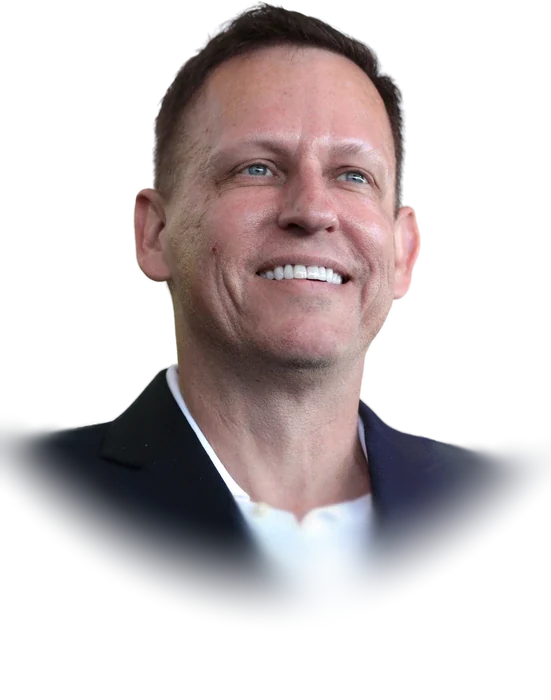
No IQ test result has been published for Peter Thiel, and the 155 and 160 that circulate for him cite no test. What is documented is a U.S. Chess Federation rating that peaked at 2342, a seventh-place national under-13 chess ranking at 12, a first-place result on a California-wide math test and two Stanford degrees: the record behind this site’s 135–150 estimate.
Peter Thiel’s estimated IQ
- Ranked seventh in the United States in the under-13 chess category at 12, Fortune reported in 2014. Chess.com calls him a U.S. Chess Federation National Master, with a USCF rating that peaked at 2342 and ended at 2287, and a FIDE rating of 2199 after ten rated games in 2003; a 2016 chess blog dates the peak to the early to mid-1990s.
- First place on a California-wide mathematics test while at a public school in San Mateo, according to Fortune’s 2014 profile; the test is not named and no second source confirms it.
- Entered Stanford University in 1985, then completed a bachelor’s degree in philosophy in 1989 and a J.D. at Stanford Law School in 1992, dates Stanford Law School itself gives. No grades, class rank or honors turned up in the sources checked.
- A 2016 meta-analysis found chess skill correlates with cognitive ability at r = .24 (revised to .22 in 2018), and with fluid reasoning at r = .32 in youth samples but r = .11 in adult ones, so a junior national ranking counts for more than an adult rating, and neither converts to points.
No IQ, SAT or ACT score has been published for Peter Thiel, so this range is inferred from a chess record, one reported math result and two Stanford degrees, not from a test. Chess strength tracks IQ only loosely and reflects years of practice, the math result rests on one line in one magazine, and his business record, which no test scores, is left out of the range.
- Born
- October 11, 1967, Frankfurt am Main, West Germany
- Education
- Stanford University (bachelor’s degree, philosophy, 1989); Stanford Law School (J.D., 1992)
- Chess record
- USCF National Master; USCF peak 2342, last 2287; FIDE 2199 (2003)
- Junior chess ranking
- Seventh in the United States, under-13 category, at age 12
- Math result
- First on a California-wide mathematics test, public school in San Mateo (reported by Fortune)
- Known for
- Co-founding PayPal and Palantir; the first outside investment in Facebook (2004); Founders Fund (2005)
- Book
- Zero to One (2014), from his 2012 Stanford course CS183
- Test record
- None found: no IQ, SAT or ACT score published
What an IQ of 135–150 actually means
Set the claim aside for a moment. If someone genuinely scored in this range, here is what that would represent.
Average is 100 by construction, and about two-thirds of people fall between 85 and 115. Take the test to place your own score on this scale.
| Score range | Classification | Share of people | What it indicates |
|---|---|---|---|
| 85 – 114 | Average | ~68% | The range most people fall into. |
| 115 – 129 | Above average | ~13.6% | Roughly one person in seven. |
| 130 – 144 | Gifted | ~2% | The threshold most high-IQ societies use. |
| Above 144 | Highly gifted | ~0.1% | Figures above this range are extrapolated from the curve rather than measured. |
Percentages are approximate and describe a normal distribution. The same number means different things on tests with different standard deviations.
Thirty questions gives you a measured position on this exact scale — your score, your percentile and the ability breakdown behind it.
Find out in 30 minutes →Who Peter Thiel is
How smart is Peter Thiel, judged only by what can be checked? He was born on October 11, 1967, in Frankfurt am Main, West Germany. His father, an engineer, moved the family to the United States, then to Africa, then back, and Thiel changed elementary schools seven times before the family settled in the San Francisco Bay Area in 1977, when he was 10, according to Fortune. At a public school in San Mateo he placed first on a California-wide mathematics test, a result Fortune reports without naming the test, and he graduated from San Mateo High School. He began playing chess at six and by 12 ranked seventh in the United States in the under-13 category.
He entered Stanford University in 1985, studied philosophy, co-founded the student newspaper The Stanford Review in 1987 and earned his bachelor’s degree in 1989; Stanford Law School’s own profile dates that degree to 1989 and his law degree to 1992. After law school he worked as a transactional lawyer at Sullivan & Cromwell in New York, leaving after seven months and three days by his own count, then became a derivatives trader at Credit Suisse’s CS Financial Products unit. No test score from those years turned up in any source we checked. The floor of this site’s range, an IQ around 135, reflects two selective Stanford degrees; the ceiling of 150 reflects the chess ranking and the math result, the only parts of his record ranked against other people.
The business record is well documented and mostly beside the IQ question. Thiel founded Thiel Capital Management in 1996 and co-founded Confinity in 1998 with Max Levchin and Luke Nosek. In March 2000 it merged with X.com, the online financial services company founded by Elon Musk, and the combined company was renamed PayPal in June 2001. Thiel led it as CEO through its February 2002 public offering and its purchase by eBay for $1.5 billion in October 2002, then launched the hedge fund Clarium Capital and, in 2003, Palantir. In 2004 he invested $500,000 for 10.2% of what was then Thefacebook, the first outside investment in Mark Zuckerberg’s company, and in 2005 he started Founders Fund. In September 2010 he announced the Thiel Fellowship, a two-year grant for young people to leave school and build something; Vitalik Buterin, a co-creator of Ethereum, was a 2014 fellow. What such results say about test scores is a separate question; see the IQ of billionaires: what the Swedish data shows.
Chess is the one field where his record was scored against other people for years. Chess.com reports that he held a 1998 draw with grandmaster Gregory Kaidanov, played ten FIDE-rated games in 2003 and has not played competitively for years, though he still makes time for the game: on November 30, 2016, at the World Chess Championship in New York, he made the ceremonial first move of the rapid tiebreaks between Magnus Carlsen and Sergey Karjakin. His book Zero to One (2014) grew out of a student’s notes from the Stanford course CS183 that he taught in spring 2012. Peter Thiel’s estimated IQ here, 135–150, is inferred from that record and from nothing measured, and whether the record makes him a genius depends on what genius-level means, a separate question from what a test would return, since none has been published.
 By Elora Mercer, Celebrity Research WriterFigures checked by Leon Falkner, Data & Research Analyst
Reviewed by Aarav Vardhan, Editor-in-Chief · Last reviewed August 2026

Peter Thiel: the documented record
The estimate above rests on this record. Every entry here is a matter of public fact, which is more than can be said for the number itself.
- 1967Born October 11 in Frankfurt am Main, West Germany.
- c. 1980Aged 12, ranked seventh in the United States in the under-13 chess category.
- 1985–1989Studies at Stanford University, co-founds The Stanford Review in 1987 and earns a bachelor’s degree in philosophy in 1989.
- 1992Earns a J.D. from Stanford Law School; his U.S. Chess Federation rating peaks at 2342 in the early to mid-1990s.
- 1998–2002Co-founds Confinity, which becomes PayPal after its 2000 merger with X.com; as CEO he takes it public in February 2002, and eBay buys it for $1.5 billion in October.
- 2003Launches Palantir and plays ten FIDE-rated games, ending on a 2199 FIDE rating.
- 2004–2005Invests $500,000 for 10.2% of Facebook, its first outside investment (2004), and starts Founders Fund (2005).
- 2010Announces the Thiel Fellowship in September; Vitalik Buterin is a 2014 fellow.
- 2016Makes the ceremonial first move of the rapid tiebreaks at the World Chess Championship in New York on November 30.
- 2025On June 26, tells The New York Times’s Interesting Times podcast that Silicon Valley is fixated on IQ.
Where the 155–160 figure came from
Following a claim back to its first appearance is the part almost nobody does — and it is what most people are actually asking.
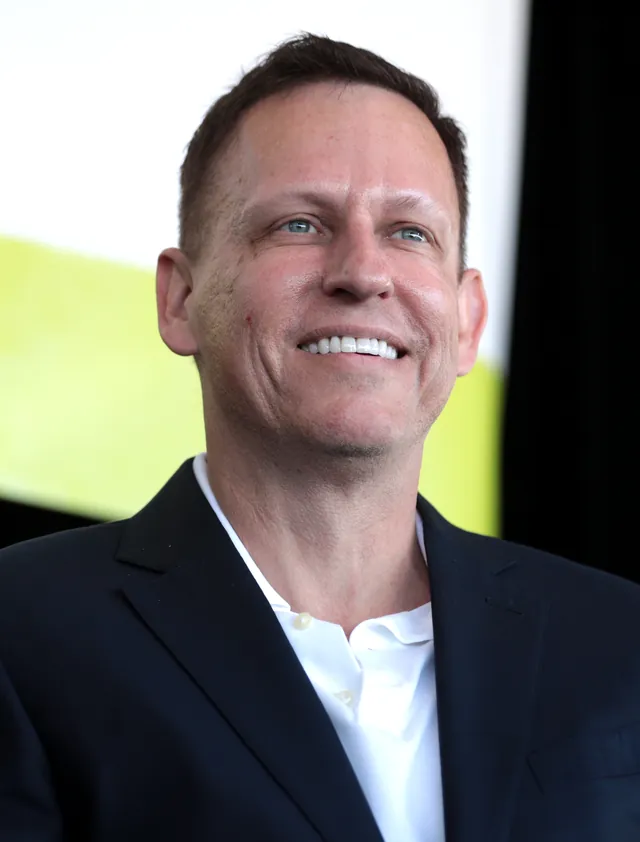
Peter Thiel’s IQ shows up as a number on very few pages we could open, and none cites a test. The Genius Index, in its IQ Archive profile, labels 155 an estimated cognitive quotient in the top 0.1%, supports it with his chess rating (given as 2300+), his ease in philosophical debate and a description of him as a Stanford Law “finalist” that no record we opened matches, and carries neither a date nor a method. A post on Freethinkers International dated October 11, 2025 puts 160 in its headline, then settles on “likely between 150 and 160” and says the range comes from rarity, one person in 2,330 at 150 and one in 31,560 at 160. That is circular: he is called one of the rarest minds, that impression becomes a number, and the number’s rarity is quoted as support. For how figures like these usually take hold, see where celebrity IQ numbers come from.
What both pages lean on is real, but smaller than it sounds. Thiel began playing chess at six and by 12 ranked seventh in the United States in the under-13 category, Fortune reported in 2014. Chess.com’s 2025 profile of celebrity players calls him a National Master, gives his U.S. Chess Federation rating as a peak of 2342 and a last figure of 2287, and reports a FIDE rating of 2199 after ten rated games in 2003, one point short of the Candidate Master threshold, so the 2300+ on The Genius Index matches his federation peak, not his FIDE figure. The link from chess to IQ is modest. A 2016 meta-analysis found chess skill correlated with cognitive ability at r = .24 (corrected to .22 in 2018), and with fluid reasoning at r = .32 in youth samples but r = .11 in adult ones; the pooled ratings ran from 1,311 to 2,607. A junior ranking therefore says more than an adult rating, and neither turns into points; see how chess ratings relate to IQ.
Thiel has said little about IQ and nothing about his own. In a June 26, 2025 conversation with Ross Douthat for The New York Times’s Interesting Times podcast, as transcribed by The Singju Post, he described Silicon Valley as fixated on IQ and on the idea that more smart people will produce great things, and set against it an argument from economics that smarter people do worse. Neither remark gives a score, and neither should be read as one. None of the accounts we opened, Fortune’s 2014 profile, Stanford Law School’s article or Founders Fund’s biography, mentions an IQ test he sat, an SAT score or a class rank; for how a score would convert if one existed, see SAT score to IQ conversion.
Placed among the business profiles here, Thiel’s 135–150 starts level with Mark Zuckerberg’s 135–145 and ends where Elon Musk’s 140–150 and Sam Altman’s 138–150 end, and the 155 and 160 that circulate for him sit in the same band as the 155 that circulates for Musk and the 152 for Zuckerberg. It stays below Jim Simons’s 150–165, a range that rests on a completed mathematics doctorate and a peer-judged prize, evidence that a philosophy degree, a law degree and no published test cannot match. It also stays ten points under Magnus Carlsen’s 145–160, which is built on a peak FIDE rating of 2882; Thiel’s FIDE rating was 2199.
How we read a number →None appears in Fortune’s 2014 profile, Stanford Law School’s 2014 article, Founders Fund’s biography, Wikipedia or Wikidata, and MyIQScores’ “Famous IQ Claims” page does not list him. The two pages that print a figure, The Genius Index and a Freethinkers International post, cite no test.
The Genius Index gives an estimated cognitive quotient of 155 (top 0.1%), undated, citing his chess rating (2300+) and a “Stanford Law finalist” description; no test. The Freethinkers post carries 160 in its headline, settles on 150–160 in the text and says the range is the author’s estimate based on rarity.
Born in Frankfurt in October 1967; family settles in the Bay Area in 1977; chess from age six and seventh in the U.S. under-13 category at 12; first on a California-wide mathematics test at a public school in San Mateo; enters Stanford in 1985; co-founds The Stanford Review in 1987; seven months and three days at Sullivan & Cromwell; Credit Suisse derivatives; PayPal and its $1.5 billion sale to eBay; Palantir; $500,000 for 10.2% of Facebook in 2004; Founders Fund in 2005; Thiel Fellowship launched in late 2010. It does not mention a test score or a valedictorian title.
Chess.com: National Master; USCF rating peaked at 2342 and ended at 2287; ten FIDE-rated games in 2003, ending at 2199; a 1998 draw with Gregory Kaidanov; the ceremonial first move of the 2016 World Championship rapid tiebreaks. The blog agrees on 2342 (early to mid-1990s) and 2287 (last published 2005). ChessBase lists him at 2199 as a chess master and one of the highest-ranked under-21 players in the country. The federations’ own player databases were not consulted.
Stanford Law School dates his Stanford undergraduate degree to 1989 and his J.D. to 1992 and repeats his seven-month stint at a New York law firm; The Stanford Review, the student newspaper he co-founded, calls him an undergraduate philosophy major. Neither gives grades, honors or a test score.
Founders Fund states that he co-founded PayPal, led it as CEO and took it public, and made the first outside investment in Facebook; co-founded Palantir, where he is chairman; started the Thiel Fellowship; and wrote Zero to One. It gives no degrees or test scores. Waterloo confirms that Vitalik Buterin was awarded a $100,000 Thiel Fellowship grant in 2014 and left the university to work on Ethereum full time.
Chess skill correlates with cognitive ability at r = .24 on average and with fluid reasoning at r = .24; the fluid-reasoning link is r = .32 in youth samples and .11 in adult ones; pooled Elo ratings ran from 1,311 to 2,607. The 2018 corrigendum lowers the overall average to .22 and leaves fluid reasoning unaffected.
Thiel says Silicon Valley is fixated on IQ and on the idea that more smart people will do great things, and cites an economics argument that smarter people do worse. He gives no score for himself. Read as a third-party transcript; the New York Times page could not be opened.
Confirms this is Peter Thiel, the German-American entrepreneur and venture capitalist: born October 11, 1967, in Frankfurt am Main; no date of death recorded; educated at Stanford University. Carries no chess identifier.
Orientation for Thiel Capital Management (1996), Confinity (1998), the March 2000 merger with Elon Musk’s X.com, the June 2001 rename, the February 2002 public offering and October 2002 eBay sale, Palantir (2003), Clarium Capital, the September 2010 Thiel Fellowship announcement at TechCrunch Disrupt, Buterin’s 2014 fellowship, the spring 2012 CS183 course behind Zero to One (2014) and the November 2016 title match in New York.
The sources behind our estimate
The figures that circulate for Peter Thiel, what we were able to confirm, and where the two diverge.
Two pages put a number on Peter Thiel’s IQ level. The Genius Index’s IQ Archive profile gives an estimated cognitive quotient of 155, and a post on Freethinkers International (October 11, 2025) carries 160 in its headline while its text says only “likely between 150 and 160”. Neither cites a test.
No published Peter Thiel IQ test result exists, and no SAT or ACT score has been published either. The Genius Index gives its 155 no date and bases it on his chess rating (given as 2300+), his ease in philosophical debate and a description of him as a Stanford Law “finalist” that no record we opened supports; its own label is “estimated”. The Freethinkers International post says its range is the author’s estimate based on rarity, quoting one person in 2,330 at 150 and one in 31,560 at 160. MyIQScores’ “Famous IQ Claims” page, which prints unverified estimates for Elon Musk, Bill Gates, Jeff Bezos and Mark Zuckerberg among others, does not list him.
Our range ends at 150, five points under The Genius Index’s 155 and ten under the 160 in the Freethinkers headline. As on most profiles here, the documented record supports a lower ceiling than the figure that circulates. The 155 leans on a chess number that matches his U.S. Chess Federation peak (2342) but not his FIDE rating (2199), and the 160 is a guess whose only support is how rare a 160 would be.
Want a number that does hold up? Every figure on this page is somebody’s claim. Take the 30-question test and get a percentile you can check rather than a figure you have to trust.
Peter Thiel — frequently asked
What is Peter Thiel’s IQ?
Peter Thiel’s IQ is unknown: no IQ test result has been published for him. This site’s Peter Thiel IQ estimate, 135–150, is inferred from a U.S. Chess Federation National Master record, a first-place result on a California-wide math test and two Stanford degrees, not from any score. The figures that circulate, 155 and 160, cite no test.
Did Peter Thiel take an IQ test?
No Peter Thiel IQ test result has been published, and no SAT or ACT score either. The sources checked for this page, including Fortune’s 2014 profile, Stanford Law School’s article and Founders Fund’s biography, mention none. The only scored results reported anywhere in our sources are chess ratings and rankings and a first-place finish on a California-wide math test, and neither is an IQ test.
Where does the Peter Thiel IQ score of 155 or 160 come from?
The 155 comes from The Genius Index, which labels it an estimated cognitive quotient and supports it with his chess rating and debating ability. The 160 is in the headline of an October 2025 Freethinkers International post whose text says only “likely between 150 and 160”, a range its author says rests on rarity. Neither cites a test.
Is there a real Peter Thiel IQ figure on Reddit?
Any Peter Thiel IQ figure posted on Reddit or another forum is a guess, because no test result exists for anyone to quote. The numbers that circulate on the pages we checked, 155 on The Genius Index and 160 on Freethinkers International, give no test, and this site’s 135–150 is likewise an estimate from his record, not a score.
Was Peter Thiel really a chess master?
Yes, by the U.S. Chess Federation’s title: Chess.com calls him a National Master, with a peak USCF rating of 2342, and Fortune reports he ranked seventh in the United States in the under-13 category at 12. His FIDE rating was 2199 after ten games in 2003. That shows real chess strength, but chess skill tracks IQ only modestly, at about r = .24.
Is Peter Thiel a genius?
“Genius” is a label for achievement, not a score, and his is documented in parts: national-master chess, a first-place math result, two Stanford degrees and a founder’s record at PayPal and Palantir. No IQ result exists to test the label, which is why this site gives a range, 135–150, instead of a number.
What has Peter Thiel said about IQ?
In a June 26, 2025 conversation with Ross Douthat on The New York Times’s Interesting Times podcast, Thiel said Silicon Valley is fixated on IQ and on the idea that more smart people will do great things, and cited an economics argument that smarter people do worse. He did not give a score for himself.
How does Peter Thiel’s estimated IQ compare with Mark Zuckerberg’s?
This site’s estimate for Thiel, 135–150, overlaps Mark Zuckerberg’s 135–145 and runs five points higher at the top. Both rest on documented achievement, not a test. Thiel’s range leans on chess and two Stanford degrees. The men are linked by Thiel’s 2004 investment of $500,000 in Facebook for 10.2%, reported by Fortune.
How does my IQ compare with Peter Thiel?
You can find out in about fifteen minutes. The IQ Metrics assessment is 30 questions, scored on the same 100-mean scale used throughout this page, so your result and the estimate above are at least expressed in the same units — one measured, one inferred. Once you have a number, the leaderboard shows where it would sit, and how we score and norm it explains the benchmarking.
Where does this estimate come from?
From the documented record rather than a test — the method is named above and set out in full under how we read a number. Compare it against the other business & tech profiles, starting with Steve Jobs.
- Take the 30-question IQ test — get a measured score and percentile of your own
- Average IQ by country — how the scale behaves across populations
- How IQ Metrics scores its assessment — the method behind our own number
- More on how IQ testing works — reliability, error and what a score can and cannot say
- More business & tech profiles — same field, same method
More business & tech
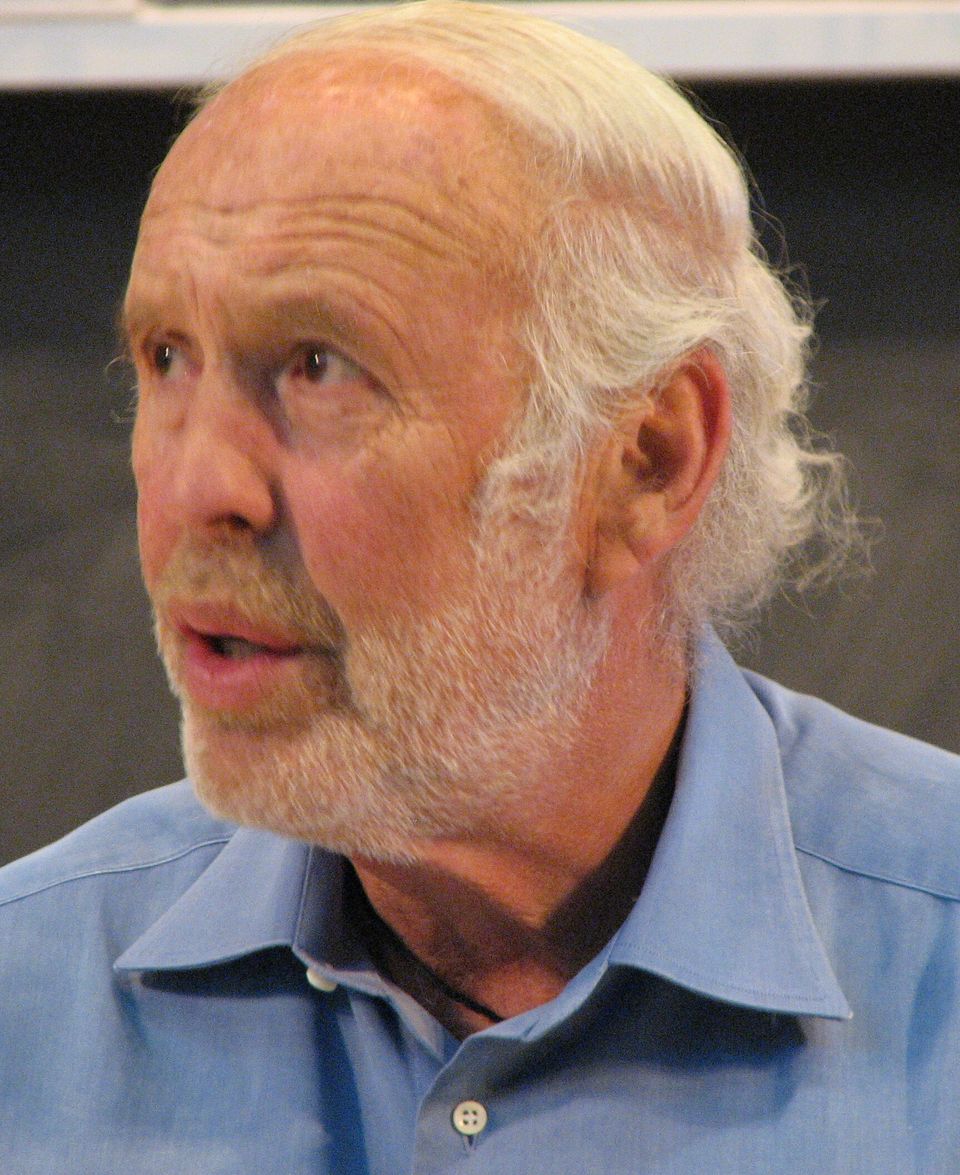
Photograph by Gleuschk (MSRI, May 2007), CC BY-SA 3.0. Background removed for the portrait above. · Photograph by Lukasz Kobus (© European Union, 2023; source: European Commission Audiovisual Service, May 24, 2023), CC BY 4.0. Cropped from the original. Background removed for the portrait above. · Portrait © Matthew Yohe, CC BY-SA 3.0. The background-removed portrait above is a derivative work and is likewise offered under the same licence.
.jpg)
.jpg)

An estimate is an inference.
Yours can be measured.
Thirty questions, scored against general-population benchmarks. Your score, your percentile, your ability breakdown and a printable IIF certificate.
Find your IQ score now! →