



What was Julius Caesar’s IQ?
The 170 that circulates for him traces to a headline whose own page never loaded; what actually survives is seven books in his hand, and a rival’s verdict that the style is bare, correct, and rather good.
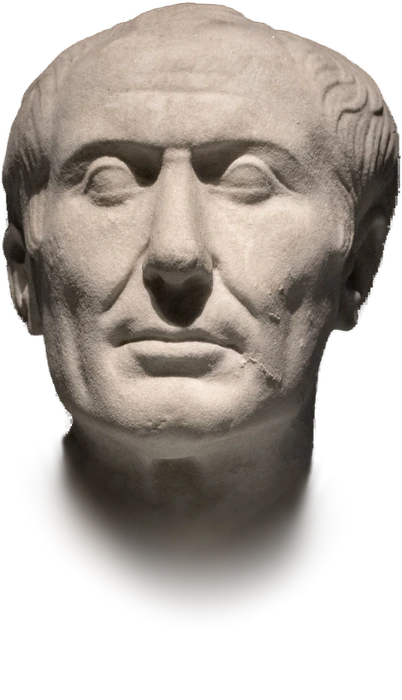
No IQ test result exists for Julius Caesar, who died in 44 BCE, nineteen centuries before the Binet–Simon intelligence test of 1905, and the 170 that circulates for him cites none. What is documented is a run through Rome’s cursus honorum by 59 BCE, eight years in Gaul, and seven surviving books of his prose, which Cicero called stripped of ornament. This page’s estimate of his IQ level, from that record, is 135–155.
Julius Caesar’s estimated IQ
- A full run through the cursus honorum on a competitive, alliance-driven ladder: quaestor in 69 BCE, Pontifex Maximus in 63 BCE, praetor in 62 BCE, and consul in 59 BCE, followed by eight years commanding the Gallic Wars (58–50 BCE) and a fast, decisive civil war (49–45 BCE).
- Seven surviving books of his own prose, the Commentarii de Bello Gallico, written as each campaign season closed; in the Brutus (46 BCE) Cicero, a rival with no reason to flatter him, judged the style “nudi enim sunt, recti et venusti” — unadorned, correct and pleasing, every rhetorical ornament stripped off.
- A separate, now-lost treatise, De analogia, two books on Latin grammar dedicated to Cicero and composed while crossing the Alps — a systematic exercise apart from the military and political record.
- Commissioned and carried through the calendar reform of 46–45 BCE with the astronomer Sosigenes of Alexandria, correcting years of accumulated drift in one 445-day year; the Julian calendar it produced stayed in use, later refined into the Gregorian, for centuries.
- J. McKeen Cattell’s 1903 ranking of the thousand most eminent men in history, built from the space six reference works gave each name, placed him eighth, ahead of Goethe, Luther and Plato. That measures reputation, not ability.
Caesar died in 44 BCE, more than 1,900 years before intelligence testing began, so this range is a modern judgment of a documented record, not a recovered score. It leans on his own writing, which is deliberately plain — built to make a Roman readership accept his own account of events, not to display complexity — and the same lack of verifiable detail about his childhood that keeps him out of Cox’s 1926 study also means the range cannot be anchored the way a Renaissance or modern figure’s can; ambition, ruthlessness, inherited rank and the First Triumvirate’s backing did at least as much for his career as any measurable trait.
- Born
- 100 BCE (traditionally 12 or July 13), Rome, into the patrician gens Julia
- Died
- 44 BCE (March 15, the Ides of March), Rome; assassinated at the Theatre of Pompey, stabbed twenty-three times
- Field
- Military command, statecraft, oratory and historical prose
- Education
- Tutored privately from boyhood; rhetoric under Apollonius Molon at Rhodes, 75 BCE
- Political career
- Quaestor 69 BCE, Pontifex Maximus 63 BCE, praetor 62 BCE, consul 59 BCE, dictator perpetuo from 44 BCE
- Own writings
- Commentarii de Bello Gallico (7 books) and Commentarii de Bello Civili; De analogia, a lost grammar treatise
- Signature achievements
- The Gallic Wars, 58–50 BCE; the Julian calendar reform, effective January 1 45 BCE
- Cox 1926 status
- Not a subject: Cox’s study covers people born 1450–1850 CE, about 1,550 years after Caesar
What an IQ of 135–155 actually means
Set the claim aside for a moment. If someone genuinely scored in this range, here is what that would represent.
Average is 100 by construction, and about two-thirds of people fall between 85 and 115. Take the test to place your own score on this scale.
| Score range | Classification | Share of people | What it indicates |
|---|---|---|---|
| 85 – 114 | Average | ~68% | The range most people fall into. |
| 115 – 129 | Above average | ~13.6% | Roughly one person in seven. |
| 130 – 144 | Gifted | ~2% | The threshold most high-IQ societies use. |
| Above 144 | Highly gifted | ~0.1% | Figures above this range are extrapolated from the curve rather than measured. |
Percentages are approximate and describe a normal distribution. The same number means different things on tests with different standard deviations.
Thirty questions gives you a measured position on this exact scale — your score, your percentile and the ability breakdown behind it.
Find out in 30 minutes →Who Julius Caesar is
Julius Caesar was born in Rome in 100 BCE, traditionally on 12 or July 13, into the patrician gens Julia. His father, also named Gaius Julius Caesar, was a praetor who governed the province of Asia; his mother, Aurelia Cotta, came from the consular Aurelii Cottae. At about eighteen, with the dictator Lucius Cornelius Sulla purging his political opponents, Caesar refused an order to divorce his wife Cornelia, daughter of the popularis leader Cinna, and went into hiding until relatives on his mother’s side secured him a pardon. He then served in the military in Asia and, at the Siege of Mytilene in 81 BCE, won the Civic Crown, Rome’s second-highest military decoration, for saving a fellow soldier’s life in battle.
En route to study rhetoric on Rhodes in 75 BCE, Caesar was captured by pirates who held him for a ransom of twenty talents; he reportedly told his captors he was worth fifty, and after his release, funded locally, he raised a force, hunted them down, and had them executed — granting them the mercy of the sword before crucifixion, he said, for their easy treatment of him in captivity. He went on to study under the rhetorician Apollonius Molon, whose pupils also included Cicero. His public career then moved quickly: quaestor in Hispania in 69 BCE, the year his wife Cornelia died; elected Pontifex Maximus, Rome’s chief priesthood, in 63 BCE; praetor in 62 BCE; and consul in 59 BCE alongside Marcus Calpurnius Bibulus, a term in which he had the Senate’s proceedings published for the first time and redistributed Campanian land to citizens with three or more children. That same circle of years, an informal alliance with Pompey and Crassus, formed in 60 BCE and later called the First Triumvirate, was cemented by Pompey’s marriage to Caesar’s daughter Julia.
As governor of Gaul from 58 BCE, Caesar fought the Gallic Wars for eight seasons: the Helvetii at Bibracte and Ariovistus’s Germans in 58 BCE, Belgic tribes at the Sabis in 57 BCE, the Veneti in Brittany in 56 BCE, two expeditions across the Channel to Britain in 55 and 54 BCE, a bridge thrown over the Rhine to demonstrate Roman reach, and the siege that took Vercingetorix’s surrender at Alesia in 52 BCE. He set each season down in a book of his Commentarii de Bello Gallico — seven in total, with an eighth added after his death by his officer Aulus Hirtius — in a plain style that Cicero, no natural admirer of a rival’s prose, judged in the Brutus (46 BCE) “nudi enim sunt, recti et venusti”: unadorned, correct and pleasing. He also found time, while crossing the Alps, to write De analogia, two books on Latin grammar dedicated to Cicero and arguing for regularity in word formation; only fragments survive, quoted mainly by the later grammarian Festus.
Ordered by the Senate to lay down his command, Caesar crossed the Rubicon with a single legion around 10 or January 11 49 BCE, reportedly quoting a line of Menander in Greek, and marched on Rome; the civil war that followed took him to Spain and then to Greece, where he defeated Pompey’s larger army at Pharsalus in 48 BCE. Pompey was murdered in Egypt, where Caesar then spent nine months allied with Cleopatra VII, whose son Caesarion was born in 47 BCE; that same year he crushed Pharnaces II at the Battle of Zela in a campaign brief enough to report to the Senate as “veni, vidi, vici” — I came, I saw, I conquered. Named dictator repeatedly from 49 BCE and dictator for life, dictator perpetuo, early in 44 BCE, he also commissioned a reform of the calendar with the Alexandrian astronomer Sosigenes, stretching 46 BCE to 445 days to correct years of accumulated drift before the 365-day Julian calendar took effect on January 1 45 BCE — the basis, eventually, of the calendar in use today. He was dead within fifteen months of that reform, stabbed twenty-three times by a group of senators led by Marcus Junius Brutus and Gaius Cassius Longinus at a Senate meeting in the Theatre of Pompey on March 15 44 BCE, the Ides of March; ancient sources put the number of conspirators as high as sixty. A reputation like his is what a genius IQ level tries to describe in modern terms, the same problem this site works through for Aristotle — but reputation, like his own carefully plain prose, is not a test score.
 By Elora Mercer, Celebrity Research WriterFigures checked by Leon Falkner, Data & Research Analyst
Reviewed by Aarav Vardhan, Editor-in-Chief · Last reviewed August 2026
_(cropped).jpg)
Julius Caesar: the documented record
The estimate above rests on this record. Every entry here is a matter of public fact, which is more than can be said for the number itself.
- 100 BCEBorn in Rome to the patrician gens Julia; his father, a praetor, governs Asia, and his mother is Aurelia Cotta.
- 82 BCEAt about eighteen, refuses Sulla’s order to divorce his wife Cornelia and goes into hiding until his mother’s family secures a pardon.
- 81 BCEWins the Civic Crown at the Siege of Mytilene for saving a fellow soldier’s life in battle.
- 75 BCECaptured by pirates demanding a twenty-talent ransom; after release, has them hunted down and executed. Studies rhetoric under Apollonius Molon at Rhodes.
- 69–62 BCEServes as quaestor in Hispania (69 BCE); elected Pontifex Maximus (63 BCE); serves as praetor (62 BCE).
- 60–59 BCEForms the First Triumvirate with Pompey and Crassus (60 BCE); elected consul (59 BCE), publishing the Senate’s proceedings and redistributing Campanian land.
- 58–52 BCEGoverns Gaul and fights the Gallic Wars, from the Helvetii and Ariovistus to Vercingetorix’s surrender at Alesia; writes the seven books of Commentarii de Bello Gallico.
- 49–48 BCECrosses the Rubicon with a single legion (January 10–11 49 BCE); defeats Pompey at Pharsalus (48 BCE).
- 47–46 BCEWins the Battle of Zela (“veni, vidi, vici”); son Caesarion is born; Cicero’s Brutus praises the Commentarii’s style; commissions the calendar reform with the astronomer Sosigenes.
- 45–44 BCEThe Julian calendar takes effect (January 1 45 BCE); proclaimed dictator perpetuo; assassinated in the Senate on the Ides of March, 44 BCE.
Where the 170 figure came from
Following a claim back to its first appearance is the part almost nobody does — and it is what most people are actually asking.
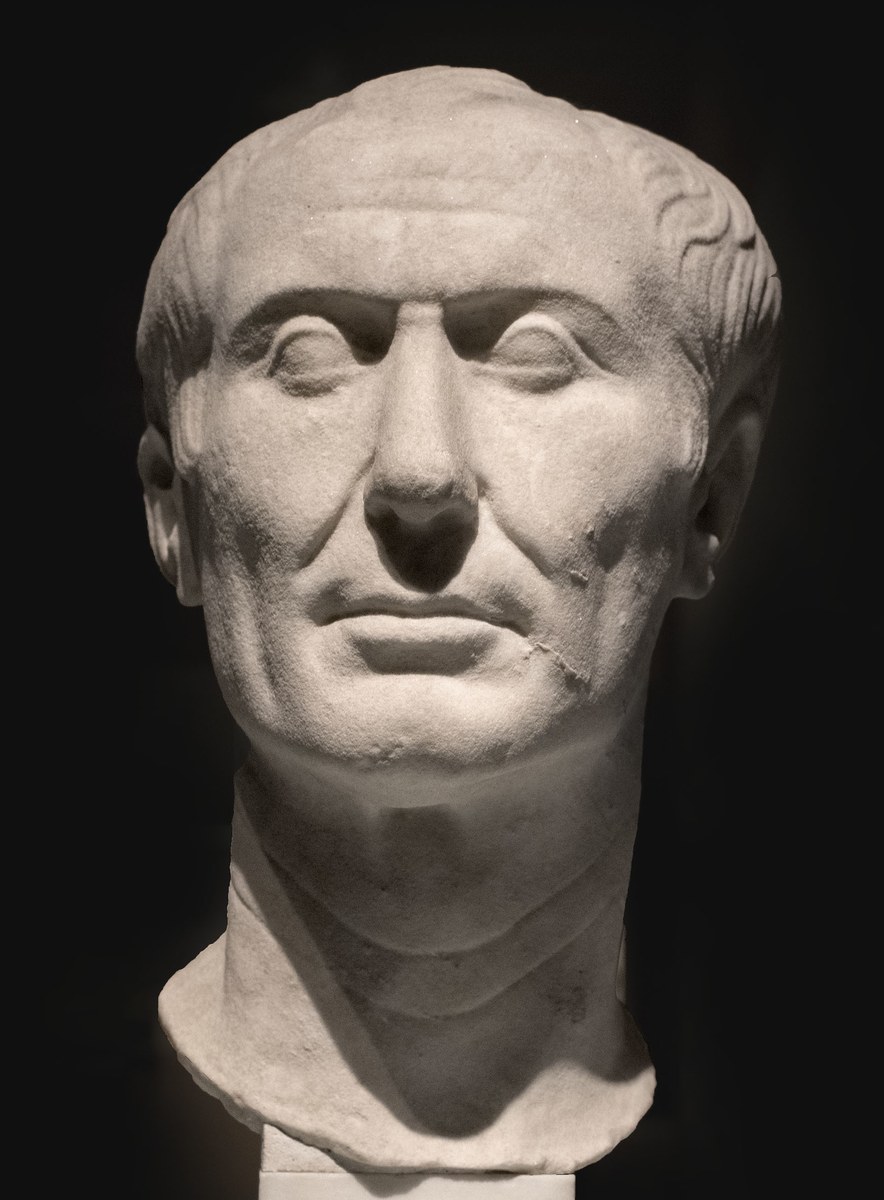
Almost every Julius Caesar IQ figure online converges on one number: 170. Geniuses.club runs it twice — in the title of its profile, “IQ of Julius Caesar — Score 170, Facts & Ranking”, and again in a biography post headlined “Julius Caesar: IQ 170, Biography, Achievements & Legacy” — and unanswered.io repeats it in “Julius Caesar’s Genius: IQ 170 and Leadership Lessons”. Checked in September 2026, none of the three pages’ body text loaded, so what can be confirmed is the number each puts in its own headline, not an argument behind it; none names a test, a rater or a method. For how figures like this get made and repeated across sites, see where celebrity IQ numbers come from.
A page that actually loads gets closer to the truth by saying nothing at all. Intelligence-and-iq.com runs a dedicated profile, “Julius Caesar: One of the greatest Military Leaders of All Time”, that covers his career at length — including the 75 BCE ransom episode, when pirates holding him for twenty talents heard him promise, apparently in jest, to have them crucified once freed, and later watched him do it — without ever attaching a number. That is the right amount of evidence for an IQ score: none exists, and none could: Alfred Binet and Théodore Simon published the first usable intelligence test in 1905, about nineteen centuries after Caesar died, a gap this site’s history of intelligence testing lays out in full.
Catharine Cox’s 1926 study cannot supply a number for him either, though its subjects and Caesar trace back to the same source list. The Early Mental Traits of Three Hundred Geniuses began, by Cox’s own account, from the top half of J. McKeen Cattell’s 1903 ranking of the thousand most eminent men in history — the same ranking that places Caesar eighth, ahead of Goethe, Luther and Plato — but Cox then restricted her 301 subjects to those born between 1450 and 1850 with adequate documented detail of their own childhoods; even William Shakespeare was cut for want of it, according to a 2020 review of the volume by the historiometrician Dean Keith Simonton. Caesar, born in 100 BCE, misses her earliest cutoff by roughly fifteen centuries, so any page citing “Cox 1926” for a Julius Caesar IQ cites a study that does not include him. Napoleon, profiled elsewhere on this site, is a genuine Cox subject and the nearer comparison in kind: another general who made himself absolute ruler, born within her window in 1769.
What sets this profile apart from most of this site’s other ancient figures is that a sample of Caesar’s own mind survives, not just accounts of it. Seven books of his Commentarii de Bello Gallico, written as each campaign season closed between 58 and 52 BCE, reached Cicero within Caesar’s lifetime; in the Brutus, finished in 46 BCE, Cicero — a rival orator with no reason to flatter a dictator — judged the style “nudi enim sunt, recti et venusti, omni ornatu orationis tamquam veste detracta”: unadorned, correct and pleasing, every rhetorical ornament stripped off like a garment. That is a genuine data point, rarer for antiquity than for any figure on this site born after the printing press, but it records a deliberately plain style built to justify a war to a Roman readership, not a demonstrated ceiling on complexity — evidence of a capable mind, not a score.
How we read a number →Checked directly: intelligence testing dates from the 1905 Binet–Simon scale, about nineteen centuries after Caesar died in 44 BCE. None of the pages below cites a test for him; the sites carrying “170” cite none, and a dedicated profile at intelligence-and-iq.com discusses his career without giving any figure.
Source of the 170 figure. Checked September 2026: body text did not load on any of the three URLs, so only the headline figure could be confirmed; none names a test, rater or date. A separate, fully loading profile at intelligence-and-iq.com covers his career at length and gives no figure at all.
Simonton’s review states Cox drew her 301 subjects from the top half of Cattell’s (1903) list of 1,000 eminent men, then required birth between 1450 and 1850 exclusively and detailed childhood biographical information — strict enough to exclude even Shakespeare. Caesar (b. 100 BCE) is not discussed anywhere in the review and falls about 1,550 years before Cox’s earliest cutoff, so he is not a subject.
Cattell’s ranked list of the 1,000 most eminent men in history, built from the space given each name in six reference works. The ten most eminent are given as Napoleon, Shakespeare, Mohammed, Voltaire, Bacon, Aristotle, Goethe, Caesar, Luther, Plato — Caesar eighth, cross-checked against this site’s Aristotle (sixth) and Plato (tenth) profiles.
Source for the core biography: birth and death dates, the cursus honorum (quaestor 69, Pontifex Maximus 63, praetor 62, consul 59 BCE), the First Triumvirate (60 BCE), the Gallic Wars campaigns, crossing the Rubicon (c. January 10–11 49 BCE) with the Menander quotation, Pharsalus (48 BCE), and the assassination (Theatre of Pompey, led by Brutus and Cassius). Wikidata Q1048 confirms the entity as the Roman general and dictator, not a namesake.
Source for the pirate-ransom episode (twenty talents demanded, his claim to be worth fifty, the crucifixion of his captors after a mercy killing), the Egypt sojourn and Caesarion’s birth, the January 1 45 BCE effective date of the Julian calendar, and assassination detail (twenty-three stab wounds; up to sixty conspirators).
Source for the Commentarii’s structure (seven books by Caesar, an eighth added by Aulus Hirtius); the calendar reform credited to Sosigenes of Alexandria and the 445-day “year of confusion”; the Civic Crown at the Siege of Mytilene (81 BCE); and De analogia, Caesar’s lost grammar treatise dedicated to Cicero, written crossing the Alps and surviving only in fragments quoted by Festus.
Confirms the Latin text of Cicero’s verdict on Caesar’s Commentarii — “nudi enim sunt, recti et venusti, omni ornatu orationis tamquam veste detracta” — with the translation “unadorned, correct, and pleasing, with every rhetorical ornament stripped off like an evening gown”, attributed to Cicero’s Brutus, section 262.
Napoleon’s range (130–140, Cox 1926 method, a genuine subject born 1769) and Aristotle’s range (150–170, achievement-based, also excluded from Cox 1926) and its account of Cox’s exclusion criteria, used for the comparisons drawn on this page.
The sources behind our estimate
The figures that circulate for Julius Caesar, what we were able to confirm, and where the two diverge.
Julius Caesar IQ figures online converge on 170: the title of a geniuses.club profile (“IQ of Julius Caesar — Score 170”), the same site’s biography post (“Julius Caesar: IQ 170”), and an unanswered.io guide (“Julius Caesar’s Genius: IQ 170”). None names a test.
There is no published IQ test result or IQ score for Julius Caesar, and there could not be one: he died in 44 BCE, more than 1,900 years before the Binet–Simon intelligence test of 1905. Checked in September 2026: a geniuses.club profile titled “IQ of Julius Caesar — Score 170, Facts & Ranking”, a geniuses.club blog post titled “Julius Caesar: IQ 170, Biography, Achievements & Legacy”, and an unanswered.io guide titled “Julius Caesar’s Genius: IQ 170 and Leadership Lessons” — on each, the body text did not load when checked, so only the headline figure could be confirmed, and none names a test, a rater or a date. A specialist profile that does load in full, intelligence-and-iq.com’s “Julius Caesar: One of the greatest Military Leaders of All Time”, covers his career at length and states no IQ figure at all.
The one figure that recurs, 170, sits 15 points above this page’s range, the usual direction of error. On the standard scale (mean 100, SD 15) it is about 4.7 standard deviations out, on the order of one person in several hundred thousand — the territory this site’s IQ ceiling effect page treats as beyond what any existing test can support.
Want a number that does hold up? Every figure on this page is somebody’s claim. Take the 30-question test and get a percentile you can check rather than a figure you have to trust.
Julius Caesar — frequently asked
What is Julius Caesar’s IQ?
Julius Caesar’s IQ was never measured, and could not have been: he died in 44 BCE, about nineteen centuries before the Binet–Simon intelligence test of 1905. The figure that circulates online, 170, appears only in page titles that cite no test. This site’s estimate of his IQ level, inferred from his documented record, is 135–155.
Where does the Julius Caesar IQ estimate of 170 come from?
It recurs across a geniuses.club profile and blog post and an unanswered.io guide, all titled around the number “170”. Checked in September 2026, none of the three pages’ body text loaded, so only the headline figure could be confirmed, and none names a test, a rater or a date.
Did Julius Caesar take an IQ test?
No. Intelligence testing began with the Binet–Simon scale in 1905; Caesar died in 44 BCE, about nineteen centuries earlier. No test result exists for him, and a dedicated profile at intelligence-and-iq.com that covers his career at length gives no IQ figure at all.
Was Julius Caesar a genius?
By reputation, few Roman figures rival him: J. McKeen Cattell’s 1903 ranking of the thousand most eminent men in history placed him eighth, ahead of Goethe, Luther and Plato. But that measures lasting fame, not a measured score, and no IQ test result for him exists.
Was Julius Caesar included in Catharine Cox’s 1926 study of three hundred geniuses?
No. Cox’s The Early Mental Traits of Three Hundred Geniuses covers 301 people born between 1450 and 1850, selected for having detailed records of their own childhoods. Caesar, born in 100 BCE, misses her earliest cutoff by about 1,550 years, so any page citing “Cox 1926” for a Julius Caesar IQ cites a study that does not include him.
How does Julius Caesar’s estimated IQ compare with Napoleon’s and Aristotle’s?
This site estimates Caesar at 135–155, Napoleon at 130–140 and Aristotle at 150–170. Caesar’s range sits above Napoleon’s, the nearer comparison as another general who seized absolute power, mainly because Caesar’s own prose survives and drew praise from Cicero; it sits below Aristotle’s, whose reputation rests on a wider body of surviving work.
What did Julius Caesar write, and does it survive?
Caesar wrote the Commentarii de Bello Gallico, seven books on the Gallic Wars (58–52 BCE), and the unfinished Commentarii de Bello Civili on the civil war; both survive. Cicero’s Brutus (46 BCE) called the Gallic Wars’ style unadorned, correct and pleasing. A grammar treatise, De analogia, is lost except for fragments.
How does my IQ compare with Julius Caesar?
You can find out in about fifteen minutes. The IQ Metrics assessment is 30 questions, scored on the same 100-mean scale used throughout this page, so your result and the estimate above are at least expressed in the same units — one measured, one inferred. Once you have a number, the leaderboard shows where it would sit, and how we score and norm it explains the benchmarking.
Where does this estimate come from?
From the documented record rather than a test — the method is named above and set out in full under how we read a number. Compare it against the other historical profiles, starting with Isaac Newton.
- Take the 30-question IQ test — get a measured score and percentile of your own
- Average IQ by country — how the scale behaves across populations
- How IQ Metrics scores its assessment — the method behind our own number
- More on how IQ testing works — reliability, error and what a score can and cannot say
- More historical profiles — same field, same method
More historical

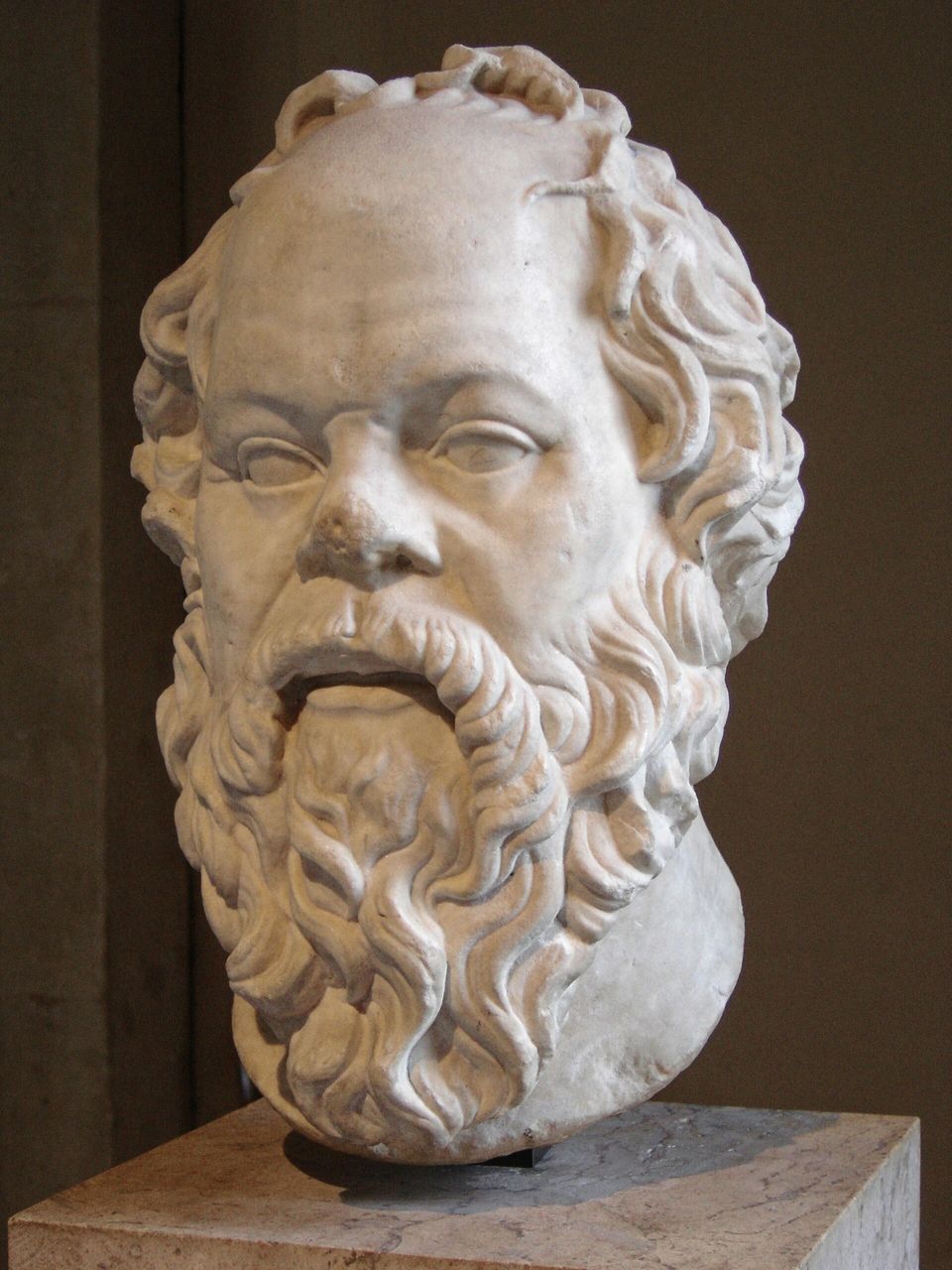
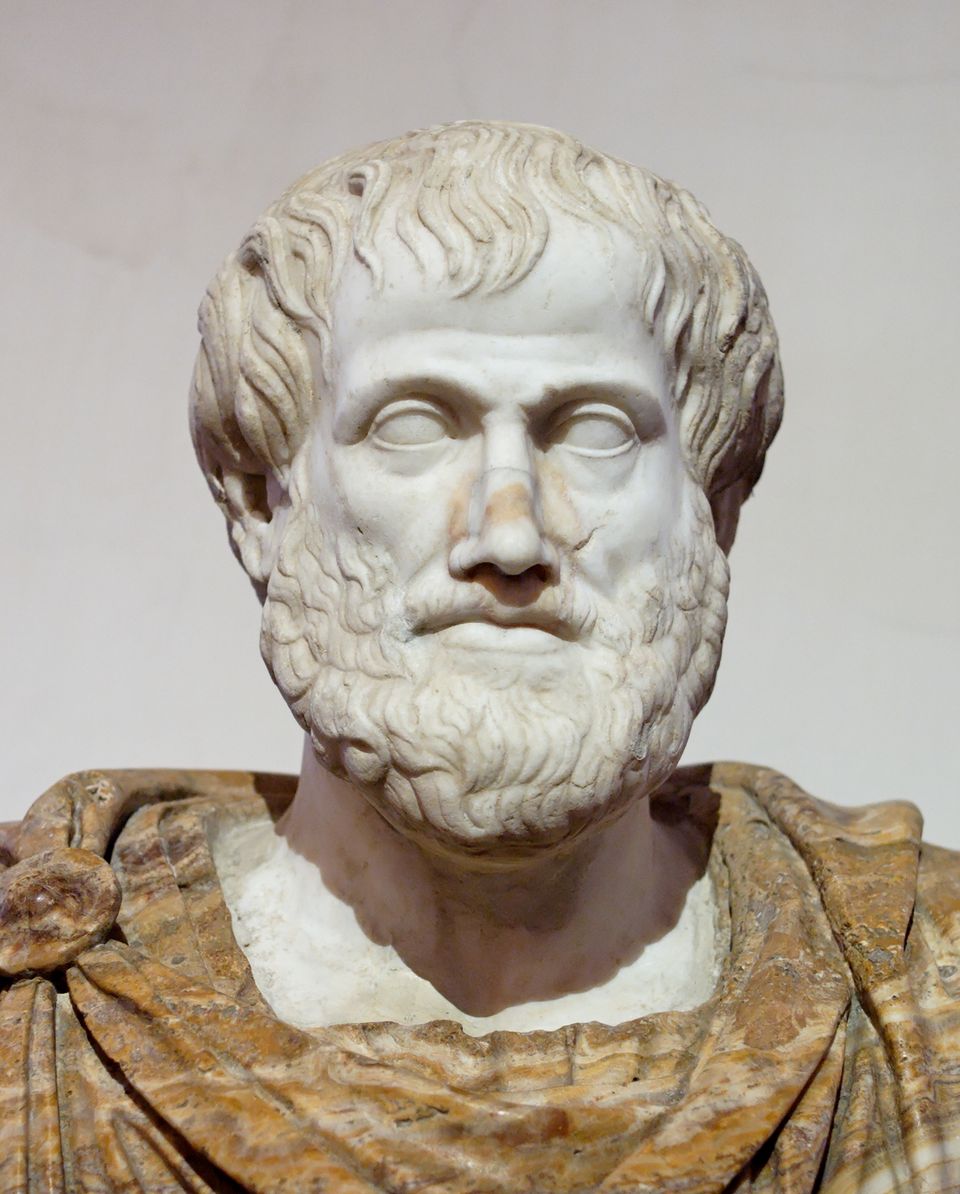
Photograph by John Jabez Edwin Mayall (1875), public domain. Background removed for the portrait above. · Photograph by Eric Gaba (Wikimedia Commons user: Sting) (July 2005), CC BY-SA 2.5. Roman marble portrait of Socrates, 1st century AD, Louvre Museum. Background removed for the portrait above. · Photograph by Jastrow (2006), public domain. Roman marble copy after a Greek bronze by Lysippos (c. 330 BCE); the alabaster mantle is a modern addition. Background removed for the portrait above.


An estimate is an inference.
Yours can be measured.
Thirty questions, scored against general-population benchmarks. Your score, your percentile, your ability breakdown and a printable IIF certificate.
Find your IQ score now! →