



What is Larry Page’s IQ?
A Montessori story, and two numbers nobody sourced.

Two figures circulate for Page, 150 and 160, and neither has ever been traced to a document. What is documented is a Montessori childhood, an honours engineering degree, and the Stanford research project that became PageRank.
Larry Page’s estimated IQ
- BS in computer engineering from the University of Michigan, 1995, graduating with honours and serving as president of the Eta Kappa Nu engineering honour society.
- Admitted to the Stanford computer-science PhD program in 1995; under advisor Terry Winograd, his research into the link structure of the web became the project he left the program to commercialise.
- Co-inventor on US Patent 6,285,999, “Method for node ranking in a linked database” — the PageRank patent, filed 1998 and granted 2001, assigned to Stanford University.
Every input here is an admissions decision, a completed degree, or a shipped invention — real and checkable, but none of it is a test. Page left Stanford’s doctoral program without finishing it, so this sits with the completed-master’s tier rather than the doctorate one.
- Born
- 26 March 1973, Lansing, Michigan
- Field
- Computer science, search engineering
- Education
- BS Engineering, University of Michigan (1995, honours); MS Computer Science, Stanford (1998)
- Known for
- Co-founding Google; co-inventing PageRank
What an IQ of 145–160 actually means
Set the claim aside for a moment. If someone genuinely scored in this range, here is what that would represent.
Average is 100 by construction, and about two-thirds of people fall between 85 and 115. Take the test to place your own score on this scale.
| Score range | Classification | Share of people | What it indicates |
|---|---|---|---|
| 85 – 114 | Average | ~68% | The range most people fall into. |
| 115 – 129 | Above average | ~13.6% | Roughly one person in seven. |
| 130 – 144 | Gifted | ~2% | The threshold most high-IQ societies use. |
| Above 144 | Highly gifted | ~0.1% | Figures above this range are extrapolated from the curve rather than measured. |
Percentages are approximate and describe a normal distribution. The same number means different things on tests with different standard deviations.
Thirty questions gives you a measured position on this exact scale — your score, your percentile and the ability breakdown behind it.
Find out in 30 minutes →Who Larry Page is
Larry Page was born in 1973 in Lansing, Michigan, to two computer-science educators at Michigan State University, and graduated from the University of Michigan with an honours engineering degree in 1995 before entering Stanford’s PhD program the same year.
At Stanford, under Terry Winograd, Page began studying the link structure of the web — the project that became BackRub, then PageRank, then Google, incorporated in 1998. He left the doctoral program without finishing it.
He served as Google’s first CEO, stepped back in 2001, returned to the role in 2011, and became CEO of Alphabet at its 2015 restructuring before stepping down from executive duties in 2019. None of that is a measurement of intelligence; it is a record of what he built, which is a different thing.
 By Elora Mercer, Celebrity Research WriterFigures checked by Leon Falkner, Data & Research Analyst
Reviewed by Aarav Vardhan, Editor-in-Chief · Last reviewed August 2026
.jpg)
Larry Page: the documented record
The estimate above rests on this record. Every entry here is a matter of public fact, which is more than can be said for the number itself.
- 1973Born in Lansing, Michigan.
- 1991Graduates East Lansing High School.
- 1995Graduates the University of Michigan with honours; enters Stanford’s CS PhD program and meets Sergey Brin.
- 1998Earns a Stanford MS in Computer Science; co-files the PageRank patent; incorporates Google with Brin.
- 2001Steps down as CEO; the PageRank patent is granted.
- 2004Google’s IPO; Page and Brin receive the Marconi Prize for PageRank.
- 2011Resumes the role of CEO at Google.
- 2015Google restructures under Alphabet Inc.; Page becomes Alphabet CEO.
- 2019Steps down from executive duties; Sundar Pichai becomes CEO.
Where the 160 figure came from
Following a claim back to its first appearance is the part almost nobody does — and it is what most people are actually asking.
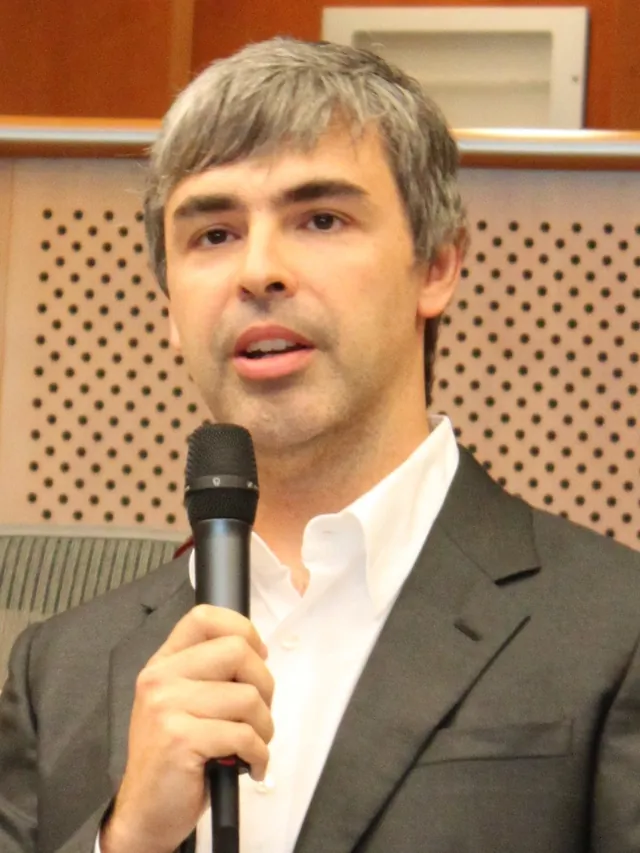
Page is a close structural match for Zuckerberg’s entry on this site: a real, dated academic record sits next to an IQ figure that appears on hundreds of pages and is sourced on none of them.
The Montessori detail is the one that gets repeated the most, usually to explain his management style rather than to support a number. It is well documented that he attended Okemos Montessori School as a young child — it is not evidence of a specific cognitive score, and nobody citing it claims it is.
The stronger anchor is the Stanford research itself. PageRank came out of a specific, dated research project under a named advisor, and it produced a granted patent — a rare thing for this section to be able to point to. That record is what the 145–160 range rests on, not the 150 or 160 that circulate.
How we read a number →The PageRank patent, assigned to Stanford University and co-invented by Page. The strongest documented output the estimate rests on.
Confirm the honours BS (Michigan, 1995) and the MS in Computer Science (Stanford, 1998); Stanford’s account names Terry Winograd as his doctoral advisor.
Unrelated to the IQ question, included here only as an example of what is and is not documented about him in the press.
No score report, school record or clinician’s account has ever been published.
Source URLs and first-appearance date pending audit.
No original could be located for either figure; the 160 variant’s attached Mensa claim traces to one uncorroborated aggregator page.
The sources behind our estimate
The figures that circulate for Larry Page, what we were able to confirm, and where the two diverge.
150 and 160 both circulate for Page, usually on general “billionaire IQ” or tech-founder listicles. The 160 figure sometimes appears alongside a claim that he was a young Mensa member.
We found no evidence that Larry Page has ever taken or published an IQ test. The Mensa claim traces to a single low-tier aggregator page and appears nowhere in his own interviews or in higher-quality biographical sources — it is not corroborated.
A 150/160 split with no reasoning attached to either number is the same shape as the unsourced figures already documented on this site for other founders — see Mark Zuckerberg.
Want a number that does hold up? Every figure on this page is somebody’s claim. Take the 30-question test and get a percentile you can check rather than a figure you have to trust.
Larry Page — frequently asked
What was Larry Page’s IQ?
No measured score exists on record. Figures of 150 and 160 circulate online, but neither traces to a test, an interview or any document.
Was Larry Page a Mensa member?
That claim appears on a single low-tier aggregator page and is not corroborated anywhere else, including his own interviews.
Did Page finish his Stanford PhD?
No. He entered the computer-science doctoral program in 1995, earned a master’s in 1998, and left without completing the dissertation to build Google.
What is Page’s strongest documented achievement?
The PageRank patent — co-invented with the underlying research completed at Stanford under Terry Winograd, filed in 1998 and granted in 2001.
Does Google’s success prove Page has a high IQ?
No. A company’s value reflects timing, capital and market conditions as well as the people behind it — the same caution that applies to Mark Zuckerberg’s entry on this site.
Did Page attend Montessori school?
Yes, Okemos Montessori School as a young child — a well-documented biographical fact, but not evidence of any specific score.
How does my IQ compare with Larry Page?
You can find out in about fifteen minutes. The IQ Metrics assessment is 30 questions, scored on the same 100-mean scale used throughout this page, so your result and the estimate above are at least expressed in the same units — one measured, one inferred. Once you have a number, the leaderboard shows where it would sit, and how we score and norm it explains the benchmarking.
Where does this estimate come from?
From the documented record rather than a test — the method is named above and set out in full under how we read a number. Compare it against the other business & tech profiles, starting with Steve Jobs.
- Take the 30-question IQ test — get a measured score and percentile of your own
- Average IQ by country — how the scale behaves across populations
- How IQ Metrics scores its assessment — the method behind our own number
- More on how IQ testing works — reliability, error and what a score can and cannot say
- More business & tech profiles — same field, same method
More business & tech


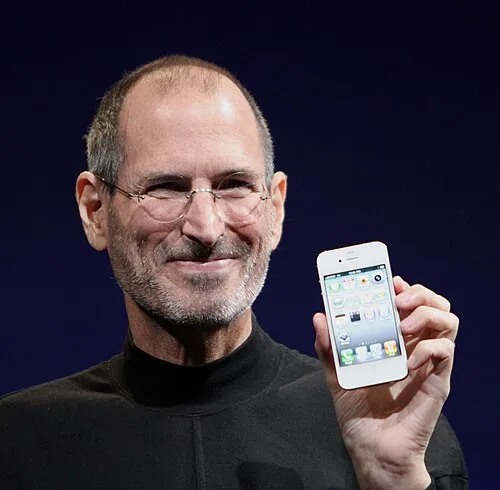
Photograph by Gage Skidmore (Scottsdale, Arizona, 2022), CC BY-SA 3.0. Background removed for the portrait above. · Photograph by Lukasz Kobus (© European Union, 2023; source: European Commission Audiovisual Service, May 24, 2023), CC BY 4.0. Cropped from the original. Background removed for the portrait above. · Portrait © Matthew Yohe, CC BY-SA 3.0. The background-removed portrait above is a derivative work and is likewise offered under the same licence.

.jpg)

An estimate is an inference.
Yours can be measured.
Thirty questions, scored against general-population benchmarks. Your score, your percentile, your ability breakdown and a printable IIF certificate.
Find your IQ score now! →