



What is Roger Federer’s IQ?
No IQ score has been published; the record is a 1997 school certificate in commercial studies, French learned at 14 and 20 major titles.
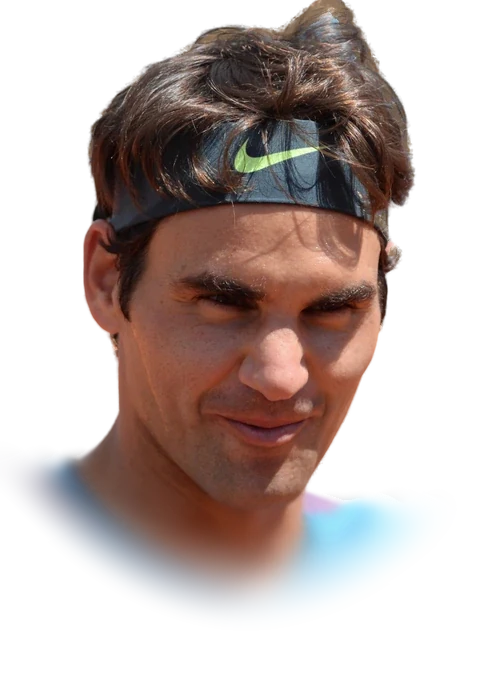
Roger Federer’s IQ has never been published: no test score is on record, and our Roger Federer IQ estimate is 110–125. It rests on his school record, his languages and a tennis career with 20 major singles titles. It is a judgment from a record, not a test result.
Roger Federer’s estimated IQ
- He trained at the Swiss National Tennis Center in Écublens from 1995 to 1997, learned French at 14, and finished compulsory school at La Planta in July 1997 with a certificate from the upper division, commercial studies section (Wikipedia).
- Wikipedia says he had little interest in studying and struggled to balance school with tennis. A 2013 swissinfo profile reports that at 15 he wrote down his goal as breaking the top ten and then becoming number one.
- Wikipedia says Swiss German is his native language and that he speaks Standard German, French and English fluently. Swissinfo, in 2013, lists German, French and English.
- He won 20 major men’s singles titles and 103 ATP singles titles, was world No. 1 for 310 weeks, and retired in September 2022 after the Laver Cup (Wikipedia).
A tennis record shows talent, training and tactical sense, and it measures them in a game, not in an IQ test. His school record gives a certificate and no grades. We found no IQ score, so the range is wide and is not a measurement.
- Born
- August 8, 1981, Basel area, Switzerland
- School
- La Planta secondary school; certificate July 1997, commercial studies section
- Training
- Swiss National Tennis Center, Écublens, 1995–97
- Languages
- Swiss German (native); Standard German, French and English
- Career
- 20 major singles titles; retired September 2022
- Status
- Living; facts are as of November 2026
- Documented IQ test
- None published
What an IQ of 110–125 actually means
Set the claim aside for a moment. If someone genuinely scored in this range, here is what that would represent.
| Score range | Classification | Share of people | What it indicates |
|---|---|---|---|
| 85 – 114 | Average | ~68% | The range most people fall into. |
| 115 – 129 | Above average | ~13.6% | Roughly one person in seven. |
| 130 – 144 | Gifted | ~2% | The threshold most high-IQ societies use. |
| Above 144 | Highly gifted | ~0.1% | Figures above this range are extrapolated from the curve rather than measured. |
Percentages are approximate and describe a normal distribution. The same number means different things on tests with different standard deviations.
Thirty questions gives you a measured position on this exact scale — your score, your percentile and the ability breakdown behind it.
Find out in 30 minutes →Who Roger Federer is
Who is Roger Federer? Roger Federer was born on August 8, 1981, in the Basel area of Switzerland. He is a former professional tennis player, and Wikipedia says he was world No. 1 for 310 weeks and won 20 major men’s singles titles, including a record eight at Wimbledon. He is a living person, so this page keeps to his school and tennis record.
What does his school record show? He began school at six and, Wikipedia says, was soon the best in his age group at tennis. From 1995 to 1997 he trained at the Swiss National Tennis Center in Écublens and learned French at 14. He finished compulsory education at La Planta secondary school in Chavannes-près-Renens and got his certificate in July 1997.
What did the certificate cover? Wikipedia says it was in the upper division, commercial studies section. No grades are published. The same article says he had little interest in studying and found it hard to balance school and tennis, so the record supports a range and not a number.
What is “tennis IQ”? It is a phrase for court sense: reading an opponent, choosing the right shot and playing the right pattern. Commentators use it as praise. It is not measured by an IQ test, and nobody publishes a tennis IQ score for Federer.
 By Elora Mercer, Celebrity Research WriterFigures checked by Leon Falkner, Data & Research Analyst
Reviewed by Aarav Vardhan, Editor-in-Chief · Last reviewed November 2026

Roger Federer: the documented record
The estimate above rests on this record. Every entry here is a matter of public fact, which is more than can be said for the number itself.
- 1981Born on August 8.
- 1993Wins the Swiss under-12 national junior championship.
- 1995Wins the under-14 Swiss national title and enrolls at the Swiss National Tennis Center in Écublens.
- 1997Gets his school certificate in July, in the upper division, commercial studies section.
- 1998Wins the junior title at Wimbledon.
- 2003Wins his first major singles title, at Wimbledon, at age 21.
- 2018Becomes the first man to win 20 major singles titles.
- 2022Retires from professional tennis after the Laver Cup in September.
Why no figure circulates
Following a claim back to its first appearance is the part almost nobody does — and it is what most people are actually asking.
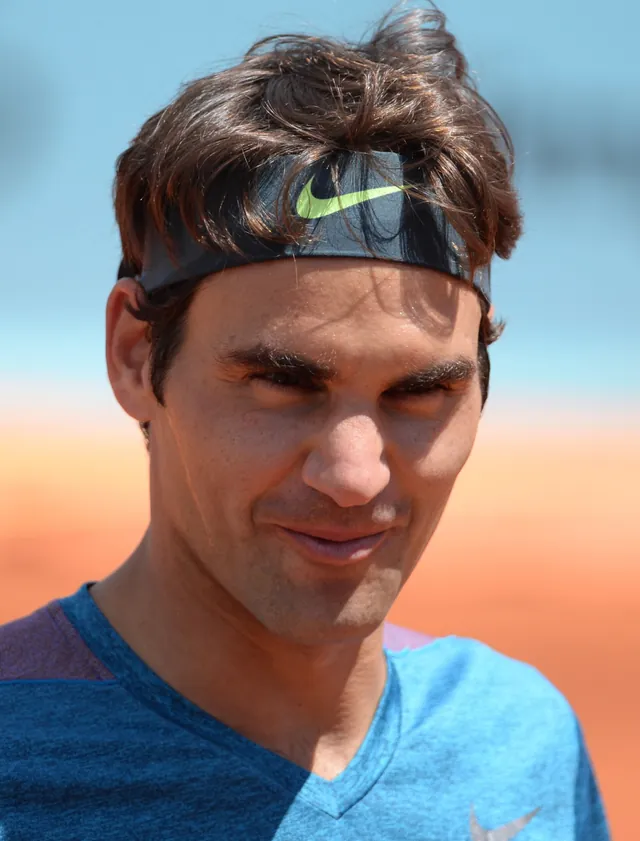
What is Roger Federer’s IQ? No test score has been published, and no source we opened gives one. Our own range is 110–125, built from his schooling, his languages and his career. For why such ranges stay wide, see where celebrity IQ numbers come from.
Is Roger Federer smart? His record shows an athlete who learned a new language at 14, set goals early and played for two decades at the top. None of that is an IQ. Our guide to soccer IQ explains the same point in another sport: game intelligence is not an IQ score, and the link between the two is weak.
Does speaking several languages show a high IQ? Not reliably. Our article on the bilingual advantage shows that the early claim of sharper executive function in bilinguals largely failed to replicate. Federer’s French came from living in a French-speaking region, so it is a fact about his schooling, not about a score.
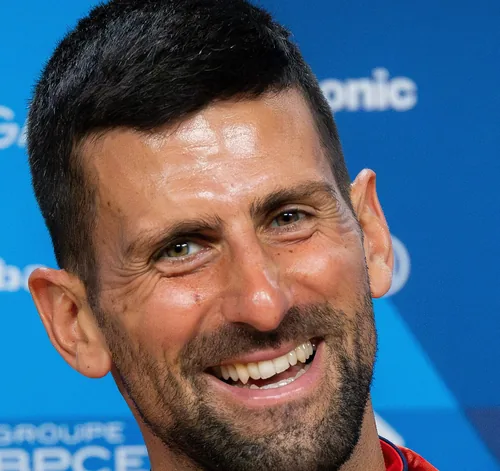
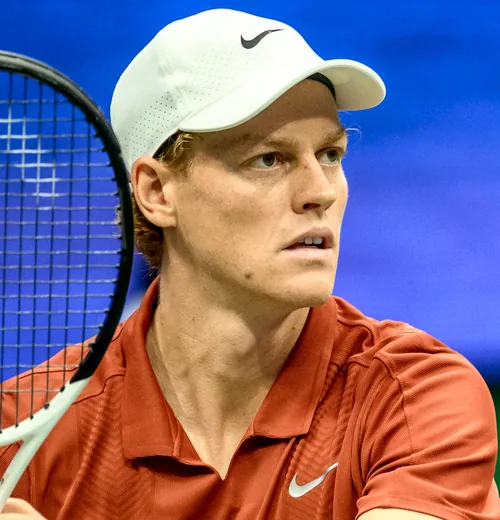
How does he compare with other athletes here? Novak Djokovic is 110–125, Jannik Sinner is 105–120 and Michael Jordan is 115–135. See all athletes. To test speed and attention yourself, try the reaction time and Stroop games in our Brain Games.
How we read a number →Born August 8, 1981; Écublens 1995–97; learned French at 14; La Planta certificate in July 1997, upper division, commercial studies; little interest in studying; native Swiss German and fluent Standard German, French and English; 20 majors and 310 weeks at No. 1; retirement in September 2022. It does not mention an IQ test.
Reports that as a 15-year-old at the Swiss National Tennis Centre he wrote down his goal as breaking the top ten and then becoming number one, and lists German, French and English with Swiss German as his mother tongue. No IQ.
Confirms the identity (Swiss tennis player born 1981) used for this page’s structured data.
We read his Wikipedia page and the swissinfo profile and searched for an IQ figure. None gave a score, a test or an examiner.
Our own pages on why game intelligence is not an IQ score and why speaking several languages is a weak sign of a higher score. Context, not evidence about Federer.
Three other athletes on this site with their own estimated ranges.
The sources behind our estimate
The figures that circulate for Roger Federer, what we were able to confirm, and where the two diverge.
People type “roger federer iq”, “roger federer iq score”, “is roger federer smart” and “roger federer education”. A search for his IQ found biographies, a Swiss news profile and quiz sites, and none gave a score with a test, a date or an examiner.
We found no IQ score for Roger Federer and no estimate that names a test. Wikipedia and swissinfo describe his schooling, languages and career, and neither mentions an IQ test. His page here has a documented school path and a blank number.
No circulating number sits beside the range. It matches Novak Djokovic (110–125) on this site, sits above Jannik Sinner (105–120) and overlaps Michael Jordan (115–135).
Want a number that does hold up? Every figure on this page is somebody’s claim. Take the 30-question test and get a percentile you can check rather than a figure you have to trust.
Roger Federer — frequently asked
What is Roger Federer’s IQ?
No IQ score for Roger Federer has been published. Our Roger Federer IQ estimate is 110–125, based on his school record, his languages and his tennis career. It is a judgment from a public record, not a test result. To place a score on the scale, use our IQ percentile calculator.
Has Roger Federer’s IQ ever been published?
No. We found no test, date or examiner for any Roger Federer IQ score, so any figure you see is a guess. Our 110–125 is a range, and we label it as an estimate.
Is Roger Federer smart?
His record shows a disciplined athlete with an unusual feel for the game and several languages. That is evidence of ability, but “smart” is not a score. We rate him 110–125 from the record and keep the range wide.
What does Roger Federer’s education show?
He finished compulsory school at La Planta in Chavannes-près-Renens in July 1997 with a certificate in the upper division, commercial studies section, according to Wikipedia. It also says he had little interest in studying. No grades are published.
What is “tennis IQ”, and is it a score?
Tennis IQ is a phrase for court sense, such as choosing shots and patterns well. It is not a score from an IQ test. Our guide to soccer IQ makes the same point for football: game intelligence and IQ are different things.
Does learning French at 14 say anything about IQ?
Not much. He learned French while training in a French-speaking part of Switzerland, according to Wikipedia. Speaking several languages is not a reliable sign of a higher IQ, and the early claims about bilingual advantages have not held up well. See our article on the bilingual advantage.
How does Roger Federer’s estimated IQ compare with Novak Djokovic’s and Jannik Sinner’s?
On this site Roger Federer is 110–125, Novak Djokovic 110–125 and Jannik Sinner 105–120. All three are estimates from records, not test scores. Treat the gaps as differences in the record, not measured differences.
How does my IQ compare with Roger Federer?
You can find out in about fifteen minutes. The IQ Metrics assessment is 30 questions, scored on the same 100-mean scale used throughout this page, so your result and the estimate above are at least expressed in the same units — one measured, one inferred. Once you have a number, the leaderboard shows where it would sit, and how we score and norm it explains the benchmarking.
Where does this estimate come from?
From the documented record rather than a test — the method is named above and set out in full under how we read a number. Compare it against the other athletes profiles, starting with Magnus Carlsen.
- Take the 30-question IQ test — get a measured score and percentile of your own
- Average IQ by country — how the scale behaves across populations
- How IQ Metrics scores its assessment — the method behind our own number
- More on how IQ testing works — reliability, error and what a score can and cannot say
- More athletes profiles — same field, same method
More athletes
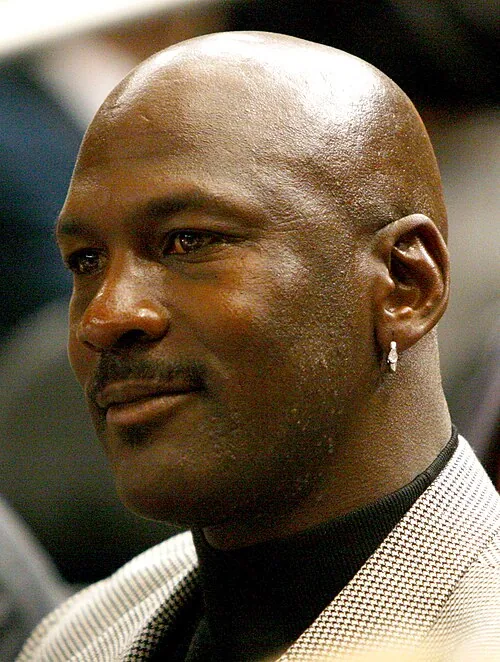
Michael Jordan
Photograph of Novak Djokovic by Andymiah (Paris 2024 Olympic Games, August 4, 2024), CC BY-SA 4.0. Cropped and with background removed for the portrait above. · Photograph of Jannik Sinner by The White House (US Open men’s singles final, New York, September 7, 2025), public domain as a work of the U.S. federal government. Cropped and with background removed for the portrait above. · Photograph by Joshua Massel, cropped by Commons user Quadzilla99, CC BY-SA 2.0.


An estimate is an inference.
Yours can be measured.
Thirty questions, scored against general-population benchmarks. Your score, your percentile, your ability breakdown and a printable IIF certificate.
Find your IQ score now! →